


0,99 €
Mehr erfahren.
- Herausgeber: Herbert Silberer
- Kategorie: Religion und Spiritualität
- Sprache: Englisch
CONTENTS
Translator's Preface
Part I. The Parable.
Section I. The Parable.
Section II. Dream And Myth Interpretation.
Part II. Analytic Part.
Section I. Psychoanalytic Interpretation Of The Parable.
Section II. Alchemy.
Section III. The Hermetic Art.
Section IV. Rosicrucianism And Freemasonry.
Section V. The Problem Of Multiple Interpretation.
Part III. Synthetic Part.
Section I. Introversion And Regeneration.
A. Introversion And Intro-Determination.
B. Effects Of Introversion.
C. Regeneration.
Section II. The Goal Of The Work.
Section III. The Royal Art.
Das E-Book können Sie in Legimi-Apps oder einer beliebigen App lesen, die das folgende Format unterstützen:
Veröffentlichungsjahr: 2017
Ähnliche


















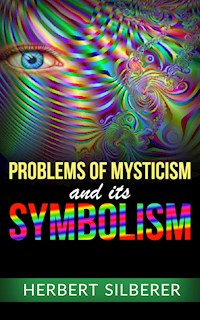
Problems of Mysticism and its Symbolism
Herbert Silberer
first digital edition 2017 by Anna Ruggieri
Contents
Translator's Preface
Part I. The Parable.
Section I. The Parable.
Section II. Dream And Myth Interpretation.
Part II. Analytic Part.
Section I. Psychoanalytic Interpretation Of The Parable.
Section II. Alchemy.
Section III. The Hermetic Art.
Section IV. Rosicrucianism And Freemasonry.
Section V. The Problem Of Multiple Interpretation.
Part III. Synthetic Part.
Section I. Introversion And Regeneration.
A. Introversion And Intro-Determination.
B. Effects Of Introversion.
C. Regeneration.
Section II. The Goal Of The Work.
Section III. The Royal Art.
Translator's Preface
Prominent among the stones of a fireplace in my country den, one large rounded giant stands out. It was bourne by theglacial streams from a more northern resting place and is marked by a fossil of a mollusk that inhabited northern seas many million years ago. Yet in spite of the eons of time that have passed it can be compared with specimens of mollusks that live to-day.Down through the countless centuries the living stream has carved its structural habitations in much the same form. The science of Paleontology has collected this history and has attempted a reconstruction of life from its beginnings.
The same principlehere illustrated is true for the thought-life of mankind. The forms in which it has been preserved however are not so evident. The structuralizations are not so definite. If they were, evolution would not have been possible for the living stream of energywhich is utilized by mind-stuff cannot be confined if it would advance to more complex integrations. Hence the products of mind in evolution are more plastic—more subtle[pg iv]and more changing. They are to be found in the myths and the folk-lore of ancient peoples, the poetry, dramatic art, and the language of later races. From age to age however the strivings continue the same. The living vessels must continue and the products express the most fundamental strivings, in varying though related forms.
Wethus arrive at a science which may be called paleo-psychology. Its fossils are the thought-forms throughout the ages, and such a science seeks to show fundamental likenesses behind the more superficial dissimilarities.
The present work is a contribution to such a science in that it shows the essential relationships of what is found in the unconscious of present day mankind to many forms of thinking of the middle ages. These same trends are present to-day in all of us though hidden behind a different set ofstructural terms, utilizing different mechanisms for energy expression.
The unceasing complexity of life's accumulations has created a great principle for energy expression—it is termed sublimation—and in popular parlance represents the spiritual striving of mankind towards the perfecting of a relation with the world of reality—the environment—which shall mean human happiness in its truest sense. One of the[pg v]products of this sublimation tendency is called Mysticism. This work would seek to aid us toan understanding of this manifestation of human conduct as expressed in concrete or contemplated action through thought. It does so by the comparative method, and it is for this reason I have been led to present it to an English reading public.
Much of the strange and outre, as well as the commonplace, in human activity conceals energy transformations of inestimable value in the work of sublimation. The race would go mad without it. It sometimes does even with it, a sign that sublimation is still imperfect and that the race is far from being spiritually well. A comprehension of the principles here involved would further the spread of sympathy for all forms of thinking and tend to further spiritual health in such mutual comprehension of the needs of othersand of the forms taken by sublimation processes.
For the actual work of translation, I wish to express my obligations to friends Wilfred Lay, and Leo Stein. Without their generous and gifted assistance I would not have been able to accomplish the task.
Smith Ely Jelliffe, M.D.New York, Oct. 27, 1917.
Part I - The Parable
Part I - The Parable
Section I.
The Parable.
In an old book I discovered an extraordinary narrative entitledParabola. I take it as the starting point of my observationsbecause it affords a welcome guide. In the endeavor to understandthe parable and get a psychological insight into it, we are led onto journey through these very realms of fancy, into which I shouldlike to conduct the reader. At the end of our journey we shall haveacquired, with the understanding of the first example, theknowledge of certain psychical laws.
I shall, then, withoutfurther prelude introduce the example, andpurposely avoid at the outset mentioning the title of the old bookso that the reader may be in a position to allow the narrative toaffect him without any preconceived ideas. Explanatoryinterpolations in the text, which come from me, I distinguish withsquare brackets.
[1]. As once I strolled in a fair forest, young and green, andcontemplated the painfulness of this life, and lamented how throughthe dire fall of our first parents we inherited[pg 002]such miseryand distress, I chanced, while thinking these thoughts, to departfrom the usual path, and found myself, I know not how, on a narrowfoot path that was rough, untrodden and impassable, and overgrownwith so much underbrush and bushes that it was easy to see it wasvery little used. Therefore I was dismayed and would gladly havegone back, but it was not in my power to do so, since a strong windso powerfully blew me on, that I could rather take ten steps inadvance than one backward.
[2]. Therefore I had to go on and not mind the roughwalking.
[3]. After I had advanced a good while I came finally to alovely meadow hedged about with a round circle of fruit bearingtrees, and called by the dwellersPratum felicitatis[the meadow offelicity], I was in the midst of a company of old men with beardsas gray as ice, except for one who was quite a young man with apointed black beard. Also there was among them one whose name waswell known to me, but his visage I could not yet see, who was stillyounger, and they debated on all kinds of subjects, particularlyabout a great and lofty mystery, hidden in Nature, which God keptconcealed from the great world, and revealed to only a few wholoved him.
[4]. I listened long and their discourse pleased me well, onlysome would break forth from restraint, not touching upon the matteror work, but what touched upon the parables, similitudes and otherparerga, in which they followed the poetic fancies of Aristotle,Pliny and others which the one had copied from the other. So Icould contain myself no longer and mixed in my own mustard, [put inmy own word], refuted such trivial things from experience, and themajority sided with me, examined me in their faculty and made itquite hot for me. However the foundation of my knowledge was sogood, that I passed with all honors, whereupon[pg 003]they all wereamazed, unanimously included and admitted me in their collegium, ofwhich I was heartily glad.
[5]. But they said I could not be a real colleague till Ilearned to know their lion, and became thoroughly acquainted withhis powers and abilities. For that purpose I should use diligenceso as to subdue him. I was quite confident in myself and promisedthem I would do my best. For their company pleased me so wellthat Iwould not have parted from them for a great deal.
[6]. They led me to the lion and described him very carefully,but what I should undertake with him none could tell me. Some ofthem indeed hinted, but very darkly, so that the (Der Tausende)Thousandth one could not have understood him. But when I shouldfirst succeed in subduing him and should have assured myselfagainst his sharp claws, and keen teeth, then they would concealnothing from me. Now the lion was very old, ferocious and large,his yellow hair hung over his neck, he appeared quiteunconquerable, so that I was almost afraid of my temerity and wouldgladly have turned back if my promise and also the circumstancethat the elders stood about me and were waiting to see what I woulddo, hadallowed me to give up. In great confidence I approached thelion in his den and began to caress him, but he looked at me sofiercely with his brightly shining eyes that I could hardlyrestrain my tears. Just then I remembered that I had learned fromone of the elders, while we were going to the lion's den, that verymany people had undertaken to overcome the lion and very few couldaccomplish it. I was unwilling to be disgraced, and I recalledseveral grips that I had learned with great diligence in athletics,besides which I was well versed in natural magic [magia] so I gaveup the caresses and seized the lion so dextrously, artfully andsubtlely, that before he was well aware of it I forced the bloodout of his body,[pg 004]yea, even out of his heart. It wasbeautifully red but very choleric. I dissected him further andfound, a fact which caused me much wonder, that his bones werewhite as snow and there was much more bone than there wasblood.
[7]. Now when my dear elders, who stood above around theden andlooked at me, were aware of it, they disputed earnestly with eachother, for so much I could infer from their motions but what theysaid I could not hear since I was deep down in the den. Yet as theycame close in dispute I heard that one said, “Hemust bringhim to life again, else he can not be our colleague.” I wasunwilling to undertake further difficulties, and betook myself outof the den to a great place, and came, I know not how, on a veryhigh wall, whose height rose over 100 ells towards the clouds, buton top was not one foot wide. And there went up from the beginning,where I ascended, to the end an iron hand rail right along thecenter of the wall, with many leaded supports. On this wall I came,I say, and meseems there went on the rightside of the railing a manseveral paces before me.
[8]. But as I followed him awhile I saw another following me onthe other side, yet it was doubtful whether man or woman, thatcalled to me and said that it was better walking on his side thanwhere I went, as I readily believed, because the railing that stoodnear the middle made the path so narrow that the going at such aheight was very bad. Then I saw also some that wished to go on thatpath, fall: down below behind me, therefore I swung under therailing; holding tight with my hands and went forward on the other[left] side, till I finally came to a place on the wall which wasvery precipitous and dangerous to descend. Then first I repentedthat I had not stayed on the other [right] side and I couldnot gounder to the other side as it was also impossible to turn round andget on the other path. So I[pg 005]risked it, trusted to my goodfeet, held myself tight and came down without harm, and as I walkeda little further, looked and knew of no otherdanger, but also knewnot what had become of wall and railing.
[9]. After I came down, there stood in that place a beautifulrose bush, on which beautiful red and white roses were growing, thered more numerous, however, than the white. I broke off somerosesfrom the bush and put them on my hat. But there seemed to be in thesame place a wall, surrounding a great garden. In the garden werelads, and their lasses who would gladly be in the garden, but wouldnot wander widely, or take the trouble to come to the gates. So Ipitied them. I went further along the path by which I had come,still on the level, and went so fast that I soon came to somehouses, where I supposed I should find the gardener's house. But Ifound there many people, each having his ownroom. They were slow.Two together they worked diligently, yet each had his own work.[The meaning may be either that workingalone they were slow, but intwos they worked diligently; or two of them worked together andwere diligent. Both amount to the same thing as we shall laterrealize.] But what they did, it seems, I had myself done before andall their work was familiar to me. Especially, thought I, see, ifso many other people do so much dirty and sloppy work, that is onlyan appearance according to each one's conceit, but has no reason inNature, so it may also be pardoned in you. I wished, therefore,because I knew such tricks vanished like smoke, to remain here nolonger in vain and proceeded on my former way.
[10]. After I had arrived at the gateof the garden, some on oneside looked sourly at me, so that I was afraid they might hinder mein my project; but others said, “See, he will into thegarden, and we have done garden service here[pg 006]so long, andhave never gotten in; we will laugh him down if he fails.”But I did not regard all that, as I knew the conditions of thisgarden better than they, even if I had never been in it, but wentright to a gate that was tight shut so that one could neither seenor find a keyhole. I noticed, however,that a little round holethat with ordinary eyes could not be seen, was in the door, andthought immediately, that must be the way the door is opened, wasready with my specially prepared Diederich, unlocked and went in.When I was inside the door, I found several other bolted doors,which I yet opened without trouble. Here, however, was a passageway, just as if it was in a well built house, some six feet wideand twenty long, with a roof above. And though the other doors werestill locked, I could easilysee through them into the garden as thefirst door was open.
[11]. I wandered into the garden in God's name, and found in themidst of it a small garden, that was square and six roods long,hedged in with rose thorns, and the roses bloomed beautifully.Butas it was raining gently, and the sun shone in it, it caused a verylovely rainbow. When I had passed beyond the little garden andwould go to the place where I was to help the maids, behold I wasaware that instead of the walls a low hurdle stood there, and therewent along by the rose garden the most beautiful maiden arrayed inwhite satin, with the most stately youth, who was in scarlet eachgiving arm to the other, and carrying in their hands many fragrantroses. I spoke to them and asked them how they had come over thehurdle. “This, my beloved bridegroom,” said she,“has helped me over, and we are going now out of thisbeautiful garden into our apartment to enjoy the pleasures oflove.”“I am glad,” said I, “that withoutany further trouble on my part your desires are satisfied; yet seehow I have hurried, and have run so long a way in so short a timeto serve you.” After that[pg 007]I came into a great millbuilt inside of stones, in which were no flour bins or other thingsthat pertained to grinding but one saw through the walls severalwater wheels going in water. I asked why it had equipment forgrinding. An old miller answered that the mill was shut down on theother side. Just then I also saw a miller's boy go in from thesluice plank [Schutzensteg], and I followed after him. When I hadcome over the plank [Steg], which had the water wheels on the left,I stood still and was amazed at what I saw there. For the wheelswere now higher than the plank, the water coal black, but its dropswere yetwhite, and the sluice planks were not over three fingerswide. Still I ventured back and held onto the sticks that were overthe sluice planks and so came safely and dry over the water. Then Iasked the old miller how many water wheels he had.“Ten,” answered he. The adventure stuck in my mind. Ishould have gladly known what the meaning was. But as I noticedthat the miller would not leave I went away, and there was in frontof the mill a lofty paved hill, on which were some of thepreviously mentioned elders who walked in the sun, which then shonevery warm, and they had a letter from the whole faculty written tothem, on which they were consulting. [In our modern mode ofexpression, the elders had directed a letter to the sun, and so Ifind the passage inan English version of the parable. Thisgenerally bungling translation is nevertheless not in the leastauthoritative. And although an acceptable meaning is derived fromit, if one regards the sun as the just mentioned“prince,” yet I believe a freer translation should begiven ... the elders walked in the warm sunshine; they consultedabout a letter written to them by the faculty.] I soon noticed whatthe contents must be, and that it concerned me. I went therefore tothem and said, “Gentlemen, does it concernme?”“Yes,” said they, “you must[pg 008]keepin marriage the woman that you have recently taken or we mustnotify our prince.” I said, “that is no trouble as Iwas born at the same time as she and brought up as a child withher, and as I havetakenher once I will keep her forever, and deathitself shall not part us, for I have an ardent affection forher.”“What have we then to complain of?” repliedthey. “The bride is content, and we have your will; you mustcopulate.”“Contented,” said I.“Well,”said one, “the lion will then regain hislife and become more powerful and mighty than before.”
[12]. Then occurred to me my previous trouble and labor and Ithought to myself that for particular reasons it must not concernme but some other that is well known to me; then I saw ourbridegroom and his bride go by in their previous attire, ready andprepared for copulation, which gave me great joy, for I was ingreat distress lest the thing might concern me.
[13]. When, then, as mentioned, our bridegroomin his brilliantscarlet clothes with his dearest bride, whose white satin coat shotforth bright rays, came to the proper marriage age, they joined thetwo so quickly that I wondered not a little that this maid, thatwas supposed to be the mother of thebridegroom, was still so youngthat she appeared to be just born.
[14]. Now I do not know what sin these two must have committedexcept that although they were brother and sister, they were insuch wise bound by ties of love, that they could not be separated,and so, as it were, wished to be punished for incest. These twowere, instead of a bride bed and magnificent marriage, condemnedand shut up in an enduring and everlasting prison, which, becauseof their high birth and goodly state, and also so thatin futurethey should not be guilty in secret, but all their conduct shouldbe known to the guard placed over them and in his sight, wasmade[pg 009]quite transparent, bright and clear like a crystal, andround like a sphere of heaven, and there they were with continualtears and true contrition to atone and make reparation for theirpast misdeeds. [Instead of to a bride bed the two were brought to aprison, so that their actions could be watched. The prison wastransparent; it was a bright crystal clearchamber, like a sphere ofheaven, corresponding to the high position of the two persons.]Previously, however, all their rare clothing and finery that theyhad put on for ornament was taken away, so that in such a chamberthey must be quite naked and merely dwell with each other. [It isnot directly understood by these words that a cohabitation inmodern sense (coition) is meant. According to modern language thepassage must be rendered, “had to dwell near each other nakedand bare.” One is reminded, moreover, of the nuptial customsthat are observed particularly in the marriage of persons of highbirth. In any case and, in spite of my reservation, what occurs isconducive or designed to lead to the sexual union.] Besides theygave them no one that had to gointo the chamber to wait on them,but after they put in all the necessities in the way of meat anddrink, which were created from the afore mentioned water, the doorof the chamber was fast bolted and locked, the faculty sealimpressed on it and I was enjoined that I should guard them here,and spend the winter before the door; the chamber should be dulywarmed so that they be neither too hot nor too cold, and they couldneither come out nor escape. But should they, on account of anyhope of breaking thismandate, escape, I would thereupon be justlysubjected to heavy punishment. I was not pleased by the thing, myfear and solicitude made me faint hearted, for I communed withmyself that it was no small thing that had befallen me, as I knewalso that the college of wisdom was accustomed not to lie but toput into action what it[pg 010]said. Yet because I could not changeit, beside which this locked chamber stood in the center of astrong tower and surrounded with strong bulwarks and high walls, inwhich one could with a small but continuous fire warm the wholechamber, I undertook this office, and began in God's name to warmthe chamber, and protect the imprisoned pair from the cold. Butwhat happened? As soon as they perceived the slightest warmth theyembraced each other so tenderly that the like will not soon beseen, and stayed so hot that the young bridegroom's heart in hisbody dissolved for ardent love, also his whole body almost meltedin his beloved's arms and fell apart. When she who loved him nolessthan he did her, saw this, she wept over him passionately and, asit were buried him with her tears so that one could not see, forher gushing tears that overflowed everything, where he went. Herweeping and sorrowing had driven her to this in a shorttime, andshe would not for deep anguish of heart live longer, butvoluntarily gave herself to death. Ah woe is me. In what pain andneed and trouble was I that my twocharges had quite disappeared inwater, and death alone was left for me. My certain destructionstood before my eyes, and what was the greatest hardship to me, Ifeared the threatened shame and disgrace that would happen to me,more than the injury that would overtake me.
[15]. As I now passed several days in such solitude and ponderedover the question how I could remedy my affairs, it occurred to mehow Medea had revived the dead body of Aeson, and I thought tomyself, “If Medea could do such a thing, why should such athing fail me?” I began at once to bethink me how I would doit, foundhowever no better way than that I should persist withcontinual warmth until the waters disappeared, and I might seeagain the corpses of our lovers. As I hoped to come off withoutdanger and with great advantage and praise I went on with mywarmth[pg 011]that I had begun and continued it forty whole days,as I was aware that the water kept on diminishing the longer I keptit up, and the corpses that were yet as black as coal, began againto be visible. And truly this would have occurred before if thechamber had not been all too securely locked and bolted. Which Iyet did not avail to open. For I noted particularly that the waterthat rose and hastened to the clouds, collected above in thechamber and fell down like rain, so that nothing could come of it,until our bridegroom with his dearest bride, dead and rotten, andtherefore hideously stinking, lay before my eyes.
All the while the sunshine in the moist weather caused anexceedingly beautiful rainbow to be seen, in the chamber, withsurprisingly beautiful colors, which overjoyed not a little myoverpowering affliction. Much more was I delighted that I saw mytwo lovers lying before me again. But as no joy is so great but ismixed with much sadness, so I was troubled in my joy thinking thatmy charges lay still dead before me, and one could trace no life inthem. But because I knew that their chamber was made of such pureand thick material, also so tight-locked that their soul and spiritcould not get out, but was still closely guarded within, Icontinued with my steady warmth day and night, to perform mydelegated office, quite impressed with the fact that the two wouldnot return to their bodies, as long as the moisture continued. Forin the moist state nature keeps itself the same, as I then alsofound in fact and in truth. For I was aware upon carefulexamination that from the earth at evening through the power of thesun, many vapors arose and drew themselves up just as the sun drawswater. They were condensed in the night in a lovely and veryfruitful dew, which very early in the morning fell and moistenedthe earth and washed our dead corpses, so that from day to day, thelonger such bathing and washing continued,[pg 012]the morebeautiful and whiter they became. But the fairer and whitertheybecame, the more they lost moisture, till finally the air beingbright and beautiful, and all the mist and moist weather, havingpassed, the spirit and soul of the bride could hold itself nolonger in the bright air, but went back into the clarified andstill more transfigured body of the queen, who soon experienced it[i.e. her soul and spirit] and at once lived again. This, then, asI could easily observe, not a little pleased me, especially as Isaw her arise in surpassingly costly garments whose like was neverseen on earth, and with a precious crown decked with brightdiamonds; and also heard her speak. “Hear ye children of menand perceive ye that are born of women, that the most high powercan set up kings and can remove kings. He makes rich andpoor,according to his will. He kills and makes again tolive.”
[16]. See in me a true and living example of all that. I wasgreat and became small, but now after having been humbled, I am aqueen elevated over many kingdoms. I have been killed and made tolive. To poor me have been trusted and given over the greattreasures of the sages and the mighty.
[17]. “Therefore power is also given me to make the poorrich, show kindness to the lowly, and bring health to the sick. ButI am not yet like my well-beloved brother, the great and powerfulking, who is still to be awakened from the dead. When he comes hewill prove that my words are true.”
[18]. And when she said that the sun shone very bright, and theday was warmer than before, and the dog days were at hand. Butbecause, a long time before, there were prepared for the lordly andgreat wedding of our new queen many costly robes, as of blackvelvet, ashen damask, gray silk, silver taffeta, snow white satin,even one studded with[pg013]surpassingly beautiful silver piecesand with precious pearls and lordly bright-gleaming diamonds, solikewise different garments were arranged and prepared for theyoung king, namely of carnation, yellow Auranian colors, preciousgear, and finally a red velvet garment withprecious rubies andthickly incrusted with carbuncles. But the tailors that made theirclothes were quite invisible, so that I also wondered as I saw onecoat prepared after another and one garment after another, howthese things came to pass, since I wellknew that no one came intothe chamber except the bridegroom with his bride. So that what Iwondered at most of all was that as soon as another coat or garmentwas ready, the first immediately vanished before my eyes, so that Iknew not whence they came or who had taken them away.
[19]. When now this precious clothing was ready, the great andmighty king appeared in great splendor and magnificence, to whichnothing might be compared. And when he found himself shut in, hebegged me with friendly and verygracious words, to open the doorfor him and permit him to go out; it would prove of great advantageto me. Although I was strictly forbidden to open the chamber, yetthe grand appearance and the winning persuasiveness of the kingdisconcerted me so that Icheerfully let him go. And when he wentout he was so friendly and so gracious and yet so meek that heproved indeed that nothing did so grace high persons as did thesevirtues.
[20]. But because he had passed the dog days in great heat, hewas very thirsty, also faint and tired and directed me to dip upsome of the swift running water under the mill wheels, and bringit, and when I did, he drank a large part with great eagerness,went back into his chamber, and bade me close the door fast behindhim, so that no one might disturb him or wake him from sleep.
[21]. Here he rested for a few days and called to me to[pg014]open the door. Methought, however, that he was much morebeautiful, more ruddy and lordly, which he then also remarked anddeemed it a lordly and wholesome water, drank much of it, more thanbefore so that I was resolved to build the chamber much larger.[Evidently because the inmate increased in size.] When nowthe kinghad drunk to his satisfaction of this precious drink, which yet theunknowing regard as nothing he became so beautiful and lordly, thatin my whole life I never saw a more lordly person nor more lordlydemeanor. Then he led me into his kingdom, and showed me all thetreasures and riches of the world, so that I must confess, that notonly had the queen announced the truth, but also had omitted todescribe the greater part of it as it seemed to those that know it.For there was no end of gold and noble carbuncle there;rejuvenation and restoration of natural forces, and also recoveryof lost health, and removal of all diseases were a common thing inthat place. The most precious of all was that the people of thatland knew their creator, feared and honored him, and asked of himwisdom and understanding, and finally after this transitory gloryan everlasting blessedness. To that end help us God the Father, Sonand Holy Ghost. Amen.
The author of the preceding narrative calls it a parable. Itssignificance may have indeed appeared quite transparent to him, andhe presupposes that the readers of his day knew what form oflearning he masked in it. The story impresses us as rather a fairystory or a picturesque dream. If we compare parables that comenearerto our modern point of view and are easily understood onaccount of their simplicity, like those of Ruckert or those of theNew Testament, the difference can be[pg 015]clearly seen. Theunnamed author evidently pursues a definite aim; one does findsomeunity in the bizarre confusion of his ideas; but what he isaiming at and what he wishes to tell us with his images we cannotimmediately conceive. The main fact for us is that the anonymouswriter speaks in a language that shows decided affinity with thatof dreams and myths. Therefore, however we may explain in whatfollows the peculiarly visionary character of the parable, we feelcompelled to examine it with the help of a psychological method,which, endeavoring to getfrom the surface to the depths, will beable to trace analytically the formative powers of the dream lifeand allied phenomena, and explain their mysterious symbols.
I have still to reveal in what book and in what circumstancesthe parable appears. It is in the second volume of a book“Geheime Figuren der Rosenkreuzer aus dem 16ten und 17tenJahrhundert,” published at Altona about 1785-90. Its chiefcontents are large plates with pictorial representations and withthem a number of pages of text. According to a note on the titlepage, thecontents are “for the first time brought to lightfrom an old manuscript.” The parable is in the second volumeof a three-volume series which bears the subtitle: Eingüldener Tractat vom philosophischen Steine. Von einem nochlebenden, doch ungenannten Philosopho, den Filiis doctrinae zurLehre, den Fratribus Aureae Crucis aber zur Nachrichtungbeschrieben. Anno, M.D.C.XXV.
[pg 016]
If I add that this book is an hermetic treatise (alchemistic),it may furnish a general classification for it, but will hardlygive any definite idea of its nature, not merely on account of theoblivion into which this kind of writing has now fallen, but alsobecause the few ideas usually connected with it produce a distortedpicture. The hermetic art, as it is treated here, the principles ofwhich strike us to-day as fantastic, is related to several“secret” sciences and organizations, some of which havebeen discredited: magic, kabbala, rosicrucianism, etc. It isparticularly closely connected with alchemy so that the terms“hermetic art” and “alchemy” (and even“royal art”) are often used synonymously. This“art”—to call it by the name that not withoutsome justification it applies to itself—leads us by virtue ofits many ramifications into a large number of provinces, whichfurnish us desirable material for our research.
So I will first, purposely advancing on one line, regard theparable as a dream or a fairy tale and analyze itpsychoanalytically. This treatment will, for the information of thereader, be preceded by a short exposition of psychoanalysis as amethod of interpretation of dreams and fairy tales. Then I will,still seeking for the roots of the matter, introduce the doctrinesthat the pictorial language of the parable symbolizes. I will giveconsideration to thechemical viewpoint of alchemy and also thehermetic philosophy and its hieroglyphic educational methods.
Connections will be developed with religious and[pg 017]ethicaltopics, and we shall have to take into account the historical andpsychological relations of hermetic thought with rosicrucianism inits various forms, and freemasonry. And when we begin, at theconclusion of the analytical section of my work, to apply to thesolution of our parable and of several folk tales the insight wehave gained, weshall be confronted with a problem inwhich we shallface two apparently contradictory interpretations, according towhether we follow the lead of psychoanalysis or of the hermetic,hieroglyphic solution. The question will then arise whether and howthe contradiction occurs. How shall we bring into relation witheach other and reconcile the two different interpretations whichare quite different and complete in themselves?
The question arising from the several illustrations expands intoa general problem,to which the synthetic part of my book isdevoted. This will, among other considerations, lead us into thepsychology of symbol-making where again the discoveries ofpsychoanalysis come to our aid. We shall not be satisfied withanalysis, but endeavor tofollow up certain evolutionary tendencieswhich, expressed in psychological symbols, developing according tonatural laws, will allow us to conjecture a spiritual building upor progression that one might call an anabasis. We shall seeplainly by this method of study how the original contradictionarises and how what was previously irreconcilable, turns out to betwo poles of an evolutionary process. By that means, severalprinciples of myth interpretation will be derived.
[pg 018]
I have just spoken of an anabasis. By that we are to understanda forward movement in a moral or religious sense. The mostintensive exemplar of the anabasis (whatever this may be) ismysticism. I can but grope about in the psychology of mysticism; ItrustI may have more confidence at that point where I look at itssymbolism from the ethical point of view.
[pg 019]
Section II.
Dream And Myth Interpretation.
[Readers versed in Freud's psychoanalysis are requested to passover this chapter as they will find only familiar matter.]
In the narrative which we have just examined its dream-likecharacter is quite noticeable. On what does it depend? Evidentlythe Parable must bear marks that are peculiar to the dream. Inlooking for correspondences we discover them even upon superficialexamination.
Most noticeable is the complete and sudden change of place. Thewanderer, as I will hereafter call the narrator of the parable,sees himself immediately transported from the place near the lion'sden to the top of a wall, and does not know how he has come there.Later he comes down just as suddenly. And in still other parts ofthe story there occurs just as rapid changes of scene as one isaccustomed to in dreams. Characteristic also is the fact thatobjects change or vanish; the shift of scene resembles also, asoften in a dream, a complete transformation. Thus, for instance, assoon as the wanderer has left the wall, it vanishes without leavinga trace, as if it had never been. A similar change is also requiredin the garden scene where, instead of[pg 020]the previouslyobserved enclosing-wall, a low hedge appears in a surprisingmanner.
Further, we are surprised by instances of knowledge withoutperception. Often in a dream one knows something without havingexperienced it in person. We simply know, without knowing how, thatin such a house something definite and full of mystery hashappened; or we know that this man, whom we see now for the firsttime, is called so and so; we are in some place for the first timebut know quite surely that there must be a fountain behind thatwall to which for any reason we have to go, etc. Such unmediatedknowledge occurs several times in the parable. In the beginning ofthe narrative the wanderer, although a stranger, knows that thelovely meadow is called by its inhabitants Pratum felicitatis. Heknows intuitively the name of one of the men unknown to him. In thegarden scene he knows, although he has noticed only the young men,that some young women (whom on account of the nature of the placehe cannot then see) are desirous of going into the garden to theseyoung men. One might say that all this is merely a peculiarity ofthe representation inasmuch as the author has for convenience, oron account of lack of skill, or for brevity, left out someconnecting link which would have afforded us the means of acquiringthis unexplained knowledge. The likeness to the dream thereforewould in that case be inadmissible. To this objection it may bereplied, that the dream does exactly like the author of theparable. Our study is chiefly concerned[pg 021]with the product ofthe fancyand forces us to the observation (whatever may be thecause of it) that the parable and the dream life have certain“peculiarities of representation” in common.
In contrast to the miraculous knowledge we find in the dream apeculiar unsureness in many things, particularly in those whichconcern the personality of the wanderer. When the elders inform thewanderer that he must marry the woman that he has taken,he does notknow clearly whether the matter at all concerns him or not; aremarkable fluctuation in his attitude takes place. We wonderwhether he has taken on the rôle of the bridegroom or, quitethe reverse, the bridegroom has taken the wanderer's. We arelikewise struck by similar uncertainties, like those during thewalk on top of the wall where the wanderer is followed by some one,of whom he does not know whether it is a man or a woman. Herebelong also those passages of the narrative introduced by thewanderer with “as if,” etc. In the search for thegardener's house he chances upon many people and “itseems” that he has himself done what these people are theredoing.
Quite characteristic also are the different obstructions andother difficulties placed in the path of the wanderer. Even in thefirst paragraph of the narrative we hear that he is startled, wouldgladly turn back, but cannot because a strong wind prevents him. Ontop of the wall the railing makes his progress difficult; on otheroccasions a wall, or a door. The first experience, especially,recalls those frequent occurrences[pg 022]in dreams where,anxiously turning in flight or oppressed by tormenting haste, wecannot move. In connection with what is distressing andthreatening, as described in the precipitous slope of the wall andthe narrow plank by the mill, belong also the desperate tasks anddemands—quite usual in dreams and myths—that meet thewanderer. Among such tasks or dangers I will only mention thesevere examination by theelders, the struggle with the lion, theobligation to marry, and the burden of responsibility for thenuptial pair, all of which cause the wanderer so much anxiety.
Among the evident dream analogies belongs finally (without,however, completing my list of them) the peculiar logic thatappears quite conventional to the wanderer or the dreamer, butseldom satisfies the reader or the careful reasoner. As examples, Imention that the dead lion will be called to life again if thewanderer marries the woman that he recently took; and that they putthe two lovers that they want to punish for incest, after they havecarefully removed all the clothes from their bodies, into a prisonwhere these lovingly embrace.
So much for the external resemblances of the parablewith thedream life. The deeper affinity which can be shown in its innermoststructure will first appear in the psychoanalytic treatment. Andnow it will be advisable for me to give readers not intimatelyacquainted with dream psychology some informationconcerning moderninvestigations in dream life and in particular concerningpsychoanalytic[pg 023]doctrines and discoveries. Naturally I can dothis only in the briefest manner. For a more thorough study I mustrefer the reader to the work of Freud and his school. The mostimportant books are mentioned in the bibliography at the end.
Modern scientific investigation of dreams, in which Freud hasbeen a pioneer, has come to the conclusion, but in a differentsense from the popular belief, that dreams havea significance.While the popular belief says that they foretell something of thefuture, science shows that they have a meaning that is present inthe psyche and determined by the past. Dreams are then, as Freud'sresults show, always wish phantasies. [Igive here only exposition,not criticism. My later application of psychoanalysis will showwhat reservations I make concerning Freud's doctrines.] In themwishes, strivings, impulses work themselves out, rising to thesurface from the depths of the soul. When they come in waking life,wish phantasies are sometimes called castles in the air. In dreamswe have the fulfillment of wishes that are not or cannot befulfilled.
But the impulses that the dreams call up are principally suchwishes and impulses as wecannot ourselves acknowledge and such asin a waking state we reject as soon as they attempt to announcethemselves, as for instance, animal tendencies or such sexualdesires as we are unwilling to admit, and also suppressed or“repressed” impulses. As aresult of being repressedthey have the peculiarity of being in general inaccessible toconsciousness. [Freud[pg 024]speaks particularly of crasslyegoistic actuations. The criminal element in them is emphasized byStekel.]
One not initiated into dreamanalysis may object that the obviousevidence is against this theory. For the majority of dreams picturequite inoffensive processes that have nothing to do with impulsesand passions which are worthy of rejection on either moral or othergrounds. The objection appears at first sight to be well founded,but collapses as soon as we learn that the critical power ofmorality, which does not desert us by day, retains by night a partof its power; and that therefore the fugitive impulses andtendencies that seekthe darkness and dare not come forth by day,dare not even at night unveil their true aspect but have toapproach, as it were, in costumes, or disguised as symbols orallegories, in order to pass unchallenged. The superintendingpower, that I just now called the power of morality, is comparedvery pertinently to a censor. What our psyche produces is, so tospeak, subjected to a censor before it is allowed to emerge intothe light of consciousness. And if the fugitive elements want toventure forth they must be correspondingly disguised, in order topass the censor. Freud calls this disguising or paraphrasingprocess the dream disfigurement. The literal is thereby displacedby the figurative, an allusion intimated through a nebulousatmosphere. Thus, in thefollowing example, an unconscious deathwish is exhibited. In the examination of a lady's dream it struckme that the motive[pg 025]of a dead child occurred repeatedly,generally in connection with picnics. During an analysis the ladyobserved that whenshe was a girl the children, her younger brothersand sisters, were often the obstacles when it was proposed to havea party or celebration or the like. The association Kinder (=children) Hinderniss (= obstacle) furnished the key to a solutionof the stereotyped dream motive. As further indications showed, itconcerned the children of a married man whom she loved. Thechildren prevented the man separating from his wife in order tomarry the lady. In waking life she would not, of course, admit awish for the death of the embarrassing children, but in dreams thewish broke through and represented the secretly wished situation.The children are dead and nothing now stands in the way of the“party” or the celebration (wedding). The double senseof the word “party” isnoticeable. (In German“eine Partie machen” means both to go on an excursionand to make a matrimonial match.) Such puns are readily made use ofby dreams, in order to make the objectionable appearunobjectionable and so to get by the censor.
Psychoanalytic procedure, employed in the interpretation ofdreams of any person can be called a scientifically organizedconfession that traces out with infinite patience even to thesmallest ramifications, the spiritual inventory of what was tuckedaway in the mind of the person undergoing it. Psychoanalysis isused in medical practice to discover[pg 026]and relieve thespiritual causes of neurotic phenomena. The patient is induced totell more and more, starting from a given point, thereby going intothe most intimate details, and yet we are aware, in the network ofoutcropping thoughts and memories, of certain points of connection,which have dominating significance for the affective life of theperson being studied. Here the path begins to be hard becauseitleads into the intimately personal. The secret places of the soulset up a powerful opposition to the intruder, even without thepurposive action of the patient. Right there are, however, so tospeak, the sore spots (pathogenic “complexes”) of thepsyche, towards which the research is directed. Firmly advancing inspite of the limitations, we lay bare these roots of the soul thatstrive to cling to the unconscious. Those are the disfiguredelements just mentioned; all of the items of the spiritualinventory from which the person in question has toilsomely“worked himself out” and from which he supposes himselffree. They must be silent because they stand in some contradictoryrelation to the character in which the person has clothed himself;and if they,the subterranean elements still try to announcethemselves, he hurls them back immediately into their underworld;he allows himself to think of nothing that offends too much hisattitudes, his morality and his feelings. He does not give verbalexpression to the disturbers of the peace that dwell in his heartof hearts.
The mischief makers are, however, merely repressed,[pg 027]notdead. They are like the Titans [On this similarity rests thepsychologic term “titanic,” used frequently by me inwhat follows.] which were not crushed by the gods of Olympus, butonly shut up in the depths of Tartarus. There they wait for thetime when they can again arise and show their faces in daylight.The earth trembles at their attempts to free themselves. Thus thetitanic forces of the soul strive powerfully upward. And as theymay not live in the light of consciousness they rave in darkness.They take the main part in the procreation of dreams, produce insome cases hysterical symptoms, compulsion ideas and acts,anxietyneuroses, etc. The examination of these psychic disturbancesis not without importance for our later researches.
Psychoanalysis, which has not at any time been limited tomedical practice, but soon began with its torch to illumine theactivity of the human spirit in all its forms (poetry, myth-making,etc.), was decried as pernicious in many quarters. [The question asto how widely psychoanalysis may be employed would at this timelead us too far, yet it will be considered in Sect. 1, of thesynthetic part of this volume.] Now it is indeed true that it leadsus toward all kinds of spiritual refuse. It does so, however, inthe service of truth, and it would be unfortunate to deny to truthits right to justify itself. Any one determined to do so could inthat case defend a theory that sexual maladies are acquired bycatching a cold.
[pg 028]
The spiritual refuse that psychoanalysis uncovers is like themanure on which our cultivated fruits thrive. The dark titanicimpulses are the raw material from which inevery man, the work ofcivilization forms an ethical character. Where there is a stronglight there are deep shadows. Should we be so insincere as to deny,because of supposed danger, the shadows in our inmost selves? Do wenot diminish the light by so doing? Morality, in whose name we areso scrupulous, demands above everything else, truth and sincerity.But the beginning of all truth is that we do not impose uponourselves. “Know thyself” is written over the entranceof the Pythian sanctuary. And it is this inspiring summons of theradiant god of Delphi that psychoanalysis seeks to meet.
After this introductory notice, it will be possible properly tounderstand the following instructive example, which containsexquisite sexual symbolism.
Dream of Mr. T.“I dreamed I was riding on the railroad.Near me sat a delicate, effeminate young man or boy; his presencecaused erotic feelings in me to a certain extent. (It appeared asif I put my arm about him.) The train came to a standstill; we hadarrived at a station and got out. I went with the boy into a valleythrough which ran a small brook, on whose bank were strawberries.We picked a great many. After I had gathered a large number Ireturned to the railway and awoke.”
[pg 029]
Supplementary communication.“I think I remember that anuncomfortable feeling came over me in the boy's company. The valleybranched off to the left from the railway.”
From a discussion of the dream it next appeared that T., who, asfar as I knew, entertained a pronounced aversion to homosexuality,had read a short time before a detailed account of a notorioustrial then going on in Germany, that was concerned withrealhomosexual actions. [In consciousness, of course. In thesuppressed depths of unconsciousness the infantile homosexualcomponent also will surely be found.] An incident from it, probablysupported by some unconscious impulse, crowded its way into thedreamas an erotic wish, hence the affectionate scene in the railwaytrain. So far the matter would be intelligible even if in an eroticday dream the image of a boy, considering the existing sexualtendency of T., had been resolutely rejected by him. How are theother processes in the dream related to it? Do they not at firstsight appear unconnected or meaningless?
And yet in them are manifested the fulfillment of the wishimplied in the erotic excitement in the company of the boy. Thehomosexual action of this wish fulfillment would have beeninsufferable to the dream censor; it must be intimatedsymbolically. And the remainder of the dream is accordingly nothingbut a dextrous veiling of a procedure hostile to the censor.
[pg 030]
Even that the train comesto a standstill is a polite paraphrase.[Paraphrase as the dreamer communicated to me, of an actualphysical condition—an erection.] Similar meaning is conveyedby the word station, which reminds us of the Latin word status(from stare, to stand). The scene in the car recalls moreover thejoke in a story which often used to occur to T. “A ladyinvited to a reception, where there were also young girls,aHungarian[accentuated now, on account of what follows] (thetypical Vienna joker), who is feared on account of his racy wit.She enjoined him at the same time, in view of the presence of thegirls, not to treat them to any of his spicy jests. The Hungarianagreed and appeared at the party. To the amazement of the lady, heproposed the following riddle: ‘'One can enter from in front,or from behind, only one has to stand up.’ Observing thedespair of the lady, he, with a sly, innocent look, said,‘But well then, what is it? Simply a trolley car.’ Nextday the daughter of the house appeared before her schoolmates inthe high school with the following:‘'Girls, I heard a greatjoke yesterday; one can go in from in front or behind, only onemust be stiff.’ ” [A neat contribution, by theway, to the psychology of innocent girlhood.] The anecdote wasrelated to T. by a man later known to him as a homosexual. T. hadbeen with few Hungarians, but with these few, homosexuality hadbeen, as it happened, a favorite subject of conversation.
In the above we find many highly suggestive elements.[pg 031]Themost suggestiveis, however, the strawberries. T. had, as appearedduring the process of the analysis, a couple of days before thedream read a French story where the expression (new to him)cueillirdes fraisesoccurred. He went to a Frenchman for the explanation ofthis phrase and learned that it was a delicate way of speaking ofthe sexual act, because lovers like to go into the woods under thepretext of picking strawberries, and thus separate themselves fromthe rest of the company. In whatever way the dream wish conceivedits gratification, the valley (between the two hills!) throughwhich the brook flowed furnishes a quite definite suggestion. Herealso the above mentioned “from behind” probably gets ameaning.
The circumstance that the dream has, as it were, two faces, withone that it openly exposes to view, implies that a distinction mustbe made between the manifest and the latent material. The openlyexposed face is the manifest dream content (as the wording of thedream report represents the dream); what is concealed is the latentdream thoughts. For the most part a broad tissue of dream thoughtsis condensed into a dream. A part of thedream thoughts (not all)belongs regularly to the titanic elements of our psyche. Theshaping of the dream out of the dream thoughts is called by Freudthe dream work. Four principles direct it, Condensation,Displacement, Representability, and Secondary Elaboration.
[pg 032]
Condensation was just now mentioned. Many dream thoughts arecondensed to relatively few, but thereforeall the more significant,images. Every image (person, object, etc.) is wont to be“determined” by several dream thoughts. Hence we speakof multiple determination or “Overdetermination.”
Displacement shows itself in the fact that the dream (evidentlyinthe service of distortion) pushes forward the unreal and pushesaside the real; in short, rearranges the psychic values (interest)in such a way that the dream in comparison with its latent thoughtsappears as it were displaced or “elsewherecentered.”
As the dream is a perceptual representation it must put intoperceptually comprehensible form everything that it wants toexpress, even that which is most abstract. The tendency to vividlyperceptual or plastic expression that is characteristic of thedream, corresponds accordingly to the Representability.
To the Secondary Elaboration we have to credit the lastpolishing of the dream fabric. It looks after the logicalconnection in the pictorial material, which is created by thedisplacing dream work. “Thisfunction (i.e., the secondaryelaboration) proceeds after the manner which the poet maliciouslyascribes to the philosopher; with its shreds and patches it stopsthe gaps in the structure of the dream. The result of its effort isthat the dream loses itsappearance of absurdity anddisconnectedness[pg 033]and approaches the standard of acomprehensible experience. But the effort is not always crownedwith complete success.” (Freud, “Traumdeutung,”p. 330.) The secondary elaboration can be compared also to theerection of a façade.
Of the entire dreamwork Freud says (“Traumdeutung,”p. 338) comprehensively that it is“not merely more careless,more incorrect, more easily forgotten or more fragmentary thanwaking thought; it is something qualitatively quite different andtherefore not in the least comparable with it. It does not, infact, think, reckon, or judge, but limits itself to remodeling. Itmay be exhaustively described if we keep in view the conditionswhich its productions have to satisfy. These productions, thedream, will have first of all to avoid the censor, and for thispurpose the dream work resorts to displacement of psychicintensities even to the point of changing all psychic values;thoughts must be exclusively or predominantly given in the materialof visual and auditory memory images, and from thisgrows thatdemand for representability which it answers with newdisplacements. Greater intensities must apparently be attainedhere, than are at its disposal in dream thoughts at night, and thispurpose is served by the extreme condensation which affects theelements of the dream thoughts. There is littleregard for thelogical relations of the thought material; they find finally anindirect representation in formal peculiarities of dreams. Theaffects of dream thoughts suffer slighter changes than theirimage[pg 034]content. They are usually repressed. Where they areretained they are detached from images and grouped according totheir similarity.”
Briefly to express the nature of the dream, Stekel gives in oneplace (“Sprache des Traumes,” p. 107) this concisecharacterization: “The dream is a play of images in theservice of the affects.”
A nearly exact formula for the dream has been contributed byFreud and Rank, “On the foundation and with the help ofrepressed infantile sexual material, the dream regularly representsas fulfilled actual wishes and usually also erotic wishes indisguised and symbolically veiled form.” (Jb.; ps. F., p.519, and Trdtg., p. 117.) In this formula the wish fulfillment,following Freud's view, is preponderant, yet it would appear to methat it is given too exclusive a rôlein the (chieflyaffective) background of the dream. An important point is theinfantile in the dream, in which connection we must mention theRegression.
Regression is a kind of psychic retrogression that takes placein manifold ways in the dream (and related psychic events). Thedream reaches back towards infantile memories and wishes.[Sometimes this is already recognizable in the manifest dreamcontent. Usually, however, it is first disclosed by psychoanalysis.Strongly repressed, and therefore difficult of access, is thisinfantile sexual material. On the infantile forms of sexuality, seeFreud, “Three Contributions to Sexual Theory.”] Itreaches back also from the complicated and completed[pg 035]to amore primitive function, from abstract thought toperceptual images,from practical activity to hallucinatory wish fulfillment. [Thelatter with especial significance in the convenience dreams. Wefall asleep, for instance, when thirsty, then instead of reachingfor the glass of water, we dream of the drink.] The dreamer thusapproaches his own childhood, as he does likewise the childhood ofthe human race, by reaching back for the more primitive perceptualmode of thought. [On the second kind of regression the Zurichpsychiatrist, C. G. Jung, has made extraordinary interestingrevelations. His writings will further occupy our attentionlater.]
Nietzsche writes (“Menschliches,Allzumenschliches”), “In sleep and in dreams we passthrough the entire curriculum of primitive mankind.... I mean aseven to-daywe think in dreams, mankind thought in waking lifethrough many thousand years; the first cause that struck his spiritin order to explain anything that needed explanation satisfied himand passed as truth. In dreams this piece of ancient humanity worksonin us, for it is the germ from which the higher reason developedand in every man still develops. The dream takes us back intoremote conditions of human culture and puts in our hand the meansof understanding it better. The dream thought is now so easybecause, during the enormous duration of the evolution of mankindwe have been so well trained in just this form ofcheap, phantasticexplanation by the first agreeable fancy.[pg 036]In that respectthe dream is a means of recovery for the brain, which byday has tosatisfy the strenuous demands of thought required by the higherculture.” (Works, Vol. II, pp. 27 ff.)
If we remember that the explanation of nature and thephilosophizing of unschooled humanity is consummated in the form ofmyths, we can deduce from the preceding an analogy between mythmaking and dreaming. This analogy is much further developed bypsychoanalysis. Freud blazes a path with the following words:“The research into these concepts of folk psychology [myths,sagas, fairy stories] isat present not by any means concluded, butit is apparent everywhere from [...]




