


7,49 €
Mehr erfahren.
- Herausgeber: A.J.Kingston
- Kategorie: Sachliteratur, Reportagen, Biografien
- Sprache: Englisch
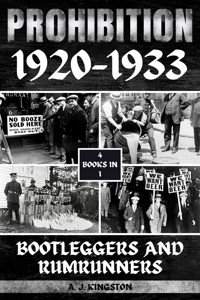
Uncover the captivating stories of a defining era in American history with our compelling book bundle, "Prohibition 1920-1933: Bootleggers and Rumrunners." Immerse yourself in the enthralling narratives of the Prohibition era, where the ban on alcohol ignited a cultural revolution of speakeasies, jazz, and underground intrigue. Dive into the rich accounts of four thought-provoking books that shed light on the Roaring Twenties and the events leading to the repeal of the 18th Amendment.
Inside this meticulously curated bundle, you'll discover four engrossing books:
Book 1 - "Dawn Of The Dry Age: America's Path To Prohibition, 1900-1920" delves into the origins of the temperance movement and its transformation into a formidable force pushing for a nationwide alcohol ban. Witness the fervent moral crusade that culminated in the passage of the 18th Amendment, forever shaping American history.
Book 2 - "Speakeasies And Jazz: Roaring Twenties Under Prohibition, 1920-1929" transports you to the enchanting world of the Jazz Age. Immerse yourself in the allure of secret speakeasies, flappers, and jazz legends who defined the cultural revolution of the Prohibition era.
Book 3 - "The Great Depression And The Last Drops: Prohibition's End, 1929-1933" unravels the tumultuous final years of Prohibition. As the Great Depression gripped the nation, calls for the repeal of the 18th Amendment grew louder. Experience the pivotal events that led to the historic ratification of the 21st Amendment, bringing an end to the Prohibition era.
Book 4 - "Temperance And Women's Suffrage: A Tale Of Two Movements" explores the fascinating intersection of the temperance and suffrage movements. Meet the remarkable women who spearheaded both causes and understand how their collective efforts shaped Prohibition and propelled the fight for women's empowerment and social progress.
This extraordinary book bundle promises a spellbinding journey through the Prohibition era, filled with captivating narratives, legendary figures, and the unforgettable spirit of an era that forever impacted American culture and society.
Whether you're a history enthusiast or simply curious about this transformative chapter in American history, "Prohibition 1920-1933: Bootleggers and Rumrunners" is a must-have addition to your reading collection. Dive into the enticing stories, iconic personalities, and the enduring legacy of an era that shaped the course of American history. Order your bundle today and embark on an unforgettable journey back in time!
Das E-Book können Sie in Legimi-Apps oder einer beliebigen App lesen, die das folgende Format unterstützen:
Veröffentlichungsjahr: 2023
Ähnliche


















PROHIBITION
1920-1933
BOOTLEGGERS AND RUMRUNNERS
4 BOOKS IN 1
BOOK 1
DAWN OF THE DRY AGE: AMERICA'S PATH TO PROHIBITION, 1900-1920
BOOK 2
SPEAKEASIES AND JAZZ: ROARING TWENTIES UNDER PROHIBITION, 1920-1929
BOOK 3
THE GREAT DEPRESSION AND THE LAST DROPS: PROHIBITION'S END, 1929-1933
BOOK 4
TEMPERANCE AND WOMEN'S SUFFRAGE: A TALE OF TWO MOVEMENTS
BY A.J. KINGSTON
Copyright © 2023 by A. J. Kingston
All rights reserved. No part of this book may be reproduced or transmitted in any form or by any means, electronic or mechanical, including photocopying, recording, or by any information storage and retrieval system, without permission in writing from the publisher.
Published by A. J. Kingston
Library of Congress Cataloging-in-Publication Data
ISBN 978-1-83938-404-2
Cover design by Rizzo
Disclaimer
The contents of this book are based on extensive research and the best available historical sources. However, the author and publisher make no claims, promises, or guarantees about the accuracy, completeness, or adequacy of the information contained herein. The information in this book is provided on an "as is" basis, and the author and publisher disclaim any and all liability for any errors, omissions, or inaccuracies in the information or for any actions taken in reliance on such information.
The opinions and views expressed in this book are those of the author and do not necessarily reflect the official policy or position of any organization or individual mentioned in this book. Any reference to specific people, places, or events is intended only to provide historical context and is not intended to defame or malign any group, individual, or entity.
The information in this book is intended for educational and entertainment purposes only. It is not intended to be a substitute for professional advice or judgment. Readers are encouraged to conduct their own research and to seek professional advice where appropriate.
Every effort has been made to obtain necessary permissions and acknowledgments for all images and other copyrighted material used in this book. Any errors or omissions in this regard are unintentional, and the author and publisher will correct them in future editions.
Join Our Productivity Group and Access your Bonus
If you're passionate about history books and want to connect with others who share your love of the subject, joining our Facebook group (search for “History Books by A.J.Kingston”) can be a great way to do so. By joining a group dedicated to history books, you'll have the opportunity to connect with like-minded individuals, share your thoughts and ideas, and even discover new books that you might not have come across otherwise. You can also access your FREE BONUS once you joined our Facebook group called “History Books by A.J.Kingston”.
>> Click Here to Join Our Productivity Group <<
One of the biggest advantages of joining our Facebook group is the sense of community it provides. You'll be able to interact with other history book enthusiasts, ask questions, and share your own knowledge and expertise. This can be especially valuable if you're a student or someone who is just starting to explore the world of history books.
>> Click Here to Follow A.J. Kingston <<
>> Click Here to Download your Free Bonus <<
If you love audiobooks, then joining our YouTube channel that offers free audiobooks on a weekly basis can be a great way to stay entertained and engaged. By subscribing to our channel, you'll have access to a range of audiobooks across different genres, all for free. Not only this is a great opportunity to enjoy some new audiobooks, but it's also a chance to discover new authors and titles that you might not have come across otherwise.
>> Click Here to Join our YouTube Channel <<
Lastly, don’t forget to follow us on Facebook and YouTube by searching for A.J. Kingston.
Table of Contents – Book 1 - Dawn Of The Dry Age: America's Path To Prohibition, 1900-1920
Introduction
Chapter 1: Intoxicating Beginnings: Early Brewing and Distilling in America
Chapter 2: A Thirst for Change: The Emergence of the Temperance Movement
Chapter 3: Rising Tide of Temperance: Advocacy and Activism
Chapter 4: Prohibition Pioneers: The Push for State and Local Bans
Chapter 5: War and Whiskey: Prohibition's Role in World War I
Chapter 6: Prohibition on the Horizon: The 18th Amendment Takes Shape
Chapter 7: Dry America: The Impact of Prohibition on Society
Chapter 8: Speakeasies and Subversion: The Underground World of Drinking
Chapter 9: The Rise of Gangsters: Organized Crime and Bootlegging
Chapter 10: The Waning Dry Age: The Beginnings of Prohibition's End
Table of Contents – Book 2 - Speakeasies And Jazz: Roaring Twenties Under Prohibition, 1920-1929
Chapter 1: The Roaring Twenties: Setting the Stage for the Jazz Age
Chapter 2: A Nation in Disguise: The Secret World of Speakeasies
Chapter 3: Bootleg Booze and Bathtub Gin: The Craft of Illegal Alcohol
Chapter 4: Swing and Syncopation: Jazz Music's Influence on Prohibition Culture
Chapter 5: Flappers and Fringe: Fashion and Social Liberation
Chapter 6: The Harlem Renaissance: Jazz, Race, and Identity
Chapter 7: The Great Gatsby Effect: Literature and Art in the Prohibition Era
Chapter 8: The Charleston and the Lindy Hop: Dancing through Prohibition
Chapter 9: Prohibition and Hollywood: The Silver Screen Goes Dry
Chapter 10: The Wall Street Crash: Prohibition's End and the Beginning of the Great Depression
Table of Contents – Book 3 - The Great Depression And The Last Drops: Prohibition's End, 1929-1933
Chapter 1: The Collapse of Prosperity: America and the Great Depression
Chapter 2: Unraveling the Dry Age: Challenges to Prohibition's Legitimacy
Chapter 3: Bustling Speakeasies: The Last Hurrah of Hidden Bars
Chapter 4: Temperance vs. Reality: The Struggle for Enforcement
Chapter 5: Beer Battles: The Repeal Movement Gains Momentum
Chapter 6: Wet or Dry: States' Rights and the 21st Amendment
Chapter 7: Prohibition's Demise: The Final Years and Public Sentiment
Chapter 8: Closing Time: Last Orders and Farewell to Prohibition
Chapter 9: Legacy of Prohibition: Social and Political Impact
Chapter 10: The Repeal of the 18th Amendment: Cheers to the End of Prohibition
Table of Contents – Book 4 - Temperance And Women's Suffrage: A Tale Of Two Movements
Chapter 1: Two Paths Converge: The Birth of Temperance and Women's Suffrage Movements
Chapter 2: The Crusade for Temperance: Paving the Way for Prohibition
Chapter 3: Votes for Women: Suffragists' Struggle for Political Equality
Chapter 4: Allies and Adversaries: Overlapping Goals and Conflicting Agendas
Chapter 5: Prohibition's Feminine Touch: Women's Roles in the Temperance Movement
Chapter 6: The March for Suffrage: Women's Fight for the Right to Vote
Chapter 7: Suffragists Turn Temperance Advocates: Bridging the Divide
Chapter 8: Anti-Suffragists and Anti-Temperance: Opposition to Change
Chapter 9: Confluence of Change: The 19th Amendment and Prohibition
Chapter 10: Legacy of Progress: Impact on Gender Equality and Social Reform
Conclusion
About A. J. Kingston
Introduction
Welcome to the enthralling world of "Prohibition 1920-1933: Bootleggers and Rumrunners," a captivating book bundle that invites you to journey back in time to one of the most transformative periods in American history. From the early 20th century to the repeal of the 18th Amendment, this collection of four books unravels the fascinating tapestry of Prohibition, revealing its profound impact on American society, culture, and politics.
Book 1, "Dawn of the Dry Age: America's Path to Prohibition, 1900-1920," takes you on a riveting exploration of the roots of the temperance movement. Witness how a growing wave of moral fervor and societal concerns led to the rise of temperance advocates, who sought to combat the perceived evils of alcohol consumption. Discover the key events, personalities, and social currents that paved the way for the passage of the 18th Amendment, marking the dawn of the Prohibition era.
In Book 2, "Speakeasies and Jazz: Roaring Twenties Under Prohibition, 1920-1929," immerse yourself in the vibrant and dynamic world of the Roaring Twenties. Despite the ban on alcohol, the nation defiantly embraced an era of secret speakeasies, clandestine parties, and the captivating sounds of jazz music. Experience the allure of the Jazz Age as society navigated the complexities of Prohibition, giving rise to a cultural revolution that left an indelible mark on American history.
As the 1920s gave way to the tumultuous era of the Great Depression, Book 3, "The Great Depression and the Last Drops: Prohibition's End, 1929-1933," unveils the mounting pressures that hastened the decline of Prohibition. Witness the voices of dissent grow louder as the nation grappled with economic hardship, and follow the events that culminated in the historic ratification of the 21st Amendment, ending the Prohibition experiment.
Finally, Book 4, "Temperance and Women's Suffrage: A Tale of Two Movements," delves into the captivating intersection of the temperance and suffrage movements. Meet the remarkable women who championed both causes and explore how their collective efforts not only shaped Prohibition but also propelled the fight for women's empowerment and social progress.
As you embark on this enlightening journey, you will be transported to a bygone era of speakeasies, bootleggers, and roaring jazz, while also gaining a deeper understanding of the profound sociopolitical transformations that unfolded during Prohibition. Each book in this bundle is a treasure trove of meticulous research, vivid storytelling, and thought-provoking insights, inviting you to explore the complexities and legacies of one of America's most defining periods.
So, dear reader, prepare to immerse yourself in the captivating stories and turbulent events that defined "Prohibition 1920-1933: Bootleggers and Rumrunners." Whether you are a history enthusiast, a lover of cultural studies, or simply curious about the past, this book bundle promises to captivate your imagination and leave you with a richer appreciation of the lasting impact of Prohibition on the American experience. Enjoy the journey!
BOOK 1
DAWN OF THE DRY AGE
AMERICA'S PATH TO PROHIBITION, 1900-1920
BY A.J. KINGSTON
Chapter 1: Intoxicating Beginnings: Early Brewing and Distilling in America
The history of alcohol production in early America is a journey of ingenuity, tradition, and adaptation. From the early days of colonial settlement, the colonists brought with them their knowledge of fermentation techniques, which eventually evolved to include the art of distillation. This transformation laid the foundation for the diverse and rich alcoholic beverages that would become an integral part of American culture. This article explores the fascinating development of alcohol production in colonial America, from its humble beginnings in fermentation to the revolutionary introduction of distillation.
Fermentation: The Brewing Traditions of Colonial America
As colonists settled in the New World, they brought with them a strong brewing tradition inherited from their European homelands. The English, Dutch, Germans, and other settlers were well-versed in the art of brewing beer and producing wine. In the early days of colonization, beer and ale were staple beverages for the colonists, and they quickly set up breweries to satisfy the demand.
Barley, wheat, and hops were the primary ingredients used in beer brewing, and the colonists found that the fertile soil and climate of the New World were suitable for growing these crops. As a result, brewing beer became an essential part of daily life, with taverns and alehouses becoming social hubs for the colonists.
The brewing practices varied across the colonies, with each region developing its distinct styles and preferences. The Dutch in New Amsterdam (now New York) brought their love of beer, while the English favored their ales and porters. The Germans, who settled in Pennsylvania, introduced lagers and other beer styles. These diverse brewing traditions contributed to a rich tapestry of flavors that would later become part of the American brewing heritage.
Distillation: The Birth of American Spirits
While fermentation produced a variety of beers and wines, the introduction of distillation in the colonies marked a pivotal moment in the evolution of American alcohol production. The first distilled spirit produced in the colonies was rum, derived from sugarcane brought from the Caribbean islands. The abundance of molasses, a byproduct of sugar refining, made rum production an economically viable venture, particularly in the New England colonies.
Rum soon became a popular commodity, not just for local consumption but also for trade in the Caribbean and Europe. The infamous Triangular Trade between the colonies, Africa, and the Caribbean thrived, with rum playing a significant role in the exchange of goods and enslaved people.
The production of whiskey followed the success of rum, with the Scots-Irish immigrants bringing their distilling knowledge to the Appalachian regions. The ample supply of grains, such as corn and rye, made whiskey production a practical choice for many farmers. Whiskey quickly gained popularity, becoming a symbol of American identity and a source of economic prosperity for local communities.
Regulation and Control: Early Attempts to Manage Alcohol Production
As the production and consumption of alcohol grew in the colonies, so did concerns about its social impact. The British Crown and colonial governments began implementing regulations to manage alcohol production and distribution. Licensing laws were introduced for taverns and alehouses, and local officials were tasked with ensuring the quality of alcoholic beverages.
In the early 18th century, the British government began imposing taxes on molasses imported into the colonies, which affected the rum industry significantly. The Molasses Act of 1733 was met with widespread resistance and smuggling, foreshadowing the tensions that would eventually lead to the American Revolution.
Temperance Movements: The Moral Crusade against Alcohol
As the colonies evolved into an independent nation, the 19th century brought about significant social and cultural changes. One of the prominent reform movements during this period was the temperance movement, advocating for reduced alcohol consumption and, in some cases, complete abstinence.
The temperance movement was driven by religious revivalism and concerns about the social consequences of excessive drinking. Supporters of temperance argued that alcohol consumption led to moral degradation, family troubles, and a decline in productivity. Women played a crucial role in the temperance movement, forming women's temperance unions and advocating for social change.
The Temperance and Prohibition Era: A Sobering Experiment
The culmination of the temperance movement's efforts came with the ratification of the 18th Amendment to the United States Constitution in 1919. This amendment prohibited the manufacture, sale, and transportation of alcoholic beverages, making the production and consumption of alcohol illegal throughout the country.
The Prohibition era brought about significant changes in American society. Speakeasies, illegal establishments that served alcoholic beverages, sprang up in every city, and organized crime syndicates profited from the illicit alcohol trade. The ban on alcohol led to an increase in criminal activity and corruption, as law enforcement struggled to enforce the law effectively.
Despite the intentions of the Prohibitionists, the "Noble Experiment" ultimately failed to achieve its desired goals. The consumption of alcohol did not decrease significantly, and the Prohibition era was marked by widespread disrespect for the law. After more than a decade of societal unrest and economic consequences, the 21st Amendment was ratified in 1933, repealing the 18th Amendment and putting an end to Prohibition.
Taverns played a central role in the social fabric of early American society, providing a unique space for community interaction and camaraderie. In colonial times, taverns served as more than just places to drink; they were gathering spots where people from diverse backgrounds came together to share stories, ideas, and news. This article explores the significance of tavern culture and social drinking in shaping early American life, politics, and culture.
The Birth of Tavern Culture in Colonial America
The roots of tavern culture in America can be traced back to the earliest days of colonization. Taverns, also known as inns or public houses, were established to offer travelers a place to rest, eat, and drink during their journeys. These early establishments were essential for the growing colonies as they facilitated trade, commerce, and communication between settlements.
As the colonies developed, taverns became more than just resting stops for travelers. They evolved into social hubs where locals and visitors alike would gather to unwind, exchange stories, and engage in lively conversations. Taverns were often the heart of community life, serving as venues for meetings, town gatherings, and political discussions.
The Role of Taverns in Politics and Governance
Taverns were more than just places to socialize; they also played a significant role in early American politics and governance. In the absence of formal meeting spaces, taverns served as impromptu town halls where citizens would discuss important issues, debate political matters, and voice their opinions on various matters of public concern.
During the colonial period and the early years of the American Revolution, taverns became hotbeds of revolutionary sentiment. The exchange of revolutionary ideas and the mobilization of patriots often took place within the walls of these establishments. Notable figures of the time, such as George Washington, Benjamin Franklin, and Samuel Adams, were known to frequent taverns and engage in political discussions that shaped the course of the nation.
Diverse Patrons and Social Drinking Traditions
Taverns attracted a diverse clientele, ranging from farmers and merchants to sailors and politicians. They were places of social integration, where people from different backgrounds could come together and forge connections, irrespective of social status or wealth. In a time when social class distinctions were more pronounced, taverns provided a rare opportunity for people of all walks of life to interact on common ground.
Social drinking in taverns was an integral part of early American culture. Alehouses, taverns, and later, beer gardens, were the preferred places for socializing, celebrating, and relaxing. Drinking was seen as a communal activity, promoting camaraderie and fostering a sense of belonging among patrons.
Entertainment and Merriment
Taverns were not merely places to drink; they were centers of entertainment and merriment. Musicians, storytellers, and traveling performers would often visit taverns to entertain the patrons, adding to the lively and convivial atmosphere. Music and dance were particularly popular forms of entertainment, drawing people together for song and dance.
Gambling was also a common pastime in taverns, with games like cards and dice providing amusement for the guests. While gambling was not universally accepted, it nonetheless contributed to the vibrant and social nature of tavern culture.
Tavern Culture and the Exchange of Information
Taverns played a crucial role in the exchange of information and news during a time when communication channels were limited. Travelers passing through town would bring stories and tidings from far-off places, disseminating information to the locals. News of important events, such as the Declaration of Independence or the signing of the Constitution, would often spread from tavern to tavern, making these establishments instrumental in keeping communities informed.
The Decline of Tavern Culture
Despite their historical significance, tavern culture began to wane in the early 19th century. The rise of the temperance movement and the push for moral reform led to increased criticism of alcohol consumption, and taverns became targets of the temperance activists. The movement gained momentum, leading to the eventual implementation of Prohibition in the 1920s, which banned the production and sale of alcoholic beverages in the United States.
The repeal of Prohibition in 1933 brought some revival to the tavern culture, but the landscape of American drinking had changed. The rise of modern bars and restaurants, coupled with shifts in social patterns, altered the drinking experience in America. Today, taverns still exist, but they often cater to different clientele and serve a different role in society than their early American counterparts.
Tavern culture and social drinking in early America were more than just about consuming alcohol; they were about community, conversation, and camaraderie. These establishments played a vital role in shaping early American life, serving as venues for political discussions, social integration, and the exchange of information. Taverns exemplified the spirit of community and togetherness that would become integral to the American identity. While tavern culture may have faded over the centuries, its legacy of social interaction and community bonding endures, serving as a reminder of the vibrant and convivial spirit of early American society.
As the United States underwent significant economic and industrial growth in the 19th century, the production of alcohol experienced a parallel transformation. Commercial breweries and distilleries emerged, marking a shift from small-scale, home-based alcohol production to large-scale, industrial operations. This change had a profound impact on the alcohol industry, shaping consumer preferences, market dynamics, and the cultural perception of alcohol.
During the early 1800s, advances in technology, such as the steam engine and improved transportation infrastructure, revolutionized various industries, including alcohol production. These innovations allowed for increased efficiency in the brewing and distilling processes, making large-scale production economically viable.
Commercial breweries started to produce beer on a larger scale, supplying the growing demand for this popular beverage. German immigrants, in particular, played a significant role in expanding the beer industry, bringing their brewing expertise and introducing new styles and brewing techniques.
The introduction of the lager brewing method, which requires colder fermentation temperatures, led to the popularization of lager beers in the United States. Brands like Anheuser-Busch and Pabst Brewing Company became household names, producing vast quantities of beer and establishing a national market presence.
Distilleries also experienced significant growth during this period. The production of whiskey, in particular, expanded rapidly, driven by factors such as the availability of grains, advancements in distillation technology, and the popularity of spirits among consumers.
Kentucky, in particular, became known for its bourbon production, thanks to its fertile soil for growing corn and the ideal climate for aging whiskey in oak barrels. The bourbon industry became an essential part of the state's economy and cultural identity, and Kentucky remains synonymous with high-quality bourbon to this day.
As commercial breweries and distilleries grew, so did the advertising and marketing of alcoholic beverages. These businesses employed innovative marketing strategies to attract consumers and create brand loyalty. Iconic beer and whiskey advertisements became a prominent part of American popular culture, contributing to the enduring legacy of certain brands.
However, the rise of commercial alcohol production also led to concerns about overconsumption and its potential consequences. The temperance movement, which had been gaining momentum since the early 19th century, intensified its efforts to promote moderation and reduce alcohol consumption. By the late 19th and early 20th centuries, the temperance movement's influence would culminate in the Prohibition era, leading to the nationwide ban on alcohol production, sale, and distribution.
Despite Prohibition's impact on the alcohol industry, the commercial brewing and distilling sectors would eventually rebound after its repeal in 1933. Post-Prohibition, commercial breweries and distilleries adapted to new regulations and market conditions, reshaping the industry once again.
Today, commercial breweries and distilleries continue to thrive, catering to a diverse range of consumer tastes and preferences. Craft breweries have experienced exponential growth in recent decades, emphasizing small-batch, artisanal production and a focus on local ingredients and unique flavors. The craft distilling movement has followed a similar trajectory, offering consumers a wide array of small-batch, high-quality spirits with distinctive characteristics.
The rise of commercial breweries and distilleries in America has left an indelible mark on the nation's cultural landscape. These establishments have not only shaped the way alcohol is produced and consumed but have also contributed to the social fabric of communities, playing a role in celebrations, gatherings, and culinary experiences. As the alcohol industry continues to evolve, the legacy of commercial breweries and distilleries remains an essential part of America's ever-changing relationship with alcohol.
The production of alcohol has been subject to various forms of regulation and taxation throughout history. Governments have aimed to balance public interests, public health concerns, revenue generation, and the promotion of industry growth.
The temperance movement gained momentum in the 19th century, advocating for reduced alcohol consumption and, in some cases, complete abstinence. Prohibition, lasting from 1920 to 1933, attempted to ban alcohol production, sale, and distribution but proved ineffective.
After the repeal of Prohibition, states were allowed to regulate alcohol within their borders. The three-tier distribution system aimed to prevent monopolies and promote fair competition.
Federal regulation is overseen by the Alcohol and Tobacco Tax and Trade Bureau (TTB), which collects excise taxes on alcohol and ensures compliance with federal laws.
Excise taxes vary depending on the type of alcohol and the state. They are imposed on the production and sale of alcoholic beverages, contributing to government revenue.
Regulations address public health and safety concerns. Licensing requirements, laws against selling alcohol to minors, and measures to prevent drunk driving are implemented.
The alcohol industry and advocacy groups influence alcohol regulations and taxation. The industry may advocate for reduced taxes and lenient regulations, while public health groups push for stricter rules.
The balance between public welfare, revenue generation, and industry growth continues to shape modern alcohol regulations and taxation. Stakeholders include governments, industry players, public health advocates, and consumers. The challenge remains dynamic and subject to ongoing debates and changes in societal attitudes toward alcohol consumption.
Chapter 2: A Thirst for Change: The Emergence of the Temperance Movement
In early American history, concerns about the impact of alcohol consumption on individuals and society were already present, leading to discussions, debates, and the implementation of various measures. Some of the early concerns about alcohol's impact included:
1. Excessive Drinking and Intemperance: The early colonists observed instances of excessive drinking and intemperate behavior, which led to societal issues, including public disorder, family problems, and violence. Intemperate drinking was seen as a threat to individual character and moral virtue.
2. Health and Public Safety: Excessive alcohol consumption was linked to health problems, particularly when adulterated or improperly distilled. Concerns about public safety arose due to accidents and injuries caused by intoxicated individuals.
3. Impact on Work Productivity: Early Americans recognized that excessive drinking could impede work productivity and economic growth. Employers and civic leaders were concerned about the effects of alcohol consumption on the workforce.
4. Family and Social Harmony: Alcohol abuse was perceived as a threat to family unity and social harmony. It was linked to domestic violence, neglect of family responsibilities, and strained interpersonal relationships.
5. Temperance Movement: The temperance movement, which gained momentum in the early 19th century, sought to promote moderation and abstinence from alcohol. Temperance activists believed that reducing alcohol consumption would lead to a more virtuous and productive society.
6. Religious and Moral Perspectives: Many religious groups viewed excessive drinking as sinful and contrary to religious principles. Sermons and writings often emphasized the dangers of alcohol and the need for temperance.
7. Impact on Native American Communities: Alcohol had a particularly detrimental impact on Native American communities, where traders and settlers introduced alcohol to exploit and weaken the indigenous populations.
8. Social Disparities: Concerns were raised about the disproportionate impact of alcohol on vulnerable populations, including the poor, immigrants, and marginalized communities.
9. Influence on Public Behavior: Early Americans debated the influence of alcohol on public behavior, arguing over whether alcohol led to crime, disorderly conduct, and social unrest.
10. Regulation and Licensing: As communities grew, local governments began to regulate alcohol production, sales, and consumption. Licensing laws for taverns and regulations on drinking establishments were implemented to address some of the concerns about alcohol's impact.
These early concerns about alcohol's impact laid the groundwork for later movements and discussions about alcohol regulation, the temperance movement, and eventually Prohibition. While societal attitudes towards alcohol have evolved over time, some of these concerns have persisted, shaping modern debates about alcohol consumption and regulation.
The roots of temperance philosophy can be traced back to ancient times, but it gained significant momentum and prominence during the 19th century in the United States and other Western countries. The temperance movement was founded on the belief that reducing or abstaining from alcohol consumption would lead to a more virtuous and morally upright society. Several key factors and historical developments contributed to the emergence and growth of temperance philosophy:
1. Ancient and Religious Influences: The idea of temperance, or moderation, can be found in ancient philosophical and religious texts. Greek philosophers like Plato and Aristotle advocated for temperance as a virtue that promotes self-control and harmony. Various religious traditions also emphasized moderation in consumption as a means of promoting spiritual well-being.
2. Protestant Reformation: During the Protestant Reformation in the 16th century, some reformers began to criticize excessive drinking and drunkenness. Leaders like Martin Luther and John Calvin viewed drunkenness as a sin and called for temperance and self-restraint.
3. Industrial Revolution and Urbanization: The Industrial Revolution brought significant changes to society, including rapid urbanization and increased access to alcohol. Many reformers believed that the growth of industrial cities and the prevalence of alcohol contributed to social problems and moral decline.
4. Social and Economic Concerns: Concerns about the impact of alcohol on public behavior, work productivity, and family life were raised during this time. Alcohol-related issues, such as poverty, domestic violence, and crime, were linked to excessive drinking.
5. Influence of Evangelical Christianity: The temperance movement found strong support within evangelical Christian circles. Religious leaders and revivalists played a significant role in promoting the cause of temperance and encouraging their congregations to embrace abstinence or moderation.
6. Public Health Concerns: Some early proponents of temperance recognized the negative health effects of alcohol abuse, such as liver disease and addiction. They believed that abstaining from alcohol could improve public health and well-being.
7. Women's Role in the Movement: Women played a crucial role in the temperance movement. Concerned about the impact of alcohol on their families, many women joined the cause, advocating for temperance and later becoming prominent figures in the fight for Prohibition.
8. Formation of Temperance Societies: The formation of temperance societies and organizations in the early 19th century provided a platform for like-minded individuals to promote the temperance philosophy. These societies organized lectures, rallies, and educational campaigns to spread their message.
9. Advocacy for Legal Measures: As the temperance movement grew, some advocates began to call for legal measures to regulate or prohibit alcohol consumption. This eventually led to the push for Prohibition, which resulted in the 18th Amendment and the nationwide ban on alcohol production, sale, and distribution from 1920 to 1933.
The temperance philosophy continued to evolve and adapt to changing social and political contexts throughout the 20th century. While Prohibition ultimately proved unsuccessful in achieving its intended goals, the temperance movement left a lasting impact on American society and contributed to ongoing debates about alcohol regulation and public health.
Religious groups have historically played a significant role in temperance advocacy, promoting principles of moderation, self-discipline, and personal responsibility. They have used sermons, religious texts, and literature to address the topic of temperance, emphasizing the potential harms of excessive alcohol consumption and promoting the virtues of moderation and abstinence.
Religious organizations and denominations have formed temperance societies to encourage members to lead alcohol-free lives. They have advocated for social reforms related to alcohol consumption, and during the temperance movement and the push for Prohibition in the United States, religious groups were among the strong proponents of alcohol regulation and complete bans.
Many religious leaders and activists have participated in the temperance movement, using their influence to raise awareness about alcohol-related issues and promote temperance as a means of promoting moral and social values.
In summary, religious groups have consistently played an essential role in temperance advocacy, using their moral and ethical teachings to promote temperance principles and advocate for social reforms related to alcohol consumption.
Chapter 3: Rising Tide of Temperance: Advocacy and Activism
Women played a pivotal and transformative role in the temperance movement, leaving a lasting impact on the movement's growth and success. Their involvement began in the early 19th century and continued through the Prohibition era. From the formation of women's temperance societies to the establishment of the influential Woman's Christian Temperance Union (WCTU), women's contributions were instrumental in reshaping societal attitudes towards alcohol and advocating for temperance as a means to improve individual lives and society as a whole.
The temperance movement emerged in response to concerns about the negative effects of alcohol consumption on families, communities, and public health. Women, in particular, were deeply affected by alcohol abuse, witnessing firsthand its destructive consequences on their husbands and families. Driven by a desire to protect their loved ones and promote a more virtuous society, women actively participated in temperance advocacy from its earliest stages.
One of the earliest expressions of women's involvement was the "Women's Temperance Crusade," which began in 1873 in Hillsboro, Ohio. This movement involved women conducting peaceful protests and marches outside alcohol establishments, urging the owners to stop selling alcoholic beverages. The Crusade gained attention and inspired similar actions in other towns and cities, showing the power of women's collective action in promoting temperance.
Building on the momentum of the Women's Temperance Crusade, women began forming their own temperance societies. These women's temperance organizations provided a platform for women to address alcohol-related issues and advocate for social change. By organizing themselves, women found strength and unity in their shared commitment to temperance principles.
However, it was the establishment of the Woman's Christian Temperance Union (WCTU) in 1873 that marked a turning point in the temperance movement and solidified women's influence. Frances Willard and Annie Wittenmyer played pivotal roles in founding the WCTU, which quickly became one of the most influential temperance organizations. The WCTU's core mission was to promote temperance, social reforms, and women's suffrage.
Under Frances Willard's leadership, the WCTU adopted a broad agenda, advocating for a range of social reforms beyond temperance. The union believed that alcohol was a major obstacle to achieving other important reforms, such as women's rights, child welfare, and labor conditions. By linking temperance with these broader social issues, the WCTU effectively engaged a wider audience and garnered support for its cause.
The WCTU conducted extensive educational campaigns to raise public awareness about the consequences of alcohol abuse. Women in the organization distributed pamphlets, literature, and educational materials, reaching communities across the country. Their efforts aimed to inform the public about the detrimental effects of excessive drinking on health, family life, and society.
In addition to educational campaigns, the WCTU organized lectures, rallies, and public events to spread their message of temperance. They emphasized the importance of individual responsibility and personal reform, encouraging people to embrace a life of sobriety. These efforts were particularly targeted at women, as they were seen as key influencers within families and communities.
The temperance movement also provided women with opportunities to develop leadership skills and engage in public activism. Women's involvement in the temperance cause empowered them to participate in public life and challenge traditional gender roles. By assuming leadership positions within temperance organizations, women demonstrated their capability and effectiveness as agents of social change.
The dedication and advocacy of women in the temperance movement eventually led to significant legislative changes. One of the movement's notable achievements was the ratification of the 18th Amendment to the United States Constitution in 1919, which brought about national Prohibition. This marked a historic moment in the temperance movement's history, as it demonstrated the power of grassroots efforts and the impact of women's collective action.
Despite the eventual repeal of Prohibition in 1933, the temperance movement's legacy endured. The work of women in promoting temperance and social reforms had a profound and lasting impact on American society. Their efforts paved the way for continued advocacy on issues related to alcohol regulation, public health, and social welfare.
In summary, women played a central role in the temperance movement, spearheading educational campaigns, forming temperance societies, and founding influential organizations like the WCTU. Their dedication to promoting temperance and social reforms led to significant changes in societal attitudes towards alcohol. Women's involvement empowered them as leaders and activists, contributing to the broader struggle for social change and gender equality. The legacy of women in the temperance movement continues to be recognized as a driving force behind the quest for a healthier, more virtuous society.
The temperance movement and the fight for workers' rights have a deeply intertwined history, with both causes sharing common goals and concerns. Throughout the 19th and early 20th centuries, advocates for temperance recognized the detrimental impact of alcohol on the lives of workers, particularly in industrial settings. Simultaneously, labor activists saw temperance as a means to improve the well-being and productivity of the working class. This convergence of interests led to collaboration between the temperance movement and the labor movement, creating a strong alliance for social reform.
Origins of the Alliance: The roots of the alliance between temperance and workers' rights can be traced back to the rise of the industrial revolution. As industries expanded, workers faced harsh and often dangerous working conditions. The growing availability of alcohol, especially in urban centers, exacerbated the challenges faced by laborers. Alcohol abuse not only affected workers' health but also contributed to workplace accidents and reduced productivity.
The Role of Trade Unions: Trade unions emerged as key players in the labor movement, advocating for workers' rights, better working conditions, and fair wages. Many trade unions recognized that excessive alcohol consumption among workers undermined their efforts to improve labor conditions. To address this issue, some unions adopted temperance principles and encouraged their members to abstain from alcohol.
Temperance as a Social Reform: For the temperance movement, aligning with workers' rights was a strategic move. By partnering with labor activists, temperance advocates gained support for their cause from a significant segment of the population. Moreover, temperance was seen as a social reform that could address not only individual behaviors but also systemic issues contributing to poverty, crime, and social inequality.
Mutual Interests and Social Conditions: Both the temperance movement and the labor movement were concerned with improving the living and working conditions of the working class. Alcohol abuse was seen as a contributing factor to poverty, family instability, and decreased productivity. Addressing alcohol-related issues aligned with the broader goals of the labor movement to create a fair and just society.
Women's Role: Women played a vital role in forging the alliance between temperance and workers' rights. As leaders in the temperance movement, they recognized the link between alcohol abuse and the challenges faced by working-class families. Women's temperance organizations like the Woman's Christian Temperance Union (WCTU) actively engaged with labor unions and advocated for both temperance and workers' rights.
The Temperance and Labor Alliance in Action: The alliance between temperance and workers' rights led to joint efforts to promote social reforms and advocate for legislative changes. Both movements saw Prohibition as a significant step towards achieving their shared goals. Labor unions and temperance organizations worked together to rally support for the 18th Amendment, which led to the nationwide ban on alcohol production, sale, and distribution from 1920 to 1933.
Challenges and Divisions: Despite the shared interests, the alliance between temperance and workers' rights was not without challenges. Not all labor activists supported temperance, and some workers saw alcohol as a means of coping with the harsh realities of industrial work. Additionally, tensions arose over the question of whether temperance legislation would lead to job losses in industries tied to alcohol production and distribution.
Legacy of the Alliance: The collaboration between the temperance movement and the labor movement left a lasting impact on American society. While Prohibition ultimately proved unsuccessful in achieving its intended goals, the alliance between temperance and workers' rights contributed to broader discussions on social reform, workers' rights, and the role of alcohol in society.
In summary, the alliance between temperance and workers' rights was driven by common concerns about the impact of alcohol on workers' lives and the desire to improve social conditions. The collaboration between temperance advocates and labor activists demonstrated the power of uniting around shared goals, even in the face of challenges and divisions. The legacy of the alliance continues to be recognized as a significant moment in the history of both the temperance movement and the labor movement, emphasizing the potential for cooperation between social reform movements to drive positive change in society.
The Anti-Saloon League (ASL) played a transformative and influential role in the advocacy for Prohibition in the United States. Established in 1893, the ASL quickly rose to prominence as one of the most powerful and effective temperance organizations of its time. Through strategic approaches, dedicated leadership, and grassroots efforts, the ASL successfully campaigned for the enactment of the 18th Amendment, which prohibited the production, sale, and distribution of alcoholic beverages from 1920 to 1933. This article explores the ASL's impact on Prohibition advocacy, its strategies, and the enduring legacy of its efforts.
The ASL emerged at a time when the temperance movement was gaining momentum. With an initial focus on lobbying for temperance legislation at the local and state levels, the ASL gradually expanded its scope to the national stage. The league's founder, Howard Hyde Russell, emphasized the importance of political engagement and single-issue voting to advance the cause of temperance. The ASL's commitment to a unified, nationwide approach proved pivotal in the fight for Prohibition.
One of the ASL's greatest strengths was its ability to wield significant political power. It strategically endorsed and financially supported candidates who embraced the temperance cause, effectively influencing elections at all levels of government. By creating a "dry" voting bloc, the ASL exerted considerable influence over elected officials, encouraging them to support temperance legislation. The league's success in lobbying for Prohibition-friendly candidates helped create a pro-temperance majority in Congress, paving the way for the ratification of the 18th Amendment.
The ASL's dedication to single-issue advocacy set it apart from other organizations. By focusing solely on promoting Prohibition, the league avoided becoming entangled in broader social or political issues. This narrow but intense focus allowed the ASL to maintain a strong and unified message, making it a formidable force in the temperance movement.
The ASL understood the importance of grassroots organizing and community engagement. It established local chapters across the country, enabling citizens to actively participate in the temperance cause. Through educational campaigns, public rallies, and town hall meetings, the league empowered individuals to advocate for temperance in their own communities. The ASL's emphasis on grassroots activism helped create a groundswell of public support for Prohibition.
The ASL recognized the power of media in shaping public opinion. It employed newspapers, pamphlets, and other forms of media to disseminate its temperance message. By strategically framing the issue, the ASL succeeded in garnering widespread support for Prohibition, even in regions with strong ties to the alcohol industry.
While the ASL was primarily focused on the goal of achieving nationwide Prohibition, it also recognized the value of forming alliances with other social reform movements. The league collaborated with suffragists, advocating for women's right to vote, as many women were strong proponents of temperance. The alliance between temperance and suffrage movements helped increase support for both causes, as women saw Prohibition as a means to improve family life and social conditions.
The ASL's political influence and dedication to grassroots organizing allowed it to amass considerable public support for Prohibition. By the time the 18th Amendment was proposed in 1917, the ASL had successfully built a broad coalition of supporters, ranging from religious groups and women's organizations to trade unions and social reform advocates.
In 1919, the 18th Amendment was ratified, marking a significant victory for the temperance movement and the ASL. Prohibition officially took effect on January 17, 1920, making the manufacture, sale, and distribution of alcoholic beverages illegal in the United States.
However, the implementation of Prohibition faced significant challenges. Bootlegging and speakeasies flourished, as did organized crime involvement in the illegal alcohol trade. Many Americans resented what they perceived as government intrusion into their personal lives, and support for Prohibition began to wane.
The ASL's strict adherence to the goal of Prohibition and its reluctance to compromise on temperance issues contributed to its decline in influence. As public sentiment shifted and the negative consequences of Prohibition became apparent, calls for its repeal grew stronger.
By the early 1930s, the ASL's influence had diminished significantly, and public support for Prohibition had eroded to the point where its repeal became inevitable. In 1933, the 21st Amendment was ratified, effectively ending Prohibition.
Despite its ultimate failure, the ASL's impact on Prohibition advocacy cannot be understated. The league's strategic approach to lobbying, grassroots organizing, and coalition building was instrumental in achieving the passage of the 18th Amendment. Its dedication to single-issue advocacy and unwavering commitment to temperance principles galvanized public support and shaped the course of American history. While Prohibition may have been repealed, the legacy of the ASL and the temperance movement continues to be recognized as a pivotal moment in the nation's ongoing debate over alcohol regulation and public health.
Chapter 4: Prohibition Pioneers: The Push for State and Local Bans
In the early 19th century, as concerns about the negative social, economic, and health effects of alcohol consumption grew, various communities and states in the United States began to experiment with local prohibition laws. These early attempts at local prohibition laws sought to address alcohol-related issues on a smaller scale, reflecting the diverse and evolving attitudes towards temperance and alcohol regulation at the time.
1. The Maine Law of 1851: One of the earliest and most significant attempts at local prohibition was the passage of the "Maine Law" in 1851 in the state of Maine. Also known as "An Act for the Suppression of Drinking Houses and Tippling Shops," the law prohibited the sale and manufacturing of alcoholic beverages in the state. It marked a turning point in the temperance movement, becoming a model for subsequent local prohibition laws in other states.
2. The Local Option: The "Local Option" approach allowed individual communities or counties to decide whether to adopt prohibition laws within their jurisdictions. This decentralized approach recognized the varying attitudes towards alcohol across different regions and allowed for a more tailored response to alcohol-related issues. Some communities embraced prohibition, while others continued to permit alcohol sales.
3. The Widespread Temperance Movement: During the mid-19th century, the temperance movement gained significant momentum, advocating for the reduction or elimination of alcohol consumption. Temperance societies and organizations played a crucial role in promoting local prohibition laws. They engaged in educational campaigns, distributed literature, and conducted public lectures to raise awareness about the perceived harms of alcohol.
4. Influence of Religious Groups: Religious groups, particularly the evangelical Protestant denominations, were strong proponents of temperance and played a central role in advocating for local prohibition laws. Their sermons and religious teachings emphasized the virtues of temperance and encouraged members to support prohibition measures at the local level.
5. Patchwork of Local Laws: As more communities and states considered local prohibition laws, a patchwork of regulations emerged. Some areas implemented strict prohibition, while others remained "wet" and continued to allow alcohol sales. This patchwork system reflected the diverse opinions on alcohol regulation and highlighted the ongoing tension between those advocating for temperance and those supporting the freedom to consume alcohol.
6. Challenges and Limitations: Implementing and enforcing local prohibition laws presented significant challenges. Prohibition faced opposition from various quarters, including the alcohol industry, which had economic interests at stake. Bootlegging and illegal alcohol trade also became prevalent, undermining the effectiveness of local prohibition measures.
7. Impact on National Prohibition: Despite the challenges faced by local prohibition laws, they laid the groundwork for the eventual push for national Prohibition. The experience gained from these early attempts at local prohibition informed the strategies and tactics used by temperance advocates during the fight for the 18th Amendment, which introduced nationwide Prohibition from 1920 to 1933.
In summary, early attempts at local prohibition laws in the United States reflected the evolving attitudes towards alcohol consumption and the growing concern over its negative effects. These local initiatives were part of a broader temperance movement seeking to address alcohol-related issues on a smaller, community-based scale. Although local prohibition laws faced challenges and varied in their effectiveness, they paved the way for the national Prohibition movement, leaving a lasting impact on the nation's alcohol regulation and public health policies.
The concept of "dry counties" emerged as a response to the temperance movement's call for restricting or prohibiting the sale of alcoholic beverages in certain geographic areas. Dry counties, also known as "prohibition counties" or "no-alcohol counties," are regions where the local government has implemented laws or ordinances that restrict or completely ban the sale, distribution, and sometimes even possession of alcoholic beverages.
The rise of dry counties in the United States can be traced back to the early 19th century, coinciding with the growth of the temperance movement. As concerns about the negative social, moral, and health consequences of alcohol consumption increased, advocates of temperance sought ways to curtail access to alcoholic beverages at the local level.
Dry counties were typically established through a democratic process, with local residents voting on whether to adopt prohibition laws. The motivations for supporting such measures were diverse and often rooted in religious, social, and economic factors.
1. The Temperance Movement's Influence: The temperance movement played a significant role in advocating for the establishment of dry counties. Temperance advocates believed that restricting or prohibiting alcohol sales in specific areas would contribute to a more virtuous and morally upright society. They argued that limiting access to alcohol would reduce crime, promote family values, and improve public health.
2. Religious and Moral Values: Religious groups, particularly Protestant denominations, were strong proponents of temperance and supported the creation of dry counties. Their religious teachings emphasized abstinence and the negative consequences of alcohol consumption, encouraging their congregations to vote in favor of local prohibition.
3. Social Reform and Progressive Ideals: In addition to moral and religious considerations, some proponents of dry counties were motivated by progressive ideals. They saw the control of alcohol as a way to address social issues such as domestic violence, poverty, and the protection of women and children from the negative effects of alcohol abuse.
4. Economic Concerns: Economic considerations also played a role in the rise of dry counties. Proponents argued that limiting alcohol sales would lead to increased productivity and decreased absenteeism in the workplace. They believed that reduced alcohol consumption would result in improved economic conditions for the community.
5. Patchwork of Local Regulations: As the temperance movement gained momentum, different regions adopted varying degrees of alcohol restrictions, creating a patchwork of local regulations. Some areas enacted partial prohibition, allowing the sale of certain types of alcohol, such as beer, while banning the sale of stronger spirits. Others implemented total prohibition, prohibiting all forms of alcoholic beverages.
6. Challenges and Opposition: The establishment of dry counties faced challenges and opposition. Not all residents supported prohibition, and the alcohol industry fought against these measures. Bootlegging and illegal alcohol trade became common in dry counties, leading to enforcement challenges and sometimes undermining the effectiveness of local prohibition.
7. Repeal and Modern-Day Status: During the Prohibition era (1920-1933), national Prohibition was enforced, superseding local dry laws. However, after the repeal of the 18th Amendment in 1933, some dry counties continued to maintain their prohibition status. As of the early 21st century, dry counties still exist in several states, especially in the South and Midwest.
8. Complexities of Dry County Status: The status of dry counties can be complex, with some allowing the sale of alcoholic beverages in certain areas, such as restaurants or private clubs, while still prohibiting retail sales. Some counties have voted to become "moist," permitting limited alcohol sales or allowing the sale of alcoholic beverages in certain jurisdictions.
9. Local Autonomy and the Dry Option: Dry counties exemplify the principle of local autonomy, allowing communities to decide their alcohol policies based on their unique values and circumstances. The presence of dry counties alongside "wet" counties, where alcohol sales are unrestricted, reflects the ongoing debate over alcohol regulation in the United States.
In summary, the rise of dry counties in the United States was closely linked to the temperance movement's call for alcohol restrictions and prohibition. Driven by religious, moral, economic, and social considerations, dry counties were established through local democratic processes, allowing communities to make decisions based on their specific values and concerns. While some dry counties remain in existence to this day, they represent a historical and ongoing reflection of the complex and evolving relationship between society, alcohol regulation, and public health policies.
The history of prohibition advocacy is a complex tapestry of early successes and challenges, woven together by the efforts of passionate individuals and groups dedicated to the pursuit of a dry society. Prohibition, the ban on the production, sale, and consumption of alcoholic beverages, emerged as a social movement in the late 19th and early 20th centuries. Advocates of temperance and prohibition saw alcohol as a detrimental force in society, responsible for various social ills, and they believed that its elimination would lead to a better and more morally upright nation.
The roots of the prohibition movement can be traced back to religious and social reform movements of the 19th century. Various temperance societies began to form across the United States, and the movement gained momentum with the formation of organizations like the Women's Christian Temperance Union (WCTU) in 1874. The WCTU, led by influential figures like Frances Willard, played a crucial role in advocating for the abolition of alcohol, utilizing persuasive speeches, pamphlets, and rallies to spread their message far and wide.
One of the early successes of the prohibition movement was the passage of local and state-level prohibition laws. These victories were fueled by the strong advocacy efforts of the temperance organizations, which garnered significant public support through their impassioned rhetoric and the presentation of alcohol's detrimental effects on families and communities. As a result, numerous towns and states implemented alcohol bans, paving the way for a larger national movement.
The turning point came with the ratification of the 18th Amendment to the United States Constitution in 1919, which prohibited the manufacture, sale, and transportation of intoxicating liquors. This was a significant victory for prohibition advocates, marking a historic moment when their cause was enshrined in the highest law of the land. The Volstead Act, passed to enforce the 18th Amendment, empowered the federal government to crack down on the production and distribution of alcoholic beverages.
However, as the prohibition era unfolded, it became apparent that the road to a dry society was fraught with challenges. The implementation of the 18th Amendment faced resistance from various quarters, most notably from organized crime syndicates that saw a lucrative opportunity in the illegal production and sale of alcohol. Speakeasies, clandestine drinking establishments, proliferated, and bootlegging became a highly profitable enterprise.
The rise of the illegal alcohol trade led to an increase in corruption among law enforcement officials and politicians, who were often bribed or coerced into turning a blind eye to bootlegging activities. The Prohibition Bureau, tasked with enforcing the Volstead Act, was overwhelmed by the scale and complexity of the illicit alcohol market, making it difficult to achieve effective enforcement.
Prohibition also led to unintended consequences, such as a rise in the consumption of dangerous, unregulated alcoholic products. With no quality control measures in place, people were exposed to poorly distilled spirits, leading to health hazards and even fatalities in some cases. Additionally, the ban on alcohol production dealt a severe blow to the economy, particularly in regions that heavily relied on the liquor industry.
As the negative impacts of prohibition became more evident, public sentiment began to shift. Many people who had once supported the movement grew disillusioned with its results. The lack of a significant reduction in alcohol consumption, coupled with the rise of organized crime, fueled calls for the repeal of the 18th Amendment.
The turning point came with the Great Depression, which further highlighted the economic consequences of prohibition. In 1933, the 21st Amendment was ratified, repealing the 18th Amendment and putting an end to the nationwide ban on alcohol. This marked the end of the prohibition era, and the regulation of alcohol was returned to individual states.
Despite its ultimate failure at the national level, the prohibition movement did leave a lasting impact on American society. It brought attention to the social issues surrounding alcohol consumption and paved the way for later reforms in alcohol regulation. Many states continued to maintain some form of alcohol control, with some opting for partial prohibition or strict regulations that lasted for decades.
In summary, early prohibition advocacy was characterized by passionate efforts to eliminate alcohol from American society. The movement achieved significant successes at the local and state levels, culminating in the passage of the 18th Amendment. However, challenges soon emerged, including the rise of organized crime, corruption, and unintended consequences. These factors contributed to the eventual repeal of prohibition and the return to a regulated alcohol industry. While the prohibition era may not have achieved its original goals, it left a profound impact on the national conversation surrounding alcohol consumption and its societal effects.
The Prohibition Party, one of the oldest third-party political organizations in the United States, has had a notable influence on state legislation throughout its history. Founded in 1869, the party's primary goal was to advocate for the prohibition of alcoholic beverages. Despite its limited success at the national level, the Prohibition Party has left a lasting impact on state legislation, particularly during the late 19th and early 20th centuries when the temperance movement was at its peak.
One of the significant ways the Prohibition Party influenced state legislation was through its advocacy for local and state-level prohibition laws. By mobilizing grassroots campaigns and leveraging public sentiment against the consumption of alcohol, the party managed to secure the passage of prohibition laws in various states. These laws varied in scope and strictness, but they all reflected the party's core belief in the harmful effects of alcohol on individuals and society. The party's influence was most prominent in states with a strong temperance movement and a significant number of Prohibition Party supporters. States in the Midwest and Northeast, such as Kansas, Maine, and North Dakota, were among the first to enact statewide prohibition laws in the late 19th and early 20th centuries, thanks in part to the efforts of the Prohibition Party.
Furthermore, the Prohibition Party's impact extended beyond the simple passage of laws. It played a vital role in shaping the political landscape, especially in states where it gained considerable support. The party fielded candidates for various political offices, including local, state, and even federal positions. While many of these candidates were unsuccessful in winning elections, their presence and campaigns brought attention to the prohibition cause and helped build support for state-level initiatives.
The Prohibition Party's influence on state legislation was not limited to alcohol-related issues. Its broader platform encompassed various social and political reforms, such as women's suffrage, labor rights, and public education. By advocating for these causes and aligning with other progressive movements, the Prohibition Party gained traction in state politics and had a hand in shaping legislation beyond the realm of temperance.
As with any political movement, the Prohibition Party also faced challenges and opposition in its quest to influence state legislation. The party's staunch adherence to the issue of prohibition sometimes limited its broader appeal, as it struggled to attract voters who were more concerned with other pressing political and economic matters. Additionally, the rise of other political parties with competing agendas, such as the Populist Party and later the Progressive Party, diluted the Prohibition Party's influence in certain regions.




