


5,99 €
Mehr erfahren.
- Herausgeber: Shuttle Systems Ltd
- Kategorie: Ratgeber
- Sprache: Englisch
"Qigong teaches us to flow with the energy of life, embracing both its challenges and its beauty."
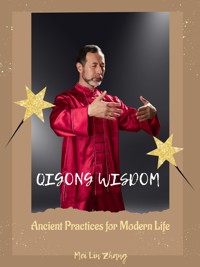
Discover the transformative power of Qigong with "Qigong Wisdom: Ancient Practices for Modern Life." This comprehensive guide will provide you with the knowledge and tools to integrate Qigong into your daily routine, improving your health and well-being. The book is structured around 25 essential chapters, each focusing on a different aspect of Qigong practice:
• Begin your Qigong journey with an introduction to its history, philosophy, and foundational principles.
• Explore the different types of Qigong, including Medical, Martial, and Spiritual, and find the right fit for your unique needs.
• Learn about the importance of proper posture, breathing, and mental focus in Qigong practice.
• Dive into the energy system of the body, known as the meridians and the key points (acupoints) related to Qigong.
• Discover various Qigong exercises for overall health, relaxation, and stress relief.
• Find targeted Qigong practices for specific health concerns, such as pain management, boosting immunity, and improving digestion.
• Enhance your mental and emotional well-being with Qigong meditations and visualizations.
• Learn how Qigong can complement other healing modalities, such as acupuncture, acupressure, and massage.
• Gain insight into advanced Qigong practices, including standing meditation, spontaneous Qigong, and internal alchemy.
• Benefit from practical tips for establishing and maintaining a consistent Qigong practice.
"Qigong Wisdom: Ancient Practices for Modern Life" is your complete guide to the powerful practice of Qigong. Whether you're a beginner or an experienced practitioner, this book offers practical advice, expert guidance, and inspiration to help you unlock the transformative power of Qigong and achieve a balanced, harmonious life. Begin your journey today and experience the incredible benefits of Qigong for yourself!
Das E-Book können Sie in Legimi-Apps oder einer beliebigen App lesen, die das folgende Format unterstützen:
Veröffentlichungsjahr: 2023
Ähnliche








Created by Xspurts.com
All rights reserved.
Copyright © 2005 onwards .
By reading this book, you agree to the below Terms and Conditions.
Xspurts.com retains all rights to these products.
No part of this book may be reproduced in any form, by photostat, microfilm, xerography, or any other means, or incorporated into any information retrieval system, electronic or mechanical, without the written permission of Xspurts.com; exceptions are made for brief excerpts used in published reviews.
This publication is designed to provide accurate and authoritative information with regard to the subject matter covered. It is sold with the understanding that the publisher is not engaged in rendering legal, accounting, health, relationship or other professional / personal advice. If legal advice or other expert assistance is required, the services of a competent professional should be sought.
A New Zealand Made Product
Get A Free Book At: xspurts.com/posts/free-book-offer
––––––––
Table of Contents
Introduction to Qigong
History and Philosophy of Qigong
The Health Benefits of Qigong Practice
The Connection Between Qigong and Traditional Chinese Medicine
Understanding Qi and Qigong
The Concept of Qi
The Three Dantian Energy Centers
Yin and Yang in Qigong
Basic Principles of Qigong Practice
Posture and Alignment
Breathing Techniques
Meditation and Mental Focus
Qigong Warm-Up Exercises
Joint Loosening Exercises
Stretching and Flexibility
Activating Energy Circulation
Qigong Forms and Techniques
Five Animal Frolics
Eight Pieces of Brocade
Six Healing Sounds
Qigong for Health and Healing
Qigong for Stress Reduction
Qigong for Pain Management
Qigong for Immune System Support
Advanced Qigong Practices
Martial Qigong
Spiritual Qigong
Medical Qigong
Integrating Qigong into Daily Life
Developing a Personal Qigong Routine
Qigong and Mindfulness
Qigong and Nutrition
Qigong Resources and Further Study
Finding a Qigong Teacher or Class
Recommended Books and Videos
Online Qigong Communities and Resources
Specialized Qigong Practices
Qigong for Women's Health
Qigong for Seniors
Qigong for Athletes and Sports Performance
Qigong and Emotional Health
Qigong for Anxiety and Depression
Cultivating Emotional Balance Through Qigong
Qigong and the Five Elements
Qigong and Self-Cultivation
Qigong and Personal Development
Qigong and Creativity
Qigong and Spiritual Growth
Qigong for Chronic Conditions
Qigong for Arthritis
Qigong for Diabetes
Qigong for Heart Health
Qigong and Energy Healing
Qigong and Reiki
Qigong and Chakra Balancing
Qigong and Distance Healing
Qigong for Better Sleep
Qigong Techniques for Relaxation and Calm
Qigong and Insomnia
Qigong and Sleep Quality
Qigong and Workplace Wellness
Qigong Exercises for Office Workers
Qigong for Reducing Work Stress
Qigong and Ergonomics
Qigong Retreats and Workshops
Benefits of Attending a Qigong Retreat
Finding the Right Qigong Workshop
Preparing for a Qigong Retreat Experience
Have Questions / Comments?
Get Another Book Free
Introduction to Qigong
Qigong, pronounced as "chee-gong," is an ancient Chinese practice that has been around for thousands of years. The word Qigong can be broken down into two parts: "Qi," which refers to the life force energy that flows within us, and "Gong," which means to work or cultivate. Therefore, Qigong translates to "cultivating life force energy."
Qigong is a holistic practice that focuses on the coordination of breath, movement, and meditation. It is often referred to as a "moving meditation" because it involves slow, flowing movements that are synchronized with deep breathing techniques. Qigong is believed to help balance the flow of Qi throughout the body, which in turn can lead to improved health and wellbeing.
There are many different forms of Qigong, each with its own unique set of movements and breathing techniques. Some styles are more focused on martial arts, while others are more geared towards health and wellness. Some common styles of Qigong include Tai Chi Qigong, Medical Qigong, and Daoist Qigong.
Tai Chi Qigong is one of the most popular styles of Qigong and is often practiced for its health benefits. It involves slow, graceful movements that are performed in a continuous sequence. Tai Chi Qigong is known for its ability to improve balance, flexibility, and coordination, as well as reduce stress and anxiety.
Medical Qigong, on the other hand, is a form of Qigong that is used for therapeutic purposes. It involves a trained practitioner using various Qigong techniques to help restore balance and harmony to the body. Medical Qigong is often used to treat chronic pain, stress-related disorders, and other health conditions.
Daoist Qigong is a form of Qigong that is rooted in Daoist philosophy and focuses on cultivating the body's inner energy to achieve a state of harmony and balance. It involves various postures, breathing techniques, and meditation practices that are designed to activate the body's natural healing abilities.
One of the key principles of Qigong is the concept of Qi. Qi is believed to be the vital life force energy that flows throughout the body and is responsible for maintaining health and wellbeing. According to traditional Chinese medicine, when Qi is flowing smoothly throughout the body, we experience good health and vitality. However, when the flow of Qi becomes disrupted or blocked, it can lead to various health problems.
Qigong is believed to help balance the flow of Qi throughout the body, which can improve health and wellbeing. By practicing Qigong regularly, we can strengthen the body's energy system, reduce stress and anxiety, and improve overall physical and mental health.
In addition to its physical and mental health benefits, Qigong is also a spiritual practice for many people. It is often used as a way to connect with the divine and cultivate a deeper sense of inner peace and harmony. Qigong is also a way to connect with nature and the natural rhythms of the universe.
History and Philosophy of Qigong
Qigong, an ancient Chinese practice that involves the coordination of breath, movement, and meditation, has a rich history and philosophy that is deeply rooted in traditional Chinese culture. The history of Qigong dates back over 5,000 years, with the first references to Qigong appearing in ancient Chinese texts such as the Huangdi Neijing (The Yellow Emperor's Classic of Internal Medicine) and the Dao De Jing (The Book of the Way and Its Power).
According to legend, Qigong was first developed by a legendary Chinese emperor named Huang Di, who is credited with writing the Huangdi Neijing. The book contains descriptions of various Qigong practices, including breathing exercises, meditation techniques, and movements that are designed to promote health and longevity.
Over the centuries, Qigong has evolved and developed into many different styles and forms. In the 1950s, the Chinese government began to standardize Qigong practices and created a system of Qigong exercises that could be taught to the general public. This led to a widespread interest in Qigong throughout China, and eventually, it began to spread to other parts of the world.
The philosophy of Qigong is deeply rooted in traditional Chinese culture and is based on the principles of Taoism, Buddhism, and Confucianism. One of the key principles of Qigong is the concept of Qi, which is believed to be the vital life force energy that flows throughout the body. Qi is believed to be responsible for maintaining health and wellbeing, and when it is flowing smoothly throughout the body, we experience good health and vitality.
Another key principle of Qigong is the concept of Yin and Yang, which are opposing forces that are believed to exist in all things. Yin represents the passive, feminine, and receptive aspects of nature, while Yang represents the active, masculine, and assertive aspects of nature. According to Qigong philosophy, health and wellbeing are achieved when Yin and Yang are balanced and in harmony.
The practice of Qigong is designed to help balance the flow of Qi throughout the body and promote harmony between Yin and Yang. Qigong involves various movements, breathing techniques, and meditation practices that are designed to activate the body's natural healing abilities and promote overall health and wellbeing.
There are many different styles of Qigong, each with its own unique set of movements and breathing techniques. Some styles are more focused on martial arts, while others are more geared towards health and wellness. Some common styles of Qigong include Tai Chi Qigong, Medical Qigong, and Daoist Qigong.
Tai Chi Qigong is one of the most popular styles of Qigong and is often practiced for its health benefits. It involves slow, graceful movements that are performed in a continuous sequence. Tai Chi Qigong is known for its ability to improve balance, flexibility, and coordination, as well as reduce stress and anxiety.
Medical Qigong, on the other hand, is a form of Qigong that is used for therapeutic purposes. It involves a trained practitioner using various Qigong techniques to help restore balance and harmony to the body. Medical Qigong is often used to treat chronic pain, stress-related disorders, and other health conditions.
Daoist Qigong is a form of Qigong that is rooted in Daoist philosophy and focuses on cultivating the body's inner energy to achieve a state of harmony and balance. It involves various postures, breathing techniques, and meditation practices that are designed to activate the body's natural healing abilities.
In addition to its physical and mental health benefits, Qigong is also a spiritual practice for many people. It is often used as a way to connect with the divine and cultivate a deeper sense of inner peace and harmony. Q
The Health Benefits of Qigong Practice
Qigong is an ancient Chinese practice that involves the coordination of breath, movement, and meditation. It is a holistic practice that has been found to have numerous health benefits. Here are some of the health benefits of Qigong practice:
1. Reduces stress and anxiety: One of the primary benefits of Qigong practice is that it can help reduce stress and anxiety. The slow, flowing movements of Qigong, combined with deep breathing techniques, can help calm the mind and promote relaxation. This can lead to a reduction in stress and anxiety levels, as well as an improvement in overall mental wellbeing.
2. Improves balance and coordination: Qigong involves slow, controlled movements that require a great deal of balance and coordination. Regular practice of Qigong can help improve balance and coordination, which can be especially beneficial for older adults who may be at risk for falls.
3. Boosts the immune system: Qigong has been found to have a positive impact on the immune system. Regular practice of Qigong has been shown to increase the number of white blood cells in the body, which are responsible for fighting off infections and diseases.
4. Reduces chronic pain: Qigong has been found to be effective in reducing chronic pain, such as back pain, arthritis, and fibromyalgia. The slow, gentle movements of Qigong can help increase circulation and reduce inflammation, which can alleviate pain and discomfort.
5. Improves cardiovascular health: Qigong has been found to have a positive impact on cardiovascular health. Regular practice of Qigong has been shown to reduce blood pressure, lower cholesterol levels, and improve overall cardiovascular function.
6. Enhances mental clarity and focus: Qigong can also improve mental clarity and focus. The deep breathing techniques used in Qigong practice can help oxygenate the brain, which can improve cognitive function and enhance mental clarity.
7. Improves flexibility and range of motion: Qigong involves slow, controlled movements that can help improve flexibility and range of motion. This can be especially beneficial for individuals with conditions such as arthritis, which can cause stiffness and limited mobility.
8. Promotes better sleep: Qigong practice has been found to promote better sleep. The relaxation and stress-reducing benefits of Qigong can help improve the quality of sleep, leading to increased energy and improved overall health and wellbeing.
9. Supports digestive health: Qigong has been found to have a positive impact on digestive health. Regular practice of Qigong has been shown to improve digestion and alleviate symptoms of digestive disorders such as irritable bowel syndrome (IBS).
10. Enhances overall health and wellbeing: Perhaps the most significant benefit of Qigong practice is its ability to enhance overall health and wellbeing. Regular practice of Qigong can help improve physical, mental, and emotional health, leading to a greater sense of wellbeing and vitality.
The Connection Between Qigong and Traditional Chinese Medicine
Qigong is an ancient Chinese practice that involves the coordination of breath, movement, and meditation. It is a holistic practice that is deeply rooted in traditional Chinese culture, and is closely tied to traditional Chinese medicine (TCM). In fact, Qigong is often considered to be a form of TCM, and is often used in conjunction with other TCM practices such as acupuncture and herbal medicine. Here is a closer look at the connection between Qigong and traditional Chinese medicine:
The philosophy of TCM is based on the concept of Qi, which is believed to be the vital life force energy that flows throughout the body. Qi is believed to be responsible for maintaining health and wellbeing, and when it is flowing smoothly throughout the body, we experience good health and vitality.
Qigong is designed to help balance the flow of Qi throughout the body, which can promote health and wellbeing. Qigong involves various movements, breathing techniques, and meditation practices that are designed to activate the body's natural healing abilities and promote overall health and wellbeing.
Many of the movements and postures used in Qigong are based on the principles of TCM. For example, some Qigong postures are designed to stimulate specific acupuncture points on the body, which can help regulate the flow of Qi and promote healing.
In addition to its physical health benefits, Qigong is also used in TCM as a way to promote emotional and mental wellbeing. Qigong is often used to treat conditions such as anxiety, depression, and insomnia, which are believed to be caused by imbalances in the flow of Qi.
In TCM, the body is seen as a complex system of interconnected parts, and any health problem is believed to be the result of an imbalance or disruption in the flow of Qi. TCM practitioners use various techniques, including acupuncture, herbal medicine, and Qigong, to restore balance and harmony to the body.
Qigong is often used in conjunction with other TCM practices to help promote overall health and wellbeing. For example, a TCM practitioner may recommend Qigong exercises to be done in conjunction with acupuncture or herbal medicine treatments.
Medical Qigong is a specific form of Qigong that is used for therapeutic purposes. It involves a trained practitioner using various Qigong techniques to help restore balance and harmony to the body. Medical Qigong is often used to treat chronic pain, stress-related disorders, and other health conditions.
Medical Qigong practitioners are trained in TCM theory and practice, and use Qigong techniques to treat specific health conditions. For example, a Medical Qigong practitioner may use Qigong exercises to help improve circulation, reduce inflammation, and alleviate pain.
Understanding Qi and Qigong
Qigong is an ancient Chinese practice that involves the coordination of breath, movement, and meditation. At the core of Qigong practice is the concept of Qi, which is the vital life force energy that flows throughout the body. Understanding Qi and how it relates to Qigong is essential for anyone who wants to fully appreciate and benefit from this ancient practice.
Qi is a fundamental concept in traditional Chinese culture, and is believed to be the vital life force energy that flows throughout the body. According to traditional Chinese medicine, Qi is responsible for maintaining health and wellbeing, and when it is flowing smoothly throughout the body, we experience good health and vitality.
There are different types of Qi in the body, including Yuan Qi, which is the prenatal Qi that we inherit from our parents, and Zong Qi, which is the Qi that is produced by the lungs and used to power the body's vital organs.
One of the key principles of Qigong is to balance the flow of Qi throughout the body. Qigong involves various movements, breathing techniques, and meditation practices that are designed to activate the body's natural healing abilities and promote overall health and wellbeing.
The movements used in Qigong are designed to stimulate the flow of Qi in the body. By moving the body in a slow, flowing manner, Qigong practitioners can help improve the circulation of Qi throughout the body, leading to improved health and vitality.
The breathing techniques used in Qigong are also designed to promote the flow of Qi in the body. Deep breathing techniques, such as abdominal breathing and reverse breathing, can help activate the body's natural healing abilities and promote relaxation and calm.
Meditation is another key component of Qigong practice. Through meditation, Qigong practitioners can focus their minds and cultivate a sense of inner peace and harmony. This can help reduce stress and anxiety, and promote overall mental and emotional wellbeing.
There are many different styles of Qigong, each with its own unique set of movements and breathing techniques. Some styles are more focused on martial arts, while others are more geared towards health and wellness. Some common styles of Qigong include Tai Chi Qigong, Medical Qigong, and Daoist Qigong.
Tai Chi Qigong is one of the most popular styles of Qigong and is often practiced for its health benefits. It involves slow, graceful movements that are performed in a continuous sequence. Tai Chi Qigong is known for its ability to improve balance, flexibility, and coordination, as well as reduce stress and anxiety.
Medical Qigong, on the other hand, is a form of Qigong that is used for therapeutic purposes. It involves a trained practitioner using various Qigong techniques to help restore balance and harmony to the body. Medical Qigong is often used to treat chronic pain, stress-related disorders, and other health conditions.




