


5,99 €
Mehr erfahren.
- Herausgeber: Shuttle Systems Ltd
- Kategorie: Ratgeber
- Sprache: Englisch
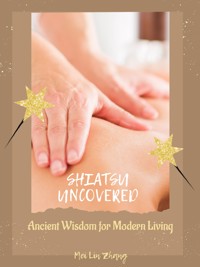
"Shiatsu is the poetry of touch, healing body and soul."
Discover the ancient art of shiatsu and experience a world of healing with "Shiatsu Uncovered: Ancient Wisdom for Modern Living." This comprehensive guide demystifies shiatsu therapy and provides practical, step-by-step instructions to help you incorporate its techniques into your daily life. Designed for both beginners and experienced practitioners, this book offers a wealth of knowledge to promote wellness, balance, and harmony within your body, mind, and spirit.
In "Shiatsu Uncovered," you'll explore:
• The origins and principles of shiatsu, and how it relates to traditional Chinese medicine and modern Western practices.
• The essential techniques and applications of shiatsu, explained in detail for easy understanding and practice.
• The role of meridians and energy flow in shiatsu therapy, and how to identify and address specific imbalances.
• The power of touch and connection, and the importance of developing intuition and empathy in shiatsu practice.
• The benefits of shiatsu for various conditions, including stress, pain, and chronic illness.
• Self-shiatsu routines and partner exercises to enhance your personal practice and share with loved ones.
• The integration of shiatsu with other holistic therapies, such as meditation, yoga, and aromatherapy, to create a well-rounded approach to wellness.
• The spiritual aspects of shiatsu, and how to cultivate mindfulness and inner peace through the art of healing touch.
• Practical tips for choosing a qualified shiatsu practitioner, or pursuing a career in shiatsu therapy.
With "Shiatsu Uncovered: Ancient Wisdom for Modern Living," you'll gain a deeper understanding of this powerful healing art and learn how to harness its potential to improve your overall well-being. Whether you're seeking relief from pain, stress, or simply looking to enhance your self-care routine, this book offers the knowledge and tools to help you on your journey to optimal health and wellness. Embark on the path of shiatsu and discover the transformative power of touch today.
Das E-Book können Sie in Legimi-Apps oder einer beliebigen App lesen, die das folgende Format unterstützen:
Veröffentlichungsjahr: 2023
Ähnliche





Created by Xspurts.com
All rights reserved.
Copyright © 2005 onwards .
By reading this book, you agree to the below Terms and Conditions.
Xspurts.com retains all rights to these products.
No part of this book may be reproduced in any form, by photostat, microfilm, xerography, or any other means, or incorporated into any information retrieval system, electronic or mechanical, without the written permission of Xspurts.com; exceptions are made for brief excerpts used in published reviews.
This publication is designed to provide accurate and authoritative information with regard to the subject matter covered. It is sold with the understanding that the publisher is not engaged in rendering legal, accounting, health, relationship or other professional / personal advice. If legal advice or other expert assistance is required, the services of a competent professional should be sought.
A New Zealand Made Product
Get A Free Book At: xspurts.com/posts/free-book-offer
––––––––
Table of Contents
Introduction to Shiatsu
Origins and history
Principles and philosophy
Shiatsu vs other massage techniques
Understanding Meridians
The concept of Ki (energy)
The 12 main meridians
Meridian functions and associations
Basic Techniques of Shiatsu
Finger pressure
Palm pressure
Kneading
Stretching
Practicing Proper Body Mechanics
Posture and alignment
Breathing techniques
Using your body weight effectively
Shiatsu for Common Ailments
Headaches and migraines
Back pain
Insomnia
Digestive issues
Shiatsu for Stress Relief and Relaxation
Techniques to calm the nervous system
Balancing energy flow
Shiatsu for emotional well-being
Shiatsu for Specific Populations
Pregnant women
Elderly individuals
Athletes
Shiatsu for Prevention and Maintenance
Boosting the immune system
Improving flexibility and mobility
Balancing energy flow for overall health
Developing a Personal Shiatsu Routine
Designing a sequence
Tips for consistency and progression
Integrating other wellness practices
Becoming a Shiatsu Practitioner
Training and certification
Ethics and professional standards
Building a successful practice
Shiatsu for Specific Conditions
Anxiety and depression
Chronic pain management
Supporting cancer care
Self-Shiatsu Techniques
Acupressure points for self-care
Daily routine for stress relief
Shiatsu for neck and shoulder tension
Shiatsu and Traditional Chinese Medicine (TCM)
The five elements
Understanding yin and yang
Integrating TCM concepts in shiatsu
Shiatsu and Western Medicine
Evidence-based research
Working with healthcare professionals
Integrating shiatsu into conventional treatments
Partner Shiatsu
Techniques for couples and friends
Effective communication during sessions
Adapting pressure and technique
Shiatsu for Children and Pets
Gentle techniques for young ones
Shiatsu for dogs and cats
Precautions and safety tips
Advanced Shiatsu Techniques
Joint mobilization
Visceral manipulation
Craniosacral therapy
Shiatsu and Spirituality
The mind-body connection
Cultivating mindfulness and presence
Exploring energy work and chakras
Case Studies and Success Stories
Real-life examples of healing
Testimonials from practitioners
Lessons learned and insights gained
Have Questions / Comments?
Get Another Book Free
Introduction to Shiatsu
Shiatsu is a form of massage therapy that originated in Japan and is rooted in the principles of Traditional Chinese Medicine (TCM). This therapy involves applying pressure to specific points on the body to stimulate energy flow and promote physical and emotional well-being. The word "shiatsu" itself means "finger pressure," which refers to the techniques used in this therapy.
Shiatsu is based on the belief that the human body contains a vital energy force known as "qi" or "ki" in Japanese. According to TCM, this energy flows through meridians or channels that run throughout the body. Shiatsu aims to balance and enhance the flow of energy through these channels by applying pressure to specific points, or "tsubos," on the body.
One of the key principles of Shiatsu is that the body and mind are interconnected. Therefore, this therapy not only addresses physical symptoms but also considers emotional and psychological factors. By stimulating the flow of energy through the body, Shiatsu aims to promote relaxation, reduce stress, and improve overall health and well-being.
Shiatsu is often performed on a mat or futon on the floor, and the recipient remains fully clothed. The therapist uses their fingers, thumbs, palms, and elbows to apply pressure to the tsubos, as well as to stretch and manipulate the body. The pressure applied can range from gentle to firm, depending on the individual's needs and preferences.
Shiatsu is known for its ability to alleviate a wide range of physical and emotional conditions. It is particularly effective for relieving muscular tension, reducing pain, and improving circulation. It can also help to boost the immune system, improve digestion, and promote better sleep.
In addition to its physical benefits, Shiatsu is also known for its ability to promote emotional well-being. Many people report feeling a sense of deep relaxation and calmness after a Shiatsu session. This therapy can help to reduce stress and anxiety, improve mood, and promote a sense of overall balance and harmony.
Shiatsu is a highly adaptable therapy that can be tailored to meet the needs of each individual. It can be used as a standalone treatment or as a complement to other forms of healthcare. Many people find Shiatsu to be a valuable part of their self-care routine, as it provides a safe and natural way to promote health and well-being.
Shiatsu has gained popularity around the world, and today, it is practiced by thousands of trained therapists. In Japan, Shiatsu is recognized as a legitimate form of medical treatment and is often covered by health insurance. In other parts of the world, including the United States and Europe, Shiatsu is widely available as an alternative or complementary therapy.
Origins and history
Shiatsu, a form of massage therapy that originated in Japan, has a rich and fascinating history. This therapy has evolved over thousands of years, drawing upon the principles of Traditional Chinese Medicine (TCM) and incorporating elements of Japanese culture and philosophy.
The roots of Shiatsu can be traced back to ancient China, where Traditional Chinese Medicine was first developed. TCM is based on the idea that the human body contains a vital energy force known as "qi" or "ki" in Japanese. This energy flows through meridians or channels that run throughout the body. In TCM, illness and disease are thought to be caused by an imbalance or blockage in the flow of qi.
The practice of Shiatsu emerged in Japan in the early 20th century, although its origins can be traced back to the ancient Japanese art of anma, or massage. Anma was a popular form of therapy in Japan, and it was used to treat a wide range of physical and emotional conditions.
In the early 20th century, a man named Tokujiro Namikoshi began developing a new form of massage therapy that he called "shiatsu." Namikoshi was born in 1905 in Hokkaido, Japan, and he was the son of an anma practitioner. As a child, he suffered from a number of health problems, including pneumonia and tuberculosis. His mother treated him with anma, which inspired his interest in massage therapy.
Namikoshi began developing his own approach to massage therapy in the 1920s. He was particularly interested in the idea of using pressure to stimulate energy flow in the body. Namikoshi believed that this approach could be used to treat a wide range of physical and emotional conditions, and he began teaching his techniques to others.
In 1940, Namikoshi founded the Japan Shiatsu College, which was the first institution dedicated to the study and practice of Shiatsu. The college became a hub for Shiatsu practitioners and helped to popularize the therapy throughout Japan.
Over the decades that followed, Shiatsu continued to evolve and grow in popularity. It was used to treat a wide range of conditions, including musculoskeletal pain, digestive disorders, and emotional imbalances.
In the 1950s, Shiatsu began to gain recognition in the West. Several Westerners traveled to Japan to study the therapy and brought it back to their own countries. In the 1970s, Shiatsu gained further recognition in the United States, where it was embraced as an alternative or complementary therapy.
Today, Shiatsu is practiced all over the world and is recognized as a legitimate form of medical treatment in Japan. It has gained popularity among people seeking natural, non-invasive forms of healthcare and is often used in conjunction with other therapies, such as acupuncture and herbal medicine.
Shiatsu has continued to evolve in recent years, with new techniques and approaches being developed. Some practitioners incorporate elements of Western massage therapy, such as deep tissue massage and myofascial release, into their Shiatsu practice. Others focus more on the traditional techniques and principles of Shiatsu, such as pressure point therapy and energy balancing.
Despite its evolution over the years, Shiatsu remains rooted in the principles of TCM and the ancient wisdom of Japanese culture. It offers a safe, natural, and effective way to promote health and well-being and is a valuable tool for anyone seeking to enhance their quality of life.
Principles and philosophy
Shiatsu is a form of massage therapy that is based on the principles of Traditional Chinese Medicine (TCM) and incorporates elements of Japanese culture and philosophy. At the core of Shiatsu are several key principles that guide its practice and underpin its philosophy.
One of the key principles of Shiatsu is the concept of qi, or vital energy. According to TCM, qi flows through the body along meridians or channels, and its balance and flow are essential for good health. Shiatsu aims to stimulate the flow of qi and promote its balance by applying pressure to specific points on the body.
Another important principle of Shiatsu is the idea of yin and yang, which are opposing yet complementary forces that exist in all things. In TCM, health is thought to depend on a balance between yin and yang. Shiatsu aims to promote this balance by addressing imbalances and blockages in the flow of qi.
Shiatsu also incorporates the concept of the five elements, which are wood, fire, earth, metal, and water. Each element is associated with specific organs, emotions, and other aspects of the body and mind. Shiatsu practitioners use this knowledge to tailor their treatments to the individual needs of each client.
In addition to its principles rooted in TCM, Shiatsu also incorporates elements of Japanese culture and philosophy. One such element is the concept of "hara," which refers to the area around the navel. In Japanese culture, the hara is considered the center of the body and the source of one's energy and vitality. Shiatsu practitioners often focus on the hara during their treatments, using techniques such as abdominal massage to promote relaxation and balance.
Shiatsu also emphasizes the importance of mindfulness and presence during treatments. Practitioners aim to cultivate a state of "ki-ai," which is a focused and attentive state of mind. This helps to promote a deep connection between the practitioner and client and allows the practitioner to work with greater sensitivity and intuition.
Shiatsu vs other massage techniques
Shiatsu is a form of massage therapy that is distinct from other massage techniques in several ways. While all forms of massage involve applying pressure and manipulation to the body, Shiatsu has its own unique set of principles and techniques that set it apart from other modalities.
One of the main differences between Shiatsu and other massage techniques is the way that pressure is applied. In Shiatsu, pressure is applied using the fingers, thumbs, palms, and elbows, and it is focused on specific points or "tsubos" on the body. The pressure applied in Shiatsu can range from gentle to firm, depending on the needs of the individual.
In contrast, many other massage techniques involve a more generalized approach to pressure and manipulation. For example, Swedish massage, which is one of the most popular forms of massage in the West, typically involves long strokes and kneading of the muscles, rather than focusing on specific points.
Another difference between Shiatsu and other massage techniques is the way that the body is positioned during the treatment. In Shiatsu, the recipient typically lies on a mat or futon on the floor, while the practitioner applies pressure using their hands, fingers, and elbows. The recipient remains fully clothed throughout the treatment.
In contrast, many other massage techniques involve the recipient lying on a massage table, often undressed and covered with a sheet or blanket. The practitioner may use oils or lotions to facilitate the massage and may use their whole body to apply pressure, rather than just their hands and fingers.
Shiatsu also differs from other massage techniques in its focus on energy flow and balance. As noted earlier, Shiatsu is based on the principles of Traditional Chinese Medicine, which holds that the body contains a vital energy force known as "qi." Shiatsu aims to stimulate the flow of qi through the body and balance its flow by applying pressure to specific points.
In contrast, many other massage techniques focus primarily on the physical body and its musculature. While some forms of massage, such as Thai massage, may incorporate elements of energy work, they are not based on the same principles as Shiatsu and may have a different focus.
Despite these differences, there are also similarities between Shiatsu and other massage techniques. For example, both Shiatsu and Swedish massage can be used to relieve muscular tension and promote relaxation. Both techniques can also be tailored to the individual needs and preferences of each client.
Similarly, both Shiatsu and Thai massage can be used to stimulate energy flow and promote balance in the body. While the techniques used in these modalities may differ, their underlying principles are similar in many ways.
Understanding Meridians
Meridians are channels that run throughout the body and are believed to be an integral part of Traditional Chinese Medicine (TCM). These meridians are thought to carry vital energy or "qi" throughout the body, and their balance and flow are essential for good health. In Shiatsu, the meridians are a key element of the therapy, and understanding their function is essential for practitioners and clients alike.
There are 12 primary meridians in the body, each of which is associated with a specific organ system. For example, the lung meridian is associated with the respiratory system, while the liver meridian is associated with the digestive system.
In addition to these primary meridians, there are also eight "extraordinary" meridians, which are not associated with a specific organ system but are believed to play a vital role in overall health and well-being.
The meridians are not visible to the naked eye, and their existence cannot be proven through conventional scientific methods. However, they are widely accepted in TCM and other forms of alternative medicine as a key element of the body's energy system.
Shiatsu practitioners use their knowledge of the meridians to tailor their treatments to the individual needs of each client. By applying pressure to specific points along the meridians, they aim to stimulate the flow of qi and promote its balance throughout the body.
One of the key concepts in understanding meridians is the idea of "acupoints." Acupoints are specific points along the meridians where pressure can be applied to promote the flow of qi. In Shiatsu, these acupoints are known as "tsubos," and they are the focus of the therapy.
The acupoints along the meridians are believed to have specific functions and properties. For example, some acupoints may be used to promote relaxation and reduce stress, while others may be used to alleviate pain or improve digestion.
Shiatsu practitioners use their knowledge of the acupoints to develop a treatment plan that is tailored to the individual needs of each client. By identifying the specific acupoints that are most relevant to the client's condition, they can apply pressure in a targeted and effective way.
While the concept of meridians may seem unfamiliar to those who are accustomed to Western medicine, it is important to recognize that many of the concepts that underpin TCM have been validated by scientific research. For example, studies have shown that acupuncture, which is another form of therapy that is based on the meridian system, can be effective in treating a wide range of conditions, from pain and inflammation to anxiety and depression.
In addition to its potential therapeutic benefits, the concept of meridians can also be helpful in understanding the body's energy system and its interconnections. By recognizing the interconnectedness of the various organ systems and energy pathways in the body, we can gain a deeper understanding of the complex processes that underlie health and well-being.
The concept of Ki (energy)
In Shiatsu, the concept of "ki," or vital energy, is central to the therapy. Ki is a fundamental concept in Traditional Chinese Medicine (TCM) and is believed to flow through the body along meridians or channels. The balance and flow of ki are essential for good health, and Shiatsu aims to promote this balance by stimulating the flow of ki through the body.
The concept of ki is rooted in the ancient philosophy of Taoism, which holds that everything in the universe is made up of energy or "qi." In TCM, this concept is applied to the human body, where ki is thought to flow through the meridians and provide the body with the energy it needs to function properly.
Ki is not visible to the naked eye, and its existence cannot be proven through conventional scientific methods. However, it is widely accepted in TCM and other forms of alternative medicine as a vital component of the body's energy system.
Shiatsu practitioners use their knowledge of ki to tailor their treatments to the individual needs of each client. By stimulating the flow of ki through the body, they aim to promote its balance and restore health and vitality.
One of the key concepts in understanding ki is the idea of yin and yang. Yin and yang are opposing yet complementary forces that exist in all things, including the human body. In TCM, health is thought to depend on a balance between yin and yang, and Shiatsu aims to promote this balance by addressing imbalances and blockages in the flow of ki.
Another important concept in understanding ki is the idea of "hara." In Japanese culture, the hara is considered the center of the body and the source of one's energy and vitality. Shiatsu practitioners often focus on the hara during their treatments, using techniques such as abdominal massage to promote relaxation and balance.
Shiatsu also emphasizes the importance of mindfulness and presence during treatments. Practitioners aim to cultivate a state of "ki-ai," which is a focused and attentive state of mind. This helps to promote a deep connection between the practitioner and client and allows the practitioner to work with greater sensitivity and intuition.
While the concept of ki may be unfamiliar to those who are accustomed to Western medicine, it is important to recognize that many of the concepts that underpin TCM have been validated by scientific research. For example, studies have shown that acupuncture, which is another form of therapy that is based on the concept of ki, can be effective in treating a wide range of conditions, from pain and inflammation to anxiety and depression.
In addition to its potential therapeutic benefits, the concept of ki can also be helpful in understanding the body's energy system and its interconnections. By recognizing the interconnectedness of the various organ systems and energy pathways in the body, we can gain a deeper understanding of the complex processes that underlie health and well-being.
The 12 main meridians
Shiatsu is a form of massage therapy that is based on the principles of Traditional Chinese Medicine (TCM) and incorporates elements of Japanese culture and philosophy. At the core of Shiatsu are the meridians, or channels, that run throughout the body and are believed to carry vital energy or "qi." Understanding the 12 main meridians is essential for Shiatsu practitioners, as they use their knowledge of these channels to tailor their treatments to the individual needs of each client.
1. Lung Meridian: The lung meridian runs from the chest down to the hand and is associated with the respiratory system. Shiatsu techniques that stimulate the lung meridian can be helpful in relieving breathing difficulties, coughing, and other respiratory problems.
2. Large Intestine Meridian: The large intestine meridian runs from the hand up to the face and is associated with the digestive system. Shiatsu techniques that stimulate the large intestine meridian can be helpful in relieving constipation, diarrhea, and other digestive problems.
3. Stomach Meridian: The stomach meridian runs from the face down to the foot and is associated with the digestive system. Shiatsu techniques that stimulate the stomach meridian can be helpful in relieving nausea, vomiting, and other digestive problems.
4. Spleen Meridian: The spleen meridian runs from the foot up to the chest and is associated with the digestive system. Shiatsu techniques that stimulate the spleen meridian can be helpful in relieving bloating, gas, and other digestive problems.
5. Heart Meridian: The heart meridian runs from the chest down to the hand and is associated with the circulatory system. Shiatsu techniques that stimulate the heart meridian can be helpful in relieving chest pain, high blood pressure, and other circulatory problems.
6. Small Intestine Meridian: The small intestine meridian runs from the hand up to the ear and is associated with the digestive system. Shiatsu techniques that stimulate the small intestine meridian can be helpful in relieving bloating, gas, and other digestive problems.
7. Bladder Meridian: The bladder meridian runs from the foot up to the head and is associated with the urinary system. Shiatsu techniques that stimulate the bladder meridian can be helpful in relieving urinary incontinence, bladder infections, and other urinary problems.
8. Kidney Meridian: The kidney meridian runs from the foot up to the chest and is associated with the urinary system. Shiatsu techniques that stimulate the kidney meridian can be helpful in relieving urinary incontinence, kidney infections, and other urinary problems.
9. Pericardium Meridian: The pericardium meridian runs from the chest down to the hand and is associated with the circulatory system. Shiatsu techniques that stimulate the pericardium meridian can be helpful in relieving chest pain, palpitations, and other circulatory problems.




