


13,99 €
Mehr erfahren.
- Herausgeber: John Wiley & Sons
- Kategorie: Fachliteratur
- Sprache: Englisch
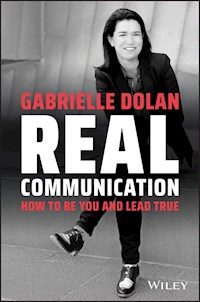
Effective communication through authentic leadership A rapidly evolving workplace and disruptive technologies have created a growing demand for transparency and authenticity in communication from business leaders. Yet many decision-makers find themselves far behind the curve when it comes to understanding and meeting the evolving expectations of employees and customers. Real Communication: How to Be You and Lead True reveals how to guide and communicate in a way that is authentic and will help business leaders truly connect and engage with their teams, customers, and coworkers. * Communicate more effectively * Improve employee engagement * Manage organisational changes * Help teams cope with change When employees trust their leaders, businesses thrive. In Real Communication you will find everything you need to implement new strategies, instill core values, and cultivate engagement.
Sie lesen das E-Book in den Legimi-Apps auf:
Seitenzahl: 265
Veröffentlichungsjahr: 2019
Ähnliche

















“ Read this book cover to cover ... and loved it! A great read about people keeping it real, telling it how it is, with down to earth tips on leadership, communicating with impact and building and keeping trust. It starts with being true to yourself — and sharing, showing and keeping it real with others. Thanks Gabrielle for the stories, the reminders and the advice! Needed today more than ever.”
Christine Corbett, former acting CEO and Chief Customer Officer of Australia Post
“ Authenticity is a word that gets thrown around a lot. Gabrielle is the first leadership expert I've met who lives it. Real messages, delivered with truth in a way that anyone can access.”
Matt Church, Author, Speaker and Founder Thought Leaders
“ I have often reflected on the many presentations I have sat through and when I have been on the edge of my seat or when I have been trying desperately to stay awake. And what was the difference? Well it was rarely the content but nearly always the way it was delivered. Real Communication is one of those ‘must read' books for anyone who is serious about leadership as it is packed with practical tips and real-life examples of how to lead and communicate in a more effective and authentic way.”
Jamie McPhee, CEO ME Bank
“ Real Communication: How to be you and lead true is in equal parts entertaining as it is instructional. It is teeming with tips, tools and lively anecdotes from the battle of Actium to the battle for same sex marriage, highlighting the importance of jargon free communication and authentic self.
In a world of fake media riddled with message obfuscation, Ral, with the wisdom of an expert who has helped leaders become outstanding communicators, tells it like it is and makes simple the art of Real Communication.
I highly recommend Real Communication both for the tools, tips and practical insights it provides as well as for the simple yet profound reminder that if you bring self-awareness and authenticity into each interaction, you end up doing a service not only for yourself but also for those you interact with. Here's to Real Communication and bring on the f-bomb!”
Dorothy Hisgrove, Partner and Chief People Officer PwC
“ The irrepressible and talented Gabrielle Dolan has done it again. Real Communication is full of wonderful stories and useful tips, all in the service of enabling people wherever they sit to be more effective in getting their message heard and absorbed, and in exercising leadership on behalf of whatever they care deeply about.”
Marty Linsky, Faculty Harvard Kennedy School
“ The field of leadership has evolved a great deal since the turn of the century. People are now wanting to lead in a way that is more authentic and bring their entire selves to work. With pressing concerns for diversity and inclusion, Real Communication: How to Be You and Lead True provides essential insights for twenty first century leaders. It's a refreshing – and necessary – view of where leadership is headed.”
Frederique Covington, Senior Vice President Marketing Asia Pacific, VISA
“ In our fast changing world, our customers and employees' expectations have evolved faster than ever before. Jargon, command and control leadership just doesn't work anymore, especially for the younger generations. People are looking for and will respond to genuine and authentic leadership they can trust.
This book will make you completely rethink how you lead, communicate and behave to be a more inclusive leader and possibly reassess your own values to be successful in the future, professionally and personally.”
Michael Ebeid AM, Group Executive, Enterprise at Telstra
“ Having the courage to be you when communicating takes lots of skill and practice and Gabrielle's insights and simple clear approach allows the reader to go on their own learning journey.
As someone who genuinely cares for people, it is so important to put your audience at the centre of your communication style, approach and delivery and Gabrielle shows you how to do this in a very transparent and genuine way.
Most organisations talk about the need to grow and innovate and to do this leaders need to create an environment of trust, inclusion and engagement. At the heart of this is the ability to communicate in a simple, compelling and genuine way free of jargon and acronyms and with the right emotion to connect with the people of the organisation to deliver their best every single day. Gabrielle's book is your own co-pilot, as it is full of ideas to support you on your journey.”
Kate Mason, Group Director, People & Culture, Coca-Cola Amatil
GABRIELLE DOLAN REAL COMMUNICATION HOW TO BE YOU AND LEAD TRUE
First published in 2019 by John Wiley & Sons Australia, Ltd 42 McDougall St, Milton Qld 4064
Office also in Melbourne
© John Wiley & Sons Australia, Ltd 2019
The moral rights of the author have been asserted
All rights reserved. Except as permitted under the Australian Copyright Act 1968 (for example, a fair dealing for the purposes of study, research, criticism or review), no part of this book may be reproduced, stored in a retrieval system, communicated or transmitted in any form or by any means without prior written permission. All inquiries should be made to the publisher at the address above.
Cover design by Wiley
Author photo by Oli Sansom
Disclaimer
The material in this publication is of the nature of general comment only, and does not represent professional advice. It is not intended to provide specific guidance for particular circumstances and it should not be relied on as the basis for any decision to take action or not take action on any matter which it covers. Readers should obtain professional advice where appropriate, before making any such decision. To the maximum extent permitted by law, the author and publisher disclaim all responsibility and liability to any person, arising directly or indirectly from any person taking or not taking action based on the information in this publication.
CONTENTS
Cover
The real Ral
Really big thanks
Introduction
PART I Why you need to get REAL now
Chapter 1 Decline in trust
Who do you trust?
The birth of ‘alternative facts'
Trust me, it's important
Why it's so hard to rebuild trust
Chapter 2 Evolution of expectations
What do
they
want?
In-time communication
Chapter 3 Rise of jargon
Are we on the same planet?
What are we hiding?
Is it ever acceptable to use jargon?
Chapter 4 Addiction to acronyms
Acronyms for ease and efficiency
WTF are you talking about?
Curse of knowledge
Is it ever okay, OK or K
3
to use acronyms?
PART II How we get Real Engagement
Chapter 5 Communicate concisely
Get your message write
1
Stop wasting words
Meet me on time (and make it worth my while)
Be present when you present
Chapter 6 Share personal stories
Just give me the facts
The magic of story
Make your story personal
Write it out: Stories in written communication
Chapter 7 Visualise information
The problem with PowerPoint
Power your points instead
Chapter 8 Deliver your content with impact
Fear and loathing in public speaking
Involve everyone
Mastery matters
PART III How we practise Authentic Leadership
Chapter 9 Use real words
When a biscuit is not a biscuit
Real passion
When jargon works
Chapter 10 Deal with what's real
Real-world problems
Dealing with excuses
It's just not cricket
A fucking monumental stuff-up
Chapter 11 Show what's real to you
Australia takes to the skies
A new zeal
Your ‘version 2.0'
Who is in your corner of the court?
The consequences of speaking up
The spice of life
To stand or not to stand?
Chapter 12 Know what's real for others
Politeness prolongs progress
Prioritising can take a crisis
Be a role model
Conclusion
Are you ready to get REAL?
Index
Gratitude
Storytelling for business
Conference speaking
Thought leadership
End User License Agreement
Guide
Cover
Table of Contents
Chapter
Pages
C1
i
ii
v
ix
x
xi
xii
xiii
xiv
1
2
3
4
5
6
7
8
9
10
11
12
13
14
15
16
17
18
19
20
21
22
23
24
25
26
27
28
29
30
31
32
33
34
35
36
37
38
39
40
41
42
43
44
45
46
47
48
49
50
51
52
53
54
55
56
57
58
59
60
61
62
63
64
65
66
67
68
69
70
71
72
73
74
75
76
77
78
79
80
81
82
83
84
85
86
87
88
89
90
91
92
93
94
95
96
97
98
99
100
101
102
103
104
105
106
107
108
109
110
111
112
113
114
115
116
117
118
119
120
121
122
123
124
125
126
127
128
129
130
131
132
133
134
135
136
137
138
139
140
141
142
143
144
145
146
147
148
149
150
151
152
153
154
155
156
157
158
159
160
161
163
164
165
166
167
168
169
170
171
172
173
174
175
176
177
178
el
The real Ral
I am one of eight children. My littlest sister could never pronounce ‘Gabrielle', so she called me ‘Ral' instead and the name has since stuck.
It was probably being one of so many that first helped me realise the power of storytelling. It was a great way to gain some attention from my parents.
During my 20s, storytelling's power was reinforced while sitting in pubs with my mates. We would spend the night sharing stories, fuelled by alcohol and '80s music — which was (and still is) a magical combination.
This obsession with storytelling (not '80s music … okay, maybe a little) continued into adult life and my career in a senior leadership role at National Australia Bank. It was here that I realised stories could be used for good, and for business — and, more importantly, for the good of the business!
Since that time, I have made it my mission to teach others how to share stories in business to communicate more effectively and authentically. I've worked with thousands of high-profile leaders and companies from around the world to help them get real with their communications. These companies have included Amazon, Shell, Caltex, Ericsson, Accenture, EY, VISA, Uber and International Committee Red Cross (to name-drop a few).
I might have failed my final year of English, but I didn't let that hold me back. This is my fifth book and my old English teacher Mrs Bennetts would be proud and no doubt extremely surprised of this effort. My other books include Stories for Work: The Essential Guide to Business Storytelling (Wiley, 2017),Ignite: Real Leadership, Real Talk, Real Results (Wiley, 2015) Storytelling for Job Interviews (self-published, 2016), and Hooked: How Leaders Connect, Engage and Inspire with Storytelling (Wiley, 2013).
I hold a master's degree in management and leadership from Swinburne University, and an associate diploma in education and training from the University of Melbourne. I'm also a graduate of the Harvard Kennedy School of Executive Education in both the Art and Practice of Leadership Development, and Women and Power: Leadership in a New World — and I have the T-Shirt and coffee mug to prove it.
My obsession for bringing authenticity to the way business people communicate led me to found Jargon Free Fridays in 2016 (www.jargonfreefridays.com). This is a fun way to raise awareness about the consequence of jargon and acronyms.
I live in Melbourne with my husband, Steve, two teenage daughters, Alex and Jess, and Digger the dog — though often I'm found in the veggie patch on my holiday property at Bermagui in New South Wales.
I think (no, I know) the world would be a better place if there was more manure in vegetable gardens and less in business. Don't you agree?
Ral
Really big thanks
For some reason this book felt like the hardest book I have ever written ... maybe it's just the recency of pain. Like when you finish a long run or give birth. But I am so proud of the end result of this book and I would not have been able to achieve this without the help from the following people.
Firstly, the always brilliant (and sometimes brutal) Kelly Irving who is an amazing editor. This is the third book Kelly has edited for me and her feedback and suggestions are always insightful. Like a personal trainer, her tough love and guidance always takes my writing to a higher level.
I would also like to thank the team at Wiley for their ongoing support in me. Special shout out to Lucy Raymond, Ingrid Bond and Charlotte Duff for their guidance and suggestions. It's always a pleasure to work with them.
Massive gratitude to Kieran Flanagan who was the inspiration for the cover design and for Matt Church, Janine Garner and Dan Gregory who gave me the courage to go with a photo of me on the cover. I seriously had to get out of my own way there.
Speaking of which, Oli Sansom is a magical photographer who is not only a pleasure to work with but beautifully captured the look and feel I was after. He made me scrub up OK.
Another really big thanks to my Executive Manager and friend Elise Turner who basically kept the show running while I buried myself away writing for days and weeks on end. Every time I went looking for a distraction, which was fairly often, she reverted to her school teacher days and I was told to keep writing.
Special thanks to my family, Steve, Alex and Jess who give me not only the space to write but often some pretty good material to write about. And if I don't mention Digger the dog I get in trouble, so thanks to Digger for keeping me company in the office, even though he seriously stunk at times.
This book would not be possible without all the people that kindly gave me their time and stories to feature in this book ... and quite a few others I interviewed that due to a change of direction in some parts, didn't end up in the book. I thank you for allowing me to share your stories, insights and opinions.
Finally, thanks to you, the reader. It is only through people like you that have the courage to be you and lead true that we will have genuine and real communication.
Introduction
This is just what the world needs, isn't it? Another bloody book on communication and leadership.
Well, I might not be the best salesperson in the world, but let me explain why I wrote this book and why you need to read it.
I have worked in business for over 35 years (which does make me feel a tad old …). For a big chunk of that time, I have helped leaders communicate more effectively and be the absolute best that they can be: authentic, insightful, impactful, influential … just plain real.
I know from personal experience how hard it is to work for, and work with, leaders who talk rubbish and never do what they say they do. (I don't think I am on my own here.) We are crying out for leaders who are authentic and speak in a way that is real.
This kind of authentic leadership and real communication is needed now, more than ever.
Why? Times have changed, and continue to change at a rapid rate (it's not slowing down!). With this change comes a whole new set of phrases, acronyms and jargon that is confusing and, at times, overwhelming. We are also more cynical of the world at large and, hence, more demanding of what we expect from the companies and leaders we work for.
So in part I of this book, we will explore the decline of trust in today's world and our confusion about knowing what or whom to trust. We'll also look at the evolving expectations of employees and customers, and why they are crying out for us to communicate to them in a more transparent and genuine way. And we'll examine the increasing amount of corporate jargon that we use and how that can be disengaging and isolating. Finally, we will look at our addiction to acronyms and how that can lead to inefficient communication and, in many cases, miscommunication.
In part II, you'll discover some practical ways to ensure you communicate concisely by putting your audience first. We will look at the need to include emotion and stories in your communication if you want to form a genuine connection with employees and customers. You'll also learn how to prepare your content so it's more engaging and visual, helping you deliver messages with impact — no matter if you're writing an email, talking one-to-one, holding a team meeting, pitching to a client or speaking on stage to a large audience.
Then in part III, we'll dive into what it really means to be an authentic leader. Through case studies and stories, you will experience what it looks like to have the clarity to use real words, and the courage to deal with what is real and admit when you have stuffed up. We will look in depth at leaders who have congruence in their values and actions, and who show what is real to them and the people they lead.
Throughout the book I've included real-life examples, stories and case studies from my clients as well as high-profile companies. And at the end of all chapters in parts II and III, I've included ‘Get REAL now' pointers and tips to help you apply the information provided to your communication and leadership. These examples and pointers will help you to see what real leadership looks like in practice and, ultimately, how you can get real with your employees, customers and colleagues.
We are all crying out for real communication and authentic leadership.
This book will show you why and how.
PART IWhy you need to get REAL now
It is more important than ever that we communicate in a way that is genuine, authentic and real. This is because of four worldwide trends that are influencing how effective we are when we communicate to others.
The four trends are:
Decline in trust:
We're surrounded by alternative facts, fake news and cover-ups. Royal commissions and inquiries have revealed years of systematic deceit, lies and betrayals of trust. It's no surprise that we are sceptical. Leaders need to be mindful of this cynicism when they are communicating to employees, customers and peers, especially in times of change.
Evolution of expectations:
Over the past decade, our expectations of how we work, how we lead and how we are communicated to has changed. The challenge is how we respond to this. Leaders need a new mindset and new skills to communicate and lead differently, while companies need updated processes and structures that encourage everyone to get and feel involved, regardless of their age or background.
Rise of jargon:
We use jargon as a default in business to help us fit in, to make us sound smarter than we are or to avoid saying what we really mean. The overall result? Miscommunication and the feeling of isolation as we struggle to understand what is being said by the people we work for, the companies we buy from, the peers we work with and even the kids we parent.
Addiction to acronyms:
Every acronym has a multiple meaning or interpretation. So if everyone has the same understanding and is clear on what a particular acronym stands for and means, great! However, if they are not (and the vast majority of the time they are not), using the acronym can lead to inefficiency, miscommunication and, in some cases, very embarrassing situations.
We'll explore each of these trends in detail in part I.
Chapter 1Decline in trust
Here's how the Oxford Dictionary defines trust:
Firm belief in the reliability, truth, or ability of someone or something.
Acceptance of the truth of a statement without evidence or investigation.
The state of being responsible for someone or something.
A person or duty for which one has responsibility.
And here's how trust works in practice. I give my house key to my cleaners because I trust them to come in and clean my home when I'm not there and not damage or steal anything. My parents have a key to my place as a legacy from when they used to babysit the kids. My friend has a key in case I lock myself out and I can't get in, so too does my executive manager for when she needs to come to my house and work.
Trust makes our life, at home and work, easier.
If I didn't have trust, I would have to stay home every time the cleaners come.
The Cambridge Dictionary has a slightly different definition for trust from the Oxford, defining it as, ‘To believe that someone is good and honest and will not harm you, or something is safe and reliable'. I think this aspect is so true when you look not just at the people around you — your friends, your leaders, your team, your peers and your clients — but also at the information you are presented with by those people.
We trust financial institutions with our money and superannuation. We trust our accountants to ensure they file our tax legally. We trust our insurance companies to pay out if we get sick or our house burn downs. We trust our local barista when they say they serve organic coffee and won't make it too hot. We trust our kids when they say they don't have any homework.1
The flip side to all of this is that when we lose trust, life becomes much, much harder.
Without trust, we don't make decisions as quickly or we take more time to double check information. If we don't trust our doctor, we seek out a second or perhaps third opinion. If we don't trust our accountant, we spend a large amount of time checking and double-checking the tax statements. If we don't trust our partners, we spend a lot of time thinking and expecting the worst.
As a leader, if your people don't trust you, they will not follow you. And if you look over your shoulder and no-one is following you, guess what? You may have the title of leader but you are not a leader. The title is all you have.
If you are a business and customers lose trust in you, you lose their loyalty and their spending dollars. And when it comes out that an abuse of trust has been performed deliberately, this can cause enormous brand damage — which, you will soon see, is near impossible to repair. Once lost, trust is very hard to earn back.
Knowing who to trust and what to trust has become significantly harder.
Who do you trust?
Edelman, a global communications marketing firm, conduct an annual global study to determine levels of trust. The 2018 results revealed that we are in a battle for the truth, and knowing who we can trust to provide this. The research showed an overall decline in trust, specifically in the United States, where they experienced the steepest decrease for any country (out of the 28 included in the research) ever measured over the 18 years of this study.
The report also looked at the levels of trust in four institutions:
media
government
business
non-government organisations.
Findings from the report showed:
Non-government organisations are distrusted in 10 countries and have seen a decline in trust in 14 of the 28 included countries over the past year from 2017 to 2018.
While business has experienced an increase in trust in 14 out of the 28 countries, it is still distrusted overall in 18 countries.
Trust in government has also increased, this time in 16 countries, but they are still distrusted in 21 of the 28 countries.
One of the perhaps most disturbing findings is that for the first time media is the most distrusted institution, being distrusted in 22 of the 28 countries. The study classifies media as both content (what is being communicated) and platform (how it is being communicated, including traditional TV and radio but also social media platforms such as Facebook). While trust in journalists rose 5 points to 59, trust in platforms dropped 2 points to 51.
Overall, 59 per cent of participants stated that they were not sure what is true and what is not, 56 per cent stated that they do not know which politicians to trust and 42 per cent say they do not know which companies or brands to trust.
This lack of trust in the media — both in content and platform — has largely arisen due to the rise of fake news and alternative facts.
The birth of ‘alternative facts'
When did alternative facts replace lies? Well, after Donald Trump's US presidential inauguration in 2017, Sean Spicer, his press secretary at the time, stated that present at the event was ‘the largest audience to ever witness an inauguration. Period'.
The backlash was swift, with images popping up over media comparing Barack Obama's inauguration crowd side by side with Trump's. The fact was that the images showed the crowd on the streets of Washington DC for Obama were far larger than the number who turned up for Trump. Period.
After making that statement, Spicer told the media that he would be honest with the American people, but also stated that the White House may sometimes ‘disagree with facts'.
That same day, the US Counselor to the President, Kellyanne Conway, was interviewed on Meet the Press and was asked to defend the White House and Sean Spicer's false statement about the attendance numbers at Trump's inauguration. When challenged on why Spicer would ‘utter a provable falsehood', Conway replied that Spicer was giving ‘alternative facts'.
Conway's choice of words was widely mocked on social media and criticised by journalists. It was described as a ‘George Orwell phrase' and even helped increase sales of his book, 1984, pushing it to the number one bestseller position on Amazon and forcing a 75 000 reprint by publisher Penguin.
Conway later defended the phrase, defining ‘alternative facts' as ‘additional facts and alternative information'.
Surely alternative facts would be more accurately defined as lies.
If we have the highest office in the United States claiming alternative facts as real, that this is having a negative impact on trust overall is hardly a surprise.
Faking it
‘Fake news' is another term that has entered our modern-day vocabulary.
Of course, fake news is nothing new. Cases have been recorded as far back as the first century BC, when Octavian apparently ran a fake news campaign against his rival Mark Antony, publishing a false document of Mark Antony's will, which stated that he wished to be entombed in the mausoleum of the Ptolemaic pharaohs. This invoked outrage from the Roman people, who were already unhappy with Mark Antony marrying2 Cleopatra (after divorcing Octavian's sister) and appointing her ruler of Egypt, Cyprus, Crete and Syria.
After Mark Antony was defeated by Octavian at the Battle of Actium, Cleopatra was forced to flee to Egypt so she spread fake news of her own suicide. However, she forgot to tell her husband (a major oversight, which some historians argue was deliberate) and he thought she was really dead, so he committed suicide himself.
Fake news is the deliberate spreading of fabricated information with the intention to deceive, typically for political or financial gain.
This kind of deception seems to be on the rise as advances in technology make fake news more believable. For example, researchers have developed programs that allow you to swap faces on videos. With an application such as FakeApp (which started life as a program enabling users to make fake celebrity porn), people can create very convincing fake videos about anything they choose. The capability — and accessibility — of this technology means it is very easy for anyone with a bit of technical know-how to create fake news.
This technology is not only making fake news more convincing and, therefore, easier to believe, but is also allowing it to be spread at a faster rate and to reach more people. While news in the past was communicated by traditional print and mainstream media outlets, it is now increasingly being spread by social media.
New technologies for creating fake audio are also on the market. Programs allow you to edit audio in much the same way as you can edit a photo. The Canadian company Lyrebird, for example, allows you to fake someone else's voice.
So emerging technologies will literally allow you to create an audio clip of anyone saying anything. This could have some serious repercussions, with people being forced to defend an audio clip of something they never actually said or, conversely, people easily being able to deny something they did say, claiming it as fake audio. Imagine the impact that could have on political campaigns!
Some people may create fake news to undermine their opponents or to elevate themselves. Some even do it for fun or satire.
In any case, this has a significant impact on who and what we trust.
The Edelman report mentioned earlier in this chapter stated that 7 out of 10 participants were worried that false information in fake news will be used as a weapon. The report also showed that 63 per cent agreed the average person does not know how to tell good journalism from rumours of falsehoods, and that 59 per cent agreed it is becoming harder to tell if a piece of news was produced by a respected media institution.
With an increase in citizen journalism, where anyone looking for 15 minutes of fame with a smartphone can provide newsworthy content to mainstream media channels, plus more convincing technology readily available to us, distrust looks set to increase.
Trust me, it's important
As can be seen from the focus areas in the Edelman report, in society we delegate important aspects of our lives to four major institutions:
media, for information and knowledge
government, to provide national security and public policy
business, for our economic and wellbeing needs
non-government organisations, for social causes and issues.




