


16,99 €
Mehr erfahren.
- Herausgeber: John Wiley & Sons
- Kategorie: Geisteswissenschaft
- Sprache: Englisch
Refiguring in Black is a meditation on black life, and a meditation on the questions and concerns with which black life is confronted. It takes the form of a critical engagement with the thought of Frederick Douglass, Toni Morrison, Hortense Spillers, and Charles Mingus - key figures in the black radical tradition. Sithole does not reduce these thinkers to biographical subjects but examines them as figures of black thought in ways that are creative and generative. Erudite and passionate, this book is a statement of and testimony to refiguring as a form of critical practice by those who are engaged in a radical refusal, and thus part of the long arc of the black radical tradition. As a way of understanding the contemporary moment and unmasking antiblackness in all its forms and guises, Sithole's work brings the annals of black thought into being in order to think differently and necessitate rupture, refusing to concede to the order of things and refusing to be complicit in the dehumanization that has marked the black condition.
Sie lesen das E-Book in den Legimi-Apps auf:
Seitenzahl: 292
Veröffentlichungsjahr: 2023
Ähnliche




















Table of Contents
Cover
Dedication
Title Page
Copyright Page
Acknowledgments
Aperture
1 Aunt Hester’s Flesh
The Human Scandal
The Flesh
Interpellation and Extraction
On Death
2 The Specter of the Africanistic Presence
On Epistemic Violence
On Fabrication
On Self-Definition
On Spectral Writing
Of Wandering
3 “Sophisticated Lady” – On Phonographic Authorship
Of Scripting Sound
Discoursing Sophistication
Text and Tongue
Verso
References
Index
End User License Agreement
Guide
Cover
Table of Contents
Begin Reading
Pages
ii
iii
iv
vii
viii
1
2
3
4
5
6
7
8
9
10
11
12
13
14
15
16
17
18
19
20
21
22
23
24
25
26
27
28
29
30
31
32
33
34
35
36
37
38
39
40
41
42
43
44
45
46
47
48
49
50
51
52
53
54
55
56
57
58
59
60
61
62
63
64
65
66
67
68
69
70
71
72
73
74
75
76
77
78
79
80
81
82
83
84
85
86
87
88
89
90
91
92
93
94
95
96
97
98
99
100
101
102
103
104
105
106
107
108
109
110
111
112
113
114
115
116
117
118
119
120
121
122
123
124
125
126
127
128
129
130
131
132
133
134
135
136
137
138
139
140
141
142
143
144
145
146
147
148
149
150
151
152
153
154
155
156
157
158
159
Dedication
For
Thabang
Refiguring in Black
Tendayi Sithole
polity
Copyright Page
Copyright © Tendayi Sithole 2023
The right of Tendayi Sithole to be identified as Author of this Work has been asserted in accordance with the UK Copyright, Designs and Patents Act 1988.
First published in 2023 by Polity Press
Polity Press
65 Bridge Street
Cambridge CB2 1UR, UK
Polity Press
111 River Street
Hoboken, NJ 07030, USA
All rights reserved. Except for the quotation of short passages for the purpose of criticism and review, no part of this publication may be reproduced, stored in a retrieval system or transmitted, in any form or by any means, electronic, mechanical, photocopying, recording or otherwise, without the prior permission of the publisher.
ISBN-13: 978-1-5095-5701-1 (hardback)
ISBN-13: 978-1-5095-5702-8 (paperback)
A catalogue record for this book is available from the British Library.
Library of Congress Control Number: 2022948512
by Fakenham Prepress Solutions, Fakenham, Norfolk NR21 8NL
The publisher has used its best endeavors to ensure that the URLs for external websites referred to in this book are correct and active at the time of going to press. However, the publisher has no responsibility for the websites and can make no guarantee that a site will remain live or that the content is or will remain appropriate.
Every effort has been made to trace all copyright holders, but if any have been overlooked the publisher will be pleased to include any necessary credits in any subsequent reprint or edition.
For further information on Polity, visit our website: politybooks.com
Acknowledgments
This has been a very interesting journey, which I have walked with amazing souls who pushed me with their comments, suggestions, and criticism. I thank Thabang Monoa, to whom this book is dedicated, for pushing my fragmented ideas into this second installment of The Black Register. When I was laboring on this book I was in the great company of those whose names are too many to mention. I want to say to all of you that you made an impact on me in ways that you will not understand.
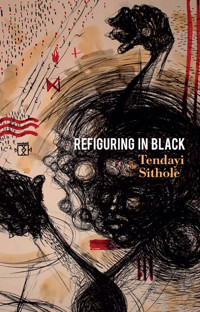
John Thompson, Lindsey Wimpenny, Susan Beer, and the rest of Polity Press team have made sure that this book is a success. Your support, as always, has been unwavering. I want to extend my thanks to anonymous peer reviewers who gave shape to my ideas. Thanks to Wits University Press for copyright permissions to republish, in an extended form, Chapter 1, “Aunt Hester’s Flesh,” which appeared earlier as “Meditations on the Dehumanisation of the Slave,” in Decolonising the Human: Reflections from Africa on Difference and Oppression, edited by Melissa Steyn and William Mpofu (2020). Mzwandile Buthelezi, you are the bomb, and thanks so much for gracing this book cover with your work.
I wish graciously to thank Siphamandla Zondi and the Institute for Pan-African Thought and Conversation at the University of Johannesburg for appointing me as a senior research fellow and for generously funding this book. My thanks also go to the Johannesburg Institute for Advanced Study under the directorship of Bongani Ngqulunga for hosting me as a 2022 writing fellow.
Lindiwe, ndino tenda maningi. Mwari aku busise!
Aperture
There must be many and different ways of redefining the current conjuncture by way of refiguring.
With the emphasis on specificity, refiguring in black can be defined as doing things differently and deliberately so from the black point of view. Precisely at this specificity, there lies the critical mode of thinking about black figures and studying them differently. In this meditation, Frederick Douglass, Toni Morrison, Hortense Spillers, and Charles Mingus are figures who are not only located in black thought but they are thematized outside the conventions of their critical reception and commendation, which means they cannot be studied otherwise. By being refigured from the black point of view, this is the insistence that they must be located outside the limitations that are imposed on them as stagnant figures. In short, Refiguring in Black has a different tenor and disposition of these figures, hence their refiguring from the black point of view. What is presented here is a meditation by way of refiguring. It is a critical practice, a discourse, whose critical disposition, operation, is (on) the edge. By refiguring, it means that this suite gives new meaning to the thought of Douglass, Morrison, Spillers, and Mingus as in a form of reformulation – rupture. In other words, they are refigured in ways that part company with familiar interpretive practices, discourses, styles, sensibilities, and tropes. Things become radically different.
This, in essence, means seeing things differently, seeing them for what they are, seeing them like never before – say, anew. It is not only seeing just for its own sake. It is the seeing that has been refused, where blackness has been blinded so as not to see things for what they are. It is to see differently and, according to Ngũgĩ wa Thiong’o (1987), it is to see clearly. What does it mean to see clearly? To see clearly is not only to look. It is to have a point of view. It is to see dissimulation and to unmask its falsities, malice, and pretenses. To see clearly is to see differently. It is to see what is not seen. To see clearly is refiguring. It is, according to wa Thiong’o, the institution of a different reality, which comes into being by means of having seen things differently because they are seen from the perspective of the black. For wa Thiong’o, there should be a look at what deformed the black, and that means having to come into confrontation with what deforms and liberates the self from this deformation. It is to begin anew. To see clearly, ways of seeing differently, mean coming into contact with what has always been hidden from sight. Not that what is seen is kept off sight. For it is something that is there on sight to see but the black is blinded not to see. Thus, it is as if things are invisible, while they are not. They are there; it is just a way not only of seeing differently, but of seeing clearly after the black has removed the blindfold.
At the moment of this opening, a foundation is laid, and the claim is made that refiguring in black is a distinctive point of view, which, in itself, as radical, presents an opportunity to do things differently, to see them in distinctive ways, to feel them otherwise and, more precisely, to be free to inhabit the realm of the unknown. This is what the work of Douglass, Morrison, Spillers, and Mingus is all about. More so, refiguring their work, and that being done from the black point of view, illuminates the darkened spaces that have decentered these figures and the concerns they bring.
To see in darkness is not to see clearly without any light, or if what is seen is clearly visible. The way of seeing is the call to end blindness. The black must see clearly, and this means seeing what W. E. B. Du Bois (2015 [1903]) calls the “color-line,” which is the fundamental problem, and which even went beyond what was marked as the scene of the twentieth century. The clear mark of the world is what Boaventura de Sousa Santos (2007) calls the “abyssal line.” Linked to this also is seeing, at the level of alterity politics, which perpetuates coloniality through the paradigm of difference, and which V. Y. Mudimbe (2003) calls the “fault-line.” All these aforementioned lines are drawn not on sand, but are engraved on the crust of the earth. At the somatic level, they are drawn all over the racialized body of the black, even more visibly, in the psyche that is fabricated and abstracted by dehumanization. These aforementioned lines, after being seen for what they are, metamorphize, and embody what Nelson Maldonado-Torres (2007) refers to as “lines of damnation.” These are the lines that demarcate those who embody life and those who are denied this life.
In this refiguring, Douglass, Morrison, Spillers, and Mingus are engaged in themes that do not account for the totality of their work, but themes that will illuminate different ways of thinking about them. That is why this refiguring is contrapuntal in nature. If there is a grain, this radical instantiation thinks, reads, scripts, and discourses against this grain. The whole idea of this refiguring is, as a practice and disposition, to engage in the open field that black life is – rupture.
Thus far, the incessant and necessary effort of black thought is what has stood in its own name, and no form of interdiction has claimed absolute totality in obliterating it. The way in which refiguring in black is articulating itself has been a forced grammar, a matter of struggle, a matter of necessity. The point is that black thinkers have been doing the thinking, while they are refused the very idea of thinking. They are interdicted when it comes to matters of thought and, as a contrapuntal gesture, they radically refuse and radically insist on doing the thinking from their own black point of view. This, in short, is what refiguring in black means. For, as its imperative, it does the work of grasping and grappling with matters of thought in different registers and dispositions that are fundamentally black. Definitely, this is refiguring in its contextual definitional form, the disposition of this meditation. There is a different accent through which things are thought, and refiguring is such a form. It can also be said, in relation to the forms that dominate the current conjuncture, that refiguring is the disfiguring of forms (more especially if they orthodoxically insist on closure as opposed to rupture).
There is no refiguring in black outside black thought. Already at work is black thought as the constitutive element of black life. The questions, concerns, and matters of black life are confronted by way of refiguring in order to understand the critical conjuncture the black is in. Making sense of reality and the world as it were, refiguring in black signals the generativity through which existential concerns have erupted in different and profound ways. This meditation, at this current conjuncture, is one of the ways (among many other dispositions), by way of refiguring, that black thought is taken up. By doing this, through Douglass, Morrison, Spillers, and Mingus as figures of black thought, refiguring in black is heightened into one of the dispositions through which the black point of view is made bold and manifest in the arena in which it has been rendered mute, irrelevant, banal, and all things outside “standards.”
To say refiguring in black is to attest to what is not in the name of what is lying out there. Rather, it is a phenomenon that is lived, it is in the current conjuncture of the past and the present. It is the radical work of those who live in their current conjuncture, and who not only make a difference, but who act out of necessity as opposed to acting from luxurious choice. The conditions in which they find themselves have fundamentally to change not by chance, but by pure intentions of their making, their radical effort. They are more about pushing limits. In other words, Douglass, Morrison, Spillers, and Mingus do refiguring in black as what is vast and ever-expanding in its grammar, what is impure in its genealogies, trajectories, and horizons, which, in themselves, attest to the complexity of reality as such.
At the heart of this refiguring is Cedric Robinson (2000), whose concept of the black radical tradition is its very edge, and is the operation of how black thought unfolds. It is that critique of Western civilization, the elementary definition whose mode of operation is fundamental as it attests to the material and the concrete, whose abstractions and poetics are not a luxurious muse, but are having to grasp and grapple with different ways of meditating about black life through the criticality of Douglass, Morrison, Spillers, and Mingus. This, to Anthony Bogues (2010), has been the question and concern of what it means to live inside empire. These four figures are those whose thought and life is in the clutches of this empire. It is in this location, however, that insurgent forms of black life are acted and re-enacted to become a radically different reality. Douglass, Morrison, Spillers, and Mingus are within the black radical tradition. In emphasizing the deliverance of the black radical tradition, Fred Moten (2013: 237) points to its “radical resources,” which should be mobilized, ones that “lie before the tradition, where ‘before’ indicated both what precedes and what awaits, animating our times with fierce urgency.” This is where generativity lies, and it is what marks the critical thought of Douglass, Morrison, and Spillers. And, as Moten signals, this is a way of tapping into the resources that lie before the tradition. These resources are not what the work of these thinkers is all about, but are matters of black life that can be thought in relation to their own thought.
One important thesis of this meditation is not the interpretation of Douglass, Morrison, Spillers, and Mingus; rather, it is thinking along with each of them by paralleling them with thematic concerns that are appellative to their thought. This is necessary in this refiguration because it opens other domains of thinking that are necessary not only to excavate the relevance of these figures but to attend to what they thought and to show how that is the very extension of black life through what Robinson (2000) calls “ontological totality” in its heterogenous forms. Since black life is not a homogenous totality, what is aimed at here is understanding the ways through which the accounting of this life is what is lived to the limit of having its humanity questioned. It is at this limit that there are those generative forms that insist on living in ways that are not submitting to the imposed status of dehumanization. Douglass, Morrison, Spillers, and Mingus are thinking through the limit, and they are not reduced by it, nor are reduced by it. If thinking freedom is what they can be said to be doing, in the spirit of the black radical tradition, they are engaged in insurgent forms that are concerned with what is urgent.
Urgency and insurgency abound, the edge through which things are being pushed on, at, to, and through; the fact is that there is a lot at stake. This, then, equates to the amount of work to be done, for that work having been done in the past, and which is also to be done in the future – that is, doing the work, refiguring in black, which, in its essence, is not palatable to the captive logics of what is orthodox. Breaking free from the strictures and edicts of what deny humanity, Douglass, Morrison, Spillers, and Mingus think about the modes of being otherwise. To be on the edge, refiguring things, and from the black point of view is, according to Moten (2013: 239), “enforced when we emphysemically authorize ourselves to speak of the spirit of the age.” This is the refiguring in black done by Douglass, Morrison, Spillers, and Mingus, who are, as black thinkers, living, thinking, and working in the name of the spirit of the age, thus insisting on breathing from the scarcity of breath. Therefore, the spirit of the age they have been in has been forever critical; refiguring in black is their radical fold and, added to this, their formation. As a result of this, and having to point to the centrality of the edge, it is important to consider the ways in which the spirit of the age are a matter of their urgency and insurgency.
In figuring out the problematic, by way of refiguring, at its edge, it is justified for Douglass, Morrison, Spillers, and Mingus to be central to this disposition, that different outlook, altogether. That is why, for Nahum Chandler (2014), refiguring is the discourse – one that is formulated and enacted as heterogenous. The edge is where things are pushed to/toward. Things will, as a result, be a different form and formation. Walter Mignolo (2011: 321) writes: “Certainly, to move in such a direction is not easy.” The move of those whom Mignolo describes as doing “border thinking,” and pushing the margins to the edge, is necessary and more urgent. By pushing and blurring the margins, by being on the edge and being disentangled in trappings of colonization, Mignolo makes an indictment of civilization by calling it the “civilization of death.”
Douglass, Morrison, Spillers, and Mingus insist on living. They seek to repossess that of which they have been dispossessed. All they seek, from their black point of view, by that edge called the black radical tradition, is to necessitate the possible in the clutches of impossibility. That is why, for Robinson (2000), it is key to define the black radical tradition as the critique of Western civilization. This definition points to the insurgent force that animates the critique of decadence – that is, this Western civilization that has been extracting and disposing of black life. In this definition, the black radical tradition, its insurgent force, that relentless critique, constitutes that generative force that does not come from exhaustion, failure, and defeat. In fact, from what seems to be the end, generativity begins things differently, anew. There is no repetition of the same, but the doing of the otherwise. This is the generative force whose grammar of being summons being to come, being-in-becoming, becoming being. The self-making of the black is a result of insurrection from the condition of having their humanity denied. It is the self not creating the individual subject, but the totality of black life. It is the life that is at stake, under attack, under siege, captive life whose death is seen as just and justified. The refusal of the black to concede to these criminalizing and pathologizing justifications of death has called for the ways of creating the world in the ways that the black in the existential struggle deems fit. Eruption and disruption are the operative modes through which Douglass, Morrison, Spillers, and Mingus are taken.
This diagnosis, interrogation, and investigation, in the form of an iteration, adjusts to an interest that radically insists on ways of thinking outside the captive logics of this civilization. What Douglass, Morrison, Spillers, and Mingus do is thinking, what they think, and how thinking is done. Their thought demands the effort that is always ready to reformulate. It is clear that in this operation, they engage what Jean-Luc Nancy (1996) refers to as “effectuation,” where the creation of the concept emerges from critical thought and where things are given another modulation. This means, as Nancy (1996: 110) states, that “which does not imitate the other, which does not represent it or signify it, but which effectuates it in its own way.” The way things are put forth, the way they are argued, that is the place where blackness is – the edge. This is engaging thought, according to Chandler (2014: 85), in “a noncategorical way.” This is breaking from and breaking form. To reach and to be at this limit is having to deal with concrete contradictions that haunt dehumanization, and that also cascade into pathologizing the black as the exteriori of the human.
Douglass, Morrison, Spillers, and Mingus insist on the otherwise and, by way of a disposition that refigures, their intention is to reschedule critique. The rescheduling of critique comes through what Moten (2018a) pushes forth as “meaning of things,” which means the radical disruption of things themselves. It is in this distinctive form that refiguring is put into operation.
To reconfigure is to forge, to make something, otherwise. Also, it is to forge ahead. It is, by way of Nancy’s effectuation, which is to say, “explication,” the edge. It is to form, set-up, build, establish, invent, and so on. All this makes everything to be on the edge. But, on the other negative hand, to forge is to defraud, falsify, counterfeit, imitate, duplicate, and so on. But here, in this intervention, to forge means to refigure. Whatever the meaning of the forge is, the black engages in the first order of its meaning, the positive one, if you like. That is to say, it is the one that creates possibility.
The black is going where life is. It is this wandering, according to Sarah Cervenak (2015), which forges a set of conditions that necessitate life and the call for it to be lived, freely, even. This is the life that the black must invent. It is not the one that will be given, but what the black will take for having been dispossessed of it. Thus, this is the life that is refigured in black. In short, black life.
What is at stake in so far as the grammar of the black is concerned? The stakes are high. It is the naturalization of racial difference, and this difference means creating the human and the non-human. It is the production of the non-human that creates the conditions of death in a way that is legitimate.
There is that talk of those who are within, the inside thing, interiori. It is the talk that happens in private. It is, as Moten (2013) states, a “critique of privacy.” It is here that the enclosure should not be the norm. It is a private affair that is challenged; there is something going on that should not be in the private domain. Those who are communicating with each other, in their bond, their filial relation, do so to bring meaning into the world that has denied them any sense of meaning. They are giving themselves something that has been taken away from them. It is their duty to do so, and no one will act on their behalf. Everything is upon their shoulders; it is the burden they carry, their own.
Douglass, Morrison, Spillers, and Mingus engage in the re-cartographization of the world. It is their inscriptions onto maps (re-mapping), that perpetual rewriting on the surface of the map, that makes the map into the visual representation of the place the black inhabits. The world that is under the command of the black inscription is, as a matter of fact, the one that is being made under the tireless effort of having to realize fundamental change. This, for Chandler (2014: 167) is “marking the limit of the world,” and it is at this critical edge that refiguring engenders ways in which Douglass, Morrison, and Spillers are thought. The world is made to be in another form. It is the world that is refigured in black, by blacks, not only as interlocutors but as co-creators. The change this inaugurates, as the result of the radical demand for the world to be different, does not have to be a form of coming to the uniform consensus, but of putting to work, the working out of differences, of not only figuring out, but of refiguring. The world must be different, the refusal of the status quo of antiblackness, is what this black radical tradition is all about. This tradition brings the refusal to concede to the order of things, by doing things differently, to seek the disorder of things, to find a new dimension of how things should be, and not reordered – to return to tabula rasa. In short, there must be a new beginning. The foundation must be dug again, and maps must be redrawn without borders. The cartographic inscriptions should be the ones of life, and not the imperial domination of Man to the world.
The beginning of being human, the status that has been taken away from the black from birth right until death, is reclaimed and the humanity that is assumed is not the one of the world that has to do with the logic of hierarchization where, according to Anthony Farley (2005), the asymmetrical relations are that of white-over-black. The descriptor, the very analytic, the focal point of critique, is that of diagnosing what dehumanization does, and what are its mechanics. What Douglass, Morrison, Spillers, and Mingus do is the undoing of dehumanization. It is the undoing of what has been the activator of their denial of being. In essence, it is the undoing that will take the initiative of doing, the critique that animates this refiguring as the refusal to be complicit in dehumanization. This is the refusal to go against themselves and their kind.
This way of seeing, and that being a different way, of course, opens this meditation with the conception of the aforementioned aperture. In this formulation, also, there are three meditative installations. The first is “Aunt Hester’s Flesh,” which is the witness account that Frederick Douglass gives about the horror of slavery. It is the focus of Aunt Hester’s horror that her beating can be seen in a way that Douglass gives this witness account of – the captive body that then is abstracted and brutalized as being mere flesh. The second is “The Specter of the Africanistic Presence,” which accounts for the ways that Toni Morrison meditates when rewriting the episteme by way of authorizing the figure of the black. This is the radical intervention that refigures how the racialized self, which has been written off or erased from knowledge, gives the authorial inscription that allows the possibility of another to come into being (thus refusing to confine Morrison to being a novelist but, instead, an epistemologist). The third and last is “Sophisticated Lady – On Phonographic Authorship,” which re-articulates Spillers’s writerly practice as attuned to Duke Ellington’s composition, and which Charles Mingus re-elaborated. Also, the richness of this intervention makes the critical conjunctures of Spillers and Mingus into an intimate encounter, even if this was not the case – to say what is conjectural in form and spirit.
More specifically, this meditation, as a threefold composition, is a suite. Each chapter is a stand-alone, but in that, it is the re-anchoring of the very idea of refiguring, thus from a black point of view contra dehumanization. These chapters are marked by tempo (“Aunt Hester’s Flesh”), acceleration (“The Specter of the Africanistic Presence”), and resolve (“‘Sophisticated Lady’ – On Phonographic Authorship”). This suite, by means of its threefold composition, distills the spirit that underpins the black radical tradition through the critical operation coined as refiguring in black.
The invitation of this opening, which serves as the narrative arc, calls us to bear witness to what has been, what is, and what will continue to be enclosed and enforced as closure. The compositional experiment, as opposed to structure (the latter which is susceptible to closure), is what is at stake, in so far as what is being witnessed is the very thing with which the world will not concern itself to come into contact with, and being with as a mode of not only belonging but dwelling. This is the plight and plague of the black. It is the one that the black should deal with in its own way, a way that is different from the imposed rules and dictations that relegate black thought to nothingness.
1Aunt Hester’s Flesh
There is, at first, that harrowing scene, which is regarded as the primal scene. It is what Frederick Douglass is bearing witness to and what he narrates by giving account of the beating of his aunt. The excess of power, the one that was exercised upon Aunt Hester by Captain Anthony, is the unleashing of death, the very inscriptive force of slavery. This force is a form of inscription, an acute designation, to call it as it is – that is, the marking done on Aunt Hester’s flesh through the whip as a writing instrument on her bare back. The horror that Douglass came to witness was his inauguration into the institution of slavery. The inscription of dehumanization is what the whip will signify, the flesh as the site where violence is experimented with and exercised.
The Aunt Hester scene is the one that haunts, and it will continue to be the black condition, the very logic of dehumanization, and about which Douglass does not have language to narrate. It is what defies comprehension, and it is this scene that can be seen as the invention of reality. This is the reality that continues, the one where the black is living in its remnants. This is the scene of unforgetting as it will be a constant reminder throughout the breathing days of black life.
This is not the retelling of Aunt Hester’s scene, but an examination of its markings of terror as exercised upon the flesh. The sentient suspension by Captain Anthony is the fatal coupling of scream and blood. The lashes that marked Aunt Hester’s flesh, the merciless strokes, which are bloody, gory, and deadly, are the marking of what dehumanization is. The violence that befalls Aunt Hester’s flesh is engaged in a form of a radical critique. By giving a witness account of hell, what Douglass rightfully deemed slavery to be, is the true account not only of himself, but of those who are dehumanized.
The concept of dehumanization will be examined. This will account for the ways in which Aunt Hester’s beating is not only Douglass’s witness account, but also his critique of dehumanization. This critique is, in fact, a form of diagnosis and its analytics of the flesh are not concerned about the horrors of the past, but the everyday life of the violation of the black. Douglass’s intervention is radical in that he could not keep silent. Therefore, as compelled by his principled stance, he chose to narrate. And, by doing so, he also chose to enact another form of possibility through the flesh of Aunt Hester.
The Human Scandal
If the human is a given, then the human exists in the world. In a sense, the human is inseparable from humanity. For there to be humanity there must be life. There is no humanity without life. However, then, the mutual standing of the human and humanity has allowed separation, which then suggests that there can be the human without humanity. The conception of the human has to do with certainty and mastery of the ways of life. The subject that is constitutive, the full subject as opposed to the figure of lacks and deficits is the one that is embodied and is in control of the aspects of existence. The subject is, therefore, the transcendental and free agent, of its own making. The subject is not the slave.
First, it is important to ask: What is the subject in relation to the human question? Why the human now? What does it mean to think of the human? Is it that the human and the subject are the same? Or, put simply, what is the human




