



18,99 €
Mehr erfahren.
- Herausgeber: John Wiley & Sons
- Kategorie: Geisteswissenschaft
- Serie: Critical South
- Sprache: Englisch
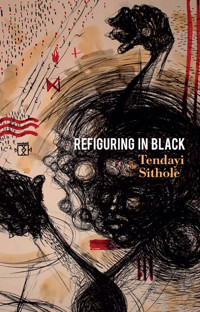
How can thinkers grapple with the question of the human when they have been dehumanized? How can black thinkers confront and make sense of a world structured by antiblackness, a world that militates against the very existence of blacks?
These are the questions that guide Tendayi Sithole’s brilliant analyses of the work of Sylvia Wynter, Aimé Césaire, Steve Biko, Assata Shakur, George Jackson, Mabogo P. More, and a critique of Giorgio Agamben. Through his careful interrogation of their writings Sithole shows how the black register represents a uniquely critical perspective from which to confront worlds that are systematically structured to dehumanize. The black register is the ways of thinking, knowing and doing that emerge from existential struggles against antiblackness and that dwell in the lived experience of being black in an antiblack world. The black register is the force of critique that comes from thinkers who are dehumanized, and who in turn question, define, and analyze the reality that they are in, in order to reframe it and unmask the forces that inform subjection.
This book redefines the arc of critical black thought over the last seventy-five years and it will be an indispensable text for anyone concerned with the deep and enduring ways in which race structures our world and our thought.
Das E-Book können Sie in Legimi-Apps oder einer beliebigen App lesen, die das folgende Format unterstützen:
Seitenzahl: 625
Veröffentlichungsjahr: 2020
Ähnliche



















Contents
Series title
Title page
Copyright page
Dedication
Acknowledgments
Foreword by Fred Moten
Introduction: The Black Register
The Category of the Black Register
The Category of the Unthought
The Itinerary
1. Sylvia Wynter: Contra Imperial Man
The Imperial Man
Niggerization
The Rebel
Decolonial
Scientia
Practices of Freedom and the Politics of Being –
After Man
2. Aimé Césaire and the Scandal of the Human
Europe and its Other
Humanism as the False
The Return
3. Steve Biko as the Figure of the Outlawed
On Blackness: The Problem of the Problem
On the Mystique of the Martyr
The Outlawed in the Racist State
The Tyranny of the Paradigm of Policing
White Liberals in Black Affairs
The Politics of Black Solidarity
Authority to Judge
4. The Prison Slave Narrative: Assata Shakur and George Jackson’s Captive Flesh
The Prison Slave Narrative
The Tyranny of Justice
The Loving Subjectivity
5. For Mabogo P. More: A Meditation
The Existential Struggle as Philosophy
The Infrastructure of Antiblack Racism
The Bad Faith of White Liberals
For Black Solidarity
Mandela’s House Mystique
Sartre, Fanon, Manganyi, and Biko Against the Manichean Axis
By Way of Fanon’s Prayer
6. Marikana: The Conceptual Anxiety of Bare Life
Bare Life
Qua
Subject Erasure
A Deathscape and the Zone of Non-Being
On Structural Violence
The Politics of Life: The Negation of Ontology
Human Rights for Humans Only
Ontological Density
Conclusion: On the Reconfiguration of the Subject
Shifting the Geography of Reason
The World, Its End
References
Index
End User License Agreement
Guide
Cover
Contents
1. Sylvia Wynter: Contra Imperial Man
Pages
ii
iii
iv
vi
vii
viii
ix
x
xi
xii
xiii
1
2
3
4
5
6
7
8
9
10
11
12
13
14
15
16
17
18
19
20
21
22
23
24
25
26
27
28
29
30
31
32
33
34
35
36
37
38
39
40
41
42
43
44
45
46
47
48
49
50
51
52
53
54
55
56
57
58
59
60
61
62
63
64
65
66
67
68
69
70
71
72
73
74
75
76
77
78
79
80
81
82
83
84
85
86
87
88
89
90
91
92
93
94
95
96
97
98
99
100
101
102
103
104
105
106
107
108
109
110
111
112
113
114
115
116
117
118
119
120
121
122
123
124
125
126
127
128
129
130
131
132
133
134
135
136
137
138
139
140
141
142
143
144
145
146
147
148
149
150
151
152
153
154
155
156
157
158
159
160
161
162
163
164
165
166
167
168
169
170
171
172
173
174
175
176
177
178
179
180
181
182
183
184
185
186
187
188
189
190
191
192
193
194
195
196
197
198
199
200
201
202
203
204
205
206
207
208
209
210
211
212
213
214
215
216
217
218
219
220
221
222
223
224
225
226
227
228
229
230
231
232
233
234
235
236
237
238
239
240
241
242
243
244
245
246
247
248
249
250
251
252
253
254
255
256
257
258
259
260
261
262
263
264
265
266
267
268
269
270
271
272
273
274
275
276
277
278
279
280
281
282
283
284
285
286
287
288
Series title
Critical South
The publication of this series was made possible with the support of the International Consortium of Critical Theory Programs and the Andrew W. Mellon Foundation.
Series editors: Natalia Brizuela and Leticia Sabsay
Leonor Arfuch, Memory and Autobiography Aimé Césaire, Resolutely Black Bolívar Echeverría, Modernity and “Whiteness” Celso Furtado, The Myth of Economic Development Eduardo Grüner, The Haitian Revolution María Pia López, Not One Less Pablo Oyarzun, Doing Justice Néstor Perlongher, Plebeian Prose Nelly Richard, Eruptions of Memory Silvia Rivera Cusicanqui, Ch’ixinakax Utxiwa Tendayi Sithole, The Black Register
The Black Register
Tendayi Sithole
polity
Copyright page
Copyright © Tendayi Sithole 2020
The right of Tendayi Sithole to be identified as Author of this Work has been asserted in accordance with the UK Copyright, Designs, and Patents Act 1988.
First published in 2020 by Polity Press
Polity Press
65 Bridge Street
Cambridge CB2 1UR, UK
Polity Press
101 Station Landing
Suite 300
Medford, MA 02155, USA
All rights reserved. Except for the quotation of short passages for the purpose of criticism and review, no part of this publication may be reproduced, stored in a retrieval system or transmitted, in any form or by any means, electronic, mechanical, photocopying, recording, or otherwise, without the prior permission of the publisher.
ISBN-13: 978-1-5095-4206-2 (hardback)
ISBN-13: 978-1-5095-4207-9 (paperback)
A catalogue record for this book is available from the British Library.
Library of Congress Cataloging-in-Publication Data
Names: Sithole, Tendayi, author.
Title: The black register : essays on blackness and the politics of being / Tendayi Sithole.
Description: Cambridge, UK ; Medford, MA : Polity, 2020. | Series: Critical south | Includes bibliographical references and index. | Summary: "Drawing upon Africana existential phenomenology, black radical thought, and decoloniality, Sithole offers a new way of thinking about the contemporary relevance of seminal thinkers such as Wynter, Cesaire, Shakur, and Biko"-- Provided by publisher.
Identifiers: LCCN 2019033286 (print) | LCCN 2019033287 (ebook) | ISBN 9781509542062 | ISBN 9781509542079 (pb) | ISBN 9781509542086 (epub)
Subjects: LCSH: Blacks--Study and teaching. | Blacks--Race identity. | Anti-imperialist movements. | Radicalism.
Classification: LCC CB235 .S57 2020 (print) | LCC CB235 (ebook) | DDC 305.896/073--dc23
LC record available at https://lccn.loc.gov/2019033286
LC ebook record available at https://lccn.loc.gov/2019033287
Typeset in 10 on 12pt Sabon
by Fakenham Prepress Solutions, Fakenham, Norfolk NR21 8NL
Printed and bound in Great Britain by TJ International Limited
The publisher has used its best endeavors to ensure that the URLs for external websites referred to in this book are correct and active at the time of going to press. However, the publisher has no responsibility for the websites and can make no guarantee that a site will remain live or that the content is or will remain appropriate.
Every effort has been made to trace all copyright holders, but if any have been overlooked the publisher will be pleased to include any necessary credits in any subsequent reprint or edition.
For further information on Polity, visit our website: politybooks.com
Dedication
For my three mothers: Lebohang, Dikeledi, and Maduma
Acknowledgments
This book has been a long journey. At least I was not alone in this long walk. I was part of the chorus of the long song and many interlocutors to it, near and far, have kept it alive. I am thankful to them.
I would like to thank Victoria Collins-Buthelezi for her encouragement and friendship, which led to her soliciting this manuscript. Natalia Brizuela is also worth mentioning for her warm messages of encouragement and being an interlocutor. In addition, I wish to extend my appreciation to the editorial collective of Critical South in Polity Press, of which these two aforementioned comrade scholars are part. These include Judith Butler, Souleymane Bachir Diagne, Rosaura Martínez, Vladimir Safatle, Gisela Cantazaro, Françoise Verges, and Felwine Sarr. The invaluable support of John Thompson, the director of Polity Press, is humbling. Thanks to Evie Deavall, and my amazing editor at Polity Press, Susan Beer, who took me through this project with grace and loads of laughter.
The Africa Decolonial Research Network is always a home, and it is where this book was conceptualized right through to its completion. Thanks to my mentor, Sabelo “Mdala” Ndlovu-Gatsheni, for spearheading this collective. The Department of Political Sciences, University of South Africa, has been my home and it is where I found time to work on this book.
Jane and Lewis R. Gordon saw the work at its sketchy phase and inspired me to push on. I thank them for the journey we have travelled with it. They opened their home for my visits and their love is greatly appreciated as always. I also want to thank for intellectual support, as well as for warm friendship: Robin D.G. Kelly, Hortense J. Spillers, Ronald A.T. Judy, John and Jean Comaroff, James Manigault-Bryant, Linda Alcoff, Andrea Pitts, Charles Mills, Calvin Warren, Frank B. Wilderson III, Aaron Kamugisha, Paget Henry, Sarah Cervenak, J. Kameron Carter, Nathaniel Mackey, Dan Woods, Reiland Rabaka, Molefi K. Asante, Neil Roberts, and V.Y. Mudimbe. Tons of thanks go to Nelson Maldonado-Torres, Ramon Grosfoguel, Roberto D. Hernández, and Pablo Gonzalez, who are the uncompromising decolonial scholars who pushed me to sharpen my lenses. Laura Harris and Fred Moten gave me an awesome world of generosity, and I am deeply indebted as always.
The manuscript was gracefully engaged by Kenneth Taffira (may his soul rest in power), Cyprian Mpungose, Marzia Milazzo, Siphamandla Zondi, Luthando Ngema, Muntu Vilakazi, Lebohang Motsomotso, Boshadi Semenya, Zingisa Nkosinkulu, Marule Lentsoane, Maurice Vambe, Lunga Mkila, Mpho Maake, Kgomotso Masemola, Sam Raditlhalo, and Mante Mphahlele.
Thanks to Thabang Monoa, Sindisiwe and Salim Washington, Jessica Russel, Hlulani Mdingi, Tumi Mogorosi, Gabi Motuba, Katlego Pilane, Nombulelo Siwane, Aneesa Khan, Sipho Mantula, Edith Phaswana, Paul “Rude Boy Paul” Mnisi, Mosa Motha, Sibusiso Maseko, Julia Simango, Mwelela Cele, Lesley Hadfield, and Ontlotlile Seemela.
To my late uncle, Mohlalifi Jacob Lebele, who never lived to see this book, I would say robala ka kgotso Letsitsi. Many thanks to my brothers, Tshepo Lebele and Tshepiso Molepo, for your generosity. To my fallen comrade, Kasay Sentime, thanks for the critical reading of Chapters 1, 2, and 3, when this book was in its infant stages.
Tendayi Jr., Chanise, Sibusiso, Dyani wa Matekwe – you are the reason I breathe. I am glad we share the jazz spirit, and we sing Don Cherry chants together in corrupted notes of the avant-garde. My love for jazz is my love for you!
All my work is made possible by the prayers of Papa and Ma Sithole. All my love to you.
To those whose names I have forgotten to include here, mea culpa, and please know that I am always humbled by your support at different stages of this book. All the errors in the book are mine, mine alone.
Foreword
What precedes the black register?
Will it have been proper to associate what it is to record, or to bear again, with what it is to rule, or guide? To consider a problematic of visual alignment in (non)alignment with a problematic of aural atunement? The row, and its hard way, is part of an audiovisual seriality, a series of sensual problems and problems of sense, a spectrum of concerns for meaning, itself, that take a wavering, spectral, moaning line that won’t and can’t stop twisting, folding, creasing, and turning in return, finally, to feel. How is a movement of nonalignment braided with the movement of the nonaligned? The book that is now in your hands gives this as a South African question concerning Pan-African desire. Tendayi Sithole’s The Black Register can’t and won’t quite keep it straight, in the canted Wohnung of black indigeneity, of what it is to have been displaced in place, to have been relegated to a homeland that is not home at home, to be exiled to a reservation, to live in and as what Heidegger calls “standing-reserve,” which is genocidally to be taken as and for a resource, while also having been taken away from the general and generative beauty of being-resource in an unsettled field of sharing. The black register re-instantiates that sharing, while also recording that it has been taken. It is expropriative. It releases, rather than retakes, what has been taken. It moves in what it is to seek and practice anti-coloniality’s embrace of displacement by way of the refusal of the colonial imposition of displacement, recognizing that the brutality that attends this duality in and of displacement isn’t so much a European thing as it is that commitment to murderous thingification out of which the very idea of Europe emerges.
The Black Register shows us how the black register works. What is the relationship between displacement and registration in Sithole’s grammar? Black study is a field of open questioning and Sithole is an accelerant of that fire, a proliferant of its recesses and gatherings, and itinerant but unscheduled stoppages, and unending terminations and broken persistences, which do not so much purify as blur, in burning. The field is strewn with what Denise Ferreira da Silva calls no-bodies, so that the non-opposition of decay and bloom becomes our particular burden, a condition whose curative immediacy we must devise a way to show and move. We are constrained to practice this showing, to show this showing in our practice of it. It is an empirical mysticism that abjures what the beautiful ensemble we refer to is – that which Stuart Hall calls the empiricist attitude. The black register overflows and undercuts itself, is always more and less than itself, and this non-fullness and non-simplicity is shown, registered, recorded, discorded, disordered, and practiced in The Black Register.
On this broken edge, what’s the relationship between analysis and the all-at-once? Between world and subdivision? Maybe these are François Laruelle’s questions, which shade some of Bertrand Russell’s toward being turned inside out by Ed Roberson’s. What if mysticism, which is metaphysic’s flesh and fugitive core, is Tendayi’s tendency to see the earth before the end of the world? For lack of more precise terms, which the quest for greater precision always exposes as a kind of devotion, let’s call this being-empirical without an attitude: no settled position, no emotional or epistemological truculence, just this deep, shared, entropic sensing. Such seeing, such registration, such re-gestation, must be under duress. There is no redress of or for this ruthless restlessness. There’s nothing but the imperative to address it with(in its) absolute and unmediated obliquity, tilted, off, side-eyed, glancing. Notice is bent, appositional. Blackness can’t be registered but it does register because it is registration. A way of measure that drives the will to account straight, cold, geocidally crazy. What kind of account, and of what, does the unaccountable give? Or does it give the account away? Or is the account, in the unaccountable, foregiven?
Blackness does not give an account of itself in the black register or in The Black Register. But this is not due to a puritanical imperative against ethical experiment in the gap between description and portrayal. Somehow, predication is our funhouse. In the funnyhouse of the Negro we come up with nicknames for our prior and seductive resistance to their naming and we fall apart in the horror of how they try to tear us apart, to temper what remains off scale, which is their reaction to how our nickname ain’t the same as their name even though they seem to sound the same. In other words, given that we can measure or record or account for neither what we are nor what they’ve done to us, what is the black register? An illicit, woven accounting of that which only has one name, the name of the one who kills the innumerable, the unnameable? Or, if what the black register is white, does its limit disappear in the disappearance of its object? Will the black register white’s disappearance, in the lonely instant of the last analysis, as its own fade? Register’s rich field of definition is like a field of proliferate recess. A test. But what are we testing for? There’s the black register, the mechanical reproduction of subjectivity’s residuum, and then there’s the fact that blackness won’t be registered. This is the line Sithole walks with the broken faithfulness of a man in black, the line between skin and livery indeterminate, Johnny Cash singing the body in question’s questions, black skein, white masque, as Bongani Madondo might say.
What’s the relationship between the black register and the real? What’s the relation between the social and the psychic?
The “re” in register, the “re” in record, is of things, of res, of the real. What if the problem with Lucretius is that there is no nature of things? What if there’s just the way of things, or maybe even a way to things, an approach, that is, in the end, in having no end, in its obliteration of ends, also a way from things, a veering away from things that is given, as it were initially, as a veering away in things, in black things, which makes them not quite understandable, or accountable, or to be registered? What if what precedes the black register is unprecedented? An approach not so much to things, even, but to the real, the realistic spot, the neighborhood, the holographic, holosensual field? But “re” is not only of things and their dispersion, emanation/coalescence, and sharing: it also bears the repeat, as if the peat of repeat is folded or pleated into things as their reverberation, the verberation or murmuration being already in the “re,” already of the real, this buzz or hum or doubling or blurring of edge, the edgy edgelessness of things, their blue-black smokiness, like a garment – a shawl or a warm woolen sweater, some kind of laborious weaving wrapped with a tightness that works the difference between chemise and skin – not so much worn but traversed and absorbed or imbibed, as if it were Laphroaig. The record of the thing, the repetition of the thing, is already in the thing which therefore constitutes the thing’s nothingness, its nonbeing in being more and less than itself. The black register is where the dual delusion of the in/dividual – where some infernal alignment will have occurred that posits separation without difference rather than difference without separation – is seen for what it is by we who refuse to see it and to be seen within it. It has a grammatical effect. What if the sound pattern of English took rhythm into account? What if rhythm messes with syntax in a way that makes sentences not seem quite right? Is there a critical writing that scans, sees, but as if from within what it sees, in a way that defies normative scansion and the grammar it attends and implies, a grammar/scansion that itself implies the hegemony of the whole number? Sithole says a little prayer for us in a black musical way, in a real, in an anarithmetical way, an Arethametical way, a real, the real, arererererererethmetical way, an a-rhythmetical way, a nonmetrical way, an acousmetrical way, a matrical way. His sentences buzz like the bush of ghosts with words that are more and less than themselves. The work is disintegratively anintegered. It’s Tutuolan in its atonal antotality, just as the black register welcomes this constant gathering as that which won’t quite come together in having gone past. The Black Register is a bush of hosts.
What if one of the questions that the specificity of South Africa requires you to ask is how the devolution from individual to dividual, from disciplinary society to society of control, was already given there in the intensity and particularity of a settler coloniality that never had the brutal luxury of a myth of autochthony from which a “demographic” problem could emerge? What if, here, the demographic problem could never have been seen as anything other than that which awaits the settler as he incorporates and excludes “his” surroundings? There, in that place, in that social situation, but also by way of the physics and sociology the unsettled allow and demand and require, the Kantian/Newtonian metaphysical and political laws of in/dividuality, or discipline/control or even discipline → control break down. The black register sees and bears and instantiates that breakdown, is what I want to say that Sithole is saying. But how do you say that, in writing? What graphics don’t so much correspond to but bear that insight, as a matter of sound and sounding? What entropy, what disorder, what revolt is borne in every string of words? Again, this is a question concerning Sithole’s music. It is a question to be played on, and by, an African Pan.
Diaspora detached from practice in the enactment of identity is the neoliberalization of Pan-Africanism, which was a neighborhood thing or, more precisely, nothing but what we do in the realistic spot, in its diffuse and irreducible nonlocality, out from abstractions of the nation-state in the nation-state’s hold, underneath or on the outskirts of the polis, in the place of dis/place/meant that Clyde Woods and Katherine McKittrick and Abdoumaliq Simone talk about with Sylvia Wynter and Amiri Baraka – the district, the territory, the mill quarters, the demonic ground, the way of things where in/dividuation breaks down. The Black Register feels that and forms its own reverberations and Steven Biko is at the heart of this, for Sithole, as Fanon’s situated extension. Our Pan-African desire is in and for a rent party, or a house party, for self-defense in self-refusal. Not the real thing but the realistic spot because there is neither a national structure nor a personal agent for our more and less than political desire. The black register is theory’s experimental band practice, its anaTrinidadian panorama, and when we sit in with Sithole and the ensemble he forms, and which forms him, in prison’s fetid, open air with Assata Shakur and George Jackson, in massacre’s continuance, we have to want to be ready because when they play, they plays all that and then some. Reading Biko with Mabogo P. More in the wake of Wynter reading Fanon, and Wynter through the echo of Fanon and Aimé Cesaire in Biko, Sithole feels and means all that, hearing, listening, looping, phonoseismographically feeding back, in measure, the immeasurable.
Fred Moten
Introduction: The Black Register
The animation of thought by those who have their humanity questioned presents an ontological scandal. It is here that the human question becomes central, and yet it is still raised as an ire by blacks who are dwelling in blackness. The stance adopted here is the one that undertakes serious reflections on foundational and constitutive problems that are marked by dehumanization.
In essence, thinking from blackness has always meant a set of critical attitudes whose stance means to occupy the position of those who are structured in opposition to dehumanization. This means that to be is to be at the receiving end of antiblackness – to be structured in relation to the world that militates against the existence of blacks – to have one’s humanity called into question. It is, therefore, imperative to note that to be in such a position is to be rendered non-existent and not even have thought itself. Simply, it means that blackness must disappear in the face of existence. But this is bound to fail, as blacks continue to raise existential questions that scandalize the antiblack world.
The two important sites where blackness is located in terms of embodiment, and where the articulation of the modes of being becomes more clearly pronounced, are life and text. Life and text bring to the fore the embodiment of blackness, the cartography that maps out the ways in which blackness is coming into being, but that being is still put into question. The life and text of blackness are the important sites through which the ontologico-existential struggle enunciates itself and where fundamental questions emanate. The life and text are what blackness is in terms of assertion and not authorization, as blackness is militated against in the antiblack world. The place of blackness, being the subjectivity that is formulated in struggle – to live and to write in struggle – is the necessity to deploy discursive oppositions against the dehumanization that is called the black register.
The Category of the Black Register
The black register, hitherto described and not operationalized by any mode of definition, is here what might be referred to as the ways of thinking, knowing, and doing that are enunciated from existential struggle against antiblackness, and which dwell from the lived experience of being-black-in-an-antiblack-world which must be ended. It is here that blackness dictates its own terms of the existential struggle and sees the world from the perspective that refuses the universal disembodiment but dwells in the embodiment of blackness and as the site that generates existential questions. Indeed, these questions, which continue to haunt, and animate blackness are not new. They are – lock, stock, and barrel – what Wilderson (2010) terms “ensemble of questions,” which are burdened by the long and dark history of black existential misery. The black register is, therefore, nothing novel and nothing magical. In short, it is not the conjuring of tricks. The hand of blackness has no magic wand, but the pen whose ink is the liquid (sweat, blood, and tears) that drips from the injured and suffering body. Clearly, the meaning and gesture of the black register is a witness account and expression of critique from the onto-epistemico site that has been rendered object and thus dehumanized. As the onto-epistemico intention, articulation, and actualization, the black register by operation is, in point of fact, a particular task of redefining the black condition otherwise. This otherwise is the radical insistence of breaking free from dogmatic claims but of continuing the longer tradition of black radical thought. The black register is not an attitude and expression whose sensibility is conforming to the orthodox line. The ways of thinking, knowing, and doing are always otherwise, and in their radically different orientation, they continue to forge ahead possibilities inside the belly of impossibilities; the latter which has been solidified by the longer history of disappointment with black liberation not being actualized. The fundamental question of black existence endures, and this is what authorizes the black register, the very thing that defines and concretizes it. For, if there was no antiblackness, there would be no black register.
By definition, nothing has been that of a brief duration when it comes to the black lived experience and what is worthwhile to record is that there is this thing called the black register, the mark of what is a longue durée. It illuminates the embodiment of the black lived experience and it is by no means declarative in the sense of prescribing a manifesto, but rather, it is the problematization of the problematic lived experience of the black. Gordon (2000a) makes it clear that blacks are not a problem, as they have been marked to be by an antiblack world, but rather, and as a matter of a condition they are in, and by facticity, blacks are people with problems. The existence of the black is problematic, and this is brought into being by the infrastructure of racism which is underwritten by the logic of antiblackness. That said, by modes of authorial inscriptions that blackness accorded and afforded itself, it can be said that the black register is thinking, knowing, and doing blackness as, according to Chandler (2014), a problem for thought. Added to this kind of an operation, it also means that blackness “experimentalizes being” (Carter and Cervenak 2016). That is why, by radical insistence, the black register can be called a “critical operation” and its modes of inscription authorize the grammar of blackness. This critical operation is, in actual fact, a mode of being in the world where the reality is the lived experience of being-black-in-an-antiblack-world.
What it is to be black, or what that means, is something apparent in the black register because it is the authorial inscription, and also, authorial intentionality that authorizes the modes of writing on the edge. This is a matter of life and death. The operative intention, its mode and constitution, is the reconfiguration and promulgation of conjunctions that pushes to the edge, and having to be black, and thinking, knowing, and doing from the abyss in order to erupt onto the surface of the world. This is no complicated negotiation but rather the assertion of possibility and (re)making things otherwise. The black register is there to disrupt, transform, and put to test what has been absolute and making declarations of what should be possible. The black register is an undertaking whose thematization embodies the interventions made here.
The black register is a (dis)position, an enunciation of radical statements and a place where blackness dwells. It is where thought is expressed – a stand that inscribes meaning, searching for this meaning, and making sense of this meaning – that is, the meaning of being black in the meaninglessness of an antiblack world which must be combated and re-configured otherwise. The semblance of justice is a façade and blackness is at the receiving end of injustice and the necessity, therefore, is to write meaning differently. This is where the black register as the ontological and epistemological imperative means thinking, knowing, and doing the work that is authorized by the standpoint against any form of injustice, subjection, and antiblackness writ large – say, dehumanization. As a form of assertion, the black register is oppositional. It is the refusal to be interpellated, appropriated, diluted, and tamed by the liberal consensus that structurally reads the question of subjection and antiblackness off the base. The liberal triptych of liberty, equality, and justice is, in an antiblack world, a register that renders blackness absent and mute. Therefore, the black register is blackness uttering for itself, and without being mediated. The black register is an “unknown tongue” as Carter and Cervenak (2016) state; thus, it matures into the irruption of what might be called the “communion of the whole” and it is here that unveiling serves as a revelation. It is the black register that Abdur-Rahman (2017, 684) brings to the fore; the “black grotesquerie” which reflects the “expressive practices” of formal disintegration and recombinant gathering – the assembly and anesthetization of remains – that opens pathways for as-yet-unrealized and as-yet-unimagined black futures. It is the black sayability in the face of unsayability. As such, the black register is the inscription of the denied, erased, distorted, muted, and censured grammar of blackness; the coerced expression that insists on saying things no matter what – the reorganization of the ordinariness of order – the unmasking and scandalizing of the status quo. To extend this idea, the black register is not only an opposition or critique, but the engendering of continuity, the elaboration of what has been done in black radical thought (the longue durée reformulation which can be said to be the bane of antiblackness). For the fact that blackness is denied, it nevertheless authorizes itself by refusing to be denied and it does this in its own way, without ingratiating itself, in order to be accepted. The black register is, in the face of this refusal, the critical combat against the official grammar and its sensibilities (order itself – say, antiblackness and its racist modes of authorization that denies any form of black subjectivity). Those who refuse are black and it is through the black register that they do not conceal; the refusal to be dispossessed and for them to possess life. The refusal that blacks face, and what it is on the brink of, is what Moten (2017) engages as a “radical refusal” – resisting forcefully and authorizing the modes of life that “persist in altered forms of diminished life” (Abdur-Rahman 2017, 683). It is the authorization of life and in authoring it through the means of coming into being by rewriting the script, where the black register “reconfigures the terms of contemporary black struggle by rendering the boundary between (black) living and (black) dying porous and negotiable” (Abdur-Rahman 2017, 683). The ability to think, and when it is something not worthy to be proven (when black radical thinkers combat antiblackness), cannot then, by any means, be surrendered. That is why the black register, blackness rewriting in its own name, is decisive and combative in its questions of charting multiple paths to liberation and the possibility of another world or even worlds.
The modes of coming into being are a clear evidence of having been expelled from living, thus coming back from the throes and the brink of death. The black register is, then, a radically transformative force, the insistence on life. By articulating another way of thinking, knowing, and doing, opening closed registers by way of inaugurating the possibilities of black grammar, is a way forward for the everyday life and its quest for liberation. A critical elaboration invents the presence of what has been reinstating itself, the re-making and re-imaging the world, the different ways of inhabiting the being of blackness in the world that is not supposed to be hospitable, but rightfully, the habitable world or worlds otherwise.
As the constitutive element of confronting antiblackness and rupturing possibility even in the mounted face of impossibility, the disorderly writing of the black register marks the bane whose insistent interruption is extending distinctive conjunctions in which the grammar of blackness records prescriptive and descriptive statements, which are never final but are deepened further and further. That is why the black register marks the writing that originates in the abyss. It is, at its operative functionality, the rewriting that does not revise what has been a canonical inscription, but the inscription of the grammar of blackness, the form of life that is denied writing itself into being.
It is not about giving a voice to blackness. It is, more properly, blackness rewriting the world. What is rewritten is what should be revealed as opposed to being hidden. What is of concern is what stands, according to Abdur-Rahman (2017, 698), “as black modes of being.” Also, this is the rewriting of those who are made to exist and are thus making themselves come into being. The reconfiguration of order, the black register as the mark, is a “structure of opposition” as Chandler (1996, 78) names it, “is to overturn the hierarchy at a given moment.” This, also, can be any given moment. For, it is a stand, an orientation whose attitudinal charge is to confront and combat antiblackness. The black register is a reconfiguration. It is blackness rewriting itself for-itself and from-itself – that is, in its own name and its own authorized grammar. The black register is generativity and articulation whose effort is the (re)-making of the world. Thus, its authorial intention is writing blackness into existence, to unveil what has been foreclosing blackness. “This movement above the veil experimentalizes a modality of black life that sees without being seen and can only register as being unseen, interrupting and augmenting this world’s spatiotemporality with the assertion of an otherwise knowledge” (Carter and Cervenak 2016, 206). The black register unveils what has been a “veil entrapment” as Carter and Cervenak call it – that is, to see differently, to break from (en)closure to inaugurate and to necessitate rupture. The black register is, as a mode of reconfiguration, “building something in there, something down there” (Carter and Cervenak 2016, 213).
Yet this aporic also functions in strategic political practice. In order to displace hegemonic institutions one can carry out the full displacement by crossing the threshold from open criticism to a declaration of authority. Without assuming power according to some existing institution within the status quo, any project of criticism is always open to a quite worldly and unkind intervention.
(Chandler 1996, 87)
This has nothing to do with the absolute black authenticity which needs representation and narrative. Rather, what is at stake here is rupture that is evident in the practices of rewriting as unveiling. To rupture the given world and its closure, is what the black register is all about and its authorial inscription is “freedom’s proper domain” (Abdur-Rahman 2017, 700). That is why there are radical demands. They embody what might be a radically different authorial statement. In the face of subjection, by any means necessary, liberation is demanded. The black register is the ethical operation of blackness liberating itself in its own name. It is a register that does not border on the generality and totality of the universal. Its specificity, hence it being called the black register, is bringing to the fore fundamental questions that must deal with the dehumanization of blackness. It is not a revision. It is a rewriting. Its imperative is authorizing the authorial modes of what might generally be called black writing or, more preferably, the black authorial inscription. It is breaking with the ranks. It raises fundamental questions. It is the eruption of what has been suppressed – a burst! That is why the black register is not an absolute inscription. It is, factually so, a beginning.
Epistemologically, it is to engage in different practices, which is to say that themes, genres, texts, discourses, critique, and so on are of who are struggling to become human, and they are different from those who are human, or who claim to be human by virtue of dehumanizing others. The notion of difference does not connote the preferred positionality; it is the one that is violently structured, the zone of non-being where blackness should be. This makes it important to point out ways in which thinking is done from this zone. Perhaps it is important to ask: What does it mean to have the black register and what kind of thought is produced from the dehumanized ontological domain of blackness being?
It is important to introduce the figure of the subject as that which is not black. If blackness has its humanity questioned, and it is still in the clutches of subjection and the structural relation of antiblackness, then it follows that the subject does not hold. What exists, then, is the black subject (the subject that is black or to be black as subject), the very instantiation of the subject proper. That is, the subject is the authorization of the human, and if there is no human, there is no subject. In the eyes of the antiblack racist, the black is nothing but the black, and the concept of the subject is to account for what the conception of difference that leads to violence, dehumanization, and death actually is. The black subject is not a subject of distinction or difference; it is, in the racist imagination, the subject of not: it is the subject which is not the subject, and this attests to the fact that there cannot be the subject where embodiment is relegated to the Fanonian zone of non-being.
The zone of non-being is in close proximity to the zone of being. This is the asymmetrical relation such that for there to be the zone of being there must be the zone of non-being. The zone of being is not a zone of its own; for it to exist it must feed itself parasitically from the zone of non-being. Privilege, which is the domain of life of whiteness, exists precisely because there is dispossession, which is the domain of blackness. The existence of civility is present on the basis of the form of barbarity it creates, something with which it compares itself. For there to be life there must be death. Not that life ends with death, but life exists side by side with death, and those who are in the domain of death are denied the forms of life. The Fanonian distinction of the zone of being and the zone of non-being is key to understanding the labor of thought at the limits of being. For there to be life in the just world, both the zone of being and the zone of non-being must be obliterated. Being structures how the world is made and these zones were created in order to displace blackness.
As it is written outside the register of the ontological, blackness inhabits the zone of non-being. Not only is this zone inhabited by beings – blacks are non-beings. The zone of non-being is not geographic to the point of being escapable; it is tied to black bodies whose transgression is nothing more than to appear in the world. To appear in the world, blackness is disciplined not to appear, and the zone of non-being serves the very purpose of eliminating blackness. If blackness imparts its modes of being, they become ossified, since the domain of being is not that of blackness. The zone of non-being structures blackness to be in the ontological void, the zone which is marked by death as opposed to life.
To live the life that is put into question is obviously to be in the domain of death. Having its humanity questioned and being structured by violence in the form of the banal and the everyday, blackness cannot claim any ontological status of being. It is the zone of non-being where blackness is declared dead at any time, which is to say, life under siege is the life which can arbitrarily be declared dead. It is the life that can be taken at will anywhere, anytime, and by any means. The suspension of ethics applies when it comes to blackness, for it is the life that is not life. The suspension of ethics means that there is no ethical necessity, as there is nothing ethical. The inescapable fact of the zone of non-being means that blackness is in the perpetual ontological state of capture. It cannot be a trap, but a permanent state of capture in which blackness does not choose whether to “play it right or safe”; the zone of non-being is a permanent state for blackness. Even those who claim to be in proximity to the zone of being find that this zone does not cater to blackness. There is no way that there can be a claim from blackness to be in the zone of being, as this is just an oxymoron.
The myth of upward mobility and liberal meritocracy as the way to get out of the zone of non-being and into the zone of being is a fallacy in that it does not deal with ending these two distinctions. The antiblack world does not see the human in blackness, but the black of black. What is important to state is the fact that the zone of being and the zone of non-being are racialized positions. There are no exceptions; blackness is marked at the level of corporeality, its appearance in the world, through being black, is a give-away by virtue of being hypervisible. In no way can blackness hide itself from being seen by the racist gaze, which sees not the human, but the black. The zone of non-being captures blackness in totality. The salient differences or discrepancies that are propagated by the class perspective, the perspective which has nothing to do with the bane of racialization, seems to suggest that there are blacks in the zone of being and that they are like whites. The fallacy in class analysis creates the impression that if blackness is in the domain of whiteness, then it is exempted from racism and dehumanization. The very fact of class distinction is the dismissal of binary positions such as the zone of being and the zone of non-being. According to this perspective, those zones are marked not by race but by class, and not race, but only class matters. The exaggeration can go to the extent of claiming that there is no such thing as these two zones, as all humans are the same, and what makes them different are circumstances – accidental and deliberate – that create class positions. The existence of class relations suggests relations, and these relations are those of whiteness. The obliteration of race would mean a classless society and the creation of the egalitarian world. Plausible as this may seem, the erasure of race leaves intact the racist infrastructure of antiblackness.
According to the class perspective, there is no race; put simply, race is just a social construct and therefore it does not exist. This inscription of the statement does pander to the sensibilities or bad faith of race denialists. In fact, it is correct to say, from the limits of being as the zoning of sub-ontological difference, that there is no race, but there is race that is dehumanized and there is race that humanizes itself from the very fact of dehumanization. There is no race as floating signifier, but there is race in its actuality, enactment, expression, classification, and labelling. Race signifies the extent of dehumanization that defines who is human and who is non-human, who lives and who dies, who is included and who is excluded, who is superior and who is inferior. Race will not be engaged in terms of calling for its complexity and its elusiveness. Race does not exist in so far as it is made to be elusive, the very deliberate act carried out to deny its existence.
What if race exists, not as a floating signifier, but as the burden of blackness? If race exists it needs to be named as such and it needs to be excavated in terms of its dehumanizing infrastructure. It is racism that creates those who are in the limits of being, not the alienated, exploited, and dominated, but – worse – those who are dehumanized in all facets of life and are rendered non-existent. To be outside the boundaries of being is to be racialized as that which does not exist. The very discursive labelling and other degrading effects are “add-ons” to dehumanization. Race exists only if it is referred to as actuality of race and racism – not racism as just a floating signifier, but race as dehumanization situated in the structure of the political life. Race has never been anything but antiblack racism. The kind of race and racism that is engaged upon here is antiblack racism because the world is antiblack and wants to exist by not seeing black bodies.
What is of importance here is the militancy of theory and its being the mode of subjectivity that, for Hardt (2011, 34), “opens up a new form of governance.” This governance, it seems, is the creation of another form of life. What appears in this register is the neglect of the racialized injustices and of the ways in which the racist infrastructure hides behind governance, which still puts blackness behind precarious existence. The capacity of critique is important to Hardt, and its potency should unmask the hidden dimensions of meta-narratives, because nothing is a given. The limits of critique, says Hardt, are its limit in that it cannot transform and give alternatives to the existing power structures. The limit is at the level of political practice and propositions informed by theory. As such, theory in modernity and critique are nothing but the discourse domesticated by modernity itself. In brief, critique falls short in the call for the subjection of those who are racialized. They fall outside the domain of critique and theory as such.
If the task of theory is to mask the present, as Hardt suggests, and in the spirit of collectivism, “we,” it is then important to ask: Whose present is it, whose past and whose future? And, in inventing this present, what if in the “we” the present is hellish or the past an invention being secondary primarily because time does not matter? What if the invention of the present is the reification of the very same hellish present? Of course, the call here is not for the invention of the future or the past. The call is for the end that must come first and invention will then, as a result, be taken upon. From Hardt, what emerges is the fact that theory in inventing for the present calls for the politics to renounce the form of governance, and in its militancy, theory gestures the modes of self-governance of the “we.” It is not clear to whom reference is being made when Hardt (2011, 21–22) writes: “We should have the courage, then, together to make an exodus from the rule of authority, to throw off our habits of obedience, and to realize our capacities to govern ourselves.”
It seems to Hardt that the present is the condition that needs to be contended with. As Hardt (2011, 12) insists, “theory is characterized by specific relation to the present.” The invention of the present seems to be rupture that will ultimately be located in what Hardt refers to as the “terrain of struggle” – the site where power is negotiated and contested. This means transforming the selfhood of the “we” and its relational status to the world. In this terrain, the “we,” according to Hardt (2011, 31–32), “struggle to destroy the modes of control and constitute not only a new life for themselves and others but also the world.” Militancy of theory aims to create a new world and as a terrain of struggle it has a different form of relation to the world. It is the one in need of transformation and it needs a new prefiguration – it must produce different forms of lives. It is from this world that different outcomes manifest. The world of the “we” in the terrain of struggle negotiates and contests for power. This suggests that critique through militancy of theory is a political intervention informed by the desire to democratize. If the world can be democratic through transformation, the militancy of theory would have fulfilled its task. This does not naively suggest that this is a means to an end, but at least it is the manner in which the stakes for the struggle of the “we” are certainly safeguarded. As posited earlier on, the struggle of the “we” – modern subjects qua whiteness – is not similar to that of blackness positioned at the limits of being. The kind of world that militancy of theory produces and the one that the black register (where blackness is positioned as a radical critique) calls for are entirely different.
The call for transformation by the “we” means that the status quo remains the terrain of the struggle about negotiation and contestation. If to transform, then, is to maintain the status quo, for those outside this terrain of struggle and outside the militancy of theory, blackness in the ontologico-existential struggle means having different forms of politics outside the world as it is. Of course, this is not what militancy of theory is about, and the “we” as subjects of the political have sentiments and aspirations that are structured in modernity. Hardt’s “we” has a different plight from that of blackness in the antiblack world. They are not plagued by injustice that still serves as the continuum of the past, which still haunts the present and those who are at the limits of being.
The utopic register for Hardt, then, is to destroy what he refers to as “our minority status” – and, while insisting on that, nothing is said about the racialized nature of the world. Indeed, for Hardt what should come to an end is not the world, and the stakes are not high for the life of the “we,” for they yearn for democracy as the utopic destination. The militancy of theory, therefore, is confined to unmasking the structures of hierarchy and obedience and, once this is done, the ontologico-existential struggle for blackness is on the other side – the zone of non-being in which Hardt’s “we” is not structurally positioned. Clearly, Hardt’s world is not antiblack and its utopic destination and the constitution of the subject is the “we” who is the embodiment of the world. The nature of the antiblack world, which is organized through the infrastructure of antiblack racism and dehumanization, then, remains unexplored. This cannot be expected to be the task that Hardt has to carry out, and on that basis, militancy of theory is interpellated modernity and its Western episteme has no relevance to the ontologico-existential plight of blackness. By implication, then, the “we” cannot be said to apply to humanity writ large, since its world is dehumanizing to those whom it racializes. The universalistic posture of the “we,” which suggests all humanity of the world, is by implication exclusionary, as blackness in this schema falls out. The totality of this narrative sees itself as not being obliged to account for the race question which calls for the unjust, violent, rapacious, hegemonic, and devastating conceptions of the world in the present. The world to come for the “we” and Hardt’s militancy of theory has nothing to do with the end of the antiblack world.
The black register is the force of critique that comes from thinkers who are dehumanized, and who in turn question, define, and analyze so to frame the reality that they are in, and to unmask the forces that inform subjection. The world in which they are structured violates their existence, and they are committed to the project where they are lower in the pecking order of being, resurrecting from the existential abyss. Their project is that of critique in the form of the black register. In essence, the black register is the politics of life and confronting death – worlds that systematically and systemically produce dehumanization through subjection. The introductory intervention, then, is the theory that frames the parameters of thinking where to see, and to theorize is done from the black perspective, the perspective which is rendered superfluous, if it is considered a perspective at all. To distil the lived experience of blackness through understanding the blackened (non)-relation to the world that is antiblack is to come to terms with how the black register is animated.
Blackness objects to the distorted image that it has been given – to the point that it even refuses the kind of politics in which it is entrapped. This objection is fundamental in the sense that it is not the act of refusal, but of self-assertion, and in its own terms, which are not mediated according to the inscription of whiteness. It is to claim the ontological position in its own terms, without, however, wallowing in nostalgic performances, but viewing performance as the mode of critique that emphasizes the order of things as they are. It is to suture the fractures, to create a register from vast political ontological critiques, and to unmask subjection. It may, then, seem important to assume the position of resistance from those at the receiving end of violence.
These politics are more about structuring the demands of blackness in line with the sensibilities of the oppressor. The structural arrangements of power which effect violence that is directed at black bodies are such that they can command when blackness can be human and when not. Even if the gesture of recognition can be said to exist, by virtue of being the crafted narrative, the one done outside blackness, it will not help matters. It suggests that there is recognition, but it is nothing but a cosmetic gesture. The lived experience that witnesses the damnation of blackness is closely tied to the unmaking of the world and to fundamentally changing the place of blackness. This form of change does not need to come through blackness being acted upon; it must determine the forms of change it wants. If there is a myth to be dispelled it is that recognition matches the remedy for the crisis of blackness as a category of being in the world. For that world to come, it means that there should be ethical relations, but it does not mean having a form of teleology as a register of array in paradise; instead it means creating a path that makes it possible to imagine politics otherwise.
There is reason in black because there is, as Gordon (2010) registers, theory in black – that is, reason as the mode of articulating the lived experience of blackness in relation to the making of epistemic justice. The knowledge arrangement of the world is challenged, and the black register is the epistemological rupture that questions the making of the epistemic systems as the absolute truth through which the world demands that blackness not expand on its theorization. Blackness authorizes itself discursively by breaking the epistemological structures that police all forms of black thought. This articulation, as Gordon notes, is the expanding of thought, as blackness unmasks the falsity of white enclosure. If blackness is its own and regenerates its own grammar to install the structures of antagonism, then there is a possibility of thinking about the black register. What the black assembles is an attempt of meta-theory to locate being as the discursive center.
The black register does not claim any form of “Western equation,” as Wynter (2006) puts it, and, as such, it does not claim any forms of superiority, as its task is to assert humanity and to see the obliteration of subjection which is being exposed in discursive practices that are founded on the politics of antagonism. Indeed, blackness is epistemologically eclipsed through Western epistemic violence – the provincialized form of reason – in its posture and expression as the universal, the only reason that is all encompassing and the most absolute truth, with its debates, differences and positions being nothing that is provincial. As Gordon (2011, 95) notes, knowledge has been colonized through “concomitant organization of knowledges into knowledge.” If knowledge is colonized, there is one conception of reason, and this cannot be opposed. Reason, like the knowledge from which it derives, is also colonized, and blackness at the limits of being is on its exterior. The fact is that blackness resurrects from the domain of nothingness, which has been deemed as such by reason. It is in this resurrection that reason gets challenged. Moten (2018, 101) amplifies: “This means, in turn, arguing with the cunning self-consumption of reason that should in no way be accepted as standard.” Reason, which can also be unreason/unreasonableness, is confronted by its accommodationist project, which insists that blackness must mimic reason in its Euro–North-American-centric posture without any form of opposition. It is necessary that there should be such opposition to what Gordon (2011, 98) terms “the effort to colonize reason.” If reason is colonized, it will render stubborn social reality and the lived experience of those who are outside reason. Gordon is correct in referring to this mode of reason as unreasonable reason – the form of reason that poses as reason whereas it is not, in fact, reason.




