


15,99 €
Mehr erfahren.
- Herausgeber: John Wiley & Sons
- Kategorie: Geisteswissenschaft
- Sprache: Englisch
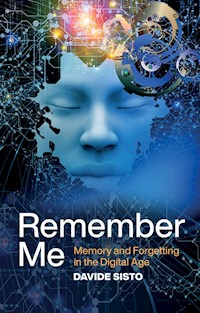
As the end of December draws near, Facebook routinely sends users a short video entitled 'Your Year on Facebook'. It lasts about a minute and brings together the images and posts that received the highest number of comments and likes over the last year. The video is rounded off with a message from Facebook that reads: 'Sometimes, looking back helps us remember what matters most. Thanks for being here.' It is this 'looking back', increasingly the focus of social networks, that is the inspiration behind Davide Sisto's brilliant reflection on how our relationship with remembering and forgetting is changing in the digital era. The past does not really exist: it is only a story we tell ourselves. But what happens when we tell this story not only to ourselves but also to our followers, when it is recorded not only on our social media pages but also on the pages of hundreds or thousands of others, making it something that can be viewed and referenced forever? Social media networks are becoming vast digital archives in which the past merges seamlessly with the present, slowly erasing our capacity to forget. And yet at the same time, our memory is being outsourced to systems that we don't control and that could become obsolete at any time, cutting us off from our memories and risking total oblivion. This timely and thoughtful reflection on memory and forgetting in the digital age will be of interest to students and scholars in media studies and to anyone concerned with the ways our social and personal lives are changing in a world increasingly shaped by social media and the internet.
Sie lesen das E-Book in den Legimi-Apps auf:
Seitenzahl: 284
Veröffentlichungsjahr: 2021
Ähnliche




















Table of Contents
Cover
Dedication
Title Page
Copyright Page
Acknowledgements
Introduction. Social Networks and Looking Back
The Past is Just a Story We Tell Our Followers
Facebook and Looking Back: #10YearChallenge, On This Day, Memories
Notes
1 From Social Networks to Digital Archives
The Twenty Days of Turin
: Facebook in 1977
Naked in front of the Computer: Social Networks in the 1990s
The World Doubled: Reincarnation or the Cocaine of the Future?
Blogs, Forums, Mailing Lists: A New Life in 56K
The Era of Shared Passions: An Epidemic of Digital Memories
Digital Memory as Crazed Mayonnaise: The Past is Emancipated, Identities Multiply
Notes
2 Collective Cultural Autobiographies and Encyclopedias of the Dead 2.0
Experiments in Collective Cultural Autobiography
Copy and Paste: Writing About Oneself is Like Summing Up the History of the Universe
Cancer Bloggers: My Body is My Message
Stories of Cancer Bloggers on YouTube and Facebook
Facebook: Encyclopedia of the Dead 2.0?
Autobiographical Memory: Inventing the Past
Disinterred Bodies: Social Networks and Data Flows as Archives
Notes
3 Total Recall, Digital Immortality, Retromania
Becoming the Database of Ourselves: Lifelogging and Video-Camera Memory
The
Memobile
: From Total Recall to Digital Immortality
The Memory Remains
: The Life of Memories Post-Mortem
Mind-Uploading
as a Declaration of Independence by Memory
Insomnia Inside a Garbage Heap: Funes, or of a Life that Never Forgets
Creating Space in Memory: Forgetting and Sleep as Forms of Resistance
The Internet as a Melancholy Container of Regret: Hollie Gazzard, The Last Message Received, Wartherapy
Retromania and Sad Passions: The End of Nostalgia and the Loss of the Future
San Junipero Exists and Lives in Facebook
Notes
Conclusion. Digital Inheritance and a Return to Oblivion
Digital Inheritance: What to Do With Our Own Memories?
The Value of Oblivion and the Joy of Being Forgotten
Notes
Bibliography
Index
End User License Agreement
Guide
Cover
Table of Contents
Begin Reading
Pages
ii
iii
iv
vii
viii
1
2
3
4
5
6
7
8
9
10
11
12
13
14
15
16
17
18
19
20
21
22
23
24
25
26
27
28
29
30
31
32
33
34
35
36
37
38
39
40
41
42
43
44
45
46
47
48
49
50
51
52
53
54
55
56
57
58
59
60
61
62
63
64
65
66
67
68
69
70
71
72
73
74
75
76
77
78
79
80
81
82
83
84
85
86
87
88
89
90
91
92
93
94
95
96
97
98
99
100
101
102
103
104
105
106
107
108
109
110
111
112
113
114
115
116
117
118
119
120
121
122
123
124
125
138
139
140
141
142
143
144
145
146
147
148
149
150
151
152
153
154
155
156
Dedication
For Michele Barbotto,
in memory of the Potentissima, of Bar Verde
and everything that death has left here
Remember Me
Memory and Forgetting in the Digital Age
Davide Sisto
Translated by Alice Kilgarriff
polity
Copyright Page
Originally published in Italian as Ricordati di me: La rivoluzione digitale tra memoria e oblio © 2020 Bollati Boringhieri editore, Torino
This English edition © Polity Press, 2021
The translation of this work has been funded by SEPS Segretariato Europeo per le Pubblicazioni Scientifiche
Via Val d’Aposa 7 – 40123 Bologna – Italy
[email protected] – www.seps.it
Polity Press
65 Bridge Street
Cambridge CB2 1UR, UK
Polity Press
101 Station Landing
Suite 300
Medford, MA 02155, USA
All rights reserved. Except for the quotation of short passages for the purpose of criticism and review, no part of this publication may be reproduced, stored in a retrieval system or transmitted, in any form or by any means, electronic, mechanical, photocopying, recording or otherwise, without the prior permission of the publisher.
ISBN-13: 978-1-5095-4503-2 (hardback)
ISBN-13: 978-1-5095-4504-9 (paperback)
A catalogue record for this book is available from the British Library.
by Fakenham Prepress Solutions, Fakenham, Norfolk NR21 8NL
The publisher has used its best endeavours to ensure that the URLs for external websites referred to in this book are correct and active at the time of going to press. However, the publisher has no responsibility for the websites and can make no guarantee that a site will remain live or that the content is or will remain appropriate.
Every effort has been made to trace all copyright holders, but if any have been overlooked the publisher will be pleased to include any necessary credits in any subsequent reprint or edition.
For further information on Polity, visit our website: politybooks.com
Acknowledgements
Writing a book on memory and memories has, for me, been a titanic endeavour. I do not have an easy relationship with ‘looking back’, as it always leaves me with a melancholy sense of loss. This forces upon me the need always to look ahead and to recognize the importance of dying and being forgotten. However, as incoherence tends to win out over coherence, looking back is the central issue of this book which, having been written in order to be published and read, reveals the author’s implicit desire to leave his mark.
I would like, first and foremost, to offer my most heartfelt thanks to Roberto Gilodi, Michele Luzzatto, Flavia Abbinante, Elena Cassarotto and the publishing house Bollati Boringhieri for having given me the opportunity to write this book.
I would also like to thank all of those with whom I share, each and every day, the objective of bringing the discourse on death back into the public space in order to limit the negative effects of its social and cultural repression: Marina Sozzi and the blog Si può dire morte; Ines Testoni and the Masters in Death Studies and the End of Life at the University of Padua; Ana Cristina Vargas, Gisella Gramaglia and Fondazione Ariodante Fabretti in Turin; Maria Angela Gelati and Il Rumore del Lutto in Parma; Massimiliano Cruciani and Zero K in Carpi; Laura Campanello and the Death Cafè in Merate; Alice Spiga and the SO.CREM. in Bologna.
I would also like to thank everyone who has shown interest and enthusiasm for Online Afterlives, giving me the possibility of discussing the book’s themes throughout Italy. I will cherish the memories of moving experiences I have had from North to South over the last year and a half. I am truly grateful to those splendid individuals whom I have had the opportunity to meet from time to time.
I would also like to thank Ade Zeno, friend and companion in never-ending thanatological adventures; Valentino Farina, in memory of past times; and Dedalo Bosio, the Splunge cited in this book. Finally, I would like to thank Lorenza Castella, because she doesn’t read my books and therefore will never know she has been thanked.
The final and most important mentions go to Nello and Silvana, and to my irreplaceable Roberta, so involved in this book (poor her!) that she dreamed about it at night. May many pasticcini al pistacchio atone for my sins.
IntroductionSocial Networks and Looking Back
The Past is Just a Story We Tell Our Followers
The past is just a story we tell ourselves. These are the words Samantha, the OS1 operating system and the protagonist in Spike Jonze’s film Her, uses to console Theodore Twombly, the man who constantly imagines he is talking to his ex-wife, Catherine. He picks up on old, never forgotten conversations and uses hindsight to construct justifications he was unable to give when the woman, before leaving him, pointed out his repeated failings. The past does not really exist. This point is made unremittingly by Jonathan Gottschall in his book The Storytelling Animal: though it may have actually happened, the way in which we present it makes it seem like nothing more than ‘a mental simulation’. Our memories are not perfect recordings of what actually happened but reconstructions, and most of their details are unreliable.1 This is probably what pushed Desmond Morris to take such a radical step following the death of the woman with whom he had lived for sixty-six years, getting rid of all the physical memories that made his grief unbearable. As Aleida Assmann observes, ‘By erasing a mark, the survival of a person or an event in the memory of those who come after becomes as impossible as the discovery of a crime.’2 Therefore, the British zoologist asked himself, why not eliminate all traces? The thousands of books, paintings and antiques bought with his wife over the course of more than half a century of marriage, those simple utensils (a teacup, for example) that symbolically contain the most normal daily gestures of a shared life, along with photographs, and even a whole house. The house represents ‘a deposit, that exists both physically and within us, of memories that are still shared’, it is ‘the final bulwark of a time painstakingly removed […] from the unrelenting progression of loss, from the painful dissipation of living worlds’.3 Morris follows this rule: if you leave me, I’ll erase you.
Theodore Twombly in cinematic fiction, and Desmond Morris in real life, share the same fate: the end of the world in its totality, to borrow a famous expression from Jacques Derrida. Both the end of a sentimental relationship and the death of a loved one suddenly erase the physical presence to which we are bound, along with everything that had been shared both materially and emotionally up until that moment. Twombly and Morris suddenly find themselves at the starting point of their own lives, as if every experience up to that moment had been erased. The only thing posing any opposition to the end of the world in its totality is the spectral presence of the person who is no longer physically there, the transparent copy that proliferates in material and mental memories, remaining alive and kicking in their scattered remains. That copy, which according to Umberto Eco is relied upon by every human being who, aware of both their physical (‘I’m going to die sooner or later’) and mental weakness (‘I’m sorry that I’m going to have to die’), finds proof of that soul’s survival in the memory that remains of it.4 In other words, both the death of a loved one and the end of a loving relationship determine the passage from identity to the images of identity that transform the absent into a collector’s item, the bulwark against the memory’s fragility at which one can direct their own enduring regrets.
The inevitable disconnect between the disappearance of the physical presence and the force of the spectral presence usually generates profound emotional unrest in the person left behind. The bitter knowledge of the end of the whole world is continually invoked by the eternal excess of its shadows and images, which make thoughts and objects that were once shared the exclusive inheritance of the person who is suffering. This is why, in cases where the grief is particularly unbearable, it can be useful to remember Samantha’s suggestion: to view the past as a story we have told ourselves, breaking its suffocating bond with the present. Ghosts are kept at a safe distance, as per the approach taken by Desmond Morris, to avoid us becoming their prisoners, like Theodore Twombly. As Thomas Hobbes teaches us, if we set aside the passing of time, we have no way of distinguishing memory from imagination.5 And, as Bertolt Brecht confirms, ‘without the forgetfulness of night which washes away all traces’, we would never find the strength to get up in the morning.6
Morris, however, has to reckon with a greater problem than Twombly: he is obliged to walk the fine line between his own sacrosanct need to forget and his dead wife’s equally legitimate desire to be remembered.
So what happens when the past becomes a story that we not only tell ourselves but also our followers, recording it on social media profiles and online more generally?
If, traditionally, the house is the archetype of hybrid memory, filled as it is with the past in various areas of the domestic space and thus becoming an extreme stronghold of a time removed from the urgent rhythm of loss, our second home today is the online realm. To inhabit, Walter Benjamin explained, means ‘to leave impressions’. This is confirmed by the invention of ‘an abundance of covers and protectors, liners and cases […] on which the traces of objects of everyday use are imprinted’.7 In those countless online rooms, we are constantly recording, accumulating and preserving these marks in excessive quantities, creating digital deposits of our memories and delegating our own faltering memories to artificial tools. In comparison with the first house, the internet’s front door is always ajar, if not wide open. Sharing has become one of its defining imperatives. As Kevin Kelly writes, it is also ‘the world’s largest copy machine’ because it is continually updating, ‘[copying] every action, every character, every thought we make while we ride upon it’.8 It copies our own psycho-physical presence, dematerializing it. It detaches myriad digital I’s from the biological I physically present in only one location in the offline world, creating digital presences that wander (more neurotic than carefree) throughout all possible places in the web, leaving indelible marks through an unbridled multiplication of their personal and social identities. Human beings, historical constructs whose contingency depends on continuous and ongoing technological progress, have learned how to develop more ‘informational souls’. Reciprocally connected within the Infosphere, these souls occupy spaces in which there is no distinction between natural individuals and artificial agents. They reveal, therefore, a brand new virtue with regard to ‘spiritual’ souls, that of satisfying in equal measure the ‘two figures obsessed by immortality’ referred to by Elias Canetti: both the one that wants infinite continuity with time, and the one that instead wishes to return periodically.9 As we find in inter-disciplinary studies on Digital Death,10 these technological spectres help our digital I’s attain that eternal life denied their biological twin, who remains exposed to the whim of the Grim Reaper.
It follows that, unlike those objects held within domestic walls, for the most part private, unique and rare specimens (physical in the broad sense) that facilitate the choice taken by Desmond Morris, the data accumulated in digital deposits (written messages, photographic images, audiovisual recordings, and so on) are difficult to erase. The fact that these data are shared not only obviously means they are not private, but also means they enjoy the gift of ubiquity and can be multiplied infinitely. Some are shared voluntarily (in posts left on social media profiles), some are shared unwittingly (every trace a user leaves on a device while online), some are shared by third parties (the problematic habit common to parents of posting photographs of their underage children, usually on Facebook). It can all exist autonomously and in an indeterminate number of copies, occupying the internal space of an equally unknown quantity of electronic devices and online locations. Each of these devices and locations in turn represents a privileged point of 24/7 access to digital memories. The distinction between ‘internal’ and ‘external’ has now become superfluous in comparison with historical eras in which, in the absence of digital technology, the house acted as the custodian of private memories, clearly marking the boundary between inside and outside.
So, while it is relatively easy to ‘empty’ material deposits once mourning has taken place, placing a protective barrier between the world that has come to an end and the world that must now be built, it is much more difficult (if not impossible) to do the same thing with digital deposits. Like the ‘invisible cascade of skin cells’11 that we leave in the streets of our cities, the collection of data, digital footprints and information recorded online that is constantly photocopied and to which we delegate our memories with increasing frequency, makes those ghosts that assail Twombly’s mind at night increasingly pervasive and permanent, and render Morris’ attempts to chase them out entirely in vain.
Today’s world seems struck by an epidemic of memory that provides the past with the opportunity to free itself from the present’s control. As it slowly becomes autonomous as an objective reality in its own right, the past overlaps with the present, imposing itself from one moment to the next. As a consequence, it is liberated from the spectrality attributed by those who, until now, have always thought of it as either nothing more than a story we tell ourselves or a mere simulation produced by the mind. And it is preparing to subvert the very rules that govern the way in which we remember and forget.
Facebook and Looking Back: #10YearChallenge, On This Day, Memories
Mark Zuckerberg, the man most responsible for the recent multiplication of our informational souls, was the first person to recognize the radical shift taking place in the way we remember and forget. Taking the positive aspects, he ignores Samantha’s advice and chooses to favour total recall over oblivion. As Kenneth Goldsmith writes, ‘Our archiving impulse arises as a way to ward off the chaos of overabundance.’12 Zuckerberg takes this on board, transforming Facebook from the most popular social network in the world to a technological memory chest, a gigantic digital archive capable of: (1) conserving data shared by its users over the years, constantly recreating and reshaping the relationship between the past and the present; (2) carefully selecting those memories using its algorithms; (3) making the documents and the digital footprints each one has left easily accessible. An interactive archive that, unlike a traditional one, preserves ‘those traces and remains of the past that are not part of a culture of active memory’.13 They are those biographical aspects of individual memory, ostensibly lacking any primary use for society, but at the same time capable of keeping our digital I perennially alive, reproduced in every single record that is made public.
Facebook’s (ongoing) metamorphosis can be seen in the fact that looking back has been its most important feature for some time now. The perennial exhumation of what has happened within it seems to be a literal translation of the pathos and resonance Vilèm Flusser attributes to the internet in general, describing it as a ‘way of loving our neighbour’.14
At some point towards the end of December, Facebook provides each of its two billion users with a video entitled ‘Year in Review’, alternating, in little more than a minute and against a strategically coloured background, the images and posts shared by the user over the past twelve months that received the highest number of likes and comments. Just like the brief videos created skilfully by online newspapers, in which the rapid succession of Juventus’ most important goals illustrates their victory march towards their umpteenth championship title. Or those shown on television, in which a collage of a talk show’s highlights is used to celebrate its season finale. At the end of the Facebook video, we read: ‘Sometimes, looking back helps us remember what matters most. Thanks for being here.’
Anything but improvised, this ‘looking back’ exists all year round within standalone initiatives such as the #10YearChallenge. All it took was a simple hashtag, which went viral in a matter of minutes in January 2019, to convince millions of Facebook users to post photos to their Walls, publicly comparing a current photo of themselves to one taken ten years earlier. The most cynical of observers interpreted this challenge as yet another cunning strategy to obtain substantial amounts of personal data and images with which to train facial recognition algorithms. The fact remains that beyond any possible hidden agendas, millions of people dug up personal photos from 2009 and wallowed in collective nostalgia for a good few days. This took the form of a self-satisfied longing for an imagined, and distant, golden age: a decade before, yes, but still in reach. A time that, when observed with the disenchantment typical of the present, does not include the often hastily made choices taken over the years, nor the disappointments into which once-held ideals have since mutated, nor the inevitable failures, and nor does it see, on a much more basic level, the wrinkles and white hairs as merciless markers of Chronos’ insensitivity. This is a nostalgic wallowing into which Instagram also plays, becoming involved in the challenge and therefore party to the onslaught of millions of images accompanied by the same hashtag. The initiative takes on further significance if we remember that the majority of personal events that have taken place over the last decade, events this explicitly invokes, have been documented on a daily basis on the above-mentioned social networks.
Since late spring 2015, the retrospective gaze has become a daily protagonist thanks to the On This Day feature. ‘You have a new memory’ is the notification text that celebrates this ritual, automatically directing our digital devices to a post, video or photograph shared on Facebook (or one in which we have been tagged) on the same day as it occurred in the past. Apart from recurring or historical events, On This Day rhapsodically revives biographical events or personal stories using algorithms. Initially, this ‘looking back’ is only visible to the user, who is then free to decide whether or not to share (and therefore make current) the memory with all of their followers. If the user chooses to share the post, they can leave it as it is or they can modify it partially with a comment that provides context for the present.
Alternatively, they can relive these moments in a private way or eliminate them completely. The stated aim of On This Day is to connect the present to nostalgia, sparking new debate between users that aims to resurrect that which, once it has happened, should, in theory, be lost forever. In other words, it tends towards just one of the two paths that, according to Johann Jakob Bachofen, characterize any act of recognition: not the long, slow, hard path of rational reconstruction, but the shortcut ‘that is travelled with the power and velocity of electricity, the road of the imagination that suddenly grasps the truth, in a split second, the moment it comes into contact with archaeological remains without relating it to anything’.15 Suddenly, past and present find themselves mixed together, making it particularly difficult to distinguish clearly between the two. We see this when a user chooses an old photo as their current profile picture. The comments written by followers on the day in which it was originally shared merge with those written later, causing them to become confused. More often than not the consequences of this are equally odd. For example, it could be that beneath the image of a woman are comments from both her current husband and her ex (unless he has been blocked), both of which refer to her as if she were their wife. Only a close inspection of the date in which the post was originally shared by the reader avoids any suspicion of polygamy.
On 13 June 2018 there was a passage from On This Day to Memories that was as decisive as it was emblematic. While On This Day offered the user a single post shared on the same date of a different year, Memories (www.facebook.com/memories) is a parallel timeline included in the Explore section, where all the posts shared on each day of all past years are collated. Memories wholeheartedly adopt ‘the simple mystery of concomitance’ that Roland Barthes attributes to photography, believing the date the photo was taken to be an integral part of its whole. The date does not denote a style, but ‘it makes me lift my head, allows me to compute life, death, the inexorable extinction of the generations’.16 The Memories section does not perhaps aspire to such heights. However, its objective is clear from the moment in which it greets us with the words: ‘We hope that you enjoy looking back on your memories on Facebook, from the most recent memories to those long ago’ [my italics]. Scrolling back through the wall, we find everything we have shared on any given day laid out in descending order. On 25 February 2019, I click on Memories and immediately discover that I shared two photographs on the same day in 2018: one depicting my city, Turin, blanketed in snow by the arrival in Italy of the freezing Siberian wind named ‘Burian’ by enthusiastic meteorologists, and the other showing a ticket for the Nirvana concert I went to as a teenager on 25 February 1994 in Milan, in the venue that used to be called the Palatrussardi. Ticket number: 8211. Cost: 32,000 lire. That was the Seattle grunge band’s penultimate ever concert, as Kurt Cobain committed suicide just a month and half later. This event was therefore relevant from both a personal perspective and an historical one. Moving down the page, I re-read two of my posts: the first, dated 25 February 2017, refers to the faltering political situation in Italy at that precise moment, while the second, dated 25 February 2016, contains a number of personal considerations of a vaguely existential nature (not purposefully so) on the passing of time. The subject shared with my followers the previous year was somewhat lighter: a piece of dark chocolate eaten at 1am. Going even further back, I discover that in 2013, a friend who lives in Finland had written a post on my wall notifying me he was going to a heavy metal concert, knowing how much of a fan I am. In 2012, I was tagged by another friend after an evening spent in San Salvario, an area of Turin famous for its nightlife. And so on, all the way to my first ever 25 February post on Facebook: that from 2009. Once this journey back through the personal memories of that day has come to an end, close friendships from past years are listed alongside special videos or collages celebrating new contacts. Significant events from the user’s personal life are then listed, regardless of whether or not they happened that day: the anniversary of a wedding or a graduation, or the start of a new job. The ‘looking back’ ends with a succinct: ‘That’s all for today.’ Anyone can go into Memories to re-share one or more of these memories, making them current in the same way as On This Day. When there are no posts shared on that day, Facebook points this out and invites the user to check the next day or perhaps activate specific notifications for memories so that none are missed.
The invention of the Memories section, according to Facebook’s product manager, Oren Hod, is justified by the fact that around ninety million people use On This Day each day, using the social network to relive experiences that are long gone, and therefore revive their own past. As a consequence, the creation of Memories provides all users with a dedicated place for their personal memories that allows them to consult these easily and intuitively without having to scroll through the hundreds or thousands of posts shared over the years. It would seem, then, that as far as ninety million people are concerned, it is not enough simply to tell the story of their past to themselves.
These numbers allow us to predict that Facebook in a not-too-distant future will create its own universal database of memories, which could be consulted using a simple single-word search. In this way Facebook will make definitive use of key word indexing (introduced in 2013) with a view to analysing our shared posts, looking for correlations, recurrent themes and anomalies in the lives recorded within it. Despite the inherent difficulty posed by managing such a vast level of content, this prediction is corroborated by the presence of a system that allows every user to make single searches by year, month and day within their own profile and those of their contacts. All they need to do is head to the ‘Activity Log’ section and select the year and month of interest, highlighting the shared posts, images and links to be recovered. In addition to this there is a ‘Stories’ archive that is easy to search and that can be downloaded onto the user’s computer. The ‘Stories’, used by both Facebook and Instagram, initially seem to prove Samantha right. They are, indeed, temporary ways of sharing photographs, videos and written texts. They stay visible for 24 hours after which time they delete themselves, just as happens with Snapchat content. Their objective is the creation of a kind of live streaming of our very existence, meaning immediacy, instantaneousness and the avoidance of recording are their fundamental prerogatives. However, the collective desire to preserve them and revive them whenever we wish has pushed those in charge at Facebook and Instagram to create a specific space that overwhelmingly downsizes the carpe diem inherent in these platforms.
Facebook even allows users to download the entirety of the digital life they have lived within its labyrinthine workings. If you visit the profile section on information, accessed from the general Settings page, you find a way of archiving all that content on your own computer: posts, photos, video, likes and reaction, friends, stories, messages, groups and so on. The download can include both single publications, once the type of information and desired timeframe have been selected, and the entire collection of documents. It is possible to choose between a HTML format, which is easier to view, and the JSON format that allows for another service to import the data immediately. This download, which involves a substantial amount of time for those profiles that have been particularly active over the years, is password-protected and only the account user is able to access it. It also only exists for a limited amount of time before it is automatically deleted. Alternatively, in the case of the user’s death (though only if they have previously given permission) this can be accessed by a legacy contact. Once the friend’s death has been certified, the legacy contact can carry out the download and archive a copy of the deceased’s profile and all its contents (excluding private messages) on their own computer. Thus, the digital memory carefully constructed by the deceased during their time on Zuckerberg’s social network will be preserved forever.
From the video celebrating the year that is about to end, to impromptu hashtags such as #10YearChallenge, to On This Day and Memories, arriving at the copy in a single file of all of your digital memories produced on Facebook over the years, Zuckerberg seems to make his own, albeit optimistically, the unnerving thought expressed by Mark Fisher: ‘in conditions of digital recall loss is itself lost’.17 Thanks to digital technology, the recollections buried in our memory today have the possibility of being disinterred at any moment in our daily life and brought back to life, once more achieving that same actuality that had characterized them when they had first been experienced.
This book, developing the reflections on Digital Death made in Online Afterlives, aims to analyse the philosophical consequences of this digital unearthing of memories for our way of remembering and forgetting, shining a light on the parallel effects of the past’s gradual emancipation from control by the present. In order to do this, it is necessary first to revisit those fundamental stages in the journey that has led, in less than twenty years, to the metamorphosis of social networks such as Facebook into technological memory chests and digital archives.
Notes
1
Jonathan Gottschall,
The Storytelling Animal: How Stories Make Us Human
, Houghton Mifflin Harcourt, New York 2012, p. 169.
2
Aleida Assmann,
Sette modi di dimenticare
[
Seven Ways of Forgetting
], Il Mulino, Bologna 2019, p. 23.
3
Antonella Tarpino,
Geografie della memoria. Case, rovine, oggetti quotidiani
, [
Geographies of Memory. Houses, Ruins, Daily Objects
] Einaudi, Turin 2008, p. 27.
4
Umberto Eco,
La memoria vegetale e altri scritti di bibliofilia
[
The Vegetal Memory and Other Writings on Bibliophilia
], La Nave di Teseo, Milan 2018, pp. 9–10.
5
Thomas Hobbes,
De corpore
, in
Human Nature and De Corpore Politico
, ed. J.C.A. Gaskin, Oxford University Press 2008, p. 220: ‘In memory, the phantasms we consider are as they were if worn out by time; but in our fancy we consider them as they are […] The perpetual arising of phantasms, both in sense and imagination, is that which we commonly call discourse of the mind, and is common to with other living creations. For he that thinketh notice of their likeness or unlikeness to one another.’
6
Bertolt Brecht,
In Praise of Forgetting
, in
The Collected Poems of Bertolt Brecht
, trans. and ed. David Constantine and Tom Kuhn, W.W. Norton and Company, London 2018, p. 646.
7
Walter Benjamin, ‘Paris, Capital of the Nineteenth Century’, in
Reflections
, trans. Edmund Jephcott, Schocken Books, New York 1986, pp. 155–6.
8
Kevin Kelly,
The Inevitable. Understanding the 12 Technological Forces That Will Shape Our Future
, Penguin, New York 2017, p. 61.
9
See Elias Canetti,
Il libro contro la morte
[
The Book Against Death
], Adelphi, Milan 2017, p. 49. For the German original,
Das Buch gegen den Tod
, Hanser Literaturverlage.
10
Within the concept of
Digital Death
we find the various ways in which digital technology is changing our connection to death, mourning and immortality. For more on this, see my book
Online Afterlives. Immortality, Memory and Grief in Digital Culture
, MIT Press 2020.
11
Elaine Kasket,




