


21,99 €
Mehr erfahren.
- Herausgeber: John Wiley & Sons
- Kategorie: Fachliteratur
- Sprache: Englisch
How to be more respectful and how to encourage others to treat you more respectfully
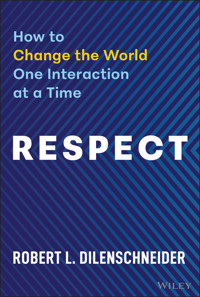
In Respect: How to Change the World One Interaction at a Time, veteran public relations executive Robert Dilenschneider delivers an insightful and original discussion of how to cultivate respectfulness in every facet of your life. You’ll learn how to embody and encourage respectful behavior and speech among work colleagues, family, friends, and others.
You’ll learn about how respectfulness has life-changing consequences for all who practice it and why it’s within reach for us all. You’ll also discover why it’s so sorely needed in an increasingly fragmented society and how it can transform our interactions for the better.
Readers will also find:
- Strategies for transcending the inane and unimportant and creating meaning in your life
- Tools and paths to improve your self-respect, develop respectfulness, and encourage others to treat you with respect
- Techniques to begin mending some of the fences that appear irreparably damaged by increasing societal incivility
Perfect for managers, executives, directors, founders, entrepreneurs, and other business leaders, Respect is an essential guide to navigating a society, marketplace, and environment that seems increasingly prone to disrespect and rudeness, and how to help make it better.
Sie lesen das E-Book in den Legimi-Apps auf:
Seitenzahl: 275
Veröffentlichungsjahr: 2025
Ähnliche


















Table of Contents
Cover
Table of Contents
Title Page
Copyright
Dedication
Books by Robert L. Dilenschneider
Preface
CHAPTER 1: A Call for Respectfulness
Notes
CHAPTER 2: Is Respectfulness Truly Possible in the Age of Retribution?
Notes
CHAPTER 3: What's in It for Me?
Notes
CHAPTER 4: Start with Self-Respect
Notes
CHAPTER 5: The Top Five Qualities of Respectfulness
Listen to Others—Really Listen—Instead of Thinking About What You'll Say Next
Understand That Everyone Has Their Own Experiences and Beliefs
Be Courteous; Help Others See the Good
Practice Compassion; Foster a Sense of Belonging
Acknowledge the Dignity of Human Life, No Matter One's Station, Culture, or Preferences
Notes
CHAPTER 6: Respectfulness at Work
Notes
CHAPTER 7: Respectfulness in Family and Personal Relationships
Notes
CHAPTER 8: Respectfulness in Civic Institutions
Respectfulness in Politics
Respectfulness in Religion
Notes
CHAPTER 9: Transforming Society
Civics and Civility
Transforming
Notes
Acknowledgments
About the Author
Index
End User License Agreement
Guide
Cover
Title Page
Copyright
Dedication
Books by Robert L. Dilenschneider
Preface
Table of Contents
Begin Reading
Acknowledgments
About the Author
Index
End User License Agreement
Pages
iii
iv
v
vii
xi
xii
1
2
3
4
5
6
7
8
9
10
11
12
13
14
15
16
17
19
20
21
22
23
24
25
26
27
28
29
30
31
32
33
34
35
37
38
39
40
41
42
43
44
45
46
47
48
49
50
51
52
53
54
55
56
57
58
59
60
61
62
63
64
65
66
67
68
69
71
72
73
74
75
76
77
78
79
80
81
82
83
84
85
86
87
89
90
91
92
93
94
95
96
97
98
99
100
101
102
103
104
105
106
107
108
109
110
111
112
113
114
115
116
117
118
119
120
121
122
123
124
125
126
127
128
129
130
131
132
133
134
135
136
137
138
139
140
141
142
143
144
145
146
147
148
149
150
151
152
153
154
155
156
157
158
159
169
170
171
172
173
174
175
176
177
178
179
180
How to Change the World One Interaction at a Time
RESPECT
ROBERT L. DILENSCHNEIDER
Copyright © 2026 by John Wiley & Sons, Inc. All rights reserved, including rights for text and data mining and training of artificial intelligence technologies or similar technologies.
Published by John Wiley & Sons, Inc., Hoboken, New Jersey.Published simultaneously in Canada.
No part of this publication may be reproduced, stored in a retrieval system, or transmitted in any form or by any means, electronic, mechanical, photocopying, recording, scanning, or otherwise, except as permitted under Section 107 or 108 of the 1976 United States Copyright Act, without either the prior written permission of the Publisher, or authorization through payment of the appropriate per-copy fee to the Copyright Clearance Center, Inc., 222 Rosewood Drive, Danvers, MA 01923, (978) 750-8400, fax (978) 750-4470, or on the web at www.copyright.com. Requests to the Publisher for permission should be addressed to the Permissions Department, John Wiley & Sons, Inc., 111 River Street, Hoboken, NJ 07030, (201) 748-6011, fax (201) 748-6008, or online at http://www.wiley.com/go/permission.
The manufacturer's authorized representative according to the EU General Product Safety Regulation is Wiley-VCH GmbH, Boschstr. 12, 69469 Weinheim, Germany, e-mail: [email protected].
Trademarks: Wiley and the Wiley logo are trademarks or registered trademarks of John Wiley & Sons, Inc. and/or its affiliates in the United States and other countries and may not be used without written permission. All other trademarks are the property of their respective owners. John Wiley & Sons, Inc. is not associated with any product or vendor mentioned in this book.
Limit of Liability/Disclaimer of Warranty: While the publisher and the authors have used their best efforts in preparing this work, including a review of the content of the work, neither the publisher nor the authors make any representations or warranties with respect to the accuracy or completeness of the contents of this work and specifically disclaim all warranties, including without limitation any implied warranties of merchantability or fitness for a particular purpose. No warranty may be created or extended by sales representatives, written sales materials or promotional statements for this work. The fact that an organization, website, or product is referred to in this work as a citation and/or potential source of further information does not mean that the publisher and authors endorse the information or services the organization, website, or product may provide or recommendations it may make. This work is sold with the understanding that the publisher is not engaged in rendering professional services. The advice and strategies contained herein may not be suitable for your situation. You should consult with a specialist where appropriate. Further, readers should be aware that websites listed in this work may have changed or disappeared between when this work was written and when it is read. Neither the publisher nor authors shall be liable for any loss of profit or any other commercial damages, including but not limited to special, incidental, consequential, or other damages.
For general information on our other products and services or for technical support, please contact our Customer Care Department within the United States at (800) 762-2974, outside the United States at (317) 572-3993 or fax (317) 572-4002.
Wiley also publishes its books in a variety of electronic formats. Some content that appears in print may not be available in electronic formats. For more information about Wiley products, visit our web site at www.wiley.com.
Library of Congress Cataloging-in-Publication Data is Available:
ISBN 9781394340965 (Cloth)ISBN 9781394340972 (ePub)ISBN 9781394340989 (ePDF)
Cover Design: Paul McCarthyCover Art: © Getty Images | Ali Kahfi
To Joan Avagliano, who is responsible for much of my success.
Books by Robert L. Dilenschneider
Character
The Ultimate Guide to Power & Influence
Nailing It
Decisions
The Critical First Years of Your Professional Life
50 Plus!
The Critical 2nd Phase of Your Professional Life
Power and Influence
Civility in America
The Public Relations Handbook
A Briefing for Leaders
The AMA Handbook of Public Relations
A Time for Heroes
Values for a New Generation
On Power
The Men of St. Charles
The Corporate Communications Bible
The Hero's Way
Preface
Respect may be one of the least discussed human qualities. Most of us go through life without giving it much thought. It seldom comes up in conversations. The media rarely use the word. It's not that we don't care about respect. Rather, we tend to just take it for granted.
It is my contention that respect deserves, well … more respect. That is, more attention, consideration, appreciation, praise.
It is respect for one another that builds healthy relationships. It is mutual respect that creates friendships and enables societies and their organizations to function effectively. It is respect that establishes trust between individuals, between groups, among nations.
It is the feeling of being respected that helps build self-confidence. And our own self-respect is essential for us to get along in life.
But if we don't think much about respect, we do give a lot of attention to its opposite: disrespect. We've even created a shorthand version of the word: diss. Just saying, “You dissed me” can be enough to start insults flying, and sometimes fists, too. Countless feuds have started because someone felt disrespected. In extreme cases, even wars.
To put it simply, being respectful for one another makes this a better world. Failing to show respect can make it a worse place. That's true not only in our daily lives but also throughout history. In fact, a lot of world history has been made by people who used respect as a force for good.
A carefully selected group of leaders and thinkers were interviewed for this book and their experiences and advice bring life to the lessons. They share their perspectives on how to embody and encourage respectfulness at work, with personal interactions of family and friends, and within the community.
I have long cared about the value of respectfulness; what I see as the erosion of it prompted this book.
I've encountered many, many people in my decades-long career in international public relations; I've been called the “dean of American public relations executives” and have written several books on the subject. Thirty-plus years ago I started my own Manhattan-based firm, The Dilenschneider Group, which provides strategic advice to Fortune 500 companies, leading families, and individuals around the world. Every day, business and political leaders come to me for advice. I will share with you real-world examples of what I've learned in my long career.
My curiosity about human nature compelled me to write books, such as Decisions: Practical Advice from 23 Men and Women Who Shaped the World, Nailing It: How History's Awesome Twentysomethings Got It Together, and more recently, Character: Lessons in Courage, Integrity and Leadership.
Concern about the eroding of civility in discourse prompted me to initiate a Civility in America lecture series, along with the Hearst Corporation. Many of the nation's thinkers from a wide variety of professions have been featured and provided a perspective on what must be done to restore civility. The series began in 2012 and, sad to say, civility is needed now more than ever.
Civility and respect go hand-in-hand.
My hope is that the exploration of respectfulness in this book will be helpful to you––whether you see the need or especially if you do not yet. The pages are packed with provocative thought and practical advice.
Here is your road map to restoring respectfulness in every facet of life and improving society along the way, one personal interaction at a time.
CHAPTER 1A Call for Respectfulness
It's a gaze that radiates respect. It's a gaze that says that every person I meet is unique, unrepeatable, and, yes, superior to me in some way.
Every person I meet is fascinating on some topic.
– David Brooks
The world can feel like it's fueled by chaos. Disorder is the new order. Our planet's 8.1 billion population is clamoring to be heard—all at once. Social media has handed the megaphone to any who want it, regardless of the truthfulness of what they have to say. And if the poster can remain anonymous, then it's no holds barred.
While instant communication comes with undeniable and remarkable benefits, the unfiltered platforms have encouraged nastiness and rancor as a means to get attention and gain followers. An innocuous comment, say about a beautiful sunrise, can quickly devolve into political diatribes and name-calling. Consensus building is supplanted by ostracizing “the other.”
It seems that respect for each other is perceived as unnecessary, a virtue of a bygone era. Respect is like the pocket square tucked into a man's suit—an old-fashioned touch serving no purpose. Even suits are becoming optional for work these days!
Far from outdated, however, respectfulness is a vital part of the foundation of a well-functioning society and a fulfilling life. We would do well to cultivate it, and this book will show you how—and why.
Here is a good measure of just how important respect can be: one of the great shifts in the history of Western civilization came when it set aside a code of conduct based on honor and replaced it with a code based on, yes, respect. For centuries when one man said another had dishonored him, it all too often led to a duel. Now when an issue arises and one feels disrespected rather than dishonored, rancor may result, but no one gets run through with a sword or shot by a musket ball.
Yet that code of conduct is on shaky ground these days when respect for others is neither practiced nor held in esteem.
How can one survive—and even succeed—amid the chaos? Can the inanity be turned around into something useful?
You will find in this book the answers to those questions and road maps—practical steps—on how to get there. You can't just decide one day to be respectful and with the snap of fingers be done. No, it's work. But worthwhile work that can have a lasting effect on all your interactions and society at large.
You may skip around chapters, reading first what appeals to you. But please do go back and read every chapter as each contributes to the others and you will learn profound lessons and practical tips along the way.
While my books typically have been for a business audience—and this one is perfect for entrepreneurs to directors to CEOs—it also will resonate with anyone at any point in their life who wants to improve interpersonal communication and relate to others with authenticity. Isn't that all of us?
You will read of the experiences of a dozen-plus thought leaders in diverse areas such as education, hospitality, politics, nonprofit foundations, and for-profit industry. They will share their lessons on incorporating respectfulness into their work and personal lives. Their views are interspersed among the chapters; here they are alphabetically:
Alex von Bidder is a partner of the former Four Seasons restaurant in Manhattan, the place to be and be seen for business and cultural leaders. He will tell you what happened the day Jacqueline Onassis arrived without a reservation. He dishes his personal strategy for dealing with stressful situations gracefully.
Dr. Miguel Cardona rose from an inner-city fourth-grade teacher fresh out of college to the 12th US Secretary of Education. Spanish was his first language; he learned English in kindergarten and talks about the lasting value of a supportive family and community. He describes ways respectfulness is taught in the classroom with students taking responsibility.
Michael Dowling is the CEO emeritus of Northwell Health, the largest private health-care provider in New York and locations in Connecticut with more than 105,000 employees. He speaks of how he learned self-respect growing up in a rural village in Ireland and of his somewhat startling approach to ferret out disrespect in the workplace.
Phil Gramm, the former US senator from Texas who brought his economic acuity to Washington, discusses what he thinks is needed to return respectfulness among the major political parties and within Congress.
Sarah McArthur is an author and the editor in chief of
Leader to Leader
, the online journal for the Frances Hesselbein Leadership Forum at the University of Pittsburgh's Graduate School of Public and International Affairs. She reflects on profound lessons in respectfulness from Hesselbein, the former CEO of the Girl Scouts who brought the organization into the modern era and worked with management guru Peter Drucker.
Betsy McCaughey was a lieutenant governor in the administration of Republican governor George Pataki and made a mark in health care with protocols for reducing patient infections. Now as a weekend news talk show host, she discloses how she deals with guests with whom she disagrees.
Kelly McKenzie, an award-winning author from Vancouver, relates the challenges of handling disrespectful customers in retail where you can't just walk away.
Stuart Muszynski established with his clinical psychologist wife, Dr. Susan Muszynski, the Values-in-Action Foundation, which now provides free curriculum to teach kindness in schools across all 50 states. He talks about what kids today think about the quality of respectfulness.
Allia Zobel Nolan, the award-winning author of religious, children’s, and adult books, often involving cats, talks about shifting social cues that can lead to awkward situations and how she handles them.
Indra Nooyi is well-known for her leadership as the former president and CEO of PepsiCo and today a board member of high-profile corporations. She discusses how she fostered respectfulness in a multilayered environment at work and how the value of respectfulness has changed in society.
MaryLou Pagano, the executive director of The Sheen Center for Thought and Culture in New York City, describes how she approaches respectfulness with her staff, performers, and patrons; each requires something different.
Rabbi Arthur Schneier, a leader of the historic landmark Park East Synagogue in New York City and founder of the Appeal of Conscience Foundation, is widely respected as a humanitarian. He provides his views on respectfulness in religion and his interactions with world leaders.
Sol Trujillo is an international business leader, having run communications networks in more than 30 countries. He describes the three points he sees in determining respectfulness.
All of these leaders talk about much more in the exploration of respectfulness in every facet of life. Do they think it's possible to consistently be respectful? Their answers might surprise you.
We can agree that the atmosphere in society has to change. The foundation for that change is respect. To be respectful. In this book I will guide you into building respectfulness into your daily life, your workplace, civic institutions, society, our planet, humankind. I know this sounds lofty. But it's not woo-woo stuff, either. Respectfulness must emanate from you in all of your endeavors and interactions.
As Malala Yousafzai, the activist for girls' education in Pakistan who at 15 was shot by the Taliban while riding a school bus, urged, “We should all consider each other as human beings, and we should respect each other.”1 This is a powerful statement considering how she was treated.
Following the adage “you get what you give,” when you live a life of respectfulness, you will gain respect.
Although children are taught in some cultures to “respect your elders,” respect is not automatic. As with wisdom, respect does not necessarily come with age. It must be earned. And it also must be nurtured because, like your reputation, respect can be lost.
Respectfulness is a vitally important part of a functioning society. That is a lesson that must be taught—even drilled into—every new generation. A lesson that goes something like this: a good citizen has an obligation to extend respect to others and has the right to expect it in return. You don't necessarily have to like everyone you deal with, but you should treat them with at least a minimal level of respect.
What does that look like?
Respect is a word like love or caring that bears a positive connotation, but it can mean different things to different people.
As Aretha Franklin insisted in her anthem: “R-E-S-P-E-C-T, find out what it means to me!”2
Norman Cousins, the legendary figure in publishing circles who was editor in chief of the prestigious Saturday Review when I knew him, was instrumental in teaching me respectfulness. He did this by the example of how he interacted with people of all kinds. He showed me a way to handle others with ease, respect, and sophistication. I can never imagine Cousins insulting anyone. It just did not happen. If he were insulted, he took it with a smile and thanked the person for his comment. This unexpected response can be disarming.
The subtext of Cousins's lessons was that the “old rules” of good manners and ethical behavior never truly get old. That includes treating others with respect.
Does this seem easy? Maybe so when you are dealing with someone you like. But try it with someone whose political views are diametrically opposite yours. It gets harder to respect the person when their beliefs are abhorrent to you. Yet this is what is needed if we are ever going to repair our divided society.
The anthropologist Margaret Mead understood. “I have a respect for manners as such, they are a way of dealing with people you don't agree with or like,” she said.3
Alex von Bidder, the manager of the storied former Four Seasons restaurant in Manhattan, said he thinks people don't know how to teach or follow the rules of etiquette anymore. And there are rules.
“It's like behavior exhibited at court,” he explained. “For example, when going to Buckingham Palace, there will be a rehearsal, a walk through, a discussion on the proper way to address the king.” You will read about von Bidder's methods for teaching manners––to children as well as adults––in Chapter 3.
Manners can be learned, but the tricky thing is they can vary from culture to culture and even circumstance to circumstance. What one person considers a show of good manners, another might see as insulting. Reading one handbook on etiquette won't suffice.
Today manners alone are an incomplete guide. At one time, a man holding a door open for a woman was considered chivalrous, exhibiting fine manners. Now the gesture could be interpreted as patronizing or belittling. How does one navigate social cues? What is a respectful way to respond—no matter what side of the door you face? You will find out in this book.
Let us examine what I consider the top five qualities that comprise being respectful. (Not that there are only five but starting with a number makes them easier to remember.)
Listen to others—really listen—instead of thinking about what you'll say next.
Understand that everyone has their own experiences and beliefs.
Be courteous; help others see the good.
Practice compassion; foster a sense of belonging.
Acknowledge the dignity of human life, no matter one's station, culture, or preferences.
“It's not who you are, but how you act that garners respect,” said Allia Zobel Nolan, the writer of more than 150 published books, many of them for children.
In future chapters, we will apply these top five into various settings, such as the workplace, institutions, and everyday interactions. We will even talk about how to argue effectively––and respectfully to yourself and the other person or perhaps persons.
A starting point to develop and demonstrate respectfulness is to first respect yourself. You cannot respect others if you do not respect yourself.
Paradoxically, gaining self-respect requires not looking to others for respect or validation. It is a quality that must come from within. Then, and only then, can it extend outward authentically.
The ancient Chinese philosopher Lao Tzu advised, “When you are content to be simply yourself and don't compare or compete, everybody will respect you.”4
One way you can cultivate this sense of self-respect is through daily habits that involve using your time wisely, not being pulled in many directions according to what others want. Learn how to say no––at the right times. When you value your time, others will, too.
If you are someone who has said yes to others most of your life, then it can be hard to be someone who says no sometimes. You are wired to avoid disappointing someone else. But in the long run if you always put yourself second, you are the one who will end up disappointed. You will feel like you are missing out on what you really want to do.
“All relationships require a little give and take, but if getting someone to like you more makes you like yourself less, it's not worth the price,” said Jefferson Fisher, the author of The Next Conversation: Argue Less, Talk More.5
“There's nothing wrong with pleasing people,” he said. “Just make sure you're one of them.”
Find and follow your purpose. What speaks to you, not what others say is right for you. When you are guided by your purpose, you'll see how parts of your life fit together; you are in the flow. You can tap into your creative energy—yes, it's there!
Sarah McArthur, editor in chief of Leader to Leader, uses a question posed by her mentor, Frances Hesselbein, to find purpose.
“What is it you see when you look out the window that is visible but not yet seen?” Hesselbein, the long-time CEO of the national Girl Scouts, would ask. She wasn't talking about squirrels!
It was an invitation, a direction, to “explore our deepest thoughts, concerns, fears and hopes for our society,” McArthur said.6
Do you know your purpose? Are you honoring it––or waiting until some day when all conditions are perfect? Do not delay.
And even though this is obvious, it bears saying: take care of yourself. You cannot have self-respect if you neglect your physical, mental, and spiritual health. Keep learning. (Be sure to give yourself credit for learning by reading this book!)
Try not to take things personally, such as a perceived slight or an ugly comment on social media. Don't respond to emotional triggers—that's needlessly stressful and counterproductive. When you begin to control your reactions, you will be building self-respect.
The journalist writer Hunter S. Thompson noted the importance of self-respect. In his book The Proud Highway he wrote, “We shall all someday look back on our lives and see that, in spite of our company, we were alone the whole way. I do not say lonely––at least, not all the time––but essentially, and finally alone. This is what makes your self-respect so important, and I don't see how you can respect yourself if you must look in the hearts and minds of others for your happiness.”7
Ground yourself; be authentic and sincere. From this solid space of self-respect, you can conduct your life with respectfulness for others.
When you live a life of respectfulness you are considerate of others. You pay attention. On the Fourth of July a good friend happened to be in a touristy candy store and during the routine transaction of paying the cashier, she thanked her for working a holiday. The cashier was truly surprised by this small gesture and appreciated being “seen” as a person and not merely a function. And you know what? My friend said she felt unexpectedly buoyant by the simple connection.
Meaningful conversation can be blocked by psychological barriers, for example, thinking that your comments would have no impact.
“Belonging is a fundamental human need virtually on par with eating and sleeping and yet previous research suggests that people often forgo opportunities to connect with others that would satisfy this need and thereby enhance both their own and others' well-being,” write Michael Kardas, Amit Kumar, and Nicholas Epley in a 2021 article for the American Psychological Association.8
“Even the briefest engagements with others, from saying ‘hello’ to a barista to making eye contact with a passerby, can increase the sense of connection to others,” they wrote, and yet people sometimes avoid even these easy ways to engage with others.
They can become reluctant to give compliments, express gratitude, or perform random acts of kindness. Why? Because, at least partly, people underestimate the positive impact their social behavior will have on others, they wrote.
“Misunderstanding how positively others value social interaction can create a barrier to engaging with others, thereby creating a systematic barrier to satisfying the basic human need for belonging.”
I might add that it's easier to pull out your phone and scroll through email––anything––to avoid making small talk with a stranger. The ups and downs of small talk and the avoidance of it is a topic for Chapter 3.
In the workplace respectfulness requires cultivating a culture where people feel safe to express their opinions without retribution or being ignored. It requires deliberately seeking views that are different from your own, perhaps because of experiences, culture, or other factors.
“Be mindful and attentive,” said international business leader Sol Trujillo. “Listen on a personal level. If you don't listen, the result is negative.”
Phil Smith of Marathon Oil understood the power of words. He would select each word he spoke or wrote carefully and each word would carry meaning, the way in poetry every word must count. You never left his office without feeling something positive. He was not the head of Marathon, he was in the communication department. Nonetheless, he had influence, and people came to him. He listened.
There's a term called active listening, which is a way to let others be heard. And that's not just what they say with words. The unspoken words and body language must be noticed. In Chapter 5 we will describe the tools to employ for active listening. At its core is respectfulness for the other.
Individual respectfulness in the workplace can go far to foster a sense of belonging. Indra Nooyi, early in her executive leadership roles, would look around the conference table and not see herself. That is, she was the only woman and, being a native of India, the only immigrant in a seat. She tried to stay calm. I would say it is difficult to hold a respectful attitude in such circumstances. Many would probably talk louder or somehow command attention—not terribly productive. Nooyi approached the imbalance with hard work, innovative ideas, and listening. She rose to become the president and then CEO of PepsiCo for a dozen pivotal years; she was the first woman to lead a Fortune 50 company. During her tenure that extended to 2018, she was intent on reshaping the ubiquitous soda and snack company—Lay's potato chips were among the holdings—into a health-conscious and environmentally sensitive organization.9 You will learn more about Nooyi's leadership style and how she cultivated a culture of respectfulness in Chapter 6.
Maybe when you were a kid your mother told you to “live and let live.” This means more than not stepping on ants, though that's a good admonishment, too. Recognize that others have the right to live their lives according to their beliefs, even if it means, say, they voted for a candidate you deem unworthy.
“That principle of respecting people or treating people the way you want to be treated doesn't go away because you ideologically are different than me,” said Miguel Cardona, the former US Secretary of Education. The principle should remain no matter the circumstances.
It can be hard to find a kernel of respect for someone who denigrates or shames or works for opposing goals. But try. You can't be open-minded only when people think as you do.
“It's harder, definitely harder,” said cable news and analysis show host Betsy McCaughey, “but life is long and if you take the long view, civility is the better course of action.”
Different viewpoints and opinions can lead to arguments, sometimes loud, sometimes followed by the silent treatment. No one feels good. We will talk in detail in Chapter 7 about strategies for navigating through disagreements—while remaining true to yourself.
We will talk about communication and how it can get distorted in the digital age and gain outsized influence in social media.
Social media has its positives, but it is not to be trusted as a reliable source of fact or truth.
A quote has been going around the internet for quite a while attributed to the actress Meryl Streep. In part it says,
I have no patience for cynicism, excessive criticism and demands of any nature. I lost the will to please those who do not like me, to love those who do not love me and to smile at those who do not want to smile at me.
I no longer spend a single minute on those who lie or want to manipulate. I decided not to coexist anymore with pretense, hypocrisy, dishonesty and cheap praise. I do not tolerate selective erudition nor academic arrogance. I do not adjust either to popular gossiping. I hate conflict and comparisons. I believe in a world of opposites and that's why I avoid people with rigid and inflexible personalities.10
That could sound like her, right? (Or our perceptions of what a respected actress would say.)
The trouble is, she didn't say any of that; she never made that statement. Yet it has circulated around the internet for more than 10 years––with her photo, making it more believable.
Do you know who did say those words? José Micard Teixeira, a Portuguese life coach/self-help guru, according to Snopes.com, a reputable fact-checking site.11
“Popular quotations need famous mouths, history has proved time and again: If you want people to pay attention to a statement, the odds that they will do so are greatly enhanced if those words seemingly issued from the mind and lips of someone they know and respect,” Snopes reported.
Here's how the inaccuracy happened, according to Snopes: “As far as we can tell, the earliest Facebook reposting of Teixeira's words that incorrectly credited them to Meryl Streep occurred on the page of Tuncluer Textiles on 15 July 2014, and the quote went viral in that form after being combined with a photograph of Meryl Streep and published on the Romanian-language “Ioadicaeu's Blog” on 31 July 2014.”
Teixeira tried to set the record straight, but the misattributed quote persists.




