


19,99 €
Mehr erfahren.
- Herausgeber: John Wiley & Sons
- Kategorie: Fachliteratur
- Sprache: Englisch
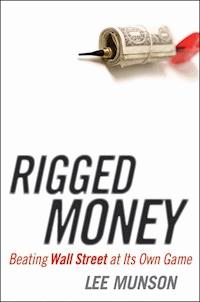
Today's financial landscape and what Wall Street doesn't want you to know Rigged Money is based on one simple truth: Wall Street needs money from Main Street, not the other way around. The financial industry has convinced the general public that investing across different asset classes is the only way to protect wealth, but this is an outdated rule that no longer applies. Since asset classes--small caps, large caps, international investments, gold, and bonds--now overlap when it comes to risk and volatility parameters, the diversification effect is gone. That's exactly what Wall Street doesn't want you to know--that the rules of the game have changed. * Risk Isn't Constant: Pie charts lie when it comes to accurately describing the risk of stocks and bonds * Dividends Are No Silver Bullet: They are designed to entice investors rather than to increase a company's value or your net worth * Buy and Hold is Dead: The financial world (and all the companies and securities in it) moves too quickly and is changing too often for this theory to hold true today * Gold Is Not an Investment: Gold is today's currency of fear, and this fear is driven by escalating government debt An unflinching look at this new financial world, Lee Munson's Rigged Money arms today's investors with the simple, smart, and clear advice needed to level the playing field.
Sie lesen das E-Book in den Legimi-Apps auf:
Seitenzahl: 388
Veröffentlichungsjahr: 2011
Ähnliche


















Contents
Preface
Acknowledgments
Part I: Old School . . . of Thought
Chapter 1: Buy and Hope: The Scam?
Blame the Dutch!
All the Wrong Moves?
Time Is Not on Your Side
My Dinner with Burton
Chapter 2: Lie of the Pie
Today’s Outrage: Pie Town
The Original Pie Crust
Breaking Eggs, Then the Entire Kitchen
So, What Is Next? Risk Budgeting!
Part II: Wall Street: The Set Up
Chapter 3: Mayday
How the SEC Let the Dogs In
Mayday, We Have Soft Dollars!
Soft Dollars
Death of the Stockbrokers
Short History of Advice
Avoiding Fleas
Chapter 4: Research by the Pound
Research by the Pound
The Report Trail
Chapter 5: 401(k): Gun to Your Head
How We Became Traders
The Mutual Fund Supermarket Is Born
No Stockbroker Is an Island
Chapter 6: Liquid Casino
Liquidity Is God
Why Dark Is In
When the Lights Go Out
Part III: Surviving the Rigged Game
Chapter 7: How Wall Street Sees You
Is That Really What You Want?
Taking a Strong Opinion Too Far?
Cramer Is Driving Me Crazy
How a So-Called Pro Fools Himself
Other Distorted Images
Chapter 8: ETFs: Fact or Fiction?
Selling the Sizzle
Getting Down to Earth
The Audit Part I: Sectors
The Audit Part II: Grain Wars
The Audit Part III: Junk Is Garbage
The Final Audit: We Have a Winner!
The Virus Goes Airborne
Chapter 9: Gold Is Money
Historical Use of Gold
Gold Is Standardized
Control versus Live Free or Die
Brave New Non-Pegged World
Chapter 10: Options: Really?
Do You Want Them?
Practical Strategies
Chapter 11: Dividends: A Conundrum!
The Pitch
The Early Days
Growth Breaks Out
What’s Next?
Chapter 12: The New Scam
How Did We Get Here?
History Repeats Itself
Further Down the Rabbit Hole
Credit Unions
Corporate Credit Unions
Afterword
About the Author
Index
Copyright © 2012 by Lee Munson. All rights reserved.
Published by John Wiley & Sons, Inc., Hoboken, New Jersey.
Published simultaneously in Canada.
No part of this publication may be reproduced, stored in a retrieval system, or transmitted in any form or by any means, electronic, mechanical, photocopying, recording, scanning, or otherwise, except as permitted under Section 107 or 108 of the 1976 United States Copyright Act, without either the prior written permission of the Publisher, or authorization through payment of the appropriate per-copy fee to the Copyright Clearance Center, Inc., 222 Rosewood Drive, Danvers, MA 01923, (978) 750-8400, fax (978) 646-8600, or on the Web at www.copyright.com. Requests to the Publisher for permission should be addressed to the Permissions Department, John Wiley & Sons, Inc., 111 River Street, Hoboken, NJ 07030, (201) 748-6011, fax (201) 748-6008, or online at http://www.wiley.com/go/permissions.
Limit of Liability/Disclaimer of Warranty: While the publisher and author have used their best efforts in preparing this book, they make no representations or warranties with respect to the accuracy or completeness of the contents of this book and specifically disclaim any implied warranties of merchantability or fitness for a particular purpose. No warranty may be created or extended by sales representatives or written sales materials. The advice and strategies contained herein may not be suitable for your situation. You should consult with a professional where appropriate. Neither the publisher nor author shall be liable for any loss of profit or any other commercial damages, including but not limited to special, incidental, consequential, or other damages.
For general information on our other products and services or for technical support, please contact our Customer Care Department within the United States at (800) 762-2974, outside the United States at (317) 572-3993, or fax (317) 572-4002.
Wiley also publishes its books in a variety of electronic formats. Some content that appears in print may not be available in electronic books. For more information about Wiley products, visit our web site at www.wiley.com.
Library of Congress Cataloging-in-Publication Data:
Munson, Lee.
Rigged money : beating Wall Street at its own game / Lee Munson.
p. cm.
Includes index.
ISBN 978-1-118-09968-1 (cloth); ISBN 978-1-118-17112-7 (ebk);
ISBN 978-1-118-17113-4 (ebk); ISBN 978-1-118-17114-1 (ebk)
1. Investments. 2. Wall Street (New York, N.Y.) I. Title.
HG4515.M865 2012
332.6–dc23
2011029146
To my wife and daughter, for allowing me to follow my passion.
Preface
Did it really take the 2008 meltdown to clue in the population that Wall Street was somehow rigged? Don’t be naïve. For 400 years, common stock and the trading of it has never been designed to make or lose you money. It’s simply designed for you to participate. Most people ask the wrong questions either out of a lack of understanding of the game or because Wall Street, like a hypnotist, is suggesting the question. This book is written to unravel and illuminate those questions. I get to the bottom of why it’s necessary for Wall Street to have a strategy for every investor, a market for every man, and a philosophy to suit any temperament. If you are a buy and hold investor and are disillusioned by the meltdown, or if you found your asset allocation pie chart to be dubious at best, keep reading. I show you where those concepts came from, why they work or don’t work, and let you be the judge. The very first company that ever floated stock in 1602 was a shaky operation that paid its dividend half in cash and half in spice. Not exactly awe inspiring. That is the start of the rigged system.
You only need to make one decision right here and right now. Do you want to be successful? If you are a young investor, you need to learn how to rub your two pennies together so that you can create a nest egg for when you may not be able to work for money. If you’ve spent a lifetime saving, you need to understand how to turn that nest egg into a cash-flow machine to provide yourself a lifetime of income without having to be productive in terms of our capitalist system. How is it that people are going to be retired for 30 years and not work? One hundred years ago, retirement was a euphemism for dying.
Everyone must engage the system. If you’re lucky enough to have a great pension, where do you think that money comes from? The system. Do you understand what a pension manager has to do to make a check appear in your mailbox every month? We live in a global society in which industry and job security from here on out are questionable. It’s not enough to preserve your capital when you quit working if you want to keep up the lifestyle you’re accustomed to.
All you have to do is take one action: read this book. I don’t give you all the answers, but I will tell you how to prevent Wall Street from getting you off track. Learn how Wall Street gives you answers to questions that you didn’t ask.
Why Did I Write This Book?
April 1, 2001: An article was published on that April Fools’ Day by the New York Observer. The guy who sat next to me at Bear Stearns had a buddy named George Gurley. I had hung out with George mostly drinking with a group of guys for a few months before he asked me if I wanted to do an article with him describing the crazy world of Wall Street. It was never my intention to have my name in it, but as a wiser person today, I should have known better.
George invited me out drinking one night, started a tab, and we hung out. There were several sessions in which I espoused my philosophy about Wall Street, how it worked, how it was rigged, and the over-the-top lifestyle that people lived during a market top. I said all those words and I meant all those words. My only lapse in judgment was drinking too much as George served more and more pints of beer. I could have been more tactful in delivering my ideas, and George Gurley could have been a more professional journalist rather than encouraging me into a night of drinking to extract vulgar language over substance. In the end we were both products of the excessive times. Times have changed. I said more than 10 years ago that New York was burning and that it would fall. Five months later it did—for real. After the planes hit the Twin Towers, my fate was sealed. I would move before the end of the year back to New Mexico.
From there I got a great job at Charles Schwab, at the time the most wholesome place to work on Wall Street. It gave new meaning to squeaky-clean. And yes, I found it telling that they would take me with all the negative public relations that came with that article just because they simply wanted my experience. It also gave me a shot at maturity. This Fortune 500 company saw more than just a guy who could make money. They saw me as somebody who could do good things for Wall Street and Main Street. I began studying, first for the Certified Financial Planning designation and then to earn a Chartered Financial Analyst charter. I bought my first home and had my first child, a daughter. Will I ever be able to explain my lapse in judgment to her?
I want to teach my daughter that even if certain people in society disagree with you or what you do—follow your passion. You respect the fact that some people are ignorant and will never approve. In essence, I want to tell her: don’t apologize and don’t back down.
Now that I’m older, I like what Business Insider did without contacting me in publishing a 10-year flashback of the ordeal. That was the defining moment because it reminded me of something. It reminded me of what I was trying to tell people back in 2001. The Business Insider retrospective of the article that came out April 1, 2011, reminded me of one thing: I had the idea in the first place, but I needed a way to communicate it to a wider audience with more wisdom and preferably with less profanity and offensive metaphors.
Why did I start the firm? Because eventually I felt that my previous firm wasn’t the wholesome place it used to be. It wasn’t being run by the same CEO anymore, and I didn’t feel intellectually honest about what I was doing. But honestly I just wanted to do it my way. Isn’t that the American dream? It was Chuck Schwab’s. And that’s why I started Portfolio, LLC in 2008. I wanted to represent clients only and I wanted to not have a gag rule. I wanted to have the ability to politely or otherwise tell people how things worked, expose it, and make my clients money doing it.
Who Is This Book For?
I’m not here to shock you anymore. The ideas in the book are jarring enough. The substance of what I have to say here is outrageous. This book is for people who want to grow their money, protect their assets, and instinctively know that there is a house out there stacking the odds against them. I’m part of the house because I’m a Wall Street operator. But I’m also hired by my clients to only work in their best interests and to get them the results that they request. I only serve one master: my clients. And that includes you, the reader. Whether you’re starting off, have been investing for 50 years, or are a professional investor yourself, this book is designed to free your mind and to act as a starting point for your financial education.
This is for people who want to reset their perception by getting rid of a lot of misperceptions. In this book I talk about a lot of different things—some positive and some negative. There is no clear-cut way to do things, and if anything, you’ll see the upside and downside of both arguments even if I clearly have a bias. The most important thing the reader can do after finishing this book is to go back and read the original sources which you can find at the end of this book. As a student of St. John’s College, the third oldest institution in this country, we were taught to read only the original text. These words are my original text. If you want to go further in your education of how the game works, you need to read what I read. St. John’s taught me how to read! It was the single most important contributing factor to my ability to think and consistently refer back to the original texts. I’m not challenging anybody’s work. I just have my own ideas. Most people I’ve known in the business quote books that they’ve never read and use ideas that they have never critically thought through. Given the education I received at St. John’s, I find that unacceptable.
What’s in the Book?
I break up the book into three sections: Part One Old School . . . Of Thought, Part Two Wall Street: The Set Up, and Part Three Surviving the Rigged Game. Old school is just that—ideas that are past their prime. But is it that simple? The very idea of buying and holding something for a long period of time seems reckless and without any real thought. I look at two different companies, the very first was publicly traded, and one of the best performing of the last 40 years. You would think the incredible returns would prove a buy-and-hold approach. Hindsight identifies a needle in a haystack. But it doesn’t help you today going forward. Buy and hold is a phrase that has very little actual meaning and doesn’t describe any type of investment philosophy as much as a dogma or sales pitch. Even worse, as we enter the modern age of the asset-allocation pie chart, we realize risk has been understated and the very nature of illustration has been misrepresented. Many salespeople in my industry find these ideas dangerous. Why? Essentially, I indict their intellectual credibility and expose their deficiencies. By the end of this section you’ll have a clear idea of how to move forward without the baggage that you and Wall Street have saddled each other with.
Once we understand risk and how that idea has over the years been misrepresented by Wall Street, what other structural changes in the business have contributed to the delinquency of investors? In Part Two, we go back to the year I was born. Through several key rules set forth by the U.S. Congress, the unintended consequences include devaluing the credibility of stock research and taking away the choice of the American worker to engage or not engage the stock market. By creating competition and lowering prices, we ended up becoming cynical and distrusting of the market structure itself. Cheap discount commissions, 401(k)s, and electronic trading were all supposed to help us in some way, but it doesn’t feel that way. I’m going to help you understand why you should care. We want to look past the problems and understand how to turn it into your advantage.
In order to survive the rigged game, you have to control how the other side sees you. In Part Three, I will give you a few examples of how far off the mark Wall Street’s perception of you can be. From there, we’ll look at a few popular investment ideas. Why are exchange traded funds (ETFs) popular? And what should you do with them? Is gold a bubble? Money? Or is it just another way for Wall Street to get a commission? For intrepid investors, I offer my version of trading options. If old and stodgy is your style, sit back for Chapter 11, where I explain why dividends matter and why on some level they’re irrelevant. Most importantly, I will tell you how all these things get turned into a pitch which Wall Street cares about nothing except selling you something. To top it off, I unveil the New Scam. Thanks to deregulation and a complete disregard for moral hazard, we start a new century with banking and brokerage joined together like it was 100 years ago, with essentially the same effect: bedlam. Ladies and gentlemen, I give you the rigged game!
Additional Materials
For updates and more information, go to www.riggedmoney.com.
Acknowledgments
I’d like to thank acquisition editor Laura Walsh for her passion behind the project and Judy Howarth for putting up with my writing. I want to acknowledge my incredible luck of having Jonathan Gake show up on my doorstep and wanting to work for me. Without him the manuscript would still be in my mind. Lorraine Ell for her constant eye on detail and everybody at Portfolio who put up with my days of absence in order to write the book. Needless to say, my wife and daughter made significant sacrifices and I want to acknowledge that I will be spending more time at home after this book is published.
But what about those who made it possible to write the book on a bigger scale? First and foremost, thank you to Stephen Schwartz, Mark Ronda, and the crew at Prime Charter in the late 1990s. I could not have asked for a better place to spend my first four years in the business.
I want to thank the management at Bear Stearns for realizing we were a bad fit right off the bat. It couldn’t have happened to a better batch of people. I also want to thank all of the producers at CNBC who gave me a shot to be myself and coached me along the way, especially Dan Holland. Special thanks to Larry Kudlow for teaching me to grab hold of my idea and not let go.
PART I
OLD SCHOOL . . . OF THOUGHT
CHAPTER 1
Buy and Hope: The Scam?
Over the years there has always been a debate over whether investors should buy and hold stocks and never sell them versus the active pursuit of trading stocks to earn profits. I have no idea why anyone would take the risk that a corporation will last longer than you will or for that matter what buy and hold means. Why would anyone purchase a stock, and then never sell it? One common reason is that if the stock pays a dividend—the earnings of a corporation paid out to its shareholders—you can get cash flow just for holding the shares. Some people just want to accumulate wealth and hold onto stocks forever, but even the desire for endless fortune doesn’t mean an endless holding period. Would you still want to own shares of a typewriter company?
Of course the basic assumption of buying and holding a stock is a better bet than the old adage of buy low sell high. The concept we are exploring here is buy and never sell. Who would want to sell a company that is supposed to make profits over the long haul? Plus, how would you know when to sell? If you hold a stock forever, it shouldn’t matter when you buy it since it will be a one-time transaction. This would be fine if most corporations made money in large amounts forever and paid out the profits to you. If you suffered the horror of a basic finance class in college, the value of a company was determined by looking at the long-term earnings or cash flow of a firm if you wanted to answer the test questions correctly. That would be fine if the world had no shares traded on public exchanges where the price to buy and sell is determined each day by supply and demand, not rational analysis of a firm’s true value. Plus, I have no idea how people in a public market would ever come to a consensus to figure out the value of a big company like General Electric (GE). Even the executives at GE can’t tell you the real value of the company. This is because there is no real value, only the price a buyer and seller can agree on at that moment in time in which the stock trades hands.
Lesen Sie weiter in der vollständigen Ausgabe!
Lesen Sie weiter in der vollständigen Ausgabe!
Lesen Sie weiter in der vollständigen Ausgabe!
Lesen Sie weiter in der vollständigen Ausgabe!
Lesen Sie weiter in der vollständigen Ausgabe!
Lesen Sie weiter in der vollständigen Ausgabe!
Lesen Sie weiter in der vollständigen Ausgabe!
Lesen Sie weiter in der vollständigen Ausgabe!
Lesen Sie weiter in der vollständigen Ausgabe!
Lesen Sie weiter in der vollständigen Ausgabe!
Lesen Sie weiter in der vollständigen Ausgabe!
Lesen Sie weiter in der vollständigen Ausgabe!
Lesen Sie weiter in der vollständigen Ausgabe!
Lesen Sie weiter in der vollständigen Ausgabe!
Lesen Sie weiter in der vollständigen Ausgabe!
Lesen Sie weiter in der vollständigen Ausgabe!




