


Erhalten Sie Zugang zu diesem und mehr als 300000 Büchern ab EUR 5,99 monatlich.
- Herausgeber: Icon Books
- Kategorie: Lebensstil
- Sprache: Englisch
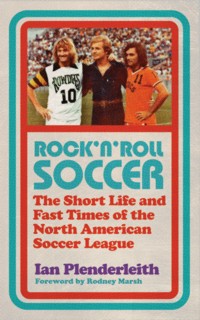
Superstars, hype, cheerleaders, razzmatazz – the North American Soccer League in its 1970s heyday was a league way ahead of its time. It lured the biggest names of the world game, like Cruyff, Best, Beckenbauer and the greatest of them all, Pelé, to play football as it was meant to be played – without inhibition, to please the fans. It experimented with rules and innovations that upset purists, and liberated players from the negative tactics of the muddy, hooligan blighted grounds of Europe; then it crashed back down to earth like a rock star's private jet, bankrupt but laughing all the way. Acclaimed football writer Ian Plenderleith reveals in all its glory the colour and chaos of the world's first truly international league.
Sie lesen das E-Book in den Legimi-Apps auf:
Seitenzahl: 674
Veröffentlichungsjahr: 2014
Das E-Book (TTS) können Sie hören im Abo „Legimi Premium” in Legimi-Apps auf:
Ähnliche
















ROCK’N’ROLL
SOCCER
ROCK’N’ROLL
SOCCER
The Short Life and Fast Times of the North American Soccer League
Ian Plenderleith
Published in the UK in 2014 by Icon Books Ltd, Omnibus Business Centre, 39–41 North Road, London N7 9DP email: [email protected]
Sold in the UK, Europe, South Africa and Asia by Faber & Faber Ltd, Bloomsbury House, 74–77 Great Russell Street, London WC1B 3DA or their agents
Distributed in the UK, Europe and Asia by TBS Ltd, TBS Distribution Centre, Colchester Road, Frating Green, Colchester CO7 7DW
Distributed in Australia and New Zealand by Allen & Unwin Pty Ltd, PO Box 8500, 83 Alexander Street, Crows Nest, NSW 2065
Distributed in South Africa by Jonathan Ball, Office B4, The District, 41 Sir Lowry Road, Woodstock 7925
Distributed in Canada by Penguin Books Canada, 90 Eglinton Avenue East, Suite 700, Toronto, Ontario M4P 2YE
ISBN: 978-190685-069-2
Text copyright © 2014 Ian Plenderleith
The author has asserted his moral rights.
No part of this book may be reproduced in any form, or by any means, without prior permission in writing from the publisher.
Typeset in ITC Legacy by Marie Doherty
Printed and bound in the UK by Clays Ltd, St Ives plc
For my dad, Robert Plenderleith, who had the great but truly terrible idea to take his six-year-old son to Sincil Bank in 1971
In memory of soccer writer David Wangerin (1962–2012)
About the author
Ian Plenderleith is a US-based British football writer and journalist. He has been writing about football for the past twenty years for publications including the Guardian, the Wall Street Journal, When Saturday Comes and Soccer America. Resigned to a life starved of success following Lincoln City and Scotland, he leaves his desk on evenings and weekends to coach, play and referee the beautifully frustrating game. He lives just outside Washington DC.
Rodney Marsh won nine caps for England between 1971 and 1973 and made over 400 league appearances for Fulham, QPR and Manchester City. After moving to the USA and the Tampa Bay Rowdies in 1976, he was instrumental in helping both his team and the North American Soccer League look for a few heady years like they were going to revolutionize the US sporting landscape.
Contents
Author’s note
Foreword by Rodney Marsh
Introduction
1. Atlanta, ‘Champions of England’
2. Pelé vs Eusebio: ‘Hot property getting mobbed’
3. Leaving old Europe behind
4. Marsh and Best: Entertaining the USA
5. Gimmicks, girls and teenage kicks: Selling soccer to the US public
Half-time
6. Brilliant mistakes: Quicksilver teams in Vegas and Honolulu
7. The NASL vs FIFA and the world
8. Broken teams in dysfunctional DC: Cruyff, the Dips, the Darts and the Whips
9. Myths and memories: The Cosmos, the Fury and the rock ’n’ roll lifestyle
10. Crash
Conclusion
Appendix A: North American cities and their NASL teams
Appendix B: North American Soccer League championship games
Notes
Acknowledgements
Index
Author’s note
This is an analysis, not a complete history, of the North American Soccer League. The book does not cover every team season by season, and the events and games described are only in a very rough chronological order. There are dozens of players, coaches and owners not mentioned in this book, but Colin Jose’s book A Complete Record of the North American Soccer League will answer any statistical question that might arise while reading. The internet will more than likely help too. Because the League’s cities, team names, rules and structure changed constantly, I have added two appendices for reference. Appendix A (page 405) lists the cities and the names of the teams they hosted in any given year. Appendix B (page 407) lists the finalists and the scores of the championship game or games.
I call football ‘soccer’ throughout, simply to avoid confusion and differentiate it from American football. I refer to a team’s coach knowing that we in the UK would call that same person a manager. Again, this is to differentiate the coach from the general manager (GM) – every US sports team has a GM, who is generally in charge of buying players and managing the budget for buying players. He also tends to act as more of a team spokesman than the coach. Simply put, the GM manages the team, and the coach coaches it. Or, at least, that’s the theory.
When referring to the NASL as ‘the League’, a capital L is used to differentiate it from any other league. An MVP is Most Valuable Player, which depending on the context means ‘man of the match’ or ‘player of the season’. An All-Star XI is announced at the end of every US sports league’s season to honour those judged to be the best eleven players in the league that year – it is generally considered to be a big deal. The term ‘franchise’ is used liberally and interchangeably with ‘club’ and ‘team’, not because I supported the FA’s decision to move Wimbledon FC to Milton Keynes (I didn’t, and still don’t), but because in the 1970s especially, US soccer teams really were franchises, as mobile and vulnerable as under-performing branches of a fast food chain. Quotes in the present tense are from interviews conducted by the author, quotes in the past tense are from archival research.
Picture credits for images in the plate section appear alongside the individual images. Where images appear uncredited we have been unable to trace the copyright holder; anyone whose copyright has been inadvertently infringed is invited to contact the publisher.
Foreword
by Rodney Marsh
History may have largely forgotten the North American Soccer League, but it wasn’t forgettable to those of us who were there. I joined the appropriately named Tampa Bay Rowdies from Manchester City in 1976 when the NASL was on the rise, following in the footsteps of world greats Pelé and Eusebio. My very first day at the Rowdies pretty much set the tone for what was to come. I walked into the secretary’s office to find her on the phone to the local police station, negotiating to get two of our players out of jail. Apparently a couple of Tampa’s Scottish lads had enjoyed a boisterous night out and ended up behind bars.
Yes, the NASL had a reputation as something of a party league for ageing pros. The last time that Pelé came to play in Tampa for the New York Cosmos in 1977, it was a massive game, built up for weeks beforehand. Our marketing executive sent a limo to the airport to pick him up, along with their colourful striker Giorgio Chinaglia, to be taken straight to a press conference at a TV station. In the back of the limo were two beautiful cheerleaders holding a bottle of Chivas Regal on a silver tray. The story goes that the two players never made it to the press conference, and in fact were not seen at all for several hours. Next day, the Rowdies won 4–2 in front of 45,000 fans.
Yet no one who played in the NASL disputes that we all took the soccer very, very seriously, and that included Pelé. The Rowdies developed an intense rivalry with the Cosmos, and I had my personal battles with the great Brazilian. In one game he went ballistic at me for what he thought was showboating (he was right – it was). In another game he scythed me down and provoked a fifteen-man brawl. Most painful of all, after I nutmegged him once he came up to me and ruffled my hair – a sporting gesture by the revered icon. Except that no one could see that he’d gouged my ear with his fingernail and opened up a bleeding wound.
Off the field, Pelé was always the perfect gentleman, but on the field he would throw the elbow and harass the referee. He was not only the greatest player in the world, but a proper winner, and the vast majority of those who played both with him and against him in the NASL approached the game with just as much commitment.
Pelé and football’s other household names like Johan Cruyff and Franz Beckenbauer were a perfect fit for America, where I quickly learned that people generally love a superstar as much as they love a big event. I still today look at the English mentality and its desire to slag off a star and destroy him as quickly as possible. In the US, I found a country that not only celebrated its stars, but enjoyed them too. Like many other British players at the time I felt more relaxed in a place where I could express myself freely, both on and off the field.
Of course there was a lot of craziness as well. In my NASL career I was a player, coach and finally part-owner of the Rowdies. Before the final season in 1984 we met to discuss possible rule changes, and somebody suggested each team should have a designated number 9 who would be allowed to punch the ball in open play. I burst out laughing, and told them FIFA would never allow it. We actually took a vote on it, and it tells you something about the adventurous mindset of some of the owners that the idea suffered only a narrow defeat.
Those owners were the same men, women and corporations who lost millions of dollars in a league that ultimately didn’t make it. Some were clueless jokers out to make a fast buck, but many were courageous investors who genuinely thought that soccer had a future in the US. Beyond all the razzmatazz and the great players, it was their cash and enthusiasm that helped lay the foundations for soccer’s massive presence today across North America. The millions of young kids now playing across the US and Canada are the enduring legacy of a trend kick-started by the global game’s biggest names, and the hundreds of European and South American pros who joined them.
I’ve always felt that there’s been the need for a relevant, definitive book about the NASL that would capture the essence of the League and its true place in both US and world soccer history. This book finally does justice to the story of the remarkable rise and fall of a wild and uniquely glorious league that dared to be different, and had a hell of a good time along the way.
Rodney Marsh
Introduction
‘This sport will take off. There is absolutely no way that it will not bypass everything else. This country will be the centre of world soccer. In the 80s there will be a mania for the game here. There will be three to five million kids playing it. The North American Soccer League will be the world’s No. 1 soccer league. And it will be the biggest sports league in the USA.’
—North American Soccer League Commissionera
Phil Woosnam, 1977.1
No one ever accused the North American Soccer League Commissioner Phil Woosnam of lacking optimism. It was, after all, the former Aston Villa forward’s drive and diligence that had rescued the nascent professional soccer league from the brink of extinction after just one year of play in 1968. Less than ten years later under his stewardship, the League was not only succeeding and expanding beyond the wildest of expectations, but was turning into a roller-coaster phenomenon that really might fulfil Woosnam’s brash and bullish forecast: number one sport in America, number one soccer league in the world. Yet again, the Yanks were coming with their arrogance, their money, their revolutionary vision and their self-belief, sweeping aside a century of tradition as they stormed forward into a shiny future that was splashed with character, colour and cool.
A few months after Woosnam’s bold forecast, the New York Cosmos beat the Fort Lauderdale Strikers 8–3 in a sold-out NASL playoff game at Giants Stadium, New Jersey. The attendance was 77,691, and the Cosmos starting line-up featured Pelé, Franz Beckenbauer, Carlos Alberto and Giorgio Chinaglia. The NASL was at its zenith, and this single game sums up everything the League stood for – a huge crowd, tons of goals and some of the biggest names in world soccer. There were celebrities in the stands and leggy cheerleaders on the touchline. What could possibly go wrong? It’s easy to ask that question now with a knowing smile. Arguably of more interest are the things that went right.
In the 1970s, Pelé, Johan Cruyff, Eusebio, George Best, Gerd Müller and Beckenbauer all played in the same league. Forty years later, that legendary constellation seems almost unreal. Yet, this was the product which the NASL attempted to sell to a sceptical audience – the world’s greatest players representing start-up teams unknown both at home and abroad. The NASL was a project way ahead of its time. It was a big-money glamour league that aimed to entertain, while generating cash. In that respect, it was the Champions League and the English Premier League rolled into one. Pelé had already retired from soccer in 1974, but he chose to come back the following year for one league only. The pugnacious NASL offered the kind of outrageous, multi-million dollar deal that no European team had the courage to put on the table, yet it pointed to the eventual path of European club soccer at its highest level.
European attitudes towards US soccer have always been informed by a sense that the Yanks don’t know what they’re doing when it comes to any sport that won’t stop the action for commercial breaks. It was no different in the 1970s. The British press looked down on the pom-pom presentation, the plastic pitches, the garish uniforms, and the alien points system that was set up to encourage more goalscoring. More goals? How distasteful! When the NASL declined, there was a sense of both relief and schadenfreude in Europe, shared by a majority of the professional sports establishment in the USA. The NASL was up against incredible odds – it had to compete against American football, baseball and basketball at home and with the conservative soccer traditionalists abroad. Yet its vision of the game has persevered, while at the time it flourished for a few short years in conspicuous contrast to the grim European game. In Britain especially, crowds were plummeting thanks to widespread hooliganism, while tactics were increasingly geared towards results with little thought paid to thrilling the fans.
Woosnam’s fantasy may have been realized if the NASL had had the money and the management to carry the League through for just a few more years. After all, the National Basketball Association struggled through the same decade before establishing itself in the mainstream of US sport and culture in the 1980s. The National Football League, despite gridiron’s long history, had only recently become a massive, major-league movement thanks to a lucrative television contract and the ease of air travel. In the post-Second World War years, the most popular US sports were baseball, boxing and horseracing, all followed avidly on the radio, but the latter two had declined in popularity as American football rose. As far as soccer was concerned in the 1960s when plans were first discussed for a new professional league, the North American sports market was an open field with a large share of the cash and the audience still up for grabs. If it had pulled through, we could now be looking at Woosnam’s alternative: a league firmly established as the best in the world, whose success has carried Canada and the US to the top of the international game. Players flocking to North America from Europe, Africa and Latin America to play for the globally known brands whose games are transmitted to Europe, Africa, Asia and South America by satellite every weekend from February to November. The League having stolen a jump on the old capitals of soccer, baffled as to why they didn’t feel the imminent gusts of change. FIFA having begrudgingly upped sticks and relocated to midtown Manhattan, dwarfed by the NASL’s 24-floor tower across the road on Sixth Avenue (with a pneumatic chute installed beneath for the efficient transfer of brown envelopes).
If you were designing a prototype for a brand new, modern soccer league, you would place the most image-conscious, most skilful, most brand-friendly players with the clubs in the biggest, most glamorous cities. The ensuing media coverage would guarantee the crowds, and so sponsorship revenue and a fat television deal would automatically follow. Celebrities and politicians would start to show their faces in the stands as sure as ticks on a stray dog. Your league might look like the Premier League, or the periodically mooted European Super League. It would look something like the top half of North America’s first division in the late 1970s, a league that got too much right to ignore.
‘In Britain there is certainly room for radical thought about a more modern approach to the needs of the fans, better communication,’ wrote the Sunday Mirror journalist Ken Jones in the late 1970s. ‘The United States will one day emerge as a major power in the soccer world. There is a lot to be done, a lot to learn, a long road to travel, but please send up a few fireworks along the way. Light the sky with your ambition, energy and initiative. Soccer needs America.’2 In The Observer, Hugh McIlvanney also pleaded the US case: ‘It would be foolish to look upon soccer in the US as a sort of threat,’ he wrote in 1977, ‘when it might so easily provide a marvellous infusion of freshness. Given the present condition of British football, we should be the last people to take an excessively didactic attitude about what is happening here.’3
These were rare positive voices to be heard about US soccer in the supercilious European media. They recognized the potential in America’s verve and hunger, and the fact that Europe badly needed a few ‘fireworks’ up its backside to liven up its act. Such perspectives have been lost in the standard narrative of the NASL as a failure, or through contemporary assessments by the likes of the Guardian’s David Lacey, who dismissed the NASL as ‘a glossy but third rate competition’.4
Like Elvis, though, the NASL only ended up a failure – there was plenty of good and influential material long before the Vegas years and the body found in the bathtub.
In the quick-fire, instant-image era of the internet, there’s a standard photograph that tends to turn up whenever there’s a discussion about the NASL – a picture of the shirts worn by the Colorado Caribous during the 1978 season, the ones with the leather cowboy fringe all the way across the chest. Ha ha, that’s how stupid the NASL was. Remember, the league that beat its chest in the 1970s and told the world to watch out, then crashed like Lynyrd Skynyrd’s private jet? What’s missing from that facile summation is the life of the North American Soccer League, and its crucial role for both US and world soccer beyond the 1970s. The stories of the myriad players who moved thousands of miles to start up a brave new league at a time when most players stayed firmly put in their home countries. What it was like to play with and against Eusebio and Pelé, or to share a dressing room with a domineering character like Johan Cruyff. What it meant to be thrown into a world of six-lane highways, five-hour flights to away games, and to take to the field on the back of an elephant while trying to remember the instructions you’d only half understood from your Yugoslavian coach. Then, after the game, you’d get to meet a famous rock star. ‘People assume that my greatest thrill last year was winning the [NASL] championship,’ said the New York Cosmos’ young English midfielder Steve Hunt in 1978. ‘They’re wrong. It was meeting Mick Jagger.’5
The NASL introduced the idea that a soccer game could be an event and a spectacle, not just two teams meeting to compete for points. You weren’t herded into the stadium by policemen waving wooden batons. You were a customer, not a criminal or a public nuisance. You arrived at the stadium two or three hours early to grill hot dogs and chug down beer with your mates in the car park while listening to a ramped-up radio. Then, well refreshed and whooping in that way unique to hyper-enthusiastic US sports fans, you’d enter a newly constructed, futuristic, multi-purpose stadium – the same impressive dome where the city’s baseball and American football teams played. The players were introduced by name and were greeted with raucous music and dancing girls as they ran out on to the field, one by one, waving to the crowd. There might be a soul star singing ‘The Star-Spangled Banner’ (Lou Rawls was a regular part of the NASL’s pre-game routine) before the cheerleaders raised their well-honed legs in formation, some rockets decorated the night sky, and the match ball would descend in the arms of a man with a parachute on his back, dressed up as a clown. Manufactured atmosphere, some might argue. Others might argue in return, innovative marketing techniques aimed at wooing a new generation of sports fan.
Once the game started you could watch a version of soccer easily recognizable as the real thing, but which promoted scoring, played down defensive duties, and refuted the virtues of a hard-fought 1–1 draw. That’s why the NASL instigated the shootout – not because drawn games were ‘un-American’, but because they were unsatisfactory to a US crowd. Why bother going to a game if neither side was going to win? Why deny the fans that moment of climactic glory or crushing disappointment? Then if a cheerleader congratulated the biggest name on the soccer planet with a kiss after he won the game with a coolly taken shootout conversion … hey, relax dude, that’s just how we roll with the game here.
Woosnam and the NASL had the courage to initiate a new way forward for the game. It took two decades for the rest of the world to embrace, but then the biggest soccer leagues on the planet became an extension of what the NASL had begun. The redevelopment of European club soccer owes a substantial debt to what is commonly disdained as North America’s farcical, hubristic attempt to found its own national league. During the NASL years, television revenue became an indicator of a league’s health. The League abolished the price ceilings for what players could earn. For better and worse, it revolutionized the idea of what a soccer club could be. It played games in modern, all-seater stadiums. In the Cosmos, it created an all-conquering giant that everyone loved to hate. In an era of bleakness, austerity and violence in Europe, it found a way to make professional soccer fun. That it took FIFA, UEFA and the biggest European leagues so long to catch up demonstrates just how out of touch they were. The NASL at its brief peak might have been a product of the brash, loud and shameless 70s, but then and now it’s the league of the future.
Footnote
a. North American term for chairman, president, chief, honcho, big boss.
1
Atlanta, ‘Champions of England’
‘America? They can’t play the bloody game over there!’
—Ron Newman, future NASL coach, in 1967.
The front-page, capitalized headline on the Birmingham Evening Mail was unequivocal: US CLUB WANTS TO BUY VILLA.1 This was almost 40 years before Randy Lerner took over the Birmingham club in 2006, when the interest of American millionaires in English top-flight clubs was no longer quite so shocking. In November 1968, however, it was beyond radical. England were world champions, and the only foreign players in English soccer were from Scotland, Ireland and Wales. The Americans did not even play the game, did they?
In Atlanta, they did. By the time of the Mail’s headline, the Atlanta Chiefs had been playing it for two whole years. Only that summer they had taken on the English league champions, Manchester City. They had the backing of the Atlanta Braves baseball team, making them, in the words of Mail reporter Dennis Shaw, ‘the wealthy American soccer club’. And it quoted the team’s chief executive Dick Cecil as saying ‘we would only be interested in taking full control’, stressing that the organization had ‘vast financial resources’. Villa, struggling for cash, were certainly interested enough to open talks.
Mr Cecil was asked by the newspaper, somewhat under-statedly, if he didn’t think that US control of an English soccer team ‘would raise eyebrows’, to which Cecil responded puckishly, ‘Rather like our taking over the Queen Marya.’ However, he stressed that the team would still be English-run. ‘We would not expect to come over with a boatload of Americans and think we had all the answers to English football. We think we would have something to offer by American methods in some spheres. Remember we are businessmen. We would not want to be regarded as a lot of American millionaires coming in to throw money around unwisely.’
The takeover never happened, possibly because it was 30 years too early, and because Villa eventually found other sources of money more comfortingly close to home. In the late 1960s, the English league was not ready for American businessmen with fancy new ideas about making money out of soccer. In England, there were still some vestiges of the Corinthian ideal, although any rejection of American business values probably stemmed more from a parochial distaste for the upfront approach of the brazen Yanks. We’ll take old money, but not new. Meanwhile, the game was there to be played, not exploited, and it was backed by almost a century of tradition. If a team was having money troubles, it would get through somehow. Glorious old teams like Aston Villa would not be allowed to die overnight.
Dick Cecil will only give a knowing smile when asked today if the Chiefs were making a realistic bid for Villa. At a time when the fledgling US game was looking for every chance to make itself public in a bid to sell soccer, the headline alone could be counted as a great result (he later told the Daily Mail, ‘A link with Aston Villa would have given soccer in America tremendous impetus’). In 1968, with the backing of baseball cash and the optimism of Phil Woosnam, Villa’s under-rated Welsh forward who was nearing the end of his career, Atlanta was the pioneer in an ambitious drive to permanently alter the American sporting landscape. In England, foreign ownership was too much, too soon. In the United States, change was a constant, and its limits were unknown.
English champions, bad losers
Manchester City’s assistant manager Malcolm Allison didn’t take his team’s defeat to Atlanta well. Prior to the game on 27 May 1968, he had been sanguine, while the local media touted City as champions of England and thus possibly the best team in the world – a deductive leap that, in the name of publicity, few in either camp would have bothered to dispute. ‘The stadium is a beautiful facility and the pitch is fine with us,’ Allison said.2 ‘It won’t make a bit of difference to us playing on part of a baseball infield. It’ll be just like playing on a frozen field in England. And we’ve played in all kinds of conditions.’ He even pre-empted excuses about City struggling after a long, hard season, because it just meant ‘we really don’t need that much practice’.
His players were more cautious. Tony Book, looking back at an already demanding tour (City had so far played and drawn with Dunfermline Athletic, twice, in Toronto and New Britain, and then beaten the Rochester Lancers 4–0) conceded that ‘the team is a little tired, since we’ve had to really play in these games. It seems everyone wants to beat us.’ With City missing some key players on international duty, the game could be a close one. Should that happen, he added, ‘it could be a great thing for soccer. It would be great for the game, because everyone back home and over the world is watching soccer in America. And we all want it to succeed here.’3
Book’s comments reflect that City, to their huge credit, willingly co-operated in selling the exhibition game to the Atlanta public, arriving in the city a few days in advance, showing up at various banquets and receptions in their honour, and generally doing their part to talk up the coming game and soccer in general. In spite of the rigours of a demanding tour at the end of a long and extremely successful English season, manager Joe Mercer at least gave the impression that his side was taking it all seriously enough. ‘Although we don’t quite know what to expect, you can bet we won’t be complacent,’ he said.4 ‘I haven’t seen the Chiefs play, but I do know some of their players and what their capabilities are.’ Francis Lee also cautioned that ‘they just might give us a pleasant, or unpleasant, surprise.’5
Pleasantly, or unpleasantly, City lost 3–2 in front of 23,000 raucous fans, and Allison’s reaction was far from gracious. ‘They couldn’t play in the Fourth Division in England,’ he said.6 ‘The boy that kicked the last goal was offside too. They played well. We played poorly. It’s as simple as that. It happens sometimes in England. The Third and Fourth Division sides come up and beat the First and Second Division teams. They just want the game more. The Chiefs had more to gain tonight than we did. We played like we didn’t really want to win the match.’
The game itself, though, was a proper contest, and in spite of the purportedly offside third goal, City keeper Ken Mulhearn conceded that his team’s penalty goal through Francis Lee should probably not have been given either. ‘I was surprised,’ he said. ‘I really didn’t think they would be that fast. I knew they had the soccer skills, but the speed surprised me.’ He compared Atlanta with the better teams from the English Second Division.
What also surprised the local media was the passion of the crowd as they reacted to the home side’s comeback from an early goal scored by City’s Tony Coleman. ‘The play on both sides was brilliant, fierce and fiery,’ wrote the Atlanta Constitution. ‘The Chiefs opened with every intent on winning and hammered at the British goal on numerous occasions.’ They equalized through Englishman Graham Newton – a former bit-part player with Walsall, Coventry and Bournemouth – then hit late goals through Kaizer Motaung (who later returned to his native South Africa with the team’s name to found the Kaizer Chiefs), and the Zambian Freddy Mwila – Allison’s ‘offside’ goal. Lee’s penalty in the 88th minute was too little, too late to prevent defeat.
Mercer’s analysis was much more generous than Allison’s. ‘We were beaten fair and square on the night,’ he said. ‘We’re going to Chicago next and somebody has got to catch out for it [the loss].’ The Chiefs’ player-coach Phil Woosnam exulted: ‘The boys did it. They really played well together and it was a real team effort. They worked the ball well and really went after them.’ He wasn’t about to say anything too rash, though, being aware of the need to temper local expectations and the American penchant for hyperbole. ‘We’re not First Division now just because we won one game. That does not make us the world champs.’7 Striker Ray Bloomfield, a former England Youth international who had been persuaded by Woosnam to move to Atlanta from Aston Villa, was moved to say, no matter what happened to soccer in the US now, ‘I shall never forget tonight.’8
The local press, however, which thanks to Woosnam’s tireless lobbying was giving the new team generous coverage in its sports pages, could see that this was a friendly game with some significance. Columnist Jesse Outlar wrote that the Chiefs ‘attacked the Marvelsb as though the World Cup were at stake, instead of a mere exhibition score. When it was over, excited boosters [fans] mobbed the Chiefs, proving that soccer is not only a highly emotional game in Latin America and London. Those 23,141 customers could not have cheered louder Monday night if the Braves had won the seventh game of the World Series.’ For an American sportswriter, that really was the ultimate accolade.
The paper’s most forthright columnist, Furman Bisher – a sporting version of H.L. Mencken whose views were rarely less than entertaining – wrote with some retrospective irony that the game ‘was another fight for independence. Once again Our Side was the frontier and Manchester was the aggressor. We were the bush-league, Manchester the classic bully. We were the pitiful minority, Manchester the tyrant.’ The win meant that ‘our colonials still have a streak going, beginning with the Revolutionary War and carrying on down through the Ryder Cup, the Walker Cup, the Wightman Cup and the cup that runneth over.’ Meanwhile, Eric Woodward wrote for a UK audience in Football Monthly, ‘The score, 3–2, could not reflect the enthusiasm the game detonated among a crowd of 23,141 – at least two-thirds of whom were seeing professional soccer for the first time.’ No one could now dispute that soccer would ‘sweep the States’ when a crowd of this size, way above the League norm, ‘literally abandoned their seats in this no-standing Atlanta Stadium to stand and yell themselves hoarse for 90 minutes … The noise at times made Liverpool’s Kop sound like a cathedral choir in comparison.’9 It should be noted, however, that the fulsome Woodward worked for the Chiefs as an administrator.
While Atlanta’s burgeoning soccer community glowed, City left town to continue their long tour. They lost to Borussia Dortmund in Chicago, twice drew with Dunfermline again, in Vancouver and LA (both games ended 0–0, so they weren’t making soccer converts at every stop), then went down 3–0 to the Oakland Clippers. Next it was on to Mexico, to play Atlante in the Aztec Stadium, but the game was cancelled because Atlante claimed that City had broken the terms of their contract, which stated that they were supposed to field their championship-winning team. Mercer told them this was physically impossible due to injuries and absences – the situation had become so bad that Allison had played in the second half in one of the Dunfermline friendlies, affording the entire bench the opportunity to hurl abuse at him in ‘the true Allison style’10 – and so the game never happened. A second game scheduled against another Mexican first division team, America, was also cancelled.
You’d think after a gruelling domestic season and eight games across North America, that would have been the cue to take a flight back to Manchester. The squad was threadbare, players were enduring games in pain, and they were missing two key men, Colin Bell and Mike Summerbee, both off on international duty with the England team. Yet clearly something still rankled about that defeat in Atlanta. When the games in Mexico were cancelled, City called the Chiefs. Do you fancy a rematch? With the chance of another gate four times above their home average, Atlanta were more than happy to oblige and host the English champions a second time. The rematch was set for 15 June. They had nothing to lose, and plenty of publicity to gain.
Unwanted twins – the NASL’s painful birth
‘It was the late 60s, the Vietnam war was winding down, there was a lot of rebellion, a lot of “we want to do things differently”, the long hair – well, soccer fit that trend.’
—Dick Cecil, former Chief Executive, Atlanta Chiefs11
It’s not enough to state that the Atlanta Chiefs were a North American professional soccer team in their second year of existence, because that very existence was both extraordinary and precarious. Although the Chiefs were backed by the wealth of the Atlanta Braves and their owners, professional soccer’s new start in the US had already almost choked to an embarrassing, early death. A few months after the Manchester City games, it would almost do so again. Its survival on both occasions owed much to Atlanta, a city in the state of Georgia that is twice the size of Scotland, but where in the mid-1960s a total of six private schools played soccer prior to the founding of the Chiefs.
Professional soccer’s presence in the USA was to some extent fortuitous. The live transmission of the 1966 World Cup final had accelerated the imaginations of several wealthy men who had made money out of sport, and who for some time had been considering the formation of a professional, nationwide soccer league. This was in part thanks to the economically favourable climate of the 1960s, and also because several European teams touring the US in the previous decade had pulled in large crowds for one-off friendlies that gave a deceptive picture of the country’s level of soccer interest. The United States Soccer Football Association (USSFA – and from 1974 shortened to the United States Soccer Federation/USSF) was also interested in the idea of a coast-to-coast pro league, and let it be known that it was ready to listen to proposals. The putative owners were not sentimental about American sporting tradition, and did not care about creating a new rival to baseball or American football – if there was space for a viable new sport, they would be happy to exploit it. The baseball owners like those of the Braves, for example, had new, multipurpose stadiums that needed more teams and events, and if soccer was going to fill an empty date on the calendar and bring in cash, there was no American businessman or woman alive who was going to get wet-cheeked about stagnating baseball gates and the thought of fewer dads taking their sons to the ball game for peanuts and crackerjack.
Basketball and ice hockey were, in the mid-1960s, not yet firmly established in the US, while even baseball, the generally accepted ‘national pastime’, was sensitive to the ‘threat’ in advance of professional soccer’s nationwide return to the US (the first attempt, in the 1930s, had foundered due to administrative factionalism, geographical distances, and the advent of the Great Depression).12 Perhaps baseball commissioner William Eckert was so defensive because many young fans at this time were eschewing his sport on the fairly reasonable grounds that it was boring compared with American football. When anything happened to affect baseball’s position, he stated, ‘I am naturally concerned and will look into it.’ Eckert opposed soccer due to potential damage to the field; ‘conflict of interest and possible anti-trust implications’; the dilution of baseball promotion ‘by efforts to sell a new sport during the baseball season’; and finally, as a sort of catch-all whinge that got to the real point, ‘financial damage to baseball as a whole’.13 This combination of pseudo-threatening waffle and statutory objections ignored the guiding business principles of all those who invested in North American sports teams, which were – as outlined by Eric Midwinter in his 1986 analysis of sport’s over-commercialization, Fair Game – that teams are located in cities ‘with the same calculating eye to profit as might attend the decision to site a supermarket in an acceptable catchment area’.14 When it doesn’t work, the supermarket is shut down or relocated.
Dick Cecil, the man behind the Villa takeover talks, remembers the day he saw England versus West Germany, two months after interested owners of the possible National Professional Soccer League (NPSL) had met for the first time at the New York Athletic Club. While for many Englishmen the match would have been the culmination of a lifetime’s devotion to soccer, it was Cecil’s first ever glimpse of the game. ‘We had a baseball game,’ he recalls. ‘We turned on the TV and the players started watching the game. It probably had more word of mouth reaction than any game I’d ever seen to that point. People were calling people and saying, “Are you watching this game? It’s a hell of a game.”’ There were lots of goals, and 100,000 people in a stadium, and the game was being broadcast around the world. It’s easy to see how that might have been seductive to businessmen used to making money out of sport.
Writer Chuck Cascio put it succinctly in his 1975 book Soccer USA. ‘Bucks. That’s what did it,’ he wrote. ‘Thoughts of millions of green bucks were generated by the 1966 World Cup games in England, and before you could say “Pelé”, three new professional American soccer leagues were formed.’15 American media coverage widely quoted the large amounts of revenue generated by the healthy attendances at the tournament’s games, and these were perhaps interpreted out of context. The world’s best players at the time – Pelé, Eusebio, Bobby Moore, Bobby Charlton and the emerging Franz Beckenbauer – had all been captured in one place, in a country where soccer was the overwhelmingly established national game. While their nose for business had no doubt made men like Lamar Hunt, Jack Kent Cooke, William Clay Ford and William Randolph Hearst II comfortably rich and more, their missing sense for what placed a love of sport in people’s hearts led them down a dark alley where they promptly got mugged.
The three gestating pro leagues were chiselled quickly down to two before a ball was kicked, but that was still one league too many. The NPSL, including the Atlanta Chiefs, was a ‘proper’ league, in the sense that all its teams recruited their own professional players. The United Soccer Association (USA – only a cynic would say this was a crass marketing appeal to patriotic sentiment), caught on the hop by the NPSL’s announcement that it would start play in 1967, decided that it could not afford to start one year later in 1968, so hastily supplanted entire professional teams from various European and South American cities to selected North American locations to play out a twelve-game season, followed by a championship final. At best, the teams could be termed second choice for what now looks like a prototype World Club Championship. Participants included Stoke City (the Cleveland Stokers), Wolverhampton Wanderers (the LA Wolves), Aberdeen (the Washington Whips) and Dundee United (Dallas Tornado – well, at least they both begin with a ‘D’). Without very much rhyme or reason, Uruguay’s Montevideo became the New York Skyliners, Bangu of Brazil camped in Houston, Texas, while Cagliari masqueraded as the Chicago Mustangs.
To call it a United States professional soccer league is giving the USA way too much credence. It was an extended summer tournament for randomly available and not especially famous clubs, which just happened to be played in the US. Although, when you watch the highlights of the LA Wolves beating the Washington Whips 6–5 in the final in LA, there’s little doubt that the teams were, by then, taking it seriously. A final’s a final, after all. Never mind that an eleven-goal game in Britain would have immediately raised suspicions of a fix.
Yet on the recommendation of the USSFA, FIFA had sanctioned the USA, not the NPSL, which became now, by a process of elimination, an ‘outlaw’ league unrecognized by soccer’s international governing body. To render even more absurd the landscape of the brave new soccer world, it was the internationally ostracized NPSL that managed to secure a ten-year national television contract with the Columbia Broadcasting System (CBS), albeit a contract with numerous get-out clauses for CBS if soccer didn’t attract enough viewers.
‘Jobs for the boys’
Why did the USSFA choose the imported league? In short, money (again). The USSFA wanted to charge each team in any new and officially recognized professional league a $25,000 fee (the previous fixed fee for teams at any level of US soccer was just $25), and also to take a share of gate receipts (5 per cent) and TV money (25 per cent). The NPSL said no way, while the USA, led by Jack Kent Cooke, said yes. ‘Jobs for the boys’ was seemingly another factor. In late 1966, the NPSL hired the former secretary of the Scottish FA, Sir George Graham, to come over and help them get started, and in a letter home to ‘my dear Willie’ (a William Gallagher, role unspecified, but possibly a former colleague at the SFA) Sir George opines that when two separate groups showed an interest in starting a professional league, the USSFA ‘thought they saw a real chance to pick up a stack of dollars for nothing!’ When Kent Cooke’s USA agreed to the USSFA’s terms, ‘the immediate result was that two of the leading USSFA negotiators, both of them past presidents, became associated with this Cooke group [the USA], one of them as president, the other as “legal advisor”, with his son also connected with them.’ However, because the NPSL didn’t then slip away and die as expected, ‘today things here are in a most dreadful mess’. Graham wrote that he was brought over to the US to negotiate between the two parties, but that the NPSL now wouldn’t negotiate with the USSFA because they ‘cheated us, they lied to us, they misled us, and we have no faith whatsoever in any dealings with them.’16
Both leagues had offices in downtown New York, and each had its own commissioner, remembers journalist Paul Gardner, who has been covering soccer in the US for over half a century. ‘Anyone could have told them it wasn’t going to work, but they [the businessmen and investors] weren’t the sort of guys who were going to back down. They nearly ruined the whole thing before it got off the ground. The soccer was not good. Do I remember any outstanding games from that year? No.’17 Another problem, he adds, was that the media had little idea of how to report the game. The journalists sent to cover games ‘were low-level people, or being put out to grass, and the soccer beat ranked very low on the scale of desirable jobs in sports departments. That was [sports editor] Dick Young’s threat to the young writers at the Daily News – “Get that right or I’ll put you on soccer”.’ The revered English football journalist Brian Glanville was understandably sceptical.18 ‘We don’t yet know whether there is room even for one soccer league in America,’ he wrote in the New York Times. ‘English managers like Harry Catterick of Everton and Ron Greenwood of West Ham, who’ve taken their clubs to the US, don’t think so. But it is perfectly sure there is no room for two.’
As an employee of the Atlanta Braves, Dick Cecil had been charged with bringing teams and events into the Braves’ new stadium. He flew to a meeting of interested baseball team representatives, businessmen and former politicians initiated by Bill Cox, the ex-owner of the Philadelphia Phillies who had been banned from baseball for life for betting on his own team. Together they formed the NPSL, and when the USA was sanctioned by FIFA, ‘we decided to go ahead anyway,’ says Cecil. ‘We got the TV contract with CBS, which was a big blow to the other guys. We were just happy as hell because of CBS.’
Why did CBS choose to cover an unsanctioned league? ‘I’m damned if I know,’ he says. ‘I think they looked at us like this – we were starting a league with real players and not with teams from abroad. The other league was rent-a-team. I didn’t know who the hell FIFA was and I didn’t care. I came out of an environment where you go sign players, and instead of the US we had the whole world to attack.’ Presumably CBS didn’t care who FIFA was either, setting a pattern of conflict with Zürich that would last for almost the next two decades.
Securing television rights was already seen as a key to any league’s success in the US, well over two decades before the idea caught on in Europe that screens transmitting games directly to almost every home on the continent could generate masses of revenue for clubs and owners. Bill McPhail, vice-president for sports at CBS, said, ‘Sure we’re taking a risk. We don’t think soccer will ever replace baseball or football. It may never catch on at all. But we’ve signed a long-term contract and I don’t think we’ll pull out unless it’s absolutely a disaster.’19
Once the NPSL was formally founded, the next challenge was to start a league from scratch. The owners of the ten teams – four of which were in the same cities as USA teams – lured a number of foreign coaches to New York for interviews, and at this meeting the fate of the future NASL was decided. Phil Woosnam, an inside right with Orient, West Ham and Aston Villa (described by Villa and Atlanta teammate Ray Bloomfield as ‘a midfield maestro, he was like a bloody spider. I didn’t realize how good he was until I marked him in a game’20), talked to Dick Cecil, and the two men hit it off immediately. Cecil managed to persuade the St Louis franchise, which was about to hire Woosnam, that Atlanta, with its dearth of any kind of ethnic population, badly needed an English speaker as its coach. ‘This was American football country,’ says Cecil, ‘and the first thing we made a philosophical decision on was that the head coach and the players had to speak English, because we had one hell of an educational process to go through.’
Woosnam agreed to come to Atlanta. He went back to England and found that he had been offered the chance to play for Chelsea, but decided to stick to his word, even though he was yet to sign a contract and was venturing into uncharted soccer territory. Cecil says it was a fledgling sign of Woosnam’s vision for soccer in the US that he turned down the chance to play for the London side. ‘I think he really wanted to be the big fish. If he’d stayed in England, he’d just have been one of many. He was a very bright man, he excelled in math, he was educated, and he was … I’m not sure he was liked by a lot of people, but he was respected by almost everybody.’ Despite ‘massive disagreements on a lot of things’, because Woosnam wasn’t realistic from a business point of view, the two men set about recruiting players from around the world.
Cecil gives the credit for putting the team together to Woosnam and his ‘big resources’ (that is, his huge network of contacts in the game), as well as his incredible work ethic. Letters sent to Cecil from Woosnam as he travelled around Africa and the UK recruiting players testify to his inexhaustible diligence and superb organizational skills. ‘At long last mission accomplished,’ he wrote to Cecil from Zambia at midnight on 12 December 1966. ‘This afternoon Zambian government sanction officially confirmed and tonight players signed are Zoom [Samuel Ndhlovu], Emment [Kapengwe] and Howard [Mwikuta].’ Then he was leaving for Nairobi to sign another Zambian, Freddy Mwila, before heading to Ghana to contact another player, and then ‘we will be meeting British players in England on Sunday 18th.’21
Woosnam was joined on the team by midfielder Vic Crowe, who had been a Welsh international and Villa teammate. They also signed Peter McParland, a prolific goalscorer for Villa in the late 1950s who had netted five of Northern Ireland’s six goals at the 1958 World Cup (one fewer than Pelé got at his breakout tournament). McParland calls his move to Atlanta ‘an exciting sort of time at the end of my career. I felt like I had the knowhow to help build up the League and my team. They didn’t have to sell it to me. There was nothing like going out there to take a look – I decided straight away.’22 Ray Bloomfield remembers that ‘Phil took a lot of younger players he knew had talent – a mixture. The reason I went with Phil was that he said the NASL was going to be the biggest thing in the world, that I’d be playing with Bobby Moore and Geoff Hurst. Phil genuinely believed it. I thought it would enhance my career.’23
Another important recruit for the League’s future was Ron Newmanc, who two years later ended up exporting Woosnam’s missionary zeal in Atlanta to Dallas, where he became coach of the Tornado. Fresh off the plane in 1967, he says that he was impressed by how ‘everything was new. Everything was huge.’ Had he been sold on the idea of spreading the soccer gospel to the US heartlands? He admits that it may have been something else that swayed him when he met the Braves’ baseball representatives at a hotel in London. ‘We had lobster,’ Newman says. ‘I’d never had lobster before, we couldn’t afford that.’24
Woosnam’s three Zambians (‘Zoom’ never made it) were joined by Willie Evans from Ghana. Two Jamaicans, a Trinidadian and a Swede joined various Welsh- and Englishmen, who were all treated very well and moved into apartment buildings in Williamsburg Village, according to McParland. ‘They were excellent players,’ says McParland of the Zambians Kapengwe and Mwila. ‘We had a decent standard of players – they didn’t go for the top men, they went for a standard they wanted to try and work on, and build up from. I thought it was quite decent in the first season and in the second season they improved. In the second season in 1968 we [the Chiefs] won the whole thing’ (the Oakland Clippers, a team made up chiefly of Yugoslavs and Costa Ricans, had won the sole NPSL title in 1967).
By that second season, though, neither the USA nor the NPSL existed. Seeing sense and, more to the point, seeing how much money they were losing, the leagues began merger talks before the 1967 season was even over. Before the start of the 67 season, one of the Braves’ owners, Bill Bartholomay, had said that the NPSL did not ‘foresee a battle between the two leagues.’25Atlanta Journal writer Bob Hertzel wrote in the same article: ‘Both leagues are run by responsible people, on sound financial footing and there is a good possibility of a merger in the future. Bartholomay, however, stated that he hoped both leagues would be able to continue to operate, profitably, on their own.’
This was dreamy thinking, or bluff. Crowds for both leagues in 1967 were mediocre. In the traditional soccer stronghold of St Louis, an impressive 21,000 showed for the Stars’ first home game against Oakland. After that, it drew around 5,000–7,000 for most games. Elsewhere, the picture was similar, with gates of roughly 3,000–6,000 for most teams, except in Chicago, where the recruitment of some Poles and Germans to appeal to local ethnic groups was a risible failure – three times the team pulled in paltry three-figure crowds at massive Soldier Field, while many low-scoring games reflected a game far removed from the thrills and atmosphere of the 1966 World Cup final. Not even the radical points system devised by Woosnam and Cecil – six points for a win, three for a draw, and a bonus point for every goal scored up to three – was yet having a noticeable effect on the kind of positive play it was deemed would attract Americans used to higher scoring sports. ‘I don’t think it failed,’ says Cecil in defence of the system. ‘We accomplished an increase in scoring, though not to the degree we wanted – we didn’t get many 6–5 games, but we got people going after the three goals.’26
‘Building a toilet in the desert’
The print press, however, was being generous to the new game. Even Furman Bisher, described by Dick Cecil as ‘a curmudgeon’, and who had the previous year derisively referred to the city’s new soccer team as the Atlanta Kickapoos, was happy to give them a chance. Woosnam had taken Fisher and several other reporters over to England to watch a League Cup semi-final between West Ham United and West Bromwich Albion at Upton Park in February of 1967, and judging by the thoughtful columns that followed, it must have worked. The Atlanta Constitution sports editor Jesse Outlar wrote of the 2–2 second leg that ‘Soccer is action-crammed from the first whistle to the final second. Any sport with as much movement as soccer should prove popular in the United States once the public is exposed to such players as Bobby Moore and Geoff Hurst.’ He was also astonished at the match-day squad of twelve players, with only a single sub, and he vouched for the fact that soccer is a contact sport and that players must be ‘in top physical condition’.27 A month earlier, Fisher had conceded that soccer was indeed coming, even though he wrote that playing the sport in Atlanta was like ‘building a restroom in the middle of the desert.’28
When the Chiefs played their first game, a 3–2 friendly win over the Baltimore Bays, Jim Minter of the Atlanta Journal wrote that soccer was ‘a tremendous game, which at first view one is tempted to describe as more exciting even than basketball, baseball or football.’ Would America accept it? ‘It’s difficult to see how it can miss,’ said Minter. ‘The pace is compelling, it is easy to watch and understand, and it creates a place for the little man, rapidly being pushed out in football and basketball, and to an extent in baseball.’29
The players and coaches who taught the unsuspecting Americans about the virtues of this new sport they were getting, like it or not, made the issue of size one of several simple talking points to stress that soccer was a democratic sport. Anyone could play it, unlike basketball (mainly tall), American football (the larger the better), or hockey (tough). Unlike football, baseball and hockey, you didn’t need tons of expensive equipment. Girls and women could play it too – even though, at this point in soccer’s history, female participation was woefully low around the rest of the world. All you needed was the basic equipment. Although, as Ron Newman found out, even getting a ball and goalposts was a challenge. Having told his eight-year-old son, who had been distraught at moving to a non-soccer country, that he could form his own youth league, Newman found himself faced with more enthusiasm than he’d expected, and had to follow through.
‘I’d worked five or six years in the docks as an apprentice and so I was a carpenter,’ says Newman. ‘I used to joke that there had been two very important carpenters in history – Jesus Christ and me. So I got the job of making a set of goalposts, because there were no goals. I made the goals, and Saturday morning came around, but somebody had ripped the goalposts down and broken them into bits. Anyway, we hammered in two goals in the end without a crossbar, but that was the start of my exploits in seeing what had to be done in a country like the US. There was nothing there. Nothing. But after a year things got bigger and more kids came around – it grew and grew and grew. So when I left [Atlanta] for Dallas after a couple of years I handed it over to the YMCA and they started the Summer Soccer League.’30 The YMCA is still the largest youth soccer league in the Atlanta area.
Newman and all his teammates were sent out by Woosnam to schools across the greater Atlanta metropolitan area as part of their brief to promote the game. In 1967, 12,000 school-children went through the Chiefs’ soccer clinics, while 42 area high schools had begun to play the game,31




