


0,49 €
Niedrigster Preis in 30 Tagen: 1,99 €
Niedrigster Preis in 30 Tagen: 1,99 €
Mehr erfahren.
- Herausgeber: Booksell-Verlag
- Kategorie: Lebensstil
- Sprache: Englisch
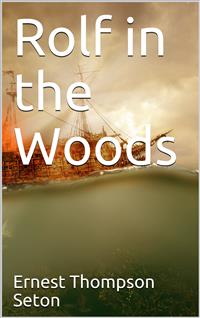
In "Rolf in the Woods," Ernest Thompson Seton weaves a captivating tale that blends adventure with profound insights into nature and self-discovery. The narrative follows the titular character, Rolf, a young boy who embarks on a journey through the wilderness, learning vital survival skills and developing a deep bond with the natural world. Seton's prose is both descriptive and lyrical, evoking vivid imagery of the flora and fauna that populate Rolf's adventures. Set against the backdrop of early 20th-century America, the novel explores themes of independence, ecological awareness, and the intrinsic connection between humans and nature, which were increasingly relevant during the rise of the environmental movement. Seton, a founding figure of the Boy Scouts in America and a well-known naturalist, infused his own experiences and passion for wildlife into his writing. His ability to engage young readers stems from his own childhood explorations and his deep admiration for the wilderness. Seton's profound appreciation for animals and nature not only shapes Rolf's character but also serves as a call to young readers to explore and respect the natural world around them. "Rolf in the Woods" is an essential read for those who cherish adventure and seek a deeper understanding of our environment. This enchanting novel is particularly suited for young readers, encouraging a lifetime appreciation for nature while also stimulating their imaginations. Seton's masterful storytelling ensures that readers are continually engaged, making it a valuable addition to both personal and educational libraries. In this enriched edition, we have carefully created added value for your reading experience: - A succinct Introduction situates the work's timeless appeal and themes. - The Synopsis outlines the central plot, highlighting key developments without spoiling critical twists. - A detailed Historical Context immerses you in the era's events and influences that shaped the writing. - A thorough Analysis dissects symbols, motifs, and character arcs to unearth underlying meanings. - Reflection questions prompt you to engage personally with the work's messages, connecting them to modern life. - Hand‐picked Memorable Quotes shine a spotlight on moments of literary brilliance. - Interactive footnotes clarify unusual references, historical allusions, and archaic phrases for an effortless, more informed read.
Das E-Book können Sie in Legimi-Apps oder einer beliebigen App lesen, die das folgende Format unterstützen:
Veröffentlichungsjahr: 2019
Ähnliche



Rolf in the Woods
Table of Contents
Introduction
Rolf in the Woods is ultimately about a young person discovering that true mastery of the wild begins with humility, attention, and moral choice. Ernest Thompson Seton crafts a narrative in which the forest is not merely a backdrop but an active teacher, shaping character as surely as it tests skill. From the first pages, the book signals its dual commitment to story and instruction, inviting readers to feel the press of pine duff underfoot while also learning how to move, watch, and think outdoors. The emotional current is steady and contemplative, emphasizing earned competence over sudden heroics.
First published in the 1910s, this work sits at the crossroads of adventure novel and woodcraft guide, reflecting early twentieth-century North American interests in outdoor life and conservation. Seton, a widely read naturalist and writer, locates the action in the northern forests of North America, where long winters, deep lakes, and dense spruce create a demanding, generative setting. Its genre roots are clear: a coming-of-age wilderness story that carries the clarity of field notes and the momentum of a trail. The era’s fascination with self-reliance and ethical engagement with nature informs both the book’s mood and its pragmatic detail.
The premise is deceptively simple: a boy enters the backcountry under the guidance of an experienced woodsman and learns how to live there. Seton shapes this apprenticeship into a sequence of small, absorbing challenges—finding shelter, tending fire, reading sign, sourcing food—that cumulatively build judgment as much as skill. The prose is direct and observant, favoring careful description and plain speech over flourish. Readers encounter a steady, immersive rhythm that feels like travel: days marked by weather, work, and quiet companionship. The result is an intimate, spoiler-safe journey that privileges process and presence rather than sudden twists or high melodrama.
Several themes resonate throughout. Self-reliance emerges not as rugged isolation but as a practice of cooperation with place—listening to wind, tracing animal paths, accepting limits. Ethics matter: restraint in taking from the land, gratitude for what is used, and responsibility for what is left. Apprenticeship underlines the value of intergenerational knowledge, while friendship shows how shared endeavor can bridge differences and create trust. Observation is elevated to a discipline, turning attention into a form of respect. These threads combine to ask a durable question: what does it mean to live competently and conscientiously in a world that is larger than oneself?
Seton’s narrative method blends experiential detail with an almost field-guide sensibility. Scenes unfold with stepwise clarity: tools are chosen for reasons, tracks are read by evidence, choices follow from conditions on the ground. The pacing mirrors the outdoors itself—unhurried, precise, open to surprise. Sensory detail grounds each moment: the feel of bark, the tone of ice, the logic of a campsite. Yet the tone remains warm and humane, attentive to companionship and small triumphs. The book’s style rewards patient readers who enjoy learning by watching actions accumulate, turning technique into texture and hard-won know-how into a quiet form of drama.
Read today, the book offers both practical fascination and ethical provocation. Its celebration of attentiveness, conservation-minded living, and hands-on problem solving aligns with contemporary interests in sustainability, outdoor education, and mindfulness. At the same time, it reflects perspectives of its time, and modern readers may notice period attitudes and language; approaching it with critical awareness enriches the experience without diminishing its core insights. For educators, parents, and young readers, it models curiosity disciplined by care. For seasoned outdoor enthusiasts, it resonates as a reminder that good judgment grows from small choices repeated well over many days.
Taken as a whole, Rolf in the Woods invites you into a landscape where skill becomes a language and character takes shape through daily practice. It promises an absorbing, reflective adventure: the steady satisfaction of making camp before dark, the thrill of reading a landscape correctly, and the quiet companionship of shared work. Without revealing its turns, one can say that the book rewards readers who value patience, integrity, and attention. In an age crowded with noise, its pages hold a clear voice that honors the living world and challenges us to meet it with respect, competence, and heart.
Synopsis
Rolf in the Woods follows a boy named Rolf who leaves an unhappy home to seek a life shaped by the forest rather than by harsh authority. Set in the northeastern wilderness in the early nineteenth century, the story introduces him as observant, resourceful, and eager to learn. The opening establishes his isolation, his practical needs, and the allure of the wild as a place of clarity and fairness. It also frames the book’s dual purpose: an adventure narrative and a guide to woodcraft. Rolf’s resolve propels him away from town life and toward companionship, instruction, and the tests the backcountry will present.
Soon after setting out, Rolf meets Quonab, a seasoned Native woodsman traveling with his small, courageous dog. Their partnership forms the core of the narrative. Quonab offers knowledge of the land, patient mentorship, and a code of conduct rooted in respect, restraint, and observation. Rolf brings energy and willingness to work. Together they shape a traveling camp, divide tasks, and establish simple rules for safety and fairness. Early episodes show fire-building, safe axe use, cleanliness in camp, and careful cooking. The relationship is practical at first, then deepening, with trust earned through shared work, quiet talk, and steady reliability in small dangers.
The pair journey deeper into the forest to build a more permanent seasonal camp. The narrative slows to detail the making of shelter, choice of campsite, storage of food, and care for tools. Rolf learns to make and repair gear, keep a dry bed, and arrange a smoke fire against insects. He observes animal trails, learns the difference between fresh and old sign, and practices moving silently. The book intersperses short how-to passages—knots, snares, canoe handling, map sense—within scenes of daily routine. These sections introduce the educational rhythm that continues throughout, even as weather, scarcity, and terrain become more demanding.
Early trials arrive as tests of judgment rather than spectacle. A storm forces difficult choices about movement and shelter. An encounter with a territorial animal demonstrates caution, patience, and retreat when prudent. A clash with rude or careless trappers underlines the unwritten laws of the woods: leave no waste, take only what is needed, keep peace when possible. Rolf learns the value of scouting ahead, planning for return, and maintaining signals. He practices the ethics Quonab teaches—sharing, honesty in trade, and respect for sacred places—while gaining a sense that the wilderness rewards quiet skill over bravado.
With winter settling, the story turns to the rigors of trapping season. Quonab lays out a line with attention to wind, water, and travel time. Rolf learns to set deadfalls, choose bait wisely, and hide scent. They craft snowshoes, mend moccasins, and ration fuel. Cold, silence, and distance become daily opponents, and the small dog’s tracking and warnings prove essential. The narrative stresses humane methods, full use of what is taken, and thanksgiving customs before meals. Illness, thin supplies, and ice-swollen streams add pressure, but their routine—check line, gather wood, repair, record—provides both safety and the satisfaction of competence.
Spring loosens the ice and opens routes to trading posts. The partners travel by canoe, bringing pelts to market and taking on flour, powder, and new iron. In settlements, Rolf sees how town rules differ from backwoods practice and witnesses prejudice directed at his companion. The episodes underline fair bargaining, written receipts, and the hazards of debt. Brief stays among farmers and boatmen provide news of distant trouble, maps to new grounds, and hints of changing times. They return to the forests with replenished supplies and plans to explore fresh waters, aware that the wider world may press upon their quiet routines.
Rumors of war reach the northern lakes, and the narrative shifts to scouting and guiding work along the frontier. The same woodcraft skills—tracking, concealment, reading weather, silent signaling—now serve patrols and intelligence rather than hunting. Rolf and Quonab move lightly, report what they see, and steer groups through bogs, ridges, and river mazes. Engagements are described with restraint, emphasizing preparation, reconnaissance, and survival over battlefield detail. The episodes show the limits of bravado, the cost of poor planning, and the steadiness required in alarm. Their service strengthens their partnership and tests their values amid pressure and divided loyalties.
After the campaigns, the story returns to trade trails and timbered hills, but with a changed sense of possibility. Decisions about future camps, obligations to friends, and the claims of law and custom shape the final stretch. Rolf is tested in matters of fairness and restitution, and he measures himself against the standards he has absorbed. Conflicts with rivals and hardships in travel are resolved in ways that reflect skill rather than force. The conclusion preserves the arc of growth without overturning the quiet tone: independence earned through practice, friendship honored through action, and a path forward aligned with learned discipline.
Overall, Rolf in the Woods presents a coming-of-age story grounded in practical knowledge and mutual respect. Its sequence blends instruction with incident, showing how attention, patience, and self-control guide a life close to the land. Major events—meeting a mentor, enduring winter, facing human conflict, serving as scouts—mark stages of competence rather than sensational twists. The book’s message is that self-reliance is learned step by step, that nature yields to care rather than conquest, and that cross-cultural friendship can be a true education. Readers leave with a sense of place, method, and character joined in a steady, durable way.
Historical Context
Ernest Thompson Seton situates Rolf in the Woods in the northern borderlands of the United States and British Canada, with episodes unfolding in the Adirondack Mountains, the Champlain Valley of New York and Vermont, and the Abenaki homeland linked to Odanak (Saint-François-du-Lac) in Quebec. The temporal frame is the early nineteenth century, roughly 1800 to 1815, when trapping, small-scale logging, and subsistence agriculture shaped daily life. The Richelieu and Champlain waterways functioned as strategic corridors for trade and military movement, while the deep evergreen forests and winter snows defined the seasonal rhythms of work. The book’s woodcraft lessons are anchored in this specific geography and pre-industrial frontier economy.
The narrative’s Abenaki mentor figure mirrors the complex history of the St. Francis Abenaki centered at Odanak, a Jesuit mission community established around 1700 near present-day Pierreville, Quebec. The community survived the British Ranger raid led by Robert Rogers on 4 October 1759, an infamous attack that scattered families yet did not erase cross-border lifeways. After 1794, Article III of the Jay Treaty recognized the right of Indigenous people to move across the new international boundary, sustaining traditional hunting circuits between Quebec, Vermont, and northern New York. The book’s Indigenous teachings and itinerant traplines echo these enduring Abenaki networks and their resilience amid colonial and national upheavals.
The War of 1812 (1812–1815) turned the Champlain-Richelieu corridor into a contested front. The climactic Battle of Plattsburgh on 11 September 1814 saw Commodore Thomas Macdonough’s American squadron, led by USS Saratoga, defeat Captain George Downie’s HMS Confiance as Sir George Prevost’s British army withdrew to Canada. This victory secured the northern border in subsequent peace negotiations and checked British incursions via Lake Champlain. The book’s episodes of scouting, stealthy travel, and intimate knowledge of portages evoke the roles Indigenous trackers and frontier woodsmen played in patrolling these waterways, mapping wilderness routes, and supplying militias and regulars during the conflict’s tense campaigns.
Early U.S. expansion into northern New York was driven by land speculation and resource extraction. The vast Macomb’s Purchase of 1791, encompassing more than 3.6 million acres, triggered a boom-bust cycle; financier Alexander Macomb defaulted in 1792, and the tract was subdivided. Logging for potash, timber rafting on the Saranac and Hudson, and charcoal ironworks created extractive outposts scattered across the Adirondack foothills. Military roads, including the route from Plattsburgh surveyed in the 1810s, facilitated troop movement and settlement. The book’s reliance on isolated cabins, traplines, and barter economies reflects these dispersed communities and the precarious livelihoods that characterized the region’s early republican decades.
The Northeast’s fur economy in the early 1800s intertwined with cross-border trade through Montreal and Lake Champlain. The rivalry of the North West Company and the Hudson’s Bay Company, resolved by merger in 1821, set prices and demand that filtered into New England and New York traplines, even as local beaver populations declined from overharvest. U.S. maritime policies also disrupted commerce: the Embargo Act of 1807 and the Non-Intercourse Act of 1809 spurred smuggling along the Champlain-Richelieu route, a practice that persisted into wartime. The book’s trapping journeys, negotiations with traders, and emphasis on careful taking reflect the economic pressures of fur markets and the necessity of sustainable methods.
The work is decisively shaped by the Progressive Era youth movement, especially Seton’s Woodcraft and the emergence of Scouting, which provided the book’s ethos, curriculum, and didactic structure. In 1902, at his Cos Cob, Connecticut home Wyndygoul, Seton organized the Woodcraft Indians after engaging local boys through outdoor challenges, nature study, and a code of honor. He codified this program in The Birch-Bark Roll (1906), blending Indigenous-inspired campcraft with natural history and civic virtues. Across the Atlantic, Robert Baden-Powell’s Scouting for Boys (1908) catalyzed a global Scout movement. In the United States, publisher William D. Boyce incorporated the Boy Scouts of America on 8 February 1910, soon joined by Daniel Carter Beard’s Sons of Daniel Boone. Seton became the BSA’s first Chief Scout, and his writings strongly informed the 1910–1911 American handbook. Administrative and philosophical conflicts followed, notably with James E. West, appointed Chief Scout Executive in 1911, over the balance of nature study, Indian lore, and civic drill. Seton resigned in 1915, but by then his woodcraft pedagogy had permeated American youth culture. Rolf in the Woods, published in 1911 and explicitly subtitled for Boy Scouts in some editions, functions as a narrative manual: it models camp hygiene, tracking, mapmaking, signaling, game laws, and ethical hunting. Its borderlands setting and Indigenous mentorship dramatize Scouting’s ideal of character formation through service, self-reliance, and environmental citizenship. Thus the book mirrors concrete organizational milestones, leaders, and dates of the Scouting and Woodcraft movement and translates them into a historically grounded frontier story.
Conservation politics at the turn of the twentieth century underwrite the book’s ecological tone. Nationally, the Forest Reserve Act of 1891 and Gifford Pinchot’s forestry reforms institutionalized resource management; the Boone and Crockett Club (founded 1887 by Theodore Roosevelt and George Bird Grinnell) campaigned against market hunting; and the Lacey Act of 1900 curbed interstate wildlife trafficking. In New York, the Adirondack Forest Preserve (1885) and the state constitution’s forever wild clause (1894) protected headwaters crucial to the region. The Weeks Act of 1911 enabled federal purchase of eastern forests. Seton’s naturalist advocacy aligns the book with these measures by modeling restraint, closed seasons, and reverence for habitat.
As social and political critique, the book challenges the extractive, hurried modernity of the early republic and the Progressive Era alike. It exposes how market hunting, reckless logging, and speculative land schemes degrade commons and livelihoods, contrasting them with Indigenous stewardship and disciplined woodcraft. By elevating an Abenaki mentor and cross-cultural apprenticeship, it implicitly rebukes nativist prejudices and the assimilationist pressure that marginalized Northeastern Native communities. Its didacticism addresses urban youth neglect and class anxieties by proposing outdoor competence and public-spirited service as civic remedies. In depicting ethical limits on taking game and timber, it argues for conservation as a democratic obligation rather than a privilege.
Rolf in the Woods
Preface
In this story I have endeavoured to realize some of the influences that surrounded the youth of America a hundred years ago, and made of them, first, good citizens, and, later, in the day of peril, heroes that won the battles of Lake Erie, Plattsburg, and New Orleans[1], and the great sea fights of Porter, Bainbridge, Decatur, Lawrence, Perry, and MacDonough.
I have especially dwelt in detail on the woodland and peace scouting in the hope that I may thus help other boys to follow the hard-climbing trail that leads to the higher uplands.
For the historical events of 1812-14, I have consulted among books chiefly, Theodore Roosevelt's “Naval War of 1812,” Peter S. Palmer's “History of Lake Champlain,” and Walter Hill Crockett's “A History of Lake Champlain,” 1909. But I found another and more personal mine of information. Through the kindness of my friend, Edmund Seymour, a native of the Champlain region, now a resident of New York, I went over all the historical ground with several unpublished manuscripts for guides, and heard from the children of the sturdy frontiersmen new tales of the war; and in getting more light and vivid personal memories, I was glad, indeed, to realize that not only were there valour and heroism on both sides, but also gentleness and courtesy. Histories written by either party at the time should be laid aside. They breathe the rancourous hate of the writers of the age—the fighters felt not so—and the many incidents given here of chivalry and consideration were actual happenings, related to me by the descendants of those who experienced them; and all assure me that these were a true reflex of the feelings of the day.
I am much indebted to Miss Katherine Palmer, of Plattsburg, for kindly allowing me to see the unpublished manuscript memoir of her grandfather, Peter Sailly, who was Collector of the Port of Plattsburg at the time of the war.
Another purpose in this story was to picture the real Indian with his message for good or for evil.
Those who know nothing of the race will scoff and say they never heard of such a thing as a singing and religious red man. Those who know him well will say, “Yes, but you have given to your eastern Indian songs and ceremonies which belong to the western tribes, and which are of different epochs.” To the latter I reply:
“You know that the western Indians sang and prayed in this way. How do you know that the eastern ones did not? We have no records, except those by critics, savagely hostile, and contemptuous of all religious observances but their own. The Ghost Dance Song belonged to a much more recent time, no doubt, but it was purely Indian, and it is generally admitted that the races of continental North America were of one stock, and had no fundamentally different customs or modes of thought.”
The Sunrise Song was given me by Frederick R. Burton, author of “American Primitive Music.” It is still in use among the Ojibwa.
The songs of the Wabanaki may be read in C. G. Leland's “Kuloskap the Master.”
The Ghost Dance Song was furnished by Alice C. Fletcher, whose “Indian Song and Story” will prove a revelation to those who wish to follow further.
ERNEST THOMPSON SETON.
Chapter 1. The Wigwam Under the Rock
The early springtime sunrise was near at hand as Quonab, the last of the Myanos Sinawa[2], stepped from his sheltered wigwam under the cliff that borders the Asamuk easterly, and, mounting to the lofty brow of the great rock that is its highest pinnacle, he stood in silence, awaiting the first ray of the sun over the sea water that stretches between Connecticut and Seawanaky.
His silent prayer to the Great Spirit was ended as a golden beam shot from a long, low cloud-bank[1q] over the sea, and Quonab sang a weird Indian song for the rising sun, an invocation to the Day God:
Again and again he sang to the tumming of a small tom-tom, till the great refulgent one had cleared the cloud, and the red miracle of the sunrise was complete. Back to his wigwam went the red man, down to his home tucked dosed under the sheltering rock, and, after washing his hands in a basswood bowl, began to prepare his simple meal.
A tin-lined copper pot hanging over the fire was partly filled with water; then, when it was boiling, some samp[3] or powdered corn and some clams were stirred in. While these were cooking, he took his smooth-bore flint-lock, crawled gently over the ridge that screened his wigwam from the northwest wind, and peered with hawk-like eyes across the broad sheet of water that, held by a high beaver-dam, filled the little valley of Asamuk Brook.
The winter ice was still on the pond, but in all the warming shallows there was open water, on which were likely to be ducks. None were to be seen, but by the edge of the ice was a round object which, although so far away, he knew at a glance for a muskrat.
By crawling around the pond, the Indian could easily have come within shot, but he returned at once to his wigwam, where he exchanged his gun for the weapons of his fathers, a bow and arrows, and a long fish-line. A short, quick stalk, and the muskrat, still eating a flagroot, was within thirty feet. The fish-line was coiled on the ground and then attached to an arrow, the bow bent—zip—the arrow picked up the line, coil after coil, and trans-fixed the muskrat. Splash! and the animal was gone under the ice.
But the cord was in the hands of the hunter; a little gentle pulling and the rat came to view, to be despatched with a stick and secured. Had he shot it with a gun, it had surely been lost.
He returned to his camp, ate his frugal breakfast, and fed a small, wolfish-looking yellow dog that was tied in the lodge.
He skinned the muskrat carefully, first cutting a slit across the rear and then turning the skin back like a glove, till it was off to the snout; a bent stick thrust into this held it stretched, till in a day, it was dry and ready for market. The body, carefully cleaned, he hung in the shade to furnish another meal.
As he worked, there were sounds of trampling in the woods, and presently a tall, rough-looking man, with a red nose and a curling white moustache, came striding through brush and leaves. He stopped when he saw the Indian, stared contemptuously at the quarry of the morning chase, made a scornful remark about “rat-eater,” and went on toward the wigwam, probably to peer in, but the Indian's slow, clear, “keep away!” changed his plan. He grumbled something about “copper-coloured tramp,” and started away in the direction of the nearest farmhouse.
Chapter 2. Rolf Kittering and the Soldier Uncle
This was the Crow Moon, the white man's March. The Grass Moon was at hand, and already the arrow bands of black-necked honkers were passing northward from the coast, sending down as they flew the glad tidings that the Hunger Moon was gone, that spring was come, yea, even now was in the land. And the flicker clucked from a high, dry bough, the spotted woodwale drummed on his chosen branch, the partridge drummed in the pine woods, and in the sky the wild ducks, winging, drummed their way. What wonder that the soul of the Indian should seek expression in the drum and the drum song of his race?
Presently, as though remembering something, he went quietly to the southward under the ridge, just where it breaks to let the brook go by, along the edge of Strickland's Plain, and on that hill of sliding stone he found, as he always had, the blue-eyed liver-leaf smiling, the first sweet flower of spring! He did not gather it, he only sat down and looked at it. He did not smile, or sing, or utter words, or give it a name, but he sat beside it and looked hard at it, and, in the first place, he went there knowingly to find it. Who shall say that its beauty did not reach his soul?
He took out his pipe and tobacco bag, but was reminded of something lacking—the bag was empty. He returned to his wigwam, and from their safe hanger or swinging shelf overhead, he took the row of stretched skins, ten muskrats and one mink, and set out along a path which led southward through the woods to the broad, open place called Strickland's Plain, across that, and over the next rock ridge to the little town and port of Myanos.
was the sign over the door he entered. Men and women were buying and selling, but the Indian stood aside shyly until all were served, and Master Peck cried out:
“Ho, Quonab! what have ye got for trade to-day?”
Quonab produced his furs. The dealer looked at them narrowly and said:
“They are too late in the season for primes; I cannot allow you more than seven cents each for the rats and seventy-five cents for the mink, all trade.”
The Indian gathered up the bundle with an air of “that settles it,” when Silas called out:
“Come now, I'll make it ten cents for the rats.”
“Ten cents for rats, one dollar for mink, all cash, then I buy what I like,” was the reply.
It was very necessary to Silas's peace that no customer of his should cross the street to the sign,
So the bargain, a fair one now, was made, and the Indian went off with a stock of tobacco, tea, and sugar.
His way lay up the Myanos River, as he had one or two traps set along the banks for muskrats, although in constant danger of having them robbed or stolen by boys, who considered this an encroachment on their trapping grounds.
After an hour he came to Dumpling Pond, then set out for his home, straight through the woods, till he reached the Catrock line, and following that came to the farm and ramshackle house of Micky Kittering. He had been told that the man at this farm had a fresh deer hide for sale, and hoping to secure it, Quonab walked up toward the house. Micky was coming from the barn when he saw the Indian. They recognized each other at a glance. That was enough for Quonab; he turned away. The farmer remembered that he had been “insulted.” He vomited a few oaths, and strode after the Indian, “To take it out of his hide”; his purpose was very clear. The Indian turned quickly, stood, and looked calmly at Michael.
Some men do not know the difference between shyness and cowardice, but they are apt to find it out unexpectedly Something told the white man, “Beware! this red man is dangerous.” He muttered something about, “Get out of that, or I'll send for a constable.” The Indian stood gazing coldly, till the farmer backed off out of sight, then he himself turned away to the woods.
Kittering was not a lovely character. He claimed to have been a soldier. He certainly looked the part, for his fierce white moustache was curled up like horns on his purple face, at each side of his red nose, in a most milita style. His shoulders were square and his gait was swaggering, beside which, he had an array of swear words that was new and tremendously impressive in Connecticut. He had married late in life a woman who would have made him a good wife, had he allowed her. But, a drunkard himself he set deliberately about bringing his wife to his own ways and with most lamentable success. They had had no children, but some months before a brother's child, fifteen-year-old lad, had become a charge on their hands and, with any measure of good management, would have been a blessing to all. But Micky had gone too far. His original weak good-nature was foundered in rum. Always blustery and frothy, he divided the world in two—superior officers, before whom he grovelled, and inferiors to whom he was a mouthy, foul-tongued, contemptible bully, in spite of a certain lingering kindness of heart that showed itself at such rare times when he was neither roaring drunk nor crucified by black reaction. His brother's child, fortunately, had inherited little of the paternal family traits, but in both body and brain favoured his mother, the daughter of a learned divine who had spent unusual pains on her book education, but had left her penniless and incapable of changing that condition.
Her purely mental powers and peculiarities were such that, a hundred years before, she might have been burned for a witch, and fifty years later might have been honoured as a prophetess. But she missed the crest of the wave both ways and fell in the trough; her views on religious matters procured neither a witch's grave nor a prophet's crown, but a sort of village contempt.
The Bible was her standard—so far so good—but she emphasized the wrong parts of it. Instead of magnifying the damnation of those who follow not the truth (as the village understood it), she was content to semi-quote:
“Those that are not against me are with me,” and “A kind heart is the mark of His chosen.” And then she made a final utterance, an echo really of her father: “If any man do anything sincerely, believing that thereby he is worshipping God, he is worshipping God.”
Then her fate was sealed, and all who marked the blazing eyes, the hollow cheeks, the yet more hollow chest and cough, saw in it all the hand of an offended God destroying a blasphemer, and shook their heads knowingly when the end came.
So Rolf was left alone in life, with a common school education, a thorough knowledge of the Bible and of “Robinson Crusoe,” a vague tradition of God everywhere, and a deep distrust of those who should have been his own people.
The day of the little funeral he left the village of Redding to tramp over the unknown road to the unknown south where his almost unknown Uncle Michael had a farm and, possibly, a home for him.
Fifteen miles that day, a night's rest in a barn, twenty-five miles the next day, and Rolf had found his future home.
“Come in, lad,” was the not unfriendly reception, for his arrival was happily fallen on a brief spell of good humour, and a strong, fifteen-year-old boy is a distinct asset on a farm.
Chapter 3. Rolf Catches a Coon and Finds a Friend
Aunt Prue, sharp-eyed and red-nosed, was actually shy at first, but all formality vanished as Rolf was taught the mysteries of pig-feeding, hen-feeding, calf-feeding, cow-milking, and launched by list only in a vast number of duties familiar to him from his babyhood. What a list there was. An outsider might have wondered if Aunt Prue was saving anything for herself, but Rolf was used to toil. He worked without ceasing and did his best, only to learn in time that the best could win no praise, only avert punishment. The spells of good nature arrived more seldom in his uncle's heart. His aunt was a drunken shrew and soon Rolf looked on the days of starving and physical misery with his mother as the days of his happy youth gone by.
He was usually too tired at night and too sleepy in the morning to say his prayers, and gradually he gave it up as a daily habit. The more he saw of his kinsfolk, the more wickedness came to view; and yet it was with a shock that he one day realized that some fowls his uncle brought home by night were there without the owner's knowledge or consent. Micky made a jest of it, and intimated that Rolf would have to “learn to do night work very soon.” This was only one of the many things that showed how evil a place was now the orphan's home.
At first it was not clear to the valiant uncle whether the silent boy was a superior to be feared, or an inferior to be held in fear, but Mick's courage grew with non-resistance, and blows became frequent; although not harder to bear than the perpetual fault-finding and scolding of his aunt, and all the good his mother had implanted was being shrivelled by the fires of his daily life.
Rolf had no chance to seek for companions at the village store, but an accident brought one to him. Before sunrise one spring morning he went, as usual, to the wood lot pasture for the cow, and was surprised to find a stranger, who beckoned him to come. On going near he saw a tall man with dark skin and straight black hair that was streaked with gray—undoubtedly an Indian. He held up a bag and said, “I got coon in that hole. You hold bag there, I poke him in.” Rolf took the sack readily and held it over the hole, while the Indian climbed the tree to a higher opening, then poked in this with a long pole, till all at once there was a scrambling noise and the bag bulged full and heavy. Rolf closed its mouth triumphantly. The Indian laughed lightly, then swung to the ground.
“Now, what will you do with him?” asked Rolf.
“Train coon dog,” was the answer.
“Where?”
The Indian pointed toward the Asamuk Pond.
“Are you the singing Indian that lives under Ab's Rock?
“Ugh! [*] Some call me that. My name is Quonab.”
“Wait for an hour and then I will come and help,” volunteered Rolf impulsively, for the hunting instinct was strong in him.
The Indian nodded. “Give three yelps if you no find me;” then he shouldered a short stick, from one end of which, at a safe distance from his back, hung the bag with the coon. And Rolf went home with the cow.
He had acted on hasty impulse in offering to come, but now, in the normal storm state of the household, the difficulties of the course appeared. He cudgelled his brain for some plan to account for his absence, and finally took refuge unwittingly in ancient wisdom: “When you don't know a thing to do, don't do a thing.” Also, “If you can't find the delicate way, go the blunt way.”
So having fed the horses, cleaned the stable, and milked the cow, fed the pigs, the hens, the calf, harnessed the horses, cut and brought in wood for the woodshed, turned out the sheep, hitched the horses to the wagon, set the milk out in the creaming pans, put more corn to soak for the swill barrel, ground the house knife, helped to clear the breakfast things, replaced the fallen rails of a fence, brought up potatoes from the root cellar, all to the maddening music of a scolding tongue, he set out to take the cow back to the wood lot, sullenly resolved to return when ready.
Chapter 4. The Coon Hunt Makes Trouble for Rolf
Not one hour, but nearly three, had passed before Rolf sighted the Pipestave Pond, as it was called. He had never been there before, but three short whoops, as arranged, brought answer and guidance. Quonab was standing on the high rock. When Rolf came he led down to the wigwam on its south side. It was like stepping into a new life. Several of the old neighbours at Redding were hunters who knew the wild Indians and had told him tales that glorified at least the wonderful woodcraft of the red man. Once or twice Rolf had seen Indians travelling through, and he had been repelled by their sordid squalour. But here was something of a different kind; not the Champlain ideal, indeed, for the Indian wore clothes like any poor farmer, except on his head and his feet; his head was bare, and his feet were covered with moccasins that sparkled with beads on the arch. The wigwam was of canvas, but it had one or two of the sacred symbols painted on it. The pot hung over the fire was tin-lined copper, of the kind long made in England for Indian trade, but the smaller dishes were of birch bark and basswood. The gun and the hunting knife were of white man's make, but the bow, arrows, snowshoes, tom-tom, and a quill-covered gun case were of Indian art, fashioned of the things that grow in the woods about.
The Indian led into the wigwam. The dog, although not fully grown, growled savagely as it smelled the hated white man odour. Quonab gave the puppy a slap on the head, which is Indian for, “Be quiet; he's all right;” loosed the rope, and led the dog out. “Bring that,” and the Indian pointed to the bag which hung from a stick between two trees. The dog sniffed suspiciously in the direction of the bag and growled, but he was not allowed to come near it. Rolf tried to make friends with the dog, but without success and Quonab said, “Better let Skookum [*] alone. He make friends when he ready—maybe never.”
The two hunters now set out for the open plain, two or three hundred yards to the southward. Here the raccoon was dumped out of the sack, and the dog held at a little distance, until the coon had pulled itself together and began to run. Now the dog was released and chivvied on. With a tremendous barking he rushed at the coon, only to get a nip that made him recoil, yelping. The coon ran as hard as it could, the dog and hunters came after it; again it was overtaken, and, turning with a fierce snarl, it taught the dog a second lesson. Thus, running, dodging, and turning to fight, the coon got back to the woods, and there made a final stand under a small, thick tree; and, when the dog was again repulsed, climbed quickly up into the branches.
The hunters did all they could to excite the dog, until he was jumping about, trying to climb the tree, and barking uproariously. This was exactly what they wanted. Skookum's first lesson was learned—the duty of chasing the big animal of that particular smell, then barking up the tree it had climbed.
Quonab, armed with a forked stick and a cord noose, now went up the tree. After much trouble he got the noose around the coon's neck, then, with some rather rough handling, the animal was dragged down, maneuvered into the sack, and carried back to camp, where it was chained up to serve in future lessons; the next two or three being to tree the coon, as before; in the next, the coon was to be freed and allowed to get out of sight, so that the dog might find it by trailing, and the last, in which the coon was to be trailed, treed, and shot out of the tree, so that the dog should have the final joy of killing a crippled coon, and the reward of a coon-meat feast. But the last was not to be, for the night before it should have taken place the coon managed to slip its bonds, and nothing but the empty collar and idle chain were found in the captive's place next morning.
These things were in the future however. Rolf was intensely excited over all he had seen that day. His hunting instincts were aroused. There had been no very obvious or repellant cruelty; the dog alone had suffered, but he seemed happy. The whole affair was so exactly in the line of his tastes that the boy was in a sort of ecstatic uplift, and already anticipating a real coon hunt, when the dog should be properly trained. The episode so contrasted with the sordid life he had left an hour before that he was spellbound. The very animal smell of the coon seemed to make his fibre tingle. His eyes were glowing with a wild light. He was so absorbed that he did not notice a third party attracted by the unusual noise of the chase, but the dog did. A sudden, loud challenge called all attention to a stranger on the ridge behind the camp. There was no mistaking the bloated face and white moustache of Rolf's uncle.
“So, you young scut! that is how you waste your time. I'll larn ye a lesson.”
The dog was tied, the Indian looked harmless, and the boy was cowed, so the uncle's courage mounted high. He had been teaming in the nearby woods, and the blacksnake whip was in his hands. In a minute its thong was lapped, like a tongue of flame, around Rolf's legs. The boy gave a shriek and ran, but the man followed and furiously plied the whip. The Indian, supposing it was Rolf's father, marvelled at his method of showing affection, but said nothing, for the Fifth Commandment is a large one in the wigwam. Rolf dodged some of the cruel blows, but was driven into a corner of the rock. One end of the lash crossed his face like a red-hot wire.
“Now I've got you!” growled the bully.
Rolf was desperate. He seized two heavy stones and hurled the first with deadly intent at his uncle's head. Mick dodged in time, but the second, thrown lower, hit him on the thigh. Mick gave a roar of pain. Rolf hastily seized more stones and shrieked out, “You come on one step and I'll kill you!”
Then that purple visage turned a sort of ashen hue. Its owner mouthed in speechless rage. He “knew it was the Indian had put Rolf up to it. He'd see to it later,” and muttering, blasting, frothing, the hoary-headed sinner went limping off to his loaded wagon.
Chapter 5. Good-bye to Uncle Mike
Rolf had learned one thing at least—his uncle was a coward. But he also knew that he himself was in the wrong, for he was neglecting his work and he decided to go back at once and face the worst. He made little reply to the storm of scolding that met him. He would have been disappointed if it had not come. He was used to it; it made him feel at home once more. He worked hard and silently.
Mick did not return till late. He had been drawing wood for Horton that day, which was the reason he happened in Quonab's neighbourhood; but his road lay by the tavern, and when he arrived home he was too helpless to do more than mutter.
The next day there was an air of suspended thunder. Rolf overheard his uncle cursing “that ungrateful young scut—not worth his salt.” But nothing further was said or done. His aunt did not strike at him once for two days. The third night Micky disappeared. On the next he returned with another man; they had a crate of fowls, and Rolf was told to keep away from “that there little barn.”
So he did all morning, but he peeped in from the hayloft when a chance came, and saw a beautiful horse. Next day the “little barn” was open and empty as before.
That night this worthy couple had a jollification with some callers, who were strangers to Rolf. As he lay awake, listening to the carouse, he overheard many disjointed allusions that he did not understand, and some that he could guess at: “Night work pays better than day work any time,” etc. Then he heard his own name and a voice, “Let's go up and settle it with him now.” Whatever their plan, it was clear that the drunken crowd, inspired by the old ruffian, were intent on doing him bodily harm. He heard them stumbling and reeling up the steep stairs. He heard, “Here, gimme that whip,” and knew he was in peril, maybe of his life, for they were whiskey-mad. He rose quickly, locked the door, rolled up an old rag carpet, and put it in his bed. Then he gathered his clothes on his arm, opened the window, and lowered himself till his head only was above the sill, and his foot found a resting place. Thus he awaited. The raucous breathing of the revellers was loud on the stairs; then the door was tried; there was some muttering; then the door was burst open and in rushed two, or perhaps three, figures. Rolf could barely see in the gloom, but he knew that his uncle was one of them. The attack they made with whip and stick on that roll of rags in the bed would have broken his bones and left him shapeless, had he been in its place. The men were laughing and took it all as a joke, but Rolf had seen enough; he slipped to the ground and hurried away, realizing perfectly well now that this was “good-bye.”
Which way? How naturally his steps turned northward toward Redding, the only other place he knew. But he had not gone a mile before he stopped. The yapping of a coon dog came to him from the near woods that lay to the westward along Asamuk. He tramped toward it. To find the dog is one thing, to find the owner another; but they drew near at last. Rolf gave the three yelps and Quonab responded.
“I am done with that crowd,” said the boy. “They tried to kill me tonight. Have you got room for me in your wigwam for a couple of days?”
“Ugh, come,” said the Indian.
That night, for the first time, Rolf slept in the outdoor air of a wigwam. He slept late, and knew nothing of the world about him till Quonab called him to breakfast.
Chapter 6. Skookum Accepts Rolf at Last
Rolf expected that Micky would soon hear of his hiding place and come within a few days, backed by a constable, to claim his runaway ward. But a week went by and Quonab, passing through Myanos, learned, first, that Rolf had been seen tramping northward on the road to Dumpling Pond, and was now supposed to be back in Redding; second, that Micky Kittering[4] was lodged in jail under charge of horse-stealing and would certainly get a long sentence; third, that his wife had gone back to her own folks at Norwalk, and the house was held by strangers.
All other doors were closed now, and each day that drifted by made it the more clear that Rolf and Quonab were to continue together. What boy would not exult at the thought of it? Here was freedom from a brutal tyranny that was crushing out his young life; here was a dream of the wild world coming true, with gratification of all the hunter instincts that he had held in his heart for years, and nurtured in that single, ragged volume of “Robinson Crusoe[5].” The plunge was not a plunge, except it be one when an eagle, pinion-bound, is freed and springs from a cliff of the mountain to ride the mountain wind.
The memory of that fateful cooning day was deep and lasting. Never afterward did smell of coon fail to bring it back; in spite of the many evil incidents it was a smell of joy.
“Where are you going, Quonab?” he asked one morning, as he saw the Indian rise at dawn and go forth with his song drum, after warming it at the fire. He pointed up to the rock, and for the first time Rolf heard the chant for the sunrise. Later he heard the Indian's song for “Good Hunting,” and another for “When His Heart Was Bad.” They were prayers or praise, all addressed to the Great Spirit[6], or the Great Father, and it gave Rolf an entirely new idea of the red man, and a startling light on himself. Here was the Indian, whom no one considered anything but a hopeless pagan, praying to God for guidance at each step in life, while he himself, supposed to be a Christian, had not prayed regularly for months—was in danger of forgetting how.
Yet there was one religious observance that Rolf never forgot—that was to keep the Sabbath[7], and on that day each week he did occasionally say a little prayer his mother had taught him. He avoided being seen at such times and did not speak of kindred doings. Whereas Quonab neither hid nor advertised his religious practices, and it was only after many Sundays had gone that Quonab remarked:
“Does your God come only one day of the week[2q]? Does He sneak in after dark? Why is He ashamed that you only whisper to Him? Mine is here all the time. I can always reach Him with my song; all days are my Sunday.”
The evil memories of his late life were dimming quickly[3q], and the joys of the new one growing. Rolf learned early that, although one may talk of the hardy savage, no Indian seeks for hardship. Everything is done that he knows to make life pleasant, and of nothing is he more careful than the comfort of his couch. On the second day, under guidance of his host, Rolf set about making his own bed. Two logs, each four inches thick and three feet long, were cut. Then two strong poles, each six feet long, were laid into notches at the ends of the short logs. About seventy-five straight sticks of willow were cut and woven with willow bark into a lattice, three feet wide and six feet long. This, laid on the poles, furnished a spring mattress, on which a couple of blankets made a most comfortable couch, dry, warm, and off the ground. In addition to the lodge cover, each bed had a dew cloth which gave perfect protection, no matter how the storm might rage outdoors. There was no hardship in it, only a new-found pleasure, to sleep and breathe the pure night air of the woods.
The Grass Moon—April—had passed, and the Song Moon was waxing, with its hosts of small birds, and one of Rolf's early discoveries was that many of these love to sing by night. Again and again the familiar voice of the song sparrow came from the dark shore of Asamuk, or the field sparrow trilled from the top of some cedar, occasionally the painted one, Aunakeu, the partridge, drummed in the upper woods, and nightly there was the persistent chant of Muckawis, the whippoorwill, the myriad voices of the little frogs called spring-peepers, and the peculiar, “peent, peent,” from the sky, followed by a twittering, that Quonab told him was the love song of the swamp bird—the big snipe, with the fantail and long, soft bill, and eyes like a deer.
“Do you mean the woodcock?” “Ugh, that's the name; Pah-dash-ka-anja we call it.”
The waning of the moon brought new songsters, with many a nightingale among them. A low bush near the plain was vocal during the full moon with the sweet but disconnected music of the yellow-breasted chat. The forest rang again and again with a wild, torrential strain of music that seemed to come from the stars. It sent peculiar thrill into Rolf's heart, and gave him a lump his throat as he listened.
“What is that, Quonab?”
The Indian shook his head. Then, later, when it ended, he said: “That is the mystery song of some one I never saw him.”
There was a long silence, then the lad began, “There's no good hunting here now, Quonab. Why don't you go to the north woods, where deer are plentiful?”
The Indian gave a short shake of his head, and then to prevent further talk, “Put up your dew cloth; the sea wind blows to-night.”
He finished; both stood for a moment gazing into the fire. Then Rolf felt something wet and cold thrust into his hand. It was Skookum's nose. At last the little dog had made up his mind to accept the white boy as a friend.
Chapter 7. Rolf Works Out with Many Results
The man who has wronged you will never forgive you, and he who has helped you will be forever grateful. Yes, there is nothing that draws you to a man so much as the knowledge that you have helped him.
Quonab helped Rolf, and so was more drawn to him than to many of the neighbours that he had known for years; he was ready to like him. Their coming together was accidental, but it was soon very clear that a friendship was springing up between them. Rolf was too much of a child to think about the remote future; and so was Quonab. Most Indians are merely tall children.




