


16,99 €
Mehr erfahren.
- Herausgeber: John Wiley & Sons
- Kategorie: Geisteswissenschaft
- Sprache: Englisch
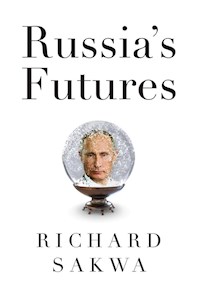
Russia is back as a major force in global politics, but what does this mean? Is Russia the dangerous revisionist foe that meddles in Western elections and tries to subvert the liberal international order? Or is it a country precariously trying to maintain security and enhance prosperity at home, while re-asserting its place as a great power in the world today? In this book, renowned Russia scholar Richard Sakwa explores current debates on Russia, placing them in historical context and outlining the fundamental challenges currently facing the country. Post-communist Russia had to grapple with a unique set of problems, including reconstituting the political system, rebuilding the economy, re-imagining the nation, and rethinking Russia's place in the world. The solutions are still being sought, but this hard-hitting study argues that the failure to create an international system in which Russia's transformation became part of a revised world order has made the search far more difficult than it may otherwise have been. Although Russia is one of the oldest states in Europe, in its contemporary guise it is one of the youngest. Russia has had many pasts and, given its size, centrality and complexity, it will also have many futures.
Sie lesen das E-Book in den Legimi-Apps auf:
Seitenzahl: 422
Veröffentlichungsjahr: 2019
Ähnliche

















Table of Contents
Title page
Copyright page
Preface
Notes
Introduction: Multiple Pasts and Many Futures
Notes
1 Getting Russia Right
What was it all for?
Where is Russia today?
How Russia and the West lost each other
Russia’s neo-modern future
Notes
2 Power and Ideas
State, regime and society
Four views of Russia and the future
Russia of the mind
Ways of seeing Russia
Notes
3 Economy and Development
Capitalism Russian style
Stability vs. reform
In the era of sanctions
Notes
4 State, People and the Future
State and nation building
Demography and society
Global competitiveness and resilience
Notes
5 Making Russia Great Again
Order and chaos
The structural contradiction
The international system and Russia
New alignments in the era of confrontation
Notes
6 Russia’s Futures
Evolution or revolution
Shaping the future
Future risks
Political reform
Economic transformation
The clash of world orders
Apocalypse or towards a grand bargain?
Regime and order change
Notes
Conclusion: Russia as Challenger and Challenged
Escape to the future
Succession and the future
Notes
Index
End User License Agreement
Guide
Cover
Table of Contents
Preface
1 Getting Russia Right
Pages
iv
vii
viii
ix
x
xi
xii
221
1
2
3
4
5
6
7
8
9
10
11
12
13
14
15
16
17
18
19
20
21
22
23
24
25
26
27
28
29
30
31
32
33
34
35
36
37
38
39
40
41
42
43
44
45
46
47
222
223
224
225
226
227
48
49
50
51
52
53
54
55
56
57
58
59
60
61
62
63
64
65
66
67
68
69
70
71
72
73
74
75
76
77
78
79
80
81
82
83
84
85
86
87
88
228
229
230
231
232
233
90
91
92
93
94
95
96
97
98
99
100
101
102
103
104
105
106
107
108
109
110
111
112
113
114
115
234
235
236
116
117
118
119
120
121
122
123
124
125
126
127
128
129
130
131
132
133
134
135
136
137
138
139
140
141
142
143
237
238
239
240
241
144
145
146
147
148
149
150
151
152
153
154
155
156
157
158
159
160
161
162
163
164
165
166
167
168
242
243
169
170
171
172
173
174
175
176
177
178
179
180
181
182
183
184
185
186
187
188
189
190
191
192
193
194
195
196
197
198
199
200
201
202
203
204
205
206
207
244
245
246
247
208
209
210
211
212
213
214
215
216
217
218
219
220
248
249
250
251
252
253
254
255
256
257
258
259
260
261
262
263
264
265
266
267
Copyright page
Copyright © Richard Sakwa 2019
The right of Richard Sakwa to be identified as Author of this Work has been asserted in accordance with the UK Copyright, Designs and Patents Act 1988.
First published in 2019 by Polity Press
Polity Press
65 Bridge Street
Cambridge CB2 1UR, UK
Polity Press
101 Station Landing
Suite 300
Medford, MA 02155, USA
All rights reserved. Except for the quotation of short passages for the purpose of criticism and review, no part of this publication may be reproduced, stored in a retrieval system or transmitted, in any form or by any means, electronic, mechanical, photocopying, recording or otherwise, without the prior permission of the publisher.
ISBN-13: 978-1-5095-2423-5 (hardback)
ISBN-13: 978-1-5095-2424-2 (paperback)
A catalogue record for this book is available from the British Library.
Library of Congress Cataloging-in-Publication Data
Names: Sakwa, Richard, author.
Title: Russia’s futures / Richard Sakwa.
Description: Cambridge, UK ; Medford, MA : Polity Press, 2019. | Includes bibliographical references and index.
Identifiers: LCCN 2018027743 (print) | LCCN 2018046605 (ebook) | ISBN 9781509524273 (Epub) | ISBN 9781509524235 (hardback) | ISBN 9781509524242 (pbk.)
Subjects: LCSH: Russia (Federation)--Politics and government--1991- | Russia (Federation)--Economic policy--1991- | Russia (Federation)--Foreign relations. | Russia (Federation)--Social policy.
Classification: LCC DK510.76 (ebook) | LCC DK510.76 .S255 2019 (print) | DDC 947.086--dc23
LC record available at https://lccn.loc.gov/2018027743
Typeset in 10 on 16.5 Utopia Std by
Fakenham Prepress Solutions, Fakenham, Norfolk NR21 8NL
Printed and bound in Great Britain by CPI Group (UK) Ltd, Croydon
The publisher has used its best endeavours to ensure that the URLs for external websites referred to in this book are correct and active at the time of going to press. However, the publisher has no responsibility for the websites and can make no guarantee that a site will remain live or that the content is or will remain appropriate.
Every effort has been made to trace all copyright holders, but if any have been overlooked the publisher will be pleased to include any necessary credits in any subsequent reprint or edition.
For further information on Polity, visit our website: politybooks.com
Preface
This book has been long in the making, although relatively short in the writing. Russia and its future has always been a central preoccupation of my academic as well as personal life. From the early years when I studied history at the London School of Economics (LSE) and then when I undertook doctoral studies at the Centre for Russian and East European Studies (CREES) at the University of Birmingham, and also when I studied and then worked in Moscow for over two years, Russia and its problems have been a daily concern. To live in Moscow in the early 1980s was to witness an empire in decline. The stultifying attempts at imposing conformity, the pervasive surveillance and arrests, the food and consumer goods shortages, the visible signs of a society ravaged by alcohol consumption, all testified to the exhaustion of what had once presented itself as an alternative model of modernity. With Mikhail Gorbachev’s arrival in the Kremlin in March 1985 hopes were raised that long-delayed reforms and greater openness would finally be achieved. They were, but instead of creating a more dynamic and revived socialist system, the Soviet Union was reformed out of existence.
In its nearly three decades of independent existence since the disintegration of the Union of Soviet Socialist Republics (USSR) in December 1991, Russia has confronted the political, social and economy legacy of the Soviet attempt to build a communist alternative. It has done this while trying to build a capitalist market democracy and while creating a new state and forging a new national identity. The enormity of the task is staggering, and is still far from over – to the degree that such processes are ever complete. In addition, Russia’s relations with the rest of the world played an important part in shaping domestic reconstitution. The emerging pattern of elite political and economic power, shaped in part by the Soviet and even pre-Soviet legacy, influenced the way that Russia relates to the external environment and, in the end, traditional patterns of confrontation were revived. There was to be no smooth passage to competitive market democracy at home or integration into the global economy and dominant power system abroad. The eternal ‘Russian question’ of identity and autonomy of civilizational experience re-emerged in sharp forms. For much of Russia’s post-communist elite, socialized in the idea of Soviet and Tsarist exceptionalism, the idea of joining Western institutions as a subordinate power proved simply impossible. On the other side, the Western powers are simply mystified as to why Russia could not take its place in the expanding ‘liberal international order’ as a worthy member of this community of democracy and progress.
The offer was there, and it was a genuine one. However, for Russia, ultimately the sticking point was the prefix: the ‘US-led’ liberal international order. Status concerns and worries that this ‘order’ ultimately was not so ordered led to a deterioration in relations. The crisis over Georgia in 2008 and Ukraine in 2014, the imposition of sanctions in that year, which have become progressively tougher, and Russia’s status as an outcast from the West, have now become realities. This accelerated Russia’s long-term ‘turn to the East’, and Russia and China have now forged an alignment that is unprecedented in its depth and scope. Enduring tensions with the West and the opening up of Russia’s horizons towards the East now shape Russia’s immediate future. However, while Russia’s orientation on Eurasia and the East are important, Russia’s future will ultimately be determined by the dynamic interaction of the Eastern and Western vectors.
Domestic factors of course will be crucial. The constitution adopted in December 1993, after a long period of turmoil that brought the country to the brink of civil war, represented the culmination of aspirations for genuine constitutional governance. The document is both liberal and democratic, although granting the presidency perhaps excessive powers. The 1990s under Boris Yeltsin was one of unprecedented freedom in which the institutions of liberal democracy were established, and the rudiments of a capitalist economy were created. This was also a period of catastrophic social hardship, anarchic governance and the accumulation of power and property by a small group of insiders who came to be known as ‘oligarchs’. Vladimir Putin was the nominee of some of their leading representatives, but soon after coming to power in 2000 he set out on his own course, rebuilding the power of the state, taming what he perceived to be unruly business leaders, regional governors and civil society activists. He established what has come to be known as ‘managed democracy’. The Putin years are distinguished by the emphasis on Russia’s status and sovereignty at home and abroad.
According to Vladislav Surkov, the former deputy head of the Presidential Administration responsible for domestic strategy, Russia faces ‘one hundred years of solitude’. He stressed that ‘Solitude does not mean complete isolation’, but Russia’s openness would be limited in the future. In his view Russia had a ‘mixed breed’ culture incorporating elements of the East and the West: ‘He is everyone’s relative, but nobody’s family’. It was now up to Russia whether it became ‘a loner in a backwater’, or ‘an alpha nation that has surged into a big lead’ over other countries.1 Russia would have to find its own path to the future and rely on itself to develop. For Russian nativists this is only to be welcomed, putting an end to the illusion that a country of Russia’s size, civilization and history could simply join the ranks of the medium-sized powers such as Britain and France as a subordinate element in the existing world order. For liberals (the term covers a wide spectrum of views, but they are united in an internationalist perspective), such ‘solitude’ will be disastrous, and they recommend finding a way towards reconciliation with the West. Many believe that the problem lies in Putin’s leadership, but his re-election for a presumably final six-year term in 2018 means that Russia’s immediate future will be shaped by his preferences. Although Putin is one of Russia’s most consequential leaders, the problems and challenges facing the country are far deeper than that. Any new leader will face the same problem of reconciling the many different views of Russia’s future and negotiating the treacherous foreign policy waters. In fact, one of the main themes of this book is that there is no single view of the way that Russia should go, and it is this absence of consensus which in part allowed Putin and his ‘centrist’ group to dominate for so long.
Russia’s future is shaped by long-term historical and cultural factors, by sociological and economic realities, by some fundamental ideological cleavages within society about what sort of Russia is desirable, by the absence of consensus on Russia’s place in the world, and by a political elite that has been able to manage constitutional constraints to perpetuate its own power. In this context, views on Russia’s future veer from the apocalyptic to the benign. My own view is that any discussion of Russia’s futures needs to be rooted in an appreciation of the country’s past and its present social and political configuration, as well as an understanding not only of the larger international arena in which the future will be shaped, but also some of the deeper process shaping our era. I also believe that there is a deep underlying societal pressure for genuine constitutionalism and public accountability, the rule of law, defensible property rights, good relations with the West (but not on any terms), free and equal citizenship, and competitive elections. All this can be achieved within the framework of the present constitutional order.
Although the word ‘democracy’ in Russian public consciousness is tainted by its association with the bacchanalia of the 1990s, these features in effect comprise democracy. The question, then, is whether Russia can achieve an evolutionary shift to democracy, or whether it is fated once again to endure a systemic breakdown. The experiences of 1917 and 1991 suggest that revolutions do open up new vistas for social and political development, but at enormous cost in lives and institutional development. In short, can Russia manage the change from managed to liberal democracy without another revolution? Other outcomes, of course, are possible, including a more consolidated authoritarian system, accompanied by isolationism and greater domestic repression. Another possible future is a burgeoning Sino-Russia alignment that creates a thriving alternative international order to that dominated by the traditional Western powers. The emergence of such an order would restore balance and multipolarity in international affairs. Such a system, feasibly, would be no less rules-based, but it would no longer be the West adjudicating on the rules.
While the past is open to interpretation, the present to contestation, the future belongs to us all. I am grateful to Polity Press, and in particular my editor Louise Knight, for the opportunity to think through these issues. Louise has been unfailingly supportive and constructive in what has turned out to a particularly tricky assignment. I am also thankful to Louise’s assistant, Nekane Tanaka Galdos, whose bright emails have cheered many a dull moment. It has been tough going, especially since anything to do with Russia today in certain circles has become extremely toxic, while academic and policy debates have become increasingly polarized. Russia is not a ‘rogue’ state, but it has emerged in opposition to what were once thought to be the verities of the post-Cold War world. In such a short book only the broad outlines can be analysed, but the work is written in the belief that Russia’s future is part of the common destiny of humanity. The future is a process that is ours to shape and for which we have to take responsibility.
Canterbury, May 2018
Notes
1
Vladislav Surkov, ‘Odinochestvo polukrovki’,
Russia in Global Affairs
, 9 April 2018,
http://www.globalaffairs.ru/global-processes/Odinochestvo-polukrovki-14-19477
.
Introduction: Multiple Pasts and Many Futures
Many argue that the twenty-first will be China’s century, but few would dare to suggest that it will be Russia’s. The country is one of whom it is said that they will have a great future – but that future, like the horizon, never seems to arrive. Russia is one of those countries with a tendency to plan its own future, often with mythical and messianic overtones, and this too often detracts from existing harsh realities. The idea of Moscow as the ‘Third Rome’ gave way in the Soviet era to Moscow as the shining city of the communist future. All this turned to dust, but these ideas still exert an appreciable influence on current thinking. Russia may no longer have a great future, defined in messianic terms, but what sort of future will it have?
Critics, whose ranks in recent years have swelled enormously (probably more than reality deserves), would argue that Russia is a declining power in the grip of enduring and debilitating demographic and economic crises, governed by a despotic and kleptocratic elite, wracked by corruption and social alienation (anomie), and a threat to the financial and political institutions of the West. These critics accuse the Putinite leadership of engaging in provocative actions abroad to divert attention from domestic shortcomings, while feeding the nationalistic sentiments of a population drugged by the endless propaganda pumped out by the state television stations. By contrast, defenders of the broad outlines of Putin’s policy argue that Russia is finally standing up to those who have tried to determine its future from abroad, and is pursuing not only its national interests in resisting the enlargement of the US-led liberal international order, which today takes the form of the expansion of the NATO military alliance to Russia’s borders, but is also defending international order itself against a system that so disastrously pushed for regime change in Iraq and Libya, and then tried to do the same in Syria. Those who look on the bright side of Russian life stress the way that Putin’s rule has restored confidence and pride in the country, increased GDP several-fold, stabilized the demographic situation, reduced the scourge of inflation to only 2.2 per cent in early 2018, and consistently increased standards of living (except for the four years 2014–17). Above all, a sense of security has been returned as the crime rate has fallen dramatically. Putinite stability has come at a price, but one its defenders insist is well worth paying.
Both views could be expanded indefinitely. Pessimists would point to the heavy-handed political regime that suppresses genuine political pluralism, manipulates the rule of law, allows elite members to enrich themselves incommensurably while the country has become one of the most unequal in the world; public health and education are starved of funds while military adventures are pursued abroad, and funds are diverted to pay for the annexation of Crimea in March 2014 and to pay for grandiose mega-projects such as the Winter Olympics of February 2014 and the FIFA World Cup in June–July 2018. Optimists would suggest that the Putin system has stabilized the country, raised its status in the world, established inter-ethnic and cross-religious peace (although, of course, not without problems), halved the poverty rate and created a middle class accompanied by a burgeoning consumer society, with shiny new shopping and entertainment malls built, cultural monuments and churches restored. The streets are clean and well paved, and millions now take their holidays abroad. From this perspective, Russia has never been freer, with a lively public sphere, plentiful sources of alternative information from critical newspapers and the internet. Indeed, in intellectual circles it is considered bad form not to criticize Putin, and people do so fearlessly and with gusto (even in some of the more boisterous political chat shows on the state TV channels).
Both the optimists and the pessimists make justified points, so how can we reconcile these opposing positions? Some say Russia is headed for disaster under a corrupt self-serving leadership, while the other side says Russia has never had it so good. How can both positions be true? But they are! This is why this book is called ‘Russia’s futures’. The title is meant to indicate not only that Russia will have a multiplicity of futures, but above all that its reality is multi-planed, plural and diverse. The future, like the present (and perhaps even more so the past), is a process, in which multiple realities intersect and diverge. This could sound like a cop-out, trying to hedge one’s bets and avoid coming down on one side or the other. In fact, keeping alive the possibility of many futures and the multiplicity of presents is the only way to keep an open mind, and to be aware of the undoubted negative features of contemporary Russia, while remaining alive to how the system has developed in recent years and delivered enormous public goods: macroeconomic stability that has severely reduced inflation, budgets running mostly in balance, full employment, a social security system that works and delivers support (perhaps not very generous and not very efficient, but providing a lifeline and safety net for millions), courts that in daily matters provide justice and are increasingly trusted by the population to deliver fair verdicts, the provision of free education and health services, and a cultural life that ranks with the best of any times in Russia’s history. In other circumstances no doubt, these goods could be provided at less cost and at higher quality; but these ‘other circumstances’ could also have led to their degradation if not complete abolition.
On the other side, any leadership group that remains in power for over two decades is prey to degradation, arrogance, corruption and high-handedness. Although elite stability provides policy continuity, leadership change provides an opportunity for innovation. Personnel turnover is an essential mechanism of political accountability. Although elected for a fourth term in March 2018 by an overwhelming majority (76.7 per cent of the vote on a 67.5 per cent turnout, meaning that for the first time in a Russian presidential election over half the population voted for him), Putin faced the challenge of any long-term incumbent to demonstrate that the system retained vitality and the capacity to adapt. Maintaining power could become an end in itself, reinforced through stultifying social and political legislation. Notably, in spring 2018 the authorities tried to close down Telegram, a popular social networking site with end-to-end encryption used also by some major banks and public corporations for internal communications. Telegram, with 16 million users in Russia and 200 million worldwide (with a large subscriber base in Iran) fell foul of a new law requiring internet sites to store communications in the country for six months, and to make available the encryption codes to the Russian security services, allegedly to facilitate the struggle against terrorism. It appeared that Russia was trying to regulate what is called ‘Runet’ (the Russian internet) on Chinese lines, an impossible and dangerous enterprise given that a whole generation had grown up used to web freedom.
The founder of Telegram, Pavel Durov, had earlier been in conflict with the authorities over his social media platform VKontakte (later renamed VK) when the Federal Security Service (FSB, the successor to the Soviet KGB) demanded that he hand over the identity of users and block certain protest groups. Even those who had maintained a stance of sceptical neutrality vis-à-vis the authorities were effectively turned into rebels as they changed Internet Protocol (IP) addresses to maintain access to Telegram’s services. The government agency responsible for the attack, Roskomnadzor, blocked thousands of IP addresses, including those of Yandex and the cloud services of Google and Amazon. Roskomnadzor enjoys a budget that is 12 per cent that of the Russian Academy of Sciences, and used its generous resources to learn from Chinese experience how to build a firewall in the informational sphere. The defence of internet freedom is essential if Russia is to become a competitive modern state in which a reasonable balance is maintained between security concerns and business development. It is this sort of misstep, mobilizing even those usually little interested in politics, which has provoked alienation and the downfall of regimes in the past. Effective restraint on the security services is one of those ‘structural reforms’ that is essential if Russia is to be part of the globalized economy. A veneer of stability can conceal deeper processes eroding the legitimacy and solidity of a system, rendering it brittle and liable to sudden collapse.
Russia has always sought to be treated like any other country, yet it is unlike any other country. Its sheer enormity, its diversity, its many peoples, its dramatic rises and falls, mean that writing about the country requires sensitivity to the historical and cultural matrix out of which modern Russia has emerged, and in which it continues to operate. It also means that a very special type of courage is required when studying the country, since for every statement of fact and above all judgement, even of opinion, there is always another fact, or a different perspective or view, to be advanced to argue the opposite. This is not to say that Russia inhabits some sort of postmodern fantasy land, where everything is relative and a matter of opinion, and where nothing can be stated with certainty and where truth dissolves into the air. Quite the contrary. Although a healthy dose of fantasy and imagination does help make sense of Russia, this book is written in the belief that ultimately the normal criteria of rationality and empirical research apply. Although Victorian-style narratives of national improvement, or even Soviet-style meta-narratives of progress, liberation and peace through global anti-capitalism no longer apply, a coherent story can be told, applying conventional standards of evidence, evaluation and critique. This is not to say that the story of Russia is simple, but that the danger of ‘orientalizing’ or ‘othering’ Russia as some sort of exotic artefact of our imaginations needs to be avoided. Equally, following Russian interventions in Ukraine and Syria, the ‘demonization’ of Putin reached extraordinary heights, especially among the political elite in Washington. It was amplified by allegations that Moscow had ‘meddled’ in the presidential election of November 2016, in which Donald J. Trump scored an improbable victory over the more conventional Democratic candidate, Hillary Clinton. There is an enduring problem of finding an appropriate narrative to tell the story of our times, but it is one that is not unique to Russia. Russia is indeed more different than most other countries, but the difference is one of quality rather than of essence.
What are these qualities? Above all, they are shaped by Russia’s engagement in successive programmes of radical change, designed to make the country conform to models generated outside of the country and to render it competitive in the international system. The dialectic of autonomy and adaptation continues to shape Russia’s future. Since Peter the Great in the early eighteenth century launched his radical programme of modernization from above, Russia became the paradigmatic case of a late-developing country seeking to emulate more advanced models by imposing them on an often unwilling and certainly long-suffering population. This provokes a conservative reaction, shaping a culture of resistance to what became known as ‘catch-up’ modernization. Russian nationalists continue to believe that the gulf between the state and society of the Petrine era has still not been healed. In particular, this division is held responsible for the Russian revolution in 1917. A modernizing elite oriented towards the West adopted the cultural norms of other countries, but became isolated from the real concerns and native virtues of its own country. This gulf may have been closing as the country industrialized from the late nineteenth century on, but the very process of rapid urbanization and modernization created a working class not effectively integrated into the changed society. Under the pressure of war, this alienation turned into revolution.
Russia’s ruling elite was well aware of the fragility of the society, as demonstrated by the wave of strikes and social disturbances from 1912. Nevertheless, the leaders ignored warnings that the country would not survive full-scale modern warfare and joined the Great War on the side of the Allies in August 1914. The country coped remarkably well, although with few major victories, but it ultimately headed ‘towards the flame’.1 Food shortages and a lack of trust in the monarchy provoked the abdication of the Tsar in February 1917. The Provisional Government at last promised the nation constitutional government and democracy; however, it not only stayed in the war but ill-advisedly launched the disastrous Galician offensive in the spring. Vladimir Lenin at the head of the Bolsheviks took advantage of the turmoil, and in October put an end to Russia’s short-lived experiment with what was to have been constitutional democracy. The Bolshevik government, like Peter the Great, sought to ‘drive out barbarism by barbaric means’ (as Lenin put it), and thus inaugurated another form of barbarism. The Soviet attempt to build an alternative but improved form of economic modernity finally ran out of steam, and by 1991 the communist experiment was at an end. In the 1990s Russia once again embarked on a grand programme of radical change, this time trying to build a capitalist democracy on the bones of the Soviet order. Although the rudiments of a market and democracy were established, Russia’s capitalist revolution unleashed forces that the state was unable to control. Powerful oligarchs effectively captured the state, while in the regions, governors established semi-feudal fiefdoms.
Putin’s leadership stabilized not only the political system, but also and above all tempered expectations of the future. The Putin system represents a historic compromise in which the many pasts are incorporated into an overarching narrative built precisely on acknowledgement of the diversity of Russia’s many pasts and the values on which they were based. This leaves few entirely satisfied, but no version is entirely rejected. The Putin system incorporates disparate elements, giving all a stake in the system but allowing none to predominate. This is a type of selective restoration, drawing on useful elements of the past while repudiating others. This means that the leadership in the Kremlin becomes the coordinating mechanism, reconciling different factions and social forces. Its ideological position is ‘centrist’ (although with a conservative hue) on the horizontal left–right plane; but in political terms it sought to create a ‘vertical of power’ to provide direction in a country that had experienced systemic collapse and national disintegration in the 1980s and the anarchy of the 1990s.
This is the grand Putinite bargain, a combination of political centrism and technocratic leadership. In the absence of political consensus, centrism provides a rallying point for the diverse ‘ideological ecosystems’ that fracture and divide the country.2 Integrated leadership on the vertical axis negates the centrifugal trends threatening national unity and provides coherence and direction to policy-making. The combination provided the country with an unprecedented breathing space (peredyshka), but there was a price to pay. Centrism and integrated leadership create what could be called a ‘stabilocracy’ or a stability system, in which the goal is social and economic peace and keeping political options open. This means suppressing the possibility of resolving certain major questions of public policy at the political level (for example, through competing political programmes presented at elections with an equal chance of winning), and deferring what some would argue are necessary structural reforms to the economy. The idea of ‘structural reform’ can be interpreted differently, and for some is no more than a synonym for the weakening of the social provision of welfare and other services and the disbursement of public assets through privatization, while plunging the country into the sort of crisis that it endured from the late 1980s. However, if understood as a package of real responses (including political ones) to ensure a dynamic, sustainable and competitive economy, then the term is useful, and it is used in that sense in this book. While the maintenance of stability is one of the essential tasks of any modern government, the assault on Telegram demonstrated that it is in danger of turning into a ‘securocracy’, in which the security apparatus once again (as in the Soviet period) stifles the free development of society. The Putin system from this perspective represents not the resolution of the problems facing Russia but their deferment – hence the perceived need for structural reform. The character of the political system remains ‘undetermined’, in the sense that it is a hybrid of democratic and authoritarian impulses and governing practices; while the economic system is even more a combination of statist dirigisme and market competition.
The overarching trajectory of Russia’s history in the modern era has been a two-fold struggle: on the one hand, to modernize and to catch up with the West in economic and social terms; and on the other hand, to complete the long struggle for constitutionalism. The two are of course related, yet in certain periods, notably in the Soviet years, a disconnection took place that still exerts an influence on the way that public affairs are conducted. The power system in the Kremlin since 1991 prioritized social and economic transformation, but in so doing it reproduced certain leadership characteristics of earlier years. This only reinforced the centrality of constitutionalism. Russia today has constitutional government, but the spirit of constitutionalism is less well developed. The concept of ‘constitutionalism’ here is more than the technical apparatus of a formulated body of norms, institutional rules and procedures, but the complex that makes up a ‘democratic’ polity: accountability, the rule of law, the competitive formation of executive authority, civic and human rights, and much more. Of course, there can be constitutionalism without democracy, but democracy without constitutionalism is inconceivable. In the Russian case, this is more than a ‘transition’, but a long process of social struggle, mobilization, false paths leading to dead ends, huge sacrifices for meagre rewards, yet an enduring struggle for civic dignity, free and equal citizenship and governmental accountability.3
This means that Russia remains in a condition of incomplete modernization, with modernization here defined as the combination of economic and political changes. This definition excludes any simple economic or political determinism but stresses that Russia’s future will be shaped through the dynamic interaction of contradictory pressures, and that its destiny will be forged through the combination of a diversity of paths, pluralism of forms and unity of ends. This ultimately is what ‘neo-modernization’ means: accepting that global modernity today requires certain principles of economic order and political inclusion; but this does not mean that modernization equates to Westernization, let alone subordination to the Western power system, even when presented as a universal ‘liberal international order’.
Russia remains locked in an extended constitutional revolution. Max Weber described the period of constitutional monarchy from 1906 to 1917 as ‘sham constitutionalism’, while the Soviet system represented ‘nominal constitutionalism’, in which constitutional norms failed to provide legal guarantees of rights and freedoms and where the power system was not controlled.4 The struggle today is to move from nominal to real constitutionalism, a category which includes some broad definition of social justice. The institutional framework for this is already in place in the form of the 1993 constitution, but now a reform of the elite – the way it is constituted, recruited and inserted into the power system – is required, accompanied by shifts in behaviour regulated not by personal ties of loyalty and obligation, but by the impartial norms of the constitutional state. This can only be achieved in an evolutionary manner, since a new revolution – by definition – will only reproduce authoritarian behavioural patterns (even if by a new elite) that impede the move towards genuine constitutionalism. From this perspective, Putinism can be defined as the final phase of the Russian revolution, preparing the ground for a subsequent transition towards the ‘normal’ politics of regular constitutionalism, representative democracy and governmental accountability. That is one path to the future and, while not inevitable, it is far from precluded.
Russia has not moved fully into the era of constitutional democracy and liberal democracy, but neither has it regressed into a new form of hard authoritarianism. Putin himself is a conservative centrist but, by definition, the centre shifts as the tide of opinion sways in one direction or another. Putin himself has strong views, which are predicated above all on the belief that his leadership prevents the country returning to another ‘time of troubles’, of the sort that tore the country apart in the early seventeenth century and again during the Revolution and Civil War between 1917 and 1921. A large proportion of the country agrees with him, hence his enduring high levels of support. His popularity is partially manufactured, but reflects overall the deeply held view that Russia in one way or another will have to find its own path to becoming modern while not necessarily becoming Western. It is Putin’s insistence on the autonomy of Russia’s historical experience and the complementary view that the country will remain a great power (the concept of derzhavnost’) and an independent actor in international affairs that ultimately provoked the breakdown in relations with the West and the onset of a renewed period of confrontation that is dubbed by some a ‘new cold war’.
Russia is the graveyard of utopias. The future of the past has too often become more attractive than the future of the present. It is over this disillusioned and traumatized society that Putin governed for a unique historical period. He rules in the classic guise of the restorer of order, but the foundations and durability of that order contain elements of fragility. A peredyshka by definition will sooner or later give way to something else. This work explores the historical origins and features of the present order, and will peer through the dark glass to outline the factors that will shape some of Russia’s possible futures.
Notes
1
Dominic Lieven,
Towards the Flame: Empire, War and the End of Tsarist Russia
(London, Penguin, 2016).
2
Marlene Laruelle, ‘The Kremlin’s Ideological Ecosystems: Equilibrium and Competition’, Ponars Eurasia Policy Memo No. 493, November 2017,
http://www.ponarseurasia.org/sites/default/files/policy-memos-pdf/Pepm493_Laruelle_Memo_Nov2017_0.pdf
.
3
For a magisterial account, see Andrei Medushevskii,
Politicheskaya istoriya russkoi revolyutsii: Normy, instituty, formy sotsial’noi mobilizatsii v XX veke
(Moscow and St Petersburg, Tsentr gumanitarnykh initsiativov, 2017).
4
Medushevskii,
Politicheskaya istoriya russkoi revolyutsii
, p. 28.
1Getting Russia Right
Russia in a certain sense ‘lost’ the twentieth century in a period of false hopes, disappointed expectations, misery and ruin. This certainly is the judgement of a recent major collective historical project analysing the reasons for the presumed disaster. Some look to the erosion of national identity as responsible, while others talk of the loss of spiritual orientations.1 The question has exercised many generations of Russian thinkers. Some were already analysing the problem in the early years of the century, when a premonition of the impending crisis seized the intelligentsia. Seven intellectuals issued the prophetic Landmarks (Vekhi) volume in 1909, with essays warning that the extremism of the radical Russian intelligentsia would lead the country to disaster.2 As Nikolai Berdyaev put it in his essay: ‘The Russian intelligentsia distrusted objective ideas and universal norms on the assumption that they hampered the struggle with autocracy and service to “the people”, whose well-being was considered more important than ecumenical truth and good.’3 This populist inclination to ascribe a single undifferentiated view to ‘the people’ irrespective of facts has powerful echoes to this day. Alexander Solzhenitsyn examined the question in his various works, but notably in his multi-volume Gulag Archipelago describing the Soviet labour camp system from Lenin to Joseph Stalin. A slimmed-down popular version is recommended reading in all Russian schools today.
The sheer enormity of the events in Russia’s twentieth century still leaves much of the country speechless. The legacy of the various revolutions, wars and projects for the amelioration of the condition of humanity still shapes Russia today. There is no clear language in which to analyse Russia’s fate, since the various ideologies of the twentieth century – communism, nationalism, liberalism – themselves contributed to the traumas of the period. The modernist revolt against tradition and the traditionalist revolt against modernity combined to distil a heady cocktail that still leaves the country reeling. What are the ‘landmarks’ against which to judge the ambitions of the revolutionaries in 1917 and the consequences, and how to assess progress when measured against such enormous destruction? How do we balance the Soviet Union’s defeat of Nazi Germany with a country that disintegrated under the pressure of its own contradictions in 1991? How do we measure progress in the post-communist era, when millions lost their savings, jobs and security in the turbulent ‘transition’ period in the 1990s? How do we balance the undoubted stabilization of the Putin period against the costs of the loss of accountability, the erosion of genuine constitutionalism, and a managed political process in which a power system stands outside the democratic procedures which give it legitimacy? These questions weigh heavily on Russia today.
What was it all for?
It is impossible to understand the Russia of today without some analysis of the historical context. History continues to weigh heavily, and shapes many current decisions. It is a history of war, revolution, development and disaster, the latter often self-inflicted. As Minister of Finance from 1892 to 1903, Sergei Witte masterminded a crash industrialization programme, focusing on railway building and financed in part through crushing taxes on the peasantry. Russia’s autocracy was humbled by defeat by the Japanese in the war of 1904–5, and then shaken by the 1905 revolution. A constitution was adopted in 1906 that tempered the former absolutism, but the constitutional monarchy remained unstable (above all because of Nicholas II’s refusal to accept limits on his autocratic powers) and was overthrown in February 1917. Nevertheless, in its final period the old regime oversaw Russia’s rapid industrialization. In the years from 1909 to 1913 alone its industrial output increased nearly five-fold, and by 1913 Russia’s economy represented 5.3 per cent of the global total. Russia was catching up with Britain and Germany, although it was already left far behind by the USA.
In 1914, this dynamic development gave way to a decade of war, revolution, and then civil war. Although on the winning side, Russia managed to snatch defeat from the jaws of victory. It ended up a loser of the Great War, and was excluded from the Paris peace conference in 1919. Instead, it plunged into revolutionary turmoil. The establishment of a ‘bourgeois-democratic’ government, as Marxists dubbed the Provisional Government, provided Russia at last with the potential for constitutionalism and dynamic capitalist development. The war had to end first, but instead of withdrawing, in spring 1917 the Provisional Government launched the ill-fated offensive in Galicia at the behest of the Allies seeking to relieve pressure on the French at Verdun and motivated by ‘secret treaty’ promises that a victorious Russia would achieve its historical goal of taking Constantinople (Istanbul). The campaign was disastrous, intensifying disaffection, and ultimately allowing the Bolsheviks to gain support in the army and factories, and above all among the peasants. Russia’s experiment with liberal democracy was over before it had really started, and on 25 October 1917 the Bolsheviks seized power in Petrograd, and then brutally asserted their authority over the rest of the country.4 The elections to the Constituent Assembly brought a non-Bolshevik majority and when the Assembly met in January 1918 it was dissolved after one day (‘the guard is tired’), never to reconvene. After a savage civil war, by 1921 the Bolsheviks defeated their divided ‘White’ enemies, and by 1921 ruled most of the country. The whole Bolshevik ‘experiment’ in the end lasted a mere 74 years, from 1917 to 1991.5 In 1991 Russia became the ‘continuer state’ to the Soviet Union, assuming its legal and diplomatic obligations and responsibility for nuclear weapons, but was faced with the task of reconstituting its entire political and economic order.
The 1917 revolution opened up decades of crisis and development. It endured five massive economic catastrophes as a result of two prolonged invasions, a civil war, at least three major famines (1921–2, 1933–4 and 1947–8), accompanied by the collapse of historical markets and trading links. As a recent commentary puts it: ‘Without the Bolshevik revolution in 1917, Russia might have suffered just three or even fewer disasters, like China or Germany. It might have become considerably more prosperous and populous.’ Russia failed to converge its per capita GDP and democracy score with Italy or Spain, and instead its ‘obvious peer is again Mexico and pre-1917 data look very familiar’.6 In other words, despite the vast effort and huge sacrifices, in comparative terms Russia after seven decades ended up roughly where it had begun. In the early years of the twentieth century Russia had been one of the fastest growing economies in the world and, following the defeat in 1904–5, it had also been rapidly modernizing its military forces, one of the factors that prompted the German High Command to start the war in 1914 rather than waiting for Russia to complete its modernization plans.7
Russia withdrew from the war, with the Bolsheviks promising ‘land and peace’. At the price of enormous territorial concessions Soviet Russia in March 1918 accepted the Brest-Litovsk peace with Germany. When Germany capitulated in November 1918, the country ended up on the side of the losers. There is no way of knowing whether a post-war Russia on the side of the victors in November 1918 would have resumed its strong developmental trajectory, or whether it would have succumbed to the developmental traps suffered by so many other countries with great potential, notably Brazil and Argentina. What we do know is that even before 1914 Russian civil society had been developing rapidly, and new patterns of social inclusion were being implemented.8 This was notably the case in Moscow, the old capital before Peter the Great moved it to St Petersburg in 1712. In Moscow, the pattern of native capitalist development, notably in textiles, as well as the strong influence of the Old Believers meant that trams, water and improved housing were laid on for workers.9 In other words, an evolutionary outcome may well have been able to resolve the political problems facing the country in the twentieth century. This is why so many in Russia today deny not only the necessity of the Bolshevik revolution but also of the overthrow of the monarchy.10 And this is why ‘anti-revolution’ is one of the cardinal principles of Putin’s ideology. In his Russia at the Turn of the Millennium (often termed the Millennium Manifesto), Putin argued that ‘Russia has reached its limit for political and socio-economic upheavals, cataclysms and radical reforms. Only fanatics or political forces that are absolutely apathetic and indifferent to Russia and its people can make calls for a new revolution.’11 A traumatized nation largely agreed with him.
Russia developed enormously in the twentieth century, yet could it have achieved much more with different forms of social organization? As a counter-factual, that question is impossible to answer, yet it is worth asking. A Russia on the side of the victors would have shared the spoils and become established as part of the new order. Instead, Russia burned on the bonfire of world revolution, even though Joseph Stalin after Lenin’s death in 1924 focused on building ‘socialism in one country’. Russia, like the defeated Germany, became an outcast of the European state system. Nevertheless, the Soviet commitment to education and literacy quickly propelled the country into the front rank, accompanied by rapid urbanization, to the point that today 75 per cent of Russians live in cities. There were also broad opportunities for upward social mobility for workers, women and national minorities. The peasantry suffered catastrophic losses as a result of the forced collectivization programme from 1929, including a famine that particularly affected Ukraine and the Kuban, and from which Russian agriculture only recovered in the Putin years. Stalin’s crash industrialization programme from the late 1920s increased steel production and industrial capacity to withstand, and ultimately defeat, the Nazi German invasion of 22 June 1941, although at enormous cost. Despite impressive scientific achievements, notably the space programme that put the first man, Yuri Gagarin, in space in April 1961, one of the world’s most advanced nuclear power industries, the achievement of nuclear parity with the USA in the mid-1970s and the development of an advanced military–industrial complex, the Soviet economy, in terms of per capita output and sophistication lagged woefully behind its peers in the advanced Western economies. From the 1960s, consumption was suppressed (as in China until recently) in favour of investment, but unlike China much of this went into the vastly bloated but unproductive defence sector.
The final years of Leonid Brezhnev, who was General Secretary of the Communist Party of the Soviet Union (CPSU) from October 1964 to his death in November 1981, have come to be known as the era of ‘stagnation’, with declining economic growth rates and a stultifying social atmosphere. By the time Gorbachev was selected Soviet leader in March 1985 the country was ready for change. Gorbachev launched a programme of ‘reform communism’, a more cautious version of what had been attempted in Czechoslovakia twenty years earlier in the Prague Spring. The idea then had been to devise ‘socialism with a human face’, but the Soviet-led invasion of August 1968 put an end not only to this attempt but destroyed the very foundations for the renewal of revolutionary socialism. Gorbachev had been deeply impressed by the Czechoslovak attempt at reform (and one of its leaders, Zdeněk Mlynář, had been a friend in Moscow State University in the early 1950s), but by the time that he tried to emulate the experiment, its historical moment had passed.12




