


6,99 €
Mehr erfahren.
- Herausgeber: Open Book Publishers
- Kategorie: Geisteswissenschaft
- Sprache: Englisch
What can the architecture of ancient ships tell us about their capacity to carry cargo or to navigate certain trade routes? How do such insights inform our knowledge of the ancient economies that depended on maritime trade across the Mediterranean?
These and similar questions lie behind Sailing from Polis to Empire, a fascinating insight into the practicalities of trading by boat in the ancient world. Allying modern scientific knowledge with Hellenistic sources, this interdisciplinary collection brings together experts in various fields of ship archaeology to shed new light on the role played by ships and sailing in the exchange networks of the Mediterranean. Covering all parts of the Eastern Mediterranean, these outstanding contributions delve into a broad array of data – literary, epigraphical, papyrological, iconographic and archaeological – to understand the trade routes that connected the economies of individual cities and kingdoms.
Unique in its interdisciplinary approach and focus on the Hellenistic period, this collection digs into the questions that others don’t think to ask, and comes up with (sometimes surprising) answers. It will be of value to researchers in the fields of naval architecture, Classical and Hellenistic history, social history and ancient geography, and to all those with an interest in the ancient world or the seafaring life.
Das E-Book können Sie in Legimi-Apps oder einer beliebigen App lesen, die das folgende Format unterstützen:
Veröffentlichungsjahr: 2020
Ähnliche




















SAILING FROM POLIS TO EMPIRE
Sailing from Polis to Empire
Ships in the Eastern Mediterranean During the Hellenistic Period
Edited by Emmanuel Nantet
https://www.openbookpublishers.com
© 2020 Emmanuel Nantet. Copyright of individual chapters is maintained by the chapters’ authors.
This work is licensed under a Creative Commons Attribution 4.0 International license (CC BY 4.0). This license allows you to share, copy, distribute and transmit the text; to adapt the text and to make commercial use of the text providing attribution is made to the authors (but not in any way that suggests that they endorse you or your use of the work). Attribution should include the following information:
Emmanuel Nantet (ed.), Sailing from Polis to Empire: Ships in the Eastern Mediterranean During the Hellenistic Period. Cambridge, UK: Open Book Publishers, 2020, https://doi.org/10.11647/OBP.0167
In order to access detailed and updated information on the license, please visit https://doi.org/10.11647/OBP.0167#copyright
Further details about CC BY licenses are available at https://creativecommons.org/licenses/by/4.0/
All external links were active at the time of publication unless otherwise stated and have been archived via the Internet Archive Wayback Machine at https://archive.org/web
Any digital material and resources associated with this volume can be found at https://doi.org/10.11647/OBP.0167#resources
Every effort has been made to identify and contact copyright holders and any omission or error will be corrected if notification is made to the publisher.
ISBN Paperback: 978-1-78374-693-4
ISBN Hardback: 978-1-78374-694-1
ISBN Digital (PDF): 978-1-78374-695-8
ISBN Digital ebook (epub): 978-1-78374-696-5
ISBN Digital ebook (mobi): 978-1-78374-697-2
ISBN XML: 978-1-78374-698-9
DOI: 10.11647/OBP.0167
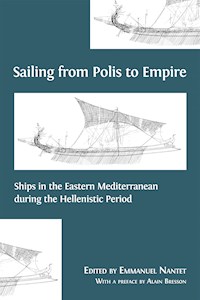
Cover image: Delos, House of Dionysos, Room L, Eastern Wall (1st century BCE): graffito of an Hellenistic warship with 85 oars (drawing by Dominique Carlini in Récit d’une aventure : les graffiti marins de Délos : Musée d’histoire de Marseille, 18 décembre 1992 – 22 mars 1993, Marseilles, Marseilles Historical Museum, 1992). All rights reserved.
Cover design: Anna Gatti.
Contents
Preliminary Notes
vii
Authors
ix
Preface
xi
Alain Bresson
Bibliography
xvii
1.
The Hellenistic Merchantmen: A Contribution to the Study of the Mediterranean Economies
1
Emmanuel Nantet
Bibliography
6
2.
Evolutions of the Representation of the Eastern Mediterranean in the Hellenistic Period
11
Jean-Marie Kowalski
2.1.
Granularity of Information
14
2.2.
Distances and Maritime Experience
16
2.3.
Seasonality of Weather Indications
18
2.4.
Influence of Weather Conditions Over Navigation
20
2.5.
Granularity and Quality of Information: The Problem of Salience
21
2.6.
Salience and Visually Distinctive Features: The Case of Cape Pedalion
24
2.7.
Conclusion
24
Bibliography
25
3.
Naval Architecture. The Hellenistic Hull Design: Origin and Evolution
27
Patrice Pomey
Bibliography
51
4.
Naves Pingere: ‘Painting Ships’ in the Hellenistic Period
55
Martin Galinier and Emmanuel Nantet
4.1
Naval Issues Before the Reign of Alexander
56
4.2.
Ship Painters
60
4.3.
Conclusion
67
Bibliography
68
5.
The Rise of the Tonnage in the Hellenistic Period
75
Emmanuel Nantet
5.1.
The Sources
76
5.2.
An Initial Rise in the First Part of the Second Century?
80
5.3.
A Second Rise from the End of the Second Century to the Beginning of the First Century?
82
5.4.
The Common Reasons for the Two Increases
84
5.5.
Conclusion
86
Bibliography
86
6.
A Note on the Navigation Space of the Baris-Type Ships from Thonis-Heracleion
91
Alexander Belov
6.1.
Main Characteristics of the Baris as per Herodotus and New Archaeological Data
93
6.2.
Navigation Area of the Baris-Type Ships
94
6.3.
Conclusions
106
Bibliography
110
List of Tables and Illustrations
119
Index
123
Preliminary Notes
This book originated partly from an international workshop, which was held on 14 November 2014 in Nicosia, at the Archaeological Research Unit of the University of Cyprus. It was organized by Stella Demesticha (University of Cyprus) and Emmanuel Nantet (then University of Le Mans, France, now at the University of Haifa, Israel, based in The Leon Recanati Institute for Maritime Studies, Laboratory of Nautical Archaeology and History). It was supported by the ‘Sailing in Cyprus Through the Centuries’ project, the French Institute in Cyprus (Institut Français de Chypre), the CReAAH (Centre de Recherches en Archéologie, Archéosciences, Histoire — UMR 6566) and the Scientific Interest Group of Maritime History (Groupement d’Intérêt Scientifique d’Histoire Maritime).
The book has been edited by Emmanuel Nantet and improved by further contributions, with sincere thanks to the contribution of the French Institute in Cyprus, of the CRESEM (Centre de Recherche sur les Sociétés et les Environnements Méditerranéens — EA 7397) and the LabEx Archimède (Archéologie et Histoire de la Méditerranée et de l’Égypte Anciennes). This book has benefited greatly from the advice of Conor Trainor (University of Warwick) and Christoph Schäfer (University of Trier). It has been copy-edited and proof-read by Sharon Elisheva Turkington, Ivana Kubalova and Lucy Barnes.
Authors
Alexander Belov, Centre for Egyptological Studies of the Russian Academy of Sciences, Moscow.
Alain Bresson, University of Chicago.
Martin Galinier, Université de Perpignan Via Domitia, CRESEM E.A. 7397.
Jean-Marie Kowalski, University of Paris-Sorbonne / French Naval Academy FED 4124.
Emmanuel Nantet, Department of Maritime Civilizations, Laboratory for Nautical Archaeology and History, The Leon Recanati Institute for Maritime Studies, University of Haifa, associated member UMR 6566 (CReAAH).
Patrice Pomey, Emeritus Research Director, AMU, CNRS, MCC, Centre Camille Jullian.
Preface
Alain Bresson
© Alain Bresson, CC BY 4.0 https://doi.org/10.11647/OBP.0167.07
The absence of technological progress in the ancient world has long been a dogmatic belief among ancient historians, linked to the idea that the ancient economy was stagnant. It took time, and also a prolonged and vigorous debate, to explode both pronouncements. Recent research has shown that starting in the Archaic period, and culminating at the end of the Hellenistic period and at the very beginning of the Imperial period, the ancient Mediterranean world experienced a vigorous period of growth. The evidence for this process is abundant and manifold: from the basic quantity of ceramic shards on archaeological sites to the size of houses and cities, or the number of various artefacts found in these sites.
Admittedly, the idea has also long prevailed that, to the extent that there was growth, it was purely the consequence of demographic expansion rather than the result of any productivity increase. But this idea also must be abandoned. Economic growth in the ancient world was fundamentally based on a specific institutional organization, that of the city, which firmly guaranteed property rights. This meant property rights over land and any other material item, but also over people, slavery being one of the pillars of ancient society. Some would even (wrongly) argue that the exploitation of enslaved men and women was the only fuel of economic growth. But no matter what, if an analysis of the factors of economic growth must include the diverse forms of exploitation of the workforce, it should not neglect technological progress and innovation. Indeed, the process of growth was also based on a comparatively vigorous technological progress. The fact that the ancient world did not introduce the steam engine (and other technologies that harness huge quantities of energy) has seemed to condemn all the technological progress that took place during this period. Technological innovation in the ancient world was less spectacular than that of the modern period, as the latter is the result of a systematic combination of scientific knowledge and technological developments. Yet, in various sectors of the ancient economy, the process of innovation achieved impressive results, which allow us to understand how economic growth could actually take place. One of the major technological breakthroughs of the ancient world occurred in sailing technology. In this respect, both for its quantitative and qualitative aspects, naval archaeology provides a major contribution to our understanding of this phenomenon.
For the former, one can think of the now famous graph produced by Anthony J. Parker, which, since its introduction into the scholarly debate, has been regularly updated without radically changing the overall picture. The graph of the number of shipwrecks between the Archaic period and Late Antiquity has a Gaussian aspect. One might argue that the graph illustrates the growth of trade relations, not global economic growth per se. One could also contend that real economic growth did not follow such an abrupt pattern of increase and decline. This is not the place to address these questions. Nonetheless, given that the growth of the ancient economy was directly linked to the expansion of trade, primarily maritime trade, the graph of shipwrecks illustrates the process of economic growth (and decline from the second century CE onwards).
As for maritime trade, recent research has shown that the technology of shipbuilding experienced several major transformations during Classical antiquity. That is where this volume, Sailing from Polis to Empire: Ships in the Eastern Mediterranean during the Hellenistic Period, is important. It publishes the papers presented at an international workshop that took place in Nicosia, at the Archaeological Research Unit of the University of Cyprus, on 14 November 2014. This workshop was organized by Stella Demesticha (University of Cyprus) and Emmanuel Nantet (then Université du Mans, now University of Haifa). Emmanuel Nantet recently published his monumental and justifiably acclaimed Phortia: le tonnage des navires de commerce en Méditerranée du VIIe siècle av. l’ère chrétienne au VIIe siècle de l’ère chrétienne (Rennes 2016: Presses Universitaires de Rennes), which was devoted to the question of ship tonnage in the ancient world. There is a clear complementarity between the two books. Of course, the diversity in authorship in an edited volume like this one also means a diversity of approaches to ancient naval archaeology. But the common thread is the ship, the ‘forgotten hero’ of the study of ancient economic life, as is emphasized from the start by Emmanuel Nantet himself.
The chapter by Patrice Pomey, one of the scholars who has contributed most to the study of this technology, perfectly summarizes the various phases in the ancient technology of shipbuilding. The basic technology used for assembling ships in the Archaic Greek world was that of stitching. At the turn of the Archaic and Classical periods, the ‘sewn ships’ were replaced by ships assembled by tenon and mortise. This technique originated from Phoenicia and migrated westward. The Mediterranean world was not only an area where the accelerated transfer of goods could occur. It also provided ideal conditions for the migration of technologies, and unsurprisingly, given the direct link provided by the movement of ships and sailors, the technology of shipbuilding was one that could most easily migrate. With its tripartite structure—keel, planking, framing—the ship of the ‘Hellenistic type’ (as it is defined by Pomey) was still of the ‘shell-first’ variety. It was however much sturdier than its predecessor. Its size and its hollow shape (defined as a ‘wine-glass profile’) meant that its tonnage could easily reach several hundred, as compared to the less than thirty of the early Archaic sewn ships. The small ships of the early Archaic period were fit for transporting mainly small quantities of luxury goods for wealthy elites, whereas the massive increase in the tonnage of ships made it possible to achieve the pan-Mediterranean long-distance transport of heavy freight loads for ordinary customers.
The ship of the ‘Hellenistic type’ still had weaknesses. For instance, the keel was not firmly linked to the other parts of the structure and it could easily be lost after a shock, precipitating the inevitable sinking of the ship. Ships of the Imperial period, with their keelsons and several lateral sister-keelsons, were apparently more robust. Pomey’s argument is supported throughout by a large number of illustrations (photos and drawings) and the reader can easily follow the demonstration. One can only be struck that the observations made on the shipwrecks match the ships depicted in Roman representational art so well, which in return helps the archaeologists reconstruct the often-missing parts of the wrecked ships, such as the prow or the upper parts of the hull. Emmanuel Nantet himself sees two main phases in the process of the growth of the tonnage of the Hellenistic ships: the beginning of the second century BCE, where this growth was pan-Mediterranean, and the turn of the first century BCE, where it was limited to specific routes and specific products like wine or works of art, directly connected with the new phase of the Roman conquest. Beyond the technological change in ship building, he also insists on the structural transformations in harbour construction necessitated by the increase in the size of merchantmen fleets and in the tonnage of their respective ships. This is currently one of the most active fronts of research in ancient navigation and nautical archaeology, as is made clear by the many and ground-breaking studies of Pascal Arnaud, on the institutional and practical side of access to ports, and Simon Keay, on port archaeology and specifically on Portus Romae, the imperial Roman port built in the first century CE.
Another side of ancient water transport is river navigation. Alexander Belov revisits the case of the baris. This type of ship is mentioned by Herodotus (2.179) when he explains that it was used in the internal waterways of Egypt. The word baris comes from the ancient Egyptian br (byr)and during the Eighteenth Dynasty it was a sea-going ship. But later, in Herodotus’s time and until the Late Hellenistic period (the last mention in papyri is from 125 BCE), this ship was the typical Nile freighter. The case of the baris is fascinating because the textual evidence can be combined with excavation data. Indeed, the site of Thonis-Heracleion, at the mouth of the Canopic branch of the Nile, has proved to be a gold mine for our understanding of ancient navigation and shipbuilding. The site has been explored by Frank Goddio and his team for the last two decades. The underwater excavation has revealed a large number of shipwrecks. Belov himself participated in the exploration of the site and has a first-hand knowledge of the material. More than sixty ships have been definitively identified but their actual number is certainly significantly higher. Some of these shipwrecks, like Ship 17, allow us to form a vivid picture of these craft.
Belov has devoted a monograph to this ship. It was built of local wood (acacia) and had no proper keel, which was not a problem for Nile navigation but rather an advantage. Such a ship had to be hauled upstream. It was 27–28 m long and its tonnage was c. 113 metric tons. Let us stress that this was a considerable amount for this period. If we apply the rule that one medimnos of wheat (the standard grain production of Egypt) weighed 31 kg, the cargo of a baris was equivalent to 3645 medimnoi. This was slightly over the capacity of a standard Greek sea-going ship of the Classical period (c. 3000 medimnoi). The cargo of a single Nilotic baris would have easily filled the hold of a Greek sea-going ship bound for its homeland. Once again, we see how important it is for the historian to combine textual evidence and archaeological data.
Navigation and sea routes are also considered in this volume. Jean-Marie Kowalski analyses the navigation routes from and to Cyprus on the basis of literary sources, from Herodotus through to Strabo and the Stadiasmus maris Magni. It is important, as Kowalski does, to use the data provided by our literary sources not in abstracto but in their geographic and ecological framework. This implies taking into account the differences in the wind directions between the summer and winter seasons. From this perspective, it is perfectly legitimate to use modern climatic data to make sense of the ancient literary sources, as it has been done for the conditions of navigation around the Triopion (cape Krio, Knidos).
Another aspect of the life of ships — their decoration — is addressed in Martin Galinier and Emmanuel Nantet’s chapter. ‘Painting vessels’ could have two meanings in ancient tradition: depicting vessels in a painting or actually painting vessels. Building on an anecdote related by Pliny (NH 35.101) about the life of the famous painter Protogenes of Kaunos, Galinier and Nantet cleverly offer a small masterpiece, an analysis in the form of a diptych covering both aspects of ‘painting vessels.’ The depiction of vessels in the ancient pictorial tradition was illustrated by vase painters and also by the most famous masters like Apelles and Protogenes. Pliny informs us that, to earn his living, Protogenes began his career as a vessel painter. Many texts, as well as pieces of representational art such as paintings and coins, confirm that ancient ships were lavishly decorated, and for this reason there should be no doubt about the actual meaning of Pliny’s allusion: before representing ships in his paintings, Protogenes had been a simple ship painter. Indeed, the ships were adorned with reliefs painted in bright colours. The painting often consisted of tinted wax, with additives allowing the mix to resist the effects of sun and salt water. Ruddle or red ochre (miltos), a dye that was supposed to protect the wood from decay caused by worms, was used to paint ancient ships. It was for this reason that, in the fourth century BCE, Athens established its monopoly over the island of Keos in the Cyclades, which was a large producer of this pigment.
Beyond protecting the wood, it remains clear that the decoration of ships, especially of warships, was seen as a standard part of their equipment. This is true not only for antiquity but also for the Western tradition at least until the end of the early modern period. Until war became an industrial process in the course of the nineteenth century, going to war both on land and sea was also a form of pageantry. For ships, this meant displaying a spectacular array of colours and reliefs in order to capture the imagination of both seamen and landsmen, friends or foes. The most stunning testimony of this practice remains the Swedish warship Vasa, shipwrecked on 10 August 1628 during her maiden voyage, after navigating less than one mile from her port in the bay of Stockholm. The shipwreck was located in the 1950s and salvaged in 1961, and the Vasa is now on display at the VasaMuseum in Stockholm. Visitors can discover the hull and rigging, but they can also behold the many statues that decorated the ship, especially on the prow and stern portions. A careful examination of the ship’s wood has resulted in the recovery of traces of pigments, allowing researchers to propose restorations of the original paintings. Visitors can thus admire on a replica the vivid colours applied to the decorations of the ship, allowing them to get a fair idea of the taste for the spectacular that at the time went with building a man-of-war.
As observed by Galinier and Nantet, who usefully quote Euripides’ Iphigenia in Aulis (231–276), the decorations of the ships appealed to the imagination of the observers and a fleet parade was a show in itself. One understands even better the spectacle offered by the Athenian fleet leaving for Syracuse in June 415 BCE, as described by Thucydides (6.31.1–6), who emphasizes the expensive figureheads (sēmeia) and equipment of the vessels (6.31.3).
Obviously, this volume is important for economic historians, but also for scholars of social and cultural history. If nautical history has been long dominated by specialists of the Western Mediterranean, the balance is currently changing, as proved by this publication. The editor and contributors of this volume must be praised for that and encouraged to undertake further research in the same direction.
Bibliography
Bresson, A. 2011. ‘Naviguer au large du cap Triopion.’ Anatolia Antiqua 19:395–409.
Bresson, A. 2016. The Making of the Ancient Greek Economy: Institutions, Markets, and Growth in the City-States. Princeton: Princeton University Press.
Carrara, A. 2014. ‘À la poursuite de l’ocre kéienne (IG II2 1128): mesures économiques et formes de domination athénienne dans les Cyclades au IVe s. a.C.’ In Pouvoirs, îles et mers: formes et modalités de l’hégémonie dans les Cyclades antiques (VIIe s. a.C. — IIIe s. p.C),edited by G. Bonnin and E. Le Quéré, 295–316. Bordeaux: Ausonius.
Lytle, E. 2013. ‘From Farmers into Sailors: Ship Maintenance, Greek Agriculture, and the Athenian Monopoly on Kean Ruddle (IG II2 1128).’ Greek, Roman and Byzantine Studies 53:520–550.
Parker, A. J. 1992. Ancient Shipwrecks of the Mediterranean & the Roman Provinces. BAR International Series 580. Oxford: Tempus Reparatum.
1. The Hellenistic Merchantmen: A Contribution to the Study of the Mediterranean Economies
Emmanuel Nantet
© Emmanuel Nantet, CC BY 4.0 https://doi.org/10.11647/OBP.0167.01
Although numerous scholars have explored the Mediterranean economy of the last centuries BCE, their research has included hardly any data about shipwrecks. This can be explained not only by the lack of such data, but likewise the lack of conferences dedicated to this issue. The impact of shipwrecks on the Hellenistic sea trade is therefore a gap in our collective knowledge. The purpose of this book is to suggest some approaches to the study of this issue.
Since Rostovtzeff,1 many scholars have shown an interest in the sea trade during the Hellenistic period. But like Finley,2 most of the economic analysis of the Greek world deals primarily with the Archaic and the Classical periods.3 The economy of the Hellenistic period suffers from a lack of rigorous analysis. Fortunately, some studies have been dedicated to the Hellenistic economies, but almost all of them focus on a kingdom4 or a city. Of course, the royal power and the polis constitute the principal framework in which economies were strongly embedded. Nevertheless, this regional approach tends to overlook the Mediterranean scale.5 This is why a group of scholars, including Zosia H. Archibald, John K. Davies and Vincent Gabrielsen,6 undertook to organize a series of three conferences to explore the Hellenistic economies.7 These conferences produced many case studies about the various issues at hand. The work does not rely on regional areas, which would limit the discussion, but on a thematic and comparative approach. Moreover, they rely both on written and archaeological evidence. These conferences have produced many fruitful works, which have improved our knowledge of this issue.
However, among the numerous works about Hellenistic economies, very few mention the ships.8 Only the conference on Hellenistic Economies at Liverpool in 1998 dedicated a paper to this issue9 and so far, Gibbins’ article seems to be the only study focusing on Hellenistic shipwrecks. His paper is well documented and offers a useful appendix that consists of a list of sixty-four Hellenistic ‘shipwrecks’10 relying on the data gathered by Anthony Parker. Although Gibbins’ study is entitled ‘Hellenistic Shipwrecks’, it focuses only on the amphorae that the ships were carrying. Almost nothing is said about the hulls, apart from a few details about the hull of Kyrenia,11 and a brief mention of the hull of Apollonia (discovered off the coast of Libya) in the appendix.12 Furthermore, Gibbins does not write a word about the Ma’agan Mikhael shipwreck despite the fact that he deals with Classical shipwrecks — his article is very focused on the Aegean and Cypriot areas.
The second and third conferences about the Hellenistic economies did not include any contributions about ships either; despite this, they were mentioned from time to time,13 which shows how significant they are for our understanding of the sea trade. All the other contributions to these conferences that discussed underwater remains dealt only with transport amphorae — for example, when Mark Lawall mentioned shipwrecks, he focused on amphorae cargoes only.14 Even though these studies about transport amphorae are quite useful, the ship is systematically omitted: the resulting publications do not neglect data collected from underwater archaeology, but they deal mainly with cargoes, not hulls.
The ship, as a vital tool for commerce, is therefore missing from the global analysis, despite the fact that the study of the ship could contribute a great deal to our understanding of Hellenistic maritime commerce. Indeed, it allows us to measure the scale of trade. This must be understood in its geographic context.15 Firstly, the sea trade relies on three kinds of maritime routes. The regional one, which joins Ephesus to Piraeus for example, or Alexandria to Rhodes, is well documented by various sources. However, our knowledge about the inter-regional route, which connected distant harbours of the Mediterranean such as Pozzuoli and Alexandria, relies almost exclusively upon written evidence. As for local routes, which linked harbours that lay only a few nautical miles apart, it is very hard to identify these. Nonetheless, the importance of short journeys must not be overlooked. In addition to these varying geographical scales, we also need to take into account the quantitative ones.16 Were these amphorae embedded in lively or less active networks of trade? It is tempting to suggest that the bigger ships were carrying merchandise on long-distance trade routes between large and significant harbours, and that smaller ships were just redistributing the goods into the secondary harbours. This situation was certainly common, but it was not always so.
Thus, this inquiry about the varying nature of the sea trade raises many questions: how were these ships built? How big were they? How much could they carry? What merchandise did they convey? What was their navigation area? Where did these ships sail to and from? Was the situation different in the Eastern and the Western waters? A close examination of these ships will therefore contribute greatly to our understanding of Hellenistic economies.
So far, most scholars who have dealt with Hellenistic ships have not focused closely on economic issues.17 Since there were almost no shipwreck remains in the Eastern Mediterranean, there was very limited information about cargoes; only iconography and written evidence was available, so architectural features and legal issues have been to the fore. Whereas research on the Western Mediterranean put technical and economic issues at the heart of maritime studies,18 those focusing on the Eastern region have answered different questions. This lack of interest in sea trade among the scholars who have studied Hellenistic ships in the Eastern Mediterranean was also not conducive to the analysis of Hellenistic economies.
Above all, this situation reflects a lack of knowledge. Very few shipwrecks have been excavated in the Eastern Mediterranean, since they are much more numerous in the Western part of the sea.19 The difference between the Eastern and Western waters was more pronounced in the Hellenistic period.20 During the last few decades, when conferences about Hellenistic economies were held and when ship experts wrote scholarly studies about navigation in the Eastern Mediterranean, almost no underwater remains of this period had been discovered in that part of the sea. But during last decade, the situation has changed slightly, because more shipwrecks have been discovered in the Eastern Mediterranean. Publications about Hellenistic underwater discoveries off the Eastern Mediterranean coasts are therefore more numerous.21
These new discoveries could have been published in the Tropis conference proceedings, organized by Harry Tzalas of the Hellenic Institute for the Preservation of Nautical Tradition.22 Nonetheless, even without them, these proceedings gather together many useful interdisciplinary studies about ships, relying on written and archaeological sources.23 Unfortunately, the findings of the last two international meetings, held in 2005 in Ayia Napa (Tropis IX) and Hydra (Tropis X), have not been published so far and no other conference has been organized since then.24 Since the end of the Tropis conferences, the publications have scattered in national periodicals. Thus, ship archaeologists have lost a place to meet and discuss the issue transnationally. But the revival in this field seems to come from Cyprus. The island is located in an appropriate place, central enough in the Eastern Mediterranean to facilitate these international meetings. It has peaceful relationships with its surrounding neighbours. In addition, the Archaeological Research Unit of the University of Cyprus played a major role in setting up maritime conferences,25 some of them attaching much importance to ships. For instance, the workshop held in Cyprus, which resulted in this book, was intended to fulfil a need among the ship archaeologists interested in the Eastern Mediterranean to meet and discuss their research. The Honor Frost Foundation conference, ‘Mediterranean Maritime Archaeology: Under the Mediterranean’, held in Nicosia in October 2017, also offered a place of exchange for the scholars involved in this field of research.26 Although, for the past decade, the foundation has been subsidising much work by scholars from all the countries of the Eastern Mediterranean, it has recently decided to restrict its funds to Cyprus, Egypt, Lebanon, and Syria. The strong recent revival of maritime archaeology in the Eastern Mediterranean is well evidenced by a recent book by Justin Leidwanger, which focuses on the Roman period.27
Unfortunately, the subject areas are overly compartmentalized. The ship archaeologists and the experts in ancient economics organise their own conferences. These barriers explain why ships have often been neglected in previous studies of Hellenistic economies.
To meet this need, the studies gathered in this book aim to shed light on navigation in the Eastern Mediterranean during the Hellenistic period. They deal with all the parts of the Eastern Mediterranean: not only the Aegean Sea, but other seas between Asia Minor and Egypt. They use all kinds of data — literary, epigraphical, papyrological, iconographic and archaeological. The goal of the book is not to give an exhaustive analysis of maritime commerce; it is to set up the initial framework to help future scholars in their research, as more and more archaeological shipwrecks continue to be discovered and made public in the next decades.
This chapter is followed by a study, conducted by Jean-Marie Kowalski, about the role of Cyprus in the network of maritime routes (chapter 2). He demonstrates the differences between the distances given by the literary sources. The next chapter, written by Patrice Pomey, deals with the architectural type of the Hellenistic ships (chapter 3). He shows that the main change in ship evolution was the adoption of the tenon-and-mortise assemblage. The warships, once they were built, were decorated by ship painters (chapter 4). The Hellenistic period saw an increase in the tonnage (chapter 5). The comparisons between the epigraphical, papyrological and archaeological sources allow us to understand the chronological phases of this increase, and the factors that affected it. The last chapter is dedicated to Ship 17 from Thonis-Heracleion (chapter 6). The careful analysis of the architectural features by Alexander Belov shows that this ship was an Egyptian baris and that she may have sailed in the estuary of the Nile.
Bibliography
Archibald, Z. H., J. K. Davies, V. Gabrielsen, and G. J. Oliver, eds. 2001. Hellenistic Economies. London: Routledge. https://doi.org/10.4324/9780203995921
Archibald, Z. H., J. K. Davies, and V. Gabrielsen, eds. 2005. Making, Moving and Managing: The New World of Ancient Economies, 323–31 B.C. Oxford: Oxbow Books. https://doi.org/10.1111/j.1468-0289.2006.00361_13.x
Archibald, Z. H., J. K. Davies, and V. Gabrielsen, eds. 2011. The Economies of Hellenistic Societies, Third to First Centuries BC. Oxford: Oxford University Press. https://doi.org/10.1093/acprof:osobl/9780199587926.001.0001
Arnaud, P. 2013. ‘L’apport de l’archéologie sous-marine.’ In Archéologie sous-marine: pratiques, patrimoine, médiation, edited by C. Cérino, M. L’Hour, and É. Rieth, 193–203. Rennes: Presses Universitaires de Rennes.
Arnaud, P. 2015. ‘La batellerie de fret nilotique d’après la documentation papyrologique (300 avant J.-C.–400 après J.-C.).’ In La Batellerie égyptienne: archéologie, histoire, ethnographie, edited by P. Pomey, 99–150. Alexandria: Centre d’Études Alexandrines.
Basch, L. 1987. Le Musée imaginaire de la marine antique. Athens: Institut hellénique pour la préservation de la tradition nautique.
Blue, L., ed. 2019. In the Footsteps of Honor Frost. The Life and Legacy of a Pioneer in Maritime Archaeology. Leiden: Sidestone Press.
Bresson, A. 2011. ‘Grain from Cyrene.’ In The Economies of Hellenistic Societies, Third to First Centuries BC, edited by Z. H. Archibald, J. K. Davies, and V. Gabrielsen, 66–95. Oxford: Oxford University Press. https://doi.org/10.1093/acprof:osobl/9780199587926.003.0004
Bresson, A. 2009. L’Économie de la Grèce des cités (fin VIe–Ier siècle a.C.). I, Les structures et la production. Paris: Armand Colin. https://doi.org/10.14375/np.9782200265045
Bresson, A. 2018a. ‘Flexible Interfaces of the Ancient Mediterranean World.’ In Trade and Colonization in the Ancient Western Mediterranean: The Emporion, From the Archaic to the Hellenistic Period, edited by E. Gailledrat, M. Dietler, and R. Plana-Mallart, 35–46. Montpellier: Presses Universitaires de la Méditerranée (Collection Monde Ancien).
Bresson, A. 2018b. ‘Coins and Trade in Hellenistic Asia Minor: The Pamphylian Hub.’ In Infrastructure and Distribution in Ancient Economies Proceedings of a Conference Held at the Austrian Academy of Sciences, 28–31 October 2014, edited by B. Woytek, 35–46. Vienna: Austrian Academy of Sciences. https://doi.org/10.2307/j.ctvddzgz9.9
Casson, L. 1971. Ships and Seamanship in the Ancient World. 2nd ed. Princeton: Princeton University Press.
Chankowski, V. and F. Duyrat, eds. 2004. Le Roi et l’économie: autonomies locales et structures royales dans l’économie de l’empire séleucide: actes des rencontres de Lille (23 juin 2003) et d’Orléans (29–30 janvier 2004). Lyon: Maison de l’Orient méditerranéen.
Demesticha, S. 2011. ‘The 4th-Century-BC Mazotos Shipwreck, Cyprus: A Preliminary Report.’ International Journal of Nautical Archaeology 40: 39–59. https://doi.org/10.1111/j.1095-9270.2010.00269.x
Finley, M. I. 1985. The Ancient Economy. London: Hogarth.
Galili, E., B. Rosen, and A. Zemer. 2016a. ‘A Marble Disc (Ship Eye) from a Hellenistic Shipwreck South of Haifa.’ In Seafarers’ Rituals in Ancient Times, edited by A. Zemer, 130–31. Haifa: The National Maritime Museum.
Galili, E., D. Syon, G. Finkielsztejn, V. Sussman, and G. D. Stiebel. 2016b. ‘Late Ptolemaic Assemblages of Metal Artifacts and Bronze Coins Recovered off the Coast of Atlit.’ Atiqot 87: 135.
Galili, E., V. Sussman, G. D. Stiebel, and B. Rosen. 2010. ‘A Hellenistic/Early Roman Shipwreck Assemblage off Ashkelon, Israel.’ International Journal of Nautical Archaeology 39: 125–45. https://doi.org/10.1111/j.1095-9270.2009.00249.x
Gianfrotta, P. A. and P. Pomey. 1981. Archeologia subacquea: storia, tecniche, scoperte e relitti. Milan: A. Mondadori.
Gibbins, D. 2001. ‘Shipwrecks and Hellenistic Trade.’ In Hellenistic Economies, edited by Z. H. Archibald, J. K. Davies, V. Gabrielsen, and G. J. Oliver, 273–312. London: Routledge. https://doi.org/10.4324/9780203995921
Harris, E. M., D. M. Lewis, and M. Woolmer, eds. 2016. The Ancient Greek Economy: Markets, Households and City-States. Cambridge: Cambridge University Press. https://doi.org/10.1017/CBO9781139565530
Lawall, M. 2005. ‘Amphoras and Hellenistic Economies: Addressing the (Over)-Emphasis on Stamped Amphora Handles.’ In Making, Moving and Managing: The New World of Ancient Economies, 323–31 B.C., edited by Z. H. Archibald, J. K. Davies and V. Gabrielsen, 188–232. Oxford: Oxbow Books.
Leidwanger, J. 2020. Romans Seas. A Maritime Archaeology of Eastern Mediterranean Economies. Oxford: Oxford University Press.
Murray, W. M. 2012. The Age of Titans: The Rise and Fall of the Great Hellenistic Navies. Oxford: Oxford University Press. https://doi.org/10.1093/acprof:oso/9780195388640.001.0001
Nantet, E. 2016. Phortia: le tonnage des navires de commerce en Méditerranée: du VIIIe siècle av. l’ère chrétienne au VIIe siècle de l’ère chrétienne. Rennes: Presses Universitaires de Rennes.
Pomey, P., ed. 1997. La Navigation dans l’Antiquité. Aix-en-Provence: Édisud.
Pomey, P. and A. Tchernia. 1978. ‘Le tonnage maximum des navires de commerce romains.’ Archaeonautica 2: 233–51.
Préaux, C. 1939. L’Économie royale des Lagides. Bruxelles: Éd. de la Fondation égyptologique reine Élisabeth.
Rostovtzeff, M. I. 1941. The Social & Economic History of the Hellenistic World. Oxford: The Clarendon Press.
Sakellariou, D., P. Georgiou, A. Mallios, V. Kapsimalis, D. Kourkoumelis, P. Micha, T. Theodoulou, and K. Dellaporta. 2007. ‘Searching for Ancient Shipwrecks in the Aegean Sea: The Discovery of Chios and Kythnos Hellenistic Wrecks with the Use of Marine Geological-Geophysical Methods.’ International Journal of Nautical Archaeology 36: 365–81. https://doi.org/10.1111/j.1095-9270.2006.00133.x
Scheidel, W., I. Morris, and R. P. Saller, eds. 2008. The Cambridge Economic History of the Greco-Roman World. Cambridge: Cambridge University Press. https://doi.org/10.1017/chol9780521780537
Syon, D., C. Lorber, and E. Galili. 2013. ‘Underwater Ptolemaic Coin Hoards from Megadim.’ Atiqot 74: 1–8.
Tzalas, H., ed. 1989. Tropis I: 1st International Symposium on Ship Construction in Antiquity: proceedings, Piraeus, 1985. Athens: Hellenic Institute for the Preservation of Nautical Tradition.
Tzalas, H., ed. 1990. Tropis II: 2nd International Symposium on Ship Construction in Antiquity: proceedings, Delphi, 1987. Athens: Hellenic Institute for the Preservation of Nautical Tradition.
Tzalas, H., ed. 1995. Tropis III: 3rd International Symposium on Ship Construction in Antiquity: proceedings, Athens, 1989. Athens: Hellenic Institute for the Preservation of Nautical Tradition.
Tzalas, H., ed. 1996. Tropis IV: 4th International Symposium on Ship Construction in Antiquity, Center for the Acropolis Studies, Athens, 28, 29, 30, 31 August 1991: proceedings. Athens: Hellenic Institute for the Preservation of Nautical Tradition.
Tzalas, H., ed. 1999. Tropis V: 5th International Symposium on Ship Construction in Antiquity: proceedings, Nauplia, 26, 27, 28 August 1993. Athens: Hellenic Institute for the Preservation of Nautical Tradition.
Tzalas, H., ed. 2001. Tropis VI: 6th international symposium on ship construction in antiquity Lamia, 28,29,30 August 1996: proceedings. Athens: Hellenic Institute for the Preservation of Nautical Tradition.
Tzalas, H., ed. 2002a. Tropis VII: 7th International Symposium on Ship Construction in Antiquity, Pylos, 26, 27, 28, 29 August 1999: proceedings. Athens: Hellenic Institute for the Preservation of Nautical Tradition.
Tzalas, H., ed. 2002b. Tropis VIII: 8th International Symposium on Ship Construction in Antiquity: Hydra, 27, 28, 29, 30 august 2002: proceedings. Athens: Hellenic Institute for the Preservation of Nautical Tradition.
Tzalas, H. 2019. 1985-2008: TROPIS International Symposia on Ship Construction in Antiquity. In In the Footsteps of Honor Frost. The Life and Legacy of a Pioneer in Maritime Archaeology, edited by L. Blue, 91–94. Leiden: Sidestone Press.
Velissaropoulos, J. 1980. Les Nauclères grecs: recherches sur les institutions maritimes en Grèce et dans l’Orient hellénisé. Geneva: Droz.
1 Rostovtzeff 1941, 2:1248–71.
2 Finley 1985.
3 See recently, Harris et al. 2016, who focus on the Classical period.
4 Préaux 1939; Chankowski and Duyrat 2004.
5 For example, Scheidel et al. 2008.
6 And Graham J. Oliver at the first conference.
7 Archibald et al. 2001, 2005, 2011.
8 Note a well-documented exception: Bresson 2016, 86–88.
9 David Gibbins, ‘Shipwrecks and Hellenistic Trade,’ in Zofia H. Archibald et al. (eds.), Hellenistic Economies (London/New York: Routledge, 2001), pp. 273–312.
10 Ibid. 296–304, table 10.A1.
11 Ibid., 288–89.
12 Ibid., 297 (n°7).
13 For example, Bresson 2011, who often discusses shipping issues. Two recent chapters by this author provide interesting contributions to the study of maritime trade in the Hellenistic period: Bresson 2018a and 2018b.
14 Lawall 2005, 191.
15 Nantet 2016, 171–73.
16 Ibid.,173–75.
17 Casson 1971 (2nd ed. 1995); Velissaropoulos 1980, who focuses mainly on maritime law; Basch 1987, who analyses the iconography to understand the architectural features of the ships; Murray 2012, who deals with military ships.
18 Pomey and Tchernia 1978; Gianfrotta and Pomey 1981; Pomey 1997.
19 For a discussion about the reasons, see Gianfrotta and Pomey 1981, 55–60; Parker 1992; Arnaud 2013, 199–200; Nantet 2016, 251–54. Also see chapter 4 in this volume.
20 See chapter 5.
21 In Israel, see the research of Jacob Sharbit and especially Ehud Galili: Galili et al. 2010; Syon et al. 2013; Galili et al. 2016a; Galili et al. 2016b. In Greece, see the survey led off Chios and Kythnos, Sakellariou et al. 2007. In Cyprus, see Demesticha 2011. In Egypt, see the study of the shipwreck of Heracleion (cf. chapter 5).
22 Tzalas 1989, 1990, 1995, 1996, 1999, 2001, 2002a, 2002b.
23 Tzalas 2019.
24 Tropis IX. 9th International Symposium on Ship Construction in Antiquity, Ayia Napa 2005. Tropis X. 10th International Symposium on Ship Construction in Antiquity, Hydra 2008.
25 Among many meetings, one example: ‘Per Terram, Per Mare. Production and Transport of Roman Amphorae in the Eastern Mediterranean’, Nicosia, Cyprus, from 12 to 15 April 2013, organized by S. Demesticha, A. Kaldeli, D. Michaelides and V. Kassianidou.
26 Blue 2019.
27 Leidwanger 2020.
2. Evolutions of the Representation of the Eastern Mediterranean in the Hellenistic Period
Jean-Marie Kowalski
© Jean-Marie Kowalski, CC BY 4.0 https://doi.org/10.11647/OBP.0167.02
Studying the evolutions of the representation of the Eastern Mediterranean in the Hellenistic period is a quite challenging task. There is a substantial lack of evidence and in some cases, the granularity of the manuscript sources is quite poor. Moreover, the quality of information varies from one source to another. Nevertheless, by comparing these sources we create a context within which to examine the different ways Cyprus was integrated within the network of maritime routes. The calculation of the length of these routes is unsurprisingly based on an asymmetrical representation of space, but a closer look reveals the importance of seasonality to navigation. The winds blow from sharply different directions in summer and in winter, so it was sometimes impossible to sail certain routes, and a statistical assessment demonstrates that some were much more frequently sailed in summertime than in winter. Lastly, the variety of landscapes around Cyprus makes it necessary to focus on the different kinds of landmarks, and what makes them products of their environment.
This chapter will address the representation of the Eastern Mediterranean during the Hellenistic period, focusing in particular on the case of Cyprus and its place within the maritime routes of the Eastern Mediterranean. I shall compare Classical and Ancient representations with late Hellenistic examples in order to highlight some of the differences and continuities of the representation of this particular region.
The first difficulty that arises is the lack of reliable, datable evidence from this period. Cyprus is very often mentioned in classical literature: for example in the writings of Herodotus, Xenophon, Plato, Thucydides, Isocrates, Demosthenes, and Ephorus.1 Until the late first century BC (Diodorus Siculus, Strabo) and the first century AD (Flavius Josephus,2Dioscorides3) almost no information is given about the island and its geography apart from brief references in Menander’s comedies, in Polybius’ histories, in Theopompus’ fragments or in those by Clearchus the philosopher (fourth century BC).4 Most of the references deal with political or military issues, but very inadequate information is given about navigation and maritime routes.5
We will pay a particular attention to the Stadiasmus (or Periplus Maris Magni) and to Strabo’s Geography, even if the Stadiasmus raises several challenging questions as it is rather difficult to say precisely when it was written and the author’s sources.6Timosthenes of Rhodes (c. 270 BC) is one of the most important sources, but some late information dating from 10 BC can also be identified. It is even more difficult to say when this book was written as the different assumptions range from 50 CE to the fifth century. There are several layers of information that mainly belong to the Hellenistic period and the beginning of the Roman era, but they are probably scattered on a very large span of time. It is also important to note that this text was written long after the Hellenistic period and Strabo’s Geography. We must therefore recognise that this document cannot be considered a fully reliable piece of evidence that reflects the way maritime spaces were represented during a specific period. What is more, there is no real consistency in the descriptions of the different geographical areas within the Stadiasmus. The author gives a very accurate depiction of the coast on the west of Alexandria — this is the only part of the text that could be compared to modern Nautical Instructions — but there is a real lack of detail in the description of the coast of Asia Minor.
As far as the Archaic period is concerned, the island of Cyprus is mentioned only once in Homer’s Iliad,7and five times in the Odyssey.8 In the Iliad, Cinyras learns that the Achaeans are about to sail to Cyprus. This rumour appears to spread beyond the Aegean, but absolutely no indication is given about the island itself. We therefore cannot really say that Cyprus was integrated in the maritime communications network during the poet’s time. In the Odyssey, Cyprus is first mentioned as the place visited by Menelaus when he is wandering on his way back to his country. He then calls in at Phoenicia, in Egypt, before meeting the Ethiopians, the Sidonians, the Eremboï and the Libyans in a clockwise trip around the Eastern Mediterranean. In Cyprus, one can also see Aphrodite’s forest and altars in Paphos.9 Ulysses also arrives in Cyprus after he has been captured as a pirate in Egypt.10
We cannot draw any significant conclusions from Homer’s references to the island of Cyprus, apart from the fact that the island was clearly well integrated into the network of maritime routes that criss-crossed the Eastern Mediterranean and the Aegean Sea. No information is given about its harbours and ports, although the sanctuary of Aphrodite in Paphos appears to have been considered a useful landmark for sailors. The existence of this sanctuary is the only accurate information about Cyprus given in Homer’s Odyssey, and it is also mentioned in the Stadiasmus,11 although it is said to be situated near a city that faces the south, with a triple harbour. Homer’s geographical knowledge about Cyprus was evidently quite poor.
While the poet describes Paphos, Aphrodite’s birthplace,12 possessing an altar dedicated to the goddess as well as a forest, the Stadiasmus13 does not include the forest — although the sanctuary is still there, as is a south-facing city with a triple harbour, which is said to be accessible in all wind conditions since its entrance faces the south. This is the only ‘triple harbour’ mentioned in the Stadiasmus with breakwaters that were built during the Hellenistic period.14 It is therefore a particularly interesting harbour, because it is highly representative of the Hellenistic world before the damage wreaked by earthquakes and by the constant silting of the basins.15 The exact meaning of ‘triple harbour’ is not completely clear, but it is highly probable that this refers to the division of the main basin into several parts, inside a limenkleistos, a closed harbour. This naming is specifically Hellenistic, as ‘closed harbours’ are not mentioned in classical literature, but they are present in Hellenistic writings.
2.1. Granularity of Information
The granularity of the information given is rather different in the Stadiasmus and in Strabo’s Geography (Figs. 2.1 and 2.2).
Fig. 2.1 Itineraries mentioned in the Stadiasmus (CAD Anne-Laure Pharisien/CReAAH).
Fig. 2.2 Itineraries mentioned in Strabo’s Geography (CAD Anne-Laure Pharisien/CReAAH).
In the Stadiasmus, no fewer than twenty-two different itineraries from Cyprus or around the island are mentioned, while in the Geography, some thirteen routes around Cyprus, and between Cyprus and other places, are mentioned.16 At a first glance, it looks as if Strabo’s Geography and the Stadiasmus share many commonalities, but a further examination of these texts reveals significant discrepancies between them. Indeed, among the twenty-two different itineraries around and from Cyprus mentioned in the Stadiasmus, eighteen are parts of the periplus around the island, while Strabo does not give very accurate information about the distances around Cyprus, but he replaces it in the global network of maritime routes. That is to say that Strabo’s homage to Homer in his introduction to the Geography is not some kind of compulsory tribute,17 but a true allegiance to Homer’s vision of the world. Strabo’s representation places Cyprus inside a network of maritime routes18 while the Stadiasmus focuses the reader’s attention on a large number of sometimes very short itineraries around the island. It looks as if the discrepancy between testimonies was not a matter of their age, but rather a matter of sources and purposes. The Stadiasmus also reveals the very dense network of harbours and port facilities that seafarers could find around the island.
In spite of these discrepancies, some common features can be identified between these representations.
2.2. Distances and Maritime Experience
At first it might appear both difficult and almost meaningless to make comparisons between the distances mentioned by the Stadiasmus and those mentioned by Strabo, as the former mainly deals with short-range itineraries while the latter deals with long-range journeys. However, if we consider the quantitative information given by the authors, the Stadiasmus and the Geography give similar information about the distances involved. Nonetheless, no firm conclusions can be drawn from the distances mentioned, as many different factors have led to some irrelevant indications. The main factor is the granularity of manuscripts. The two main editions in use nowadays derive from one tenth-century manuscript (Matritensis 121), in which the text of the Stadiasmus comes immediately after the Chronicle of Hippolytus.19 This unique manuscript is badly damaged and can hardly be deciphered. That is why Müller’s edition of the Stadiasmus in the Geographi Graeci Minores contains many corrections and much additional information. Helm’s edition is more recent (1929) but it does not contain as many corrections of Müller’s edition. The manuscript history of the Stadiasmus means that the reader must be very careful when applying the quantitative data given by the text about the different itineraries.
These factors will not be thoroughly discussed, but one can see, for example, that according to the Stadiasmus, Kargaia is supposedly only 40 stadia20 away from Kouriakos, while the true distance is approximately 13 nautical miles. This would suggest that there are only 3.08 stadia per mile, but the distance between Keryneia and Lapathos is said to be 450 stadia: it is in fact no more than 6 miles.
Whatever the causes of these discrepancies, they should make one very cautious when assessing the reliability of the distances given. Nevertheless, the average number of stadia per mile is very similar between Strabo and the Stadiasmus: 12.7 for Strabo and 14.3 for the Stadiasmus.
Even if each individual indication cannot be considered fully reliable, these are quite close as a group, in spite of differences between the nature of sailing as outlined in these texts. While Strabo mainly refers to long-distance routes on the high seas, the Stadiasmus merges different types of journey, from very short coastal navigation to oceangoing maritime routes. Therefore, the apparent resemblance of their representations is a kind of trompe l’œil similarity insofar as it is not based on the same items. Additionally, nothing is said about the size and type of ships that are supposed to sail these routes.
Some indications about the weather conditions given by the Stadiasmus shed new light on these distances, since they introduce qualitative features to the long lists of distances. Paphos21 is said to be a triple harbour whatever the wind conditions are, just like the city of Ammochostos.22 On the contrary, Amathus23 is said to be deprived of any kind of harbour (alimenos) which makes it an unsafe destination. But this does not mean that the city does not have any mooring place. Strabo says that Amathus is a city but does not say anything about its facilities. The indication of strong gales that blow from the north (boreaswind)24 in Arsinoe and in Karpaseia25 raises the question of the precise meaning of the verb used by Strabo. The author writes ‘kheimazei’, which can be understood in two different ways, as ‘cheimazein’ refers to winter conditions rather than to generic storms. On the same coast, Melabron26 is said to have good summer mooring.
2.3. Seasonality of Weather Indications
At first glance, the Stadiasmus does not indicate directions in the same way in all descriptions. As far as Cyprus is concerned, directions are described using cardinal points to indicate wind directions. One specific type of wind is mentioned, the zephyros, which blows from the west, while the south is said to be ‘mesembria’, that is to say, from the sun’s side at noon.
The contemporary weather statistics of this area provided by the National Oceanic and Atmospheric Administration (NOAA) provide useful indications. Indeed, during the summer, winds usually blow from the west, while in winter, they predominantly blow from the north east with an average speed of 10 knots.27 When they blow from the north, they are usually stronger and reach an average speed of 15 knots. In both cases, they make harbours and moorings quite difficult and unsafe for ships, as even moderate winds from the north east usually become stronger along the northern coast.
Fig. 2.3 Weather conditions around Cyprus in December (CAD Anne-Laure Pharisien/CReAAH).
Fig. 2.4 Weather conditions around Cyprus in June (CAD Anne-Laure Pharisien/CReAAH).
This seems to be a significant indication of the seasonality of navigation or, at least, the seasonality of distance indications, as the Stadiasmus explicitly mentions unfavourable winter conditions on the north coast of Cyprus and does not deal exclusively with summer navigations (Figs. 2.3 and 2.4).
In winter, the average north wind is stronger than the average north-easterly wind. Lastly, these indications do not take into account the local weather phenomena that were well known in antiquity.
This qualitative information suggests a new approach to the indications of distances from and around the island. Instead of paying attention solely to these distances, the information given about the quality of harbours and moorings suggest that we should make connections between weather conditions and distances.
2.4. Influence of Weather Conditions Over Navigation
Even if climatology has changed within a timespan of two millennia, the lack of statistics before the second half of the twentieth century made it acceptable to use NOAA’s data. We have decided here (table 2.1) to rate this data according to the average winter (end of December) and summer conditions (end of June) according to the angle between the wind and the route supposedly followed by the ships along the itineraries mentioned (from 180 to 135 degrees: 3 — fair conditions –, from 135 to 90 degrees: 4 — highly favourable conditions –, around 90 degrees: 2 — average conditions –, from 90 to 45 degrees: 1 — poor conditions –, and from 45 to 0 degrees: 0 — unfavourable conditions –).
If this assessment can be applied to the capacities of the ancient ships, two further conclusions can be drawn. First, Strabo and the author of the Stadiasmus both mention maritime itineraries that are more favourable for ships during summer. This does not mean that sailing in winter was impossible, but the winds were much less favourable, and some harbours and moorings were made unsafe, especially on the north coast of Cyprus. Secondly, even if the Stadiasmus and Strabo both rely on information derived from accounts of summer navigation, the Stadiasmus seems to depend more explicitly on the maritime experience of sailors, because the itineraries mentioned are more favourable during summer.
Table 2.1 Comparison of the impact of weather conditions on navigation.
2.5. Granularity and Quality of Information: The Problem of Salience
Distance is a core datum in geographic literature, but both authors give a series of additional information that is rather qualitative than quantitative, and therefore shed a new light on the question of the evolution of the representation of maritime spaces. At a first glance, the granularity seems to be finer in the Stadiasmus than in Strabo’s Geography.
Fig. 2.5 Akrai and akroteria in Strabo’s Geography (CAD Anne-Laure Pharisien/CReAAH).
Fig. 2.6 Akrai and akroteria in the Stadiasmus (CAD Anne-Laure Pharisien/CReAAH).
Some geographic entities, usually described as capes or promontories, should be considered as structural elements of space, especially the akroteria and akrai around Cyprus (Figs. 2.5, 2.6 and Table 2.2). Akroteria and akrai cannot be considered only as capes or promontories, that is to say horizontal or vertical salient geographical features. These are elements that organize space because they are useful landmarks which form nodes on the network of maritime routes.
Some of these akrai or akroteria can hardly be considered as visually salient landmarks, but they are undoubtedly cognitive landmarks. This is particularly the case for Akroterion Tretous in the Stadiasmus, which could be the akra Strabo places after Kourion. This place was known as the anchorage of al-Itritus during the Ottoman period.28 This anchorage offered good protection against the winds blowing from the north (boreas) and the east/south east (euros).
This example highlights that geographical entities do have formal features, but they are also characterized by their multiple capabilities: to protect ships, to offer safe mooring places, to be good landmarks, to create a landing place on shore, to provide ships with fresh water, or to make seafaring possible. This could be the case with Tretous, as the adjective ‘tretos’ generally describes rocks with holes through which mooring lines are to be pushed.29
Table 2.2 Main akroteria and akrai mentioned in the Stadiasmus and in Strabo’s Geography.
2.6. Salience and Visually Distinctive Features: The Case of Cape Pedalion
Salience derives from affordances, but salience also derives from visually distinctive features. The Stadiasmus description of Cyprus gives quite scanty details about these elements. Absolutely no information is given about Cape Pedalion, which is nowadays known as Cape Greco in the southern part of the island. On the other hand, Strabo’s description provides the reader with accurate and granular details.30 According to the geographer, Pedalion is a cape (akra), with a rough hill (trakhus lophos) on the top, which is high, and is both table-shaped and dedicated to Aphrodite. All these details give visual indications that characterize this cape and help the reader recognize it.
The concept of salience is also a relative one. Cyprus is an island with very sharp geographic contrasts, the Eastern part being much lower than the Western. In spite of this, Strabo’s description of the Eastern cape of Cyprus mentions an akra with an oros, on the top of which (akrôreia) is built a temple to Aphrodite Akraia, which cannot be entered by women. In front of this cape lie several islands. The Stadiasmus does not mention any of these details, but what is striking here is that Strabo’s description seems to describe a mountain in a location that is actually one of the lowest parts of Cyprus.
The only thing we can say is the little elevation at the very end of the cape is the only noticeable distinctive feature of this place. Therefore, the oros cannot be considered literally as a mountain, but simply as a prominent element in the landscape that characterizes an important landmark around Cyprus. What is more, this landmark is only noticeable when ships are navigating close to the coast, in an area made dangerous by the different islands around it.
2.7. Conclusion
Therefore, what makes the difference are actually the man-made buildings and facilities on shore. However, at the same time, the texts reveal that the basic features of the human representation of spaces remain the same. While quantitative information cannot be considered as truly reliable for many reasons, such as the asymmetry of the distances estimated or some defects belonging to the manuscript, qualitative elements should be considered closely. Firstly, the texts we have studied put into sharp relief the fact that, if distances are usually based on rough estimates and closely linked to the length of time it takes to travel by sea, they are also somehow connected with seasonality and the estimation of good travel conditions. What is more, the definition of geographical elements at the end of the Hellenistic period is still based on affordances rather than on formal features. These geographers could say that a place was an oros even if it was not a mountain, just because it was somehow higher than its environment, and this specific feature made it highly salient in its environment. Akraï are neither particularly large capes nor high promontories, but they are salient in their environment and can provide seafarers with safe moorings, or offer good protection against the winds in specific conditions.
Bibliography
Arnaud, P. 2009. ‘Notes sur le Stadiasme de la Grande Mer: la Lycie et la Carie.’Geographia Antiqua 18: 165–93.
Leonard, R. J., R. K. Dunn, and R. L. Hohlfelder. 1998. ‘Geoarchaeological Investigations in Paphos Harbour, 1996.’ Report of the Department of Antiquities of Cyprus, 141–57.
Raban, A. 1995. ‘The Heritage of Ancient Harbour Engineering in Cyprus and the Levant.’ In Proceedings of the International Symposium Cyprus and the Sea




