



1,99 €
Niedrigster Preis in 30 Tagen: 1,99 €
Niedrigster Preis in 30 Tagen: 1,99 €
Mehr erfahren.
- Herausgeber: Booksell-Verlag
- Kategorie: Ratgeber
- Sprache: Englisch
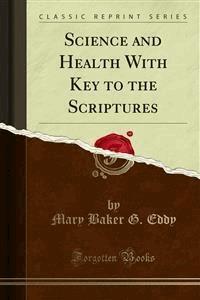
In "Science and Health with Key to the Scriptures," Mary Baker G. Eddy presents a revolutionary exploration of the relationship between spirituality and healing. Written in an accessible yet profound style, the text combines elements of poetry, philosophical inquiry, and practical guidance, inviting readers to examine the interplay of Christian theology and metaphysics. Eddy's work emerged in the context of the 19th-century American religious revival, shaped by Transcendentalist thought and the emerging mind-body connection that characterized her era. Through detailed exegesis of Biblical scripture alongside her own spiritual revelations, Eddy formulates a comprehensive system of Christian Science that emphasizes the potency of spiritual understanding in achieving physical and mental healing. Mary Baker G. Eddy, a pioneer of the New Thought movement, faced significant personal and societal challenges that deeply influenced her writing. Confronted with illness and seeking solace in divine healing, Eddy's journey led her to develop a unique interpretation of God as a benevolent force for healing. Her own transformative experiences with faith-based healing galvanized her mission to share these insights, leading to the establishment of a lasting movement dedicated to spiritual health and wellness. "Science and Health with Key to the Scriptures" is essential reading for those seeking deeper understanding of the intersection of faith and wellness. Whether one approaches it from a desire for spiritual enrichment, an interest in alternative healing practices, or a quest for philosophical inquiry, this seminal work offers profound insights that resonate through the ages. In this enriched edition, we have carefully created added value for your reading experience: - A succinct Introduction situates the work's timeless appeal and themes. - The Synopsis outlines the central plot, highlighting key developments without spoiling critical twists. - A detailed Historical Context immerses you in the era's events and influences that shaped the writing. - An Author Biography reveals milestones in the author's life, illuminating the personal insights behind the text. - A thorough Analysis dissects symbols, motifs, and character arcs to unearth underlying meanings. - Reflection questions prompt you to engage personally with the work's messages, connecting them to modern life. - Hand‐picked Memorable Quotes shine a spotlight on moments of literary brilliance. - Interactive footnotes clarify unusual references, historical allusions, and archaic phrases for an effortless, more informed read.
Das E-Book können Sie in Legimi-Apps oder einer beliebigen App lesen, die das folgende Format unterstützen:
Veröffentlichungsjahr: 2020
Ähnliche
















Science and Health
Table of Contents
Introduction
In the tense space between bodily suffering and spiritual hope, this book insists that the deepest questions of health are also questions of meaning.
Science and Health, written by Mary Baker G. Eddy, has attained classic status because it stands at a rare crossroads of religious thought, ethical aspiration, and literary ambition. Its pages attempt not merely to console but to persuade, building an extended argument about the nature of reality and the place of healing within it. For many readers, its significance lies as much in its disciplined insistence on first principles as in its devotional urgency. That blend of rigor and exhortation helped the work endure long after the immediate controversies of its era had passed.
First published in 1875, Science and Health emerged in the United States during a period marked by rapid change in science, medicine, and public religious life. Eddy wrote and revised the book across subsequent years, and it became the central text associated with the movement she founded, Christian Science. The work’s longevity is not an accident of history; it reflects sustained readership and continuous engagement by people who approached it as both theological statement and practical guide. Its publication context matters because the book speaks into debates that were already alive about mind, body, and faith.
At the center of the book is a premise presented as both spiritual and demonstrable: that true understanding of God and creation has consequences for human experience, including the experience of illness. Eddy frames her project as an exposition of Christian teaching, with particular emphasis on healing understood through spiritual means. The book is structured to lead readers from foundational claims about God and reality toward implications for prayer, ethics, and daily living. It does not require that one accept its conclusions in advance; instead, it presses for a reconsideration of what counts as evidence, causation, and genuine remedy.
Part of the book’s literary impact comes from its distinctive mode of address. Rather than offering a narrative plot, Science and Health develops an architecture of ideas—definitions, contrasts, interpretations, and applications—that invites close reading. Its style often moves between the abstract and the urgent, aiming to make metaphysical claims feel immediate. Readers encounter not only doctrinal exposition but also a sustained effort to shape perception, language, and attention. In this way, the book participates in a tradition of American religious prose that seeks to transform inner life through disciplined thought and deliberate practice.
Its enduring themes help explain its continued presence in American letters and religious culture. Science and Health returns repeatedly to the relationship between spirit and matter, the nature of prayer, and the moral demands of discipleship. It also grapples with fear, suffering, and the desire for certainty, proposing that spiritual understanding can reorder experience. Because these themes arise wherever human beings confront vulnerability, the book remains legible across changing historical conditions. Even readers who disagree with its metaphysics often recognize the seriousness with which it treats questions of agency, responsibility, and hope.
The book’s influence is also institutional and intertextual. As the primary text of Christian Science, it shaped a community’s vocabulary, practices, and public presence, thereby amplifying its reach beyond the page. Its arguments about healing and spiritual reality became reference points in conversations about religion and health, especially in the late nineteenth and early twentieth centuries. The work’s prominence ensured that later writers—whether sympathetic, critical, or simply attentive—could not easily ignore it when considering the landscape of American religious innovation. That cultural footprint contributes to its classic status as a document that helped define an era.
Science and Health also holds attention because it treats interpretation as a moral act. Eddy reads Christian scripture as a living source of spiritual law rather than a distant record, and she asks readers to consider how interpretation shapes conduct and expectation. The book therefore functions as both theology and pedagogy, directing readers toward habits of thought meant to align life with divine good. This concern with the ethical stakes of belief gives the work a seriousness that transcends sectarian boundaries. It speaks to the perennial tension between inherited tradition and the demand to make belief operative in experience.
The work belongs to a broader nineteenth-century milieu that sought to reconcile religious conviction with claims of rationality. Without reducing itself to contemporary science, Science and Health adopts the language of principle, law, and demonstration to argue that spirituality is not mere sentiment. That rhetorical posture—asserting intelligibility and coherence—was one reason it engaged such a wide readership. It invited people to see religious practice as something that could be thought through systematically, not only felt. In doing so, it contributed to ongoing debates about what counts as knowledge and how inner transformation relates to outward conditions.
As a classic, the book has persisted because it continues to be read in more than one way. For adherents, it is a cornerstone text: doctrinal foundation, devotional companion, and practical counsel. For historians and students of American culture, it is a revealing artifact of religious entrepreneurship, theological creativity, and the era’s fascination with health and healing. For literary readers, it offers an example of persuasive religious prose that uses repetition, definition, and contrast to build conviction. The book’s ability to sustain these different kinds of reading keeps it active rather than merely historical.
Approaching Science and Health today benefits from an awareness of its aims and its setting. It is not a conventional treatise on medicine, nor is it a memoir or a novel; it is an argument about reality and its spiritual comprehension, presented with the intention of guiding practice. The reader is asked to consider a coherent worldview and to test, in thought and life, the consequences of that worldview. Whether one is persuaded or not, the work’s method—its insistence on consistency between belief, ethics, and experience—makes it a serious encounter rather than a casual one.
The questions that animate the book remain contemporary: how to meet suffering without surrendering meaning, how to cultivate hope without denying responsibility, and how to understand the relation between conviction and wellbeing. In an age still negotiating the boundaries between spiritual life, mental life, and physical health, Science and Health continues to attract attention for its audacity and its focus on healing as a moral and spiritual concern. Its lasting appeal lies in that persistent invitation to reconsider what is most real and what kind of life follows from the answer.
Synopsis
Science and Health with Key to the Scriptures by Mary Baker Eddy presents itself as a theological and practical treatise that argues for a spiritual basis of existence and healing. Written in the context of Eddy’s formation of Christian Science, it sets out to reinterpret Christian doctrine by insisting that Scripture, when properly understood, supports a non-material view of reality. The book opens by framing its purpose: to explain how spiritual understanding relates to health, morality, and redemption, and to offer a method intended to be applicable rather than merely speculative.
paragraphs Early sections establish the work’s central claim that God is wholly good and that genuine reality is spiritual, not material. From that premise, Eddy challenges prevailing assumptions about matter, disease, and causation, treating them as problems of perception and belief rather than ultimate facts. The argument develops as a contrast between what the senses report and what spiritual understanding, grounded in God’s nature, can discern. This creates the book’s main tension: how to reconcile everyday experiences of suffering with a theology that denies evil any final authority or permanence.
paragraphs Eddy then advances a systematic vocabulary for her theology, defining key terms and clarifying how she reads Biblical language. She describes God in ways meant to emphasize permanence, goodness, and intelligibility, and she links human identity to a divine source rather than to physical conditions. The discussion introduces a model of prayer and spiritual reasoning that aims to correct fear, guilt, and despair, treating them as obstacles to clearer perception of God’s goodness. The book’s argumentative sequence repeatedly moves from doctrinal propositions to their intended moral and practical implications.
paragraphs A major portion of the work turns to the interpretation of Jesus’ ministry, especially healing, as evidence for spiritual law. Eddy presents Jesus as exemplifying divine power and as showing a method that is learnable, not unique to a single historical moment. She argues that the healings reported in the Gospels are not exceptions to law but demonstrations of a higher law that can be understood. This line of thought deepens the book’s central question: whether Christian faith can be made demonstrable through spiritual practice, and what conditions of thought and conduct make that demonstration possible.
paragraphs Building on this, Eddy articulates Christian Science healing as a practice involving prayer, moral regeneration, and disciplined thought rather than material remedies. She frames healing as an outcome of aligning consciousness with divine reality, where sin and sickness are treated as connected forms of error to be corrected. The narrative of argument emphasizes responsibility and self-examination, insisting that spiritual growth and ethical living are inseparable from effective prayer. Throughout, the book maintains that spiritual understanding is not escapism but a corrective to fear and limitation that shapes daily life.
paragraphs Eddy addresses objections and competing frameworks, including the authority of material medicine and the influence of mental suggestion, seeking to distinguish her approach from both physical causation and mere human willpower. She argues that relying on material means reinforces a mistaken worldview, while relying on personal mentality risks substituting one form of error for another. This section develops the conflict between differing accounts of what heals and what counts as evidence. The book’s method is presented as grounded in God’s nature rather than in a practitioner’s charisma, aiming for consistency and principled application.
paragraphs The work continues by exploring moral and spiritual themes such as repentance, forgiveness, and the transformation of character as integral to health and salvation. Eddy links spiritual progress to the reformation of motives and habits, describing how resentment, fear, and self-centeredness can impede spiritual clarity. The argumentative flow underscores that healing is not only relief from symptoms but part of a broader restoration of right thinking and right living. The reader is repeatedly invited to test ideas through practice, while the text insists that genuine spiritual power must express itself in compassion, integrity, and humility.
paragraphs Later parts provide a structured “key” for interpreting the Bible, offering Eddy’s lens for reading Scriptural narratives in support of her metaphysical claims. She positions her interpretation as continuous with Christianity while also revising how passages about creation, suffering, and redemption are understood. The book’s sequencing here is less linear narrative than cumulative exposition: doctrinal statements are revisited and tightened, and implications for worship and community life are drawn. By grounding its teachings in Scripture, the work seeks to stabilize its authority and to make its approach appear coherent across the Biblical canon.
paragraphs Across its progression, Science and Health aims to unite theology, ethics, and healing into a single framework in which God’s goodness is the decisive fact and spiritual understanding is the path to freedom. Without hinging on a single dramatic resolution, it sustains its momentum through repeated confrontation with the question of how spiritual truth relates to lived experience of pain and limitation. Its broader significance lies in its role as the foundational text of Christian Science and in its enduring challenge to materialist assumptions about mind, body, and reality, inviting readers to consider faith as something meant to be practiced and verified in life.
Historical Context
In the United States after the Civil War, roughly the 1860s through the early 1900s, rapid industrial growth, expanding cities, and Protestant Christianity shaped public life. New England remained an influential center of publishing, reform, and theology, and Boston in particular hosted active debates about religion, science, and medicine. It was in this setting that Mary Baker Eddy, a New Englander by birth and residence for much of her life, developed and published Science and Health with Key to the Scriptures (first issued in 1875). The book emerged within a culture that valued both biblical authority and modern claims of scientific progress.
Science and Health is closely tied to the broader religious ferment of the Second Great Awakening’s aftermath and the continued proliferation of new denominations in the nineteenth century. Americans formed and joined movements that promised moral renewal, direct spiritual experience, and practical guidance for daily problems. Eddy’s work took shape within this environment of voluntary religious organization, lay participation, and energetic print culture. The book’s appeal and controversy cannot be separated from an era in which sermons, tracts, newspapers, and religious books circulated widely, enabling new teachings to gain followers quickly and to encounter equally swift public criticism.
Eddy’s life intersected with a long New England tradition of Congregational and other Protestant forms of Christianity, alongside growing challenges to inherited orthodoxy. By the mid-to-late nineteenth century, theological liberalization, biblical criticism, and shifting views of miracles and healing were part of educated discourse. Science and Health positioned itself as a “Key to the Scriptures,” seeking to ground its teachings in the Bible while reinterpreting traditional doctrines. In doing so, the book engaged a central question of the period: how to defend Christian faith and authority while living amid expanding claims about scientific knowledge and modern intellectual life.
The publication history of Science and Health reflects nineteenth-century American publishing practices, including frequent revision and new editions. Eddy issued the book in 1875 and continued revising it for decades, with many subsequent editions appearing in the late nineteenth century. This pattern mattered historically because the book functioned both as a religious text and as the doctrinal anchor for an emerging institution. Ongoing revision also situated Eddy as an author actively responding to misunderstandings, criticisms, and the changing conditions of her movement’s growth. The text thus bears the imprint of long-term interaction between author, readers, and a contentious public sphere.
One of the most direct historical currents connected to Science and Health was the rise of alternative healing movements in nineteenth-century America. Practices such as mesmerism and various “mind cure” approaches circulated widely, often claiming that mental or spiritual states affected bodily health. Eddy’s teaching developed in this broad milieu, and she framed her approach as Christian and grounded in Scripture. Science and Health reflects that environment by treating healing as a central demonstration of religious truth, while also distinguishing its claims from rival systems that were popular in the same decades and frequently discussed in newspapers and public lectures.
At the same time, the era saw the professionalization of medicine and the consolidation of medical authority. In the nineteenth century, medical education standards, licensing, and hospital systems developed unevenly but with increasing influence, especially after mid-century. New theories about disease and more standardized medical practice strengthened the cultural power of physicians, even as many Americans remained skeptical of medical treatments they found harsh, ineffective, or inaccessible. Science and Health entered this contested space by challenging material explanations of illness and critiquing prevailing medical assumptions. Its arguments resonated in a time when medical outcomes were often uncertain and public debate about care was common.
The spread of germ theory and bacteriology in the late nineteenth century reshaped medical thought, public health, and everyday practices. Scientific work in Europe and the United States led to new understandings of infection and to changes in sanitation and disease prevention. Science and Health did not adopt germ theory as the foundation of its healing method, and its insistence on spiritual causation stood in tension with a culture increasingly impressed by laboratory science. That tension helps explain both the book’s appeal to readers seeking non-material answers and its criticism by those who regarded modern biomedical explanations as definitive.
Post–Civil War America also experienced repeated epidemics and chronic disease burdens that affected families and communities. Outbreaks of infectious disease and high infant and maternal mortality, along with limited effective treatments for many conditions, shaped daily anxieties about health. In that context, religious interpretations of sickness and recovery remained persuasive to many, and testimonies of healing carried social weight. Science and Health’s focus on healing addressed widespread needs and fears, offering an account of health and restoration grounded in Eddy’s theological framework. The book’s prominence cannot be separated from the period’s lived experience of vulnerability and loss.
Women’s roles in religious and reform movements provide another critical context. Nineteenth-century America often restricted women’s formal authority in politics and many professions, yet women played major roles in churches, benevolent societies, and social reform. Eddy’s emergence as a religious founder and prominent author was historically notable within this gendered landscape. Science and Health was central to establishing her leadership, giving her a textual basis for authority and a means to teach followers. The book also reflects a world in which women readers were a major part of the religious book market and active participants in voluntary associations.
The book’s appearance in 1875 coincided with ongoing debates about Reconstruction’s aftermath, national identity, and moral order in a rapidly changing society. Although Science and Health is not a political manifesto, it addressed questions of authority, interpretation, and moral discipline that paralleled larger concerns about social cohesion. The late nineteenth century was marked by anxiety over urbanization, immigration, and labor conflict, and many Americans sought stable frameworks to interpret upheaval. Eddy’s emphasis on spiritual law and moral transformation can be read as an effort to provide coherence amid perceived disorder, presenting a universal principle meant to stand above partisan politics.
Eddy’s teachings soon became institutionalized through the formation of The First Church of Christ, Scientist, in the late 1870s, and through the establishment of structures for worship and teaching. Science and Health functioned as the movement’s foundational text and was used alongside the Bible in worship. This institutional aspect matters historically because it placed the book at the center of a growing religious organization with distinctive practices, including reliance on spiritual healing and standardized forms of reading and instruction. The book’s authority was thus reinforced by organizational life, while the organization’s growth depended on the text’s dissemination.
Conflicts with clergy, physicians, and journalists formed part of the book’s public context. As Christian Science expanded, it attracted scrutiny and debate about healing claims, religious authority, and the welfare of children and the sick. These controversies were not unique to Christian Science; they mirrored wider disputes in a period when new religious movements regularly faced public challenge. Science and Health both contributed to and responded to this environment by articulating a detailed theological rationale for healing and by insisting that spiritual understanding, not material intervention, was the decisive factor in health. Public controversy amplified the book’s cultural visibility.
Technological and economic changes also shaped how Science and Health circulated. Advances in printing, distribution, and the growth of national markets in the late nineteenth century made it easier for books to reach distant readers. Railroads and expanding postal networks supported broader dissemination of publications, while an increasingly literate public created demand for religious and self-improvement literature. These developments helped a book produced in a particular regional and denominational setting become a national and then international presence. The work’s repeated editions and sustained readership were made possible by the same commercial and technological systems that transformed American publishing.
The Progressive Era, roughly the 1890s through the 1910s, brought heightened attention to social welfare, regulation, and public health. Reformers advocated sanitation measures, child welfare initiatives, and professional standards, and governments increasingly intervened in health-related matters. Christian Science, with Science and Health at its core, operated within this evolving regulatory atmosphere. Debates about medical licensing, public health authority, and the responsibilities of parents and practitioners became more prominent, and movements that emphasized non-medical healing encountered intensified legal and social scrutiny. The book’s steadfast theological claims thus interacted with an expanding modern state concerned with health and safety.
Within American religious history, Science and Health belongs to the broader story of attempts to reconcile Christianity with modernity. In the late nineteenth century, many believers grappled with new scientific theories, including evolutionary thought and the growing prestige of empirical research. Eddy’s approach did not adopt the dominant scientific frameworks of her time, but it did present itself in the language of “Science,” offering a systematic, law-like account of spiritual reality. This rhetorical strategy reflects an era when “science” carried cultural authority, and when religious thinkers often sought either to accommodate that authority or to contest it on new terms.
Eddy’s long process of revision and the book’s sustained centrality also reflect the period’s debates about religious texts and interpretive control. Many American movements wrestled with how to preserve unity amid growth: whether doctrine should be fixed, who could interpret Scripture, and how to manage schism. Science and Health served as a stabilizing instrument by providing a shared reference point and an authorized interpretive framework. At the same time, its prominence raised questions familiar in the era’s religious landscape: the relationship between charismatic leadership, institutional governance, and the authority of a published text in shaping belief and practice.
By the early twentieth century, Christian Science had become a visible part of American religious life, and Science and Health remained its defining work. The book functioned as both a mirror and a critique of its era: it echoed the nineteenth century’s fascination with healing, moral reform, and the authority of “science,” while challenging the growing dominance of materialist medical and intellectual explanations. It also reflected the possibilities and limits of women’s leadership in a changing society, using print and organization to secure influence. Read historically, Science and Health illuminates how Americans negotiated faith, health, authority, and modern change.
Author Biography
Mary Baker Eddy (1821–1910) was an American religious leader and author whose writings helped found Christian Science and shaped a distinct current of modern religious thought in the late nineteenth century. Emerging in an era of rapid social change, expanding print culture, and vigorous debate about medicine and spirituality, she developed a body of prose that combined biblical interpretation with a systematic account of healing. Eddy’s influence extended through her books, sermons as printed in church periodicals, and an institutional program of publishing and education. Her most enduring work, “Science and Health with Key to the Scriptures,” became a central text for her movement.
paragraphs
Eddy was born in New Hampshire and received a schooling that reflected the opportunities available to many New England women of her time, including instruction in basic academic subjects and religious learning. Her intellectual formation took place within the broad Protestant culture of the region, where close reading of the Bible and theological disputation were common. Publicly documented influences on her later writing include the wider nineteenth-century milieu of religious revivalism and reform as well as contemporary currents that explored the relationship between mind, faith, and bodily health. Rather than presenting herself as a literary stylist in the conventional sense, she wrote as a religious teacher working toward a coherent doctrinal exposition.
paragraphs
A decisive turning point came in the mid-1860s, when Eddy reported a transformative healing experience that she later connected to spiritual insight gained from Scripture. In subsequent years she devoted herself to articulating what she understood as the principles of Christian healing and to teaching others. Her early efforts included public instruction and the gradual development of a terminology that sought to distinguish her system from other forms of spiritual or mental healing circulating at the time. These years were marked by intensive writing, revision, and the creation of a conceptual framework meant to be both practical—addressing illness and suffering—and theological, rooted in her reading of the Bible and the life of Christ Jesus.
paragraphs
Eddy’s principal book, “Science and Health with Key to the Scriptures,” first appeared in 1875 and was repeatedly revised by her over the following decades. Written as a doctrinal and interpretive work, it sets out her understanding of God, creation, prayer, and healing, and it includes an extended “Glossary” and a spiritual interpretation of biblical terms. The book became widely circulated and, for adherents, functioned alongside the Bible as a guide to religious practice. Its prose is argumentative and didactic, often addressing readers directly and anticipating objections. Over time it attracted both devoted readership and intense criticism, reflecting broader cultural conflicts about religion and medicine in the period.
Science and Health
Science and Health — Contents
“God is Love.”
1
John
iv. 8.
“There is nothing either good or bad, but thinking makes it so.”
Shakespeare.
“I, I, I, I itself, I,
The inside and outside, the what and the why,
The when and the where, the low and the high,
All I, I, I, I itself, I.”
CONTENTS OF VOL. I.
Chapter
Page
I.
Science of Being
8
II.
Footsteps of Truth
64
III.
Physiology
122
IV.
Recapitulation
166
V.
Healing the Sick
185
CONTENTS OF VOL. II.
Chapter
Page
VI.
Demonology
1
VII.
Imposition and Demonstration
47
VIII.
Creation
97
IX.
Marriage
152
X.
Prayer and Atonement
164
XI.
Platform of Christian Scientists
192
XII.
Reply to a Clergyman
199
“Damsel, I say onto thee, arise.” — Mark v. 41.
SCIENCE AND HEALTH
BY
MARY B. GLOVER EDDY
THIRD EDITION, REVISED
Lynn, No. 8 Broad Street:
PUBLISHED BY DR. ASA G. EDDY.
1881.
Entered according to Act of Congress, in the year 1881, by
Mary B. Glover Eddy,
In the Office of the Librarian of Congress, at Washington.
University Press:
John Wilson And Son, Cambridge.
I.
[ 9 ]
SCIENCE AND HEALTH.
CHAPTER I.
SCIENCE OF BEING.
At the Oxford University, England[1], a prize of one hundred pounds has been offered for the best essay on Natural Science that refutes the tendency to attribute physical effects to physical causes rather than a final spiritual cause. A demand for metaphysics expresses the wants of the race. It is the one question to be considered, for it relates more intimately than all others to the progress of mankind. The age seems ready to verge upon this subject, to think briefly on the supremacy of Spirit, and to touch the hem of its garment and be made whole. The utter control of mind over body is no longer a question with us; we have gained its proof by demonstration, and have reduced our discoveries to a system, stated the principle upon which it is based, and the rules for applying metaphysics to the treatment of disease.
After careful examination of the discovery in metaphysics that mind governs the body not in part but wholly, we submitted our metaphysical system of treating disease to the broadest practical proofs. Our theory has gradually gained ground, and established its own [ 10 ] proof whenever it has been employed honestly and under circumstances that permitted its demonstration as the most effectual curative agent in medical practice.
As time is working wonders in the world we call material, the swift pinions of thought are soaring to the realm of the real, the first cause of all things. A material basis whence to deduce all that is deemed rational is yielding slowly to a metaphysical basis of reasoning, changing from matter to mind to discover cause and explain effect. The honored materialistic philosophers, Professors Tyndall, Huxley, Agassiz[2], and so on, appear to challenge to final combat physics and metaphysics; and at this Utopian period, like the shepherd-boy with his sling, woman goes to battle with the Goliath. The theories that we contest, stated fairly, are these: that all is matter; else matter originated in mind, and possesses the actual of mind, — sensation and life. The first-named theory, that all is matter, is quite as feasible as the second, that Mind and matter coexisted and co-operates. But the fact remains that one of the following statements can alone be true; namely, that all is matter, or that all is mind: which one is it? The conservative position that gives place and power to both matter and mind falls to the ground: science is radical, and permits no half-way positions for a rule. The metaphysical statement that all is mind is not supported by the evidence before the senses until we take the principle and rule of this statement to prove it; then we can arrive at no other conclusion. Our discovery that mind produces all the action of the body set thought to work in new channels, and we found the above statement true and demonstrable. Few will deny that an intelligence apart from man formed [ 11 ] and governs the spiritual universe and man: and this intelligence is the eternal Mind, and neither matter nor man created this intelligence and divine Principle; nor can this Principle produce aught unlike itself. All that we term sin, sickness, and death is comprised in the belief of matter. The realm of the real is spiritual; the opposite of Spirit is matter; and the opposite of the real is the unreal or material. Matter is an error of statement, for there is no matter. This error of premises leads to error of conclusion in every statement of matter as a basis. Nothing we can say or believe regarding matter is true, except that matter is unreal, simply a belief that has its beginning and ending.
The conservative firm called matter and mind God never formed. The unerring and eternal Mind destroys this imaginary copartnership, formed only to be dissolved in a manner and at a period unknown. This copartnership is obsolete. Placed under the microscope of metaphysics matter disappears. Only by understanding there are not two, matter and mind, is a logical and correct conclusion obtained of either one. Science gathers not grapes of thorns or figs of thistles. Intelligence never produced non-intelligence, such as matter: the immortal never produced mortality, good never resulted in evil. The science of Mind shows conclusively that matter is a myth. Metaphysics are above physics, and drag not matter, or what is termed that, into one of its premises or conclusions. Metaphysics resolves things into thoughts, and exchanges the objects of sense for the ideas of Soul. These ideas are perfectly tangible and real to consciousness, and they have this advantage, — they are eternal. Mind and its thoughts comprise the whole of God, the [ 12 ] universe, and of man. Reason and revelation coincide with this statement, and support its proof every hour, for nothing is harmonious or eternal that is not spiritual: the realization of this will bring out objects from a higher source of thought; hence more beautiful and immortal.
The fact of spiritualization produces results in striking contrast to the farce of materialization: the one produces the results of chastity and purity, the other the downward tendencies and earthward gravitation of sensualism and impurity.
The exalting and healing effects of metaphysics show their fountain. Nothing in pathology has exceeded the application of metaphysics. Through mind alone we have prevented disease and preserved health. In cases of chronic and acute diseases, in their severest forms, we have changed the secretions, renewed structure, and restored health; have elongated shortened limbs, relaxed rigid muscles, made cicatrized joints supple; restored carious bones to healthy conditions, renewed that which is termed the lost substance of the lungs; and restored healthy organizations where disease was organic instead of functional.
Aside from the opposition to what is new, the greatest difficulty in introducing our metaphysical system is to express metaphysics in physical terms, and then to be understood metaphysically. This difficulty is overcome only by teaching the student the metaphysical meaning of the terms in common use. Out of twelve lessons to our class a shorthand writer produced over twelve hundred pages, all of which were unfit for use, owing to her ignorance of our subject, misapplication of our terms, and omitting our full statement as we translated physics into [ 13 ] metaphysics, the original text of all things real and eternal.
The science of Mind explains cause and effect, lifts the veil of mystery from Soul and body, reveals the scientific relation of God to man, unwinds the interlaced ambiguities of being, sets free the imprisoned thought, and explains the divine Principle of man and of the universe. This metaphysical science explains man and the universe spiritually, and reveals them only as spiritual, not material, and harmonious and eternal. The discovery of harmonious being is more important than the discoveries relating to astronomy, or any advanced idea that science has promulgated.
Human views, conflicting opinions and beliefs, are mortal mind that can emit a poisonous atmosphere more destructive to health than what is named material miasma.
Nothing but the understanding can correct this atmosphere, invigorate and immortalize the body. But, before this result is obtained, understanding and belief must be classified as Truth and error, that meet in a war of ideas, until the thunderbolts of belief shall burst and die away in the distance, and the rain-drops of Truth refresh the parched earth.
Because we apply the word science to Christianity, and Christendom resists this word, we shall lose no faith in Christianity, and Christianity shall lose no hold on us. The Principle of things must interpret them; and we should never attempt with an opinion or belief to steady the altar of science. God is the Principle of all that represents Him, that is harmonious and eternal: and science alone reveals Principle; therefore divine science, as demonstrated by Jesus, alone reveals God, the [ 14 ] Principle of all that really is, and whose government is supreme over all. There is no physical science. All science proceeds from a Divine Intelligence: it cannot be human, and is not a law of matter, for matter is not a law-giver. Science is an emanation of Mind: it has a spiritual and not a material origin, and is a divine utterance, the comforter that leadeth into all truth.
We learn from divine science that the unerring and eternal Mind is omnipotent and omnipresent, a universal cause and the only Creator, and there is no other causation, He alone creates the real and it is good; therefore evil, being the opposite of good, is unreal, and cannot be the product of God. In the original text good was the term for God, and all that He made was good like unto Himself. Because Spirit is real, and matter its direct opposite, matter is the unreal. Spirit is Principle, and man its idea: immortality is the real, and mortality the unreal. God is Spirit, and Spirit is Principle; and Principle is Life, Truth, and Love, — the only substance and intelligence, the Soul of the universe and of man. Principle and idea are God and man, and the universe is embraced in the idea; Principle being Spirit, its idea must be spiritual. All is Mind: there is no matter[1q]. The visible universe, and what is termed material man, are the poor counterfeits of the invisible and spiritual, universe and man. Eternal things are God's thoughts in the realm of the real. Temporal things are the beliefs of mortals, and are the unreal, they being the opposite of the spiritual and eternal.
There is but one Mind[2q]. The erring, sinful, sick, and dying, termed mortals, are not man and are not Mind; but to be understood we shall classify evil and error as mortal [ 15 ] mind, in contradistinction to good and Truth, the Mind which is immortal. What we term matter is one of the beliefs of mortals. Spirit is the only substance, and consciousness in science: the senses oppose this, but there are no senses material, for matter has no sensation. What we term the five personal senses are simply beliefs of mortal mind, that say Life, substance, and intelligence are matter instead of Spirit. These beliefs and their products constitute error, and this error opposes the Truth of being; hence the scripture, “For the flesh lusteth against the spirit, and the spirit against the flesh; and these are contrary the one to the other.” There is nothing in Spirit out of which to create matter: it destroys it: to Spirit there is no matter, and as we approach it we shall lose all consciousness of matter. What is this “I” that is personality and not Spirit? It is a mortal belief that saith man is both mind and matter; but this is self-contradictory; for if man was that, the loss of a limb would take away a portion of manhood. There is nothing in God out of which to make a devil. The so-called personal senses afford no evidence of God. We can neither see through the eye, hear through the ear, feel through the senses, taste or smell Spirit; and that which affords no evidence of God gives but an incorrect testimony of Life, Truth, and Love; and God never created such false heralds of himself as a mortal man, sin, sickness, or death. Truth is real: error is the opposite of Truth; therefore error is unreal. Spirit and its formations are all that are real: no partnership or fellowship exists between those two opposites, Spirit and matter. They cannot co-exist or co-operate, and either one can no more create the other than Truth can create error, and vice versâ.
[ 16 ] The temporal and unreal never touch the eternal and real; the mutable and imperfect, the immutable and perfect; the inharmonious and self-destroying, the harmonious and self-existing. Those are the tares and wheat that never mingle: but to belief they appear to grow side by side, until science separates them through the understanding of God; for one is Truth, and the other error; and error is without the reality of Truth. When we understand Spirit, we shall yield the belief that Life, substance, or intelligence is aught but God. Nature and revelation inform us that like produces like. We classify matter as error, because it is a false claim to Life, substance, and intelligence; and ignored by Spirit, it is dust to dust.
Natural history presents mineral, vegetable, and animal, preserving their original species; a mineral is not produced by a vegetable, or the human by the animal. In the order of reproduction, throughout the entire round of universal nature, the rule relating to genus and species is preserved, and it indicates the spiritual fact of being. But error claims the opposite statement, namely that Spirit produces matter, that good is the author of evil, etc., which contradicts natural science. Metaphysical or divine science reveals the great facts that God is not the author of sin, sickness, or death; that Spirit is exempt from either one of those; that matter is a falsity, — not the fact but the fable of existence, a belief and illusion, that nerves, brain, stomach, lungs, etc., have no intelligence, Life, substance, or sensation. That Mind is in matter, or that matter is the medium of Mind, is no more natural or real, than for a rock to embrace a tree in embryo and become the medium of its development [ 17 ]
and identification. The only excuse for entertaining such opinions is our ignorance of Spirit, that can yield only to the understanding of divine science, whereby we enter into the kingdom of Truth, and learn that Spirit is supreme, and matter but an error of belief, and they no more commingle than light and darkness; when one appears the other disappears. Harmony is real and immortal: discord is unreal and mortal. Belief and understanding never mingle; the latter destroys the former: discord is the nothingness of error; harmony is the somethingness of Truth.
The so-called mind beneath a skull-bone is a myth, a false statement of man; and we shall all learn that sin and mortality are without any actual origin or rightful existence, having neither Principle nor permanency; they are the native nothingness out of which error would simulate creation through dust instead of Deity. Error alone presupposes man both mind and matter, while divine science, contradicting the so-called personal senses, rebukes belief, and asks, What is the “I,” whence its origin, and what its destiny? The “I” is Spirit, Soul not sense, God and not man, Principle and not person: and there is but one I, but one Mind or Spirit, because there is but one God, and man reflects this one God; he is the image and likeness of Him, and is harmonious and immortal. Spirit or Soul, which is God, is not in man, else there would be but one, and no longer two, namely God and man, and man the reflection of Him. Man should have no other mind but God; and he has not in reality: it is only to belief that he seemeth to have, and this belief is the inverted image of Truth and intelligence; it is upsidedown in every thing, claiming Soul in body, Spirit in matter, [ 18 ] immortality in mortality, the infinite within the finite, and Principle in its idea.
To gain the reality and order of being, we must begin by reckoning God as the only Life, substance, and intelligence; leaving sin, sickness, and death out of our record, regarding them as they are, not the reality of being, but its counterfeit, and recognizing ourself in only what is good and true; for man is the offspring of Spirit of God, and not man.
The absence of Truth we name error. But did God create error? No; the same fountain sendeth not forth sweet and bitter waters; and God is never absent, being Omnipresence. Error is a belief without identity or Principle, and exists not except in belief. That Life, substance, or intelligence belongs to matter is a mistake; therefore, it is an error or belief that should not be defined as a person or thing, an agent or actor. The so-called senses of matter named the five personal senses will define error and Truth, as mingling until their false evidence yields to the understanding of Spirit and its creations. Belief is mesmerism. Change the belief, and that which before seemed real disappears as a reality, and whatever is accepted in its place becomes the real. That a belief is not true is the only fact it presents. Faith is something higher than belief: it is the chrysalis state, where the spiritual evidence, unseen to the senses material, begins to appear, and Truth that is taking the place of belief, is understood. Belief has its degrees of comparison. Some beliefs are better than others. But not one is founded on a rock; it can be shaken; and, until it becomes faith and faith becomes understanding, belief has no relation to the actual. [ 19 ] God is the divine Principle, the Life, Truth, and Love that Jesus taught and demonstrated; so that all are without excuse who arrive not at the understanding and demonstration of this Principle. Sickness, sin, or death, whatever is the opposite or absence of God, is a belief that is neither Mind nor one of its faculties, and is unreal because it is not begotten of the Father, Truth and Love.
Because sin brought sickness and death it proves them error, and because there is no death it proves death but a belief that Spirit destroys with the evidences of Truth and Life, showing you that death, or what appears that to the senses, comes from mortal belief instead of matter. Mortals are not intelligences, for there is but one intelligence, but one God or Mind. Mortal man is the belief that Life and intelligence are in and of matter, which belief disappears as the immortal appears whose only Life and intelligence is God — good. Spirit is only reached through the understanding and demonstration of Life, Truth, and Love.
God is not the author of error, inasmuch as Truth is not the origin of error, and error is not the result of intelligence. Belief is the author of error, and calls itself something when it is nothing; that saith I am man, but I am not the image and likeness of God. When Jesus explained the origin of what is termed mortal man, he said, “Why do ye not understand my speech? even because ye cannot hear my word. Ye are of your father the devil [error], and the lusts of your father ye will do. He was a murderer from the beginning, and abode not in the truth, because there is no truth in him. When he speaketh a lie, he speaketh of his own; for he [ 20 ] is a liar, and the father of it.” The more material a belief is, the more tenacious in the error; and the stronger the manifestations of sense, the weaker are the indications of Soul.
What we term mortal, or erring mind, is but a belief and error from beginning to end, that sees only what it believes, and believes only what it sees through belief. This mortal belief, called man, says matter has intelligence and sensation, that nerves feel, brains think and sin, a stomach can make man cross, limbs can cripple him, and matter kills him. Such is the verdict of what are termed the five senses of matter, or the body, of which mortals are the victims, being taught by physiology, materia medica[3], etc., to revere those five personal lies which Truth at length destroys with spiritual sense and understanding; and in place of sentient matter we have sensationless bodies, and God the Soul of the body, and man's existence perpetual in its identification of Deity, harmony, and immortality.
To admit there is such a thing as matter requires another admission equally false; namely, that matter is self-creative, self-existent, and therefore eternal. Whence it follows there are two eternal causes warring forever with each other, and yet we say that Spirit is supreme and omnipotent. The body mortal is not man, for man is immortal, and that matter is eternal contradicts the demonstration of Life as Spirit, which would leave us to conclude that man originated in dust and returned to it, and the logic of events proved annihilation. Soul was never within a finite form. The limited never for a moment contained the unlimited and immortal.
Having marked out the line between immortal man or [ 21 ] the reality of being, and what we term mortal man and the unreal recognition of Life and intelligence as matter, we learn that the pleasure or pain of what is termed personal sense is a myth, and the father of all mythology, in which matter is supposed to be intelligent and to become “gods.” The evidence before the so-called personal senses is reversed by divine science, and disappears to Soul. Hence the impossibility for sensuous man to understand the science of Soul, and his opposition to it. The Scripture saith, “The carnal man is at enmity with God.” A mortal body and material sense are beliefs that spiritual understanding will destroy; but man will not lose his identity: in the conscious infinitude of being, it is impossible that he should lose aught whereby he gains all. The beliefs of matter, its supposed pleasures and pains, sickness, sin, and death, are all that will ever be lost.
What is deemed vegetable and animal life is a self-evident falsehood, when all that remains of it is death. God is the only Life; therefore Life is not structural and organic, and is never in its formations. Life is an intelligence that creates, and is reflected by its creations. If it were to enter what it creates, it would no longer be Life reflected, but absorbed; and the science of being would then be lost, through a mortal sense of Life as having a beginning and ending. The immortal basis of all being is Soul not body, Life and not death; and from this basis science reveals the glorious possibilities of man unlimited by a belief. We cannot learn Life through death; for in Spirit we lose all that we learn of matter even as in Truth we lose what we learn of error. “The last shall be first and the first last.” What we esteem as matter now will [ 22 ] sometime dissolve. Divine science puts not new wine into old bottles, Soul into body, the infinite into a finite. Our beliefs of matter must yield before we can grasp the facts of Spirit. The old belief must disappear, or the new idea will be spilled and the inspiration gone that lifts our being higher, restores Christian healing, and explains the great facts of being, raises the dead, changes our standpoints of reasoning from matter to Spirit, and now as of old casts out devils, — error, — and heals the sick.
Let us now examine more minutely the Soul of man, remembering that mortal man has no Soul, but is a belief of sense first and last. Continuing our definition of man, let us remember that back of this belief of Life, substance, and intelligence in matter, is the real and immortal man, and yet the fact is not behind the fable, but is all, and there is nothing beside that. The science of being reveals man perfect even as the Father is perfect; because the Soul of man is God, and man is governed by Soul instead of sense, by the law of Spirit instead of a supposed law of matter. The Scriptures inform us that “God is Love,” the “Truth and the Life;” therefore He is Principle and not person, and the body of Soul is man, the idea of this Principle, and his conscious Life and intelligence is Soul and not body. Soul is Spirit, and it forms the minutiæ and infinity of identities, and comprehends man as the creation of Soul. In this divine and metaphysical science we find the senses of man are spiritual, and attached to Soul instead of body; that thought passes from Soul to body, from Principle to its idea, to govern it, but never returns a sensation or report from body to Soul, for the body is not cognizant of evil or good.
[ 23 ] The science of being destroys the belief that Soul is in body, and man a separate intelligence from his Maker, and reveals but one Mind, one Spirit; thus precluding the possibility of sin, sickness, or death, or having more than one God when being is understood, and establishing the universal brotherhood of man, wherein one mind contends not with another, but all are of one mind. Soul and body are God and man, Principle and its idea, therefore man and his Maker are inseparable. The senses of Soul take cognizance only of the true idea, — the entire creations of Life, Truth, and Love, — hence there is nothing left to what is termed personal sense. Soul and body, God and man, are reached only and understood through the senses of Soul. Divine science reverses the statement of Soul and body, as astronomy reversed the plan of the solar system, and makes the body tributary to Mind; but we shall never understand this while admitting the belief that Soul is in body, and that non-intelligence named matter has Life and sensation. God, Soul, is, and was, and ever will be; and man is coexistent and coeternal with this Soul. Until the immortal body and perfect man become more apparent, we are not gaining the true idea of God: and the body will define the mind that governs it, whether it be Truth or error, belief or understanding, Spirit or matter; therefore acquaint now thyself with God and be at peace.
The various opinions and beliefs of mortal man, culminating in dogma, doctrine, and theory, among which are materia medica, physiology, hygiene, etc., are predicated of matter, and afford not a single idea of God, Truth. Ideas, like numbers and notes, start from Principle instead of person, and admit no beliefs concerning [ 24 ] them when once their Principle is understood. The false foundations of knowledge brought sin and death, through the belief that Spirit and matter commingle, and they rest upon no foundation that time and eternity are not wearing away. Finite belief can never do justice to Truth in any direction: it limits all things, and would compress Mind, that is infinite, beneath a skull-bone. It can neither apprehend nor worship the Infinite, and seeks to divide the one Spirit into many, to accommodate its finite sense of Soul. Through this error it has “lords many and gods many.” While Jesus said, “Thou shalt have no other gods before me, and thou shalt love thy neighbor as thyself,” we behold the zeal of belief to establish the opposite error of gods many; that argument of the snake, in the allegory, “I will make ye as gods,” goes on through every avenue of belief that soul is in body, and God, infinite Life, in finite forms. All human philosophy seeks cause in effect, Life and intelligence in matter, and Principle in its idea. Materia medica would learn of matter, instead of Mind, what is the state of man. It examines the lungs, the tongue, and pulse, to ascertain how much harmony matter is permitting Mind; to know how much pain or pleasure, action or stagnation, matter allows man. Physiology exalts matter and dethrones mind; it would rule the body with a law material instead of mental or spiritual; and, that law failing in its fulfilment to give health or Life to man, ignores the intelligence and Soul of man, laying it by for another occasion; but when man sins, he is to be dealt with according to theology, that admits God can destroy sin, but can do nothing with sickness and death. Theology, presupposing the infinite within the finite, concludes that [ 25 ] God is a person, that unlimited Mind starts from a limited body, overlooking the fact that, if Mind is limitless, it never returns to a limited body, but must radiate through unfathomable space. Nor could Mind be infinite and start from a finite form or personality. Infinite Mind pre-exists, and antedates all formations, and that Mind never started from a body or could be fully manifested through personality. For a personal deity to be omnipresent, he must possess a body encompassing universal space, and we cannot conceive of such a personality.
The artist is not in his painting, the picture is his thought. Mortal belief thinks it delineates thought on matter, but thought will be finally understood and seen without a single material accompaniment. The potter is not in the clay, or that clay would have power over the potter. God produces his own personality, and cannot get into it because it is only the idea of Him who is the circumference and infinite Spirit of all things real or eternal. “Knowledge” was a mortal and finite sense of things that Spirit disclaimed, for it placed cause in effect, and would limit Life, and fasten the infinite to discord and death. When things are interpreted by their Principle they can be understood, but if explained by what is termed personal sense they cannot be understood, and are only accepted through some belief, and become man-made theories and doctrines. Impressions received through the hearing of the ear, material sight, touch, etc., are beliefs. Ideas come from Soul instead of sense, from the spiritual instead of the material; for they are the offspring of Principle, and demonstrate nothing but that which is good and a blessing to man. Spiritual understanding is unerring. Hence its necessity to Christianity and to [ 26 ] establish truth. Knowledge is a blind belief — a Samson shorn of its strength — when it loses organizations to support it. It is neither moral suasion, moral might, idea, nor Principle, but a blind admission from a material basis. Adhesion, cohesion, and attraction are forces supposed to be material: but they are qualities of mind; they belong to Principle, and support the equipoise of thought that launches the earth into its orbit, and says to the proud wave, “Hither and no farther.” We tread on forces. Withdraw them, and creation would collapse. Knowledge and belief name these mental forces matter, but metaphysical science gives them back to mind. There is no inherent power in what is termed matter; for all that is material is a product of mortal thought, and governed by that thought. God creates and governs the spiritual universe and man, and they are the products of Spirit, even the ideas that He evolves, and which are obedient to the Mind that made them. There is no other universe or man. Mortal mind has translated the spiritual into the material, and must now give back the original rendering, to escape from the mortality of its own error. Mind is the source of all action, and there is no inertia in it. Perpetual and harmonious action belong to unerring Mind. What is termed mortal mind is prolific of error, sickness, sin, and death. It acts and it reacts, then stops. But these are the results of a belief, and not the facts of Mind, that is the same in Life, Truth, and Love yesterday, to-day, and forever. Ideas, like numbers and notes, are governed by their Principle, which admits of no beliefs, but rests upon the understanding.
What is termed personal sense indicates disease as a reality and identity; but the Scriptures inform us that [ 27 ] Spirit made all that was made, even while material sense is declaring that matter makes disease, and mortal mind is not its maker. This so-called personal and material sense supports all that is untrue, selfish, or debased; it would put Soul into soil, Life into limbo, and doom all things to decay, and then re-create them from dust. We must put to silence this lie or what is called material sense with the Truth of spiritual sense, and let the error cease that brought sin and death and would shut out the pure sense of Spirit.
Is a sick man a sinner above all others? No; but he is not the idea of God. Weary of their beliefs of matter, whence so much sorrow comes, the sick grow more spiritual, even as the error or belief that Life is in matter yields to the spiritual fact of being.
A wicked man is not the idea of God; he is nothing but an error, — a belief that hatred, envy, pride, malice, and hypocrisy have Life abiding in them. Life and its idea, Truth and its idea, never made a sick man or a sinner. Mortals and mortal mind are not the ideas of God, and were never created by him in His own image and likeness.
We look on a corpse, not as a man, but simply what is termed matter. We say the body is dead; but it was the departure of a mortal belief, and not matter, that produced that effect. The consent of that belief to die occasioned the phenomenon before you, whereas you say it was matter. You believe that Soul is lost spiritually, and yet it is immortal. If Soul sinned it would die, only because it hath no element of self-destruction, such as sin, sickness, or death, is it immortal. Is man lost spiritually? No; he can only be lost materially. All sin is [ 28 ] material, it cannot be spiritual. Sin exists only so long as the belief of matter remains. It is the sense of sin, and not a soul of sin, that is lost. Entity signifies the particular nature of being; and God, without the image and likeness of Himself, named man, would be nonentity. Spiritual man, and there is none other, is the idea of God, that cannot be lost or separated from its Principle. When the evidence before the so-called personal senses was overcome by the spiritual sense of Soul, Paul declared that nothing could separate him from God, — the sweet sense and presence of Life, Truth, and Love.




