



1,99 €
Niedrigster Preis in 30 Tagen: 1,99 €
Niedrigster Preis in 30 Tagen: 1,99 €
Mehr erfahren.
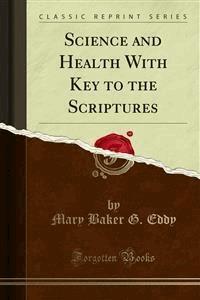
In "Science and Health," Mary Baker G. Eddy presents a foundational text for Christian Science, intertwining metaphysical healing principles with a profound exploration of spirituality and human experience. With a meticulous and often poetic literary style, Eddy articulates her groundbreaking philosophy, emphasizing the scientific nature of God and the divine law at play in healing. The work is not just a treatise on physical wellness; it is a deeply resonant philosophical framework that posits a close relationship between faith and healing, challenging contemporary medical paradigms and shifting perceptions of spirituality. Within the context of 19th-century America, Eddy's ideas emerged amid a burgeoning interest in religious reform and alternative medicine, making the book both a reflection and a catalyst of its time. Mary Baker G. Eddy, born in 1821, harnessed her personal struggle with illness and her pursuit of spiritual truths to develop her ideas. Having experienced transformative healing that she attributed to divine influence, Eddy sought to articulate a systematic approach to spirituality that transcends conventional understanding of medicine. Her life was marked by controversy and determination, as she founded the Church of Christ, Scientist, further solidifying her influence within the metaphysical movement. "Science and Health" is a must-read for those interested in exploring the intersections of faith, health, and philosophy. This seminal work not only invites readers to rethink the nature of healing but also challenges them to engage with the concept of spiritual enlightenment as a powerful force for transformative living. Eddy's insights continue to resonate, making this text a timeless resource for seekers of knowledge and understanding. In this enriched edition, we have carefully created added value for your reading experience: - A succinct Introduction situates the work's timeless appeal and themes. - The Synopsis outlines the central plot, highlighting key developments without spoiling critical twists. - A detailed Historical Context immerses you in the era's events and influences that shaped the writing. - An Author Biography reveals milestones in the author's life, illuminating the personal insights behind the text. - A thorough Analysis dissects symbols, motifs, and character arcs to unearth underlying meanings. - Reflection questions prompt you to engage personally with the work's messages, connecting them to modern life. - Hand‐picked Memorable Quotes shine a spotlight on moments of literary brilliance. - Interactive footnotes clarify unusual references, historical allusions, and archaic phrases for an effortless, more informed read.
Das E-Book können Sie in Legimi-Apps oder einer beliebigen App lesen, die das folgende Format unterstützen:
Veröffentlichungsjahr: 2022
Ähnliche

















Science and Health
Table of Contents
Introduction
With the urgency of a manifesto and the quiet of a prayer, this work declares that spirit, not matter, is the ultimate measure of life and health, challenging readers to reconsider what they trust, how they live, and why healing—moral and physical—might follow from understanding reality in a radically different way.
Science and Health, commonly known by its fuller title Science and Health with Key to the Scriptures, is the principal work of Mary Baker Eddy—often styled Mary Baker G. Eddy in her lifetime—first published in 1875 and revised repeatedly by the author. Written in the United States during a period of religious ferment and intellectual experimentation, the book presents a sustained argument about spiritual law and Christian healing. It quickly moved beyond its initial audience, becoming a touchstone text for the movement Eddy founded and a landmark of American religious literature that continues to be printed and read.
Mary Baker Eddy (1821–1910), founder of Christian Science and the Church of Christ, Scientist, brought to this book decades of searching, study of the Bible, and personal experience with illness and recovery. Her life, marked by persistence through hardship and by a commitment to theological inquiry, shaped both the tone and aims of the text. Here, she offers not memoir but doctrine and interpretation, presenting a system she believed restored the Christianity of the early church in both spirit and practice. The author’s distinctive voice—didactic, urgent, and pastoral—organizes a complex argument into an accessible, practical framework.
The late nineteenth century in America saw vigorous debates about medicine, metaphysics, and scriptural authority. In that milieu, Science and Health entered public discourse as an intervention rather than an echo. The book’s composition and revision spanned years when readers were testing new philosophies, weighing scientific advances, and reexamining inherited beliefs. Eddy wrote for readers who took the Bible seriously and wanted results that reached everyday life. The text’s insistence on method—on laws that could be understood and applied—aimed to bridge private devotion and public consequence, making theology consequential in the most tangible human concerns.
At the heart of the book is a premise Eddy calls Christian Science: that divine law, understood through the Bible and demonstrated in healing, reveals reality as spiritual and good. She argues that a clearer grasp of God and man transforms thought and experience, reforming character and restoring health. This is not presented as mere consolation but as practice grounded in understanding. The work guides readers through scriptural interpretation, ethical reasoning, and the cultivation of spiritual discernment, inviting them to examine assumptions about cause, identity, and cure without turning the text into a substitute for conscience or disciplined study.
Science and Health is carefully structured to support that argument. Its core chapters unfold a systematic reading of the Bible, culminating in a section explicitly titled as a “Key to the Scriptures,” which seeks to illuminate recurring biblical concepts. A substantial “Glossary” refines terms that might otherwise be casually used or misunderstood. The concluding chapter, “Fruitage,” gathers testimonies of healing associated with reading and applying the book’s ideas, situating doctrine alongside lived experience. Throughout, the organization balances exposition with demonstration, so the reader encounters principle, method, and reported effects in a coherent progression.
The book’s style contributes to its durability. Eddy writes in a cadence shaped by Scripture, moving between definition, exhortation, and closely reasoned argument. She avoids ornament for its own sake, favoring clarity and repetition when emphasis is needed. Key terms are carefully distinguished; metaphysical claims are followed by practical implications. The tone can be both uncompromising and consoling, reflecting confidence in the universality of the spiritual laws she articulates. This rhetorical approach—firm yet pastoral—has helped the text function simultaneously as theological treatise, devotional companion, and manual for practice.
Its classic status arises from influence as much as longevity. As the foundational text of Christian Science, Science and Health has informed worship, education, and lay practice within that tradition for generations. Beyond its community of adherents, the book occupies a visible place in the history of American religion and culture, frequently discussed in surveys of nineteenth‑century spiritual movements. It remains in print and in active use, a sign of continued readership. Literary historians note its unusual blend of doctrinal exposition and testimonial narrative, a hybrid form that has kept the book central to debates about authority, healing, and interpretation.
The book also shaped literary and public conversation by provoking response. Journalists, clergy, and physicians engaged its claims in newspapers and lectures, while notable writers took up the subject in essays and biographies. Mark Twain’s writings on Christian Science attest to the movement’s prominence in cultural debate, even when critical. Willa Cather contributed to a critical biography of Eddy published under the name of Georgine Milmine, a further sign that the author and her work had entered the republic of letters. That breadth of engagement underscores the book’s capacity to command attention well beyond church walls.
Themes that organize the text continue to resonate: the relation of thought to body, the nature of prayer as understanding rather than petition, and the moral dimension of health. Eddy’s argument proposes that theology has practical consequences and that clarity about God reorients everyday living. Her emphasis on spiritual causation challenges readers to differentiate between appearance and reality, habit and law. Whether or not one adopts her conclusions, the seriousness with which she treats the stakes of belief—character, community, and care—gives the book weight as an ethical document as well as a theological one.
To approach Science and Health profitably, it helps to read it as sustained argument rather than as aphorism. The chapters build upon one another, with definitions and biblical interpretation providing a lens for practice. Eddy expects readers to test, to study, and to relate the text to Scripture directly. The result is an invitation to disciplined engagement, not passive assent. For new readers, the presence of testimonies may serve as context rather than proof, framing the doctrine’s intended application. For returning readers, the revisions across editions reflect a living authorial effort to clarify, tighten, and instruct.
Today, when conversations about wellness, conscience, and the meaning of evidence shape public life, Science and Health retains a distinct voice. Its confidence in spiritual law, its insistence that understanding transforms experience, and its call to align thought with the good speak to enduring questions about what heals and why. As a classic, it persists not by nostalgia but by provocation: it asks readers to examine first principles and to live accordingly. That demand—for coherence between belief and practice—explains the book’s lasting appeal and suggests why its pages continue to invite, challenge, and console.
Synopsis
Science and Health with Key to the Scriptures, first published in 1875 by Mary Baker Eddy, sets out to explain the theology and practice she named Christian Science. Revised through many editions, the book presents a systematic argument that biblical Christianity includes reliable laws of spiritual healing. Eddy positions the work as both a companion to the Bible and a practical guide, encouraging readers to assess its claims in practice. The early pages define the book’s scope, establish a disciplined vocabulary, and outline the method: to reason from God’s nature to conclusions about reality, health, morality, and redemption, then to apply those conclusions in daily life.
At the foundation is a metaphysical premise: God is infinite, wholly good, and purely spiritual, and creation, in its true essence, reflects that nature. Human identity is presented as the spiritual image or idea of God, not a material organism subject to chance. Matter and evil are treated as misperceptions arising from a limited, changeable sense of mind, contrasted with the constancy of divine intelligence. The book distinguishes between the human Jesus and the eternal Christ he embodied, using this distinction to argue that Christly understanding reveals reality and heals. Scripture is read as the authoritative witness to these spiritual facts.
The chapter on prayer reframes communion with God as scientific, ethical, and transformative. Instead of pleading for changed circumstances, effective prayer aligns thought with what is held to be spiritually true—God’s goodness, law, and love—and reforms character in the process. Eddy emphasizes self-examination, repentance, and the cultivation of Christlike qualities as conditions for healing. Fear, sin, and disease are addressed as errors to be corrected by understanding, not as fixed substances or decrees. This approach dispenses with ritual and proposes a consistent, law-governed method that reasons from divine facts to human experience, making spiritual causation central to both worship and wellness.
Subsequent chapters interpret core Christian doctrines through this lens. Atonement is presented as practical unity with God, realized through obedience and spiritual understanding, rather than as a transaction imputing merit apart from regeneration. The Eucharist is treated as inward communion with divine truth, not dependent on material elements. A chapter on marriage outlines standards of fidelity, mutual respect, and moral progress, while cautioning against sensualism and domination. Across these subjects, the book argues that spiritualization of thought purifies motives and relationships, bringing stability and healing. The thread remains consistent: Christianity is demonstrated through transformed life, not merely affirmed in belief or ceremony.
Where conventional medicine locates causation in matter, the discussion of physiology challenges material premises and insists that genuine causation is mental and spiritual. Bodily conditions are said to respond to dominant beliefs, fears, and moral states; changing the basis of thought changes outcomes. The text urges readers to question authority claims that make disease lawlike, and to rely instead on divine law discerned through reason and prayer. A chapter tracing the footsteps of spiritual progress describes how persistent affirmation of what is spiritually true, combined with moral reform, lessens fear and dissolves symptoms. Healing is framed as the practical effect of corrected understanding.
To clarify what it is not, the book contrasts Christian Science with contemporary spiritualism, rejecting mediumship, necromancy, and communication with the dead as inconsistent with biblical Christianity and spiritually unsafe. It also analyzes hypnotism and related practices under the term animal magnetism, arguing that attempts to control or influence another mind are illegitimate and ultimately powerless before God. Readers are counseled to guard thought against suggestion, malice, and fear by steadfastly acknowledging divine authority. These chapters stress that only the action of God, not psychic forces or human will, can heal and reform, and they outline ethical boundaries for mental practice.
The chapter on practice sets out a method for addressing sickness and sin. Practitioners reason from spiritual premises, deny the supposed authority of symptoms and fear, affirm the present perfection of God and creation, and expect reformation of character to accompany recovery. The patient’s receptivity, honesty, and willingness to forsake harmful habits are treated as vital. A chapter on teaching explains how students should study the Bible alongside this text, master its definitions, and maintain strict ethics emphasizing humility, purity, and consistency. The aim is reproducible results grounded in principled understanding rather than personality, charisma, or esoteric technique.
A recapitulatory section summarizes core propositions in a question-and-answer format, consolidating the earlier argument about God, man, prayer, healing, and salvation. The book’s Key to the Scriptures then offers a glossary of biblical terms, redefining them in spiritual rather than material senses to guide interpretation. It presents interpretive readings of Genesis, distinguishing the spiritual narrative of creation from the Adam and Eve allegory, and treats apocalyptic imagery as symbols of the conflict between truth and material belief. This hermeneutic aims to show that the Bible consistently points to a wholly good God and to the supremacy of spiritual law.
The concluding portion includes testimonies from readers who report healing and moral renewal through study and prayer shaped by the book, presented as practical evidence rather than as doctrine. Without proposing novelty for its own sake, the work claims to restore primitive Christian healing and to provide a coherent theology that supports it. As the central text of Christian Science, it has been read devotionally, used instructionally, and tested in practice by its adherents. Its enduring message is that Christianity is demonstrable: the understanding of God as supreme good reforms character, reduces fear, and brings health, offering a spiritual basis for hope.
Historical Context
Science and Health by Mary Baker G. Eddy emerged from post–Civil War New England, principally Massachusetts and New Hampshire, amid rapid industrialization and urban growth. Dominant institutions included Protestant churches, expanding universities, professional societies, and a vigorous press centered in Boston. Railroads, the telegraph, and mass-circulation newspapers accelerated the spread of new ideas. At the same time, social upheavals—Reconstruction, labor conflicts, and shifting gender roles—challenged older patterns of authority. In this setting, questions about the nature of knowledge and the reliability of traditional authorities—clergy, physicians, and academics—were urgent. Eddy’s work addressed that moment by proposing a spiritual “science” grounded in the Bible as a counter to materialist assumptions.
The religious landscape of the region retained traces of Calvinist rigor while also absorbing Unitarian and liberal Protestant currents. Earlier waves of revivalism and Transcendentalism had emphasized individual insight, preparing audiences for movements promising direct access to truth. Spiritualism, widely popular from the late 1840s, and the Holiness and perfectionist currents within Methodism and other denominations cultivated expectations for present-tense healing and sanctification. Science and Health reflects this climate of religious experimentation by presenting scriptural exegesis that promises practical transformation. While rejecting séances and occultism, the book nonetheless engages the era’s quest for immediacy in spiritual experience and reassesses inherited doctrines through a metaphysical lens.
Nineteenth-century American medicine was in flux. The American Medical Association formed in 1847 to professionalize practice, yet allopathy competed with homeopathy, eclectic medicine, and a vast patent-medicine trade. Surgical anesthesia, demonstrated publicly in Boston in 1846, marked a turning point, while germ theory gained influence in the 1870s–1880s. Mortality from infectious diseases remained high, and many patients distrusted aggressive treatments. Against this backdrop, Eddy’s critique of “materia medica” and her claim that prayer-based healing accorded with divine law offered a stark alternative. Science and Health thus reads as both a theological statement and a response to contested medical authority in a period of uncertain therapeutic outcomes.
American “mind cure” and mesmerist traditions formed another backdrop. Phineas Parkhurst Quimby, a Maine healer active in the 1850s–1860s, treated Eddy in Portland in 1862; their interaction is well documented, though later interpretations of influence were contested. Eddy subsequently distanced her method from mesmerism, emphasizing a Christian foundation. In 1866, after a fall on the ice in Lynn, Massachusetts, she later recounted an abrupt recovery while reading the Gospels, which she interpreted as revealing spiritual law. She spent the following years studying Scripture and teaching her approach, culminating in the 1875 appearance of Science and Health, articulated as a coherent theological and therapeutic system.
The first edition of Science and Health appeared in Boston in 1875, privately published with modest circulation. Eddy revised the book repeatedly over subsequent decades to clarify terms, refine biblical interpretation, and address practical questions of healing and church practice. Later editions were titled Science and Health with Key to the Scriptures, highlighting her claim that spiritual law could unlock biblical meaning applicable to health and daily life. These successive revisions mirror the dynamic, pamphlet-rich print culture of the Gilded Age, where ideas were honed in public dialogue and authors defended their positions through prefaces, footnotes, and new editions.
Economic volatility following the Panic of 1873, along with rapid urbanization, created anxiety about social stability and bodily vulnerability. Factory labor, overcrowded tenements, and recurrent epidemics fueled demand for moral and medical reform. Amid these pressures, Eddy’s text framed sickness and sin as errors corrected through understanding God’s nature, offering an optimistic, disciplined program that promised tangible results. The book’s insistence on spiritual causality functioned as both critique and consolation: it challenged material explanations of suffering while appealing to readers seeking agency in an era when personal control over work, health, and community seemed to be slipping away.
Institutionalization soon followed. In 1881, Eddy received a charter for the Massachusetts Metaphysical College in Boston, where she trained students in her method until 1889. Graduates became practitioners and teachers, systematizing and spreading her ideas beyond New England. The college placed her approach on an educational footing, lending organizational stability and licensing a network of adherents. The closure of the college in 1889 coincided with a shift toward centralized church organization and publishing, underscoring Eddy’s preference for institutional structures that could preserve doctrinal consistency and protect the text against unauthorized reinterpretation.
Church formation anchored these developments. In 1879, Eddy and her students organized the Church of Christ, Scientist, to advance Christian healing. Boston became the movement’s headquarters, and in 1892 the church was reorganized as The First Church of Christ, Scientist. The original Mother Church edifice in Boston was dedicated in 1894, with a large Extension added in 1906, signaling the movement’s growth. Science and Health functioned as the key doctrinal source, shaping services, instruction, and practice. The church’s emergence placed Eddy’s ideas within the wider story of American religious institution-building during the Gilded Age and Progressive Era.
Women’s public roles were changing, and Eddy’s leadership was notable. The suffrage movement had gathered strength since the 1848 Seneca Falls convention, yet barriers to female authority in clergy and medicine persisted. Eddy, as a woman founding a church and authoring its central text, modeled a distinctive path to leadership. Many early practitioners and organizers were women, finding in Christian Science a venue for recognized professional and religious work. Science and Health, by centering spiritual law and practice accessible to all, intersected with broader debates over gender, authority, and education, even as it remained theologically conservative in its biblical focus.
Debates about science and religion intensified after Charles Darwin’s On the Origin of Species (1859) and the spread of German “higher criticism” of the Bible. Universities increasingly valorized laboratory science and historical-critical methods. Eddy responded by reclaiming the term “science” to denote demonstrable divine law rather than material causation. Science and Health argues that spiritual understanding yields predictable effects, including healing, thus contesting the reigning materialist assumptions while attempting to meet modern demands for rational coherence. In this way, the book participates in a broader nineteenth-century effort to reconcile religious experience with the prestige of systematic knowledge.
Technological changes in printing and distribution aided the book’s reach. Cheaper paper, improved presses, and national rail networks supported an expanding market for religious and therapeutic literature. Eddy founded periodicals to consolidate teaching and testimonies: The Christian Science Journal began in 1883, and additional publications followed in the 1890s. Reading rooms, established in cities and towns, made the text accessible to passersby and emphasized self-study. This infrastructure reflected a deliberate strategy: to embed Science and Health within a disciplined print ecosystem that reinforced its vocabulary, interpretation of Scripture, and practice of healing through widely shared testimonies.
Conflict with medical and legal authorities surfaced as the movement grew. In the late nineteenth and early twentieth centuries, states strengthened medical licensing laws. Some Christian Science practitioners were prosecuted for practicing medicine without a license or for neglect when patients, including minors, died without conventional treatment. Outcomes varied by jurisdiction and case. The controversies placed Science and Health in the crosscurrents of public health policy, professional jurisdiction, and religious liberty, testing how far a modern society would permit nonmedical healing grounded in religious conviction while balancing the state’s interest in protecting vulnerable individuals.
Eddy’s governance sought to stabilize the church and protect the text. In 1895, she directed that the Bible and Science and Health serve as the church’s impersonal pastor, replacing personal preaching with standardized readings. She also issued the Church Manual (first published in 1895), which codified rules for membership, practice, discipline, and publishing. These measures constrained charismatic leadership and emphasized uniformity. They also secured the centrality of the book in worship and teaching, reinforcing the idea that correct understanding—rather than personality—was the vehicle for healing and spiritual growth within a distinctly modern organization.
Public scrutiny intensified in the early twentieth century. A 1907 investigative series in McClure’s Magazine criticized Eddy and the movement, part of the era’s muckraking journalism. That same year, the “Next Friends” suit questioned her competence and sought a guardianship; following inquiry, the case was dismissed, and she was found capable of managing her affairs. In 1908, she founded The Christian Science Monitor, a daily newspaper known for international coverage, in part to foster higher journalistic standards. These episodes show Science and Health’s author grappling with a media landscape that could both amplify and challenge religious innovation.
The movement spread internationally in the 1890s and early 1900s, with churches and reading rooms established in North America, Britain, and parts of Europe. Transatlantic exchanges of religious ideas, facilitated by steamship travel, telegraphy, and English-language publishing, helped Science and Health gain readers abroad. In many cities, public lectures, testimonies of healing, and local reading rooms introduced the book to new audiences. This internationalization placed Eddy’s text alongside other American religious exports of the period, while its disciplined organizational model aimed to maintain consistent teaching across diverse cultural settings.
Eddy continued to revise Science and Health throughout her life, refining terminology and adding instructional aids such as a glossary and scriptural cross-references. The Christian Science Publishing Society, organized in 1898, oversaw the book’s production and related periodicals, sustaining a distinctive print culture. Eddy died in 1910, by which time the book had become the standard doctrinal source for worship services and private study within Christian Science. Its longevity reflects both doctrinal centrality and the effectiveness of institutional mechanisms—lectures, reading rooms, and periodicals—that kept the text authoritative and widely available.
Placed against the upheavals of its age, Science and Health functions as both mirror and critique. It mirrors anxieties about illness, authority, and social change by addressing readers who sought reliable guidance in a rapidly modernizing society. It critiques materialism, challenges medical exclusivity, and reimagines pastoral authority through a text-centered church. Its success relied on distinctly modern tools—print networks, legal incorporation, and media engagement—even as it advanced a transcendently spiritual ontology. In this synthesis, the book embodies a characteristic nineteenth-century American impulse: to resolve crisis through disciplined reinterpretation of Scripture, organized practice, and the promise of demonstrable results.
Author Biography
Mary Baker Eddy (1821–1910) was an American religious leader and author best known for founding Christian Science and for writing Science and Health with Key to the Scriptures. Emerging in the late nineteenth century amid debates about faith, science, and medicine, she proposed a system of Christian healing grounded in biblical interpretation and a metaphysical understanding of reality. Through her writings and organizational work, she established a new denomination, built publishing ventures, and influenced conversations about spirituality and wellness. Her career combined authorship with institution-building, leaving a distinctive imprint on American religious history and on global readers who encountered her ideas through churches, periodicals, and study.
Raised in New England, Eddy’s formal schooling was intermittent, but she developed a strong autodidactic habit centered on the Bible. Chronic ill health shaped her search for spiritual answers and exposed her to nineteenth‑century debates about mind, matter, and medicine. In the early 1860s she consulted Phineas P. Quimby, a magnetic healer whose methods prompted public discussions about mental causation; she later distinguished her theology from his. Alongside Scripture, she engaged with sermons, religious periodicals, and philosophical writings then circulating in New England. These sources, together with personal study and teaching, informed her conviction that Christian discipleship included practical, prayer‑based healing and a rigorous, spiritual reading of the Bible.
In 1866 Eddy experienced a sudden recovery from injury that she attributed to an insight gained while reading the New Testament, an event she later described as a turning point. She began articulating principles she believed underlay Christ Jesus’ healing works and taught small groups of students. In 1875 she published the first edition of Science and Health, presenting Christian Science as a method of spiritual healing and biblical interpretation. The book underwent substantial revisions across many editions as she clarified terminology, added testimonies, and expanded its pedagogical aims. She positioned the Bible and Science and Health together as the primary texts for study and practice.
During the late 1870s and 1880s, Eddy organized classes, established a teacher‑training enterprise known as the Massachusetts Metaphysical College, and helped found a church that would become The First Church of Christ, Scientist, in Boston. She launched The Christian Science Journal and later additional periodicals to provide instruction, testimonies, and guidance. Her Church Manual codified rules of governance, worship, and discipline, shaping a centralized yet broadly distributed movement through branch churches. By the 1890s and early 1900s, a church edifice in Boston and an expanding publishing operation symbolized the denomination’s consolidation, while lecture circuits and practitioners carried its message to readers and congregations in North America and abroad.
Eddy’s authorship extended beyond Science and Health to include works of instruction, autobiography, and church guidance. Notable titles include Miscellaneous Writings 1883–1896; Retrospection and Introspection; Unity of Good; No and Yes; Rudimental Divine Science; Pulpit and Press; and successive Messages to The Mother Church in the early twentieth century. Her Church Manual set organizational policies and emphasized spiritual discipline. Across these works she explored themes of divine Mind, prayer, healing, and the hermeneutics of Scripture. Her prose combined theological exposition with practical counsel for students and church officers, aiming to standardize teaching and protect the integrity of Christian Science as it grew.
Reception of Eddy’s ideas was sharply divided. Admirers credited her with restoring Christian healing and reported numerous testimonies of recovery through prayer. Critics challenged her theological claims, questioned authorship and originality, and raised concerns about medical nonintervention; public debates appeared in newspapers and magazines. She faced lawsuits and organizational schisms, yet continued to defend her teachings and institutional structure. In 1908 she founded The Christian Science Monitor, a daily newspaper intended to provide fair‑minded, constructive journalism. The Monitor and the church’s periodicals broadened her public voice, while scrutiny by the press and courts underscored the cultural tensions surrounding new religious movements and alternative healing.
In her later years, Eddy maintained oversight of church affairs through published directives and trusted officers, while withdrawing from frequent public appearances. She continued revising texts and encouraging orderly expansion of branch churches. She died in 1910, leaving a durable theological corpus, a centralized mother church with global branches, and an ongoing publishing enterprise. Her legacy includes a prominent place among American founders of new denominations and a significant role in discussions about spirituality and health. Christian Science remains active worldwide, and The Christian Science Monitor continues to publish, ensuring that her influence persists in religious communities, scholarship, and public discourse.
Science and Health
Science and Health — Contents
“God is Love.”
1
John
iv. 8.
“There is nothing either good or bad, but thinking makes it so.”
Shakespeare.
“I, I, I, I itself, I,
The inside and outside, the what and the why,
The when and the where, the low and the high,
All I, I, I, I itself, I.”
CONTENTS OF VOL. I.
Chapter
Page
I.
Science of Being
8
II.
Footsteps of Truth
64
III.
Physiology
122
IV.
Recapitulation
166
V.
Healing the Sick
185
CONTENTS OF VOL. II.
Chapter
Page
VI.
Demonology
1
VII.
Imposition and Demonstration
47
VIII.
Creation
97
IX.
Marriage
152
X.
Prayer and Atonement
164
XI.
Platform of Christian Scientists
192
XII.
Reply to a Clergyman
199
“Damsel, I say onto thee, arise.” — Mark v. 41.
SCIENCE AND HEALTH
BY
MARY B. GLOVER EDDY
THIRD EDITION, REVISED
Lynn, No. 8 Broad Street:
PUBLISHED BY DR. ASA G. EDDY.
1881.
Entered according to Act of Congress, in the year 1881, by
Mary B. Glover Eddy,
In the Office of the Librarian of Congress, at Washington.
University Press:
John Wilson And Son, Cambridge.
I.
[ 9 ]
SCIENCE AND HEALTH.
CHAPTER I.
SCIENCE OF BEING.
At the Oxford University, England[1], a prize of one hundred pounds has been offered for the best essay on Natural Science that refutes the tendency to attribute physical effects to physical causes rather than a final spiritual cause. A demand for metaphysics expresses the wants of the race. It is the one question to be considered, for it relates more intimately than all others to the progress of mankind. The age seems ready to verge upon this subject, to think briefly on the supremacy of Spirit, and to touch the hem of its garment and be made whole. The utter control of mind over body is no longer a question with us; we have gained its proof by demonstration, and have reduced our discoveries to a system, stated the principle upon which it is based, and the rules for applying metaphysics to the treatment of disease.
After careful examination of the discovery in metaphysics that mind governs the body not in part but wholly, we submitted our metaphysical system of treating disease to the broadest practical proofs. Our theory has gradually gained ground, and established its own [ 10 ] proof whenever it has been employed honestly and under circumstances that permitted its demonstration as the most effectual curative agent in medical practice.
As time is working wonders in the world we call material, the swift pinions of thought are soaring to the realm of the real, the first cause of all things. A material basis whence to deduce all that is deemed rational is yielding slowly to a metaphysical basis of reasoning, changing from matter to mind to discover cause and explain effect. The honored materialistic philosophers, Professors Tyndall, Huxley, Agassiz[2], and so on, appear to challenge to final combat physics and metaphysics; and at this Utopian period, like the shepherd-boy with his sling, woman goes to battle with the Goliath. The theories that we contest, stated fairly, are these: that all is matter; else matter originated in mind, and possesses the actual of mind, — sensation and life. The first-named theory, that all is matter, is quite as feasible as the second, that Mind and matter coexisted and co-operates. But the fact remains that one of the following statements can alone be true; namely, that all is matter, or that all is mind: which one is it? The conservative position that gives place and power to both matter and mind falls to the ground: science is radical, and permits no half-way positions for a rule. The metaphysical statement that all is mind is not supported by the evidence before the senses until we take the principle and rule of this statement to prove it; then we can arrive at no other conclusion. Our discovery that mind produces all the action of the body set thought to work in new channels, and we found the above statement true and demonstrable. Few will deny that an intelligence apart from man formed [ 11 ] and governs the spiritual universe and man: and this intelligence is the eternal Mind, and neither matter nor man created this intelligence and divine Principle; nor can this Principle produce aught unlike itself. All that we term sin, sickness, and death is comprised in the belief of matter. The realm of the real is spiritual; the opposite of Spirit is matter; and the opposite of the real is the unreal or material. Matter is an error of statement, for there is no matter. This error of premises leads to error of conclusion in every statement of matter as a basis. Nothing we can say or believe regarding matter is true, except that matter is unreal, simply a belief that has its beginning and ending.
The conservative firm called matter and mind God never formed. The unerring and eternal Mind destroys this imaginary copartnership, formed only to be dissolved in a manner and at a period unknown. This copartnership is obsolete. Placed under the microscope of metaphysics matter disappears. Only by understanding there are not two, matter and mind, is a logical and correct conclusion obtained of either one. Science gathers not grapes of thorns or figs of thistles. Intelligence never produced non-intelligence, such as matter: the immortal never produced mortality, good never resulted in evil. The science of Mind shows conclusively that matter is a myth. Metaphysics are above physics, and drag not matter, or what is termed that, into one of its premises or conclusions. Metaphysics resolves things into thoughts, and exchanges the objects of sense for the ideas of Soul. These ideas are perfectly tangible and real to consciousness, and they have this advantage, — they are eternal. Mind and its thoughts comprise the whole of God, the [ 12 ] universe, and of man. Reason and revelation coincide with this statement, and support its proof every hour, for nothing is harmonious or eternal that is not spiritual: the realization of this will bring out objects from a higher source of thought; hence more beautiful and immortal.
The fact of spiritualization produces results in striking contrast to the farce of materialization: the one produces the results of chastity and purity, the other the downward tendencies and earthward gravitation of sensualism and impurity.
The exalting and healing effects of metaphysics show their fountain. Nothing in pathology has exceeded the application of metaphysics. Through mind alone we have prevented disease and preserved health. In cases of chronic and acute diseases, in their severest forms, we have changed the secretions, renewed structure, and restored health; have elongated shortened limbs, relaxed rigid muscles, made cicatrized joints supple; restored carious bones to healthy conditions, renewed that which is termed the lost substance of the lungs; and restored healthy organizations where disease was organic instead of functional.
Aside from the opposition to what is new, the greatest difficulty in introducing our metaphysical system is to express metaphysics in physical terms, and then to be understood metaphysically. This difficulty is overcome only by teaching the student the metaphysical meaning of the terms in common use. Out of twelve lessons to our class a shorthand writer produced over twelve hundred pages, all of which were unfit for use, owing to her ignorance of our subject, misapplication of our terms, and omitting our full statement as we translated physics into [ 13 ] metaphysics, the original text of all things real and eternal.
The science of Mind explains cause and effect, lifts the veil of mystery from Soul and body, reveals the scientific relation of God to man, unwinds the interlaced ambiguities of being, sets free the imprisoned thought, and explains the divine Principle of man and of the universe. This metaphysical science explains man and the universe spiritually, and reveals them only as spiritual, not material, and harmonious and eternal. The discovery of harmonious being is more important than the discoveries relating to astronomy, or any advanced idea that science has promulgated.
Human views, conflicting opinions and beliefs, are mortal mind that can emit a poisonous atmosphere more destructive to health than what is named material miasma.
Nothing but the understanding can correct this atmosphere, invigorate and immortalize the body. But, before this result is obtained, understanding and belief must be classified as Truth and error, that meet in a war of ideas, until the thunderbolts of belief shall burst and die away in the distance, and the rain-drops of Truth refresh the parched earth.
Because we apply the word science to Christianity, and Christendom resists this word, we shall lose no faith in Christianity, and Christianity shall lose no hold on us. The Principle of things must interpret them; and we should never attempt with an opinion or belief to steady the altar of science. God is the Principle of all that represents Him, that is harmonious and eternal: and science alone reveals Principle; therefore divine science, as demonstrated by Jesus, alone reveals God, the [ 14 ] Principle of all that really is, and whose government is supreme over all. There is no physical science. All science proceeds from a Divine Intelligence: it cannot be human, and is not a law of matter, for matter is not a law-giver. Science is an emanation of Mind: it has a spiritual and not a material origin, and is a divine utterance, the comforter that leadeth into all truth.
We learn from divine science that the unerring and eternal Mind is omnipotent and omnipresent, a universal cause and the only Creator, and there is no other causation, He alone creates the real and it is good; therefore evil, being the opposite of good, is unreal, and cannot be the product of God. In the original text good was the term for God, and all that He made was good like unto Himself. Because Spirit is real, and matter its direct opposite, matter is the unreal. Spirit is Principle, and man its idea: immortality is the real, and mortality the unreal. God is Spirit, and Spirit is Principle; and Principle is Life, Truth, and Love, — the only substance and intelligence, the Soul of the universe and of man. Principle and idea are God and man, and the universe is embraced in the idea; Principle being Spirit, its idea must be spiritual. All is Mind: there is no matter[1q]. The visible universe, and what is termed material man, are the poor counterfeits of the invisible and spiritual, universe and man. Eternal things are God's thoughts in the realm of the real. Temporal things are the beliefs of mortals, and are the unreal, they being the opposite of the spiritual and eternal.
There is but one Mind. The erring, sinful, sick, and dying, termed mortals, are not man and are not Mind; but to be understood we shall classify evil and error as mortal [ 15 ] mind, in contradistinction to good and Truth, the Mind which is immortal. What we term matter is one of the beliefs of mortals. Spirit is the only substance, and consciousness in science: the senses oppose this, but there are no senses material, for matter has no sensation. What we term the five personal senses are simply beliefs of mortal mind, that say Life, substance, and intelligence are matter instead of Spirit. These beliefs and their products constitute error, and this error opposes the Truth of being; hence the scripture, “For the flesh lusteth against the spirit, and the spirit against the flesh; and these are contrary the one to the other.” There is nothing in Spirit out of which to create matter: it destroys it: to Spirit there is no matter, and as we approach it we shall lose all consciousness of matter. What is this “I” that is personality and not Spirit? It is a mortal belief that saith man is both mind and matter; but this is self-contradictory; for if man was that, the loss of a limb would take away a portion of manhood. There is nothing in God out of which to make a devil. The so-called personal senses afford no evidence of God. We can neither see through the eye, hear through the ear, feel through the senses, taste or smell Spirit; and that which affords no evidence of God gives but an incorrect testimony of Life, Truth, and Love; and God never created such false heralds of himself as a mortal man, sin, sickness, or death. Truth is real: error is the opposite of Truth; therefore error is unreal. Spirit and its formations are all that are real: no partnership or fellowship exists between those two opposites, Spirit and matter. They cannot co-exist or co-operate, and either one can no more create the other than Truth can create error, and vice versâ.
[ 16 ] The temporal and unreal never touch the eternal and real; the mutable and imperfect, the immutable and perfect; the inharmonious and self-destroying, the harmonious and self-existing. Those are the tares and wheat that never mingle: but to belief they appear to grow side by side, until science separates them through the understanding of God; for one is Truth, and the other error; and error is without the reality of Truth. When we understand Spirit, we shall yield the belief that Life, substance, or intelligence is aught but God. Nature and revelation inform us that like produces like. We classify matter as error, because it is a false claim to Life, substance, and intelligence; and ignored by Spirit, it is dust to dust.
Natural history presents mineral, vegetable, and animal, preserving their original species; a mineral is not produced by a vegetable, or the human by the animal. In the order of reproduction, throughout the entire round of universal nature, the rule relating to genus and species is preserved, and it indicates the spiritual fact of being. But error claims the opposite statement, namely that Spirit produces matter, that good is the author of evil, etc., which contradicts natural science. Metaphysical or divine science reveals the great facts that God is not the author of sin, sickness, or death; that Spirit is exempt from either one of those; that matter is a falsity, — not the fact but the fable of existence, a belief and illusion, that nerves, brain, stomach, lungs, etc., have no intelligence, Life, substance, or sensation. That Mind is in matter, or that matter is the medium of Mind, is no more natural or real, than for a rock to embrace a tree in embryo and become the medium of its development [ 17 ]
and identification. The only excuse for entertaining such opinions is our ignorance of Spirit, that can yield only to the understanding of divine science, whereby we enter into the kingdom of Truth, and learn that Spirit is supreme, and matter but an error of belief, and they no more commingle than light and darkness; when one appears the other disappears. Harmony is real and immortal: discord is unreal and mortal. Belief and understanding never mingle; the latter destroys the former: discord is the nothingness of error; harmony is the somethingness of Truth.
The so-called mind beneath a skull-bone is a myth, a false statement of man; and we shall all learn that sin and mortality are without any actual origin or rightful existence, having neither Principle nor permanency; they are the native nothingness out of which error would simulate creation through dust instead of Deity. Error alone presupposes man both mind and matter, while divine science, contradicting the so-called personal senses, rebukes belief, and asks, What is the “I,” whence its origin, and what its destiny? The “I” is Spirit, Soul not sense, God and not man, Principle and not person: and there is but one I, but one Mind or Spirit, because there is but one God, and man reflects this one God; he is the image and likeness of Him, and is harmonious and immortal. Spirit or Soul, which is God, is not in man, else there would be but one, and no longer two, namely God and man, and man the reflection of Him. Man should have no other mind but God; and he has not in reality: it is only to belief that he seemeth to have, and this belief is the inverted image of Truth and intelligence; it is upsidedown in every thing, claiming Soul in body, Spirit in matter, [ 18 ] immortality in mortality, the infinite within the finite, and Principle in its idea.
To gain the reality and order of being, we must begin by reckoning God as the only Life, substance, and intelligence; leaving sin, sickness, and death out of our record, regarding them as they are, not the reality of being, but its counterfeit, and recognizing ourself in only what is good and true; for man is the offspring of Spirit of God, and not man.
The absence of Truth we name error. But did God create error? No; the same fountain sendeth not forth sweet and bitter waters; and God is never absent, being Omnipresence. Error is a belief without identity or Principle, and exists not except in belief. That Life, substance, or intelligence belongs to matter is a mistake; therefore, it is an error or belief that should not be defined as a person or thing, an agent or actor. The so-called senses of matter named the five personal senses will define error and Truth, as mingling until their false evidence yields to the understanding of Spirit and its creations. Belief is mesmerism[3][2q]. Change the belief, and that which before seemed real disappears as a reality, and whatever is accepted in its place becomes the real. That a belief is not true is the only fact it presents. Faith is something higher than belief: it is the chrysalis state, where the spiritual evidence, unseen to the senses material, begins to appear, and Truth that is taking the place of belief, is understood. Belief has its degrees of comparison. Some beliefs are better than others. But not one is founded on a rock; it can be shaken; and, until it becomes faith and faith becomes understanding, belief has no relation to the actual. [ 19 ] God is the divine Principle, the Life, Truth, and Love that Jesus taught and demonstrated; so that all are without excuse who arrive not at the understanding and demonstration of this Principle. Sickness, sin, or death, whatever is the opposite or absence of God, is a belief that is neither Mind nor one of its faculties, and is unreal because it is not begotten of the Father, Truth and Love.
Because sin brought sickness and death it proves them error, and because there is no death it proves death but a belief that Spirit destroys with the evidences of Truth and Life, showing you that death, or what appears that to the senses, comes from mortal belief instead of matter. Mortals are not intelligences, for there is but one intelligence, but one God or Mind. Mortal man is the belief that Life and intelligence are in and of matter, which belief disappears as the immortal appears whose only Life and intelligence is God — good. Spirit is only reached through the understanding and demonstration of Life, Truth, and Love.
God is not the author of error, inasmuch as Truth is not the origin of error, and error is not the result of intelligence. Belief is the author of error, and calls itself something when it is nothing; that saith I am man, but I am not the image and likeness of God. When Jesus explained the origin of what is termed mortal man, he said, “Why do ye not understand my speech? even because ye cannot hear my word. Ye are of your father the devil [error], and the lusts of your father ye will do. He was a murderer from the beginning, and abode not in the truth, because there is no truth in him. When he speaketh a lie, he speaketh of his own; for he [ 20 ] is a liar, and the father of it.” The more material a belief is, the more tenacious in the error; and the stronger the manifestations of sense, the weaker are the indications of Soul.
What we term mortal, or erring mind, is but a belief and error from beginning to end, that sees only what it believes, and believes only what it sees through belief. This mortal belief, called man, says matter has intelligence and sensation, that nerves feel, brains think and sin, a stomach can make man cross, limbs can cripple him, and matter kills him. Such is the verdict of what are termed the five senses of matter, or the body, of which mortals are the victims, being taught by physiology, materia medica[4], etc., to revere those five personal lies which Truth at length destroys with spiritual sense and understanding; and in place of sentient matter we have sensationless bodies, and God the Soul of the body, and man's existence perpetual in its identification of Deity, harmony, and immortality.
To admit there is such a thing as matter requires another admission equally false; namely, that matter is self-creative, self-existent, and therefore eternal. Whence it follows there are two eternal causes warring forever with each other, and yet we say that Spirit is supreme and omnipotent. The body mortal is not man, for man is immortal, and that matter is eternal contradicts the demonstration of Life as Spirit, which would leave us to conclude that man originated in dust and returned to it, and the logic of events proved annihilation. Soul was never within a finite form. The limited never for a moment contained the unlimited and immortal.
Having marked out the line between immortal man or [ 21 ] the reality of being, and what we term mortal man and the unreal recognition of Life and intelligence as matter, we learn that the pleasure or pain of what is termed personal sense is a myth, and the father of all mythology, in which matter is supposed to be intelligent and to become “gods.” The evidence before the so-called personal senses is reversed by divine science, and disappears to Soul. Hence the impossibility for sensuous man to understand the science of Soul, and his opposition to it. The Scripture saith, “The carnal man is at enmity with God.” A mortal body and material sense are beliefs that spiritual understanding will destroy; but man will not lose his identity: in the conscious infinitude of being, it is impossible that he should lose aught whereby he gains all. The beliefs of matter, its supposed pleasures and pains, sickness, sin, and death, are all that will ever be lost.
What is deemed vegetable and animal life is a self-evident falsehood, when all that remains of it is death. God is the only Life; therefore Life is not structural and organic, and is never in its formations. Life is an intelligence that creates, and is reflected by its creations. If it were to enter what it creates, it would no longer be Life reflected, but absorbed; and the science of being would then be lost, through a mortal sense of Life as having a beginning and ending. The immortal basis of all being is Soul not body, Life and not death; and from this basis science reveals the glorious possibilities of man unlimited by a belief. We cannot learn Life through death; for in Spirit we lose all that we learn of matter even as in Truth we lose what we learn of error. “The last shall be first and the first last.” What we esteem as matter now will [ 22 ] sometime dissolve. Divine science puts not new wine into old bottles, Soul into body, the infinite into a finite. Our beliefs of matter must yield before we can grasp the facts of Spirit. The old belief must disappear, or the new idea will be spilled and the inspiration gone that lifts our being higher, restores Christian healing, and explains the great facts of being, raises the dead, changes our standpoints of reasoning from matter to Spirit, and now as of old casts out devils, — error, — and heals the sick.
Let us now examine more minutely the Soul of man, remembering that mortal man has no Soul, but is a belief of sense first and last. Continuing our definition of man, let us remember that back of this belief of Life, substance, and intelligence in matter, is the real and immortal man, and yet the fact is not behind the fable, but is all, and there is nothing beside that. The science of being reveals man perfect even as the Father is perfect; because the Soul of man is God, and man is governed by Soul instead of sense, by the law of Spirit instead of a supposed law of matter. The Scriptures inform us that “God is Love,” the “Truth and the Life;” therefore He is Principle and not person, and the body of Soul is man, the idea of this Principle, and his conscious Life and intelligence is Soul and not body. Soul is Spirit, and it forms the minutiæ and infinity of identities, and comprehends man as the creation of Soul. In this divine and metaphysical science we find the senses of man are spiritual, and attached to Soul instead of body; that thought passes from Soul to body, from Principle to its idea, to govern it, but never returns a sensation or report from body to Soul, for the body is not cognizant of evil or good.
[ 23 ] The science of being destroys the belief that Soul is in body, and man a separate intelligence from his Maker, and reveals but one Mind, one Spirit; thus precluding the possibility of sin, sickness, or death, or having more than one God when being is understood, and establishing the universal brotherhood of man, wherein one mind contends not with another, but all are of one mind. Soul and body are God and man, Principle and its idea, therefore man and his Maker are inseparable. The senses of Soul take cognizance only of the true idea, — the entire creations of Life, Truth, and Love, — hence there is nothing left to what is termed personal sense. Soul and body, God and man, are reached only and understood through the senses of Soul. Divine science reverses the statement of Soul and body, as astronomy reversed the plan of the solar system, and makes the body tributary to Mind; but we shall never understand this while admitting the belief that Soul is in body, and that non-intelligence named matter has Life and sensation. God, Soul, is, and was, and ever will be; and man is coexistent and coeternal with this Soul. Until the immortal body and perfect man become more apparent, we are not gaining the true idea of God: and the body will define the mind that governs it, whether it be Truth or error, belief or understanding, Spirit or matter; therefore acquaint now thyself with God and be at peace.
The various opinions and beliefs of mortal man, culminating in dogma, doctrine, and theory, among which are materia medica, physiology, hygiene, etc., are predicated of matter, and afford not a single idea of God, Truth. Ideas, like numbers and notes, start from Principle instead of person, and admit no beliefs concerning [ 24 ] them when once their Principle is understood. The false foundations of knowledge brought sin and death, through the belief that Spirit and matter commingle, and they rest upon no foundation that time and eternity are not wearing away. Finite belief can never do justice to Truth in any direction: it limits all things, and would compress Mind, that is infinite, beneath a skull-bone. It can neither apprehend nor worship the Infinite, and seeks to divide the one Spirit into many, to accommodate its finite sense of Soul. Through this error it has “lords many and gods many.” While Jesus said, “Thou shalt have no other gods before me, and thou shalt love thy neighbor as thyself,” we behold the zeal of belief to establish the opposite error of gods many; that argument of the snake, in the allegory, “I will make ye as gods,” goes on through every avenue of belief that soul is in body, and God, infinite Life, in finite forms. All human philosophy seeks cause in effect, Life and intelligence in matter, and Principle in its idea. Materia medica would learn of matter, instead of Mind, what is the state of man. It examines the lungs, the tongue, and pulse, to ascertain how much harmony matter is permitting Mind; to know how much pain or pleasure, action or stagnation, matter allows man. Physiology exalts matter and dethrones mind; it would rule the body with a law material instead of mental or spiritual; and, that law failing in its fulfilment to give health or Life to man, ignores the intelligence and Soul of man, laying it by for another occasion; but when man sins, he is to be dealt with according to theology, that admits God can destroy sin, but can do nothing with sickness and death. Theology, presupposing the infinite within the finite, concludes that [ 25 ] God is a person, that unlimited Mind starts from a limited body, overlooking the fact that, if Mind is limitless, it never returns to a limited body, but must radiate through unfathomable space. Nor could Mind be infinite and start from a finite form or personality. Infinite Mind pre-exists, and antedates all formations, and that Mind never started from a body or could be fully manifested through personality. For a personal deity to be omnipresent, he must possess a body encompassing universal space, and we cannot conceive of such a personality.
The artist is not in his painting, the picture is his thought. Mortal belief thinks it delineates thought on matter, but thought will be finally understood and seen without a single material accompaniment. The potter is not in the clay, or that clay would have power over the potter. God produces his own personality, and cannot get into it because it is only the idea of Him who is the circumference and infinite Spirit of all things real or eternal. “Knowledge” was a mortal and finite sense of things that Spirit disclaimed, for it placed cause in effect, and would limit Life, and fasten the infinite to discord and death. When things are interpreted by their Principle they can be understood, but if explained by what is termed personal sense they cannot be understood, and are only accepted through some belief, and become man-made theories and doctrines. Impressions received through the hearing of the ear, material sight, touch, etc., are beliefs. Ideas come from Soul instead of sense, from the spiritual instead of the material; for they are the offspring of Principle, and demonstrate nothing but that which is good and a blessing to man. Spiritual understanding is unerring. Hence its necessity to Christianity and to [ 26 ] establish truth. Knowledge is a blind belief — a Samson shorn of its strength — when it loses organizations to support it. It is neither moral suasion, moral might, idea, nor Principle, but a blind admission from a material basis. Adhesion, cohesion, and attraction are forces supposed to be material: but they are qualities of mind; they belong to Principle, and support the equipoise of thought that launches the earth into its orbit, and says to the proud wave, “Hither and no farther.” We tread on forces. Withdraw them, and creation would collapse. Knowledge and belief name these mental forces matter, but metaphysical science gives them back to mind. There is no inherent power in what is termed matter; for all that is material is a product of mortal thought, and governed by that thought. God creates and governs the spiritual universe and man, and they are the products of Spirit, even the ideas that He evolves, and which are obedient to the Mind that made them. There is no other universe or man. Mortal mind has translated the spiritual into the material, and must now give back the original rendering, to escape from the mortality of its own error. Mind is the source of all action, and there is no inertia in it. Perpetual and harmonious action belong to unerring Mind. What is termed mortal mind is prolific of error, sickness, sin, and death. It acts and it reacts, then stops. But these are the results of a belief, and not the facts of Mind, that is the same in Life, Truth, and Love yesterday, to-day, and forever. Ideas, like numbers and notes, are governed by their Principle, which admits of no beliefs, but rests upon the understanding.
What is termed personal sense indicates disease as a reality and identity; but the Scriptures inform us that [ 27 ] Spirit made all that was made, even while material sense is declaring that matter makes disease, and mortal mind is not its maker. This so-called personal and material sense supports all that is untrue, selfish, or debased; it would put Soul into soil, Life into limbo, and doom all things to decay, and then re-create them from dust. We must put to silence this lie or what is called material sense with the Truth of spiritual sense, and let the error cease that brought sin and death and would shut out the pure sense of Spirit.
Is a sick man a sinner above all others? No; but he is not the idea of God. Weary of their beliefs of matter, whence so much sorrow comes, the sick grow more spiritual, even as the error or belief that Life is in matter yields to the spiritual fact of being.
A wicked man is not the idea of God; he is nothing but an error, — a belief that hatred, envy, pride, malice, and hypocrisy have Life abiding in them. Life and its idea, Truth and its idea, never made a sick man or a sinner. Mortals and mortal mind are not the ideas of God, and were never created by him in His own image and likeness.




