


Erhalten Sie Zugang zu diesem und mehr als 300000 Büchern ab EUR 5,99 monatlich.
- Herausgeber: The History Press
- Kategorie: Geisteswissenschaft
- Sprache: Englisch
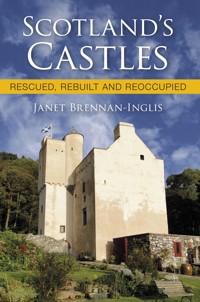
Scotland's Castles is a beautifully illustrated celebration and account of the renaissance of Scottish castles that has taken place since 1950. Over 100 ruined and derelict buildings – from tiny towers to rambling baronial mansions – have been restored as homes, hotels and holiday lets. These restorations have mainly been carried out by new owners without any connections to the land or the family history of the buildings, which they bought as ruins. Their struggles and triumphs, including interviews and first-person accounts, form the core of the book, set in the context of the enormous social, political and economic changes of the late twentieth century.
Sie lesen das E-Book in den Legimi-Apps auf:
Seitenzahl: 322
Veröffentlichungsjahr: 2014
Das E-Book (TTS) können Sie hören im Abo „Legimi Premium” in Legimi-Apps auf:
Ähnliche



















Dedicated to the memory of Professor Charles McKean, a kind and generous scholar
CONTENTS
Title
Dedication
About the Author
Acknowledgements
Castle Restoration Contributors
Chapter 1 Introduction
The Iconic Castle
But First – What is a Castle?
And What is Restoration?
Castles and Change
The Owners
Problems and Hardships
Battles with the Neighbours
Life in a Sixteenth-Century Castle
Chapter 2 The Buildings
Scottish Castles and Tower Houses
The Castle in Fiction
The History of Castle Restoration
The Romance of Ruins
The Tower in History
The Restored Buildings
The Interiors
The Grounds and Gardens
Chapter 3 The Restorers
Lairds and Ladies
Female Restorers
The ‘Family Heritage’ Restorers
David Lumsden and Tillycairn
Lt Col. D.R. Stewart Allward and Castle Stalker
Robert Lister Macneil and Kisimul
The Earl of Perth and Stobhall
Major Nicholas Maclean-Bristol and Breachacha
Graham Carson and Rusco
The Menzies Clan Society and Castle Menzies
DIY Restorers and Wealthy Second-Homeowners
Nicholas Fairbairn and Fordell Castle
The ‘Real’ Professionals – The Architects
The Entrepreneurs
Helen Bailey and Borthwick Castle
Chapter 4 Restorations 1945–79
Castles in Danger
The 1950s
The 1960s
The Heritage Industry
The 1970s – Horrors and Hope
The 1970s – Castles Restored
Aiket Castle
Chapter 5 Restorations Since 1980
The 1980s – Politics and Passion
1980s Castles Restored
Methven Castle
Restoration Mania
The 1990s
Aikwood
The Twenty-First Century
2000s – Castles Restored
Chapter 6 Barholm Castle Restored – The Inside Story
Letting out Barholm
The History of Barholm
Chapter 7 Other Castles
Castle Restorations in Other Countries
The Curious Case of Ireland
New Castles
The Projects that Failed to Make it
Torwood Castle
Castles Lost
Chapter 8 The Future for Scottish Castles
Help from the Authorities?
Is it Worth it?
Politics and Castles at Risk
Castles as Commodities
Castles Ongoing
Castles Still at Risk
Notes
Bibliography
Plates
Copyright
ABOUT THE AUTHOR
Dr Janet Brennan-Inglis bought Barholm Castle in Galloway in 1999, along with her husband John, and they began the long process of restoring it from a ruined shell surrounded by thistles and hogweed to a comfortable home with a beautiful garden. Since completing the restoration in 2006 Janet has been researching and photographing the other restored castles of Scotland, and also those that are still ruined and in need of rescue before it is too late. She was awarded a doctorate for her research in 2011.
Janet is a lecturer for NADFAS and lectures on Scottish castles and heritage throughout the UK. She is Chair of the Scottish Castles Association, secretary of the National Trust for Scotland Galloway Members Group, special interest organiser for NADFAS south-west Scotland branch, county organiser of Scotland’s Gardens and is an active member of the Galloway Preservation Society.
ACKNOWLEDGEMENTS
For proofreading, helpful suggestions and general support, my grateful thanks go to: Dr John Brennan, my dear husband and partner in the restoration of Barholm Castle; Alastair Bain, treasurer of the SCA; John Buchanan-Smith, owner of Newmilns Tower; Michael Davis, historian and author; Dr David and Janet Hannay, stewards of Sorbie Castle; Dr John and Hazel Hunter, owners of Ochiltree Castle; Brian McGarrigle, council member of SCA. Heartfelt thanks to the many castle owners and restorers who have welcomed me to their homes, allowing me to take photographs with access to private spaces, and answering endless questions. All images are the author’s own unless credited otherwise.
For generous assistance with information, visits, photographs, etc., I am indebted to: Geoffrey and Venetia Anderson, owners and restorers of Lochnaw Castle; Sue and Steve Atterton, owners of Ravenstone Castle; Ann and Anthony Bartleet, owners of Craigcaffie Castle; David Bertie, owner of the Old Place of Mochrum; Sue and Ian Brash, owners of Fa’side Castle; Andrew Briggs, artist; James Brown, owner of Baltersan; Jeffrey and Janet Burn, owners and restorers of Buittle Tower; Buffy Carson and her late husband, Graham, restorers of Rusco Tower; Robert Clow, restorer of Aiket Castle, and editor of Restoring Scotland’s Castles, a source of much material; Dr John and Kay Coyne, owners and restorers of Tilquhillie Castle; Fay Cowan, owner and restorer of Glenapp Castle; Marybelle Drummond, daughter-in-law of the Earl of Perth, who restored Stobhall Castle; Mark Ellington, owner and restorer of Towie Barclay; Gavin Farquharson, owner of Ecclesgreig Castle; Agatha Ann Graves, historian of Castle Wigg; Nicholas Groves-Raines, architect and restorer of Liberton House; George and Ann Jamieson, owners and restorers of Cramond Tower; Peter and Lesley Kormylo, restorers of Abbot’s Tower; Sandy and Moira Leask, owners and restorers of Old Sauchie; Phill Levey, owner and builder of Craigietocher; Mats Ljungberg, photographer; John and Mary McMurtrie, owners of Balbithan; Roger Masterton at Celtic Castles; Richard Paxman, aka ‘Arjayempee’ on Flickr, castle photographer; Lachlan Rhodes, restorer of Terpersie Castle; Andy Ritchie, owner of Brackenhill and Lochhouse towers; Lady Steel, restorer of Aikwood Tower; Simpson and Brown Architects, for permission to reprint drawings; Frans Smoor, architect and restorer of Gagie House; Leith and Rachel Stuart, owners of Blackhall Manor; Paul and Josine Veenhuijzen, owners of Earlshall Castle.
CASTLE RESTORATION CONTRIBUTORS
The architects, artists, authors, campaigners, organisations, owners and restorers who feature in this book:
Al-Fayed, Mohammed
Allward, Stewart
Atterton, Sue and Steve
Bailey, Helen
Balgonie, Laird and Younger
Banister, John
Begg, Ian
Binney, Marcus
Boswell, Harry
Brash, Ian
Brennan, John and Janet
Briggs, Andrew
Brown, James
Browne, Nicholas
Bryce, David
Buchanan-Smith, John
Burn, Jeffrey and Janet
Burn, William
Carson, Buffy and Graham
Charles, Prince of Wales
Clarke, George
Clarke, Peter and Gillian
Clarke, Tom and Olive
Clow, Robert
Cole, Stephen
Corbett, Judy
Cormack, Patrick
Cornforth, John
Cowan, Fay and Graham
Coyne, John and Kay
Davey, Andrew
Davis, Michael
De la Lanne-Mirrlees, Robin
Dewar, Bill and Ann
Dobson, Perle and Sam
Donnachie, Dave
Drummond, Peter
Ellington, Marc
Erbe, Tim
Fairbairn, Nicholas
Farquharson, Gavin
Friends of Portencross Castle
Gifford, John
Gillies, Peter
Gordon Lennox, George
Gordon, Granville (Marquis of Huntly)
Gray, Nick and Amanda
Grossart, Angus
Groves-Raines, Nicholas
Guyot, Michel
Hamlyn, Helen
Hannay, David
Harper, Alastair
Harris, John
Hewkin, Peter
Hope Dickson, Archibald
Hutton, David
Irons, Jeremy
Jamieson, Eric and George
Johnstone, David
Jokilehto, Jukka
Kelsall, Moultrie
Koerner, Lisbet
Kormylo, Peter and Lesley
Laing, Gerald
Laird, Michael
Landmark Trust
Leask, Sandy and Moira
Leslie, David
Level, Phill
Lindsay, Ian
Lindsay, Maurice
Lorimer, Patrick
Lorimer, Robert
Lumsden, David
MacDougall, Hope
MacGibbon, David
MacInnes, Ranald
Maclean, Fitzroy
Maclean-Bristol, Nicholas
Macneil, Robert
Maitland-Carew, Gerald
Marie, Queen of Romania
Martin, Kit
Maxwell-Stewart, Catherine
McKean, Charles
McMurtrie, Mary
Merredew, Jennifer
Millar, Gordon
Miller, Christian
Morris, William
Murdoch, Ken and Anna
Nairn, Richard and Malin
Newall, Walter
Nicholsby, Geoffrey
Oliphant, Roderick
Paolozzi, Eduardo
Parris, Matthew
Paterson, George
Pearson, David
Perth, David and Nancy
Plevey, Phill
Pooley, Robert
Ptolomey, Tony
Queen Elizabeth, the Queen Mother
Rasmussen, Michael
Rhodes, John
Rhodes, Lachlan
Ritchie, Andy
Ross, Thomas
Rowan, Mike
Roy, James Charles
Russell, Michael
Safdie, Moshie
Salter, Mike
Saltire Society
SAVE Britain’s Heritage
Scottish Castles Association
Scottish Civic Trust
Scott-Moncrieff, George
Scott-Plummer, Alexa
Sempill-Forbes, Margaret
Shaw, Francis
Simpson, Ian
Simpson, James
Smoor, Francis
Spence, Basil
Spence, Roy
Spens, Michael
Steel, David and Judy
Stenhouse, Rosamond
Stewart, Lachlan and Annie
Strachan, Alex
Strong, Roy
Stuart, Charles and Elizabeth
Stuart, Leith and Rachel
Taylor, Robert
Thomas, William
Tranter, Nigel
Turnbull, Nigel
Tweedy Savage, Ann
Udny-Hamilton, Margaret
Vivat Trust
Walker, David
Wemyss, Charles
Wharton, Ric
Wontner, Hugh
Wood, Colin
Wood, Crichton
Yeats, William Butler
Yorke, Stephen
Ziolkowski, Theodore
The Iconic Castle
Is there any other building type that has the same power to attract fascination, interest and even devotion in people of all ages, cultures and classes, and the same symbolic representation of power and romance? The romantic appeal of castellated architecture can be traced in art and literature for centuries up to the present day, from Arthurian legends through Sir Walter Scott’s gothic novels to the setting of the Harry Potter books in magnificent Hogwarts. Representations of the castle in novels, glossy periodicals, television programmes, the Internet, video games and films provide a window into popular culture and a reflection of the excitement and fantasies that the buildings inspire. Scholars, too, find castles seductively attractive, and have even appropriated a new term to cover their field of study: ‘castellology’. Of all architectural forms, the castle is surely the most written about and loved. Edinburgh Castle, in a country of only 5 million inhabitants, receives over 1 million visitors every year.
Schloss Neuschwanstein in Germany (© Thomas Wolf, www.foto-tw.de)
In Scotland, the castle is an iconic and idealised representation of heritage and even national identity and as such is seen as unchanging and eternal. But all is not as it seems; even the castle that most clearly epitomises Scottish historical continuity on calendars and shortbread tins, Eilean Donan, is a modern rebuild based on romantic imaginings rather than evidence, and the cause of controversy over its ‘restoration’ early last century.
More recently, between 1945 and 2010, around 130 Scottish castles were restored for reoccupation from a ruinous or derelict state, or brought back from the brink of dereliction with programmes of extensive repairs. There was a wide-scale renewal of Scottish castellated buildings in the second half of the twentieth century – a renaissance of Renaissance buildings, one might say. In addition to the full restorations, more than 150 castles were saved from potential decay through timely repairs and rejuvenation by new owners, and at least sixteen new tower houses were built that mimic sixteenth-century design. This occurred alongside a widening of public access, as castle owners turned increasingly to commercial activities, and many changes in ownership. Although castle restoration is not a new phenomenon – and indeed has been an ongoing activity since at least the eighteenth century – the recent number of restorations has been much greater than in any preceding period and the reasons for undertaking them have changed. Since 1945, there has been an extraordinary level of castle conservation activity for such a small country in such a short space of time. Scotland has between 1,000 and 2,000 castles still standing, depending upon how one defines a ‘castle’, and is very fortunate that a significant proportion of them has benefited from the current golden age of building and rebuilding. However, there is no room for complacency, as many others are in a perilous state and need rescuing from imminent decay and disaster.
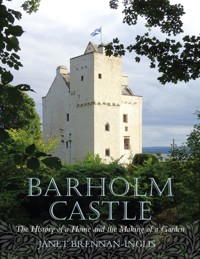
This book will examine the reasons for this modern Renaissance of Scottish castles, setting the context of the social, economic and political changes that took place in the post-Second World War years and investigating the fascinating individual stories of castle owners and their restoration projects. I have been privileged to play a small part in this larger tale, through the restoration of Barholm Castle in Galloway (See Chapter 6).
But First – What is a Castle?
Or rather, what do we understand a castle to be? If one looks at some of the stereotypical features of ‘castle’ – old, made of stone, tall, large, turrets, crenellations, moat, drawbridge – the only common feature seems to be ‘made of stone’. This is hardly sufficient to hold the whole concept together, since cottages and windmills and apartment blocks can also be made of stone, and castles are not even necessarily so – some, like the heavily fortified Potala Palace in Tibet, are even made of wood and straw. Most castles are old, but not all, and the same applies to the other defining features; there are always many exceptions. Dictionary definitions emphasise fortifications and largeness; this seems to reflect the broad understanding, which most people have, of what castles can be, i.e. buildings that look defensive but are not necessarily fortified. Definitions, though, however carefully crafted, do not necessarily represent objects, as we individually understand them. If we look at various castellated buildings, such as Schloss Neuschwanstein in Germany, upon which the symbolic Disney castle was reputedly modelled, grand country mansions and palaces like Culzean Castle in Ayrshire, and small ruined towers throughout Scotland, the main relationship that links castles of all types is a seductive historical romanticism. Fantasies are generated when people visit castles and played out when they buy them.
Some castle guidebooks take an extremely simple and direct approach: if the building is named Castle ‘X’ or ‘X’ Castle it is included, otherwise, not. On the whole, this rather crude distinction works quite well. But Abbot’s Tower, Linlithgow Palace, Old Place of Mochrum, House of the Binns, Vaila Hall and Baltersan, which is always referred to as plain Baltersan, are all just as much ‘castles’ (or not, depending on your views about the proper nature of a castle). They just suffer from what the historian Ian Grimble calls the ‘accident of nomenclature’. The small castles and tower houses of Scotland are also sometimes referred to as fortalices, keeps or peels; the grander Renaissance buildings, which owe much to French influences, feature as chateaux in Charles McKean’s book, The Scottish Chateau, deliberately named to draw the reader away from the notion of fortification. But, although the use of ‘castle’ as a catch-all descriptor of all buildings that look fortified (even if the promise of defence is a blatant impossibility) may be somewhat contentious; it is convenient if we want to avoid missing out on some very interesting buildings. In this book, the widest definition is taken, to include all buildings that are called ‘castle’ and/or look like a castle, from large medieval fortresses via small, sixteenth-century towers to big, Victorian castellated mansions that are blatant fakes – some of which even have the core of a genuine late-medieval tower tucked away in their palatial interiors, such as Cawdor Castle, Culzean Castle and Drumlanrig Castle.
Drumlanrig Castle, which includes a sixteenth-century core, heavily remodelled in the seventeenth century (© Joergsam)
Indeed, even among considerably older buildings, the ‘castle’ appellation is often not original, but a later addition: a romantic conceit added in the nineteenth century.
The heyday of castle building in Scotland was 1500–1680, when it is estimated that more than 1,000 castles were built. A second flush occurred throughout the nineteenth century, when nouveaux riches industrialists rushed to build themselves castles, aided by architects such as William Burn and David Bryce in the Gothic Revival style, and later in the Balmorial style popularised by Queen Victoria. Wealthy aristocrats disguised their outmoded but genuine late-medieval castles by refashioning them as pseudo-gothic castles, such as Kinnaird Castle in Montrose.
And What is a Restoration?
‘Restoration’ is also a tricky term. It is a word bandied about imprecisely when applied to buildings, covering activity across the spectrum from extensive interior redecoration to complete rebuilding; it is also a word, like its close associate, ‘heritage’, heavy with significance (both positive and negative) for those with strong views on architecture. The Scottish Castles Association (SCA) was founded in 1996, and represents many of the restoring owners and new owners of smaller towers and castles. The body lists the following as one of its objectives: ‘Encouraging the responsible ownership, conservation and restoration of ruined structures, and other buildings at risk, in the belief that, in many cases, restoration offers the best means of ensuring their long-term survival.’ The media tend to be supportive of this view, with many admiring television programmes and articles in glossy magazines and newspapers that praise the courage, foresight, determination and good taste of restorers. But, not everyone agrees.
William Morris, Victorian Pre- Raphaelite artist, craftsman and political campaigner, set up the Society for the Protection of Ancient Buildings (SPAB) in 1877. SPAB’s manifesto was a purist plea:
… to resist all tampering with either the fabric or ornament of the building as it stands; if it has become inconvenient for its present use, to raise another building rather than alter or enlarge the old one; in fine to treat our ancient buildings as monuments of a bygone art, created by bygone manners, that modern art cannot meddle with without destroying.
SPAB’s preservationist campaigning carried on throughout the twentieth century, with members still today required to sign up to the manifesto. It has always been a very small player in the field of heritage organisations, and only acquired a separate Scottish branch in 1995. However, its long-term influence on conservationists in the architectural profession – although difficult to measure – has doubtless been significant and has led to disputes between purists and pragmatists.
I have used the term ‘restoration’ mainly to apply to the rebuilding and reoccupation of properties that were uninhabited and uninhabitable, ranging from roofless ruins to recently derelict buildings, although a few dilapidated and almost deserted castles, such as Cleish and Buittle Tower, have crept in if they are especially interesting. Restoration does not mean that the past has been faithfully recreated, even if this is implied. It is simply not possible to pour the past back into a building. However, most restoration projects have at least tried to be faithful to the past and aimed for authenticity, filling the rooms with period furniture and reclaimed building materials, although some have got much closer than others.
Courtesy of Richard Paxman Courtesy of Richard Paxman
So, when numbers are bandied about in this book referring to Scottish castles and their restorations, be aware that these are viewed through the prism of my very personal take on what constitutes a castle and what it means to restore one. Every restoration project has a backstory and most narratives come with themes of derring-do, heroic endeavour and romantic obsession. Restorers took gigantic risks and battled horrible odds as they spent years sleeping in freezing caravans in the grounds of their ruined castles, begging for money from banks charging 17.5 per cent interest rates and despairing of ever completing the work they had started. Yet well over 100 of them succeeded and several more are still going through the processes of bringing back a ruin from the brink of disaster.
Moreover, around 150 more were brought back from the very brink of ruin by programmes of intensive repairs. If we count the total conservatively as 275 castles that have been rescued (125 restored and 150 heavily repaired) since 1945, that really is a huge number for a very small country in a very short space of time, representing somewhere between 15–30 per cent of all castles, depending on the definition. The second half of the twentieth century saw a Golden Age of castle and tower house restoration in Scotland, with a far greater level of castle-related building activity than at any time since the sixteenth century. Sadly, significant numbers of Scottish castles were lost early in this same period, through demolition, fire and fatal neglect (See Chapter 7).
At Thirlestane Castle in the Borders, for example, the rot was literally stopped. When Captain Gerald Maitland-Carew inherited the castle in 1972 from his grandmother, the Countess of Lauderdale, he was faced with carrying out repairs on an enormous scale. There were no fewer than forty major outbreaks of dry rot and the central tower was found to be leaning backwards. Captain Maitland-Carew secured substantial grant aid through the Historic Buildings Council, then, in 1984, he gifted the main part of the castle to a charitable trust set up for its preservation. The extent of the work required to restore Thirlestane Castle – which is more like a palace in its grandeur – to its former splendour was truly daunting. After many years of neglect, the vast central tower was in imminent danger of collapse and the building was edging ever closer to becoming a ruin. The repair of the central tower required the insertion of steel support beams and the drilling of the walls to take steel tension cables. The crumbling stonework of the sixteenth-century keep, which had been built of very small stones reused from earlier fortifications, had to be reconstructed also. The restoration work is ongoing, but, unfortunately, another serious outbreak of dry rot has recently closed the castle to visitors.
Castles and Change
That which is valued by a dominant culture or cultures in society is preserved and cared for; the rest can be mindlessly or purposefully destroyed, or just left to rot.1
Historic buildings are symbolic representations of the past; the attitudes towards them that are displayed by governments, society and individuals reflect, to a large extent, their view of history itself. Buildings have a powerful presence in our everyday lives and threats to their continuity are often met with fierce resistance and sadness. However, their significance changes over time. In the aftermath of the Second World War, ‘old’ usually meant unwanted, whereas now it is more likely to signify cultural heritage. The fact that many of the historic buildings of Scotland were decaying and even being demolished dismayed a few outspoken conservationists, but nothing much was done to save them until the tide of public opinion turned in the 1970s.
The castle literature of Scotland is full of books that illustrate, describe and glorify the iconic buildings that feature on shortbread tins and calendars. But even the most serious of these books, which carefully trace the history of the owners and events of Scottish castles, stops dead at a date that is usually sometime in the nineteenth century, if not much earlier. It is as if time stood still long ago for Scottish castles. Even the eighty-nine-page guidebook for Stirling Castle, published by Historic Scotland after their £12 million refurbishment of the castle, omits all mention of this enormous and exciting twenty-first-century project. Yet castles continue to change. They change owners, they change shape, they change function and, in the last fifty years, dozens of castles have changed from a roofless ruin to an inhabited building.
Barholm Castle before the restoration
In terms of outcomes, it is a sine qua non that things change when a castle is restored. The most noticeable change is usually in the outward appearance of the building; many ‘before’ and ‘after’ pictures are radically different, particularly when the building has been harled with lime render for the first time in living memory.
A familiar grey-stone ruin partly covered in ivy and surrounded by long grass and wild flowers may become an imposingly bright-white tower with a formal garden and a car park. Not everyone admires that kind of change. Access to the castle for the local community may change if a ruined castle is restored by individuals for use as a private, family home. Local ruins are often used as playgrounds by adventurous children or as (romantic) trysts by teenagers and adults, and may be sorely missed. On the other hand, local people may be delighted to see that a deteriorating building – maybe even a blot on the landscape – in danger of collapse has been rescued. Inside, the appearance of restored castles is also radically different, perhaps even more so than outside, if the outer grey stone has been left un-rendered. New floors, walls, kitchens and bathrooms are installed, with furnishings brought in to show off the setting.
A few restoring owners made quite radical changes to the structure of their ruined buildings, by removing wings or large sections that had been added at a later date than the original building. Some carried out this demolition work for aesthetic reasons and some for pragmatic ones – to reduce a huge building to a manageable size, say. In fact, many Scottish castles and country houses – if not the majority – have developed organically over the course of several centuries, as architectural taste and the needs of the owners have changed. Who is to say that the stripping back of a building to its ‘pure’ form is any more authentic than setting it in the aspic of its ‘finished’ state? Article 11 of the 1964 Venice Charter (to which Britain is a signatory) states that, ‘When a building includes the superimposed works of different periods, the revealing of the underlying state can only be justified in exceptional circumstances’. But should a historic building that has been relatively recently added to or changed with unsympathetic materials – dormer windows from the 1960s set in cement-clad surrounds, say – be retained on the grounds that one should not reveal the underlying state? What about a Georgian or Victorian addition that makes the house seem unbalanced – should that be removed?
The owners who removed parts of their castles prior to the restoration – Aboyne, Aiket, Ballencrieff, Cleish, Kinkell, Lochnaw and Methven – all did so for reasons that were carefully considered and which they felt to be entirely justifiable. Some were more successful restorations than others, but all beg the question of where to stop when working with a historic building. There is no easy prescriptive answer, but the question is addressed in a wider, international context by Jukka Jokilehto in A History of Architectural Conservation, and in a scholarly and thought-provoking manner by the historian Michael Davis in The Scottish Castle Restoration Debate 1990–2101. Davis is admiring of the many successful Scottish castle restorations:
The greatest achievement of the often virtually unknown and largely unobserved phenomenon of Scottish castle restoration in the last five decades has not only been preservation, but a holistic effect, inside and out, which has real claims to art … [T]he results have often been winsome, seductive and highly appealing. (p.70)
Almost all restorers claim to want authenticity in their restored building, although some strive harder than others. ‘Authenticity’ is one of those multivalent terms that holds a different meaning for each restorer. What most aim for is a return to an idealised original, a recapturing of what is believed once to have been. France Smoor, restoring architect of Tilquhillie Castle and Gagie House, warned of ‘the romantic preoccupation with one or another period of an historic building [which] often leads the restorer away, trying to peel away subsequent or even previous layers of architecture to achieve an ideal image’.2 Blackhall Manor, Mains Castle and Ballencrieff Castle were all restored by DIY builders using reclaimed materials that they sourced themselves. At Blackhall Manor, the plumbing, plastering, tile-laying and slating were done by tradesmen; all other work was done by Alex Strachan, the original restoring owner, with volunteer unskilled labour. Around 30,000 bricks and 30 tons of stone, much of it reclaimed, were used. Almost all the timbers, including the beams in the Great Hall, were also reclaimed. At Ballencrieff, little new material was used: old roof slates were purchased, items from other castles bought at auction and flagstones salvaged from churches.
Barholm Castle shortly after it was restored
The fact that materials look old, even if they are not necessarily local, or antique, is a significant feature in the judgement of authenticity. The cost of sourcing original Jacobean furniture and artefacts is prohibitive for all but the wealthiest owners, but reproduction pieces often sit well within sixteenth-century walls.
The restoring architects of Garth and Cleish castles, on the other hand, used modern materials and modern design to fill the interior spaces of their late-medieval buildings. Michael Spens, architect and previous owner of Cleish Castle, designed a balcony support in the form of twin steel columns dipped in nickel. The result was a sixteenth-century space augmented by the materials of the present. It received accolades in the international press and won a Saltire Award. This was in the early 1970s; awards for such modernising work would be less likely in the twenty-first century, when faithful reinstatement of the last stage of the building’s development is usually required. Cleish had been ‘restored’ in a bastardised way in the 1840s, with baronial add-ons; Spens stripped away the nineteenth-century additions to create a late twentieth-century interior filled with works of art by the sculptor Eduardo Paolozzi. Although this was not truly a restoration, as Cleish had been continuously occupied before Spens bought it, the changes were as extensive as that involved in many complete restorations of ruinous or derelict buildings. This was a project where contemporary art formed a fundamental part of the structural changes to the building. However, the amazing contemporary Great Hall ceiling that he had commissioned, modelled in shallow relief by Eduardo Paolozzi in 1973, was replaced by a subsequent owner with a traditional painted ceiling in sixteenth-century style by artist Jennifer Merredew. She has completed a number of castle restoration ceilings during the past twenty years, including the one at Barholm Castle. As can be seen from the photograph of Jennifer at work, she does not lie on her back to paint, but rather stands on a sturdy scaffold, with her neck supported by a surgical collar. Paolozzi’s ceiling was later installed in the main hall of the Dean Gallery at The Scottish National Gallery of Modern Art in Edinburgh, where it can be viewed today.
Interior of Tilquhillie Castle
Perhaps the most startling change that has taken place in a Scottish castle is the exterior painting of Kelburn Castle by Brazilian graffiti artists. In 2007, the Earl of Glasgow had been advised that the cement harling (render) of the castle would need to be replaced. His children suggested painting the castle before the harling was removed, and a spectacular spray-painted mural was applied. In 2011, the mural was named as one of the world’s top ten examples of street art – on a par with Banksy’s work in Los Angeles. Although it was initially intended to be a temporary covering, the artwork seems set to stay for a while longer, despite rumours that the earl was under pressure to remove it. Historic Scotland’s principal inspector for Glasgow and the south west, Ranald MacInnes, said in a letter to The Scotsman newspaper:
Historic Scotland has not stepped in and ordered the removal of the graffiti from Kelburn Castle and will not be doing so in the future. We were happy to support this exciting and innovative project. The artwork is a celebration of Kelburn Castle’s importance as a historic building and has attracted many visitors to the estate.
One major change that has taken place in Scottish castles since 1945 is the increase in access for the paying public, either as clients in overnight accommodation, wedding guests or day-tripping tourists paying an entry fee to tour the interior. Fifty years ago, perhaps only the queen would have access to more than a handful of Scottish castles for an overnight stay. Now, we can all experience as many nights as we wish in over 150 castles, provided that we are prepared to pay the market rate for the accommodation. Over 150 privately owned castles also currently advertise weddings, which became a particularly attractive proposition for many castles after a change in the law in 2002, allowing marriages to take place in venues other than churches and registry offices. The numbers became high in a very short period. Clearly, castle weddings are a good commercial prospect. Historic Scotland offers twelve castle venues for weddings, including Edinburgh, Stirling and Urquhart castles. The National Trust for Scotland has eight castles that cater for weddings.
Nineteenth-century engraving of Kelburn Castle
Jennifer Merredew painting the ceiling at Barholm, in 2005
The same view of Kelburn Castle, in 2009
Comlongon Castle is an excellent example of a castle that has capitalised on the wedding market. This large fifteenth-century keep near Annan was abandoned in the sixteenth century. The existing extension was built in 1900. Between 1939 and 1952, it was used by Barnardos as an orphanage and after that, the estate’s factor would occasionally live in it, but it had lain empty for ten years after the Earl of Mansfield sold the castle, mansion and estate. The Ptolomy family had previously purchased Knockbrex Castle in Kirkudbrightshire (a nineteenth-century fake castle, locally known as the ‘toy fort’) and ran it as a small hotel. They were looking for a larger castle when Comlongon came on the market in 1984. Tony Ptolomey and his family refurbished both the castle and the mansion, doing most of the work themselves.
At first, most of the guests in the eleven-bedroomed hotel were American tourists, but, in 1991, Ptolomey was afraid that business would suffer as a result of the recession, and looked around for another source of clientele. ‘We advertised in a wedding magazine,’ he said, ‘and were amazed at the response. We received letters and phone calls from throughout the world. The recession never arrived as far as we were concerned, and our difficulty now is to fit foreign tourists in as well as the weddings.’ Three local ministers are needed to handle the number of weddings conducted at Comlongon. Ptolomey says, ‘The couples are normally accompanied by close friends and relatives who also stay at the castle, which means that together with tourists we have an occupancy rate of about 90 per cent.’
Restoring owners have opened hotels and upmarket holiday lets and diversified the uses of castles in other ways, including the management of business ventures, such as a deer stud farm (Midmar in Aberdeenshire), a nursery garden (Balbithan) and an architects’ practice (Rossend Castle and Liberton House). These examples are of businesses where sales could be enhanced by the siting of the objects for sale beside or within a castle – the grounds or interior of a sixteenth-century tower make a much better venue to view breeding stags, buy garden plants, or visualise a restored building than a fenced farmyard, a purpose-built garden centre or a city office. However, all three have since changed hands and changed their usage, in a nice demonstration of the fluid nature of castle ownership and use in recent times.
The second half of the twentieth century also saw the conservation movement across Britain and Europe start up, gradually swell and finally grow to huge proportions, at the same time as the number of restorations of Scottish castles rose dramatically, decade on decade; the numbers of demolitions dropped equally dramatically. Sales of castles also increased over time – in the 1950s only a handful of castles were sold, rising to over 100 in the 1990s. Was this simply a reflection of the number of general property sales in the period? Or, are these changes cultural as well as economic?
Culturally, much of the story of the heritage movement is shared between Scotland and England. Scotland certainly had its own heritage champions, such as Nigel Tranter and Maurice Lindsay, and its own national and local conservation organisations. However, as a nation it benefited from the broader British campaigning of individuals, including Marcus Binney, Roy Strong and Patrick Cormack, and organisations such as SAVE Britain’s Heritage, whose focus was mainly on England, but whose message was disseminated throughout the UK by the media and by those interested in historic buildings who moved between the two countries. The Scottish charitable conservation bodies – the Architectural Heritage Society of Scotland, the Scottish Castles Association, the Scottish Civic Trust, the Scottish Historic Buildings Trust, The Saltire Society and The National Trust for Scotland – all played a role in changing public attitudes and conservation practice, as did a handful of active and influential individuals who campaigned for changes in attitudes towards historic buildings.
In Scotland, unlike England, the sense of national identity is bound up with the iconography of castellated architecture, way beyond the mere romantic attraction of castles. Charles McKean was surprised to find that reaction to The Scottish Chateau, published in 2001, differed north and south of the border. Scottish readers focused on the warlike aspect of castles:
It had become clear that these ‘castles’ were castles only in name, and that, in many cases, such a name was a modern attribution. They were, rather, largely indefensible stately houses or country seats. Yet what extraordinary passion this interpretation provoked … it was taken as an attack upon the builders of these houses, on their owners, and as an affront to the honour of the country itself. To remove the warlike overcoat of these great houses was tantamount to robbing them of their dignity and personality.3
It is not surprising to find that the National Trust for Scotland and Historic Scotland use images of fighting and aggression, all tied up with swords, kilts and tartan bonnets, in their publicity material and in the shops attached to castle ticket offices. Somehow, castles and conflict are inextricably linked in people’s minds. Castle owners and their visitors are fascinated by gunloops and the idea of pouring boiling oil over the enemy from the crenellated parapets of their towers, even though such an action may never have occurred to their sixteenth-century counterparts. The insertion of turrets, gunloops and crenellations in many castles was more of an architectural fashion statement than a defensive necessity. However, it seems unlikely that the association between castles and defence will ever be loosened, although academic research shows it to have been much slighter than we would like to think.
By the turn of the twenty-first century, major social, political and economic changes had taken place. The few castle restorations carried out in the 1950s were done in a different social world from those of the 1990s. Standards of living had increased greatly, as had social mobility and educational opportunities. In 1934, SMTMagazine was full of praise for the new means of motorised transport as a way of reaching Scotland’s historic buildings:
The facilities which these modern vehicles offer still seem incredible, so perfect are they in design and workmanship and comfort. With the motor coach and car at our disposal, we may now travel in freedom and comfort into the heart of the distant hills, or by the shores of the Western seas, all in a brief day’s journey, and still find ample time to visit many of our ancient abbeys and historic castles.4
Doubtless, travel by motorcar and charabanc was a thrilling novelty in the 1930s, but it was not until the 1960s that improvements in infrastructure brought about greater ease of transport, through better roads, new bridges, more reliable cars and increased air travel, which, in turn, allowed those with new wealth to buy properties in remote areas and still move around the country efficiently.
The changes of the post-war period are reflected in the challenges and opportunities facing those who restored castles over the decades from the 1950s to the beginning of the twenty-first century. Their restoration stories, decade by decade, are told in later chapters. Mostly, they are tales of triumph, but almost all, like any rattling good yarn, have elements of risk, adventure, conflict and suffering.
The Owners
Who was responsible for these restorations and why? The majority of castle restorers were ‘new’ owners, with no family connection to the ruined building that they bought and no landowning credentials. There is, of course, no single, simple answer to the question of who they were – the purchasers were as varied as the buildings they bought to restore. In addition, a handful of castles were restored by ‘old’ owners, whose ancestors had owned the building for generations and a significant minority of restorations, such as Dudhope in Dundee and Pitheavlis in Perth, were carried out by building preservation trusts or local authorities.




