


12,99 €
Mehr erfahren.
- Herausgeber: Atlantic Books
- Kategorie: Geisteswissenschaft
- Sprache: Englisch
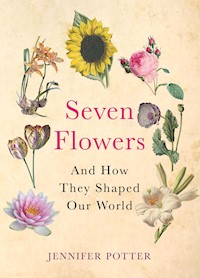
**SHORTLISTED FOR THE GARDEN MEDIA AWARDS, INSPIRATIONAL BOOK OF THE YEAR** The lotus, lily, sunflower, opium poppy, rose, tulip and orchid. Seven flowers: seven stories full of surprise and secrets. Where and when did these flowers originate? What is the nature of their power and how was it acquired? What use has been made of them in gardens, literature and art? These are both histories and detective stories, full of incident, unexpected revelations, and irony. The opium poppy, for example, returned to haunt its progenitors in the West; and while Confucius saw virtue and modesty in his native orchids, the ancient Greeks saw only sex. These are flowers of life and death; of purity and passion; of greed, envy and virtue; of hope and consolation; of the beauty that drives men wild. All seven demonstrate the enduring ability of flowers to speak metaphorically - if we could only decode what they have to say.
Das E-Book können Sie in Legimi-Apps oder einer beliebigen App lesen, die das folgende Format unterstützen:
Veröffentlichungsjahr: 2013
Ähnliche


















Seven Flowers
ALSO BY JENNIFER POTTER
Non-fiction
The Rose: A True History
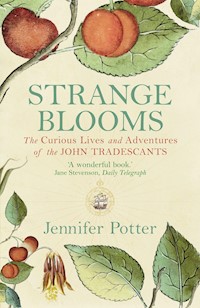
Strange Blooms: The Curious Lives and Adventures of John Tradescants
Lost Gardens
Secret Gardens
Fiction
The Angel Cantata
After Breathless
The Long Lost Journey
Published in Great Britain in 2013 by Atlantic Books, an imprint of Atlantic Books Ltd.
Copyright © Jennifer Potter, 2013
The moral right of Jennifer Potter to be identified as the author of this work has been asserted by her in accordance with the Copyright, Designs and Patents Act of 1988.
All rights reserved. No part of this publication may be reproduced, stored in a retrieval system, or transmitted in any form or by any means, electronic, mechanical, photocopying, recording, or otherwise, without the prior permission of both the copyright owner and the above publisher of this book.
The author and publisher wish to thank the following for permission to reproduce copyright material: The Big Sleep by Raymond Chandler © 1939. Reprinted by kind permission of the Estate of Raymond Chandler; Approximately 6 lines (page 146) from Collected Poems 1947–1997 by Allen Ginsberg (Penguin Books, 2009). Copyright © Allen Ginsberg, 1956, 1961. Reproduced by permission of Penguin Books Ltd; ‘The Bitter Smell of Tulips’ by Zbigniew Herbert. From Still Life with a Bridle, Copyright © 1993, used by permission of The Wylie Agency (UK) Limited; Approximately 60 words from Wide Sargasso Sea by Jean Rhys (First published by Andre Deutsch 1966, Penguin Books 1968, Penguin Classics 2000). Copyright © Jean Rhys, 1966. Reproduced by permission of Penguin Books Ltd; Rainer Maria Rilke, excerpt from ‘The Roses: II’ from The Complete French Poems of Rainer Maria Rilke, translated by A. Poulin. Translation copyright © 1979, 1982, 1984, 1986 by A. Poulin Jr. Reprinted with the permission of The Permissions Company, Inc. on behalf of Graywolf Press, Minneapolis, Minnesota, www.graywolfpress.org; ‘Rosa Sancta’ taken from Tender Taxes © Jo Shapcott, 2001, and reprinted by permission of Faber and Faber Ltd.
Every effort has been made to trace or contact all copyright holders. The publishers will be pleased to make good any omissions or rectify any mistakes brought to their attention at the earliest opportunity.
1 3 5 7 9 10 8 6 4 2
A CIP catalogue record for this book is available from the British Library.
Hardback ISBN: 978-0-85789-164-8 Ebook ISBN: 978-1-78239-037-4 Paperback ISBN: 978-0-85789-165-5
Set in 12/14.5pt Filosofia Designed by Nicky Barneby @ Barneby Ltd Printed in Great Britain.
Atlantic Books An Imprint of Atlantic Books Ltd Ormond House 26–27 Boswell Street London WC1N 3JZ
www.atlantic-books.co.uk
For Ros
To see a World in a Grain of Sand
And a Heaven in a Wild Flower,
Hold Infinity in the palm of your hand
And Eternity in an hour.
WILLIAM BLAKE, ‘Auguries of Innocence’
Contents
Foreword
1 Lotus
2 Lily
3 Sunflower
4 Opium Poppy
5 Rose
6 Tulip
7 Orchid
Afterword
Acknowledgements
Main Sources and Select Bibliography
List of Illustrations
Note on the Author
Index
Foreword
ALL MY LIFE, flowers have been creeping up on me.
My early childhood was oddly flower-free, aside from memories of threading daisy chains in the Silverdale garden of my maternal grandfather, and the lemony sweetness of Philadelphus flowers pinned to the fairy costume I wore to a local show. The flowers of Malaya, where we moved when I was eight, naturally came as a shock: frangipani, flaming cannas, hibiscus, the night-blooming Keng-hwa cactus, Spider orchids and Flame of the forest trees. These were flowers bold as brass but I took them entirely for granted. They were simply there, part of the given, like the bad-feet smell of the durian fruit and the flickering lights of the Hindu Diwali festival; I cannot claim foreknowledge of the way flowers would come to govern my life.
Returning to the English Lake District, I began to pay flowers more attention. My mother had turned into an assiduous gardener, determined to reclaim a derelict garden high above the town of Ambleside, on a hillside that had also sheltered the émigré artist Kurt Schwitters at the end of the war. Springtime is the time I remember best, when the garden filled with the flowers that still remind me of my Cumbrian home: tiny wild daffodils, Himalayan rhododendrons and, in late summer, banks of the saffron-coloured South African import montbretia (Crocosmia), which have escaped into the wild.
Everything changed when I went to university in the late sixties. Flowers became my emblem and the power of flowers my mantra. Like many of my contemporaries, I was drawn to eastern religions, and after graduating travelled westwards around the world, paying an obligatory visit to Haight Ashbury in San Francisco, which still functioned as the faintly beating heart of the Flower Power generation. While I never wore flowers in my hair, I slept on somebody’s floor, ate a macrobiotic diet of brown rice and adzuki beans, and imagined – like everyone else – that I was changing the world. It is easy with hindsight to deride such facile optimism, but the flowers we embraced represented a sincerely held belief that peace would prevail if we could only disinherit the past, counter guns with guerrilla theatre and let a thousand flowers bloom.
Ten years after leaving university, I acquired a garden of my own. Seeking refuge above all, I created a lushly green urban jungle where I could pretend to be somewhere else and where the sole flowers I allowed were white lilies and tobacco plants, because of their heavenly fragrance after dark. The space was small, no more than ten metres by ten, and its illusion of other worlds persisted until a neighbour chopped through the stems of my rampant Russian vine, exposing the fragility of my gimcrack Eden.
After jungles, my interest turned to landscapes, imaginatively recreated in fiction and later studied at London’s Architectural Association, then to books about gardens, secret and lost. These were followed by a biography of Britain’s first celebrity gardeners and plantsmen, the John Tradescants, and most recently a cultural history of the rose, which re minded me once again of the power of flowers to express our inner selves.
For five long years I tracked the rose’s evolution as a flower and as an idea, struck by how central it has been to so many cultures around the world. My conclusions were disarmingly simple: that who you are dictates how you see the rose; and that each age and each society has reinvented the rose in its own image. Through the rose we tell our stories, both personal and collective, and I wondered: if the rose can do this, what about other flowers? Can they also tell us something about who we are and where we have come from? Can they codify our aspirations, help to diffuse our fears? Can they speak to us, in other words, about things other than themselves?
Out of such questions came this book. While it cannot emulate TheRose’s breadth of enquiry undertaken for a single flower, it uses the same approach to interrogate seven flowers that have exerted power or influence of one kind or another, whether religious, spiritual, political, social, economic, aesthetic or pharmacological. I have chosen my flowers carefully; they are the lotus, lily, sunflower, opium poppy, rose, tulip and the orchid. Each has shaped our lives in some way, for better or worse, and each has some connection with my life, from the stylized lotuses of a Tibetan monastery in the Scottish Borders to the Spider orchids of a tropical childhood. I want to know where my flowers originated, when and how they gained their powers, what use men made of them in gardens, and how – or more truly why – their powers transmuted into art.
Although the book was conceived and written in Europe, I have looked further afield wherever possible, tracking the ‘Aztec’ and ‘Inca’ sunflowers through Central and South America, for instance, and tulip fever into the flower’s Turkish heartlands where its consequences were particularly brutal. Some flowers are inevitably missing; had space permitted, I would like to have included western carnations, eastern peonies and chrysanthemums, and plants endemic to the southern hemi sphere, such as banksias, proteas and the waratah.
As in The Rose, I wanted to look beyond the usual stories to untangle the flowers’ botanical and cultural evolution. Writing for me is a form of detection; I like to be taken by surprise. One of my least favourite flowers – the orchid – beguiled me the most, but all seven took me to unexpected places. Here are the flowers of healing, delirium and death; of purity and passion; of greed, envy and virtue; of hope and consolation; of the beauty that drives men wild. All seven demonstrate the power of flowers to speak metaphorically, if we would only care to listen. It isn’t enough to let the flowers bloom; we must also decode what they have to say.
Jennifer Potter, London, 2013
1. ‘The Summer Garden’, drawn and engraved by Crispin de Passe the Younger, Hortus Floridus (1614).
1
Lotus
Om mani padme hum
Tibetan Buddhist mantra, traditionally translated as ‘the jewel in the heart of the lotus’
2. Nelumbium speciosum, Curtis’s Botanical Magazine, vol. 23–24, 1806 (Image provided by Peter H. Raven Library, Missouri Botanical Garden, http://www.missouribotanicalgarden.org/)
OF ALL THE flowers that have inflamed human societies, the lotus has to come first. Natives of the tropics and subtropics, true lotuses (Nelumbo nucifera) do not flower outdoors in Britain and my first sight of them was a revelation. I had driven from Pennsylvania into New York State to look at gardens along the Hudson Valley and stopped at the Chinese-inspired Innisfree Garden at Millbrook, north of New York City. I remember climbing the low hill from the entrance and catching sight of these remarkable flowers stretching far into the lake like airborne water lilies, their fat pink buds and star-shaped flowers poking stiffly out of upturned skirts of leaves held high above the water.
Until then, the lotus had been for me a flower of Buddhist contemplation, familiar from youthful visits to a Tibetan monastery near Lockerbie in the Scottish Borders, but so abstracted that I scarcely thought of it as a flower at all. Here were lotuses in the landscape, thousands of them, and I wanted to know more about them. Where had they come from, these perfectly formed flowers that develop strange, triffid-like seed pods, and what were they doing in this ornamental landscape created in the 1930s by the American painter Walter Beck and his wife Marion, daughter of a nineteenth-century iron baron?
My search took me first to ancient Egypt, since the pink lotuses I had seen flowering in the lake at Innisfree are not the only flowers to bear the name lotus. Egyptologists call the water lilies of ancient Egypt lotuses, although they belong to a very different plant family: the tropical blue water lily (Nymphaea caerulea) and the white water lily (Nymphaea lotus), native to Central and North Africa. Both sorts of lotus made their mark at roughly the same time, nearly five thousand years ago, and both demonstrate the fundamental power of flowers in helping early civilizations to grasp and express the world around them.
IMAGINE THE STILL waters of the Nile at dawn. The surface is covered with the shiny egg-shaped leaves of the blue lotus (Nymphaea caerulea) from which rise conical buds, held some twenty to thirty centimetres above the water. As the sun climbs into the sky, the buds open into sharp-pointed stars, their petals up to twenty in number a startling violet blue at the tips fading to white near the cluster of bright yellow stamens at the base. The opening flowers release a delicate fragrance that lingers until the flowers close at noon, when they sink back into the water. They will open and close on two more days, flowering for a little longer than they did on their first day. The fruit, too, will be held above the water until it ripens and disappears into the Nile. The flowers of the night-blooming white lotus (Nymphaea lotus), by contrast, open around dusk and close mid- to late morning on four successive days. Also delicately scented, the white has rougher-edged leaves and rounder petals details that the decorators of ancient tombs captured more than three and a half thousand years ago.1
Like all the flowers of this book, Egyptian lotuses are of a rare beauty the blue lotus in particular but beauty on its own does not account for their enduring fascination. Linked by their Nile habitat to ancient Egypts extraordinary fertility, attributable to the rivers annual flooding, they were adopted as the insignia of Upper Egypt in contrast to the papyrus reed of Lower Egypts Nile delta, whose simplified shape it resembled. Lotus and papyrus came together around 3000 BCE, when the two kingdoms were united, a political union celebrated in the intertwined lotus and papyrus plants carved into King Khafres massive black funerary throne in his valley temple near the Great Sphinx. Even greater than its political power was the lotuss close association with two of ancient Egypts most powerful deities, the sun god Ra and Osiris, lord of the afterlife, which gave the flower a leading role in the very mystery of creation.
Lesen Sie weiter in der vollständigen Ausgabe!
Lesen Sie weiter in der vollständigen Ausgabe!
Lesen Sie weiter in der vollständigen Ausgabe!
Lesen Sie weiter in der vollständigen Ausgabe!
Lesen Sie weiter in der vollständigen Ausgabe!
Lesen Sie weiter in der vollständigen Ausgabe!
Lesen Sie weiter in der vollständigen Ausgabe!
Lesen Sie weiter in der vollständigen Ausgabe!
Lesen Sie weiter in der vollständigen Ausgabe!
Lesen Sie weiter in der vollständigen Ausgabe!
Lesen Sie weiter in der vollständigen Ausgabe!
Lesen Sie weiter in der vollständigen Ausgabe!
Lesen Sie weiter in der vollständigen Ausgabe!
Lesen Sie weiter in der vollständigen Ausgabe!
Lesen Sie weiter in der vollständigen Ausgabe!
Lesen Sie weiter in der vollständigen Ausgabe!
Lesen Sie weiter in der vollständigen Ausgabe!
Lesen Sie weiter in der vollständigen Ausgabe!
Lesen Sie weiter in der vollständigen Ausgabe!
Lesen Sie weiter in der vollständigen Ausgabe!




