


16,99 €
Mehr erfahren.
- Herausgeber: John Wiley & Sons
- Kategorie: Geisteswissenschaft
- Serie: China Today
- Sprache: Englisch
Choice Outstanding Academic Title for 2015
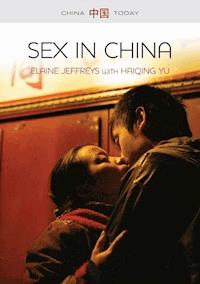
Sex in China introduces readers to some of the dramatic shifts that have taken place in Chinese sexual behaviours and attitudes, and public discussions of sex, since the 1980s. The book explores what it means to talk about �sex� in present-day China, where sex and sexuality are more and more visible in everyday life. Elaine Jeffreys and Haiqing Yu situate China�s changing sexual culture, and how it is governed, in the socio-political history of the People�s Republic of China. They demonstrate that Chinese governmental authorities and policies do not set out strictly to repress �sex�; they also create spaces for the emergence of new sexual subjects and subjectivities. They discuss the complexities surrounding the ongoing explosion of commentary on sex and sexuality in the PRC, and the emergence of new sexual behaviours and mores.
Sex in China offers clear, critical coverage of sex-related issues that are a focus of public concern and debate in China - chapters focus on sex studies; marriage and family planning; youth and sex(iness); gay, lesbian and queer discourses and identities; commercial sex; and HIV/AIDS. This book will be an invaluable resource for students and scholars both of modern China and of sex and sexualities, who wish to understand the role that �sex� plays in contemporary China.
Sie lesen das E-Book in den Legimi-Apps auf:
Seitenzahl: 372
Veröffentlichungsjahr: 2015
Ähnliche




















China Today series
Greg Austin, Cyber Policy in China
David S. G. Goodman, Class in Contemporary China
Stuart Harris, China's Foreign Policy
Elaine Jeffreys with Haiqing Yu, Sex in China
Michael Keane, Creative Industries in China
Joe C. B. Leung and Yuebin Xu, China's Social Welfare
Pitman B. Potter, China's Legal System
Xuefei Ren, Urban China
Judith Shapiro, China's Environmental Challenges
Teresa Wright, Party and State in Post-Mao China
LiAnne Yu, Consumption in China
Xiaowei Zang, Ethnicity in China
Copyright © Elaine Jeffreys and Haiqing Yu 2015
The right of Elaine Jeffreys and Haiqing Yu to be identified as Authors of this Work has been asserted in accordance with the UK Copyright, Designs and Patents Act 1988.
First published in 2015 by Polity Press
Polity Press
65 Bridge Street
Cambridge CB2 1UR, UK
Polity Press
350 Main Street
Malden, MA 02148, USA
All rights reserved. Except for the quotation of short passages for the purpose of criticism and review, no part of this publication may be reproduced, stored in a retrieval system, or transmitted, in any form or by any means, electronic, mechanical, photocopying, recording or otherwise, without the prior permission of the publisher.
ISBN-13: 978-0-7456-5613-7
ISBN-13: 978-0-7456-5614-4(pb)
ISBN-13: 978-0-7456-8594-6 (epub)
ISBN-13: 978-0-7456-8593-9 (mobi)
A catalogue record for this book is available from the British Library.
Library of Congress Cataloging-in-Publication Data
Jeffreys, Elaine, 1960-
Sex in China / Elaine Jeffreys, Haiqing Yu.
pages cm. – (China today)
Includes bibliographical references and index.
ISBN 978-0-7456-5613-7 (hardcover : alk. paper) – ISBN 0-7456-5613-7 (hardcover : alk. paper) – ISBN 978-0-7456-5614-4 (pbk. : alk. paper) – ISBN 0-7456-5614-5 (pbk. : alk. paper) 1. Sexology–China. I. Yu, Haiqing, 1970- II. Title.
HQ60.J44 2015
306.70951–dc23
2014025918
The publisher has used its best endeavours to ensure that the URLs for external websites referred to in this book are correct and active at the time of going to press. However, the publisher has no responsibility for the websites and can make no guarantee that a site will remain live or that the content is or will remain appropriate.
Every effort has been made to trace all copyright holders, but if any have been inadvertently overlooked the publisher will be pleased to include any necessary credits in any subsequent reprint or edition.
For further information on Polity, visit our website: politybooks.com
Chronology
1894–95
First Sino-Japanese War
1911
Fall of the Qing Dynasty
1912
Republic of China established under Sun Yat-sen
1927
Split between Nationalists (KMT) and Communists (CCP); civil war begins
1934–5
CCP under Mao Zedong evades KMT in Long March
December 1937
Nanjing Massacre
1937–45
Second Sino-Japanese War
1945–9
Civil war between KMT and CCP resumes
October 1949
KMT retreats to Taiwan; Mao founds People's Republic of China (PRC)
1950–3
Korean War
1953–7
First Five-Year Plan; PRC adopts Soviet-style economic planning
1954
First Constitution of the PRC and first meeting of the National People's Congress
1956–7
Hundred Flowers Movement, a brief period of open political debate
1957
Anti-Rightist Movement
1958–60
Great Leap Forward, an effort to transform China through rapid industrialization and collectivization
March 1959
Tibetan Uprising in Lhasa; Dalai Lama flees to India
1959–61
Three Hard Years, widespread famine with tens of millions of deaths
1960
Sino-Soviet split
1962
Sino-Indian War
October 1964
First PRC atomic bomb detonation
1966–76
Great Proletarian Cultural Revolution; Mao reasserts power
February 1972
President Richard Nixon visits China; ‘Shanghai Communiqué’ pledges to normalize US–China relations
September 1976
Death of Mao Zedong
October 1976
Ultra-Leftist Gang of Four arrested and sentenced
December 1978
Deng Xiaoping assumes power; launches Four Modernizations and economic reforms
1979–80
One-child family planning policy introduced
1979
US and China establish formal diplomatic ties; Deng Xiaoping visits Washington
1979
PRC invades Vietnam
1982
Census reports PRC population at more than one billion
December 1984
Margaret Thatcher co-signs Sino-British Joint Declaration agreeing to return Hong Kong to China in 1997
1989
Tiananmen Square protests culminate in 4 June military crackdown
1992
Deng Xiaoping's Southern Inspection Tour re-energizes economic reforms
1993–2002
Jiang Zemin is president of PRC, continues economic growth agenda
November 2001
WTO accepts China as member
August 2002
World Summit on Sustainable Development held in Johannesburg; PRC ratifies 1997 Kyoto Protocol to the United Nations Framework Convention on Climate Change
2003–12
Hu Jintao is president of PRC
2002–3
SARS outbreak concentrated in PRC and Hong Kong
2006
PRC supplants US as largest CO
2
emitter
August 2008
Summer Olympic Games in Beijing
2010
Shanghai World Exposition
2012
Xi Jinping appointed General-Secretary of the CCP (and President of PRC from 2013)
Acknowledgements
This research was supported under Australian Research Council's Future Fellowship funding scheme (FT100100238).
Elaine Jeffreys is the sole author of chapters 1, 2, 5, 6, 7 and 8.
The authors and publishers would like to thank Routledge for permission to reproduce parts of Elaine Jeffreys (2012) Prostitution Scandals in China: Policing, Media and Society, Abingdon, Oxon: Routledge, in chapters 5 and 6.
We would also like to thank the Aaron Diamond AIDS Research Center, ChinaAidsInitiative.org.cn, for permission to reprint figure 6.2 in chapter 6.
Elaine Jeffreys with Yu Haiqing
Abbreviations and Note on Chinese Names
Abbreviations
Note on Chinese Names
Names in Chinese are usually presented as family name followed by a personal name. That practice is followed here, with two exceptions. The first is where Chinese people have a non-Chinese personal name, in which case the personal name is presented before the family name. The second is where a person with a Chinese name has indicated, usually through publication, that they wish to be known by their personal name followed by their family name.
1Sex in China: Introduction
Move over Mao, today's Chinese revolution is sexual.
Lynch 2003
When China opened its doors to international markets in the early 1980s, it inadvertently let in another modern phenomenon – the West's sexual culture.
Braverman 2002
The Chinese landscape – in its material and virtual, as well as geographical and social dimensions – is increasingly a sexually charged space.
Zhang, E. 2011: 109
The People's Republic of China (PRC) has been undergoing economic and social change at a rate and scale that is unprecedented in world history, ever since the country abandoned socialist-style centralized planning and adopted market-based economic reforms, with a policy of opening up to the rest of the world, in December 1978. Population mobility was severely restricted in China after 1958 to meet the requirements of centralized economic planning, a system wherein the Party-state allocated work and distributed resources, and therefore needed to know the identity and location of its workers. Along with the gradual loosening of restrictions on population mobility since the mid-1980s, an estimated 262 million people have moved from rural to urban parts of China to find work, chiefly in low-income sectors such as construction, services, transport and manufacturing (Wang, Y, 2013). Highlighting the runaway nature of China's building boom, the PRC's ‘cement industry has been the largest in the world for at least the past 20 years’, reportedly accounting for more than half of the globe's cement consumption in 2011 (Edwards, P. 2013). The pace of development and urbanization in China has been so fast that some commentators claim it is the equivalent of Europe's Industrial Revolution, only collapsed into the space of thirty to forty instead of 150 years (‘The second industrial revolution’ 2004).
These changes have been accompanied by equally dramatic changes in public discussions and expressions of sex and sexuality. Numerous scholars contend that during the revolutionary Maoist era (1949–76), and especially during the Cultural Revolution period (1966–76), ‘to discuss any aspect of personal life, romantic relationships or sex was considered bourgeois and hence taboo’ (Honig 2003: 143). ‘There was a dearth of both public and private discussion of sex during the Cultural Revolution’, says anthropologist Mayfair Yang (1999: 44). In fact, the ‘slightest suggestion of sexual interest was considered so ideologically unsound that gendered tastes in hairstyle and dress were coerced into a monotonous uniformity of shape and colour .… a sexual sameness, based on the defeminization of female appearance and its approximation to male standards of dress’, says historian Harriet Evans (1997: 2).
In China today, sex and sexuality have become visible and publicly discussed components of everyday life, as the quotations at the start of this chapter suggest. Unlike in the Mao era, when public expressions of sexual intimacy were rare, young and elderly couples holding hands and kissing are now common sights in Chinese streets, parks and eateries. Advertising billboards, replete with sexualized images of young men and women promoting ‘must-have’ consumer goods, adorn the exterior walls of upscale shopping malls, alongside government public-service advertisements. Glossy images of young ‘sexy’ bodies feature on the cover pages of the many men's and women's fashion, beauty, celebrity, health, and lifestyle magazines that are displayed on streetside newspaper stalls. Nightclubs with pole dancers and transsexual karaoke shows vie for custom with bars trying to attract more male drinkers by offering free drinks for women on ‘ladies' nights’. Dating shows are a popular reality-television format and ‘talk-back’ radio shows offer advice on sex-related matters. The development of the Chinese Internet has also resulted in a proliferation of sites for engaging with sex-related matters, including: gay and lesbian support services; commercial matchmaking sites; sex blogs; soft pornographic images; and celebrity and political sex scandals.
The dramatic nature of these changes when compared to the perceived sexual austerity of the Mao era has led numerous commentators to claim that China is undergoing a sexual revolution (‘China undergoing sexual revolution’ 2003; Lynch 2003; Pan, S. 2009: 22; Zhang, E. 2011). For some, the use of the expression ‘sexual revolution’ is simply a shorthand means to capture the altered nature of China's contemporary sexual culture when compared to that of the Maoist period. For others, it indicates that the PRC is embracing western-style modernity, as demonstrated by claims that Chinese sexual practices will soon ‘catch up’ with those of western societies (‘China undergoing sexual revolution’ 2003). For yet others, it is a signifier of broader and arguably more significant political change. As one earnest young scholar explains:
There is a revolution going on in China. It is not the Long March, The Great Leap Forward or The Cultural Revolution. There is no great Helmsman at the fore. No one person caused this revolution. The Revolution is a revolution of the senses, the mind, the body and the individual. As the party-state withdraws itself from the intervention into the personal realm, it does so concurrently with the rise of the heroes of sexual freedom, liberators of the self. (Edwards, J. 2011)
The ‘sexual revolution in China’ narrative has proved to be popular with English- and Chinese-speaking commentators alike because it appeals to common-sense understandings of how things were and are. It suggests that sex was repressed by the Communist Party-state during the Mao era. In contrast, the ‘natural’ desires of the Chinese people are now being liberated as a result of the loosening of government controls and the introduction of modern western influences.
This narrative is incorrect. The next section explains why.
Rethinking the History of Sex in the PRC
Historical studies demonstrate that ‘insofar as there is a story of repression to be told’, the role of the Mao-era state in repressing sex and sexuality is far from obvious, even in the Cultural Revolution period (Honig 2003: 154). The early Chinese Communist Party (CCP) initially paid considerable attention to promoting sexual equality, especially for women. The PRC's first Marriage Law was promulgated on 1 May 1950, only seven months after the People's Republic was founded. That Law outlawed China's traditional ‘feudal marriage system’, including bigamy, polygamy, and arranged and mercenary marriages, and implemented a new system of free-choice, monogamous marriage based on equal rights for both sexes (Zhonghua renmin gongheguo hunyin fa 1950]). The early communist regime also set about eradicating prostitution and venereal diseases, describing them as emblematic of unequal class and gendered relations (Abrams 2001: 429–40; Jeffreys 2012b: 96–7). A broad range of materials were issued through the Party-state publicity system in the 1950s and early 1960s to educate the public about the new Marriage Law and its importance for women, and to promote sexual hygiene (Evans 1997: 2). These publications, as suggested by titles such as ‘Establish a Correct Perspective on Love’, and ‘Talking About the Age of Marriage From a Physiological Point of View’ (Evans 1997: 2), promoted a normative view of appropriate sex/uality as adult, monogamous, heterosexual and marital, rather than pre-marital, casual, extra-marital, homosexual and commercial, which may appear conservative from contemporary perspectives. But they also demonstrate that public discussions of sex and sexuality were not exactly ‘taboo’ in the Maoist period. It is more accurate to say that they were articulated in a different manner and in relation to different concerns from the ways in which sex-related issues are articulated today.
The role of the Mao-era state in repressing sex and sexuality during the Cultural Revolution is also unclear, despite claims that the communist repression of sex reached its zenith at this time. In an article titled ‘Socialist Sex: The Cultural Revolution Revisited’, Emily Honig (2003: 154) notes that there were no official declarations prohibiting non-marital romantic or sexual relationships. In fact, novels and personal memoirs released after the Cultural Revolution indicate that it provided previously inconceivable opportunities for teenagers to experience love and sex, as youthful Red Guards travelled around China together without parental supervision, and many urban youth were separated from their families and ‘sent down’ to the countryside to learn from poor peasants, while alleviating urban employment pressures (Honig 2003; Min 2009). Scattered statistics available from army corps suggest high levels of cohabitation and pregnancy (Honig 2003: 161). Sent-down youth were also known to have circulated handwritten copies of pornographic stories (Link 2000: 243), and imperial and Republican-era novels featuring romantic and sexual themes (Honig 2003: 157–8), which had stopped being printed or being available for sale along with the CCP's curtailment of the monetary economy and establishment of a state-controlled media.
At the same time, some members of the many different Red Guard factions bullied, harassed and condemned other people for prioritizing ‘love’ over ‘revolution’, and for being immoral (Honig 2003:153–4). Local cadres in rural areas sometimes penalized young people, and destroyed their future career-life prospects, for engaging in pre-marital sex, especially when such romances resulted in pregnancy (Honig 2003: 151–3). An official document issued in 1970 demonstrates the existence of sexual abuse and sex-related corruption, by stating that cadres who raped female sent-down youth would be penalized according to the law, and those who forced them into marriage would be subjected to criticism and struggle (‘Zhonggong zhongyang wenjian zhong fa, 1970, 26 hao’ 1970).
The preceding examples point to a more complicated relationship between ‘sex’ and ‘power’ than the narrative of a monolithic communist state oppressing people in a top-down fashion allows. The absence of prohibitions on non-marital sex, other than regulations designed to halt sexual abuse and sex-related corruption, show that the Party-state did not act strictly to repress sex, nor was it exactly ‘silent’ on the subject of sex. The perceived ‘silence’ on sex-related matters during the Maoist period is an effect of the primacy accorded to the imported discourse of Marxism in the state-controlled media, and the reorganization of social space to meet the requirements of centralized planning, which included the restriction of commercial spaces. Sex-related issues clearly became enmeshed in broader political and social movements, which were nevertheless interpreted differently by different people in different locations. This point is illustrated by the fact that some young people used their freedom from parental supervision to engage in sexual experimentation during the Cultural Revolution period, while others condemned them by conflating pre-marital sex with sexual immorality and ‘unrevolutionary’ behaviour. It is also illustrated by the fact that some local cadres used their patriarchal-style authority to penalize pre-marital sexuality, while others exploited that authority to suit their own venal purposes.
The claim that sex was actively repressed by the Mao-era state has proved to be popular, despite varying degrees of historical inaccuracy, because it appeals to what philosopher Michel Foucault (1978) calls ‘the repressive hypothesis’. Foucault notes that conventional accounts of the history of sexuality in western societies posit a standard trajectory. An original period of ‘natural’ openness was followed by a chronicle of increasing repression that culminated in the constraints of the puritanical Victorian era, where sex was confined to marriage for the purposes of procreation. All other non-(re)productive expressions of human sexuality were stigmatized and silenced, along with the rise of capitalism and bourgeois society. Hence, the twentieth and twenty-first centuries have been characterized by multiple, but as yet unfinished, attempts to free us from those shackles, and admit the full diversity of human sexualities, as demonstrated by the women's liberation movement, and struggles for lesbian and gay rights.
Foucault (1978) challenges such narratives (the repressive hypothesis) by showing how the very ‘putting of sex into discourse’, from the end of the sixteenth century to the present day, has led to a proliferation of sexual identities (albeit pathologized ones), and encouraged us to speak out about sexuality as both the truth of ourselves, and an act of courage against oppression. He argues that the Christian practice of confession established a compulsion to talk about sex in relation to the inner self, which became a secularized practice after the Reformation. Public discourses on sex were further expanded by the emerging concerns of modern nation-states to ensure prosperity by managing the life, health, reproduction and longevity, etc., of populations.
By illuminating these historical links, Foucault (1978) demonstrates that power does not act strictly to repress sex; it also produces new kinds of sexual subjects and sexual subjectivities. He further suggests that we have become attached to the repressive hypothesis, despite its lack of theoretical rigour, because talking about sex in terms of liberation from repression activates the ‘speaker's benefit’. That is, it gives the speaker or writer the aura of being attached to an important political cause, and even being a people's prophet or hero.
Foucault's argument concerning the positivity of power can be illustrated with reference to China's one-child-per-couple policy. The policy was introduced during 1979–80 as a means to guarantee future economic prosperity by curbing population growth (Greenhalgh 2003). Condemned by many as the most extreme example of coercive government controls over the reproductive capacities and desires of individuals in the history of the world (Scharping 2003), the one-child-per-couple policy has severed the link between sex and procreation, and dramatically altered the lives of Chinese women. Women in China are not only living longer, largely because of declines in maternal mortality flowing from the availability of contraception, better health care and reduced fertility rates, but also are spending less time on childrearing, and hence spending more time in full-time employment and other activities outside of the home (Riley 2004). The limitations placed on sex for procreation, combined with freedom from fear of pregnancy, have encouraged the expansion of public discourses on marital sex for pleasure (Pan, S. 2009: 29). The availability of contraception and abortion has also eroded former restrictions on non-marital sexuality (Pan, S. 2009: 30). Hence, government policies, whether intentionally or not, have played a significant role in promoting a new model of sex for leisure and pleasure in China.
The example of the one-child-per-couple policy also challenges the notion that China's changing sexual behaviours are an ‘inadvertent’ but liberating product of the PRC's opening up to the global economy and western influences. It suggests that the veritable explosion of discourses on sex that has and is taking place in reform-era China, and the emergence of new kinds of sexual behaviours and attitudes, is related to national policy developments, not just international influences. This cautions us against reiterating the tradition/modernity divide, or reifying Euramerica as the site of modern, progressive social movements, and assuming that China is more backward, traditional and oppressive, especially with regards to issues of sex and sexuality. It suggests that we should question the speaker's benefit, which, in the case of China, has the added attraction of presenting the speaker or writer as a fighter for democratic freedoms and human rights. Instead, we need to consider how different nation-states, governing strategies, economic formations, and consumer cultures, produce and uphold diverse sexual subjectivities and communities in an increasingly globalized world (Jeffreys 2009: 1).
Sex in China today
Sex in China introduces readers to some of the dramatic shifts that have taken place in Chinese sexual behaviours and mores since the 1980s. The book situates China's changing sexual culture, and the nature of its governance, in the socio-political history of the PRC. In doing so, it demonstrates that government authorities and policies do not operate strictly to repress ‘sex’; they also create spaces for the emergence of new sexual subjects and subjectivities. It further suggests that while the growth of a consumer society and the Internet has opened new spaces for the articulation of sex-related issues in the PRC, these spaces are not inherently empowering; they also contribute to the formation of different types of gendered and sexual social hierarchies.
Chapter 2 looks at the related issues of marriage, family and reproduction, showing how the ‘modern Chinese family’ has been shaped by processes of economic reform and the one-child-per-couple policy. Despite a soaring divorce rate and growing numbers of people who self-identify as gay and lesbian, marriage and parenthood are almost universal experiences for young adults in China. Marriage is a family rather than strictly personal choice for many singles, because parents and their adult children are bound by issues such as housing, social welfare and security. The high cost of housing in China's large cities means that adult children often depend on financial and other support from their families to marry in the first place. In turn, the cultural and legal expectation that children will support their parents in old age means that parents, and even grandparents, have a strong investment in the marital decisions of their children.
Following an overview of the evolution of the PRC's Marriage Law and one-child policy, chapter 2 provides four vignettes to illustrate some of the ways in which national policies and family arrangements both enable and constrain individual decision-making relating to marriage, reproduction, divorce and sexuality. The first vignette looks at some of the circumstances surrounding the marriage of a professional woman in her early thirties. The second outlines a new phenomenon known as ‘cooperative marriage’, that is, a marriage between a gay and a lesbian. The third looks at a short-lived spate of tax-related ‘fake’ divorces, whereby couples divorced to avoid paying capital gains tax on a second property. The final vignette discusses the pressures that some adult children place on divorced and widowed parents not to remarry, which has resulted in increasing numbers of elderly people cohabiting.
Chapter 3 examines the sexualization of China's youth culture, focusing on the performative sexualities of urban youth. The category of youth refers here to people born after 1979, who are predominantly only children, being born after the implementation of the one-child-per-couple policy, and who have grown up in urban environments shaped by commercialization, increased interaction with the rest of the world, changing family structures, and the spread of new media and communication technologies. Many such youth are allegedly leading China's so-called sexual revolution, as demonstrated by growing rates of pre-marital and casual sex, and the advocacy by female autobiographical novelists and sex bloggers of the right to engage in sex without emotional attachment. Other youth are using fashion and music to experiment with and express sexual personas that challenge conventional gender stereotypes, inspired in part by the cross-dressing and gender-blending practices of China's reality-television pop music idols.
Youth performative sexualities can be empowering because they challenge traditional understandings of appropriate sex and gender roles. Most notably, they challenge the assumption that expressions of female sexuality are related to heterosexual marriage and motherhood, and hence should be should be private not public. However, the performative sexualities of Chinese youth are typically limited by their articulation as individualized and commercialized acts of self-expression rather than as collective political acts.
Chapter 4 discusses the emergence and rapid expansion of gay and lesbian identities and discourses in the PRC. Although China has a documented history of tolerance of homoerotism, homosexuality was largely invisible during the Mao era, being associated with crime, sexual inversion and psychiatric disorder. Homosexuality became a topic of public discourse in the PRC during the 1980s, chiefly through medical and psychiatric texts which aimed to ‘treat’ or ‘prevent’ homosexuality. Gay identities and communities have expanded since the late 1990s in urban China, in particular, in connection with transnational lesbian and gay culture, while developing a local identity.
The PRC's actively homosexual population is now estimated at roughly 40 million people. Gay spaces catering to specific groups, for example, cruising zones, bars, restaurants, nightclubs, websites, support organizations, film festivals and pride parades, are also increasing in number and visibility. Along with these changes, new terminology is emerging as people self-identify and describe others as gay, lesbian and queer. Same-sex attracted people are also increasingly presenting their lives and experiences to others on the Internet and in film. However, despite improvements in conditions for same-sex attracted people and their hope for a better future, public discourse in China is at best ambivalent or disinterested regarding homosexuality. Many same-sex attracted people find it difficult to ‘come out’ because of family demands that they marry and have children, fear of discrimination at work and limited finances that constrain their capacity to live away from home.
Chapter 5 examines the development of a commercial sex industry in China, and the nature of public debates about its policing and legal regulation. Prostitution was allegedly eradicated from Mao-era China in the mid to late 1950s as an expression of the degraded position of women under feudal-capitalist patriarchy, and therefore as incompatible with the goals of building socialism and establishing more equitable socio-sexual relations. Today, the PRC has a highly visible sex market, catering to different hierarchies of buyers and sellers across all sectors of the society, with services expanding to include male–male and youth prostitution. This situation has raised questions about the usefulness of the nation's adherence to a more than three-decade-long policy of attempting to abolish the sex industry via policing campaigns.
Public criticisms of the corrupt, punitive and ineffective nature of police-led crackdowns on prostitution have resulted in important amendments to China's prostitution controls in recent years. The problems associated with the policing of prostitution have also led an increasing number of commentators –academics, bloggers, journalists, police, sex workers, and even prominent public figures with Communist Party affiliations – to openly argue that the commercial sex industry should be legalized or decriminalized to prevent corruption, promote tourism, raise tax revenue, prevent the spread of sexually transmissible infections (STIs), and give sex workers legal protections. However, there is no consensus to date about the actual shape of such policies and how they might be implemented in practice.
Chapter 6 explores China's altered responses to growing rates of sexually transmissible infections, especially the Human Immunodeficiency Virus (HIV) and Acquired Immunodeficiency Syndrome (AIDS). In 1964, the CCP made world history when it announced to the World Health Organization that active venereal disease no longer existed in mainland China, following a series of campaigns involving mass education, the virtual eradication of the prostitution industry and the large-scale provision of costly penicillin. Since the mid-1980s, the reported incident rate of STIs in China has risen sharply; and, since the 2000s, the spread of HIV has become linked to domestic sexual transmission, rather than ‘foreigners’, shared needles and contaminated blood transfusions.
Initially slow to respond to the policy imperatives of AIDS, the PRC government now actively promotes STIs-HIV prevention work. This shift has led to the introduction of: (1) national sentinel sites to monitor the spread of new infections and identify populations ‘at risk’; (2) improved access to medical testing and treatment; (3) celebrity-endorsed public-service advertisements encouraging acceptance of people living with HIV; and (4) programs promoting safer sex and condom use, especially for populations identified as ‘high risk’, such as sex workers and men who have sex with men. As in other parts of the world, the success of these efforts is challenged by issues of shame, fear and secrecy, and the stigmatizing and often restrictive effects of identifying certain populations as being ‘more at-risk’ than others because of their sexual behaviours.
Chapter 7 examines the history and development of sex studies in the PRC. After the founding of the PRC in 1949, academic disciplines were subordinated to the organizing principles of Marxism-Leninism and the overarching goal of socialist development. In the 1950s, disciplines such as sociology were banned as ‘anti-socialist’, based on the assumption that since socialism had been realized in China there were no longer any socio-economic problems to study, especially from a non-Marxist perspective. Hence, sex studies were accorded a low priority until the early 1980s, when Deng Xiaoping's call for intellectuals to ‘free their minds’ and assist China's modernization revived interest in fields such as anthropology, sexology, sociology and psychiatry.
Throughout the 1980s and 1990s, studies of human sexuality in China were chiefly characterized by a medical and moral focus on identifying and ‘correcting’ unhealthy sexual bodies and minds. A considerably smaller number of studies were concerned either to document the history of China's sexual culture and ethnic minority sexual cultures, or to use quantitative-style sociological surveys to identify the PRC's changing sexual behaviours and attitudes.
Since the 2000s, a small but growing number of researchers have focused on sexual diversity and sexual rights, conducting large-scale surveys of the sexual behaviours of Chinese citizens, advocating for legal acceptance of commercial sex, group sex and same-sex marriage, and running conferences about China's transforming sexual culture and sexualities. Chapter 7 explores these changes by reviewing the growth of publications on sexuality in reform-era China and the work of two of the PRC's most famous ‘sexperts’ – Li Yinhe and Pan Suiming.
Chapter 8 concludes the book by restating the key arguments of Sex in China and highlighting some avenues for future research.
2Marriage and ‘Family Planning’
This chapter discusses the related subjects of marriage, family and reproduction in reform-era China. Marriage and parenthood are almost universal experiences for young adults in China, despite growing numbers of divorcees and people who self-identify as gay and lesbian (McMillan 2004: 205). According to the 2010 Population Census of the PRC, only 1.9 per cent of men and women aged forty years and over had never married (Population Census Office under the State Council and the Department of Population and Employment Statistics, the National Bureau of Statistics 2012b: 1862; the percentage was obtained from household data from the long form of the 2010 Census given in Table 5-3 of Book III (‘Population by age, sex, educational attainment and marital status’), and was calculated by dividing the sum of men and women listed as having never married in the age group forty to sixty-five plus by the sum of men and women in the same age group who filled in the long form (Population Census Office under the State Council 2012b: 1862–7)).
Marriage is also the social arrangement within which children are legitimately born, and the majority of pregnancies out of marriage end in abortion (McMillan 2004: 205–6). China is estimated to have one of the highest abortion rates in the world, with somewhere between 9 and 13 million abortions a year being performed mostly on unmarried women under twenty-four years of age (Oleson 2011). Abortion in China is relatively inexpensive and free from stigma, largely as a result of the introduction of the one-child-per-couple ‘family planning policy’ (jihua shengyu zhengce) in 1979–80.
The social expectation that everyone will marry and then have a child is highlighted in a satirical diagram titled ‘Speeches at a Family Gathering’, which outlines a concept called ‘Chinese-style forced marriage’ (Zhongguoshi bihun) (‘Zhongguoshi bihun’ 2012). The diagram was posted on numerous online forums and reposted over 50,000 times solely on Sina.com microblogs between January and February 2012. It suggests that young adults are often reluctant to attend New Year family gatherings because, unless they are married with a child, their older relatives will compel them to become so (see also Sun and Lu 2012).
The diagram describes the ‘universal’ imperative to marry and reproduce by detailing the following series of hypothetical situations faced by young Chinese adults at New Year family gatherings. Upon arriving at the family gathering, seldom-seen older relatives will ask: ‘Are you married and do you have a child?’ If you have a spouse, then older relatives will want to know everything about them, especially how much money they earn. If you have a child, then the child will have to perform for them, for example, by singing, dancing, telling jokes or demonstrating their ability to speak English. In contrast, if you are married but do not have a child, then older relatives will urge you to get ‘pregnant’ that very day; and, if you are not married then they will beseech you to get married and have a child without delay (‘Zhongguoshi bihun’ 2012).
If you have a boyfriend/girlfriend, you will be told to ‘strike while the iron is hot’ rather than risk rejection by your partner and being unable to find another partner, then ultimately becoming old and unmarried, and socially ostracized as someone who obviously has ‘a problem’. The ensuing discussion about the inevitable awfulness of becoming a social outcast should you delay in marrying will make you promise to register to get married the following day. If you do not have a boyfriend/girlfriend then you will be told to find one immediately because being single contravenes the laws of nature, civilization and science, and is basically an ‘anti-revolutionary’ crime that harms the well-being of ‘one's parents, grandparents, Chinese society, the Chinese Communist Party and the Chinese nation!’ Your older relatives will conclude by offering to introduce you straightaway to a suitable person whom you should promptly marry, and have a child with, to stop everyone from worrying that you will grow old alone and be forced to ‘beg for food on the streets’ (‘Zhongguoshi bihun’ 2012).
The reality behind this satire of heteronormativity is demonstrated by weekly matchmaking events held in urban parks across China, each of which are attended by thousands of middle-aged parents hoping to find a suitable match for their adult child. At such events, parents holding placards that advertise details such as their child's age, height, educational background, occupation, salary, place of household registration (hukou), home-ownership status, and personal characteristics and interests, are approached by other interested parents (Shi, Y. 2013: 1, 6). All hope to find a spouse for their child and to become grandparents. As women in China usually retire at the age of fifty, and men at sixty years, many of these people view caring for their grandchild as an optimal family arrangement not only for reasons of personal satisfaction, but also because it contributes to the future security of the extended family by allowing their child to continue working.
The chapter examines the major forces shaping the ‘modern Chinese family’, focusing on the significant role played by national policies and laws. It first outlines the evolution of the PRC's Marriage Law and related regulations. It then explores some of the consequences of the introduction of China's one-child-per-couple policy in 1979–80. Finally, it provides a series of vignettes about late marriages, ‘fake heterosexual marriages’ between gays and lesbians, ‘fake tax-related divorces’ and elderly cohabiting couples. Contrary to suggestions that the Chinese conjugal family is a static state-enforced institution, the chapter illustrates how changing national policies and family arrangements both enable and constrain individual decision-making relating to marriage, divorce, reproduction and sexuality.
Marriage and Divorce
In the PRC, as elsewhere, legal frameworks define who can enter into and exit a marriage. These frameworks typically reflect and entrench heteronormative sexual mores – marrying partners should be single, adult members of the opposite sex. Such frameworks are sometimes condemned from contemporary perspectives for institutionalizing heterosexual marital monogamy (Kam 2014), and leaving ‘no discursive space for women – or men – to choose difference, whether this means simply not marrying, having a lover outside marriage, or rejecting heterosexuality’ (Evans 1997: 212). However, the promulgation of the PRC's first Marriage Law in May 1950, less than a year after the PRC was founded in October 1949, also represents the early Chinese Communist Party's claim to have revolutionized socio-sexual relationships by abolishing the feudal-patriarchal marriage and family system that had oppressed Chinese women for centuries (Information Office of the State Council of the People's Republic of China 1994a, 1994b). As these opposing viewpoints suggest, there is little that is universal, ‘natural’ or ‘private’ about marriage as an institution: ‘marriage’ is an evolving institution with enculturated and contested histories.
Marriage and family relations in China are governed by the Marriage Law of the PRC, first promulgated in 1950, and revised in 1980 and 2001. The 1950 Marriage Law abolished polygamy, together with arranged and mercenary marriages, and established a new marriage and family system based on the free choice of (heterosexual) partners, monogamy and equality between the sexes (Zhonghua renmin gongheguo hunyin fa 1950). Campaigns to implement the new Marriage Law were followed by a spate of divorces as women, in particular, sought to dissolve ‘old-style marriages’. However, the initial support of the Communist Party for unilateral divorce was soon halted because of the unpopularity of this policy with male peasants, who constituted both the mainstay of the military and early CCP support (Huang, P. 2005: 175–6), as well as with members of the older generation who felt their control of family affairs was threatened (Croll 1978: 234; Johnson




