


Erhalten Sie Zugang zu diesem und mehr als 300000 Büchern ab EUR 5,99 monatlich.
- Herausgeber: Captivating Travels
- Kategorie: Lebensstil
- Sprache: Englisch
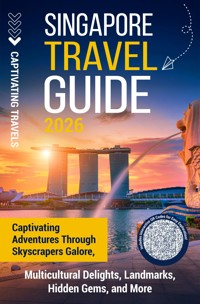
Experience Singapore with maps, QR codes, and over 100 images Step into a destination where modern precision meets centuries of heritage. This guide shows you how to move through Singapore with confidence, eat like a local, explore with purpose, and understand what makes this city unlike any other in Asia. Inside, you will discover: - Simple, structured itineraries from one-day highlights to five-day explorations, each designed around transport efficiency and comfort. - Comprehensive neighborhood coverage including Marina Bay, Chinatown, Little India, Kampong Glam, Orchard Road, and Sentosa Island. - Detailed landmark profiles with historical background, visiting tips, and the best times for photography. - Practical travel logistics covering transport systems, safety, currency, language basics, and cultural etiquette. - Food and dining guidance featuring top hawker centers, local dishes, and insider dining routines. - Nature and outdoor escapes such as the Botanic Gardens, Pulau Ubin, and Bukit Timah Nature Reserve. - Local culture explained clearly: religions, festivals, and traditions that define daily life in Singapore. - Hidden corners and calm retreats where residents go to slow down, away from the city's main flow. - Useful Malay, Tamil, and Mandarin phrases for polite, confident communication. - And much, much more! Click Add to Cart now and start planning a journey through one of the world's most efficient, safe, and culturally rich destinations.
Sie lesen das E-Book in den Legimi-Apps auf:
Seitenzahl: 103
Veröffentlichungsjahr: 2025
Das E-Book (TTS) können Sie hören im Abo „Legimi Premium” in Legimi-Apps auf:
Ähnliche














Singapore Travel Guide
Captivating Adventures through Skyscrapers Galore, Multicultural Delights, Landmarks, Hidden Gems, and More
Table of Contents
Title Page
Singapore Travel Guide
Introduction
Chapter 1: Preparing for the Journey
Chapter 2: Getting There & Getting Around
Chapter 3: The City-State Overview
Chapter 4: Marina Bay & Modern Icons
Chapter 5: Orchard Road & Shopping Central
Chapter 6: Chinatown, Little India & Kampong Glam
Chapter 7: Sentosa Island Adventures
Chapter 8: Nature & Outdoor Escapes
Chapter 9: Museums, Art & History
Chapter 10: Food & Local Dining
Chapter 11: Markets, Shopping Streets & Night Bazaars
Chapter 12: Hidden Gems & Local Corners
Chapter 13: Day Trips & Nearby Escapes
Chapter 14: Where to Stay & Rest
Chapter 15: Culture, People & Traditions
Chapter 16: Top 20 Must-See Landmarks
Chapter 17: Top 10 Photo Spots
Chapter 18: Sample Itineraries
Chapter 19: Useful Malay, Tamil & Mandarin Phrases
Appendix: Where to Find Key Landmarks in This Guide
© Copyright 2025 - All rights reserved.
The content contained within this book may not be reproduced, duplicated, or transmitted without direct written permission from the author or the publisher.
Under no circumstances will any blame or legal responsibility be held against the publisher, or author, for any damages, reparation, or monetary loss due to the information contained within this book, either directly or indirectly.
Legal Notice:
This book is copyright protected. It is only for personal use. You cannot amend, distribute, sell, use, quote, or paraphrase any part, or the content within this book, without the consent of the author or publisher.
Disclaimer Notice:
Please note the information contained within this document is for educational and entertainment purposes only. All effort has been executed to present accurate, up-to-date, reliable, and complete information. No warranties of any kind are declared or implied. Readers acknowledge that the author is not engaging in the rendering of legal, financial, medical, or professional advice. The content within this book has been derived from various sources. Please consult a licensed professional before attempting any techniques outlined in this book.
By reading this document, the reader agrees that under no circumstances is the author responsible for any losses, direct or indirect, that are incurred as a result of the use of the information contained within this document, including, but not limited to, errors, omissions, or inaccuracies.
While every effort has been made to ensure that the information in this guide is accurate and up-to-date, travel details such as prices, operating hours, and visa requirements can change. Travelers are advised to check the latest information from relevant sources before their trip.
Introduction
Marina Bay in Singapore seen at night.
Singapore is one of Asia’s most organized and modern destinations. The city’s compact size makes it easy to explore, while its precision in planning, cleanliness, and efficiency create an experience that feels effortless. Every corner offers something distinct, from sleek architectural marvels to centuries-old temples nestled among street markets. English is widely spoken, and the city’s reputation for safety and order makes it an ideal place for independent travel.
The story of Singapore is one of transformation. Once a modest trading port under British rule in the 19th century, it gained independence in 1965 and built itself into one of the world’s leading financial and transport hubs. The early years demanded discipline and resilience, as leaders focused on housing, education, and economic development. Over the decades, this small island evolved into a global city powered by innovation and multicultural harmony, where Chinese, Malay, Indian, and Eurasian traditions coexist side by side.
Your visit to Singapore can include several experiences. In a single day, you can eat breakfast in a bustling hawker center, take in panoramic skyline views from Marina Bay, stroll through Chinatown’s narrow lanes, and end the evening on Sentosa Beach. Behind every glass tower is a layer of history and daily life that continues to shape its identity. From temples and shophouses to rooftop bars and waterfront promenades, every district feels different yet connected.
Colorful houses in Singapore.
The best time to visit is between February and April, when the weather is less humid and major festivals such as Chinese New Year bring the streets to life. The climate remains warm and humid throughout the year, so light clothing, sunscreen, and hydration are essential. Rain showers come and go quickly, rarely interrupting plans for long. The city’s infrastructure ensures comfort regardless of season, with air-conditioned transport and public spaces everywhere you go.
This guide is designed to give you clear, reliable information for every step of your trip. It focuses on what to do, where to go, and how to get there with minimal effort. QR codes link to online maps, local resources, and updated transport details.
Each section includes photographs and visual references to help you recognize landmarks and plan routes with confidence. Whether you are visiting for a day or a week, you will find the essentials here to make your journey through Singapore efficient and rewarding.
Map of Singapore.
Chapter 1: Preparing for the Journey
A cyclist next to the marina.
Traveling to Singapore is straightforward when you plan ahead. The city-state’s systems are efficient, but preparation makes your visit smoother. This chapter covers the essentials: entry requirements, what to pack, health and safety guidance, currency, communication, and how to move confidently through your first day on the ground.
Singapore is both a country and a city, officially known as the Republic of Singapore. Its capital is Singapore City, though locals simply refer to the entire island as Singapore. The main language of administration is English, which makes signs, menus, and communication easy for visitors. Malay, Mandarin, and Tamil are also official languages, reflecting the city’s multicultural population. Most people switch between English and their native tongue in daily conversation, and service staff in hotels, restaurants, and transport are comfortable speaking English.
Map of Singapore
The national currency is the Singapore Dollar, abbreviated as SGD. Notes come in denominations of 2, 5, 10, 50, 100, 500, and 1,000, though the larger notes are rarely used by travelers. Coins range from 5 cents to 1 dollar. Credit cards are accepted in most places, but small notes are useful for hawker centers, street food stalls, and local taxis. ATMs are widespread, and money changers in shopping malls often offer better rates than airport counters. Mobile payment apps such as GrabPay and PayNow are popular, though foreign visitors often find it easiest to rely on cards or cash.
GrabPay information
PayNow information
Before you travel, check your visa requirements. Most visitors from Europe, North America, Australia, and parts of Asia receive a short-stay entry permit upon arrival, valid for up to 30 or 90 days. Ensure your passport has at least six months of validity beyond your entry date. Customs regulations are strict. Singapore bans chewing gum sales and controls imports of tobacco, alcohol, and controlled medications. Always declare items if unsure, as penalties for violations are heavy.
Sri Mariamman Temple.
Health standards are high, and no vaccinations are required for most travelers. Medical facilities are modern, and pharmacies are well stocked. Bring your prescriptions with original labels and copies of your doctor’s notes if carrying any controlled medication. Tap water is safe to drink, and food hygiene across the island is excellent, including at hawker centers. Travel insurance is recommended for medical emergencies or flight disruptions.
A young woman traveler in Singapore.
Packing for Singapore requires consideration of its equatorial climate. The weather is consistently warm, with temperatures between 26°C and 33°C and high humidity throughout the year. Light, breathable clothing is essential. Carry a small umbrella or lightweight rain jacket, as short tropical showers occur almost daily. Comfortable walking shoes are a must since exploring the city often involves long distances between attractions. Air-conditioning is common in malls, restaurants, and transport, so an extra layer for cooler interiors can be useful. Sunscreen, insect repellent, and a refillable water bottle will serve you well.
Electrical outlets use the British three-pin Type G plug, and the standard voltage is 230V. Adapters are easy to find in convenience stores if you forget to bring one. Wi-Fi coverage is strong across the island. Free connections are available in many public areas, and prepaid SIM cards are sold at the airport and convenience stores. Major telecom providers such as Singtel, StarHub, and M1 offer short-term tourist data plans that include both local and international calls.
Safety in Singapore is among the highest in the world. Streets are well lit, and crime rates are low. Still, use basic precautions such as keeping valuables close and avoiding unlicensed taxis.
The city enforces laws strictly, so avoid littering, smoking in restricted areas, or eating on public transport. Respect local customs by dressing modestly when visiting temples and mosques. Carry small bags that can be easily checked during security screening at attractions and transport hubs.
A hawker centre in Smith Street, Singapore.
Terence Ong, CC BY-SA 3.0 <http://creativecommons.org/licenses/by-sa/3.0/>, via Wikimedia Commons https://commons.wikimedia.org/w/index.php?curid=877157
Cultural etiquette is straightforward. Greetings are friendly but reserved. Handshakes are common, and public displays of affection are uncommon. Remove shoes when entering homes or religious sites. Use your right hand for giving and receiving items, as the left is considered impolite in some communities. Queueing is taken seriously, and punctuality is expected in all appointments and tours.
For communication, English will get you far. Street signs, announcements, and directions are in English, and locals are happy to help if you ask politely. Learning a few words in Malay, Mandarin, or Tamil is appreciated but not required. A smile and a thank-you go a long way.
Before leaving home, keep copies of your passport, travel insurance, and booking confirmations. Digital versions on your phone or email are usually accepted if originals are lost. Download a map app that works offline, such as Google Maps or Maps.me, and bookmark QR links provided throughout this guide. They connect to current transport schedules, updated entry fees, and practical tools like MRT route planners.
Preparing well ensures your trip starts without stress. This is a destination built for travelers who value structure and clarity. With this foundation, the rest of your journey will unfold naturally and on time.
Chapter 2: Getting There & Getting Around
Changi Airport.
LN9267, CC BY-SA 4.0 <https://creativecommons.org/licenses/by-sa/4.0>, via Wikimedia Commons https://commons.wikimedia.org/w/index.php?curid=140831760
Singapore’s transport network is one of the most efficient in the world. The system is designed for clarity, speed, and reliability. From your first step at the airport to your final evening in the city, movement feels effortless when you understand how it all connects. This chapter covers how to reach Singapore, how to travel within the island, and what to expect in terms of cost, timing, and comfort.
Arriving in Singapore is straightforward. Changi Airport serves as the main international gateway and ranks among the world’s best. It handles flights from all major regions, including direct routes from Europe, Asia, the Middle East, and North America. Immigration and baggage claim are organized and fast. The terminals are connected by a free Skytrain, and public transport links are clearly marked. As soon as you land, you will notice that the signage is in English and easy to follow. Facilities include rest areas, gardens, a cinema, showers, and a full shopping complex. Arriving early or waiting for a flight is rarely uncomfortable here.
Map view of Changi Airport.
www.openstreetmap.org
Changi Airport information
Seletar Airport is Singapore’s secondary air hub. It serves regional and charter flights, with most operations focused on Malaysia and nearby destinations. Located in the northeast of the island, it is smaller and quieter than Changi, offering a smooth and uncrowded travel experience. The terminal is modern and efficient, with fast check-in and security procedures. Facilities include a small café, a small retail area, and comfortable seating areas. Transportation from Seletar to central Singapore takes around 25 minutes by taxi or ride-hailing service. Public buses connect the airport to nearby MRT stations, though private transfers are often the easiest choice. Seletar mainly caters to business travelers and those connecting to short-haul regional routes, making it a useful alternative for those seeking convenience over scale.
Map view of Seletar Airport.
www.openstreetmap.org
Seletar Airport information




