


Erhalten Sie Zugang zu diesem und mehr als 300000 Büchern ab EUR 5,99 monatlich.
- Herausgeber: Captivating Travels
- Kategorie: Lebensstil
- Sprache: Englisch
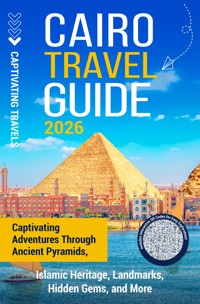
Explore Cairo with Confidence: Guide with QR Codes, Maps, and Over 70 Images This comprehensive travel guide gives you everything you need to plan, explore, and experience Egypt's capital. With clear maps, QR codes linking to extra resources, and more than 70 images, this book is designed to help you navigate the city with ease and make the most of your time. From the Great Pyramids of Giza to hidden gems tucked away in local neighborhoods, every chapter is packed with practical details, cultural insights, and step-by-step guidance. Inside the guide, you will find: - Essential tips on preparing for your journey, from visas to what to pack. - Step-by-step advice for getting to Cairo and moving around the city. - Detailed coverage of the Great Pyramids, the Sphinx, and other ancient wonders. - In-depth sections on Islamic Cairo, Coptic Cairo, and historic mosques and churches. - Complete museum guide, including the Egyptian Museum and the Grand Egyptian Museum. - Market and shopping highlights, from Khan el-Khalili to local handicraft streets. - Food and dining guide with must-try Egyptian dishes and where to eat them. - How to enjoy the Nile, from felucca rides to dinner cruises. - Day trip suggestions to Saqqara, Dahshur, Fayoum, and Memphis. - A curated list of 20 must-see landmarks and 10 top photo spots. - Sample itineraries for 2, 5, and 7 days to suit different trip lengths. - Useful Arabic phrases to help you connect with locals. - An appendix with a quick reference to all key landmarks. - And much, much more! Whether you are visiting Cairo for a few days or a full week, this guide gives you the clarity, tools, and knowledge to explore with confidence. Click Add to Cart and start planning your Cairo adventure with the detail and insight you deserve.
Sie lesen das E-Book in den Legimi-Apps auf:
Seitenzahl: 72
Veröffentlichungsjahr: 2025
Das E-Book (TTS) können Sie hören im Abo „Legimi Premium” in Legimi-Apps auf:
Ähnliche












Cairo Travel Guide
Captivating Adventures through Ancient Pyramids, Islamic Heritage, Landmarks, Hidden Gems, and More
Table of Contents
Title Page
Cairo Travel Guide
Introduction
Chapter 1: Preparing for the Journey
Chapter 2: Getting There & Getting Around
Chapter 3: Cairo, The Capital Hub
Chapter 4: The Great Pyramids of Giza & Ancient Wonders
Chapter 5: Islamic Cairo & Historic Mosques
Chapter 6: Coptic Cairo & Christian Heritage
Chapter 7: Museums, Art & Knowledge Centers
Chapter 8: Markets, Shopping Streets & Handicrafts
Chapter 9: Food & Local Dining
Chapter 10: The Nile Experience
Chapter 11: Day Trips from Cairo
Chapter 12: Hidden Gems & Lesser-Known Sites
Chapter 13: Where to Stay & Rest
Chapter 14: Culture, People & Traditions
Chapter 15: Top 20 Must-See Landmarks & Activities
Chapter 16: Top 10 Photo Spots & Photography Tips
Chapter 17: Sample Itineraries
Chapter 18: Useful Arabic Tips & Phrases
Appendix: Where to Find Key Landmarks in This Guide
© Copyright 2025 - All rights reserved.
The content contained within this book may not be reproduced, duplicated, or transmitted without direct written permission from the author or the publisher.
Under no circumstances will any blame or legal responsibility be held against the publisher, or author, for any damages, reparation, or monetary loss due to the information contained within this book, either directly or indirectly.
Legal Notice:
This book is copyright protected. It is only for personal use. You cannot amend, distribute, sell, use, quote, or paraphrase any part, or the content within this book, without the consent of the author or publisher.
Disclaimer Notice:
Please note the information contained within this document is for educational and entertainment purposes only. All effort has been executed to present accurate, up-to-date, reliable, and complete information. No warranties of any kind are declared or implied. Readers acknowledge that the author is not engaging in the rendering of legal, financial, medical, or professional advice. The content within this book has been derived from various sources. Please consult a licensed professional before attempting any techniques outlined in this book.
By reading this document, the reader agrees that under no circumstances is the author responsible for any losses, direct or indirect, that are incurred as a result of the use of the information contained within this document, including, but not limited to, errors, omissions, or inaccuracies.
While every effort has been made to ensure that the information in this guide is accurate and up-to-date, travel details such as prices, operating hours, and visa requirements can change. Travelers are advised to check the latest information from relevant sources before their trip.
Introduction
The Mosque-Madrassa of Sultan Hassan in Cairo.
Cairo is one of the world’s most historic and dynamic capitals. The city has been a center of power, culture, and religion for over a thousand years. Founded in 969 AD as the seat of the Fatimid dynasty, Cairo grew into a thriving metropolis, home to scholars, merchants, and artisans. The city’s layered history reflects the rise and fall of empires, from the Mamluks to the Ottomans, and later the modern state of Egypt. Ancient roots lie just outside the capital as well, with the Pyramids of Giza and the Sphinx standing as reminders of civilizations that shaped the course of human history.
You will see why Cairo remains a destination unlike any other. The city brings together monumental landmarks, Islamic mosques, Coptic churches, buzzing markets, and modern neighborhoods. It is both historic and contemporary, where daily life unfolds among relics thousands of years old. The rhythm of Cairo is fast and often overwhelming, but it rewards those who explore its streets with unmatched experiences.
The best time to visit is during the cooler months, from October through April. Temperatures are more comfortable then, making sightseeing and walking through historic districts easier. Summers can be hot and dry, especially in July and August, though major sites remain open year-round. Many travelers find winter ideal, when the weather is mild and evenings are pleasant along the Nile.
This guide provides practical information and detailed insights for your journey. Each chapter focuses on what to see and how to make the most of your time. You will find clear maps, QR codes linking to extra resources, and full color images that help you plan and navigate.
Whether you want to visit ancient wonders, explore local markets, or enjoy modern Cairo life, this guide is designed to give you step-by-step direction and confidence throughout your trip.
An interactive map of Cairo
Bright lamps for sale at a market in Cairo.
Chapter 1: Preparing for the Journey
A panoramic view of downtown Cairo.
Planning well before you arrive in Cairo will help you avoid stress and enjoy your trip from the very first day. This chapter covers the essential information every traveler needs, from entry requirements and money matters to packing tips and practical safety advice.
Visa Requirements
Most travelers need a visa to enter Egypt. Citizens of many countries, including the United States, Canada, the United Kingdom, the European Union, Australia, and New Zealand, can obtain a tourist visa on arrival at Cairo International Airport or through the official online e-visa portal before traveling. The single-entry visa is valid for 30 days, while a multiple-entry option is available for those planning onward travel or longer stays. Make sure your passport is valid for at least six months from your planned arrival date. To avoid delays at the airport, many visitors prefer applying for the e-visa online. Apply at least 7 working days in advance; standard processing takes 3–7 working days. Multiple entry visa costs $60 USD.
Currency and Money Matters
The local currency is the Egyptian Pound (EGP), divided into 100 piastres. Banknotes come in denominations from 1 to 200 EGP. While international credit and debit cards are accepted in hotels, upscale restaurants, and some larger shops, daily expenses are often paid in cash. Street vendors, smaller markets, and taxis prefer local currency. ATMs are widely available in the city and at the airport. It is wise to withdraw or exchange smaller bills, as many businesses struggle to provide change for larger notes. Carrying both cash and a card ensures flexibility.
Health and Safety Preparations
Travel insurance covering medical care and theft is strongly recommended. Pharmacies are common in Cairo, but you should bring any prescription medications in their original packaging. Tap water is not considered safe to drink, so rely on bottled water, which is inexpensive and widely available. Pack hand sanitizer and tissues, as public restrooms may not always be fully stocked. Cairo is generally safe for travelers, but petty theft such as pickpocketing can occur in crowded areas. Keep valuables secure and avoid carrying large sums of money.
What to Pack
Ensure you pack comfortable, appropriate clothing for your trip.
Cairo’s climate is hot and dry for most of the year, so lightweight, breathable clothing is essential. Modesty is appreciated, especially when visiting mosques and religious sites.
Pack long pants or skirts, shirts with sleeves, and a scarf or shawl for covering shoulders. Comfortable walking shoes are important, as many streets are uneven and historic sites require climbing stairs or walking on sand.
A hat, sunglasses, and sunscreen will help protect against the sun. For the cooler evenings in winter, bring a light jacket or sweater. Electrical outlets are mostly Type C and Type F, with a standard voltage of 220V, so bring a universal travel adapter if needed.
Cultural Awareness
The Hanging Church in Old Cairo.
Radosław Botev, CC BY 3.0 PL <https://creativecommons.org/licenses/by/3.0/pl/deed.en>, via Wikimedia Commons https://commons.wikimedia.org/w/index.php?curid=103195762
Respect for local customs will make your visit smoother. Arabic is the official language, though English is widely spoken in tourist areas. Learning a few basic Arabic words will be appreciated by locals. Dress codes are more relaxed in cosmopolitan neighborhoods, but conservative clothing is still the norm in traditional districts and religious sites. Fridays are the main day of prayer, so expect some closures in the morning and more crowded mosques.
Preparing for the Experience
Cairo is a busy, noisy, and energetic city. Traffic is dense, and crossing the street requires patience and confidence. Bargaining is common in markets and even some shops, so expect to negotiate prices.
The pace can be overwhelming, but a sense of flexibility and openness will help you adapt quickly. Prepare for sensory overload: car horns, the call to prayer, market sounds, and strong aromas all mix to create Cairo’s unique atmosphere.
The courtyard of al-Hakim mosque (also called al-Anwar) in Cairo.
Photo by Ahmed Salama: https://www.pexels.com/photo/historic-courtyard-of-al-hakim-mosque-in-cairo-34016632/




