


Erhalten Sie Zugang zu diesem und mehr als 300000 Büchern ab EUR 5,99 monatlich.
- Herausgeber: Captivating Travels
- Kategorie: Lebensstil
- Sprache: Englisch
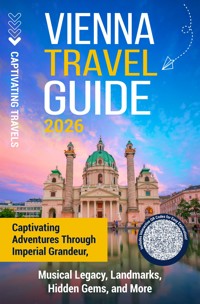
Your Complete Vienna Companion with QR Codes, Maps, and Over 100 Images Walk through Vienna's imperial palaces, enjoy its legendary cafés, and hear the echoes of Mozart and Strauss in the world's music capital. This guide gives you everything you need to plan, explore, and experience Vienna with confidence. With more than 100 images, detailed maps, and QR codes linking you to extra resources, you can navigate the city with ease and get the most from your trip. Vienna is filled with neighborhoods, parks, festivals, and daily life. This book shows you how to balance the grand highlights with hidden corners, so you leave with a deeper sense of the city. Whether you are visiting for one day or a week, you will find practical itineraries and advice tailored to your journey. What to Expect Inside: - Step-by-step guidance on getting to and around Vienna, from the airport to the tram. - In-depth chapters on palaces, museums, gardens, music, markets, neighborhoods, and food. - A curated list of the Top 20 Landmarks and Experiences. - Sample itineraries for one day, three days, and a week, plus themed trips for families and music lovers. - Day trip suggestions to Salzburg, Bratislava, the Wachau Valley, and more. - Useful German phrases for smooth communication - And much, much more! This guide helps you enjoy Vienna's imperial grandeur and everyday life in equal measure. Click Add to Cart to get your copy today.
Sie lesen das E-Book in den Legimi-Apps auf:
Seitenzahl: 68
Veröffentlichungsjahr: 2025
Das E-Book (TTS) können Sie hören im Abo „Legimi Premium” in Legimi-Apps auf:
Ähnliche






Vienna Travel Guide
Captivating Adventures through Imperial Grandeur, Musical Legacy, Landmarks, Hidden Gems, and More
Table of Contents
Title Page
Vienna Travel Guide
Introduction
Chapter 1: Preparing for Your Vienna Journey
Chapter 2: Getting There and Getting Around
Chapter 3: Vienna, The Imperial Capital
Chapter 4: The Musical Legacy of Vienna
Chapter 5: Palaces, Museums and Grand Architecture
Chapter 6: Parks, Gardens and the Danube
Chapter 7: Neighborhoods and Local Life
Chapter 8: Hidden Gems and Lesser-Known Corners
Chapter 9: Markets, Food and Coffee Culture
Chapter 10: Festivals, Concerts and Cultural Events
Chapter 11: Day Trips from Vienna
Chapter 12: Where to Stay and Rest
Chapter 13: Top 20 Must-See Landmarks and Experiences
Chapter 14: Photography and Memory Making
Chapter 15: Sample Itineraries
Chapter 16: Useful German Tips and Phrases
Appendix: Where to Find Key Landmarks in This Guide
© Copyright 2025 - All rights reserved.
The content contained within this book may not be reproduced, duplicated, or transmitted without direct written permission from the author or the publisher.
Under no circumstances will any blame or legal responsibility be held against the publisher, or author, for any damages, reparation, or monetary loss due to the information contained within this book, either directly or indirectly.
Legal Notice:
This book is copyright protected. It is only for personal use. You cannot amend, distribute, sell, use, quote, or paraphrase any part, or the content within this book, without the consent of the author or publisher.
Disclaimer Notice:
Please note the information contained within this document is for educational and entertainment purposes only. All effort has been executed to present accurate, up-to-date, reliable, and complete information. No warranties of any kind are declared or implied. Readers acknowledge that the author is not engaging in the rendering of legal, financial, medical, or professional advice. The content within this book has been derived from various sources. Please consult a licensed professional before attempting any techniques outlined in this book.
By reading this document, the reader agrees that under no circumstances is the author responsible for any losses, direct or indirect, that are incurred as a result of the use of the information contained within this document, including, but not limited to, errors, omissions, or inaccuracies.
While every effort has been made to ensure that the information in this guide is accurate and up-to-date, travel details such as prices, operating hours, and visa requirements can change. Travelers are advised to check the latest information from relevant sources before their trip.
Introduction
Hofburg Palace in Vienna.
Vienna is a city of grand avenues, imperial architecture, and music that shaped the world. For centuries it stood at the heart of empires, influencing politics, art, and culture far beyond its borders. Today it offers you a mix of tradition and modern life. Walk through palace gardens, attend an opera performance, or sip coffee in a café that has served thinkers, writers, and artists for generations. The city is easy to explore, safe, and filled with experiences that stay with you long after your trip.
A Short History of Vienna
Vienna traces its roots back to Roman times when a military camp called Vindobona stood where the city center is today. For centuries it grew as a trading and cultural hub along the Danube. In 1278, Vienna became part of the Habsburg dynasty’s domain, marking the start of centuries of imperial rule that left behind the palaces and institutions you see today.
The 16th and 17th centuries brought both challenges and growth. Vienna faced Ottoman sieges but also flourished as a seat of power for the Holy Roman Empire. Baroque architecture, music, and art turned the city into a cultural capital of Europe.
In the 18th and 19th centuries, Vienna reached new heights. Emperors commissioned monumental buildings along the Ringstrasse. Composers like Mozart, Beethoven, and Strauss shaped music in ways still felt worldwide. The city became a gathering point for intellectuals and artists, a role it continues to play.
The 20th century brought dramatic change. The Austro-Hungarian Empire collapsed after World War I, and Vienna redefined itself in a new republic. After World War II, the city recovered and rebuilt, eventually becoming home to international organizations such as the United Nations. Today, Vienna balances its past with a forward-looking spirit.
The Lion of Aspern memorial in Vienna.
C.Stadler/Bwag, CC BY-SA 4.0 <https://creativecommons.org/licenses/by-sa/4.0>, via Wikimedia Commons https://commons.wikimedia.org/w/index.php?curid=40661878
When to Visit Vienna
Vienna offers different experiences throughout the year. Spring, from April to June, brings mild weather, blooming gardens, and fewer crowds. Summer has longer days and lively open-air festivals, though it is also the busiest season. Autumn, from September to October, is cooler, with wine harvest celebrations and colorful parks. Winter is cold but magical, with famous Christmas markets, festive lights, and the New Year’s Concert. Choosing the right time depends on your interests, but every season gives you a reason to visit.
What to Expect in This Guide
This guide is designed to make your time in Vienna easier and more rewarding. You will find practical tips on transportation, accommodation, and local customs. Each chapter highlights landmarks, cultural sites, and neighborhoods with clear explanations. The guide includes full-color images to help you plan, maps for orientation, and QR codes that connect you to extra resources such as updated event schedules and ticket information. Whether you plan a short stay or an extended trip, you will have the tools to explore Vienna with confidence.
The Ringstrasse in Vienna.
Map of Vienna.
Chapter 1: Preparing for Your Vienna Journey
An aerial view of Vienna.
Good preparation makes your trip smoother and more enjoyable. Vienna is well connected, safe, and visitor-friendly, but planning ahead saves time and reduces stress. Use this chapter to organize your documents, plan your budget, pack efficiently, and make the most of your visit.
Map of Vienna
Travel Documents and Entry Requirements
A tourist in Vienna.
Austria is part of the Schengen Area. Travelers from the European Union, the United Kingdom, the United States, Canada, Australia, and several other countries can enter Austria without a visa for short stays of up to 90 days within a 180-day period. Always check the latest entry rules before your trip, as regulations change. Make sure your passport is valid for at least six months beyond your planned departure date.
If you need a visa, apply early through the Austrian consulate or embassy in your country. Carry copies of your important documents, including your passport, travel insurance, and any reservation confirmations. Having both printed and digital copies ensures you are prepared if documents are lost or stolen.
Health and Safety
A woman takes photos with her smartphone at the Kunsthistorisches Museum Wien.
Austria does not require specific vaccinations for entry, but carrying proof of standard immunizations is recommended. Travel insurance covering health, accidents, and theft is strongly advised. Vienna has excellent healthcare facilities, and pharmacies are easy to find. Keep the European emergency number, 112, saved in your phone. In Austria, you can also dial 133 for police and 144 for medical emergencies.
Vienna is considered one of the safest cities in the world. Street crime is rare, but be mindful in crowded areas like train stations or busy shopping streets where pickpockets may operate.
Budget Planning
The well-known Kohlmarkt shopping street in Vienna.
Vienna is not the cheapest city in Europe, but with smart choices you can manage your expenses. Accommodation ranges from budget hostels to luxury hotels. Meals vary from inexpensive street food stands to elegant dining experiences. Public transport is affordable and efficient, and walking is often the best way to see the city.
Expect to budget around 70 to 100 euros per day for mid-range travel, covering accommodation, meals, transportation, and entry to some attractions. If you prefer more comfort, allow for 150 to 200 euros per day. Save money by buying transport passes, eating in neighborhood cafés, and taking advantage of free attractions such as parks and historic churches.
Packing Essentials
Pack according to the




