


48,99 €
Mehr erfahren.
- Herausgeber: John Wiley & Sons
- Kategorie: Fachliteratur
- Serie: Essential Texts for Nonprofit and Public Leadership and Management
- Sprache: Englisch
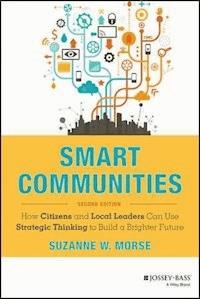
The new edition of the acclaimed guide to strategic decision-making in community planning, development, and collaboration Based on the results of more than a decade of research by the Pew Partnership for Civic Change, Smart Communities provides directions for strategic decision-making and outlines the key strategies used by thousands of leaders who have worked to create successful communities. Outlining seven "leverage points" for decision-making used by thousands of leaders who have worked to create successful communities, this new Second Edition offers leaders from both the public and private sectors the tools they need to build a civic infrastructure and create a better future for all the community's citizens. * Second Edition has been thoroughly updated with current knowledge and research * Covers new developments from current design thinking and strategy literature to innovation and invention in communities * Advises on how to create community readiness that will help avert problems before they begin * All case vignettes have been revised to include more detailed information about the process and application of the seven leverage points * Examples from communities around the country illustrate how these change agents' well-structured decision-making processes can be traced to their effective use of the seven key leverage points Smart Communities offers hope to those who are striving to improve their communities and addresses vital issues such as poverty, race relations, and children's health and welfare.
Sie lesen das E-Book in den Legimi-Apps auf:
Seitenzahl: 374
Veröffentlichungsjahr: 2014
Ähnliche


















Contents
Cover
Praise for Smart Communities
Title page
Copyright page
Preface
The Ideas That Inform This Book
Finding a Guide for Success: Process + Action
Who Should Read This Book and Why
Identifying the Cases
Overview of Contents
Acknowledgments
The Author
CHAPTER ONE: Building the Foundation for Community Change
Knowing Where to Build the Road
How We Got Where We Are
What Is in a Name
The Love-Hate Relationship with Cities
Trends of Growth and Decline of Communities
The Effects of Globalization on Communities
The Mailboxes on Main Street
Finding Community Solutions from Within
New Ways of Working
Community Fundamentals
CHAPTER TWO: Investing Right the First Time
The Wicked Problems
Kinds of Community Capital
How Decisions Are Made … Matters
Setting Priorities on Community Investments
More Than Just a Bottom Line
Finding a Guide for Investment Success
Choosing the Right Investment: Creating New Scenarios for Change
CHAPTER THREE: Working Together
Problems Cannot Be Solved Alone
What Is Working Together?
How Joint Efforts Can Work Better
Why Do Efforts Fail?
Working Together Is a Necessity, Not a Luxury
Working Together Is the Name of the Game in the New Economy
CHAPTER FOUR: Building on Community Strengths
Asset-Driven Approach to Community Development
Developing a Community from Within
Assets Come in All Sizes
Assets Disguised as Liabilities
Connect Clusters of Assets to Build Synergy
CHAPTER FIVE: Practicing Democracy
A Different Kind of Politics
Recognizing That a Problem Is a Problem
A Public Willing to Act
The Changing Shape of Engagement
The Digital Citizen
Open Government
Can We Talk?
CHAPTER SIX: Preserving the Past
Increased Property Values and Increased Tourism
The Intersection of Place, History, and Demand
Links to Our Community and to Our Past
No More Just Knocking Down or Paving Over
New Paradigms for Downtown
CHAPTER SEVEN: Growing New Leaders
A New Model for Leadership
Moving from Hand-Wringing to Hand-Holding
Potential Leaders Are All Around Us
The Promise of Leadership
Elected Leaders Can Lead
Leaders Change the Conversation
Leaders Believe It Can Be Done
Organizations Taking the Long View
More Leadership Is Better
CHAPTER EIGHT: Inventing the Future
Why Is Change So Important But So Hard to Manage?
Innovation: Community Style
Globalization Is Real … and Not a Surprise
The Maps Change
Sometimes You Have to Reboot
Final Thoughts
References
Index
List of Illustrations
Figure 2.1.
ANSWERfirst®
Guide
Cover
Table of Contents
Begin Reading
Pages
i
ii
v
vi
ix
x
xi
xii
xiii
xiv
xv
xvi
xvii
xviii
xix
xxi
xxii
xxiii
1
2
3
4
5
6
7
8
9
10
11
12
13
14
15
16
17
18
19
20
21
22
23
24
25
27
28
29
30
31
32
33
34
35
36
37
38
39
40
41
42
43
44
45
46
47
48
49
50
51
52
53
55
56
57
58
59
60
61
62
63
64
65
66
67
68
69
70
71
72
73
74
75
76
77
78
79
80
81
82
83
84
85
86
87
88
89
90
91
92
93
94
95
96
97
98
99
101
102
103
104
105
106
107
108
109
110
111
112
113
114
115
116
117
118
119
120
121
122
123
124
125
126
127
128
129
130
131
132
133
134
135
136
137
138
139
140
141
142
143
144
145
146
147
148
149
150
151
152
153
154
155
156
157
158
159
160
161
162
163
164
165
166
167
168
169
170
171
172
173
174
175
176
177
178
179
180
181
182
183
184
185
186
187
188
189
190
191
192
193
194
195
196
197
199
200
201
202
203
204
205
206
207
208
Praise for Smart Communities
“Smart Communities reminds us that nurturing community is the most difficult, most daunting, and most important work we do. Morse challenges us to get this right, and thankfully she leads the way.”
—Sherry Magill, president, Jessie Ball duPont Fund
“Any community members looking to move beyond that which has defined them for years, into a thriving community, owe it to themselves to read this book. Morse provides not only powerful tools for a community’s resurgence, but also insightful examples of how community leaders and citizens alike sought to remake their communities and succeeded. I was so taken by its timeless and compelling strategies that I bought 50 copies and handed them out around town.”
—Daniel J. Phelan, president, Jackson College, Michigan
“With Smart Communities, Suzanne Morse has achieved a unique blend of a national perspective and a community-centered study of what has helped, and will help, communities be successful over the long haul. There are many valuable lessons to be learned here, none more essential—whether for a big urban city or a small rural town—than preserving and maximizing assets. Communities that make best use of their assets will win, and Morse gives us all a road map for getting there.”
—Anne B. Pope, executive director, Tennessee Commission for the Arts, and former federal cochair, Appalachian Regional Commission
“A strong nation is dependent on strong communities—people coming together to address the problems of the community and its members. Smart Communities addresses how we can work together to help strengthen our nation.”
—Alma Powell, chair, America’s Promise Alliance
“Suzanne Morse’s Smart Communities is an inspirational, informative road map for all those who want to tackle public problems and strengthen their communities. There should be a copy in every public library. Read it, take hope from it, and use it!”
—Martha McCoy, executive director, Everyday Democracy, and president, The Paul J. Aicher Foundation
The Instructor’s Guide to accompany the second edition of Smart Communities is available for free at www.wiley.com/college/morse
SMART COMMUNITIES
How Citizens and Local Leaders Can Use Strategic Thinking to Build a Brighter Future
Second Edition
Suzanne W. Morse
Cover design by Michael Cook
Cover image © iStockphoto
Copyright © 2014 by John Wiley & Sons, Inc. All rights reserved.
Published by Jossey-Bass
A Wiley Brand
One Montgomery Street, Suite 1200, San Francisco, CA 94104-4594—www.josseybass.com
No part of this publication may be reproduced, stored in a retrieval system, or transmitted in any form or by any means, electronic, mechanical, photocopying, recording, scanning, or otherwise, except as permitted under Section 107 or 108 of the 1976 United States Copyright Act, without either the prior written permission of the publisher, or authorization through payment of the appropriate per-copy fee to the Copyright Clearance Center, Inc., 222 Rosewood Drive, Danvers, MA 01923, 978-750-8400, fax 978-646-8600, or on the Web at www.copyright.com. Requests to the publisher for permission should be addressed to the Permissions Department, John Wiley & Sons, Inc., 111 River Street, Hoboken, NJ 07030, 201-748-6011, fax 201-748-6008, or online at www.wiley.com/go/permissions.
Limit of Liability/Disclaimer of Warranty: While the publisher and author have used their best efforts in preparing this book, they make no representations or warranties with respect to the accuracy or completeness of the contents of this book and specifically disclaim any implied warranties of merchantability or fitness for a particular purpose. No warranty may be created or extended by sales representatives or written sales materials. The advice and strategies contained herein may not be suitable for your situation. You should consult with a professional where appropriate. Neither the publisher nor author shall be liable for any loss of profit or any other commercial damages, including but not limited to special, incidental, consequential, or other damages. Readers should be aware that Internet Web sites offered as citations and/or sources for further information may have changed or disappeared between the time this was written and when it is read.
Jossey-Bass books and products are available through most bookstores. To contact Jossey-Bass directly call our Customer Care Department within the U.S. at 800-956-7739, outside the U.S. at 317-572-3986, or fax 317-572-4002.
Wiley publishes in a variety of print and electronic formats and by print-on-demand. Some material included with standard print versions of this book may not be included in e-books or in print-on-demand. If this book refers to media such as a CD or DVD that is not included in the version you purchased, you may download this material at http://booksupport.wiley.com. For more information about Wiley products, visit www.wiley.com.
Library of Congress Cataloging-in-Publication Data
Morse, Suzanne W. (Suzanne Whitlock)
Smart communities : how citizens and local leaders can use strategic thinking to build a brighter future / Suzanne W. Morse. —Second edition.
pages cm
Includes bibliographical references and index.
ISBN 978-1-118-42700-2 (cloth); ISBN 978-1-118-84357-4 (ebk); ISBN 978-1-118-84355-0 (ebk)
1. Community leadership. 2. Community organization. I. Title.
HM781.M67 2014
307—dc23
2013046336
Preface
Ten years ago the world had not talked on an iPhone; communicated via YouTube, Twitter, or Facebook; learned the ins and outs of organizational politics from characters on The Office; or seen the nation’s talent on American Idol. Three-dimensional printers now are making artificial limbs more compatible; dental crowns, implants, and dentures more affordable; and the prospects for new applications unlimited. No one would argue that enormous technological and social changes have not occurred during the past decade.
Unfortunately, far too much has not changed. Rates of poverty hover at the 15 percent mark, and too many Americans barely make ends meet, if at all. The world watched while Hurricane Katrina exposed our national inequities through the lens of New Orleans; Detroit and Kodak went bankrupt; and Youngstown shrank. The culprit for the downward spiral is not one thing or one program or even the Great Recession of 2007–2009, but a concentration of systemic issues. In this cloud of dust, however, places such as Houston grew, an auto trail in the South was forged, and regions such as the Fox Cities showed how it is done. Research over the last fifty years says that if policies, practices, programs, and the public will could align, the numbers would improve and self-sufficiency would increase. A clear definition of the problems and challenges, an openness to opportunities, and an implementation strategy for the long run are needed to make real change. The secret formula is merging how to work with precise community priorities.
Lesen Sie weiter in der vollständigen Ausgabe!
Lesen Sie weiter in der vollständigen Ausgabe!
Lesen Sie weiter in der vollständigen Ausgabe!
Lesen Sie weiter in der vollständigen Ausgabe!
Lesen Sie weiter in der vollständigen Ausgabe!
Lesen Sie weiter in der vollständigen Ausgabe!
Lesen Sie weiter in der vollständigen Ausgabe!
Lesen Sie weiter in der vollständigen Ausgabe!
Lesen Sie weiter in der vollständigen Ausgabe!
Lesen Sie weiter in der vollständigen Ausgabe!
Lesen Sie weiter in der vollständigen Ausgabe!
Lesen Sie weiter in der vollständigen Ausgabe!
Lesen Sie weiter in der vollständigen Ausgabe!




