


27,99 €
Mehr erfahren.
- Herausgeber: John Wiley & Sons
- Kategorie: Geisteswissenschaft
- Sprache: Englisch
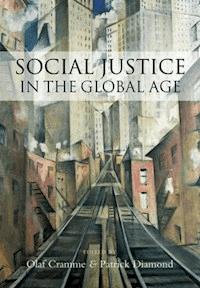
What is the relationship between the principles of social justice and global justice? How can we best reconcile the quest for greater social justice ‘at home' with greater social justice in the world? Are the social justice pressures our societies currently face the result of globalisation or are they domestically generated? How can we advance social justice in the light of the new social realities? In this volume, leading international experts offer compelling answers to these questions.
The aim of this volume is to articulate a modern conception of social justice that remains relevant for an era of rapid globalisation. The authors have developed a robust theoretical account of the relationship between globalisation and social justice complemented by an underpinning policy framework that aims to sustain new forms of equity and solidarity.
Sie lesen das E-Book in den Legimi-Apps auf:
Seitenzahl: 549
Veröffentlichungsjahr: 2013
Ähnliche




















Social Justice in the Global Age
Social Justice in the Global Age
Edited by
Olaf Cramme and Patrick Diamond
polity
Individual chapters © their authors 2009; this collection © Polity Press 2009
First published in 2009 by Polity Press
Polity Press
65 Bridge Street
Cambridge CB2 1UR, UK
Polity Press
350 Main Street
Malden, MA 02148, USA
All rights reserved. Except for the quotation of short passages for the purpose of criticism and review, no part of this publication may be reproduced, stored in a retrieval system, or transmitted, in any form or by any means, electronic, mechanical, photocopying, recording or otherwise, without the prior permission of the publisher.
ISBN-13: 978-0-7456-5872-8
A catalogue record for this book is available from the British Library.
Typeset in 10.5 on 13 pt Swift
by Servis Filmsetting Ltd, Stockport, Cheshire
Printed and bound in Great Britain by MPG Books Ltd, Bodmin, Cornwall
The publisher has used its best endeavours to ensure that the URLs for external websites referred to in this book are correct and active at the time of going to press. However, the publisher has no responsibility for the websites and can make no guarantee that a site will remain live or that the content is or will remain appropriate.
Every effort has been made to trace all copyright holders, but if any have been inadvertently overlooked the publishers will be pleased to include any necessary credits in any subsequent reprint or edition.
For further information on Polity, visit our website: www.polity.co.uk
Contents
About Policy Network
About the Contributors
Acknowledgements
Introduction
1
Rethinking Social Justice in the Global Age
Olaf Cramme and Patrick Diamond
I
Principles
2
Social Justice versus Global Justice?
David Miller
3
Towards a Renewed Concept of Social Justice
Wolfgang Merkel
II
Analysis
4
Winners and Losers of Economic Globalisation
Lionel Fontagné
5
Globalisation and Demographic Imbalances
Germano Dottori
6
Globalisation and the New Social Realities in Europe
Roger Liddle
III
Political Economy
7
Moving Beyond the National: The Challenges for Social Democracy in a Global World
Andrew Gamble
8
Social Justice in a ‘Shrinking’ World: Beyond Protectionism and Neo-liberalism
David Coates
9
Globalisation, New Technology and Economic Transformation
Robert Atkinson
IV
Policy Framework
10
Solidarity Beyond the Nation-State? Reflections on the European Experience
Maurizio Ferrera
11
Spatial and Gender Inequalities in the Global Economy: A Transformative Perspective
Diane Perrons
12
Addressing Adverse Consequences of Globalisation for Workers
Anke Hassel
13
The Progressive Challenge: Shared Prosperity
Gene Sperling
Index
About Policy Network
Policy Network is an international think-tank dedicated to promoting progressive policies and the renewal of social democracy. Launched in 2000 to facilitate the sharing of ideas and experiences among politicians, policy-makers and experts on the centre-left, it seeks to inject new ideas into progressive politics that address the common challenges and opportunities of the global age.
Progressive governments and parties in industrialised countries are facing similar pressures. Perceived threats to economic, political and social security linked to globalisation, migration or climate change, and the limitations of traditional policy prescriptions in the light of rapid social and technological change, increasingly demand that progressives look beyond national borders to find common solutions.
Through its international programme of research, publications and events, Policy Network seeks to promote international best practice and provide innovative answers to shared problems, equipping social democrat modernisers with the intellectual tools necessary to meet the policy and political challenges of the twenty-first century.
Selected recent publications
Patrick Diamond (ed.), Public Matters: The Renewal of the Public Realm (London: Politicos, 2007)
Anthony Giddens, Patrick Diamond and Roger Liddle (eds), Global Europe, Social Europe (Cambridge: Polity, 2006)
The Hampton Court Agenda: A Social Model for Europe (London: Policy Network, 2006)
Anthony Giddens and Patrick Diamond (eds), The New Egalitarianism (Cambridge: Polity, 2005)
www.policy-network.net
About the Contributors
Robert Atkinson is President and founder of the Information Technology and Innovation Foundation, Washington, DC. Previously, he was Vice President of the Progressive Policy Institute and Director of PPI’s Technology and New Economy Project. He is author of the State New Economy Index series and the book, The Past and Future of America’s Economy: Long Waves of Innovation That Power Cycles of Growth (2005).
David Coates holds the Worrell Professorship in Anglo-American Studies at Wake Forest University in North Carolina. His current research interests focus on ‘third-way politics’ and on the response of organised labour in both the UK and the US to the increasingly global nature of production and trade. His most recent books include Blair’s War (with Joel Kreiger, 2004); Prolonged Labour: The Slow Birth of New Labour Britain (2005); and A Liberal Tool Kit: Progressive Answers to Conservative Arguments (2007).
Olaf Cramme is the Director of Policy Network and a Lecturer in European Politics at London Metropolitan University. Previously, he worked as a parliamentary researcher at the Houses of Parliament. He holds a PhD in European Studies from London Metropolitan University and has studied history, politics and international relations in Heidelberg and Paris.
Patrick Diamond is the Director of Policy and Strategy for the Commission for Equality and Human Rights. He is also a senior visiting fellow at the London School of Economics and Transatlantic fellow of the German Marshall Fund of the United States. Previously, he was Director of Policy Network. His recent publications include Shifting Alliances: Europe, America and the Future of Britain’s Global Strategy (2008); Public Matters: The Renewal of the Public Realm (ed. 2007); and Global Europe, Social Europe (ed. with Anthony Giddens and Roger Liddle, 2006).
Germano Dottori teaches Strategic Studies at the International Free University for Social Sciences, and International Security at the Link-Campus of Malta University, both in Rome. He is the author of several books and essays. In 2007, he delivered at the Colloquium on Italy’s approach to international issues, promoted by the University of Cambridge, a paper entitled ‘Italy and the Challenge of Mass Migration: Risks and Opportunities – A Test for Europe’.
Maurizio Ferrera is Professor of Comparative Social Policy and President of the Graduate School in Social, Economic and Political Studies at the University of Milan. He also directs the Research Unit on European Governance (URGE) at the Collegio Carlo Alberto, Turin. He is a member of the Group of Societal Policy Analysis advisers to the European Commission and writes regularly in Il Corriere della Sera. His recent publications in English include The Boundaries of Welfare: European Integration and the New Spatial Politics of Social Protection (2005); Rescued by Europe? Social and Labour Market Reforms from Maastricht to Berlusconi (with E. Gualmini, 2004); and Recasting the European Welfare State (co-edited with Martin Rhodes, 2000).
Lionel Fontagné is Professor of Economics in the Paris School of Economics, Université Paris I (Panthéon-Sorbonne). He is also a member of the Conseil d’Analyse Économique (Council of Economic Analysis to the French Prime Minister), a scientific adviser to the Centre d’Études Prospectives et d’Informations Internationales (CEPII, Paris), and an adviser to the International Trade Center (UNCTAD-WTO, Geneva). He has formerly been the director of the CEPII, a Supply Professor at the Free University of Brussels and a Professor at the University of Nantes. He is co-editor of the online think-tank Telos.
Andrew Gamble is Professor of Politics at the University of Cambridge. Before that he was Professor of Politics at the University of Sheffield, where he was a founder member and subsequently the Director of the Political Economy Research Centre. He is joint editor of The Political Quarterly, and a Fellow of the British Academy and the Academy of Social Sciences. His books include Between Europe and America: The Future of British Politics (2003) and Politics and Fate (2000). In 2005 he received the Sir Isaiah Berlin Prize for Lifetime Contribution to Political Studies from the UK Political Studies Association.
Anke Hassel is Professor of Public Policy at Hertie School of Governance, Berlin. Previously, she worked for the Planning Department of the Federal Ministry of Economics and Labour (BMWA). She is also an adjunct professor of the Graduate School of Social Sciences at Bremen University and has published a range of articles and books, the most recent of which was Wage Setting, Social Pacts and the Euro: A New Role for the State (2006).
Roger Liddle is the vice chair of Policy Network and a visiting fellow at the European Institute, London School of Economics. He is former economic adviser to the European Commission President José Manuel Barroso, and for eight years was European adviser to Tony Blair. His publications include The Blair Revolution: Can New Labour Deliver (with Peter Mandelson, 1996); The New Case for Europe (2005); and Economic Reform in Europe: Priorities Over the Next Five Years (with Maria Joao Rodrigues, 2005).
Wolfgang Merkel is Professor of Political Science at the Humboldt-Universität zu Berlin, and Director of the research unit Democracy: Structures, Performance, Challenges at the Wissenschaftszentrum Berlin für Sozialforschung (Social Science Research Centre in Berlin). He was previously Managing Director of the Institute of Political Science at both the University of Heidelberg and the University of Mainz. He is the author of Social Democracy in Power: The Capacity to Reform (with Alexander Petring, Christian Henkes and Christoph Egle, 2007).
David Miller is an Official Fellow in Social and Political Theory at Nuffield College, University of Oxford. His current areas of research focus on theories of justice and equality; multiculturalism and justice; nationality, citizenship and deliberative democracy; and responsibilities with and between nations. He has published widely on issues in contemporary political theory and philosophy. His most recent books include National Responsibility and Global Justice (2007); Political Philosophy: A Very Short Introduction (2003); and Citizenship and National Identity (2000).
Diane Perrons is Director of the Gender Institute and Reader in Economic Geography and Gender Studies at the London School of Economics. Her current research projects are: new economy, worklife balance, equality and representation (financed by Leverhulme); and work life and time in the new global economy (financed by the Economic and Social Research Council). She is the author of Globalisation and Social Change: People and Places in a Divided World (2004).
Gene Sperling is Senior Fellow for Economic Policy at the Center for American Progress. He is also Director of the Center for Universal Education, Council on Foreign Relations, and US Chair of the Global Campaign for Education. Previously, he served as National Economic Advisor to President Clinton from 1997–2001 and Deputy National Economic Advisor from 1993–96. He is the author of The Pro-Growth Progressive: An Economic Strategy for Shared Prosperity (2005).
Acknowledgements
This book is the outcome of a series of seminars and conferences organised by Policy Network in the course of 2007. The events, which took place in London, Brussels, Washington, Santiago de Chile and Melbourne, were unique opportunities to discuss and share ideas with senior international experts and policy-makers about the relationship between globalisation and social justice. We would like to thank all those who attended and co-organised these meetings, in particular the Chilean Instituto Igualdad, the Australian think-tank Per Capita, and the Center for American Progress. Above all, we are enormously grateful to the Alfred Herrhausen Society and its director Wolfgang Nowak and its deputy director Ute Weiland, who generously supported our initiative and work. They have been an invaluable source of help.
We would also like to thank the many people who have helped in the preparation of this book. During her time as researcher at Policy Network, Chelsey Wickmark thoroughly managed the seminar series, liaised with the authors and provided useful research assistance. By helping with the production of the volume and editing early drafts, Annie Bruzzone, Mark Day, Sophie Heitz and Michael McTernan greatly facilitated the process. Thanks are also due to Joanne Burton who played an instrumental role in organising the international events. We would also like to thank Sarah Lambert and all the staff at Polity Press who have been efficient and helpful throughout.
Last but not least, we owe immense gratitude to our good friend Roger Liddle, whose commitment and intellectual stimulation has been an inspiration for years.
Olaf Cramme and Patrick Diamond London, August 2008.
INTRODUCTION
1
Rethinking Social Justice in the Global Age
Olaf Cramme and Patrick Diamond
Our argument
The aim of this volume is to articulate a modern conception of social justice that remains relevant for an era of rapid globalisation. The authors have developed a robust theoretical account of the relationship between globalisation and social justice, complemented by an underpinning policy framework that aims to promote new forms of equity and solidarity in both developing and industrialised economies.
The very definition of social justice has always been complex and contested. Here we use the term to refer to the relative distribution of rights, opportunities and resources within a given society, and whether it deserves to be regarded as fair and just. It is our contention that the principles of justice are under attack from two broad directions. There are those who believe that social justice is no longer a credible aspiration given the disciplines imposed by globalisation, the shift in the balance of power between labour and capital, and the extent of international economic competition. There are others who suggest that the claims of social justice in the west are now of a second order as against the new concern with global justice, where the focus is on defining the moral responsibilities of the world’s rich towards the world’s poor.
The underlying assumption of this book is that globalisation has profoundly affected both how we think about social justice and the extent to which we believe it is attainable. Our purpose is to reassess both the central principles of social justice and the radical reforms necessary to bring it about, as well as to tackle the myth that globalisation renders any strategy for social justice impotent. In essence, the contributors to this volume advance the following core arguments:
First, it is neither intellectually credible nor morally desirable to speak of social justice in one country. In other words, we cannot think of global and national social justice in separate compartments, but need to recognise that both are inextricably intertwined given the nature of globalisation in the twenty-first century. But second, this should not lead us to conflate the principles of social justice and global justice. Not only is our sense of solidarity and our shared self-interest inevitably stronger at the national than at the global level. There is also a major discrepancy in how the national and the international community can assume responsibility for the promotion and execution of distributive justice. We need to realise that there may indeed be complex trade-offs and difficult choices to be made between advancing social justice at home and promoting global justice abroad.
Third, this demands a credible reassessment of the principles required to achieve domestic social justice as well as a carefully nuanced analysis of how globalisation is actually affecting the capacity to achieve greater fairness in our own societies. The evidence suggests that secular trends in addition to globalisation may be responsible for increasing inequality in the distribution of rights, opportunities and resources, including the decline of manufacturing industry, the impact of fiscal policy, advances in technology, accelerating demographic change and the very different characteristics of family formation. Essentially, social change is often internally driven, but globalisation – in particular when considered in relation to international economic competition and migration – may accentuate the risk of polarisation.
Fourth, there is still significant space for national political choices about the extent to which social justice ought to be a central driver of domestic policy. Nonetheless, the heyday of the nation-state is irrefutably at an end. The argument is not that national governments are absolutely powerless in the face of global forces, but rather that it may be increasingly necessary to pursue a strategy of multi-tiered governance in which power is redistributed between different levels of the state in pursuit of collective action at the local, national, regional and global levels. This includes being prepared to rethink the role of the European Union, as well as to undertake reform of international financial institutions from the World Bank to the International Monetary Fund.
Lesen Sie weiter in der vollständigen Ausgabe!
Lesen Sie weiter in der vollständigen Ausgabe!
Lesen Sie weiter in der vollständigen Ausgabe!
Lesen Sie weiter in der vollständigen Ausgabe!
Lesen Sie weiter in der vollständigen Ausgabe!
Lesen Sie weiter in der vollständigen Ausgabe!
Lesen Sie weiter in der vollständigen Ausgabe!
Lesen Sie weiter in der vollständigen Ausgabe!
Lesen Sie weiter in der vollständigen Ausgabe!
Lesen Sie weiter in der vollständigen Ausgabe!
Lesen Sie weiter in der vollständigen Ausgabe!
Lesen Sie weiter in der vollständigen Ausgabe!
Lesen Sie weiter in der vollständigen Ausgabe!
Lesen Sie weiter in der vollständigen Ausgabe!
Lesen Sie weiter in der vollständigen Ausgabe!
Lesen Sie weiter in der vollständigen Ausgabe!
Lesen Sie weiter in der vollständigen Ausgabe!




