


50,99 €
Mehr erfahren.
- Herausgeber: John Wiley & Sons
- Kategorie: Geisteswissenschaft
- Sprache: Englisch
A lifespan approach presenting evidence-informed interventions for working with individuals and families
Social Work Practice with Individuals and Families covers assessment of and intervention with children, adolescents, adults, the elderly, and families. It offers an array of pedagogical features within each chapter, as well as online resources and review questions at the conclusion of each chapter to help guide critical thinking about topics.
Reflecting the current state of evidence-informed social work practice, each chapter's contributors emphasize the incorporation of wider forms of systematically collected data such as case studies, best or promising practices, and consumer-focused data. Reading this book will not only give readers the tools to work effectively with individuals and families, but also develop their skills in evidence informed practice.
Comprehensive and insightful, Social Work Practice with Individuals and Families is a student- and practitioner-friendly text identifying the best assessment tools and strategies available for social workers to successfully serve individuals and families facing a broad range of challenges.
Sie lesen das E-Book in den Legimi-Apps auf:
Seitenzahl: 617
Veröffentlichungsjahr: 2012
Ähnliche




















Table of Contents
Title Page
Copyright
Dedication
Preface
Acknowledgments
About the author
Contributors
Chapter 1: Assessment of Children
Defining Assessment
Historical Background
Evolving Ecological-Systems Perspective
Biopsychosocial Assessment Report
Summary of Current Evidence-Based Assessment of Children
Emerging Trends in Child Assessment
Implications for Social Work on Micro-, Mezzo-, and Macrolevels
Conclusion
Key Terms
Review Questions for Critical Thinking
Online Resources
References
Chapter 2: Intervention With Children
Development of EBPs for Children at Risk for Emotional or Behavioral Problems
Current EBPs With Children
Limitations of the Evidence
Conclusion
Key Terms
Review Questions for Critical Thinking
Online Resources
References
Chapter 3: Assessment of Adolescents
Evidence-Based Assessment With Adolescents
Limitations of Evidence-Based Assessment With Adolescents
Treatment Goals
Implications for Social Work
Conclusion
Key Terms
Review Questions for Critical Thinking
Online Resources
References
Chapter 4: Intervention With Adolescents
Overview of Issues and Problems Facing Adolescents
Promising Programs of Prevention and Intervention
Promoting the Development of Competencies and the Prevention of Disorders
Substance-Abuse-Prevention Programs
Promising Treatment Programs
Ongoing Treatment and Case Management
Considerations in Service Delivery
Motivation for Treatment
Context and Focus of Treatment
Conclusion
Key Terms
Review Questions for Critical Thinking
Online Resources
References
Chapter 5: Assessment of Adults
Historical Background
Summary of Current Evidence-Based Assessment for Individuals
Evidence-Based Assessment
Implications for Social Work on Micro-, Mezzo-, and Macrolevels
Conclusion
Key Terms
Review Questions for Critical Thinking
Online Resources
References
Chapter 6: Intervention With Adults
Historical Background
Summary of Useful Resources
Limitations of the Evidence
Implications for Social Work at the Micro-, Mezzo-, and Macrolevels
Conclusion
Key Terms
Review Questions for Critical Thinking
Online Resources
References
Chapter 7: Assessment of the Elderly
Historical Background
Elements of the Comprehensive Assessment
Mental Status
Functional Assessment
Medical History and Nutritional and Health-Behaviors Assessment
Assessment of Emotional Well-Being
Assessment of Social, Economic, and Environmental Well-Being
The Care Plan
Conclusion
Key Terms
Review Questions for Critical Thinking
Online Resources
References
Chapter 8: Intervention With the Elderly
Historical Background
Summary of Current Evidence-Based Interventions With the Elderly
Limitations of the Evidence
Implications for Social Work at Micro-, Mezzo-, and Macrolevels
Conclusion
Key Terms
Review Questions for Critical Thinking
Online Resources
References
Chapter 9: Assessment of Families
Historical Background
Current Evidence on the Assessment of Families
Limitations to the Evidence on the Assessment of Families
The Assessment Process Within Social Work Practice—Micro-, Mezzo-, and Macrolevels
Conclusion
Key Terms
Review Questions for Critical Thinking
Online Resources
References
Chapter 10: Chapter Chapter 10: Intervention With Families
Historical Background
Summary of Current Evidence-Based Intervention With Families
Cognitive Behavior Therapy With Parent Component
Limitations of Evidence-Based Family Interventions
Implications for Social Work Practice
Conclusion
Key Terms
Review Questions for Critical Thinking
Online Resources
References
Author Index
Subject Index
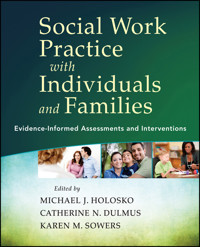
Cover Design: Andrew Liefer
Cover Images: Background bottom image: © javarman3/iStockphoto, Inset left: © Miodrag Gagic/iStockphoto, Inset middle: © Aldo Murillo/iStockphoto, Inset right: © Christopher Futcher/iStockphoto
This book is printed on acid-free paper.
Copyright © 2013 by John Wiley & Sons, Inc. All rights reserved.
Published by John Wiley & Sons, Inc., Hoboken, New Jersey.
Published simultaneously in Canada.
No part of this publication may be reproduced, stored in a retrieval system, or transmitted in any form or by any means, electronic, mechanical, photocopying, recording, scanning, or otherwise, except as permitted under Section 107 or 108 of the 1976 United States Copyright Act, without either the prior written permission of the Publisher, or authorization through payment of the appropriate per-copy fee to the Copyright Clearance Center, Inc., 222 Rosewood Drive, Danvers, MA 01923, (978) 750-8400, fax (978) 646-8600, or on the web at www.copyright.com. Requests to the Publisher for permission should be addressed to the Permissions Department, John Wiley & Sons, Inc., 111 River Street, Hoboken, NJ 07030, (201) 748-6011, fax (201) 748-6008.
Limit of Liability/Disclaimer of Warranty: While the publisher and author have used their best efforts in preparing this book, they make no representations or warranties with respect to the accuracy or completeness of the contents of this book and specifically disclaim any implied warranties of merchantability or fitness for a particular purpose. No warranty may be created or extended by sales representatives or written sales materials. The advice and strategies contained herein may not be suitable for your situation. You should consult with a professional where appropriate. Neither the publisher nor author shall be liable for any loss of profit or any other commercial damages, including but not limited to special, incidental, consequential, or other damages.
This publication is designed to provide accurate and authoritative information in regard to the subject matter covered. It is sold with the understanding that the publisher is not engaged in rendering professional services. If legal, accounting, medical, psychological or any other expert assistance is required, the services of a competent professional person should be sought.
Designations used by companies to distinguish their products are often claimed as trademarks. In all instances where John Wiley & Sons, Inc. is aware of a claim, the product names appear in initial capital or all capital letters. Readers, however, should contact the appropriate companies for more complete information regarding trademarks and registration.
For general information on our other products and services please contact our Customer Care Department within the United States at (800) 762-2974, outside the United States at (317) 572-3993 or fax (317) 572-4002.
Wiley publishes in a variety of print and electronic formats and by print-on-demand. Some material included with standard print versions of this book may not be included in e-books or in print-on-demand. If this book refers to media such as a CD or DVD that is not included in the version you purchased, you may download this material at http://booksupport.wiley.com. For more information about Wiley products, visit www.wiley.com.
Library of Congress Cataloging-in-Publication Data:
Holosko, Michael J.
Social work practice with individuals and families : evidence-informed assessments and interventions / Michael J. Holosko, Catherine N. Dulmus, Karen M. Sowers.
p. cm.
Includes bibliographical references and index.
ISBN 978-1-118-17697-9 (pbk.)
ISBN 978-1-118-41935-9 (ebk.)
ISBN 978-1-118-42091-1 (ebk.)
ISBN 978-1-118-43378-2 (ebk.)
1. Family social work. 2. Social work with children. 3. Evidence-based social work. 4. Social case work. I. Dulmus, Catherine N. II. Sowers, Karen M. (Karen Marlaine) III. Title.
HV697.H66 2013
361.3′2—dc23
2012022694
We have many blessings to be thankful for each day of our lives. The extent to which we actually count our blessings and give thanks is less well certain.
I dedicate this volume to my life partner, spiritual anchor, ego-validity checker, and reality-grounded spouse, Deborah Ann Holosko, whose support, love, and inspiration are what drives me to be me. Thank you for being you, Ann.
—Michael J. Holosko
Preface
North American social welfare and social work as we know it today evolved in the United Kingdom from the Elizabethan Poor Laws of 1601, more specifically the Act for the Relief of the Poor. Thus, it was social policy that set the framework for the provision of goods and services doled out to the have-nots of society. Since its inception then, social policy has directed social work practice and from the 19th century onward, social research has informed social work practice.
Social Work Practice With Individuals and Families: Evidence-Informed Assessments and Interventions reiterates that these two cornerstone principles of social work have never wavered. What has changed, however, are our societies, economies, and the social/political context that shape how social workers deliver services to those in need, or the vulnerable populations who are our clients. Thus, this volume links policy-practice to research and evaluation in each chapter within it.
The point of departure for each chapter is how research and evaluation document, critically appraise, assess, and provide empirical evidence for our day-to-day activities in direct practice—that being face-to-face interactions with individuals and families, or the lifeblood of social work practice. The chapters cut across the life span from children to adults, to the elderly. For each of these cohorts, material is presented that shows how to both assess and use intervention evidence judiciously. This volume shows clearly how our profession has matured, by continually making the aforementioned connections throughout research and evaluation ↔ policy-practice, and assessment ↔ intervention, and the mechanism to achieve these intersecting areas is empirical evidence.
Indeed, our profession's use of evidence has moved from: case wisdom → empirical practice → evidence-based practice → evidence-informed practice. The latter emphasizes the incorporation of wider forms of systemically collected data, for example, case studies; findings from research studies; synthesized reviews of literature; best or promising practices; and data and evidence from the experiences of consumers, service users, professional practitioners, administrators, and policy makers. As such, the evidence-informed practice offered in this volume is an effort to be the first link in a knowledge-sharing chain-of-events system involving: the evidence itself to → assessment of the evidence to → the self-appraisal of how the evidence can be used to → transparency between all stakeholders in this process (i.e., clients, practitioners, administrators, etc.) to → disseminating the evidence to → utilization, or applying the evidence to inform practice decisions. Thus, each chapter in this text is judiciously anchored in this chain of evidence.
In an effort to stylistically address this chain-of-evidence idea, all contributors were asked to first construct succinct text boxes to establish the chapter's overall purpose and rationale, as well as to explain how examples of evidence were used within the chapter. They then presented an overarching question that students could think about while reading the chapter. At the end of each chapter, contributors then identified a set of key chapter terms and three to six field-tested websites that students or practitioners could access for additional readings, as well as five critical thinking questions to further probe the content of the chapter. This uniformity of style to address these important evidence-informed issues are presented consistently in the writing and reading of the chapters. We hope these elements also made the chapters more student and practitioner friendly.
This book is designed as a foundation social work practice text with individuals and families for undergraduate and graduate students in social work programs. The text provides the foundation of skills required for beginning social work practice with individuals and families. This book addresses Council on Social Work Education (CSWE) required competencies for accreditation. Specifically, the book addresses the following required accreditation competencies:
Educational Policy 2.1.2 – Apply social work ethical principles to guide professional practice.
Educational Policy 2.1.3 – Apply critical thinking to inform and communicate professional judgments.
Educational Policy 2.1.4 – Engage diversity and difference in practice.
Educational Policy 2.1.6 – Engage in research-informed practice and practice-informed research.
Educational Policy 2.1.7 – Apply knowledge of human behavior and the social environment.
Educational Policy 2.1.9 – Respond to contexts that shape practice.
Educational Policy 2.1.10 – Engage, assess, and intervene with individuals and families.
As our profession develops and uses evidence more routinely and effectively, as such, it will not only fare well in this competitive era of legitimacy, but it will be better prepared to more effectively and ethically serve the unique needs of our diverse and marginalized clients.
—MJH, CND, KMS
Acknowledgments
A text of this nature could not have come to fruition without the support of many. This collective group is the real story behind the book, and they need recognition. First, I would like to acknowledge both of my co-editors for pushing this well-conceptualized and well-crafted book forward for publication in our field. Catherine N. Dulmus, one co-editor, spent much appreciated time shepherding, marshalling, and empowering my ability to write, edit, tweak, and freshen-up this well-written set of chapters; I thank you for this, Catherine. In regard to the chapter contributors, thank you for sharing your poignant ideas on evidence-informed assessments and intervention from your practice wisdom and research. Your professionalism and commitment to promoting this leading edge topic in order to advance our practice reality was much appreciated.
At John Wiley, a special acknowledgment goes to Rachel Livsey, Senior Editor for Social Work and Counseling and particularly Amanda Orenstein, Editorial Assistant for supporting this work from A to Z, through numerous phone calls, e-mails, long telephone messages, and edited PDF files. At the University of Georgia, I would like to acknowledge and thank Dr. Israel Berger who endowed my chair in family and child welfare in the School of Social Work. This allowed me to obtain the much needed resources and additional time to dedicate to this project. Finally, I would like to thank Catherine A. Patterson, Tisha Abolt Graduate Assistant, MSW, who not only spent countless hours on this manuscript as a research and editorial assistant, but who also found the time to co-author a chapter in the text itself. I very much appreciated your professionalism, diligence, sense of humor, and student voice in reviewing and working on countless renditions of this manuscript during this past year.
In sum, I sincerely appreciate all your help with this endeavor and I enjoyed working with all of you on this journey very much.
—MJH
About the author
Michael J. Holosko, PhD, MSW, is the Pauline M. Berger Professor of Family and Child Welfare at the University of Georgia, School of Social Work. He has taught across the undergraduate and graduate curriculum in schools of: social work (primarily), nursing, public administration, and applied social science in Canada, the United States, Hong Kong, Sweden, Australia, and the U.S. Virgin Islands. He has published extensively in the areas of evaluation, health care, gerontology, social policy, research, music intervention, and spirituality. For the past 33 years, he has been a consultant to a variety of large and small health and human service organizations in the areas of: program evaluation, outcomes, accreditation, organizational development, communication, leadership, visioning, organizational alignment, and stress management. He serves on the editorial boards of: Research on Social Work Practice; Journal of Health and Social Policy; Journal of Human Behavior and Social Environment; the Hong Kong Journal of Social Work; Journal of Social Service Research; and the Journal of Evidence-Based Social Work Practice.
Catherine N. Dulmus, PhD, LCSW, is Professor, Associate Dean for Research, and Director of the Buffalo Center for Social Research at the University at Buffalo and Research Director at Hillside Family of Agencies in Rochester, New York. She received her baccalaureate degree in Social Work from Buffalo State College in 1989, the master's degree in Social Work from the University at Buffalo in 1991, and a doctoral degree in Social Welfare from the University at Buffalo in 1999. As a researcher with interests that include community-based research, child and adolescent mental health, evidence-based practice, and university-community partnerships, Dr. Dulmus' recent contributions have focused on fostering interdependent collaborations among practitioners, researchers, schools, and agencies critical in the advancement and dissemination of new and meaningful knowledge. She has authored or co-authored several journal articles and books and has presented her research nationally and internationally. Prior to obtaining the PhD, her social work practice background encompassed almost a decade of experience in the fields of mental health and school social work.
Karen M. Sowers, PhD, is Dean and Beaman Professor in the College of Social Work at University of Tennessee, Knoxville. She is the University of Tennessee Beaman Professor for Outstanding Research and Service. Dr. Sowers received her baccalaureate degree in sociology from the University of Central Florida, and her master's degree and PhD degree in social work from Florida State University. Dr. Sowers serves on several local, national, and international boards. Dr. Sowers is nationally known for her research and scholarship in the areas of international practice, juvenile justice, child welfare, cultural diversity, and culturally effective intervention strategies for social work practice, evidence-based social work practice, and social work education.
Contributors
Chapter 1
Assessment of Children
Michael E. Woolley
Purpose: This chapter details and discusses the historical evolution and current trends in social work in the systematic, ecological, and evidenced-informed assessment of children. It includes the myriad struggles impacting children and the broad range of settings in which social workers serve children and their families.
Rationale: Whether in schools, child protective services, juvenile justice, family or community centers, mental-health agencies, or hospitals, social workers assume many roles in providing services for children. A critical part of providing effective services is a comprehensive assessment informed by social work values, ethics, interfacing with our evolving professional orientation, knowledge, skills, and tools.
How evidence-informed practice is presented: One current trend is the increasing use of quantitative survey instruments in child assessment, and there is an increasing number of such assessment tools being developed by social work researchers. A second trend is the increasingly widespread need for the evaluation of the effects of interventions. In order to offer such evaluations, valid and reliable assessment tools are needed that can show changes in the assessed struggles and targeted outcomes of those interventions.
Overarching questions: Within specific social work practice settings serving children, in order to complete an ecologically oriented and comprehensive assessment of a child and family, what information would be needed, from whom should that information be gathered, and by what means or methods should that information be collected?
Social workers are vital members of teams delivering services to children across a variety of settings, including, but not limited to, child welfare agencies, family service organizations, schools, health-care providers, and mental-health settings. The struggles and challenges faced by children served by those social workers covers a broad spectrum from day-to-day struggles to life-altering trauma. In all those settings and struggles, beginning the social work intervention process with a systematic and comprehensive effort to gather information about the child, the social contexts of the child, and the presenting struggle or challenge is a critical first step to providing professional, appropriate, and effective services to children who have been impacted by issues ranging from sexual abuse or mental illness to brain tumors or learning disabilities.
Social work has been increasingly called on, from both outside and inside the profession, to demonstrate the effectiveness of its practices. This scrutiny provides the impetus to engage in research to develop evidence-based practice (EBP) strategies and approaches (Gambrill, 1999). The needs for quality assessment tools and strategies as a fundamental task within that effort are twofold. First, all practice activities should start with and be informed by an assessment process. Second, gathering evidence as to the effectiveness of an intervention requires assessing the target of that intervention before and after that intervention is delivered; therefore, reliable and valid assessment measures are a fundamental tool in the pursuit of evidence to support practice.
This chapter first defines what is involved in performing a systematic and comprehensive social work child-assessment process. The accumulated social work practice knowledge in the area of child assessment emerging across the first 100 years of professional social work is discussed. We then outline the current prevailing framework used to gather, organize, and present assessment information about children. More recent developments in the assessment of children are then added to that framework—for example, the necessity of gathering information from multiple informants and using multiple information-gathering tools when assessing children. Within that evolving assessment framework, a growing effort in social work (and other helping professions) is to strive to utilize evidence-based strategies and tools in practice. What is meant by evidence-based practice and how that effort can inform the most effective and efficient assessment of children is explored. The limitations to the evidence in support of our current assessment strategies with children, as well as promising ways to reduce those limitations, are detailed. Finally, current trends and developments in the assessment of children in social work practice settings, including child protection, schools, and mental health, are presented.
Lesen Sie weiter in der vollständigen Ausgabe!
Lesen Sie weiter in der vollständigen Ausgabe!
Lesen Sie weiter in der vollständigen Ausgabe!
Lesen Sie weiter in der vollständigen Ausgabe!
Lesen Sie weiter in der vollständigen Ausgabe!
Lesen Sie weiter in der vollständigen Ausgabe!
Lesen Sie weiter in der vollständigen Ausgabe!
Lesen Sie weiter in der vollständigen Ausgabe!
Lesen Sie weiter in der vollständigen Ausgabe!
Lesen Sie weiter in der vollständigen Ausgabe!
Lesen Sie weiter in der vollständigen Ausgabe!




