


9,99 €
Mehr erfahren.
- Herausgeber: The History Press
- Kategorie: Geisteswissenschaft
- Sprache: Englisch
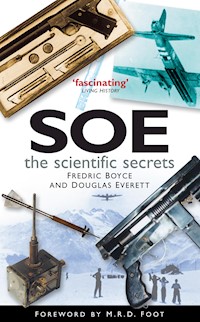
The history of Special Operations Executive (SOE) seems to spring a never-ending run of surprises, and here are some more. This book explores the mysterious world of the tools SOE used for their missions of subversion and sabotage. An often grim reality is confronted that is more akin with the world of James Bond and Q's workshop than previously believed. Written by two scientists, one of whom served in the SOE and one who was tasked with clearing up after it was disbanded; their insider knowledge presents a clear account of the way in which SOE's inventors worked. From high explosive technology to chemical and biological devices; from the techniques of air supply to incendiarism; from camouflage to underwater warfare; and from radio communications to weaponry. SOE: The Scientific Secrets is a revelation about the tools that allowed the murky world of spying and spies to operate during wartime.
Das E-Book können Sie in Legimi-Apps oder einer beliebigen App lesen, die das folgende Format unterstützen:
Veröffentlichungsjahr: 2011
Ähnliche



















SOE
the scientific secrets
This book is dedicated to Douglas Everett,
a man of stature, modesty,
kindness and tremendous enthusiasm
SOE
the scientific secrets
FREDRIC BOYCE AND DOUGLAS EVERETT
FOREWORD BY M.R.D. FOOT
Title page: The sketch in Everett’s notebook showing the principle of the ‘air leak’ or ‘disc time’ delay – Newton’s hoped-for temperature independent time delay.
First published in 2003 by Sutton Publishing
The History Press
The Mill, Brimscombe Port
Stroud, Gloucestershire, GL5 2QG
www.thehistorypress.co.uk
This ebook edition first published in 2011
All rights reserved
© Fredric Boyce, 2003, 2004, 2009, 2011
© The Estate of Douglas H. Everett, 2003, 2004, 2009, 2011
The right of Fredric Boyce, to be identified as the Author of this work has been asserted in accordance with the Copyrights, Designs and Patents Act 1988.
This ebook is copyright material and must not be copied, reproduced, transferred, distributed, leased, licensed or publicly performed or used in any way except as specifically permitted in writing by the publishers, as allowed under the terms and conditions under which it was purchased or as strictly permitted by applicable copyright law. Any unauthorised distribution or use of this text may be a direct infringement of the author’s and publisher’s rights, and those responsible may be liable in law accordingly.
EPUB ISBN 978 0 7524 7580 6
MOBI ISBN 978 0 7524 7579 0
Original typesetting by The History Press
CONTENTS
Foreword by M.R.D. Foot
Acknowledgements
Preface
1 Introduction
2 What was the Special Operations Executive?
3 SOE Research and Development Establishments
4 Organisation of Research and Development
5 Physico-Chemical Section – Sabotage Devices and Materials
6 Physico-Chemical and Physiological Sections
7 Camouflage Section
8 Engineering Section – Weapons
9 Engineering Section – Seaborne Craft
10 Operational Research and Trials
11 Operational Research – The Air Supply Research Section
12 The Wireless Section
13 Organisation of Supply and Production
14 Supply, Finance and Manpower Problems
15 Special Operations involving R&D Section
16 Technical Liaison
17 Overall Assessment
18 Epilogue
Appendix A Research and Development Establishments
Appendix B Inventors of Devices produced by SOE Research Section
Appendix C Abbreviations
Appendix D Summary of the Work of the Engineering Section
Appendix E Examples of Camouflaged Devices
Appendix F Optimisation of Equipment
Notes
Bibliography
FOREWORD
The history of SOE seems to spring a never-ending run of surprises: here are some more. For several years past, the Imperial War Museum’s secret war gallery has exhibited a set of SOE’s tools –some of them gruesome –for forwarding its tasks of subversion and sabotage. Many of SOE’s surviving papers have now gone public, and the Public Record Office has published two of the catalogues in which the tools were listed. This book explains how, why and where they were designed.
It is by two scientists, one of whom has just died –his survivor dedicates the book to him; Everett served in SOE himself, and his co-author Boyce shared in the task of clearing up after it, so they write with inside knowledge, always an advantage when dealing with a secret service. They present a clear scientific account of the ways SOE’s inventors worked, and summarise the results; some of them well enough known, others partly or entirely new.
There is a mass of detail, for instance, on Operation Braddock, the proposal to drop small incendiaries into Germany, to be picked up by slave labourers and used to start fires; Mackenzie mentions this in his recently released in-house history of SOE, but here it is handled fully (the results were disappointing). There is also a lot of new detail on Periwig, Templer’s attempt to convince the German security authorities that there was an active resistance movement in Germany in the last winter of the war; Leo Marks’s dark hints are here spelled out in full. SOE has often, wrongly, been accused of dealing in biological warfare; the authors are able to rebut this charge, but do have a disconcerting passage on research intended to disrupt the digestion of members of the Wehrmacht. This never reached the point of attempted action.
These pages give a vivid picture of how hard SOE’s scientists worked, and how informally; they were free of many constraints of service discipline, and encouraged to think laterally. George Taylor and Tommy Davies from SOE’s governing Council gave them plenty of starting impetus, and D.M. Newitt, the head of scientific research, kept all of them up to the mark.
Needless to say, he recruited on the old boy net –there was no other safe way of doing so; the results justified the method. He and six of his colleagues became Fellows of the Royal Society. Inter-service and inter-secret-service jealousies marred corners of the story, and will probably be blown up by the ignorant into attempts at sensation; they did not much hinder the war effort. With the passage of time it is getting less and less easy to remember that SOE was a fighting service, formed to help win a world war.
A good deal of mud was thrown at SOE by Marxists who maintained that it was a tool of capitalism. Many of its members did come from large firms; but they were there to beat a bad enemy, not to serve any commercial interest. One of the large firms that supplied several senior men was the great textile firm of Courtauld’s; and after the war Courtauld’s looked after Newitt, funding a chair for him at Imperial College London.
He would have enjoyed this account of his and his colleagues’ role in aiding a critical victory.
M.R.D. Foot
ACKNOWLEDGEMENTS
The authors would like to express their gratitude to the many individuals and organisations who have helped in the writing of this book. In particular, they thank Professor D.W.J. Cruickshank, FRS, for his recollections and photographs; John van Riemsdijk for supplying information and material; Elizabeth Howard-Turner for the gift of the late Agnes Kinnersley’s Station IX scrap book; and Tony Brooks for his first-hand account of sabotaging railway wagons.
Duncan Stuart, the SOE Adviser to the Foreign and Commonwealth Office, was always helpful with advice and information from files prior to their official release. Christopher J. Tompkins made an excellent sectionalised drawing of the Time Pencil and Lady Cicely Mayhew translated the German on the Pigeon Post form.
Of the organisations contacted during the research for this work, the MoD Pattern Room, then in Nottingham, and the Royal Signals Museum at Blandford Camp were most helpful in permitting photographs to be made of key items of SOE equipment.
The portrait of Professor D.M. Newitt, FRS, was obtained with the assistance of the Royal Society, while the biographical details of some of the engineers were drawn from documents made available by the Institution of Mechanical Engineers.
Other organisations which contributed are the Public Record Office at Kew who never failed to come up with any of the over two hundred files consulted; the Royal Navy Submarine Museum at Gosport; the Airborne Forces Museum at Aldershot; and the Imperial War Museum whose photographic, audio and document archives were used. It is worth noting here that the IWM contains a fascinating exhibition devoted to the SOE.
Finally we would like to thank the following individuals with whom conversations have elicited numerous small but interesting points in this history: George I. Brown, Graden Carter, H. Woodend, Eric Slater, Mrs Mary Fields, Bill Mack, Tom Rae and the late Leo Marks who sadly died during the writing of this book.
The photograph of the Welbike is British Crown Copyright, 1999 Defence Evaluation and Research Agency, and is reproduced with permission of the Controller, Her (Britannic) Majesty’s Stationery Office.
Every effort has been made to trace copyright holders for the illustrative material contained in this book. The publishers would be grateful for additional information on any copyrighted work that is not acknowledged in these pages.
FB
DHE
PREFACE
The history of the Special Operations Executive (SOE) and the exploits of some of its agents in Occupied Europe have been the subject of many books published in the last fifty years. As security has, little by little, been relaxed and the Public Record Office (PRO) has released previously secret material into the public domain, a clearer and more complete picture has emerged. However, despite the publication by the PRO of the Secret Agent’s Handbook of Special Devices and the release of the official Secret History of SOE by W. Mackenzie, there has been so far no detailed account of the development of equipment and techniques upon which the success of subversive activities relied. Though not having the same dramatic impact as stories of the daring deeds of agents, such an account is important in setting their deeds in perspective. As noted by Professor M.R.D. Foot, this aspect of SOE’s history ‘awaits reliable treatment in print’. This book attempts to fill that gap.
The main objectives of the book are threefold. First, to present a coherent account of the role of technical support in the evolution of overall SOE policies and their relation to the grand strategies of the Allies. Second, to describe in some detail the research leading to the development, production and distribution of a wide range of devices and supplies for the use of agents. Finally, to make an assessment of the importance of the work of the various R&D establishments set up by SOE in the early stages of the war and which provided much of the impetus for the development of new devices.
Relatively few of the personnel brought in to staff the research establishments were professional soldiers, and those that were had been trained in conventional military rather than in guerrilla warfare. Apart from a few seconded from Government departments, the majority of those recruited for research positions were young graduates with only a short period of research experience. Consequently much of the research started virtually from scratch and it was done by what were effectively amateurs who were faced with a steep learning curve to be surmounted on a challenging time scale. Not surprisingly, many of the initial ideas were reached ad hoc and depended on research to establish their technical validity and bring them to fruition. Ingenuity, imagination and enthusiasm were the characteristics most apparent in the staff. Perhaps the most striking feature of their activities was the very wide range of topics with which they became involved. They ran from high explosive technology to chemical and biochemical devices; from the techniques of air supply to incendiarism; from camouflage to underwater warfare; and from radio communications to weaponry.
Much of the work involved collaboration with the Operational Directorates of SOE and with other Government and military research establishments. Despite the political problems which beset SOE from time to time, these close links were effective and mutually beneficial.
One of the authors of this book, the late Douglas Everett, was recruited by SOE in 1942, worked at the research station at The Frythe near Welwyn (Station IX) and was later in charge of the User Trials Section with special responsibility for Air Supply Research. He therefore had first-hand knowledge of many of the topics dealt with. Some of his notebooks have survived, and together with several of his reports released by the PRO have formed the basis for several chapters. Fredric Boyce was an ICI engineer whose contact with and interest in SOE was fired by his involvement in the clearance of dangerous material left by them when The Frythe was acquired by ICI in 1946. He has been responsible for researching over 200 files at the PRO which have filled in many details of the organisation and development of SOE’s technical operations.
The outcome is a well-documented account of a major contribution to the effective exploitation of scientific and technical skills in support of the often heroic efforts of the SOE agents worldwide.
ONE
INTRODUCTION
On the night of 14 May 1941, a 29-year-old German spy by the name of Karel Richard Richter descended by parachute into a field near London Colney in Hertfordshire. After burying his parachute and other incriminating items, including by mistake his emergency rations, he went into hiding. If he had set off up the Great North Road and managed to avoid detection he would have reached, after a few miles on the left, the entrance to a fine estate. A notice on the gate revealed that this was War Office property and that entry was forbidden without written permission. An armed guard in a discreetly placed hut kept watch on the gates. The drive beyond the gates wound up through a plantation of mature trees – Cypress, Redwood and Wellingtonia – interspersed with banks of rhododendrons in full bloom. Through the trees he might have caught sight, silhouetted against the sky, of a red-brick Victorian mansion at the top of the rise. There was little to suggest that this was a specially protected property. There were no high fences topped with barbed wire and no guard dogs. Had he hidden in the undergrowth and waited until morning he would have observed the arrival of a few dozen girls – typists or secretaries perhaps – and the departure of a car carrying three or four men, some in uniform, some in civilian clothes. During the day a little traffic would enter or leave and in the evening the girls went and those who had spent the day away elsewhere would return. To the casual observer, even a German spy, there was little to arouse curiosity. Many companies, some of them with Government contracts, had been evacuated from London to avoid the bombing, but maintained daily contacts with their headquarters. Unfortunately for him, Richter, who had spent three days without food or drink, was quickly arrested and convicted as an enemy spy. Prisoner 13961’s short stay in the UK ended in a struggle on the gallows in Wandsworth Prison at 9 a.m. on 10 December.1
The mansion he would have stumbled upon was The Frythe at Welwyn in Hertfordshire, known then by its cover name as part of the Inter-Services Research Bureau (ISRB). These initials concealed its true identity. It was in fact one of the highly secret establishments set up early in the Second World War by the Special Operations Executive (SOE) to carry out sabotage and subversion against the enemy in occupied Europe using unconventional and often ungentlemanly means. SOE’s very existence was a closely guarded secret – denied even by the Government in the Commons. To those working at The Frythe it was simply ISRB Station IX and to many of them the initials SOE meant nothing. Nor would many have known that it had other cover names (of non-existent departments!) such as MO1(SP) in the War Office, NID(Q) at the Admiralty and AI10 at the Air Ministry. Those members of its staff who in the course of their work were required to visit other military establishments were issued with passes identifying them as from MO1(SP). Sentries and security officers rarely recognised these initials but were usually satisfied when told they stood for Military Operations 1 (Special Planning). It was not until some time after the war that the very existence of SOE was allowed to be mentioned in public.
Station IX was the main centre for the Research, Development and Supplies Directorate of SOE and, as will be described later, played a pivotal role in the evolution of new and improved weaponry, equipment and techniques for use by its agents in occupied Europe and worldwide. Over the years glimpses of this work and some of the products which evolved have been given, often incidentally, in accounts of the history of SOE and the exploits of its agents published since the war. However, the authors of many of these books were constrained by security considerations. Those who were not personally involved have had to rely on the limited amount of information available to them at the Public Record Office (PRO), and on the discreet recollections of those who were. The belated release by the PRO of most of the surviving SOE files, supplemented by personal recollections of those who are now free to speak, has made available in the public domain new evidence to fill some of the gaps. Exhibits relating to its work are displayed in a number of museums including the Imperial War Museum in London, the Airborne Forces Museum at Aldershot, the Royal Signals Museum at Blandford Camp and in a small local museum at Arisaig in Western Scotland. But the full stories behind the invention and development of its weapons have until recently remained buried in the archives. A major problem facing historians attempting to compile a definitive account of the organisation arises from the fact that in the rapid and piecemeal development of SOE there was no Central Registry for its documents and no rational filing system. The departmental papers are scattered, incomplete and often confusing. Towards the end of hostilities a Central Registry was set up but only a quarter of the work of reclassifying the papers into a common system had been completed when the organisation was eventually disbanded in 1946. Unfortunately, a large proportion of the records of SOE have been lost, partly by deliberate destruction at the end of the war, some in a serious fire at the Baker Street headquarters, and many by weeding over half a century. One estimate is that over 80 per cent of the archives had been lost and the remainder were classified.
The situation has, however, changed dramatically in the last few years as most of the surviving SOE files have been opened to the public and now provide material for a more extensive study of its activities. It is interesting that some of the files which were said to have been lost have come to light. A number of important books have now collected together information hitherto unavailable. They include The Secret History of SOE by William Mackenzie (2000), written between 1945 and 1947 but not allowed to be published for a further 55 years; the Secret Agent’s Handbook of Special Devices (2000); and even more recently SOE Syllabus (2001). But none of these provides an account of the research and development of SOE weaponry and equipment, nor of the distinguished band of scientists and engineers who were recruited to solve the wide range of problems arising from this new form of warfare.
In the following chapters an attempt is made to present as full a picture as possible, based largely on the available documentation together with personal recollections of a few of those who were involved. Sadly, many of those who could have answered some of the outstanding questions have taken their secrets to the grave: Time continues to reap its harvest month by month.
A large number of abbreviations and symbols were used throughout the conflict. An explanation of them is given in Appendix C.
TWO
WHAT WAS THE SPECIAL OPERATIONS EXECUTIVE?
The Special Operations Executive (SOE) was formed in mid-July 1940 at the height of the crisis following Dunkirk and the fall of France. It brought together three existing secret organisations: Section D of the Secret Intelligence Service (SIS) otherwise known as MI6; the Military Intelligence Research unit (MI(R)) of the War Office formerly known as General Staff (Research) or GS(R); and Electra House, attached to the Foreign Office and mainly concerned with propaganda.
As early as March 1939 the existence of three organisations tackling much the same work was seen as an anomaly. Certain duplication of effort was taking place between MI(R) and D Section, something the country could ill afford. It wasted valuable time and there was a tendency for production aspects of the work to take precedence over vital research. The first paper to address this problem was prepared in June 1939. Over the next few months there followed various initiatives attempting to solve the problem of co-ordination.
Reorganisation was discussed in a complex series of meetings held in June and July 1940 involving, in various combinations, the CIGS, Lord Gort; the Foreign Secretary, Lord Halifax; the Chief of GS(R), Col Holland; Mr Hugh Dalton; Mr Clement Attlee; and representatives of SIS. They dealt among other things with the sensitive problem of the military or civilian control of a merged organisation. The solution was to some extent a compromise between political interests, but the details of the discussions, said to have been acrimonious, leading to agreement cannot, according to W. Mackenzie in his Secret History of SOE, be traced from the papers available. The final document proposing the setting up of an organisation to be called the Special Operations Executive under the Chairmanship of Dalton was signed on 19 July by Neville Chamberlain (then Lord President of the Council following his resignation as Prime Minister on 10 May 1940). Churchill had already, on 16 July, offered the Headship of SOE to Hugh Dalton, the 53-year-old Minister of Economic Warfare (MEW), with the now much-publicised exhortation to ‘set Europe ablaze’. Ironically, it was on this very day that Hitler signed his Führer Directive No. 16 for the planning of Operation Sea Lion, the invasion of Britain. The SOE Charter was finally approved by the War Cabinet on 22 July. In retrospect it seems somewhat anomalous that it was placed, not under any of the parent ministries, but under the Ministry of Economic Warfare. The reasons were a consequence of the complex political negotiations which preceded its formation. Each of the constituent organisations had been set up independently before the war in 1938 with objectives which were loosely defined and overlapping. The new organisation was given a more specific task of promoting sabotage and subversion through its own covert agents and with supplying arms, equipment and agents to resistance movements throughout occupied Europe and beyond. When they were amalgamated to form SOE they each brought with them a good deal of historical baggage which, throughout the war, coloured relations between SOE and its parents. These political problems, though they were of major importance in the general progress of SOE, did not have any significant influence on its scientific and technical work.
Implementation of the Charter took a little time. Control of Section D and Electra House passed from the Foreign Office to MEW on 16 August, while the formal dissolution of MI(R) followed in October. Meanwhile SOE’s London Headquarters was moved in October 1940 to 64 Baker Street, where it adopted its public cover name of the Inter-Services Research Bureau. It was quite separate from MEW in Berkeley Square. Dalton remained as head until in 1942 he was replaced by Lord Selborne, also aged 53. To appreciate the development of the scientific and technical aspects of SOE’s work it is important to set the scene by outlining the history of those components which came together to form SOE. Electra House, which was set up in 1938 by Lord Hankey and headed by Sir Campbell Stuart, was mainly concerned with propaganda and had little impact on the research and development work of SOE. Attention is, therefore, here restricted to Section D (MI6) and GS(R) (later known as MI(R)). The formal relationship between them is difficult to disentangle, but some of their technical work certainly overlapped.
SECTION D
In April 1938 the then head of the SIS, Admiral Sir Hugh Sinclair, arranged for the secondment of Maj Lawrence Grand, RE, from the War Office to SIS to carry out a study and to report on the possibilities of creating a British organisation for covert offensive action. Germany and Italy had already conducted such operations in countries which they later overran, and the possible existence of a Fifth Column in Britain was not entirely ruled out.1 Grand had no experience of secret service work but he had ideas and enthusiasm and a persona which earned the admiration of all who worked with him. His personal energy was much needed for time was not on his side – by now, Austria had been occupied by Germany. Grand was promoted to Colonel, given the symbol D and set up the Devices Section of MI6, to be called Section D and with the cover name of Statistical Research Department of the War Office. Section D’s terms of reference were:
a) To study how sabotage might be carried out
b) to produce special sabotage ammunition
c) to make experiments on carrying out sabotage
d) to train saboteurs
e) to study methods of countering sabotage.
The use of aggressive action was precluded as long as peace held.
At first the Section consisted of only two officers. Among those recruited by Grand in December 1938 was Cdr A.G. Langley RN who set in motion and pursued energetically work on the research and development of ideas and stores needed to meet the above objectives. In particular, his small group was concerned with the design of time fuses and switches of various types and of explosives and incendiary devices. Section D was originally based at SIS’s head office at 54 Broadway but soon expanded to the adjacent Caxton House. In the early months of 1939, as the threat of war grew ever closer, Horace Emery of SIS arranged for the manufacture of the first batch of Time Pencil fuses to Langley’s design. Articles made in Germany and Italy which might be suitable for concealing or camouflaging weapons were collected and contacts established with organisations which could be of use in war, such as various Service Departments, the Research Department at Woolwich Arsenal, the British Scientific Instrument Research Association, the Royal Society, Imperial Chemical Industries, Shell Oil Company, the Railway Executive, etc. On the outbreak of war, most of Section D’s staff moved with the Government Code and Cipher School (GCCS), the forerunner of GCHQ, to Bletchley Park (Station ‘X’) although some went to The Frythe.
By the middle of 1939 a small magazine for explosives and incendiaries had been built at Bletchley and work had started on full scale experiments with weapons.2 This was not universally popular as it was judged that it was incompatible to have explosives and decoding work on the same site. Furthermore, GCCS’s work was expanding rapidly and Section D was forced to find accommodation for Langley’s work elsewhere. In November 1939 it was moved to Aston House at Stevenage in Hertfordshire which was given the title Signals Development Branch Depot No. 4, War Office. In 1941 it became War Department Experimental Station 6 (ES6 WD), recognising its parent MI6. On the formation of SOE it became known also as Station XII. Langley took with him a small group of about seven officers, two laboratory technicians, five other ranks (O/Rs) and secretarial staff. Among those who moved to Aston House were Dr Drane (in command); Capt L.J.C. Wood (later Colonel and in command of the Station); Capt C.R. Bailey; Mr Colin Meek, a Scientific Civil Servant and explosives expert on secondment from Woolwich Arsenal and another un-named, possibly Douglas Barnsley; and, on a part-time basis, Mr Eric Norman. The laboratory assistants were Mr G. Doe and Mr B.S.M. Stalton. Dr F.A. Freeth was also concerned with this group.
Also recruited by Grand was a group of distinguished amateur sailors from the Royal Cruising Club including Frank Carr, the Assistant Librarian of the House of Lords, Roger Pinckney, the architect of Melbourne Cathedral and Augustine Courtauld, Arctic explorer. They had all been recruited to familiarise themselves with parts of the continental coastline which could be of strategic importance in wartime. Attached to this group was Gerry Holdsworth who was later to set up the Helford Base in Cornwall.3 Meanwhile, Section D had established agents and offices in Sweden, Norway, Holland, Spain, and France. However, within a few months of the outbreak of war it had lost contact with nearly all of its overseas agents, and it was soon apparent that most had been arrested by the Germans. Its work was, inevitably for such a novel enterprise, largely a process of trial and error which was overtaken by the progress of the war before significant results could be obtained. As a result, after the fall of France neither Section D nor any other Allied covert organisation had any agents on the Western European mainland, although a number remained in the Balkans and the Middle East.
GS(R)
In 1938 a section was set up in the War Office by the Deputy CIGS, Sir Ronald Adam, known by the innocuous title of General Staff (Research). It was to research into the problems of tactics and organisation under the DCIGS. It produced a number of papers of which two are of interest but have not been found: ‘Considerations from the Wars in Spain and China with Respect to Certain Aspects of Army Policy’ and ‘An Investigation of the Possibilities of Guerrilla Activities’. In December 1938 Lt Col J.F. Holland, RE, was appointed head of the group. His experience of irregular warfare in Ireland and India had influenced the writing of the latter paper. With Col Grand of Section D, Holland produced a joint paper dated 20 March 1939 dealing with the possibility of guerrilla actions against Germany if they overran Eastern Europe and absorbed Rumania. The formal objectives of GS(R) were similar to those of Section D:
a) To study guerrilla methods and to produce a guerrilla Field Service Regulations Handbook incorporating detailed tactical and technical instructions, as they applied to various countries
b) To evolve destructive devices suitable for use by guerrillas and capable of production and distribution on a wide enough scale to be effective
c) To evolve procedures and machinery for operating guerrilla activities if it were decided to do so subsequently.
As the Military Intelligence Directorate expanded in response to the increasing threat of war in the spring of 1939, GS(R) changed its name to Military Intelligence (Research) or MI(R). Holland’s section was first housed in Caxton House, adjacent to Grand’s Section D, but on the outbreak of war it was moved to the War Office building. In the spring of that year Holland was authorised to appoint two Grade II staff officers to MI(R). The first was another Royal Engineer, Maj M.J.R. Jefferis, later Sir Millis Jefferis, to work on guerrilla devices. His unit was based initially at 36 Portland Place, but when they were bombed out in Autumn 1940 they moved to The Firs, a Tudor mansion at Whitchurch near Aylesbury which became known as MI(R)c. Also known as ‘Winston Churchill’s Toyshop’,4 it produced a string of inventions, several of which, like those from Section D, became the basis for the development of devices which were later adopted both by SOE and the regular Army Engineers. However, this unit became increasingly concerned with larger-scale military hardware such as anti-tank weapons, the destruction of concrete pillboxes and the clearance of minefields. On the formation of SOE it was specifically excluded from the transfer of MI(R) to SOE and remained independent as MD1 under the patronage of Churchill and his friend and scientific adviser, Prof Lindemann (later Lord Cherwell).
For the second of these posts Holland chose Maj Colin Gubbins, RA. This appointment was to prove crucially important in the later development of SOE. Gubbins’s first task was to work on two pamphlets: ‘The Partisan Leader’s Handbook’;5 and ‘The Art of Guerrilla Warfare’. The second of these was written in collaboration with Holland, while a third, ‘How to Use High Explosives’, was written by Jefferis. They drew heavily on the experiences of Lawrence (of Arabia) and of operations in Palestine, Ireland, the North-West Frontier and Russia. Surprisingly, there was not at this time a single book to be found in any library in any language on these subjects. In fact, none of these pamphlets was published in England although they were distributed widely in Europe and South-east Asia.
With the formation of SOE, MI(R) was combined with Section D.
THE BIRTH OF SOE
SOE had a difficult birth and suffered recurring post-natal pains. The incorporation of Section D with MI(R) to form one body responsible to an Executive Director, to be called CD, required many changes both in structure and personnel. There were hard decisions to be taken and several heads rolled. Both Grand and Holland had made internal enemies and returned to pursue their distinguished military careers: they both ended up as Maj-Gens. Many other staff left or were transferred to other duties.
The first to fill the post of CD in August 1940 was the 58-year-old Sir Frank Nelson who had to build up SOE almost from nothing. Nelson was a businessman, a former Conservative MP and former Vice-Consul at Basle in Switzerland, where he had had some involvement with SIS. He undertook his task with great enthusiasm and dedication, but ruined his health and was obliged to resign in May 1942 after eighteen months.
Initially SOE was divided into three Branches: SO1 (Propaganda), SO2 (Active Operations) and SO3 (Planning). Of these SO1 was the subject of arguments with the Ministry of Information and the Foreign Office and was soon taken over and incorporated in the Political Warfare Executive (PWE) controlled by the Foreign Office. Useful sidelights on the early years before SOE and PWE parted company are contained in The Secret History of PWE by David Garnett. SO3, in the words of M.R.D. Foot, ‘proceeded to strangle itself in festoons of paperwork’6 and had disintegrated by the end of September 1940. This left SO2, which now took on the mantle and title of SOE. At this stage, with the exception of a few Regular Army officers, the whole staff was amateur. Mercifully, the organisation was free from the minor bureaucracy of a Government department. This led to a looser and more flexible arrangement, which was not without its disadvantages.
SOE was financed by secret funds from the Ministry of Economic Warfare and for some time (certainly until the end of 1942) its officers were paid monthly in crisp, white £5 notes – until the Inland Revenue became aware that some people were not paying income tax! It is sometimes said that those paid from SOE funds were exempt from tax. This may well have been true of its agents, but not for the rest of its personnel.
Nelson inherited two deputies. Maj, later Col George Taylor from Section 6 was in charge of operations, including the re-establishment of Country Sections, while Col F.T. (Tommy) Davies from MI(R) took control of ‘facilities’ which included training, supplies and stores. Both were ruthless and efficient and played important roles in SOE throughout the war.
George Taylor was an Australian business tycoon who had joined SIS and Section D before the war. He influenced the organisational structure and later was to play a major role in Balkan and Middle Eastern affairs.
Col Davies, the son of a General and a Director of Courtaulds, had joined MI(R) as a Captain in the Grenadier Guards shortly before the outbreak of war. In 1939 he was a member of the MI(R) mission (No. 4 Military Mission) to Poland which arrived at its destination the day war broke out but returned within a few days since there was little it could do. In May 1940, Davies paid a hasty trip to Amsterdam to destroy or remove certain securities, and a few weeks later led a raiding party to the Courtauld factory in Calais and succeeded in removing large quantities of platinum before the Germans arrived. As well as being deputy for Nelson, he was also his personal assistant and as such was responsible for the setting up of the training sections. By the end of 1941 he had become the Director of Research, Development and Supplies with the code symbol AD/Z, a post he held for the rest of the war.
On Nelson’s retiral his post as CD went, early in May 1942, to his then deputy, Sir Charles Hambro, a successful city banker and a Director of the Great Western Railway and of the Bank of England. He had been in charge of the Scandinavian Section for two years. His many other responsibilities meant that he was unable to spend as much time on SOE business as the post demanded. By the spring of 1942 Dalton had been replaced by Lord Selborne. Following personal difficulties with Selborne, Hambro was sacked in September 1943. His replacement was Brig (later Maj Gen) Gubbins who, as recorded above, had joined SOE in November 1940 and been Hambro’s deputy.
Colin McVean Gubbins was in many ways the ideal leader of SOE. A professional soldier born in Tokyo, Japan on 2 July 1896, he had seen service in the First World War, and in Northern Russia and gained valuable experience when he fought as a Major against the Irish Republican Army in the Irish Civil War in 1921. He was a small, wiry Scotsman who was described as ‘quiet-mannered, quiet-spoken, energetic, efficient and charming’, ‘a still waters run deep sort of man’ and ‘a born leader of men’. He was on the staff of MI(R) in the spring of 1939 when, under the shadow of the approaching conflict, he wrote the two pamphlets on clandestine warfare referred to above. Later that year he became the senior staff officer to the British Military Mission in Poland and was in overall charge of the MI(R) group there. As it was, his efforts to set up a Polish resistance force were thwarted by the lightning speed of the German advance and he was fortunate to get out in time to Paris where he was promoted to Lt Col. In April 1940 he was brought back to select and train troops for the assault on Norway at Narvik. He was then engaged in the setting up of the Auxiliary Units in Britain to fight a guerrilla war against German invaders should they land. By November that threat had diminished and he was put in charge of Operations and Training in Dalton’s SOE, together with responsibility for the Polish and Czechoslovakian sections. After Hambro’s demise he remained as CD for the rest of the war having had to suffer the loss of his elder son in an SOE operation at Anzio, Italy in February 1944. He was knighted for his work and died in Stornoway, Scotland on 11 February 1976. A full biography, Gubbins and SOE, written by Peter Wilkinson and Joan Bright Astley, was published in 1993.
Gubbins’s influence on the direction and overall policies of SOE was crucial. Throughout his association with the organisation from 1940, his period as deputy to Hambro, and his own period as CD to the end of the war, his personality and drive played a major role in developing and executing SOE policies. The team which grew up around him realised the vital importance of scientific and technical support in areas which were regarded traditionally as outside the normal military concern. As a result, SOE was able to provide the resistance movements in Europe and the Middle and Far East with substantial specialist support in the way of supplies, equipment and technical innovation. This was made possible through the work of the Directorate of Research, Development and Supplies under Col Tommy Davies and his Director of Scientific Research, Dr Dudley Newitt. The nature and extent of the activities of the DSR Sections form the subject matter of the rest of this book.
THREE
SOE RESEARCH AND DEVELOPMENT ESTABLISHMENTS
From October 1940 the headquarters of SOE were in Baker Street, London. Its true purpose was obscured in the title Inter-Services Research Bureau which was displayed prominently for all to see on the blast wall protecting the main entrance of no. 64. In the course of the war it took over a number of office buildings in the adjacent streets and squares and gave them identities which were even more obscure. Wartime organisations undertaking highly secret work required accommodation and facilities for research and testing under conditions which would not arouse curiosity. To satisfy this demand the Government exercised its wide-reaching powers to requisition public and privately owned properties needed to meet the national emergency. Apart from the administrative offices around Baker Street, SOE acquired several other types of property. Establishments concerned with experimental work, storage and production were mostly in Hertfordshire and were denoted by Roman numerals. Those housing training schools, denoted by Arabic numerals, were mainly in three groups: paramilitary schools were in remoter areas of Western Scotland north of the Caledonian Canal; the so-called ‘Finishing Schools’ concerned with subversion and propaganda were around Beaulieu in Hampshire; the operational schools were located in Leicestershire, Gloucestershire, Oxfordshire and several counties further south. In addition, the Signals, Polish and Norwegian Sections had a number of schools and there were Parachute Schools in Cheshire, Northamptonshire, Hertfordshire and Surrey. By its very nature it was inevitable that SOE would tend to use large houses on substantial estates, and in some quarters it was supposed frivolously that SOE stood for ‘Stately’ Omes of England’. In fact, SOE was in the second league in this respect. For example, SIS was in part housed in Woburn Abbey.
The Directorate of Research, Development and Supply under Tommy Davies (AD/Z) had its main stations in and around Hertfordshire. The more important of this group were Station IX at The Frythe near Welwyn, which had been taken over by Section D in August 1939 and later received the Experimental Section when it was moved from Station XII in 1941; Station XII at Aston House near Stevenage, to which the combined Section D and MI(R) moved from Bletchley Park in November 1940; Station XV, the Thatched Barn road-house at Borehamwood, which housed the Camouflage Section; and Station VI at Bride Hall, Ayot St Lawrence, which housed the Arms Section. Each of these had limited living accommodation for staff, although many of those employed in them lived locally in rented houses or flats. A full list of SOE Stations in this Directorate is given in Appendix A.
THE FRYTHE, STATION IX
It is believed that the name Frythe came from the old English word Ffrid (pronounced Freeth) which referred to an area of wooded country rather than a specific location. There is a 1260 record of land at Welwyn being owned by a John del Frith and the Prioress of Holywell. The Wilshere family took a 60-year lease on the property in 1539 but, at the dissolution of the monasteries, Henry VIII gave The Frythe to Sir John Gostwick, the Wilsheres remaining as tenants. Sir William Gostwick, Sir John’s brother, sold the estate to William Wilshere in 1547.
The Wilshere family prospered and their social status rose from ‘yeoman’ to ‘gentleman’. From time to time the house was leased to other families but they retained their ownership. In 1838 William Wilshere, who was then MP for Great Yarmouth, decided to enhance his status by commissioning the Hertford architect Thomas Smith to design the present mansion on the site of the earlier house and this was completed in 1846 in the then fashionable Gothic-revival style. An impressive portico was added in 1870 together with a clock tower without a clock face. The time was announced by chimes and so that hearers knew which quarter of which hour was being chimed, it struck first the hour and then the quarter in question. So at a quarter to midnight it must have kept people awake for a long time!1 There was an air of opulence and history about the grand staircase and the stained glass windows characteristic of the style adopted by the upwardly mobile classes in the nineteenth century. One of the dining rooms housed an organ which was still serviceable in the late 1950s and, indeed, was played on festive occasions. But the gargoyled façade which hid the true antiquity of the estate did not impress everyone. Bickham Sweet-Escott, a one-time classical scholar turned banker, a member of Section D and an early historian of SOE, described it as ‘a large hideous Victorian house’.
During the Victorian period the Wilsheres became enthusiastic collectors of trees from around the world, adding to the large number of native species imported Cypress, Redwood, Wellingtonia, Sweet Gum, Tulip, Japanese Maple and many others. The estate eventually contained almost 600 trees which became an important collection, reputedly the second finest arboretum in England. Unfortunately, many were lost in a serious gale in 1921 and some of their replacements were among the casualties of the Great Storm of 16 October 1987.
In 1934 Gerald Wilshere and a friend opened ‘The Frythe Residential Private Hotel’. It boasted central heating, eight bathrooms and fresh fruit and vegetables from the estate kitchen gardens. Among the local amusements listed in its brochure was the Barn Road House which had a large, floodlit swimming pool, dancing, cabaret and tennis courts. Little did they know then that the Barn was to share in the wartime activities of The Frythe. First-floor rooms cost up to five guineas a week including all meals but one paid an additional 6d (six old pence) per person for early morning tea. The hotel flourished in some splendour until war was inescapable. Then, around midday on the last Saturday in August 1939, a detachment of soldiers and civilians under the supervision of a ‘Man from the Ministry’ ascended the long drive to the mansion to advise the thirty or forty staff and residents that they must pack their belongings and be gone by eight o’clock that evening.2 Despite the protestations of the owner, a First World War veteran who had been captured, repatriated and then badly wounded when back in France, the authorities insisted that they were requisitioning the estate forthwith. War was imminent and the estate was needed immediately, in this case for Section D, the small semi-autonomous and largely unacknowledgeable branch of SIS. The ‘Man from the Ministry’ was almost certainly George Taylor, a severe man who later became one of the leading lights in SOE. Throughout the winter of 1939–40 the new residents began to establish Station IX’s first research group, the Wireless Section. By mid-1941 a number of single-storey, good quality, prefabricated, felt-roofed wooden huts, (typical size 35 ft × 15 ft) extended to the south and housed the rather basically equipped laboratories of the Experimental Section, which had been moved from Station XII in July. The internal layouts were fairly conventional with a hut being partitioned into, for example, two laboratories, a specialist room and two small offices. Central heating from a steam boiler plant was available in winter. The terrace had been excavated to form an explosives pit with a concrete observation bunker with bombproof windows. The Wireless Section occupied part of a wing of the mansion. The meadows leading down to the main road were used for trials of non-explosive devices. Some of the bedrooms in the house had been converted into offices, while others provided living accommodation for some officers and secretaries.
The Engineering Section started in a small way with one workshop of 600 sq ft area. As demand increased, an area adjacent to the explosives pit was excavated to provide a large workshop hangar and, nearby, an associated test tank was constructed. The Section finally possessed a Small Mechanisms and Fine Machinery Shop, a Heavy Metal Shop, Light Metal Shop, Electricians’ Shop, Carpenters’ Shop and a Drawing Office.
Later in 1944, the very primitive laboratory facilities were enhanced by the construction of a few specialist buildings. Among them was the so-called Thermostat Hut, which was of more substantial construction than the others, being brick-built with a corrugated asbestos roof. It was designed to provide a number of constant-temperature environments in which research could proceed into the problem of the time– temperature coefficients of delayed action devices such as the Time Pencil. In addition to two small offices it contained a laboratory, initially equipped with a hydrostatic pressure test apparatus, vacuum and compressed air services and a small refrigerator, which was later converted to simulate the humid conditions of the Far East; an analytical laboratory with soldering and glassblowing facilities and a fume cupboard; and the thermostat room. This contained eight temperature-controlled cabinets which varied in size from 3 ft × 2 ft × 3 ft high to 3 ft 6 in × 5 ft × 7 ft high. Two could only be heated above the temperature of the main room; two had heating and limited cooling; two had cooling only while two provided a range of temperatures from – 40°C to +20°C. Thus any conditions from the tropics to the arctic could be simulated. A large amount of space in the room was taken up by the main timing bench. Here, the controlled temperature chambers (thermostats) were linked to six panels, each with six electric clocks and twelve counters counting six-minute intervals (1/10 hour). So in all there were 36 clocks and 72 counters to record the delay times of fuses.3 The lack of this essential facility had handicapped the work of the Experimental Section until the construction of this building in 1944.
It is today surprising to learn that the security was such that many of those working at The Frythe during those wartime years did not know of the existence of SOE until many years later or that ISRB was part of that organisation.
At the end of the war, while a small Admiralty presence remained working on hydrogen peroxide propellants, The Frythe was leased to Imperial Chemical Industries Ltd, who set up their Butterwick Research Laboratories in the huts used so recently for clandestine sabotage research. A few years later the establishment was expanded with some permanent buildings and they purchased the site, renaming it the Akers Research Laboratories after Sir Wallace Akers, an ICI Director who had worked on the atomic bomb. In the early 1960s ICI sold The Frythe to Unilever Ltd and they subsequently sold it to SmithKline Beecham Ltd, currently known as GlaxoSmithKline.
ASTON HOUSE, STATION XII
Even before the outbreak of war there was recognition of a duplication of effort between MI(R), and Section D. A scheme was drawn up at the highest levels of the Civil Service for their amalgamation.4 Section D had, by the middle of 1939, two officers conducting experiments with weapons at Bletchley Park. But they were not yet in a position to experiment with and devise techniques for the use of the revolutionary plastic explosive which was still in the development stage at the Royal Arsenal at Woolwich. On the declaration of war this experimental section was increased to seven plus a part-timer. As the Bletchley Park de-coding operation expanded, a search for alternative accommodation for Section D and MI(R) resulted in the move to Aston House in the village of Aston on the south-eastern outskirts of Stevenage in November 1939. It was initially designated Signals Development Branch, Depot No. 4, War Department. Later it was known as Experimental Station 6 (War Department), E.S.6 (W.D.) and, in SOE, as Station XII. It included a Research Laboratory and a Development Section responsible for the placing of orders with outside manufacturers. Later a separate Production Section was formed (see Chapter 13).
Aston House, sometimes referred to as Aston Place, had been built in the seventeenth century and, with its estate, occupied 46 acres close by the church of St Mary. The mansion itself in the Queen Anne style was constructed partly on three levels, while the wings to the west and east were lower, the stable block at the extreme east being on two floors. Included in the central part of the building was an octagonal library. In 1815 the estate, which included a walled garden, belonged to Mr Francis Wishaw, a local land owner, and was occupied by a Mr Edmund Darby, who also rented much of Aston and Aston End from him. Capt W.E.F. O’Brien took over the estate in the latter part of the nineteenth century until, in 1895, F.W. Imbert-Terry became the resident. In 1912 Arthur R. Yeomans bought the estate and it remained in his family until requisitioned by the War Office.5
The mansion became the officers’ mess. The additional buildings erected to meet wartime demands included one known as ‘the factory’, a NAAFI canteen, a Nissen-type entertainments hall and many Romney Nissen huts. Aston Park or ‘the pleasure grounds’ to the west of the mansion became underground explosives stores and testing grounds.
After the end of hostilities and when the disposal of all SOE assets was completed the Ministry of Supply sold the site on 1 February 1947 to the Stevenage Development Corporation, who were embarking on the construction of the New Town at the start of the postwar housing boom. Although the mansion was now suffering from the ravages of dry rot in the lounge and wet rot with worm and beetle in the dining room, the Corporation used it as its headquarters and the wartime buildings as stores, garages and a hostel for labour.
Aston House was eventually demolished in the early sixties. A high-class housing development was built in its place and incorporated by luck or design the wall of the former walled garden. The short road running through this small estate is called Yeomans Lane after the last private owner of the land and the area containing the explosives stores and testing grounds became a golf course.
BRIDE HALL, STATION VI
The Arms Section of SOE was not strictly part of its Research and Development organisation but it has been included here because of the close connections it had with Station IX in the early days of its existence.
One of the first requirements for a clandestine organisation charged with setting up a resistance network in enemy-occupied countries was to find a source of supply of small arms, a task that was none too easy after the humiliation and losses sustained in the fall of France and the evacuation from Dunkirk. Maj Hugh B. Pollard (who had been created a Don by Franco for services to him) was given this responsibility, along with a room at 2 Caxton Street in London from which to discharge it. The room became a small armoury for automatic pistols and machine guns and while Maj Pollard spent much of his time travelling abroad seeking batches of weapons to bring back, Mr E.J. Churchill, a well-known London gunsmith, shared his time between running his business and working voluntarily servicing the weapons procured. As can be imagined, this team of less than two full-time members quickly became overwhelmed with the burgeoning workload and managed to recruit Staff Sergeant Elliot, a gunsmith by profession. Shortly afterwards he was injured in a London air raid and a safer home for the Arms Section was sought. Before 1940 was over, Maj Pollard and Mr Churchill had both left and Lt Col J.N. Tomlinson, RE, took charge of the section and soon organised a move to Station IX. In December the North Road Garage in the village of Welwyn was requisitioned as a section store pending the erection of an armoury hut in the grounds of The Frythe. Some idea of the hard work and early success of this small unit can be gauged from the fact that, in February 1941, a consignment of 20 tons of arms was sent from this garage to Norway.
By this time demand for small arms weapons of all types had increased. Capt E.I. Rowat was appointed London Liaison Officer dealing with the War Office, Air Ministry (for the recovery of weapons from crashed aircraft), the Ministry of Supply, the police and various gunsmiths from whom he purchased weapons, these transactions being known euphemistically as BDPs (back door purchases). The search for weapons was very wide-ranging and given considerable impetus by Sir Norman Kendal, the Assistant Commissioner of Police at Scotland Yard, who later organised at least three appeals to patriotic holders of firearms certificates. It was at this time that the police chief regretted the fact that the British were not a very ‘gunminded’ nation. Nevertheless, in response to the appeals and in the course of other searches, the Arms Section started to acquire large numbers of various types of automatic pistols which were not available from Army sources and yet were so essential for SOE’s purposes. In January they secured the services of another armourer, Cpl Spice, and as the section became established a steady stream of weapons passed through their hands, every one of them having been serviced by the armourers before being sent on its way to the Continent, Middle East, or the Balkans. Soon, the accommodation at the North Road Garage was overstretched and the stores were moved to the splendid dining room at The Frythe. At the end of May Second Lt Kendal joined the Section and, in July 1941, as the accommodation of one hut and the dining room was clearly inadequate, the Arms Section was moved (lock, stock and barrel) the short distance to the large and rather beautiful, centuries-old barns at Bride Hall near Ayot St Lawrence, which became Station VI.6
The Bride Hall estate was owned by a timber magnate, Sir Gerald Lenanton, whose wife wrote historical novels under the name Carola Oman. He had already evacuated to the unlikely safety of the Bristol area together with some of his staff but returned to the handsome red-brick mansion in 1943 to share the accommodation with the few resident officers. Of the three gardeners and four other staff, one gardener together with a housemaid, the cook and the butler remained to look after the new guests.7 The barn walls were painted with black pitch beneath the deep red-tiled roofs and the walls were lined with tarred brown paper to keep out the draughts. One of the barns became the armoury for repairing and servicing weapons, another was used for the storage of ammunition, bombs, machine guns, etc., while a third eventually became the sleeping quarters for the other ranks, its heating being by two wood-burning stoves whose flues were prevented from setting fire to the massive old timbers by sheets of asbestos fixed all the way up the lofty walls. Sgt Elliott and another ‘three striper’, however, were blessed with accommodation in no. 2 of the nearby tithe cottages. The Section at this time employed four officers, a secretary and eight men on the armoury staff. It had what was probably a unique collection of foreign firearms of all calibres in addition to a large number of standard small arms. Two firing ranges were created: one in the orchard and the other behind the nearby woods. The officers dined and slept in the comfort of the gracious Hall, originally built in 1602 by a wealthy mariner as a wedding present for his daughter, while the other ranks ate well but in the servants’ hall. A hand-cranked petrol pump topped with a one-gallon capacity glass globe was installed outside the workshop to supply the steady flow of service vehicles. Second Lt Paton and Second Lt Richard Wattis (later to star in many comedy films and television series) swelled the officer numbers to six, while additional help was obtained by swearing in the London gunsmiths John Wilkes & Co. At the end of the year Capt Rowat became Officer in Charge.
The Arms Section became involved on the fringes of the development of the silenced version of the Sten gun in the autumn of 1942 but its problems were not resolved until the following year, the first consignment being sent out in June. Capt Rowat left the Section in August 1943 and Second Lt Kendal succeeded him as O/C, while on the secretarial front Miss Halcomb succeeded Miss Bentham.




