


Erhalten Sie Zugang zu diesem und mehr als 300000 Büchern ab EUR 5,99 monatlich.
- Herausgeber: The History Press
- Kategorie: Geisteswissenschaft
- Sprache: Englisch
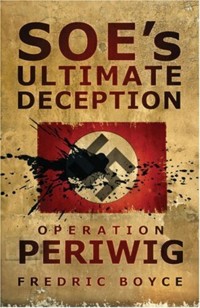
In the closing months of the Second World War, General Eisenhower exhorted the Western Allied forces to redouble their efforts to break the German will to resist. In considering this appeal, General Gubbins, whose Special Operations Executive was making a significant contribution to the liberation of occupied territory, was faced with a fundamental difficulty in the case of Germany. Although opposition to Nazism was present in some areas, it was neither organised nor pro-Allied. Then someone had the idea of creating an entirely fictional German resistance movement and 'selling it' to the Nazi security authorities. From January until April 1945, SOE rained propaganda leaflets on the hapless population fleeing the ruins of their cities and the oncoming Allied ground forces; they broadcast messages to the 'resistance'; they planted the most scandalous lies about eminent Nazis; and at the end they even dropped four agents on fictitious missions. This imaginative response to Ike's exhortation and the sheer audacity of the operation itself demand to be told to a wider audience.
Sie lesen das E-Book in den Legimi-Apps auf:
Seitenzahl: 461
Veröffentlichungsjahr: 2009
Das E-Book (TTS) können Sie hören im Abo „Legimi Premium” in Legimi-Apps auf:
Ähnliche




















ACKNOWLEDGEMENTS
The idea for writing this book came from a seed planted by the late Professor Douglas Everett during our co-authorship of SOE: The Scientific Secrets. Professor Everett was a member of SOE’s scientific team and became involved in a technical aspect of Operation Periwig. Another former SOE member who enthusiastically answered my questions about the operation was Angus Fyffe, whom I thank most warmly.
I must record my sincere thanks to Rex Aldridge, who gladly undertook to read, pass judgement upon and suggest improvements to the three chapters on the German opposition to Nazism. Any mistakes which remain are, of course, entirely my responsibility.
I would also like to record my thanks to the Special Forces Club, Denis Rigden, Joachim Fest, Hull Daily Mail Publications Ltd and especially to Uta Freifrau von Aretin, who readily provided the photograph of her father, Henning von Tresckow.
Fredric Boyce
CONTENTS
Title
Acknowledgements
Abbreviations
Introduction
1
A Potted History of Deception
2
What were SOE and PWE?
3
The German Section of SOE
4
The Major Players
5
Pre-war Opposition in Germany
6
Wartime Opposition in Germany
7
The German Opposition’s Final Fling
8
Contacts and Infiltration
9
Foreign Workers
10
The Birth of a Plan
11
The Initial Phase
12
Qualified Operational Freedom
13
The Final Phase
14
Final Assessment
Appendix 1
The Original Plan
Appendix 2
Leo Marks, Schiller and the Faulty Parachute
Appendix 3
Agent Drops into Germany
Appendix 4
Aide-mémoire for Mounting of Air Operations
Appendix 5
PWE Black Propaganda
Bibliography
Copyright
ABBREVIATIONS
ADC
Aide-de-camp
AEF
Archangel Expeditionary Force
‘C’
Symbol of the Head of the SIS
CB
Companion of the Bath
CD
Symbol of the Head of SOE
CGT
Confédération Générale du Travail (General Confederation of Labour)
C-in-C
Commander in Chief
CIGS
Chief of Imperial General Staff
COSSAC
Chief of Staff to the Supreme Allied Commander
CSDIC
Combined Services Detailed Interrogation Centre (MI19)
DCIGS
Deputy Chief of Imperial General Staff
DKE
Deutscher Kleinempfänger (German People’s Radio)
DMI
Director of Military Intelligence
DPW
Director of Political Warfare
EMFFI
Etat-Major des Forces Françaises à l’Intérieur (General Staff of the French Home Forces)
GAF
German Air Force
GCCS
Government Code and Cipher School
GCHQ
Government Communications Headquarters
GHQ
General Headquarters
GOC
General Officer Commanding
GRU
Glavno Razvedyvatelno Upravlenie (Soviet Military Intelligence)
GS(R)
General Staff (Research)
IFTU
International Federation of Trade Unions
ISK
Internationaler Sozialisticher Kampfbund (International Socialist political group)
ITF
International Transport Workers Federation
KCB
Knight Commander of the Bath
KCMG
Knight Commander of the Order of St Michael and St George
MEW
Ministry of Economic Warfare
MI(R)
Military Intelligence Research
MI5
The Security Service
MI6
Secret Intelligence Service (also known as the SIS)
MI9
Military Intelligence organisation dealing with escape routes out of German-occupied territories
MI19
Military Intelligence organisation gathering information from enemy prisoners of war
MoI
Ministry of Information
NSDAP
National Socialist German Workers’ Party (Nazi Party)
OKH
Oberkommando des Heeres (the German Army High Command, as it was known after 1935)
OKW
Oberkommando der Wehrmacht (the Wehrmacht High Command, as it was known after February 1938)
OSS
Office of Strategic Services
OWI
Office of War Information
PID
Political Intelligence Department
PoW
Prisoner of war
PRO
The Public Record Office (now the National Archives)
PWD
Psychological Warfare Division
PWE
Political Warfare Executive
RA
Royal Artillery
RE
Royal Engineers
RN
Royal Navy
RNVR
Royal Naval Volunteer Reserve
RSHA
Reichssicherheitshauptamt (Imperial security headquarters, Berlin)
SA
Sturmabteilung (lit. ‘assault detachment’)
SAS
Special Air Service
SCAEF
Supreme Commander Allied Expeditionary Force
SD
Sicherheitsdienst (German security service)
SFHQ
Special Forces Headquarters
SHAEF
Supreme Headquarters Allied Expeditionary Force
SIME
Security and Intelligence Middle East
SIS
Secret Intelligence Service (also known as MI6)
SOE
Special Operations Executive
SO(M)
Special Operations (Mediterranean)
SPD
Social Democratic Party
SS
Schutzstaffel (Hitler’s private protection army)
STS
Special Training School
TNA
The National Archives (formerly the Public Record Office)
USAAF
United States Army Air Force
VCSS
Vice-Chief of the Secret Service
W/T
Wireless Telegraphy
INTRODUCTION
In 1998 a book of some considerable length was published that lifted the lid in a most readable way on some of the inner workings of the Second World War clandestine organisation, the Special Operations Executive (SOE). Its author was the organisation’s 21-year-old codemaster, later to turn playwright, Leo Marks.
Some said publication of Between Silk and Cyanide1 had been postponed until ‘the authorities’ were happy that its revelations did not endanger national security or at least cause them embarrassment. But it was a fact that its release onto the world’s bookshelves coincided with a long-awaited relaxation of the firm grip that had kept many of the historical records of SOE from public scrutiny for over half a century.
The release of the documents at the Public Record Office (PRO), now the National Archives (TNA), gave rise to several television documentaries, but, as is often the way with such programmes that are made to fit into a tight time-frame and to appeal to a wide audience, in some cases they raised as many questions as they answered.
One of the eighty-one chapters in Marks’s book dealt with a, until then, virtually unheard-of deception operation carried out jointly by SOE and that other shadowy organisation, the Political Warfare Executive (PWE). The chapter on Operation Periwig detailed Marks’s involvement with the preparation of codes designed specifically to deceive the Germans – which presupposed that they would have to capture them under convincingly authentic circumstances. The proposed method of infiltrating the codes into the hands of the German security services has been a source of speculation, confirmation and denial. What cannot be denied is that Operation Periwig was a highly imaginative, if not bizarre, response to the exhortation of the Allied Supreme Commander, Eisenhower, to all forces to redouble their efforts to break the German will to resist. It was a deception plan that, had the war continued for another nine months and the severe restrictions placed upon SOE’s activities been lifted, might well have achieved some success.
The sheer audacity in the conception of Operation Periwig demands that its background, problems, actions and results be looked at from the viewpoint of the twenty-first century and with what written and anecdotal evidence remains.
NOTE AND SOURCE
1. Marks, Between Silk and Cyanide.
CHAPTER 1
A POTTED HISTORY OF DECEPTION
In the Western world deception has negative connotations, but it is nevertheless practised to some degree in every field of human endeavour and in many areas of animal behaviour. In its simplest form it is a straightforward lie or, in the animal world, a piece of cunning camouflage. Deception seems to have become an essential requirement for the survival of the species, and as the species evolves and becomes increasingly more sophisticated in its needs, so the means it uses to deceive potential predators or competitors becomes more and more complex.
One of the earliest things a baby learns is to gain attention by crying. Even if all its basic needs have been fulfilled, it will know that by crying as though it is uncomfortable or hungry it can attract its parents’ attention and some cosseting it would not otherwise receive. Although there is nothing wrong with the child, it deceives its parents into thinking there is. As the child gets older, so the methods it uses to persuade people to do its will become more involved. And this process continues to various degrees throughout life. The child may not become a fraudster, but the inherent ability to deceive seems to be a function of intelligence, a faculty that fortunately brings with it an appreciation of social responsibility. Sometimes petty thieves may get away with the crudest and most blatant of deceptions to gain entry to a house for burglary; relationships may break down through one party deceiving the other; and politicians may attempt to cover their unpopular actions by acts of deceit.
In the animal world the mink and the ptarmigan have evolved to change their appearance between summer and winter and so deceive their hunters or those they hunt by blending into the background. There is no better example of this than the chameleon, which changes its colour to suit whatever surface it happens to be on. But, it may be argued, deception – real deception – requires more than an instinct developed over millennia. It requires an active use of the brain for a specific purpose related to the present time.
Man has fought man literally for his survival since the earliest times, and as these conflicts have grown in size and intensity, so the means used has become more complex and the tactics more imaginative. Every great battle has its examples of achieving the element of surprise and of feinting tactics to lure the enemy into a disadvantageous position.
According to Design for Military Operations: The British Military Doctrine, surprise is a principle of war that should be directed primarily at the mind of an enemy commander rather than at his force. The aim should be to paralyse the commander’s will. Surprise can be achieved by a variety of methods; the most important must surely be deception. In battle it is not sufficient for a commander to merely avoid error: he must deliberately cause his enemy to make mistakes, and deception has precisely that aim. Deception has been a skill practised by the great generals in history, although for many it has also been their downfall.
The first requirement of the successful deceiving commander is an understanding of his opposite number’s character. If he has a reputation for rashness, impetuosity, excessive audacity or, indeed, personal ambition, he may be easily exploited by a deception plan. If the deceiver can find out his opponent’s prejudices, he is at an advantage, because there is a fair chance that whatever in the proposed plan does not fit with those prejudices will be ignored. The plan should therefore be based on what the enemy commander himself not only believes but hopes for. The military works with doctrines and organisational patterns as well as the psychological patterns of their individual members, and this forms the basis for deception. It also means that reliable intelligence about the enemy is essential.
Over the years deception in warfare has been viewed variously. In the first century AD it was commonplace among, yet not publicly endorsed by, the Romans. In the early Middle Ages, when most battles were hand-to-hand affairs with few opportunities for deception, the Western creed of chivalry considered such acts contemptible. In the Middle East, however, the Byzantines regarded deception as an essential part of warfare and took pride in their skill at it. In the late fifteenth century the ad hoc armies of the medieval period gave way to mercenaries and warfare as a profession based on discipline and training. Musketeers supplanted pikemen; firepower formed a higher proportion of armies than cavalry. By the beginning of the eighteenth century most countries had standing armies led by professional officers to whom deception in warfare was a normal path to victory.
More recently the Marxist-Leninist system had no qualms about using deception. They regarded it as a convenient and, indeed, legitimate technique to use in peace or war. In the culture of the West, however, it was often regarded as somewhat immoral. It has been said that for many years it ran counter to Americans’ concept of military honour, and it was used by them only sparingly in the Second World War. The British, on the other hand, despite their reputation for ‘fair play’ have shown themselves to be remarkably skilled in deception, and by the end of the Second World War were past masters in the art.1
In the world of deception innovative minds seek to spin intricate webs of information in an unstable and hostile environment. This work is carried out at great risk but also with the potential for greater gain. Deception in war is the art of misleading the enemy into doing something, or not doing something, so that his tactical or strategic position will be weakened. Two common types of military operation help to define this concept – deceptive and cover operations.
A deceptive operation includes all the signs of a genuine attack. It sets the enemy thinking that pretended hostile activities are real ones. It creates in the enemy a false sense of danger in one area, causing him to reinforce his defences there, and consequently to weaken them in another area where the genuine assault is due.
Cover is a type of deception that leads the enemy to believe that genuine hostile activities are a harmless feint. It induces a false sense of security by disguising the preparations for a real attack so that the enemy will be taken by surprise when it does come.
The use of animated dummy figures is an example of a simple deceptive operation, while a rumour campaign suggesting that troops embarking for the tropics are really bound for the Arctic is a simple cover operation. The scale of deception plans can range from small and simple to huge and complex.
Every deception operation must be founded on sound, reliable intelligence. The intelligence process may be seen as a simple cycle: direction, where the commander must tell his intelligence staff what he needs to know; collection of the information by overt or covert means; processing of the information gathered into usable intelligence and its distribution to those who need to know it; constant re-evaluation and updating of the information; and the effects of changes on the intelligence being disseminated.
From the viewpoint of a deceiving commander the crucial parts of an enemy’s intelligence-gathering cycle are the collection and processing stages, for here lie the opportunities for planting false information aimed at the credibility of their sources and agencies. Knowledge of what he is seeking during processing will greatly assist the deceiving commander in planting the apparently genuine but false information.
Any commander embarking upon a deception operation should bear in mind the following principles. He should aim his plans at the mind of the opposing commander. He should understand how that man’s mind works and avoid the temptation of providing him with what he thinks the opposition would like to hear. He should never forget that he is trying to make the enemy act in a manner to assist his own plans. The commander’s coordination and control should be centralised to ensure deception staff are in easy communication with him. Security is of the utmost importance to success. The genuine operation must of course be secure, and the deception plan must be equally so. The very existence of a deception plan should be divulged strictly on a ‘need to know’ basis. ‘Windfall’ inputs of unsolicited information should be avoided unless their security is guaranteed by exceptionally good disguising. If the genuine deception plan is discovered, the security measures must be such as to ensure the deceiving commander’s real intentions remain secret, perhaps by leaving several interpretations open for the enemy’s consideration. The sources of information used in the deception must be as near ‘genuine’ as possible. It should also be borne in mind that the credibility of information will be increased if it is confirmed from several sources. The enemy commander must be led to believe that he has obtained the information by accident or his own efforts. Preparation and timing are of course crucial: a deception commander must have sufficient time to develop his concepts. Finally, the facility to obtain or estimate feedback from the target is invaluable in allowing a degree of flexibility to be employed.
In the perfect deception operation, pieces of information are allowed to reach the enemy in such a way as to convince him that he has discovered them by accident or by the alertness of his agents. If he works out the connection between these items of ‘fact’ himself he is far more likely to believe that the deception is the truth. The variety and scale of the pieces of information that can be offered to the enemy are enormous: dummy installations and military equipment, skilfully composed rumours for circulation at home and overseas, the dropping of propaganda leaflets on the enemy, fictitious radio traffic between imaginary military units, deliberate indiscretions by friendly diplomats in neutral countries casually let drop at dinner parties, and the most skilful use of enemy agents under their captors’ control to leak fragments of information to their former ‘masters’. This latter practice proved vital to the success of many of the Allied deception plans in the Second World War.
The use of spies, or more precisely double agents, in deception operations as opposed to straightforward information-gathering is a powerful tool. The ordinary spy is exemplified in history by the postmaster at Versailles, who, in the war of 1701, was in the pay of Prince Eugène of Savoy-Carignan and opened letters from the French court to their generals, sending copies to the Prince. An example of an unwilling double agent is provided by the secretary of England’s King William of Orange, who was persuaded by François, duc de Luxembourg to keep him informed of everything. When the King discovered the treachery he forced the secretary to send misleading information to Luxembourg, resulting in the French being caught by surprise at Steinkirke in 1692.2
It was not until the twentieth century that the use of double agents had their greatest impact on the outcome of operations in warfare. The organisation of this kind of deception had its origins in the Middle East in the desperate days of late 1940 when, in normal military operations against the Italians and Germans, it was found advantageous to make use of captured men who had expressed a willingness to work for the Allies in spreading deliberately misleading information. Where these men had been caught undertaking espionage for the enemy, their ‘turning’ to work for the other side was assisted by the waiving of the one penalty that any spy could expect.
The techniques for using these double agents in support of deception plans, as distinct from the more usual work they had been caught doing, were developed by a specialist unit formed by the C-in-C Middle East, Gen Wavell, and known as ‘A’ Force. Under Lt Col Dudley Clarke this unit was set up specifically to devise and conduct deception operations. It is claimed that all other deception devices and arrangements later used so successfully by both British and American forces sprang from these origins.
The physical presentation of false information may often be seen as being ambiguous, particularly where items that the deceivers would like the enemy to know are of the kind not normally committed to written communications. Electronic deception by radio also has its limitations: considerable physical resources are required, and the compilation of a suitable transmission requires much skill to maintain authenticity. Then, of course, one has the uncertainty over whether the enemy will be able to receive the message or, indeed, whether he is even listening. Double agents, on the other hand, have the accuracy, speed and certainty for use in deception operations over relatively long periods and at considerable range. If they are backed up by both electronic and physical deception methods, then, if the enemy breaks through the security around the operation, he will find confirmation of the story he has uncovered.
The use of double agents in the Second World War occurred simultaneously in Egypt and Britain but was managed completely separately in the two countries. In Cairo, Security and Intelligence Middle East (SIME) had been set up to combine all matters of security and intelligence in the Middle East theatre of war and involved officers of both MI5 and MI6 working closely together. Intelligence jobs that could not find an obvious allocation, especially if they contained an element of unorthodoxy, tended to finish up at SIME. In London, turned agents were dealt with by Section B1a of MI5 under Lt Col T.A. Robertson.
Dudley Clarke in Cairo worked out and laid down some strict principles for the use of double agents: the contacts of an agent used for passing deception information should be entirely imaginary, as should be his own espionage activities; a deception agent must not be allowed access to the outside world, irrespective of his own allegiances; and no deception links should ever be used for intelligence purposes other than deception. Should this occur for any reason, then the link should cease to be used for deception. According to Jon Latimer in Deception in War,3 sometimes these principles were not followed in London – with almost disastrous consequences.
For the classic example of military deception we must go back to Greek mythology and Homer’s twenty-four books of the Iliad. The war between the Greeks and the Trojans began when Paris, a Trojan prince who had grown up as a shepherd, eloped (with Aphrodite’s connivance) with Helen, wife of Menelaus, King of Sparta. Menelaus was not best pleased and formed an alliance with other Greeks to besiege the great city of Troy. The city was well fortified and the siege continued for ten years.
After so long the Greeks formed a cunning plan. They built a huge wooden horse, left it on the beach ostensibly as an offering to Athena, the Greek goddess of wisdom, and withdrew out of sight, giving the Trojans the distinct impression they had given up the decade-long siege. The Trojans were naturally curious about this enormous equine monument, but Cassandra, a Trojan princess who had learned the art of prophecy from none other than Apollo himself and Laocoön, one of his priests, warned against interfering with it. But their warnings went unheeded and the horse was dragged into the city. At night a Greek task force hidden within it emerged to open the city gates to their comrades, who proceeded to sack the city.
In the Old Testament the story is told of how Gideon was able to rout the much larger army of the Midianites. Gideon divided his force of 300 warriors into three parts, who, each man equipped with a trumpet and a lamp hidden in a pitcher, surrounded the Midianite camp in the middle of the night. On the given order the pitchers were broken to reveal the lamps and the trumpets were blasted for all they were worth. The 300 men sent up a great cry, ‘The sword of the Lord and of Gideon’, whereupon the Midianites, thinking they were surrounded by a greater army and no doubt confused at being wakened so suddenly, took flight and were pursued by increasing numbers from other cities who joined in the rout.
The spreading of rumours exaggerating the strength of an army has been commonplace, but to have it believed and acted upon needs special care and originality. The Mongols achieved this false impression of strength by virtue of the speed and manoeuvrability of their cavalry, which could give the impression of operating over a much wider area than was really the case. Add to this the fact that each man would come to the battle with as many as five horses, the spare ones being ‘ridden’ by dummy riders, and the illusion of a much greater fighting force was complete.
To the Byzantine leaders deception in warfare was entirely acceptable. Why shed blood and spend wealth on achieving what could be gained by the skilful use of feigned retreats, stratagems and cunning ruses? Emperor Leo VI (862– 912), known as Leo the Wise or Leo the Philosopher, wrote openly in his Tactica of elaborate stratagems and recommended one piece of mischief in particular that remained in use into the Second World War, forming the basis of several deception operations considered in this book: the writing of treasonable letters to enemy officers and ensuring they fall into the hands of higher authorities.4
More than 2,000 years after the siege of Troy, during a vital phase in the Battle of Hastings, the most decisive battle fought on English soil, it is claimed that Norman cavalry pretended to retreat in the face of the resolute defence of the Anglo-Saxon foot soldiers. This move wrong-footed the defenders, and Duke William of Normandy won the day and became ruler of England.
Over 800 years later the exploits of a relatively obscure British officer in the Second Anglo-Boer War (1899–1902) served to enthral the Victorian public at a time, in the last few months of the nineteenth century, when a number of reversals had caused depression to set in at home.5 Col Robert Stephenson Smyth Baden-Powell, who later went on to form the Boy Scout movement, was a bit of a dramatist, with a hint of schoolboy mischievousness about him. The details of how he came to be besieged in Mafeking can be found on page 31 of Jon Latimer’s book, Deception in War. Baden-Powell’s preparations for dealing with his predicament included several examples of deception. His intention was to persuade the enemy that they faced a much larger and better equipped force than was really the case. So when he set up a ring of outposts around the town he made sure one of them could easily be construed to be his headquarters. It stood out by having two flagpoles – a little obvious, perhaps, but nevertheless it attracted enemy gunfire as intended, which was of course a waste of effort and ammunition, because it was a dummy. The genuine trenches and prepared houses were all linked by telephone to the real headquarters in Dixon’s Hotel. Baden-Powell employed strings of natives to continuously be seen carefully carrying boxes around the town. They were under strict instructions that on no account must the boxes be dropped. Then signs appeared around the town in Dutch and English warning of minefields. These were given even wider publicity by official announcements. If the enemy’s informants in the town still had any doubts, they were quickly dispelled by a very public test-firing of a mine. In reality the boxes so carefully handled by the Africans contained nothing more than sand and the mines were a bluff.
Baden-Powell was aware of the Boers’ intelligence-gathering capability and decided to turn it against them by writing to an old acquaintance whose home was just inside the Transvaal, warning him of the impending approach of a ‘third column’ of British troops. But he knew the man was dead and banked on the letter being opened and read by the postal authorities and the contents passed on to the Boers.
Further examples of the besieged force’s inventiveness are to be found in their fabrication from old biscuit tins of a large rectangular cone with a highly reflective interior and the intense light of an acetylene torch at its apex. This was fitted to a long pole to form a searchlight to dissuade the Boers from mounting raids under cover of darkness. The one light was moved quickly from fort to fort and is reported to have greatly impressed the Boers when it was shone in their general direction.6
Another device was a huge megaphone, again made from biscuit tins, that was said to have been capable of conveying words of command for more than 500 yards. It was used to broadcast orders to the defending ring to prepare for an attack with fixed bayonets. This was said to have greatly scared the Boers, who responded by opening fire on the megaphone location, thus giving away their own positions.7
Baden-Powell held out by means of such deceptions for 217 days, until the Boer Gen Snyman withdrew. His audacity had won through and his tactics entered the history books.
A modern variation on the Trojan horse theme occurred in 1940 when innocent-looking merchant ships entered Bergen and Narvik in Norway only to discharge their hidden German troops, who took over the two cities.
There were several dramatic and well-known deception operations during the Second World War. Among the most notable was Operation Mincemeat, when the corpse of a drowned man was disguised as a Royal Marines Officer, taken in a special container by submarine under great secrecy and put into the sea at a point off the coast of Spain where the tides were sure to wash him up onto the beach. Although Spain was neutral, certain of its cities were hotbeds of spying and intrigue, so the chances were that German agents would hear about the corpse of a British officer and make arrangements with the authorities to examine its papers. Attached to the corpse were documents ostensibly in transit between London and the Mediterranean HQ. Among the papers were carefully drafted letters from which the enemy could construe that Sicily was the cover (i.e. false) objective for the forthcoming invasion of Greece, the reverse of what was really planned. The Allies, it seemed, would attack Greece two weeks after an attack on Sicily had been launched. A week later further assaults were to take place against Corsica, Sardinia and the south of France. Exactly as anticipated, the corpse and its documents were reported to the local Germans, who examined them before the body was given a funeral as ‘Major Martin’. The enemy was deceived and was concentrating its forces well away from the genuine invasion area when the Allied troops landed in Sicily.8
In the lead-up to the D-Day invasion of the continent of Europe on 6 June 1944 the Allies were intent on keeping the Germans guessing about where the Overlord landings would take place. To achieve this, dummy aircraft, tanks, lorries and landing craft were deployed to give the impression to any Luftwaffe aerial reconnaissance sorties that the build-up of equipment was taking place in areas that indicated the Pas de Calais was to be the point of landing. Broadcasts by the Political Warfare Executive (PWE) and by the German spies who had been ‘turned’ and were transmitting to their masters under the control of the Twenty Committee also introduced subtle hints as to the target for the Allied assault. The Twenty Committee (so named because the Roman numerals for ‘twenty’ form a double cross, and by running the captured German agents the Committee was double-crossing the enemy) was part of the counter-intelligence security service, MI5. This was arguably the most successful deception of the war. It ran the entire German spy network in Britain from the fall of France in 1940 up to the return of British armies to France in summer 1944.
Not all the deception plans of the Allies in the Second World War were successful. PWE became involved in the planning of three operations as part of Operation Cockade, which suffered from serious political pressures before being set in motion. In 1943 the Combined Chiefs of Staff had decided that there would be no important operations outside the Mediterranean area. In order to help our own forces in Sicily and Italy, and our Russian allies in the east, it was highly desirable to keep as many German divisions as possible on standby in the west. To do this by means of Commando raids was not regarded as sensible. Apart from the possibility of heavy losses such as had been borne in the ill-fated Dieppe raid of August 1942, such attacks tended to give the enemy as much experience in defending targets as the Commandos gained in attacking them. Moreover, if such raids resulted in the reinforcement of the heavily fortified West Wall at points where the Allies were, in reality, planning to breach it, the exercise would have been counter-productive. At this time one of the chief objectives of British air strategy was to weaken German fighter strength before the date of the invasion. With this in mind, precision low-level attacks were made on factories making parts and assembling aircraft. To further reduce the German Air Force’s (GAF) numbers of aircraft and pilots, Fighter Command sought every opportunity to lure the enemy into combat. But GAF aircraft numbers were being reduced by superior Allied air forces, so it was enemy policy to refuse combat until the invasion had started, unless they had local tactical superiority. In addition to keeping enemy forces tied up where the Allies had no intention of engaging them, a secondary objective of these pre-Second Front deception plans was therefore to bring about an air battle and inflict heavy losses on German fighter aircraft.
Three strategic plans were drawn up as part of Operation Cockade: Tindall, Starkey and Wadham.
Tindall involved preparations for an attack on the key German base of Stavanger in Norway by forces based in Scotland. German forces in Norway were only sufficient to hold the country, and any additional threat would cause the redeployment of troops from other parts of Europe where the Allies planned genuine attacks.
Starkey concerned preparations for a British and Canadian expeditionary force to establish a bridgehead at Boulogne. Once again, the hope was to initiate large-scale German troop movements but also to lure the GAF into combat where Allied superiority could inflict heavy losses on it.
Wadham was a plan for an American airborne assault resulting in the capture of the Atlantic port of Brest.
The preparations for Tindall were arranged to culminate in late August 1943, after which the Germans were to be made to believe it had been a feint. A week or two later Starkey and Wadham would finish, and once again the Germans would have to acknowledge they had been feints. Then Tindall would be remounted a few weeks later to give the impression of an invasion of Norway.
PWE and the Special Operations Executive (SOE) were charged with drawing up detailed plans to counter the political disadvantages of the operations, for they would be taking place at a time of desperate need for liberation of the Nazi-occupied territories. In the midst of all their privations, and with the prospect of yet another winter under the Nazi jackboot, the enslaved populations would be very disappointed if they were led to believe the real invasion was at hand, only to find it was a feint. Furthermore, the enemy propaganda service would make the most of a failure to invade.
The lengths to which the deception went illustrate the necessity of covering every conceivable angle in the planning of an operation such as Starkey.9 Genuine troops were supplemented by 60,000 non-existent men whose presence had to be allowed for. PWE sent simple instructions to resistance groups on the use of small arms. The BBC broadcast talks on ‘Resistance and Security’, ‘Enemy Troop Dispositions and Plans’ and (most tellingly) ‘Recognising Allied Troops’. There was a flurry of meaningless code messages put out on the BBC French, Belgian, Dutch and Norwegian services: all activities that could be expected prior to a real invasion.
Shipping and landing craft, many of them dummies, were moved along the south coast of England from Falmouth to Rye, radio deception being used to give the illusion of far greater numbers than was really the case. Some 400 gliders, 128 Spitfires and 64 Hurricanes, all of them skilfully made dummies, were inserted into airfields in the south of England, care being taken to ensure the fighter aircraft were moved from time to time to give them some semblance of life.10 Decoy lights and fires were set up, and lighting schemes were installed to give the impression of illumination to facilitate troop embarkation.
Even after all this preparation it was decided that a few German prisoners snatched for interrogation purposes in Commando raids on the French coast would add verisimilitude to the exercise. After eight raids the only enemy property brought back were two samples of barbed wire! The leaks through agents in enemy territory and the former German spies now controlled by the British went ahead; they contained information about things that could not be spotted by reconnaissance aircraft, plus some, of course, that could, for the sake of authenticity.
The Allies continued to be concerned about the effect of this deception operation on the morale of the populations of the occupied countries concerned, and in particular on their resistance movements, whose actions were going to be crucial when the real invasion took place. To be seen to be raising the hopes of these people, only to dash them a few days later, was a risk that had to be taken. The historical records do not indicate whether the governments-in-exile were made privy to the secret. The prickly Général de Gaulle would have been a difficult leader to persuade. For security reasons the Allies felt unable to reveal to the resistance on the ground in Europe that Starkey was a fake. In the end a somewhat subtle announcement in the general style of many other messages to the overrun peoples was agreed upon:
Be careful of German provocation. We have learned that the Germans are circulating inspired rumours that we are concentrating armies on our coasts with intentions of invading the continent. Take no notice, as these provocations are intended to create among you manifestations and disorders which the Germans will use as an excuse for repressive measures against you. Be disciplined, use discretion, and maintain order, for when the time arrives for action you will be advised in advance.11
What of the British press, which could not fail to see the build-up and hectic activity along the south coast? Selected members were to be told it was a rehearsal for the real thing.
Suggestions were made for leaflet drops during the week before the operation, advising the population that the activity was a rehearsal – this would further mislead the enemy while hopefully maintaining the confidence of the patriots. Instead, a warning or Avis was broadcast, which resulted in an extremely bad reaction from France. This raised serious and vociferous objections in the French region of PWE and in the BBC. Alternative warnings were drafted in an effort to retrieve the situation, but in the end none was broadcast, and at the appointed time the ships of Operation Starkey sailed. They stood ten miles off the French coast without encountering any opposition before turning for home. The GAF stayed firmly on the ground, and by all accounts the enemy ignored what was going on.
Deception operations throughout the ages have made use of the available technology of the time. From the wooden horse of Troy to the fake horse riders of the Mongols, from remotely fired muskets to Baden-Powell’s ‘searchlight’, current technological developments have been used to deceive the enemy as the opportunity presented itself. Some people in the First World War retained vestiges of Victorian morality that regarded deception as unpalatable, but by the total war of 1939 there were no restraints on the use of technology to achieve success by any means, overt or covert. Two fields in particular had developed greatly during the interwar years and now presented many opportunities for the deceivers on both sides: wireless and aircraft. But wireless had the added advantage that, if it could be received by the enemy, it could be used to subvert his armed forces and general population. Its use in this way required great skill. The Germans tried such subversive tactics with Goebbels’s Propaganda Ministry broadcasts by the American-born traitor William Joyce. Joyce employed an exaggerated English upper-class drawl when he introduced his broadcasts with ‘Garmany calling, Garmany calling’; nicknamed Lord Haw-Haw, he quickly became the butt of schoolboy humour. Although his broadcasts could be (and were) easily picked up in England on normal household wireless sets, he was never taken seriously. As a subversive operation he was a failure. In Britain subversion was handled chiefly by PWE and SOE, the former broadcasting carefully scripted programmes from secret transmitters in the south of England. Thus deception could now go to the very heart of the enemy.
One of the most ambitious and imaginative deception plans of the Second World War had its origins in the concern felt by the Supreme Commander of the Allies, Gen Dwight D. Eisenhower, about the German people’s will to resist. With the exception of a few weeks’ setback caused by von Rundstedt’s Ardennes offensive in December 1944, the Allies had been steadily advancing towards Germany since the invasion of Normandy in June. In Germany the population itself was still enduring round-the-clock air bombardment, as it had done for some considerable time: daylight raids by the Americans and night attacks by the RAF. Targeting of military and industrial installations was not always accurate. To add to the Germans’ misery, Air Marshal ‘Bomber’ Harris, the head of Bomber Command, had adopted a policy of area (as opposed to strategic) bombing, as part of which the heart of Hamburg was destroyed in July 1943 by a huge firestorm that caused appalling numbers of civilian casualties. Many other cities had also suffered devastating raids. The culmination of this kind of operation took place in February 1945 with the controversial bombing of Dresden. Yet despite this onslaught on the German people and their consequent privations, they showed no signs of a major revolt against the Nazi regime.
On the ground the American, British and French forces advanced relentlessly throughout early 1945 to the German border and then into the ‘Fatherland’ itself. In the east the Soviets had driven the German invaders from their land and were through Poland and into the eastern states of the Reich. Everything indicated a bleak future for Germany. The obvious and sensible thing for the German forces to do was to sue for peace. But the Allies’ demand for unconditional surrender would strip both the military and the civilian population of any semblance of an honourable defeat. Some feared a repeat of the humiliation that Germany felt after its defeat in the First World War and the imposition of the Treaty of Versailles. For most of the traditional German officer class who had sworn their oath of loyalty to their Führer, a repetition of this was unthinkable. The will to resist remained steadfast in most cases.
The Allies, in the form of SOE and PWE, argued that, had there been an organised and effective opposition to Nazism at this time, as there had been in the occupied countries, they could have nurtured, supplied and helped it to rise up against the German authorities, thus assisting the incoming forces. But there was no evidence of an organised and cohesive resistance movement capable of being rapidly mobilised.
Then someone had an idea: ‘If there isn’t a resistance organisation in Germany, let’s create an imaginary one!’
Operation Periwig was conceived.
NOTES AND SOURCES
1. Latimer, Deception in War.
2. Luvaas, Frederick the Great on the Art of War, pp. 122–3.
3. Latimer, Deception in War, p. 78.
4. Latimer, Deception in War, p. 78.
5. Pakenham, The Boer War, p. 398.
6. Gardner, Mafeking, p. 65.
7. Baden-Powell, Lessons from the ’Varsity of Life, p. 206.
8. Montagu, The Man Who Never Was.
9. Cruickshank, Deception in World War II.
10. TNA (PRO) file FO898/373.
11. TNA (PRO) file FO898/398.
CHAPTER 2
WHAT WERE SOE AND PWE?
THE SPECIAL OPERATIONS EXECUTIVE
The Special Operations Executive (SOE) was formed in mid-July 1940 at the height of the crisis following the evacuation of the British Expeditionary Force from Dunkirk and the fall of France. It brought together three existing secret organisations: Section D of the Secret Intelligence Service (SIS), otherwise known as MI6; the Military Intelligence Research unit (MI(R)) of the War Office, formerly known as General Staff (Research) or GS(R); and Electra House, a clandestine body attached to the Foreign Office mainly concerned with propaganda.
As early as March 1939 the existence of three organisations tackling much the same work was seen as an anomaly. A certain duplication of effort was taking place between MI(R) and Section D, something the country could ill afford, both being concerned with offensive clandestine operations. The first paper to address this problem was prepared in June 1939. Over the next few months there followed various initiatives attempting to solve the problem of coordination. Reorganisation was discussed in a complex series of meetings held in June and July 1940 involving, in various combinations, the Chief of Imperial General Staff (CIGS), Lord Gort; the Foreign Secretary, Lord Halifax; the Chief of GS(R), Col Holland; the leader of the Labour Party, Clement Attlee; another Labour rising star, Dr Hugh Dalton; and representatives of SIS. They dealt among other things with the sensitive problem of whether to have military or civilian control of any merged organisation. The solution was to some extent a compromise between political interests, but the details of the discussions leading to agreement, said to have been acrimonious, cannot (according to Mackenzie in The Secret History of SOE) be traced from the papers available. The final document proposing the setting-up of an organisation to be called the Special Operations Executive under the chairmanship of the 53-year-old Minister of Economic Warfare, Hugh Dalton, was signed on 19 July by Neville Chamberlain (then Lord President of the Council following his resignation as Prime Minister on 10 May 1940). The leader of the wartime coalition government, Winston Churchill, had already, on 16 July, offered the headship of SOE to Dalton, with the now much-publicised exhortation to ‘set Europe ablaze’. Ironically, it was on this very day that Hitler signed his Führer Directive No. 16 for the planning of Operation Seelöwe (Sea-lion), the invasion of Britain. The SOE Charter was finally approved by the War Cabinet on 22 July.
In retrospect it seems somewhat anomalous that it was placed not under any of the parent ministries but under the Ministry of Economic Warfare (MEW). The reasons were a consequence of the complicated political negotiations that preceded its formation. Each of the constituent organisations had been set up independently before the war in 1938 with objectives that were loosely defined and overlapping. The new organisation was given a more specific task of promoting sabotage and subversion through its own covert agents, and of supplying arms, equipment and agents to resistance movements throughout occupied Europe and beyond. When these old organisations were amalgamated to form SOE they each brought with them a good deal of historical baggage which, throughout the war, coloured relations between SOE and its parents. These political problems were of major importance in the general progress of SOE throughout its existence. Implementation of the Charter took a little time. Control of Section D and Electra House passed from the Foreign Office to the MEW on 16 August 1940, while the formal dissolution of MI(R) followed in October. Meanwhile, SOE’s London headquarters was moved in October to 64 Baker Street, where it adopted its public cover name of the Inter-Services Research Bureau. It was quite separate from the MEW in Berkeley Square. Dalton remained as head until he was replaced in 1942 by Lord Selborne, also aged 53. The formal relationship between Section D (MI6) and GS(R) (later known as MI(R)) is difficult to disentangle, but some of their technical work certainly overlapped. Electra House, which had been set up in 1938 by Lord Hankey and headed by Sir Campbell Stuart, was inspired by a successful propaganda organisation in the First World War.
SECTION D
In April 1938 the then head of the SIS, Adm Sir Hugh Sinclair, arranged for the secondment of Maj Lawrence Grand, RE, from the War Office to the SIS to carry out a study and to report on the possibilities of creating a British organisation for covert offensive action. Germany and Italy had already conducted such operations in countries that they later overran, and the possible existence of a fifth column in Britain was not entirely ruled out. (The term ‘fifth column’ applies to enemy sympathisers who might provide active assistance to an invader and originates from Spanish Civil War rebel collaborators in Madrid in 1936, when four rebel columns were advancing on the city. The fifth column were the sympathisers already in the city.) Grand had no experience of secret service work but he had ideas, enthusiasm and a persona that earned the admiration of all who worked with him. His personal energy was much needed, for time was not on his side – by now Austria had been annexed by Germany. Grand was promoted to colonel, given the symbol D and set up the Devices Section of MI6, to be called Section D but with the cover name of Statistical Research Department of the War Office. Section D’s terms of reference were to:
• study how sabotage might be carried out
• produce special sabotage ammunition
• make experiments on carrying out sabotage
• train saboteurs
• study methods of countering sabotage.
The use of aggressive action was precluded as long as peace held. At first the Section consisted of only two officers.
Among those recruited by Grand in December 1938 was Cdr A.G. Langley, RN, who set in motion and pursued energetically work on the research and development of ideas and stores needed to meet the above objectives. In particular his small group was concerned with the design of time fuses and switches of various types and of explosives and incendiary devices. Section D was originally based at the SIS’s head office in London at 54 Broadway but soon expanded to the adjacent Caxton House. In the early months of 1939, as the threat of war grew ever closer, Horace Emery of the SIS arranged for the manufacture to Langley’s design of the first batch of ‘time pencil’ fuses. Articles made in Germany and Italy that might be suitable for concealing or camouflaging weapons were collected, and contacts were established with organisations that could be of use in war, such as various service departments, the research department at the Woolwich Arsenal, the British Scientific Instrument Research Association, the Royal Society, Imperial Chemical Industries (ICI), the Shell Oil Company, the Railway Executive, etc. On the outbreak of war most of Section D’s staff moved with the Government Code and Cipher School (GCCS), the forerunner of GCHQ, to Bletchley Park in Buckinghamshire (Station X – ‘ex’, not ‘ten’), although some went to The Frythe, a requisitioned private hotel at Welwyn in Hertfordshire.
By the middle of 1939 a small magazine for explosives and incendiaries had been built at Bletchley and work had started on full-scale experiments with weapons.1 This was not universally popular, because it was judged incompatible to have explosives and decoding work on the same site. Furthermore, GCCS’s work was expanding rapidly, and Section D was forced to find accommodation for Langley’s work elsewhere. In November 1939 it was moved to Aston House at Stevenage in Hertfordshire, which was given the title of Signals Development Branch Depot No. 4, War Office. In 1941 it became War Department Experimental Station 6 (ES6 WD) in recognition of its parent, MI6. On the formation of SOE it became known also as Station XII. Langley took with him a small group of about seven officers, two laboratory technicians, five other ranks and secretarial staff.
Also recruited by Grand was a group of distinguished amateur sailors from the Royal Cruising Club, including Frank Carr, the assistant librarian of the House of Lords, Roger Pinckney, the architect of Melbourne Cathedral, and Augustine Courtauld, Arctic explorer. They had all been recruited to familiarise themselves with parts of the continental coastline that could be of strategic importance in wartime. Attached to this group was Gerry Holdsworth, who was later to set up the Helford Base in Cornwall.2 Meanwhile, Section D had established agents and offices in Sweden, Norway, Holland, Spain and France. However, within a few months of the outbreak of war it had lost contact with nearly all of its overseas agents, and it was soon apparent that most had been arrested by the Germans. Its work was, inevitably for such a novel enterprise, largely a process of trial and error which was overtaken by the progress of the war before significant results could be obtained. As a consequence, by the time of the fall of France in 1940 neither Section D nor any other Allied covert organisation had any agents on the western European mainland, although a number remained in the Balkans and the Middle East.
GS(R)
In 1938 a section was set up in the War Office by the Deputy Chief of Imperial General Staff (DCIGS), Sir Ronald Adam, known by the innocuous title of General Staff (Research), or GS(R). It was to research into the problems of tactics and organisation under the DCIGS. It produced a number of papers, two of which are of interest but have not been found: ‘Considerations from the Wars in Spain and China with Respect to Certain Aspects of Army Policy’ and ‘An Investigation of the Possibilities of Guerrilla Activities’. In December 1938 Lt Col J.F. Holland, RE was appointed head of the group. He had had experience of irregular warfare in Ireland and India which had influenced the writing of the second paper mentioned above. With Col Grand of Section D, Holland produced a joint paper dated 20 March 1939 dealing with the possibility of guerrilla actions against Germany if they over-ran eastern Europe and absorbed Romania. The formal objectives of GS(R) were similar to those of Section D, namely to:
• study guerrilla methods and produce a guerrilla Field Service Regulations Handbook incorporating detailed tactical and technical instructions as they applied to various countries
• evolve destructive devices suitable for use by guerrillas and capable of production and distribution on a wide enough scale to be effective
• evolve procedure and machinery for operating guerrilla activities if it were decided to do so subsequently.
As the Military Intelligence Directorate expanded in response to the increasing threat of war in the spring of 1939, GS(R) changed its name to Military Intelligence (Research) or MI(R). Holland’s Section was first housed in Caxton House, adjacent to Grand’s Section D, but on the outbreak of war it was moved to the War Office Building. Also in the spring of that year Holland was authorised to appoint two Grade II staff officers to MI(R). The first was another Royal Engineer, Maj M.J.R. Jefferis, later Sir Millis Jefferis, to work on guerrilla devices. His unit was based initially at 36 Portland Place, but when they were bombed out in autumn 1940 they moved to The Firs, a Tudor mansion at Whitchurch near Aylesbury which became known as MI(R)c. Also known as ‘Winston Churchill’s Toyshop’,3




