


11,99 €
Mehr erfahren.
- Herausgeber: The Janki Foundation for Spirituality in Healthcare
- Kategorie: Ratgeber
- Sprache: Englisch
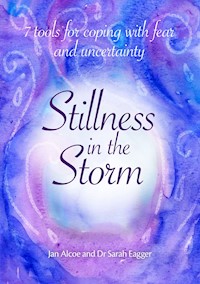
We live in a world of change and uncertainty – we always have. But presently it’s as if a storm were raging round us, churning up feelings of anxiety and fear and making it difficult to respond resourcefully to our own needs and those of others. This unique book offers seven practical self-help tools drawn from a broad range of positive psychology, therapeutic, and spiritual models and approaches, each designed to help us discover the ‘stillness in the storm’ – our sense of peace and inner wholeness. The book includes simple exercises, audio meditations and commentaries, emergency responses, and positive affirmations to help the reader put its powerful ideas into everyday practice.
Das E-Book können Sie in Legimi-Apps oder einer beliebigen App lesen, die das folgende Format unterstützen:
Seitenzahl: 134
Veröffentlichungsjahr: 2023
Ähnliche


















Copyright ©The Janki Foundation for Spirituality in Healthcare 2020
978-0-9548386-3-8All rights reserved. No part of this book or the accompanying audio recordings may be reproduced by any mechanical, photographic or electronic process, or in the form of a photographic or audio recording, not may it be stored in a retrieval system, transmitted or otherwise copied for public or private use without the written permission of the publisher. Requests for permission should be addressed to:
The Janki Foundation for Spirituality in Healthcare
Email: [email protected]
Cover and interior design: Phil Morash
Illustrations: Tanya John ([email protected])
e book creation: eBook Partnership
Audio recordings: see end of book
Dedication
This book is dedicated to our two dear friends who both passed way in theSpring of 2020:
Dadi Janki
Our founding president of the Janki Foundation for Spiritual Healthcare who was aconstant source of compassion, inspiration and encouragement.
Dr Craig Brown
Our scientific and medical advisor and former trustee who was a great supporter,innovator and contributor to the work of the Janki Foundation.
Acknowledgements
Arnold Desser and Peter Dale for feedback on the draft of the book. Dr Rachna Chowla, Dr Julia Ronder and Suman Kalra for reading the manuscript and for their support. Suman Kalra for writing some of the positive affirmations. Tanya John for illustrations, Michael Benge for copy editing.
This book draws upon many skills and approaches we have learnt through our years of training and clinical work. We are extremely grateful for all the inspirations and ideas which have informed us on the journey of writing this book. In particular, we extend gratitude to the Values in Healthcare programme (Janki Foundation, 2004), Gilbert’s Compassionate Mind model (Constable, 2009), and Neff and Germer’s Mindful Self-Compassion Course (Guilford Press, 2013), which informed the content of Chapter 3 in particular.
For acknowledgements relating to particular practices and the audio recordings, please see the back of the book.
Authors
Jan Alcoe (BSSc PsychHons, DHypPsych(UK)) is publishing and training adviser to the Janki Foundation and has a background in writing and publishing in health and social care. She is trained in clinical hypnotherapy and has written two previous Janki Foundation self-help guides based on her professional experience and from coping with personal, serious illness. She co-edited the self-development programme Values in Healthcare: a spiritual approach for the Janki Foundation. Jan has retained a lifelong interest in positive psychology, the power of the mind-body connection and spirituality in healing, and was a past vice-chair of the British Holistic Medical Association.
Dr Sarah Eagger (MB,BS, FRCPsych) is Chair of the Janki Foundation. She worked for 30 years in the NHS as a consultant psychiatrist and honorary senior clinical lecturer in the department of Psychological Medicine, Imperial College, London, and also worked in private practice for 15 years. Sarah is executive committee member of the World Psychiatric Association, Section on Religion, Spirituality and Psychiatry and past chair of the Spirituality Special Interest Group of the Royal College of Psychiatrists, the National Spirituality and Mental Health Forum and the British Holistic Medical Association. As a certified Mindful Self Compassion teacher, she is an advocate of a values-based approach to healthcare – one that embraces peace, love, positivity and compassion for the benefit of oneself and others.
Contents
Foreword
Preface
Introduction
Why this guide?
Fear and doing versus calm
Returning to wholeness: our spiritual nature
What this self-help guide offers
Who is this guide for?
How to use this guide
Before you begin, relax!
Chapter 1: Creating Inner Safety
Chapter 2: Being Present
Chapter 3: Loving Myself
Chapter 4: Stepping Back and Accepting
Chapter 5: Empowering Myself
Chapter 6: Connecting
Chapter 7: Discovering Inner Peace and Wholeness
Chapter 8: Resilience Beyond the Storm
Foreword
I would like to thank Jan Alcoe and Dr Sarah Eagger for writing this book. At this time of multiple ‘storms’, when humanity seems to be lurching from one crisis to another, even deeper one, it offers simple, spiritual self-care practices that can help us all return to our natural state of calm.
I have known Sarah most of my life and have seen how she has devoted her life to serving humanity. At the same time, I have seen how she has given attention to her own personal spiritual journey, so as to nurture and empower herself in her work supporting others. I have known Jan, too, for many years and what has struck me most is her willingness, as a medical editor, to go into the depth of values in healthcare from a spiritual perspective. I have seen Jan go through a period of critical illness and come out the other side with a lot of lightness, experience and wisdom. She has used spiritual tools in her own life to keep herself moving forward,
The unimagined changes we are witnessing in the world and experiencing in our lives are having a huge impact on the well-being, sense of identity and feelings of connectedness and belonging of individuals and communities worldwide. At such times, when our routines, choices and pastimes are no longer possible or curtailed, it is understandable that we can feel we are no longer in control, anxious and lost. Yet it is often precisely when external supports are taken away from us that we can see and understand more clearly and deeply what is going on inside – our thoughts and feelings – and start to know and take care of ourselves better. The more we connect and identify with that inner self with its eternal, innate qualities of peace, love, wisdom and joy, the better we equip ourselves to respond, adjust and contribute to the situations we face calmly and constructively.
It’s great and so timely to have a book like this and I know that these 7 spiritual tools, if applied in life, will definitely bring a lot of benefit.
Sister Jayanti
European Director of Brahma Kumaris
Preface
At the time of writing this self-help guide, we find ourselves in the midst of a coronavirus pandemic which has plunged us into a world of uncertainty and created extreme levels of personal, social and economic disruption. Never before have we been asked to isolate ourselves physically from other human beings, just when we yearn to reach out and embrace each other to show our mutual love and support. Sadly, it is the most vulnerable who will suffer the worst, and many of us will be forced to watch their distress from a distance, while being powerless to stand alongside them in physical form. Many will become physically sick but others will become mentally unwell, cast adrift in a lonely, fearful place. Following on the heels of some major climate catastrophes that have uprooted whole populations, and set alongside continuing wars that destroy lives and homes and cause huge numbers of refugees to search for safety, it is indeed a time that most of us have never seen in our memory. It is as if the world has been enveloped in a major storm, bringing darkness, uncertainty and confusion all around. How can we develop the inner resilience we will need to weather the storm and to emerge stronger and more connected?
This book provides some simple tools for dealing with our own fears and creating a stable, inner core from which we can move away from emotional distress and be of service to ourselves, our families and communities. This is particularly important when the world around us seems out of control. However bad a storm, we know that the sun continues to shine somewhere beyond. There may also be silver linings. Already there are signs that worldwide crises prompt human responses of love and support for others and even heroic sacrifice, as we come to realise our interconnectedness. Even while the coronavirus storm rages around us, by recovering our sense of calm, we can find our way back to the light, overcome our anxiety and begin to act more resourcefully. All storms pass eventually, and hopefully we will emerge with a sense of how to live more peacefully and authentically in full recognition of our inter-dependence.
We offer you a simple guide for self-help at this time. It might also be called a self-discovery guide, as some of the chapters delve into deeper philosophical and psychological aspects of resilience which we hope can inspire reflection and further study. The book does not need to be studied or read from cover to cover. The practices and recordings it contains can be selected at random according to your current needs. No one practice takes very long and so you can pick them up when you have just a minute or two and want to foster a sense of calm. However, the more you practise and listen, the more readily you will restore your equilibrium when the winds blow and you find yourself knocked off course. We wish you well.
Jan Alcoe and Sarah Eagger
NB If you are coping with physical illness, or want to use the time you may have to develop your overall well-being, there are two companion self-help books with recordings available from the Janki Foundation (see below). These are:
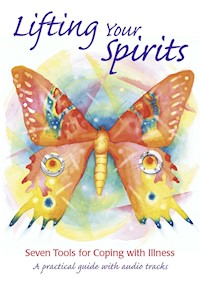
Lifting Your Spirits: seven tools for coping with illness by Jan Alcoe www.jankifoundation.org/lifting-your-spirits/
Heart of Well-being: seven tools for surviving and thriving by Jan Alcoe www.jankifoundation/the-heart-of-well-being/
Additionally, Happidote is an app for healthcare professionals to access simple guided meditations to soothe the stress of work www.jankifoundation.org/happidote
About the Janki Foundation for Spirituality in Healthcare
The Janki Foundation is a UK charity promoting the integration of spirituality into healthcare. The Foundation acknowledges the central role of positive thoughts and feelings, compassion and kindness in maintaining well-being and preventing illness. Through publications, experiential learning, talks, and networking, the Foundation provides opportunities to further such approaches among individuals and professionals. It also gives regular financial support to a hospital in Rajasthan, India, that has pioneered a healthcare model combining modern medical technology with spirituality and complementary medicine.
www.jankifoundation.org
The Foundation’s activities are free of charge and managed wholly by volunteers. Contributions to further the Foundation’s work are most welcome. Donations support our educational activities and the work of the Global Hospital and Research Centre in Mt Abu, India. This is an area where poverty is high and free treatment is provided to a large number of patients.
https://www.jankifoundation.org/donate/
Why this guide?
This self-help guide is for all of us who wish to live a fulfilling and contented life in an uncertain world. The tools it offers help us to weather the storms around us by digging inner foundations of calm. In that way, however strongly the weather rages, we can stand firm and act resourcefully, staying true to ourselves, rather than being blown around in a maelstrom of fear. We know that eventually the bad weather will pass, but discovering calm within the storm will help us to keep the sun in our sights in everything we think and do.
We live in an uncertain world that is changing and unstable in almost every dimension – political, social, climatic, economic – relayed to us from across the globe in a continuous flow via social media and TV. Graphic images of chaos and human suffering can lead us to experience general anxiety, fear, anger or even vicarious trauma. Most of us exist in a society characterised by over-stimulation, high expectations and too much choice about what we do and have, all of which can fuel our anxiety and impair our decision-making. At a family level, some of us may have grown up in difficult or abusive circumstances that have damaged our self-confidence and capacity to claim our right to a healthy and fulfilling life. We may feel so small, insignificant or even ashamed that we become prey to those who would use us for their own ends. Individual events – an accident, death of loved ones, serious illness, bullying and other psychological and physical events – can lead to many forms of emotional distress. It is not surprising that our modern societies experience rising levels of depression and other mental health problems in both adults and children.
Chronic anxiety and the inability to calm the mind and spirit can lead to physical ill health, emotional numbing, a more negative view of the world and loss of enjoyment of life. We may withdraw from others, leading to fractured relationships, and an inability to empathise with the plight of others. We lose the sense of who we really are and what is important as our sense of self shrinks or even fragments. In an effort to feel safer and back in control, we can unconsciously try to meet our needs in ways that cause further emotional suffering for ourselves and others, for example turning to over-eating, addictive substances or self-harm. There is a tendency for us to dwell on the many ‘bad’ things that happen or have happened, while a whole host of positive and kind acts go unnoticed. This fuels emotions of anger and fear and impairs our capacity to see life events from a more helpful and hopeful perspective. How can we recover our more spiritual and whole selves, capable of compassion for ourselves and others, and be able to draw on our immense inner resources to cope with what is going on around us?
Fear and doing versus calm
The key to beginning this inner journey is to access the part of the nervous system that can lead us back to calm. The more primitive part of our brain evolved to save us from danger and is characterised by an automatic and immediate ‘fight or flight’ response when we perceive a threat. When faced with a wild animal, a speeding car or an aggressive intruder, this kick-starts a whole host of physiological changes in our bodies to enable us to escape or stand our ground and fight. Our bodies are flooded with stress hormones, such as adrenalin, that raise our heart rates and blood pressure, diverting blood flow into the big muscles and away from unnecessary functions like digestion, or even thinking, so that we can save ourselves in the moment. It is only when the threat has passed that we find ourselves sweating, shaking and breathless, but hopefully out of danger. It can take some time for us to calm down from such an extreme physical and emotional reaction. While the rapid threat/defence response is vital to our survival at times, it can be also triggered by strong emotions like anger, disgust or fear when we remember past difficulties and trauma, watch upsetting scenes on a screen, or conjure up difficult thoughts about what might happen in the future. This part of our brain is unable to distinguish reality from our vivid imaginations and so our survival system can come into play before we have time to consider or think about what is really happening.
Long-term, the constant firing of the threat/defence response, and the outpouring of stress hormones that accompany it, can lead to a whole host of physical and mental health problems, from high blood pressure, insomnia and impaired immune response to depression and chronic anxiety. Long-term stress, or even a tendency to self-criticism, can provoke similar reactions, with all its inherent dangers for our well-being. Being in this state of heightened fear or stress impairs and narrows our thinking so that we are unable to keep things in any helpful perspective.
Another mind/body system we use is the active or ‘doing’ system. This mainly uses dopamine, a chemical released by nerve cells to send signals to other nerve cells, to get things done. However, it is linked to our motivational drive for and experience of pleasure, and can be highly addictive. It can lead us to check our e-mails or social media messages obsessively, or at worst, to indulge in risky or dangerous behaviours like gambling or substance mis-use. It can make it hard for us to stop ‘doing’ and slow down, leading to burnout or exhaustion.
We cannot help but react emotionally when we are under threat, or sometimes to feel driven to keep on working, even though we should rest. However, we can learn to recover quickly by activating another, soothing




