


16,99 €
Mehr erfahren.
- Herausgeber: The Crowood Press
- Kategorie: Lebensstil
- Serie: Small Crafts
- Sprache: Englisch
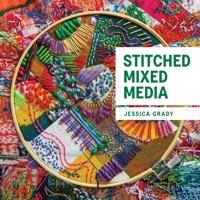
This practical guide shows you the range of possibilities that you can explore and enjoy when making and sampling with hand stitch and mixed media. Packed with colour, ideas and enthusiasm, it looks at the potential of recycled products and explains how to turn them into beautiful embellishments to hand stitch onto samples. Projects and step-by-step sequences show how the exciting process of playing with textiles and mixed media can create new and unique work. Get to grips with a basic tool kit, plus ideas for sourcing and organising supplies, make a stitch library of samples and ways to use threads creatively, from paper to recycled plastic, experiment with mixed media in new and exciting ways 2D and 3D techniques – step-by-step sequences explain a range of techniques and ideas and combine and develop techniques – create unique pieces and develop your own artistic voice
Das E-Book können Sie in Legimi-Apps oder einer beliebigen App lesen, die das folgende Format unterstützen:
Seitenzahl: 162
Veröffentlichungsjahr: 2023
Ähnliche

















CONTENTS
Introduction
1 Beginnings
2 Stitch and Thread
3 Paper
4 Fabric
5 Metal
6 Recycled Plastic
7 Found
8 Development and Material Combination
Further Information
Glossary
Index
Acknowledgements
INTRODUCTION
This book is designed to help you find creative ways to utilise a range of different materials to start exploring mixed media and stitch. Whether you are a complete beginner or someone who wants to expand upon their techniques and skills further, there will be something exciting within these pages to get the creative inspiration flowing.
A stitched sample in progress, looking at colour, texture and materials.
As an artist, materials fascinate me, and they are often the source of my inspiration for new projects. I enjoy using media that is not often considered with textile practices, particularly recycled materials. Rather than looking at something as it is now, what I like to do is think about its future potential after it has been creatively transformed. If that material is a piece of rubbish that can be repurposed into a new life, even better. Transforming mixed media is where the magic happens; even something as simple as chopping a circle out of a rectangular piece of packaging and – ta-dah! – you have your very own handmade sequin! You can transform mixed media materials in many ways including manipulation, folding, pleating, scrunching, painting, layering, cutting and rolling, to name a handful. If you run all these lovely transformations through your head when you next see something interesting, it will help you to think about a material’s future potential as an embellishment. My aim as an artist is for my finished samples or ideas (using any material) to have a playful hint towards their origins, but you have to really look closely to discover what they used to be.
Examples of a colourful selection of mixed media materials to transform into handcrafted embellishments, including painted papers, fabric scraps, recycled metal sheets, waste plastics and foam shapes.
The layout of this book is structured by materials, therefore you can really get into the fine detail of each medium as a single idea before developing and combining materials and techniques to create your own unique samples. I use the techniques explored in this book to create my own artwork and textile sample library. I am very much of the belief that stitch and mixed media is such a fun, exciting and accessible craft to get involved with. My work is driven by process and the idea of really enjoying the making, the exploring and the experimenting, as this is most often when the unexpected serendipity happens. I truly believe that you cannot create something wrong, as everything can be used in some capacity; and anything that you create that you aren’t as keen on can be chopped up, painted over and repurposed into something new.
In my studio, looking through textile samples.(Photo: Christian Ståhle)
There is also lots of room within this book for you to take my ideas, techniques and suggestions, and allow them to flourish and bloom into your own developments, without the end results being limited by a purely textile outcome. Whether you like painting, making your own clothing or journalling, or are a craft dabbler and like a bit of everything, mixed media and stitch can be added in, to transform your ideas into something new.
A mixed pile of handcrafted embellishments, ready for stitching onto base materials. Having a prepared stash of embellishments to hand will give you inspiration for new ideas and samples.
A selection of mixed media samples demonstrating the range of ideas and techniques explored within this book. This wide variety shows the scope and possibilities of embracing and trying out new materials combined with hand stitching.
The simple act of sitting with a needle and thread and stitching is such a relaxing and enjoyable way to destress and unwind. I particularly enjoy the sound of a sharp needle punching through a drum-tight piece of fabric with that lovely pop. Remember, the journey of making and creating is the most special and rewarding part. So, begin the journey, let it lead you to unexpected places and enjoy!
CHAPTER 1
BEGINNINGS
Getting started with a new creative practice, technique or idea is often the most difficult part. This first chapter will look at ways to prepare, and get you started to explore some new ideas and techniques with creative textiles and mixed media embellishments.
Clipping sheets of materials into bundles creates mini sketchbooks of details and ideas to help you get started.
BASIC SUPPLIES TO COLLECT
Sometimes the simplest of materials and supplies can be the most versatile. Having some of these staple items in your craft cupboard or studio will help you with many of the techniques and ideas demonstrated within this book. Personally I find it very helpful to collect and source my basics first before starting anything new. I think that it is not always about buying the most expensive or name-branded products – you can source a lot of materials around your own home to repurpose. You also do not always need everything on the list; feel free to swap and change materials based on your access and personal preferences.
Sewing Needles
An absolute staple for any textile enthusiast, I have hundreds and hundreds of sewing needles and would highly recommend having a few packs of varying sizes. My favourites are sharps and tapestry needles. Most people will automatically go for a sewing needle with a very large eye, even when using a narrow thread. My advice is to always go for the smallest needle you can get away with. The smaller the needle, the easier it will be to pull through your base, and you will also have more versatility for adding on small embellishments such as beads. Particularly when using mixed media and more unconventional items, a small-eyed, thin needle such as a sharp will equal less sore fingers! A child’s plastic embroidery needle is great to have to hand for experimenting with large, chunky threads and going through bases with large holes.
My tool kit of basic materials that I use for stitching and sampling. Perle cotton threads come in handy balls, rather than looped skeins, and don’t tangle as easily. A needle book is also useful as it stops loose needles from rattling around.
Scissors or Cutters
Having separate pairs of scissors for cutting different materials will be very handy and saves you from ruining any expensive fabric scissors. Cutting through recycled and thicker materials, including metals, plastics and thick fabrics, can quickly blunt scissor blades. Glue and tape will also gum up them up. Another handy basic is to have a pair of thread cutters or snips. These can be used specifically for trimming the ends of your threads when stitching and are often small and compact, so are good to pack for portable projects.
Glue and Tape
I don’t love using glue, but there is no denying it can be a very helpful addition for fixing the placement of embellishments, finishing edges or even adding special finishes or preserving raw materials before they are transformed into embellishment ideas. I normally have a glue stick, white glue or PVA, fabric glue, paper tape and double-sided tape in my supplies box. Masking tape in particular is excellent for marking out sample sizes, and often the cheaper brands are lower tack, meaning they are easier to peel off fabric without furring or adding pulls on the surface.
Sewing Threads
The choice of sewing threads can be very overwhelming. Branded thread is not always necessary, particularly when you are first trying a new craft or practising with sample pieces. I tend to look at the composition of a thread rather than its brand name. I like using 100 per cent cottons, which can come in bright, matte vibrant tones, or lustrous mercerised cotton, which has a shine to it.
For a beginner I would recommend looking at Perle cottons in no. 8 weight, rather than stranded cotton. Perle cotton can be used exactly as it is, whereas stranded cotton, which is sold in skeins, has to be split into sections as it can be too thick to stitch with as a single thread, especially when using embellishments.
Silk and metallic sewing threads may look very tempting as they come in luscious colours, silky and shiny, but they can also be a complete nightmare to work with. They are great to experiment with for quality of finish as you grow in confidence. Having a great basic sewing thread in your kit is going to give you more versatility for exploring and developing samples.
Base Materials
As with embroidery thread, having a staple base material in your supply list will make life easier for you when it comes to exploring new ideas and techniques. Remember that this does not have to be textile based, but fabric is a good starting point as it is the most familiar of materials for most stitchers. The base you stitch onto can really help or hinder you. I look out for several things when sourcing new bases to work with: base thickness, flexibility and opacity are all key factors. A good beginner’s base material wants to be mid-weight with a texture that isn’t too thick or too thin, such as cotton, denim or thin cardboard. Always test to ensure that you can easily pull your sewing needle through without much effort.
If you use a fabric or a material that is very flexible, I would advise using an embroidery hoop to keep the material tight and flat when stitching. Thick paper or thin card is also a good base as it is very easy to source, and the stiffness will mean you can stitch it without needing an embroidery hoop. Opaque bases that are a solid colour, such as most natural textiles and papers or cards, are also good basics. Transparent materials are very fun but can be tricky, especially when you need to consider the threads moving through the base as you can see both sides at once. For fabrics, natural textiles such as cotton, linen and canvas are all easier to stitch through and work with than synthetics.
Embroidery Hoops
Embroidery hoops are a great basic for any stitcher to have. They really help with reducing any puckering or ripples on the base material when stitching and make it easier to add embellishments. Hoops tend to be sized in inches, and a great hoop size for creating samples is 5–6in (13–15cm) in diameter – this is large enough to create a good-sized sample.
Selection of embroidery hoops, including bamboo, plastic, painted and wrapped hoops. I would recommend wrapping any hoop with a strip of thin fabric before use, as this will help to ensure the base material you put inside the hoop will not slip.
Hoops can come in a variety of materials and forms, including wooden, plastic and even metal. I would recommend a basic bamboo embroidery hoop, which will have an adjuster on the top to tighten the tension of your base. The bamboo hoops are very lightweight and will accommodate a wide variety of materials. I always use an embroidery hoop when stitching with fabric and plastic bases. For stiffer materials, such as paper or metal, you will not need a hoop.
Mixed Media Embellishment Materials
An embellishment is anything that you feel will add a decorative element to a base and can be attached in place, generally with stitch. A traditional embellishment is something like a sequin that you might find at a haberdashery store. Finding and making your own embellishments is much more rewarding. This could be something that can be cut out and stitched in place, such as a sheet of coloured paper, or an object such as a plastic tile spacer. Embellishments can be two- or three-dimensional and any size, shape or material.
Having a basic collection of materials to create embellishments with is not as complicated as it may appear. There is lots of potential for various mixed media that will be expanded upon in the following chapters. You can start with a handful of these materials, perhaps thinking about different sources in order to really experiment with your results. If you get stuck with choice I would recommend using what you already own and choosing colours and textures that you enjoy.
• Papers or cardboard
• Fabrics
• Metal
• Recycled plastic
• Found materials from nature
GETTING INSPIRATION
Often the act of collecting your supplies to start a project or idea can generate that inspiration or excitement to get going and start making. However, sometimes it doesn’t. When I need a little extra push to help me out with those first few stages, I simplify the process into colour and shape. This could be choosing one specific colour or colour palette and only creating a sample using those colours. Or sometimes it could be the opposite: deliberately not choosing a colour palette and putting together whatever comes to hand.
When thinking about shape, I go for the basics such as circles, squares or triangles. The beauty of simple shapes is the amazing potential to create so many different outcomes. I would avoid the idea of creating a ‘picture’ – this can put lots of pressure on yourself to make the perfect image that you have envisaged in your head, and it can prevent you from really experimenting and playing with embellishments and stitch. The best tip I can offer is to just go for it! The aim is not perfection, it is to express creativity and start the development process.
SOURCES FOR MIXED MEDIA MATERIALS
A question that I am asked time and time again is: ‘Where do you collect and source your unusual materials?’ The answer is, very simply, everywhere! Beginning with the ordinary items you have at home is good practice for collecting resources. Look at the food packaging that you see in the supermarket, your favourite jumper that has a hole in it, or the elastic bands the postman wraps around your post. Even when going out for a walk in your local environment, can you spot a rusty washer on the pavement or an interestingly shaped leaf or seed pod? As you start to recognise what you like to use and what works well, this will lead you to think about other sources.
I am a huge fan of scrapstores and secondhand shops. Scrapstores are located across the UK and many are run by local councils or are CICs (community interest companies). They aim to take safe, reusable waste – often from industry – and resell it to groups, individuals, charities, schools or whoever can make use of it. For craft purposes it’s fantastic, as stock is quite heavy with textiles, thread and paper. Stock changes constantly as supplies are used up and new waste comes in, meaning you always have fresh, exciting materials to work with.
I often find a lot of dead-stock in scrapstores. This is the term for materials that a company has been unable to sell for a variety of factors. Most of the time there are no flaws whatsoever with dead-stock and often this dead-stock is sent to landfill if it cannot be sold. To give you an idea of the variety of treasure you can find, these are some items I have found previously in my local scrapstore: leftover neon vinyl from fire engine signage, waste circles of neoprene from a wetsuit factory, rolls of dead-stock lace and a giant bag of felt washers from industrial machinery. The best thing of all about using scrapstores is that you are saving material from being thrown away and preventing that waste from going to landfill, so it’s a win-win situation. If you don’t have a scrapstore near you, any other secondhand shops or resources are always great to look out for. Remember that you can wash, chop up, colour and transform old items to make them new again – it’s all about that potential.
Some examples of collected items from scrapstores. I have transformed many of these items further with paint, dye and pattern. You can see the negative offcuts from industrial production, which make great bases for weaving and twisting threads in and out.
STORAGE AND ORGANISATION
Once you start collecting different materials, the issue can be how to store them in an accessible way that doesn’t take up too much space, where it is easy to see what you want to use. There are three main ways I organise supplies: by the types of mixed media materials, their sizes or their colours.
Washed-out spice jars filled with small embellishments. From left to right: striped plastic sequins, painted plastic sequins, paper and foil scraps, tiny metal washers and collected plastic lids.
A display of bulldog-clipped samples of materials. You can see where I bundle similar colours together and where I make appealing texture combinations by putting contrasting materials together as inspiration for creating new sample ideas.
A jar of colourful striped recycled plastic sequins.
I keep a jar to hand to fill with snips of thread; either the frayed edges from fabrics, the cut ends from knotting the back of samples or any that are too tangled to use. The result is this jar of colour that can be used for many different samples.
FIVE TOP TIPS FOR ORGANISING MATERIALS
1. Save your old spice jars for small items – as these are clear, you can easily see what is inside. Wash them out and fill them with shells, thread ends, small scraps of fabric or cut-out shapes. Pop them in a spice rack for storage.
2. Use large bulldog clips to bundle together collections of materials that you find really interesting or would like to work with in your next project. I often do this for materials that I have transformed and for my sequin sheet offcuts. I also put these up on my studio wall for inspiration – I can quickly snip a corner off a piece of dyed fabric to use in a sample.
3. For larger sheets or pieces of material, such as a bundle of papers or packets of food wrappers, cardboard folders containing different materials can be useful. As well as organising these by material, another solution is to organise by colour, so keep all similar colours together in the same folder or box. This can be helpful when starting a project.
4. When collecting recycled plastic wrappers from food or packaging, I fold these up and place them inside a clear cereal box liner. I keep this in a drawer in my kitchen and add to it when I have more wrappers to put inside.
5. Plastic vegetable trays from mushrooms or tomatoes are fantastic for smaller items. I have several and like to keep one on my desk for storing small offcuts. They make great paint palettes and the plastic itself can be cut up or painted to make more sequins.
CHAPTER 2
STITCH AND THREAD
H




