


20,99 €
Mehr erfahren.
- Herausgeber: The Crowood Press
- Kategorie: Lebensstil
- Sprache: Englisch
The renowned embroiderer Linda Miller brings the art of machine embroidery to life in this beautiful book. Packed with practical advice and over 200 photographs, each chapter guides you through all the skills and techniques needed to make an array of exciting machine-stitched pictures. There are six projects featuring different textile techniques, including solidly-stitched machine embroidery, working with found objects and reverse fabric appliqué. It also provides you with the confidence and knowledge to use your sewing machine as a drawing and painting tool.
Das E-Book können Sie in Legimi-Apps oder einer beliebigen App lesen, die das folgende Format unterstützen:
Seitenzahl: 222
Veröffentlichungsjahr: 2022
Ähnliche


















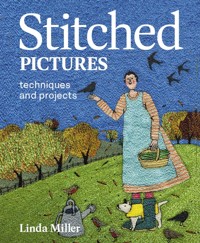
Stitched
PICTURES
Blackbird Garden by Linda Miller, 23 × 17cm (9 × 6¾in), free machine embroidery. (Photo: Michael Jennings)
Linda Miller
Stitched
PICTURES
techniques and projects
First published in 2022 byThe Crowood Press LtdRamsbury, MarlboroughWiltshire SN8 2HR
This e-book first published in 2022
© Linda Miller 2022
All rights reserved. This e-book is copyright material and must not be copied, reproduced, transferred, distributed, leased, licensed or publicly performed or used in any way except as specifically permitted in writing by the publishers, as allowed under the terms and conditions under which it was purchased or as strictly permitted by applicable copyright law. Any unauthorised distribution or use of this text may be a direct infringement of the author’s and publisher’s rights, and those responsible may be liable in law accordingly.
British Library Cataloguing-in-Publication DataA catalogue record for this book is available from the British Library.
ISBN 978 0 71984 038 8
Front cover design: Sergey TsvetkovFront cover:The Birds Sing Your Name by Linda Miller, 25 × 19cm (10 × 7½in), free machine embroidery
The designs in this book are copyright and must not be stitched for resale.All designs by Linda Miller.All photographs are by Oliver Lane, unless specified otherwise.
DisclaimerThe author and publisher have made every effort to ensure that all the instructions in the book are accurate and safe, and therefore cannot accept liability for any resulting injury, damage or loss to persons or property, however it may arise.
CONTENTS
Introduction
1Tools and Equipment
2Working with your Sewing Machine
3Using the Sewing Machine as a Drawing and Painting Tool
4Fabrics Galore!
5Finding Inspiration for your Imagery and Design
6Colour Exploration through Fabric Appliqué
7Drawing and Design
8Style, Inspiration and Placing Imagery
9Presentation and Framing
Acknowledgements
Suppliers
Index
INTRODUCTION
Making textile pictures with a sewing machine is an exciting and innovative way of expressing one’s creative ideas. The sewing machine is a wonderful drawing tool, and mark marking with stitch upon pieced and layered fabrics is an ideal medium in which to create exciting and versatile textile pictures. Whatever materials are used in conjunction with stitch, communicating and expressing ourselves through textiles allows us to create a narrative through which we can tell our story.
Flower Bouquet by Linda Miller, 29 × 29cm (11½ × 11½in), fabric appliqué and free machine embroidery.
The Evolution of the Sewing Machine
The simple pleasure of decorative stitching has been experienced since the invention of the sewing machine in the late nineteenth century and is still embraced today. The contemporary domestic sewing machine has changed almost beyond recognition from those early models and the range of precision stitching that can now be achieved is quite phenomenal. Anyone who enjoys machine sewing knows what a beautiful and versatile tool the sewing machine is. It is surely one of the most valued pieces of equipment within the workroom.
The twentieth century saw the mass production of the hand cranked sewing machine, which brought huge domestic change to the lives of women. No longer was home sewing purely achieved by hand. Purchasing a sewing machine for the household enabled women to make garments and create decorative domestic items with greater ease and speed for the whole family and home. This gave many women more time to pursue other activities, both within and away from the household. Later still, the electric domestic sewing machine further transformed machine sewing for women, enabling them to produce a greater variety of textiles at speed.
Social and economic change has altered our lives unrecognizably from that of our forebears and one of the many qualities it has brought to domestic life is more free time in which to enjoy interests and pastimes. Household sewing is no longer a necessity, and for the devotee it is a pleasure. Over the twentieth century the critical profile of textiles as an art form was raised and imbued with a greater value and respect. This, alongside the technical development of the sewing machine, has enabled its change in use from that of a solely domestic object to a drawing and painting tool and this transformation in turn has empowered its user to become a respected and valued creator.
Through the centuries, the changing look of the sewing machine.
Exploring Textiles
Textiles as a medium can be very versatile. Fabric can be cut, manipulated and stitched with the greatest of ease and the simplest of tools. The wide range and availability of both fabric and thread has given the maker an exciting pallet of textile materials to use and explore. We can choose to use new or recycled fabrics, or a combination of both, and these can be used either on their own or mixed with an array of other art materials such as paper, card and found objects.
Museums and galleries hold a wealth of textiles in all forms, from every corner of the world. If you are unable to physically visit a museum or gallery, most can be accessed online. Whichever way you visit installations and exhibitions, the experience is invaluable. Looking and observing allows our creative knowledge and understanding to grow and develop. To see how a piece has been conceived and constructed enables us to further our own thought process and gain technical knowledge to utilize within our own work, and this in turn expands our own creative journey.
There are many things to consider when making and creating textile work, including the colour palette, the use of expressive stitch, fabric texture, subject matter, and the choice and placement of imagery. The process can consist of a series of questions as you try out different visual scenarios to develop before finding a final design you wish to develop into your textile artwork. Whichever fabric we are drawn to and whatever technique we favour, it is important for us to study work in as many disciplines as we can in order to further our knowledge of the many and varied textile media. Each textile artist creates their own unique style in the way in which they use and treat their chosen medium.
Three Houses by Linda Miller, 10 × 19cm (4 × 7½in), fabric appliqué and free machine embroidery. (Photo: Michael Jennings)
Creating a Mood Board
The starting point for a textile picture can be achieved by creating a mood board. This can be an invaluable way in which to collate a group of visual references that can be then formed into an idea. Any visual and written sources that interest us can be used; items such as pictures, photographs, fabric swatches and overheard snippets of conversation. All at some stage will make it onto our mood board, ready to ignite our imagination. Items can be arranged by colour, theme, style or a mix of collaged pieces. There is no right or wrong way in which to create a mood board – whatever works for the individual is the best way.
Mood boards can either be kept digitally on a phone or tablet or physically presented upon a wall. If buying a board for a workspace, choose a pinboard made of cork as they are easy to pin into. However, they can also be easily made from a piece of cardboard, and the size can reflect on the volume of inspirational material your project demands. After the gathered reference material has served its purpose, remove it carefully from the pinboard and stick the assortment into a sketchbook. This simple action will keep all the information stored neatly away and easy to find for future use. The arrangement can always be rearranged or added to, creating new ideas for any future picture project. This will make the beginning of any textile project a straightforward and pleasurable task.
The Joys of Stitching
It is important for us all to take time away from our busy lives and spend some quality hours for ourselves. In this fast-paced life that we all lead, hobbies and pastimes are a valuable outlet for us to rejuvenate ourselves. The pleasure of sewing and making is full of many benefits; it improves our hand and eye coordination, whilst enhancing our motor skills – using our brain helps to stimulate growth. The art of sewing, making and communicating through our stitching is an outlet for our creativity, it makes us individual and unique. We feel energised while active in mind and body, and it gives us a great sense of achievement.
The activity of sewing is incredibly versatile and does not have to be a solitary endeavour. Getting together with friends to stitch is a wonderful way in which to share projects, swap ideas and exchange technical knowledge, while socializing with like-minded people. Our making is valid and needed; it is what makes us complete and able to contribute to the world around us.
In the chapters ahead, there are six exciting and versatile picture projects to make. Each one is full of clear photographs that accompany the informative text, allowing you to work at your own pace. All you need is an electric sewing machine, together with a small selection of tools and equipment and a collection of fabrics of your choice to begin your exciting adventure in sewing and making stitched pictures.
Happy stitching!
Creating a mood board can offer inspiration time and time again.
CHAPTER 1
TOOLS AND EQUIPMENT
This chapter lists all the tools and equipment you will need to create the picture projects in Stitched Pictures. If you are already an avid sewer or an enthusiastic maker, then no doubt you will have an existing collection of materials and equipment that you can use for these projects, but if you are new to sewing and making then you may need to start to gather together a set of basic materials, which you can add to as you progress.
A sumptuous array of colourful machine embroidery threads in the weights of 30 and 40.
Hurrying Home by Linda Miller, 10 × 10cm (4 × 4in), free machine embroidery. (Photo: Michael Jennings)
BASIC TOOL KIT
• An electric sewing machine, in good working order, which can drop the feed dog teeth or which has a plate that fits over the teeth
• The sewing machine’s manual and its tool kit, which should include items such as oil, a screwdriver, bobbin spools and a selection of sewing machine feet
• A free motion machine embroidery foot or a darning foot, which must be compatible with your sewing machine and allows you to free machine embroider
• Size 80 universal machine sewing needles
• Hand sewing needles
• Dressmaking pins or sewing clips
• Calico in a selection of weights such as heavy, medium and lightweight
• Decorative 100 per cent cotton fabrics in a selection of patterns, colours and textures
• Fusible fabric for bonding
• Iron-on light interfacing fabric
• Stabilizing fabric
• Machine embroidery threads and general sewing threads
• Hand embroidery threads
• Beeswax
• Dressmaking or fabric scissors/rotary cutter
• Paper scissors
• Small embroidery/sharp scissors
• Corner and edge shaper
• Quick unpick/seam ripper
• 15cm (6in) wooden embroidery hoop
• Notebook and sketchbook
• Ruler and tape measure
• Lightbox
• Good lighting/Anglepoise light/daylight bulbs
• Pen, pencil, paper, eraser, pencil sharpener, masking tape and clear sticky tape
• HB and colouring pencils
• Air-soluble drawing pen and permanent marker pen
• Tailor’s chalk
• Cutting mat
• Art and craft utility knife
• Mount board
• Hook and loop fastener tape
• Steam iron, ironing board and linen cloth for pressing (you can use a clean linen tea towel)
TOOLS AND EQUIPMENT
Sewing Machines
The most important piece of equipment that you will need to make these picture projects is an electric sewing machine, which can lower and raise the feed dog teeth. It needs to be in good working condition and should be earthed and wired correctly. Guidance on how to choose a sewing machine can be found in Chapter 2.
Feed Dog Teeth
The feed dog teeth are two rows of small spiky metal teeth situated beneath the presser foot of the sewing machine. More detail about the feed dog teeth can be found in Chapter 3.
Sewing Machine Feet and the Free Machine Embroidery Foot
All modern sewing machines come with a standard set of feet. Generally, this includes a general-purpose sewing foot, a zigzag or satin stitch foot and a zipper foot. Some machines also come with a free machine embroidery or darning foot, depending on the age of the machine. All sewing machine feet can be purchased from a sewing machine retailer.
Sewing Machine Needles
Sewing machine needles come in a range of sizes to suit sewing in different weights and types of fabric. Each needle has two numbers: one is the European size and the other is the American size. The European size ranges from 60 to 110 and the American range is from 8 to 18 (thinnest to thickest size). Sewing machine needles also range in quality – for further guidance on making the correct choice, see Chapter 2.
Bobbin Spools
The brand of machine will determine what type of bobbin spool it uses. Some machines have a drop-in bobbin spool system beneath the stitch plate, while others require the user to place the spool in its bobbin case and then insert that into the machine beneath the stitch plate. Note: not all bobbin spools are the same size and therefore you must ensure you are using the correct size bobbin for your machine; the machine will not work correctly if the wrong size bobbin spools are used.
Hand Sewing Needles
As with machine needles, hand sewing needles also differ in quality, size and usage. They are relatively cheap, so always choose good-quality branded needles. A selection packet of good-quality needles in various sizes should last you a long time and will increase the quality of your hand sewing.
A hand sewing kit. Coating the thread first with beeswax will make hand sewing easy.
Pins and Sewing Clips
A box of good-quality dressmaking pins is an essential piece of equipment for any basic sewing kit. An alternative to pins are sewing clips, which are nowadays very popular. Unlike traditional pins, these do not pierce the fabric but clip it together; the flat bottom of the clip is marked with lines of 5mm, 7mm and 1cm (3⁄8in), and by placing the clip on the fabric edge the precise measured sewing line can be sewn.
FABRICS
Base Fabrics
There are three main types of base fabrics used in these picture projects: lightweight, medium weight and heavyweight cotton calico. All these calico fabrics are unwashed and undyed and maintain their original stiffness to provide a rigid surface to work upon.
The lightweight calico is a soft, manageable cloth suitable to be used as a backing fabric. The medium weight calico is a good all-round material that responds well when it is adhered to other cotton fabrics. Finally, the heavyweight calico will hold layer upon layer of machine embroidery stitch. All of these plain-woven cotton calico fabrics are relatively cheap and easily found in any good fabric or haberdashery shop.
Spoilt for choice! Old, new and preloved cotton fabrics in all colours and patterns.
Decorative Fabrics
A selection of dressmaking and patchwork materials will make excellent decorative fabrics to use in these picture projects. These will be used in conjunction with the medium weight calico and appliquéd onto this base fabric with a free machine embroidery stitch. Utilizing household textiles alongside vintage and preloved cotton adds further interest to the palette.
Fusible Fabric for Bonding
Fusible fabric is a double-sided adhesive material that can be used in fabric appliqué to fuse two pieces of fabric together. Once ironed down, the fusible fabric tends not to fray as much as other non-bonded fabrics. See Chapter 6 for further information about using fusible fabric.
Iron-on Light Interfacing Fabric
Another type of iron-on fusible fabric used in the projects in this book is interfacing fabric. It is suitable for various fabrics and is mainly used in dressmaking, giving collars and cuffs the required stiffness. Unlike the fusible fabric for bonding, the interface fabric has the adhesive on one side only. It is applied with a hot iron to the back of the base fabric to provide a stabilizing layer. It is especially good for textile art projects as it makes a firm fabric surface and facilitates drawing with stitch.
Stabilizing Fabric
Using a stabilizing fabric when embroidering onto a fine or lightweight fabric prevents the fine fabric from splitting as you sew. When edging fabric with a zigzag satin stitch, the stabilizing fabric will ensure a clean, smooth stitching edge. On completion, any excess can easily be removed.
THREADS
Machine Embroidery Threads and General Sewing Threads
The two main types of thread used in the projects in this book are machine sewing threads and machine embroidery threads. Both types are easily found in any good high-street stockist.
Winding hand embroidery threads onto cards keeps them tangle free and easy to use.
Machine sewing threads are used for general sewing projects, with the most common being polyester thread. This practical polyester thread is strong and has a slight stretch to it, which makes it a good all-rounder that can be used on both stretch and cotton fabrics. When using a polyester thread, a light grey thread suits most coloured fabric and enables one to sew without having to keep changing the sewing thread to suit the fabric colour.
Machine embroidery threads are not suitable for practical sewing and are used purely as a decorative thread. Both types of thread are discussed in more detail in Chapter 2.
Bobbin Threads
These include all threads that are wound onto a bobbin spool and subsequently used in the bobbin and bobbin case.
Top Threads
These are threaded up through the top of the sewing machine and are always in view to the sewer.
Hand Embroidery Threads
For some projects you will need a few hand embroidery threads. These can be made from cotton or viscose. If you have a choice, always opt for cotton hand embroidery threads as they are less slippery than viscose and therefore easier to work with.
The threads consist of six strands wound together, giving you the option of either using one, two or all six of the strands together. Traditionally, hand embroidery thread is used for hand embroidery or cross stitch, and can be found in fabric or haberdashery departments and sometimes in the craft section of an art shop.
Beeswax for Hand Sewing
Beeswax is a natural wax produced by the honeybee. Running hand sewing thread through a piece of beeswax will help it to run smoothly while sewing, without forming knots and tangles.
CUTTING TOOLS
Scissors
There are scissors for specific tasks. Generally, you will need a pair of paper scissors, a pair of fabric or dressmaking scissors and a small pair of embroidery scissors.
Using set pairs of scissors for dedicated materials will give years of trouble-free cutting.
Good-quality dressmaking scissors are an investment and if well looked after will last you your sewing career. To prolong the life of your scissors, never lend them to anyone else – as we all have our own unique way of cutting – and never use them to cut paper! Fabric or dressmaking scissors need to be sharper to cut material precisely without tearing it. They can be regularly sharpened using a specific scissor-sharpening tool, easily obtained from your local fabric shop.
Specialist embroidery scissors with long, thin pointed tips are ideal to use as you will find it much easier to cut away thread ends in awkward areas. For fabric appliqué works, small appliqué scissors are recommended as they have a paddle-shaped blade that pushes away the bottom layer of fabric, enabling you to make neat and controlled cuts, close to the sewn appliqué edge. However, these are not a necessity and a pair of sharp-pointed embroidery scissors can be just as efficient, although a little more vigilance must be applied when trimming waste material to ensure that the appliqué and the base fabric are not cut away at the same time.
Rotary Cutter
Used in conjunction with a cutting mat and a grid-measured clear ruler, rotary cutters have very sharp blades and come in different sizes. The rotary cutter blade runs against the ruler to ensure a clean straight line. They can easily cut single or multiple layers of fabric.
Cutting Mat
A cut-proof mat with a printed measured grid upon it is perfect for obtaining straight cuts of measured fabric when used with a rotary cutter. The mat is an ideal base for cutting paper and card with an art and craft utility knife.
Art and Craft Utility Knife
A popular retractable craft utility knife that is designed as a multipurpose cutting tool. It often comes with replaceable blades suitable to cut and score a selection of different materials.
OTHER USEFUL TOOLS
Wooden Embroidery Hoop
You will need a wooden embroidery hoop for the picture project, Strawberry Delight (see Chapter 3), which is a solidly stitched machine embroidery picture. Once the fabric is placed into the hoop and the hoop screw is tightened sufficiently, a wooden embroidery hoop will hold the base fabric tightly, creating the drum-like surface on which to machine embroider. Do not use a plastic spring hoop, which is designed to be used for hand stitch, as this will not hold the fabric tight enough for free machine embroidery.
In terms of size, a 15cm (6in) or 20cm (8in) diameter wooden hoop is ideal to use for machine embroidery. A hoop any larger than this may prove to be unwieldy and will hit the side of the sewing machine as you move it, thereby limiting your working area.
Corner and Edge Shaper
This handy tool, made from either plastic or bamboo, enables the pushing out of seams and corners without piercing the fabric. It can also be used for taking out basting or tacking stitches.
Snow by Linda Miller, 15 × 15cm (6 × 6in), free machine embroidery. (Photo: Michael Jennings)
Quick Unpick/Seam Ripper
This is ideal for unpicking tiny stitches and any stitching mistakes that are difficult to get to with scissors.
Notebook and Sketchbook
Recording notes and ideas in a small bound notebook for future projects is a handy way of keeping track of your creative thoughts. In addition, a small companion sketchbook is ideal for jotting down quick pencil drawings and colour notes, which can be referred to for artistic inspiration.
HB and Colouring Pencils
Simple yet vital tools, and easily sourced. All pencils are marked with their graphite gradient: an H pencil means hard, and a B pencil means black. An HB pencil can be used for drawing on both paper and fabric.
Having a selection of colouring pencils to hand is always useful. They are essential for recording colour ideas in your sketchbook and are easily transported when out and about.
A simple selection of drawing pen, pencils and stationery will assist the starting point of any creative journey.
Air-soluble Drawing Pen and Permanent Marker Pen
An air-soluble pen is a great addition to any workbox. Depending on the type of fabric used, the ink on the fabric lasts for about eight hours and then disappears.
Using a permanent marker pen can be useful as the ink will not bleed into your work and the line will remain visible until you cover it either with fabric or stitch. They come in fine, medium and bold nib sizes, which are all useful.
Tailor’s Chalk
A flat triangle or square-shaped hard chalk used to make a temporary mark on fabric. Use a soft, clean brush to get rid of any unwanted chalk markings.
Hook and Loop Fastener Tape
This is a two-part tape: one tape has hooks, the other loops. It adheres strongly when pressed together. It can be bought in packs of either stick and sew or mixed.
Mount Board
A thin, flat piece of card that comes in a wide range of colours. It can be used either to mount work onto, or for cutting a window into for all framing requirements.
Steam Iron, Ironing Board and Linen Cloth for Pressing
Pressed fabric is much easier to work with than crumpled fabric. Ironing out all the seams allows for precision and tidy sewing.
As with all heavily stitched fabric, the stitching can cause puckering and for the fabric to become uneven in places, especially if the embroidered stitch has been taken in many different directions. To help reduce any wrinkles and to smooth an uneven surface on the front of the work, press the fabric on the reverse with a hot steam iron and a pressing cloth. Always use a dampened linen cloth, such as a clean tea towel, as this helps to protect the fabric from scorching, while at the same time preventing the transference of any dirt from the iron sole plate to the fabric or stitched picture.
Masking Tape
Adhesive tape with a low tack value is great to use for keeping paper and fabric in place when drawing on. It is also ideal for sticking images onto a wall for creative contemplation.
Ruler and Tape Measure
Both are invaluable tools for measuring to ensure precision when cutting. It is always best to have both metric and imperial measurements. A traditional sewer’s tape measure can be rolled up for neat storage and is easy to wear around the neck when sewing in the workroom.
Lightbox
A lightbox is a useful tool for tracing images. It has an opaque screen, which is backlit. There are many types to choose from and they can be battery powered or mains operated. The different settings enable you to work with either a very bright or slightly diffused light. You can trace from different sources of inspiration such as photographs, drawings, fabric and text, transferring images directly onto paper, fabric or tracing paper.
If you do not have a lightbox, a bright day and a window pane will act in the same way. Using masking or clear sticky tape, stick the picture that you wish to trace from onto the window, then attach the paper or fabric you wish to trace onto over the top. The sunlight will shine through, illuminating your original picture and enabling you to trace the image.
Good Lighting/Anglepoise Light/Daylight Bulbs
It is essential to see your work properly, so good lighting is a must. If the natural daylight is poor, an Anglepoise light fitted with a daylight bulb is an excellent alternative to natural daylight. A daylight bulb emits a light similar to natural daylight and will not tire your eyes as you work.
All of the projects in this book require a selection of the basic tools and equipment listed in this chapter. In addition, each project requires its own selection of materials, which are listed at the beginning of each of the project chapters.
When you use your sewing machine for the free machine embroidery technique, you must have the compatible free machine embroidery foot fitted and the feed dog teeth lowered, or a plate fitted over the feed dog teeth.
To begin the free machine embroidery technique process in each project, read the section on bringing up the bobbin thread, which is explained in




