


3,49 €
3,49 €
oder
-100%
Sammeln Sie Punkte in unserem Gutscheinprogramm und kaufen Sie E-Books und Hörbücher mit bis zu 100% Rabatt.
Mehr erfahren.
Mehr erfahren.
- Herausgeber: via tolino media
- Kategorie: Geisteswissenschaft
- Sprache: Englisch
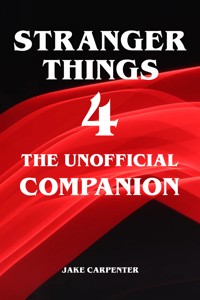
Stranger Things 4 - The Unofficial Companion tells the amazing and fascinating story behind the much delayed and hugely anticipated fourth season of the incredibly popular Netflix show. Read about the casting production, storyline development, locations and more in this book.
Das E-Book können Sie in Legimi-Apps oder einer beliebigen App lesen, die das folgende Format unterstützen:
Veröffentlichungsjahr: 2022
0,0
Bewertungen werden von Nutzern von Legimi sowie anderen Partner-Webseiten vergeben.
Legimi prüft nicht, ob Rezensionen von Nutzern stammen, die den betreffenden Titel tatsächlich gekauft oder gelesen/gehört haben. Wir entfernen aber gefälschte Rezensionen.
Ähnliche




















Stranger Things 4 - The Unofficial Companion
Jake Carpenter© Copyright 2022 Jake Carpnter
ContentsThe Birth of a PhenomenonWe Are Not in Hawkins AnymoreFrom Lithuania with LoveLenora HillsStarting OverHellraisersMaster of the Dark ArtsThe Scariest Season YetThe Nightmare HouseWar ZoneThe Horror Influences of Stranger Things 4The Final CountdownImprintTHE BIRTH OF A PHENOMENONNo
one really expected Stranger Things to be such a global pop culture
phenomenon - least of all the people who actually conceived the show or
those who brought it to the screen. They felt it had a good shot at
being a cult sort of show but its staggering mainstream popularity took
everyone by almost complete surprise. Matt and Ross Duffer, two young
brothers from North Carolina, had always wanted to be filmmakers and
got their wish when they wrote and directed a horror film called Hidden
in 2012. Hidden concerned a family who have to live underground due to
a mysterious and seemingly apocalyptic situation on the surface.
Monsters known only as 'breathers' lurk above. Hidden is a perfectly
competent and watchable film (with a reasonably satisfying twist at the
end) but there is little in the movie which anticipates Stranger Things
- save perhaps for a less than subtle reference to the classic 1982
horror movie Poltergeist. It wasn't so much that people didn't
like Hidden (the modest smattering of reviews it attracted were decent
enough - if not exactly madly enthusiastic) but more the case that no
one actually got a chance to watch Hidden. The film sat on the shelf
for three years and then made the paltry sum of $300,000 at the
box-office. The Duffer Brothers were understandably dismayed by
Hidden's lack of exposure and failure to make any money. They feared
that they might never get another chance in Hollywood again.
Thankfully, that didn't turn out to be the case. The Duffers were
thrown a lifeline by M. Night Shyamalan. Shyamalan had read the script
for Hidden and was impressed enough to hire the Duffers as part of the
writing team on his new mystery show Wayward Pines. Wayward
Pines was a reasonably diverting mix of Twin Peaks and The Twilight
Zone but only ran to two seasons. The show always felt more like a
miniseries than something destined to last and so it proved. The lead
actor Matt Dillon didn't even bother to stick around for the second
season of Wayward Pines. The Duffers, in addition to writing on Wayward
Pines, also got a chance to direct on the show. It was an invaluable
experience to work on a big television show like this from the inside.
The Duffers stored up all this inside information as they slowly began
to make plans of their own beyond Wayward Pines.Supporting
themselves with the money they had made working on Wayward Pines, the
Duffers began planning a television show of their own. According to
private emails (which were produced as evidence in 2018 when a man
named Charlie Kessler ludicrously tried to claim that Stranger Things
had ripped off his 2011 short film Montauk) by the Duffers, their ideas
for this show (which would obviously become Stranger Things in the end)
originated from as far back as 2010. The Duffers were not too sure if
the show was going to be a miniseries, anthology, or simply a
conventional television show. At one point they thought about pitching
it as a movie but their experience with Hidden made them more inclined
to go down the television avenue. Besides, the Duffers loved the long
form nature of television. They felt that television increasingly had
the prestige of films. As for the concept, the Duffers had
much more clarity on this. The basic idea was a Steven King book
directed by Steven Spielberg with a John Carpenter electronic score.
The show would be called Montauk and set in the Long Island village of
the same name. Montauk was the home of a disused military base named
Camp Hero. Camp Hero was a radar station during the Cold War and closed
down in 1980. Parts of the base though are still fenced off and
guarded. You could probably say (if you wanted to be conspiratorial)
this was rather mysterious. A more prosaic explanation is that Camp
Hero's complex is flooded with water so it would be dangerous to snoop
around down there - hence the security. The base at Montauk,
and the village in general, have been the subject of various conspiracy
theories - most of which are so outlandishly preposterous they
effectively debunk themselves without anyone else having to bother. The
main source of the conspiracies was a man named Preston Nichols. Along
with Peter Moon, Nichols wrote a book called The Montauk Project:
Experiments in Time in which he claimed to have been in charge of the
base when it was active. Nichols said his knowledge of the base had
been repressed by someone but he managed to retrieve his memories of
Montauk.The book that resulted from these 'retrieved' memories
was bizarre to say the least. Nichols said that Camp Hero kidnapped
children and used them in secret government experiments which included
time travel, jaunts to other planets, and extrasensory perception
(ESP). As you might suspect, The Montauk Project was not a book to be
taken seriously. It was patently a work of (science) fiction. Preston
Nichols didn't even seem to be aware that Alternative 3 * was a hoax
and wrote about it as if it was real. Although he claimed to be a great
expert in electronics, engineering, and science, Nichols couldn't even
provide any evidence that he had a university degree. If nothing else
though the book was an entertaining crackpot stew of conspiracy
theories and science fiction nonsense.The book was obviously
(for better or for worse) contagious because it seemed to activate any
number of conspiracy theories in relation to Montauk. There were
reports of a mysterious creature washing up on the Montauk shore and
storms that brought frogs raining from the sky. Intrepid local kids who
snuck into the derelict Montauk base at night brought back footage of
strange dust shrouded electrical equipment and secret rooms in an
underground maze complex. The Duffer Brothers loved reading
about far out conspiracy theories and the weird and fanciful tales
abounding from Montauk greatly inspired the show they planned to write.
A man named Al Bielek later claimed he and his brother were
participants in experiments in Camp Hero and developed psychic powers.
When they decided to escape, Bielek claims his brother produced a
monster from his subconscious which ran amok and forced the project to
be closed down and covered up. One can easily see how the (rather
fanciful) legends surrounding Camp Hero in Montauk partly inspired what
became Stranger Things. In the original plan for the show, the
Duffers wanted the entire town of Montauk to be engulfed by what would
eventually become known (in Stranger Things) as the Upside Down. A bank
of mist would swallow Montauk. Monsters would abound and the laws of
science would no longer apply. Stephen King's The Mist by way John
Carpenter's The Fog with a million other cinematic and literary
references - from Lovecraft to Close Encounters of the Third Kind - all
colliding. The action and mystery would take place in the
shadow of Camp Hero and on the beaches of Long Island. Chief Hopper
would live in a shack on the beach. Barb Holland would be killed after
attending a beach party in the first episode. The Byers home would be
in sight of the Montauk air force base and Joyce Byers was going to be
a Long Island waitress who drops a lot of f-bombs. Steve Harrington
would be killed off six or seven episodes in. Eleven was going to feral
and wild and ultra violent. Mr Clarke, the school science teacher, was
young and handsome and would be a leading character. Suffice to say, it
was all very different from the Stranger Things we now know and love.The
Duffers cut a fake trailer to sell their concept. The trailer was
composed of clips from classic horror and adventure movies (plus more
recent fare like Super 8) and had a John Carpenter score as a backdrop.
A pitch booklet for Montauk was made to look like a dog-eared eighties
Stephen King paperback. The booklet was laced with stills of the
classic movies Montauk was inspired by - everything from E.T. to
Hellraiser. While the booklet included a general synopsis of the plot
the actual show had yet to be written. The Duffers would have to sell
Montauk on the basis of their pitch and a pilot script. Although,
in hindsight, Stranger Things seems like a brilliantly obvious idea for
a television show and one with huge potential, no one was especially
interested when the Duffers began approaching networks to pitch
Montauk. The Duffers were rather baffled and dismayed when networks
told them that the show wouldn't work with children as major characters
and suggested they ditch the kids from the script. It seemed that the
Networks just didn't get it. They didn't seem to understand what the
Duffers wanted to do. Maybe these executives had never watched The
Monster Squad or The Goonies. The breakthrough came when the
pilot script was read by the Hollywood film director Shawn Levy. Levy
loved the script and instructed his production company to purchase it.
He then went to Netflix and struck a deal to make Montauk in 24 hours.
Levy initially planned only to act as a producer on the show but he
would end up directing some episodes too. One of the first
people to be cast in Montauk was Winona Ryder as Joyce Byers. Ryder
seemed to have slightly vanished from Hollywood in recent years but she
was still a big name. By signing Winona Ryder, the Duffer Brothers and
their casting director Carmen Cuba were somewhat more free to pursue
relative unknowns for the other roles. The relative unknowns
who were cast included some genius casting hunches - like David Harbour
as Jim Hopper, Joe Keery as Steve Harrington, and an eleven year-old
child actor from England named Millie Brown as Eleven. The more unknown
cast members signing up for Montauk had no idea that this show was
going to change their lives and make them world famous seemingly
overnight. They were in for an amazing experience over the next several
years. Around three hundred female child actors read for the
part of Eleven before they found Millie Bobby Brown. It was a tricky
part to cast because child actors can easily lose focus and
concentration when they don't have much dialogue. The Duffers said they
looked at nearly a THOUSAND boys before the parts of Mike, Will, Lucas,
and Dustin were cast. The world of child acting can be a tough old
business. Child actors have to compete with literally hundreds of other
children for parts. At some point during the planning for
Montauk the Duffer Brothers decided they didn't actually want to set
the show in Montauk anymore. The idea of a long shoot by the coast in
unpredictable weather began to sound like a nightmare. The show was
eventually relocated to Indiana. A fictional town named Hawkins would
be where the characters lived. Though set in Indiana it was decided to
shoot the show in Atlanta. Generous tax incentives for the film and
television industry in Georgia were the main factors in this decision
but Georgia also had the right mix of locations needed for the shoot. The
show now needed a new title and so became Stranger Things. It took a
long time to come up with a new title and the new one was not
universally loved at first. Matt Duffer said he got the idea to call
the show Stranger Things because it sounded like the Stephen King book
title Needful Things. Ross Duffer and David Harbour both thought that
Stranger Things was a dreadful choice for the new title of the show.
David Harbour actually sent the Duffers a long email complaining about
this 'hokey' new title they'd lumbered the show with. In the end
everyone got used to Stranger Things as a title - especially when they
saw how it looked on the opening titles. Stranger Things began
shooting in 2015 with no fanfare whatsoever. It was almost (but not
quite) like a secret stealth project. Shawn Levy and the Duffers were
left alone by Netflix to make the show exactly how they wanted. The
cast didn't have the faintest idea if anyone was going to watch this
show or if it would last beyond the eight episodes they were now
shooting. Gaten Materazzo later said that when the cast got to watch a
rough cut of the first episode they were told to make the most of this
because there probably wouldn't be a second season. The budget
was set at $6 million an episode - which was not exactly chicken feed
but fairly modest by Hollywood standards. The few times that Stranger
Things got a mention on the entertainment sites was purely because of
Winona Ryder. The entertainment sites in 2015 would say something like
- 'Winona Ryder's new show starts shooting'. The Duffers and even some
of the cast would later look back to season one in a somewhat wistful
sort of way. They were simply making a TV show they thought could
potentially be really good. They didn't have to worry about living up
to expectations or lurking entertainment tabloid photographers trying
to take a picture of the set. That would all come later.When
shooting wrapped on season one of Stranger Things, the cast bid their
farewells and went their separate ways. They really didn't know if they
would ever see one another again on a Stranger Things set. Millie Bobby
Brown (who had by now added 'Bobby' to her name to disassociate herself
from a controversial performance artist named Millie Brown) said she
went back to England and seriously doubted if she would get another
acting job. David Harbour went back to New York and then grumbled about
the lack of promotion for Stranger Things. He was delighted to have
secured a rare leading man role but he was beginning to worry that
Stranger Things might come and go without anyone even noticing.Unbeknownst
to the cast, Netflix had already decided that Stranger Things would get
a second season. They were so thrilled with the footage they had seen
during the production of season one they had even allocated the Duffers
extra money to increase the budget for the finale. The Duffers had
already started writing season two but had to keep it a secret. Netflix
wanted to wait until season one had come out before they made an
announcement about more episodes in the future. Season one
dropped on Netflix on the 15th of July 2016. The critical response was
(with the exception of a few lonely curmudgeons) overwhelmingly
positive. 97% on Rotten Tomatoes. You might say that Stranger Things
was a genuine word of mouth phenomenon. These glowing critic reviews
trickled down to general film websites and then the general public. The
first season of Stranger Things attracted over 14 million viewers in
its first 35 days online. Netflix had a massive hit on their hands. The
mix of horror, adventure, fun, conspiracy, and 80s nostalgia that
Stranger Things offered was clearly a crowd pleasing formula. Stranger
Things was the perfect show for the binge generation. Most people
thought that binging all eight episodes of Stranger Things in 2016 was
way more fun than watching the latest (and often tiresome) CGI
Hollywood blockbusters. Analytics suggested that Stranger Things took
two episodes to hook viewers. Anyone who watched two episodes would go
on to watch the rest. Stranger Things was a very addictive show. As
David Harbour later said, there might be more worthy or serious
television shows than Stranger Things out there but it's hard to think
of anything that can beat it for pure fun and entertainment. The
Duffer Brothers could allow themselves a wry smile when they looked
back on those network executives telling them to ditch the kids from
the Montauk script. The kids in the cast were all over the place when
season one of Stranger Things became a huge overnight hit. They were
more in demand for interviews and chat shows than most established
Hollywood stars. Millie Bobby Brown, at the tender age of twelve, was
soon being offered modelling contracts, magazine covers, music videos,
and movie roles. The premise of season one is relatively
simple on the surface despite the scientific trappings and numerous pop
culture Easter eggs. Dredging up inspiration from many novels, stories,
movies, television shows, and video games, the show concerns a group of
characters in a small Indiana town named Hawkins. The local Department
of Energy - in the form of the Hawkins Lab - has opened a dimensional
rift (rather like in Stephen King's The Mist) which is a portal to a
hostile and nightmare version of our own world. A faceless monster
(which the boys in the show dub the Demogorgon because of their love of
Dungeons & Dragons) begins to move to and thro from this world and
ours. A little boy named Will Byers is pulled into the other
dimension (dubbed the Upside Down by the kids) and so a search for him
begins with police chief Hopper, his mother Joyce Byers, and his
friends all conducting their own investigations. Into this mix we throw
Eleven, a little girl with telekinetic powers who escaped from the
Hawkins Lab. She is secretly sheltered by Will's friends and might be
the key to finding him. A teenager named Barb is also snared by the
monster and her friend Nancy also becomes embroiled in seeking to get
to the bottom of the strange events happening around the fringes of
this small town. Success brings its own unique pressures and
challenges and the Duffer Brothers were well aware of this when they
ventured forth straight into Stranger Things 2. Season one was almost
like an unexpected surprise for viewers. Stranger Things 2 would be
very different though. It would be hugely anticipated and it would also
have to live up to the high expectations created by the first season.
Most of the storylines for Stranger Things 2 had already been worked
out by the Duffers before they even wrote any scripts. They came out of
season one with plenty of ideas for what would happen next if the show
continued. The possession storyline involving Will Byers had been
planned in advance even prior to season one going before the cameras
and the Duffers had always known that Hopper and Eleven would end up
together in the show.There was a fairly quick turnaround on
Stranger Things 2. It arrived a few days before Halloween in 2017 -
just over a year after the first season dropped. Stranger Things 2
broke a Twitter record by generating more than 3.7 million tweets about
the show. Over 350,000 people binged all nine episodes on the day of
its release. Inside three days over 15 million people had streamed
Stranger Things 2. Season two is a slightly more expansive affair than
season one and concerns the 'Mind Flayer' (aka the Shadow Monster) - a
huge terrifying 'big boss' of the Upside Down who possesses Will. Once
again, Hawkins is infiltrated by Upside Down creatures and all hell
breaks loose. There were bigger budgets, more special effects, pay
rises for the cast, and an explosion of Stranger Things merch - both
official and unofficial. Stranger Things 2 was a rollicking
rollercoaster ride of a season that lived up to most expectations. An
episode titled The Lost Sister - which featured only Eleven out of the
regular cast and took place in Chicago - was not terribly beloved but
that aside season two had all the fun, action, adventure, laughs, and
mayhem one might expect. Some naysayers felt that Stranger Things 2 was
too much like a rehash of the first season but this felt unfair because
Stranger Things 2 is plainly trying to give you something different. It
separates Eleven from the children, teams up Eleven and Hopper, has an
episode set in a city, introduces the Mind Flayer, teams up Steve and
Dustin, has a new head of the laboratory, and introduces new characters
in Max, Bob, Billy, Kali, and Murray. Fans would have to wait
until 2019 for Stranger Things 3 but it still arrived less than two
years after season two. Stranger Things 3 introduced a shopping mall to
Hawkins and threw in Cold War intrigue. It transpires in season three
that the Soviet Union are attempting to access the Upside Down and have
infiltrated Hawkins to this end. As ever it is up to our plucky heroes
to stop them. As if that wasn't bad enough they also have to contend
with the vengeful Flayer - who has now taken control of Billy Hargrove
and an escalating number of unfortunate people in the town. The neon
drenched Stranger Things 3 was less dramatically bold than season two
and more purely escapist and far-fetched (in so far as one can use such
a term in relation to a fantastical science fiction show) but supplied
the viewer with more than their fair share of fun, comedy, and horror.A
record 26.4 million users watched Stranger Things 3 the weekend of its
release and 824,000 people binged all eight episodes on the first day.
64 million people streamed Stranger Things 3 within a month of its
release. A large number of former Netflix subscribers said they had
signed up again simply to watch Stranger Things 3. Stranger Things was
more popular than ever. Fans were already anticipating the inevitable
Stranger Things 4. They wanted to know if Hopper was really dead or
not. Well, they KNEW he wasn't dead (they were hardly likely to get rid
of David Harbour) but they were curious to see how he came back. Was he
the American in the Soviet prison? And what of Eleven and the
Byers family? Where did they go when they left Hawkins? When would
Eleven get her powers back? That promised to be intriguing. The Duffer
Brothers knuckled down on season four as soon as the dust had settled
on season three. Barely weeks after the release of season three,
Stranger Things 4 was already beginning to take shape and plan shooting
locations and the casting for new characters. It should have arrived in
relatively short order. However, for reasons that could not possibly
have been anticipated, fans would have to endure an incredibly long and
frustrating wait to catch up with the heroes of Hawkins again. *
Alternative 3 is a clever mock documentary broadcast on British
television in 1977. It was written by David Ambrose and directed by
Christopher Miles. The documentary reports an ongoing case of 'brain
drain' with scientists going missing in strange circumstances and
eventually reveals a chilling secret. It transpires that because of
pollution the Earth will not be habitable for much longer and only
three things can save the human race. We can either depopulate
drastically, live underground in bunkers, or - alternative 3 - elites
and scientists can go and live on Mars and start a new civilisation. It
seems that alternative 3 is the preferred option as space travel is far
more advanced than the authorities have let on. So that means the
elites will skip off to Mars and us poor ordinary folk are doomed. Left
on Earth to perish. Naturally, it was all a hoax (it was supposed to be
broadcast on April the 1st) but viewers began to bombard Anglia
television with calls, many of them apparently believing what they had
just watched was a real documentary. Alternative 3 is a highly
influential and clever piece of television that still causes ripples in
the conspiracy theory world today.WE ARE NOT IN HAWKINS ANYMOREStranger
Things had potentially given Netflix the commodity that all studios
crave more than anything - a potential franchise. If you make a new
movie with all original characters and an original script there is
always the unavoidable element of the unknown. You don't know for sure
how people will respond. More to the point, you don't know if they will
respond at all. However, if you own something like James Bond or Star
Wars then that element of risk is taken out of the equation. This is
why studios love franchises and tend to flog them to death when they
have one. Look at all these new Star Wars shows that are constantly
appearing out of the woodwork now that Disney owns the rights. You can
bet your life that there will be new Star Wars movies in the future
too. If you make a James Bond movie it may or may not make as
much money as you projected or hope for but you can sleep easy safe in
the knowledge that it won't bomb. A huge number of people will come out
to watch a new James Bond film - no matter what the film is about or
what the reviews are like. The same goes for Batman, Harry Potter, The
Fast and the Furious, Spider-Man, and so on. Stranger Things wasn't
quite Harry Potter or Star Wars and had very different roots (it was a
streaming show and not a movie franchise) but it had become a powerful
and lucrative brand in an impressively short amount of time.The
production of season four was therefore rife with speculation and
background chatter about Stranger Things spin-off shows. The source of
this speculation was not just fans but also Netflix themselves and even
members of the cast. Millie Bobby Brown seemed to suggest she would be
open to an Eleven centric spin-off show and Gaten Matarazzo said he
quite liked the popular fan suggestion of a show which revolved around
the comical and heroic duo of Steve Harrington and Dustin Henderson.
Steve and Dustin was an unlikely but inspired partnership in the show
which began in season two. Steve began the second season in a
couple with Nancy but the Duffers separated them because they wanted to
put Jonathan and Nancy together. They wanted to use Jonathan and Nancy
to get justice for Barb's death and also express their romantic
feelings for one another. This left the character of Steve Harrington
and Joe Keery with very little to do for the rest of the season. On a
whim, the Duffers put Steve with Dustin for a few scenes and were so
delighted with the comic chemistry between Joe Keery and Gaten
Matarazzo they leant on this dynamic for the rest of the season. In the
revised plan for Stranger Things 2, Steve became the comic all action
babysitter to the kids. Season three saw the Duffers again lean heavily
into the Steve/Dustin duo and the onscreen rapport of Joe Keery and
Gaten Materazzo. As far as spin-off shows went, there was also
the possibility of telling fresh stories about the Upside Down with new
characters. Many of the Stranger Things comic books (a rapidly
expanding but so far largely disappointing branch of the Stranger
Things universe *) tended to prequels or 'side stories' which (for
obvious reasons of not wanting to clash with the show) occurred at
times between and around (or even before) the actual seasons of the
television show. It wasn't difficult to imagine a scenario where a
spin-off show did something similar. There was even the possibility of
doing a sort of Stranger Things: The Next Generation where a new group
of plucky kids had to battle the Upside Down or similar dimensional
threat. This was all for the future though. Right now, the most
pressing task facing Netflix and the Duffer Brothers was Stranger
Things 4. In September 2019 it was announced that the Duffer
Brothers had signed a lucrative deal with Netflix to continue Stranger
Things and also work on new projects for the streaming giant in the
future. The Duffers were not the only members of the Stranger Things
cast and crew that Netflix were eager to continue their association
with beyond the show. They also arranged a lucrative contract for
Millie Bobby Brown which would give her a pick of Netflix projects for
ten years - beginning with a movie based on Enola Holmes. The heroine
of a young fiction book series by Nancy Springer, Enola Holmes is the
younger sister of a certain Sherlock Holmes. When the first
season of Stranger Things became a huge phenomenon there was a lot of
understandable speculation that the Duffers would now be heavily
courted by Hollywood. It was easy to imagine a scenario where they now
ended up working for Marvel or maybe Disney on a Star Wars movie. The
Duffers had experienced the ups and downs of the film and television
industry at first hand. The failure of Hidden made them feel like they
had blown their big chance but now - thanks to Stranger Things - they
were the toast of the town. Netflix were rather like a sporting team
owner eager to tie down their most valuable players to new contracts.
There was never any risk though of the Duffers looking to pastures new
or losing their focus on Stranger Things. They still loved the show and
still felt there was plenty of story left to tell. Though
nothing was official yet, the Duffers knew that Stranger Things could
not be wrapped up with one more season. It would take at least two more
seasons to get to the endgame. That obviously meant that we would get
Stranger Things 5. The Duffers had studiously avoided becoming involved
in any side projects during the duration of Stranger Things because
they had always found it difficult to concentrate on more than one
thing at a time. As long as Stranger Things was still going the Duffers
wanted to give the show their 100% undivided attention. They had no
desire to do anything else. The laser guided focus of the Duffers to
concentrate on Stranger Things and Stranger Things ALONE was one of the
many reasons why the show was so well crafted and maintained such high
standards. The Duffers said that during production they even dreamed
about Stranger Things when they went to sleep!The announcement
that the Duffers had signed a new contract with Netflix was marked with
a little promo trailer announcing Stranger Things 4. There was never
any doubt that season four would get the green light - especially after
the huge success of season three. The momentum of Stranger Things
showed no sign of stopping. No one was especially surprised at the news
of a Stranger Things 4 but fans were happy nonetheless to see that
plans were evidently rolling along for season four already. At this
very early stage it seemed that they wouldn't have to wait very long at
all in the transition from season three to season four. Little did they
know though of what lay in store to complicate the ambitious and bold
plans of the Duffer Brothers.We Are Not in Hawkins Anymore was
the message on the promo reel announcing season four. This was
confirmation, not that any was really needed, that season four would
have a more diverse and eclectic range of locations than we are used to
seeing on the show. The fact that Joyce Byers moved out of town with
Jonathan, Will, and Eleven at the conclusion of season three had
already made us anticipate the fact that the show would move beyond
Hawkins for at least some of the storylines in the next season. Moving
the show (or at least parts of the show) out of Hawkins had long been
something the Duffers had hinted at in the past. They often joked that
the characters in the show should get out of that crazy Upside Down
infested town and in season three they finally had some of them
actually do this. This was of course not the first time that
Stranger Things had strayed from Hawkins. Season two featured a car
chase prologue in Pittsburgh (with Kali's gang) and then later the
episode titled The Lost Sister - which was set in Chicago and had
Eleven tracking down Kali, a fellow former subject of Dr Brenner at the
lab. Season two was the first time that the Duffers had really
attempted to open up the fairly constrictive small town universe of
Stranger Things. In this specific case though, it was not a move that
met with a tremendously positive reception. The reaction to The Lost
Sister may have been a factor in the back to basics approach to season
three. It was also notable that Kali did return for Stranger Things 3 -
despite the Duffers, at certain points in the planning for season
three, suggesting that she might. The Lost Sister rather stuck
out like a sore thumb in season two and is by far the most divisive
episode of the show. It would probably be fair to say that some people
didn't care too much for The Lost Sister. Not to say that everyone
hated it but The Lost Sister is still (by a generous distance) the
lowest rated episode of the show in places like IMDB. There are a
couple of salient problems with The Lost Sister which the episode never
quite managed to overcome. The first problem was that it greatly
affected the otherwise brilliant pacing of season two. After the
fantastic cliffhanger (the Demogorgons ominously crawling up to the
lab) at the end of The Spy, the exciting head of steam generated by
season two suddenly came to an abrupt halt with The Lost Sister. It
felt like a chore to have to then sit through an entire episode with
Kali's gang (who we didn't know from Adam and so were not terribly
invested in) when we simply wanted to go back to the Hawkins Laboratory
and continue the escaped Demogorgon shenanigans from the end of The
Spy. Stranger Things is designed (with its limited amount of episodes)
to be propulsive. The Lost Sister was a rare instance of the show
feeling as if it was treading water and going nowhere in particular.
Another problem with The Lost Sister was that out of the regular
characters in the show it only featured Eleven. The lack of the
familiar cast of characters around Eleven and the atypical city
location meant that The Lost Sister felt rather generic. It is the only
episode of Stranger Things where you sometimes feel as if you aren't
even watching an episode of Stranger Things. While it was nice
to have a solo spotlight on Eleven and Millie Bobby Brown was - as
usual - very good, The Lost Sister felt a lot like an experiment which
didn't quite come off. It was as if the Duffer Brothers were testing
the waters to see if episodes outside of Hawkins were viable in the
show going forward. While they pointedly avoided such experiments in
season three, their desire to broaden the scope of the show and take
elements of the story outside of Hawkins had not subsided. The
difference this time is that the story outside of Hawkins in season
four would not feature a character in isolation. The entire Byers
family would be joining Eleven this time. In an interview
conducted around the time of Stranger Things 3's release, the Duffer
Brothers said that season four would feel very different to previous
seasons and the show would open up somewhat in that it might feature
different locations. The Duffers said that they didn't want each season
to feel exactly the same because that would be boring both for them and
the audience. One could previously see their intent to freshen things
up in season three - which featured a mall, took place in the summer,
and introduced the Russians as the new human villains. Season
three also notably eschewed the Hawkins Lab - which had featured so
heavily in the horror and intrigue in the first two seasons. One other
thing the Duffers did in season three was take away Eleven's powers
near the end. The Duffers didn't want Eleven to be a deus ex machina
who always conveniently solves the crisis at the end with her
superpowers. The desire to freshen up each new season with some
creative changes would be more pronounced than ever with season four.
Stranger Things 4 would be unlike any season of the show we had
experienced before. New locations in season four were pretty
much a given now that Joyce and her family had moved out of Hawkins and
there was also the question of where Hopper might have ended up after
he was vapourised in the Upside Down drilling machine explosion at the
end of season three. While the Duffers and David Harbour pretended to
be ambiguous and unsure as to Hopper's fate and whether he would back
in season four there was never any real doubt from fans and followers
of the show. Of course Hopper would be back. David Harbour was
essentially the leading man in the show - and it had taken him years to
secure a leading role in anything. He was highly unlikely to be written
out or walk out on the show.The attempted misdirection was all
very reminiscent of the equally unconvincing preamble to season two
where the Duffers and Millie Bobby Brown tried to create some doubt
about Eleven's fate and participation in Stranger Things 2 as a means
to make her return all the more surprising. This ruse didn't really get
far at all because everyone knew that they were NOT going to make
season two without the breakout star of season one. That would have
been completely insane. Can you imagine if Eleven had not featured at
all in Stranger Things 2? Fans would not have been happy. There was no
chance of that happening and it was equally absurd to think that Hopper
might actually be dead. Peter Gabriel's cover of David Bowie’s
Heroes plays in Holly, Jolly when Will's body is found in the quarry.
It also plays in the season three finale when Hopper is supposedly dead
and Eleven is reading his letter. This song is a less than subtle sonic
clue that all is not what it seems and Hopper is not really dead. The
Duffer Brothers and David Harbour have admitted that they were never
terribly convincing in that brief period when they pretended to be
uncertain about whether Hopper was really dead or not after Stranger
Things 3. You didn't need to be Lieutenant Columbo to deduce that
Hopper would be back. A big part of season four then would be
the (inevitable) return of Jim Hopper. With the task of showing us what
happened to Hopper and the Byers family and Eleven living outside of
Hawkins, the Duffers alredy had two interesting plot threads to frame
season four around. They also had plenty of other ideas up their sleeve
- as we shall see. As ever, the Duffer Brothers said they had the
'broad strokes' of season four in place fairly early but did not want
to completely box themselves in. It was by now a tradition on the show
that the Duffers would leave a few loose ends lying around - even as
production began. This gave them sufficient room during
production to change a particular storyline or even add a new subplot.
One example of this flexibility was in season three. The original plan
in Stranger Things 3 was for Steve Harrington and Robin Buckley to
become a romantic couple. During the early stages of production though
the Duffers (and indeed Maya Hawke and Joe Keery) felt that this would
be far too predictable a storyline and decided on a fresh arc where
Robin turns out to be gay and she and Steve simply become best friends.
Season four would end up somewhat more 'nailed down' than previous
seasons but the Duffers still liked to leave themselves with at least a
little bit of wriggle room. Stranger Things 4 had been
confirmed only a few months after the release of Stranger Things 3.
There was some media speculation that season four would be the last
season but, as we have noted, this was not the case. The speculation
may have originated from comments made by the Duffers back in the early
days of the show (in the wake of the huge success of season one) where
they conjectured that Stranger Things would probably be a four seasons
and 'out' sort of show. As it transpired though there was still enough
story to tell to ensure that we would get a fifth (and as it turned out
final) season. The Duffers Brothers were always at pains to
ensure fans that they had an endgame somewhere on the distant horizon
and knew where the show was ultimately heading - however long it might
take to get there. The Duffers were not making this all up as it went
along. They had it all planned out. These comments, though unwittingly
you would presume, tended to remind one of shows like Lost and Heroes -
which made strong starts but then began to wobble (much sooner in the
case of Heroes) when it became apparent that the writers didn't seem to
have a long term plan and REALLY were making this up as they went
along.---ENDE DER LESEPROBE---




