


9,99 €
Mehr erfahren.
- Herausgeber: John Wiley & Sons
- Kategorie: Fachliteratur
- Sprache: Englisch
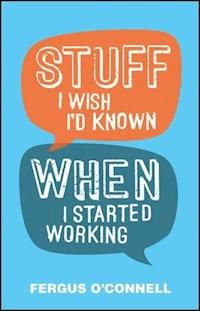
Don't learn the hard way—get work advice from some of the world's most successful people, all in one place!
Work is a tricky business—the politics, the workload, the career ladder. It can take years and years of battling away and learning through mistakes to fully get to grips with the dos and don'ts. What if you could fast track that process? Cut out all those years of learning the hard way and working it out for yourself? Enter Stuff I Wish I'd Known When I Started Working, the unique guide to making work work! Fergus O'Connell has had a wonderfully varied career spanning three decades, and in this book, he will teach you the things it takes others years to figure out. You'll also find nuggets of wisdom and invaluable career advice from some of the world's most successful people—people like Oprah Winfrey, J.K. Rowling, Steve Jobs, Richard Branson and Jeff Bezos.
Whether you're new to the workforce, changing roles, or just stuck in a professional rut, this book shows you what you need to know to get ahead. By learning from the common mistakes of others, you can avoid making those mistakes yourself—and possibly skip a few rungs on the corporate ladder.
- Quickly learn what others have taken years to work out
- Get nuggets of work wisdom from some of the world's most successful people
- Learn how to get more done in less time, and stimulate your creativity
- Aim high, and get where you're going faster
You'll spend the majority of your waking hours at work for the majority of your life. Make it time well spent. Learn how to be more effective, more accountable, more visible, and less afraid. If you want a seat on the bullet train to success, Stuff I Wish I'd Known When I Started Working provides the tips and tools you need. Buckle up.
Sie lesen das E-Book in den Legimi-Apps auf:
Seitenzahl: 183
Veröffentlichungsjahr: 2014
Ähnliche
















STUFF I WISH I’D KNOWN WHEN I STARTED WORKING
FERGUS O’CONNELL
This edition first published 2015 © 2015 Fergus O'Connell
Registered officeJohn Wiley and Sons Ltd, The Atrium, Southern Gate, Chichester, West Sussex, PO19 8SQ, United Kingdom
For details of our global editorial offices, for customer services and for information about how to apply for permission to reuse the copyright material in this book please see our website at www.wiley.com.
The right of the author to be identified as the author of this work has been asserted in accordance with the Copyright, Designs and Patents Act 1988.
All rights reserved. No part of this publication may be reproduced, stored in a retrieval system, or transmitted, in any form or by any means, electronic, mechanical, photocopying, recording or otherwise, except as permitted by the UK Copyright, Designs and Patents Act 1988, without the prior permission of the publisher.
Wiley publishes in a variety of print and electronic formats and by print-on-demand. Some material included with standard print versions of this book may not be included in e-books or in print-on-demand. If this book refers to media such as a CD or DVD that is not included in the version you purchased, you may download this material at http://booksupport.wiley.com. For more information about Wiley products, visit www.wiley.com.
Designations used by companies to distinguish their products are often claimed as trademarks. All brand names and product names used in this book and on its cover are trade names, service marks, trademark or registered trademarks of their respective owners. The publisher and the book are not associated with any product or vendor mentioned in this book. None of the companies referenced within the book have endorsed the book.
Limit of Liability/Disclaimer of Warranty: While the publisher and author have used their best efforts in preparing this book, they make no representations or warranties with the respect to the accuracy or completeness of the contents of this book and specifically disclaim any implied warranties of merchantability or fitness for a particular purpose. It is sold on the understanding that the publisher is not engaged in rendering professional services and neither the publisher nor the author shall be liable for damages arising herefrom. If professional advice or other expert assistance is required, the services of a competent professional should be sought.
Library of Congress Cataloging-in-Publication Data
O'Connell, Fergus. Stuff I wish I'd known when I started working / Fergus O'Connell. pages cm Includes bibliographical references. ISBN 978-0-85708-570-2 (paperback) ISBN 978-0-85708-568-9 (ebk) ISBN 978-0-85708-569-6 (ebk) 1. Success in business. 2. Job satisfaction. 3. Achievement motivation. I. Title. HF5386.O253 2014 650.1—dc23
2014029801
A catalogue record for this book is available from the British Library.
ISBN 978–0–85708–570–2 (paperback) ISBN 978–0–85708–568–9 (ebk) ISBN 978–0–85708–569–6 (ebk)
Cover design by Wiley
For Jenny Ng, my friend and the best co-pilot any author
Contents
So Why Did You Write the Book, Fergus?
OK, So What’s the Plan?
Aiming High – The only limits are the ones you set yourself
Appreciating Life – It’s about how you see things
Being More Productive – Why the answer is not 16-hour days
Time management
Working crazy hours
Do less
Keep it going
Bosses – What they’re like and what they like
Bosses make mistakes – ‘OMG there’s a surprise’
Bosses like to have their problems solved
Bosses have a tendency to be delusional
Bosses like long hours
Commitment and Perseverance – One gets you started, the other keeps you going
Commitment
Perseverance
Common Sense – It’s not all that common but it’s a skill you can learn
1 Many things are simple
2 Know what you’re trying to do
3 There is always a sequence of events
4 Things don’t get done if people don’t do them
5 Things rarely turn out as expected
6 Things either are or they aren’t
7 Look at things from others’ points of view
Communication – You gotta keep ‘em in the loop
Make sure you communicate at the beginning of the project
Make sure you communicate throughout the project
Make sure you communicate the right thing
Creativity – It’s not just for artists
Notes
Decision Making – Figure out the real issue and stop faffing
1 State the issue
2 Say what the ideal solution would be
3 Identify a range of solutions
4 Pick one
Email – Step away from the computer!
Failure – It’s good to fail
Having a Purpose – Find something you like to do and you’ll never work a day in your life
Find your passion
See if you can make a living from it
Keeping Your Business Going – Don’t run out of money
Your customers better have money
Premium pricing or be expensive
Bad debts and getting stung
The job’s not over until the money’s in the bank
If you get into trouble
Making the Sale – People don’t like to be sold to – but they love to buy
People don’t buy what you sell, they buy what you believe
Love your customers
You gotta have daily targets
Managing People – How our natural tendency to manage is often the opposite of what we ought to do
One size doesn’t fit everybody
What we ought to do versus our natural tendency
Meetings – Just because everyone else goes doesn’t mean you have to
Holding effective meetings
Moving Up – Show you can do what you’re aiming for
Getting a raise
Getting promoted
Negotiation – There must be something in the deal for everyone
Think win/win
50/50 is good
Splitting the difference is good
Giving concessions is good
Thinking outside the box is good
Backing people into a corner is not good
Gloating isn’t either
Conflict/arguments are very bad
Networking – Why you should never throw away a business card
Start collecting business cards
Start talking to people
Have an online presence
Start going to events
Build a list
Organizations – Why they’re not actually run by senior management
Presentations – You don’t need to be led by PowerPoint
Projects and Getting Stuff Done – Why you’re probably being mistaken for Santa Claus
What’s in a plan?
And so …
Reports and Reporting – Why this is your chance to save some rainforest
Starting Your Own Thing – Just get out there and see if people will buy it
Epilogue
References
Acknowledgements
About the Author
About ETP, Fergus’s company
Also by Fergus O’Connell
You Can Contact Me
Advert
End User License Agreement
Guide
Cover
Table of Contents
Chapter
Pages
vii
viii
ix
x
xi
1
2
3
4
5
6
7
9
10
12
13
15
16
17
18
19
20
22
23
24
25
26
27
28
29
30
32
33
34
35
36
38
40
41
42
43
44
45
46
47
48
49
50
51
52
53
54
55
57
58
59
60
61
62
63
64
65
66
67
68
69
70
71
72
73
75
76
77
78
79
80
81
82
83
84
85
87
89
90
91
92
94
96
97
98
99
100
101
102
103
104
105
106
107
108
109
110
111
112
113
115
116
117
118
120
121
122
123
124
125
126
127
128
129
130
132
133
134
135
136
137
138
139
140
141
143
144
145
146
147
149
150
151
152
153
154
155
156
157
158
159
160
161
162
163
164
165
167
168
169
170
171
172
173
175
176
177
178
179
180
So Why Did You Write the Book, Fergus?
This book had a simple and – rather obvious – birth.
I was thinking one day about how I’d really like to be nineteen again. Nineteen – but to have all the knowledge about the world that I have gained – gained from people I’ve met or been involved with, gained from situations I’ve been in or experienced, gained from the countless dumb mistakes that I’ve made.
It occurred to me then that a book that talked about this knowledge – but in a business context – would be a useful thing. I’ve made lots of mistakes in my working life – some big, plenty small. If a book could stop other people from making those mistakes then that probably would be a good enough reason to destroy a lot of trees and make a book. You’ll be able to make plenty mistakes of your own. You don’t have to make the ones I made.
Mistakes involve waste – sometimes appalling amounts of it. And waste, of course, is one of the big problems in the world today. I don’t just mean rubbish/garbage, but waste of time, effort, resources, money, people, lives. If a book like this could stop some of that waste then the destruction of the trees – not really a good thing – would have been repaid by these savings – which could be a very good thing indeed.
That was good enough for me. I pitched it to Darin, my agent. He liked it. We pitched it to the good folks at Wiley. They liked it. I got to work and here we are.
Thank you for buying and I hope it makes a difference.
Fergus O’Connell
Ireland, 2015
OK, So What’s the Plan?
Maybe you’ve started working for somebody else – a company or organization. Maybe you’ve started your own thing. In either case I think you’ll find much that will be of use to you in this book. (And given that I’ve done both I feel I’m suitably qualified to be your guide.)
If you have never started your own business, don’t discount the chapters that appear to be targeted at the entrepreneur or business owner. Greater minds than mine have pointed out how the era of a job for life is long over – that ship has sailed. More and more, organizations are encouraging their employees to think like entrepreneurs. Get closer to the customer. Take risks. Be passionate about projects. How else can I add value? What value do I add? Why do I deserve a salary rise? And so on.
What I’ve done is to rack my brains and come up with (what’s turned out to be) 24 subjects about which I wish I’d known more when I started working. Thus, the book has 24 chapters in alphabetical order.
The book is intended to be quick and easy to read, punchy and concise. The chapters are all pretty short. I take as my starting point that you’re like the rest of us – that you’ve got far more to do than you’ll ever have time to do it. So you don’t want to spend too much time messing around with this book.
While you can certainly read it from cover to cover – and would get benefit from doing that – my sense is that the most effective way to use the book would be to dip into it. You’re asked to attend a meeting, for example, so you check the chapter on meetings. You’re asked to take on a new project but before you start calling meetings, sending out emails, banging stuff into your computer, hiring people, making Gantt charts in Microsoft Project and so on, you take a few minutes out to read the chapter on projects.
I would pretty much guarantee that the time you spend on this book would be repaid several or even many times over by time you wouldn’t waste as a result. Not a bad deal, eh?
Each chapter is short and focused on a very specific subject. The main body of each chapter talks about the issues associated with that subject. The book is very much a how-to book so it then goes on to tell you how to deal with these issues. In other words, it identifies some specific actions that you can take straight away in order to learn the lesson of the chapter.
Littered throughout the book are extracts from carefully selected commencement speeches – where the great and the good give advice to graduating university students. In commencement speeches, the speaker recounts past experiences and tries to crystallize the lessons they learned from these. Essentially, these lessons, which they are now passing on to people about to go into the workplace, are the things they wish they’d known when they started working.
So these commencement speeches fitted in very nicely with the concept of the book. While I found some of these speeches to be of questionable quality, there were also some truly great ones there. So I’ve taken the best of these and spread them throughout the book. I’ve also drawn on some of the wisdom of the great and good throughout history – from Roman times to the present day.
So will this book change your life? Well, surely the change needs to come from within. But it should certainly inspire and support change.
Is it free from fluffiness and cod-philosophy? Yes – we’ve tried to ensure that it is.
Does it contain useful, actionable insight? For sure – it is common sense, hopefully elucidated with uncommon clarity.
Does it allow dip-in-dip-out reading, for that quick refresher/morale boost at those times your commitment to change is wavering? It certainly does. It’s written in manageable chunks, which we hope you will find enjoyable to read.
And so without further ado, let’s launch into it.
AIMING HIGHTHE ONLY LIMITS ARE THE ONES YOU SET YOURSELF
At some point in any career, a normally unjustifiable risk might need to be taken to make the quantum leap from the mediocre to the big time.
– Sir Ranulph Fiennes, British explorer
I remember being a kid and watching on a black and white TV the Alabama race riots. I remember – even as a kid – wondering how this problem could ever be solved, how this level of hatred could ever be overcome. Fast forward 50 years and there’s a coloured president in the White House. Pretty much anything is possible.
In my teens and twenties, the Iron Curtain was a fixed part of the geography of Europe. It was hard to see how that situation could ever change. Look at the map of Europe now. Germany is reunited, democracies (of various qualities) in almost all of the countries of the former Soviet Union and that country itself a distant memory. And all of that happened in a just a handful of years. Pretty much anything is possible.
In 2000, my company numbered nearly 50 people. When the dot.com bubble burst, much of our business disappeared overnight. Thinking this was a temporary thing, we tried to ride out the storm rather than getting small quickly, which is what we should have done. Bad mistake. As a result, we ended up with a debt of – essentially – $1,000,000. Fast forward to now and we’re debt free, small, profitable and thriving. I’ll say it again – pretty much anything is possible.
Have you ever thought how lucky you are to have been born at this time in the history of the world?
Imagine if you had been born in the Middle Ages or indeed pretty much any time before about the middle of the nineteenth century. If you had, and unless you were lucky enough to have been born into that tiny percentage of the world’s wealthy people, you would have died as you started out – a peasant or a farmer or a miner or a factory worker or a soldier or something similar.
These days, it’s all different. These days, you can do whatever you want. You can become whatever you want to be. You can start out as the child of parents who do whatever for a living and you can end up doing something entirely different that has never been done by any of your family members or ancestors before you. Harold May was a draughtsman at the Ministry of Aviation – his son Brian went on to become guitarist with Queen.
If your parents are not well off, you don’t have to be too – if that’s what you want. In 2008, Warren Buffet, was reckoned by Forbes magazine to be the richest man in the world with a net worth of $62,000,000,000. Buffet was born in 1930. His father was a congressman whose salary at that time would have been $9,000 per annum.
If your family were people who didn’t seek the limelight, you don’t have to be like them – you can put yourself out there – all over the Internet – if you want to. Beyoncé’s father worked for Xerox and her mother owned a hair salon.
Basically – you don’t have to do anything anybody in your family did before – all down through history. You can go and plough your own course. The world is your oyster.
What a privilege. What a blessing.
‘If you think you are too small to make a difference, try sleeping with a mosquito’.
– The Dalai Lama
And there’s another thing. In my lifetime, the idea of moving up the ladder was the accepted thing. I did it myself for a time – until (you might say) I wised up. This was my ladder:
First in mathematical physics
Software engineer
Project manager
Managing a software group
Managing a much larger software group
Set up a subsidiary of a software company
before starting my own thing.
These days you can skip the ladder if you want. You can become the CEO of your own company in the morning, if you’re so inclined. Larry Page is co-founder of Google. This was Larry’s ladder:
Bachelor of Science
Master of Science
Began a PhD
Co-president of Google
How’s that for jumping several rungs of the ladder rather than laboriously climbing up each one in turn?
So given that you’ve been born at this great time in history and granted this extraordinary opportunity, what are you going to do with it?
The answer – it seems to me – is that you need to aim high. Why shouldn’t you? The opportunity is there and we’re surrounded by evidence that these opportunities can be seized; any mountain climbed and any summit reached.
‘Whether you think you can, or think you can’t – you’re right’.
– Henry Ford, founder of the Ford Motor Company
Aim high. There’s no reason why you shouldn’t. You just need to have confidence in yourself. There is no ceiling, no limit. Or rather, the only ceilings and limits are the ones you set yourself.
How is it that we set these ceilings? While it’s easy to blame your parents, I think they may definitely have something to do with it. My father’s advice to me was to ‘get a good education and then get a good job’. Given where he had come from – leaving an economically depressed Ireland in the 1940s, and straight into World War II where he served in the British Merchant Navy, then returning to a post-war Britain to look for a job – this was probably good advice, as he saw it. I hope my advice to my children has been a bit closer to the mark – ‘Find what you like to do and then see if you can make some money from it’.
But it’s not just our parents. Sometimes we just make assumptions as to how far we can go or how high we can climb or what we can achieve. Or we slide from school or college into a job and then another (more senior, better paying) job and another and another. We take on more and more financial responsibilities – a car, a house, a partner, children – and before we know it we’re far off down a path that we maybe never really intended to travel.
Perhaps – when it comes right down to it – these ceilings are just caused by thoughtlessness – not consciously thinking about or deciding what it is we want to do with the precious life of ours.
‘Our deepest fear is not that we are inadequate. Our deepest fear is that we are powerful beyond measure. It is our light not our darkness that most frightens us. We ask ourselves, who am I to be brilliant, gorgeous, talented and fabulous? Actually, who are you not to be?’
– Marianne Williamson, spiritual teacher and author




