


Erhalten Sie Zugang zu diesem und mehr als 300000 Büchern ab EUR 5,99 monatlich.
- Herausgeber: Books on Demand
- Kategorie: Ratgeber
- Sprache: Englisch
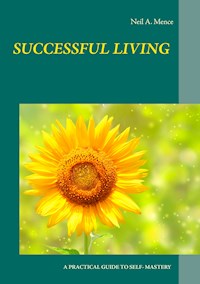
SUCCESSFUL LIVING shows how LASTING SUCCESS can be achieved through a series of lessons in practical living. Each is designed to guide us on our own personal voyage of self-discovery, personal development and inner change looking at a whole range of issues which affect our everyday lives.
Sie lesen das E-Book in den Legimi-Apps auf:
Seitenzahl: 310
Veröffentlichungsjahr: 2015
Das E-Book (TTS) können Sie hören im Abo „Legimi Premium” in Legimi-Apps auf:
Ähnliche

















FOREWORD
What is success?
For many people success is the level they reach when they’ve achieved a specific goal such as a raise at work, a new car, money in the bank or a new house. In general terms it’s regarded as ‘getting’ something that makes the recipient feel happier and more fulfilled.
Success, then, can be defined as a feeling – a feeling that’s attained when a desire or choice has been satisfied. It’s that state of being that awakens bliss and happiness. But is it lasting? Some would argue that it lasts only until the next desire or goal needs to be achieved.
In this book we consider LASTING SUCCESS through a series of lessons in practical living. Each is designed to guide us on our own personal voyage of self-discovery, personal development and inner change. These are the constituent elements of successful living and on this journey we’ll be looking at a whole range of issues which affect our everyday lives. This book is, in fact, a comprehensive guide to self-development and to living life more fully and meaningfully.
We’ll look at what life’s all about, as well as some of the things we’re supposed to know -- things such as getting on with people and being healthy, financially secure and successful.
We’ll also consider some of the things we may not have a clue about, as well as some things that may appear to be blocking our good -- fear, rejection, lack of self-esteem, unforgiveness, to name just a few.
Then we’ll address some of the things we’ve perhaps never really considered -- reincarnation, spirituality, how to get out of a hole, meditation and other things we can do to get ourselves sorted out.
Finally we put it all together by developing a practical guide to successful living through self-mastery. This is the blue-print to demonstrate how we can live a happier and more successful life.
Each chapter builds on that preceding it so as to experience an upward path of growth. The contents of the 12 chapters are outlined on the next five pages.
TABLE OF CONTENTS
INTRODUCTION
PART 1: SOME OF THE THINGS WE’VE BEEN TRYING TO FIND OUT
1. WHAT’S IT ALL ABOUT?
- Why do things seem to go wrong?
- The Law of Attraction
- Quantum Mechanics
- Thoughts are things
- The Law of Life
- Beliefs
- The creative process
- Types of thought
2. LET’S TALK ABOUT US
- The blocks that bind us
- Fear
- Anger
- Guilt
- Forgiveness
- Choice
- A meditation
3. THE THINGS WE NEED TO KNOW
- Success and happiness
- Our values and attitudes
- Affirmations
- Doing and Being
- What are you expecting?
- Focussing on what we want
- Faith
PART 2: RELATIONSHIPS
4. SORTING OURSELVES OUT
- Self-esteem
- Our authentic self
- Early influences
- Self-acceptance
- Living in peace and joy
- Habitual thinking
- Self-confidence
- Seeking validation
5. OUR RELATIONSHIPS WITH OTHERS
- Healthy relationships
- Is there a ‘right’ relationship?
- Effective communication
- Arguments
- Forgiveness
- Co-dependency
- Rejection
- We all have rights
6. OUR RELATIONSHIP WITH HEALTH
- Defining health
- To ‘be’, or to ‘do’?
- Do you feel comfortable with your doctor?
- Pain
- Child abuse
- Childhood dis-eases
- The blame and guilt games
- Hereditary illness
- Addictive and compulsive behaviour
- Beliefs
- Wholeness
7. OUR RELATIONSHIP WITH MONEY
- Misconceptions about prosperity
- What motivates us to be prosperous?
- What is wealth?
- Money
- A reminder about the Law of Life
- It’s all consciousness
- Lack, limitation and debt
- Financial freedom
- The Law of Circulation
- Tithing and giving
8 OUR RELATIONSHIP WITH WORK
- Finding the right position
- Attitudes toward work
- How do we change things?
- Finding out what we REALLY want to do
- An exercise to help us
- Can it happen overnight?
- Getting on with others
PART 3: THE THINGS WE’RE NOT SURE WE WANT TO KNOW ABOUT BUT WE’RE ASKING ANYWAY
9. JUST CURIOUS
- The purpose of life
- Aging
- Death and dying
- Life after death
- Immortality
- Reincarnation
- Religion, Spirit, mysticism and all that stuff
- Science and Religion
PART 4: GETTING OURSELVES SORTED OUT
10. THE THINGS WE CAN DO
- Accepting our self-worth
- Inner peace and harmony
- Centring
- Meditation
- Silence and listening
- Visualisation
- Visioning
- Affirmations
- Affirmative prayer
- Allowing
- Circulation
- Being of service
- Being healthy
11. SEEING THINGS DIFFERENTLY
- Where we are now -- getting to where we want to be
- The things that determine our reactions
- When things go wrong
- How to turn things around and make them go right
- Affirmations for the challenges we may face
- Criticism/rejection
- Health
- Freedom
- Relationships – surviving them
- Relationships – self-esteem
- Relationships – general
- Prosperity
- Work
- Happiness and being kind to ourselves
- Gratitude
12. A BLUE-PRINT FOR SELF-MASTERY
- Putting it all together
- Knowing what we want
- Defining our purpose
- Who are we?
-More about the purpose of life
- A practical guide to successful living
- Know who you are
- Be true to yourself
- Boost your self-esteem
- Listen
- Let go of resistance
- Follow your bliss
- Give
- Expect the best
- Goal setting
- Dedicate yourself and take action
- Be grateful
- Get out of the way
- Things to keep in mind
ABOUT THE AUTHOR
INTRODUCTION
Several years ago I heard a story about how the world seemed to be in a bit of a mess and so God decided to hold a board meeting with his top angels. When one angel complained about the sad state of affairs God silenced him by saying, “If you don’t like the world the way it is, go and make a better one.”
The message is very clear. If we don’t like our world the way it is, only we can change it. No one else can do if for us for one very simple reason – we created it.
Each of us creates our own world through our thoughts, feelings and actions and so the world not only looks different, but is different for each of us.
Regardless of where in the world we live we find that although many education systems teach a wide variety of subjects ranging from the arts and sciences to agricultural, industrial and homemaking subjects, very rarely are we taught the basics of living.
In today’s commercially-driven world practically everything we buy comes with an instruction manual included. It doesn’t matter if it’s a car, television set, household appliance or any other gadget, there’s usually a step-by-step instruction book either in the box, tucked away in the glove compartment, or downloadable from the Internet.
Unfortunately we aren’t given an instruction manual for life at the moment of birth or even at school. There are no obvious instructions to lead us through the transition from school to how to succeed in life.
So what is it that most people really want help with?
Isn’t it ‘How to survive and to know how to get on in the world’?
Perhaps we want to know how to survive a relationship that ends through death, divorce or separation. And then there’s that monster that none of us wants to face: rejection – how do we survive that?
And what about co-dependency? And how do we cope with the feeling that, “No one loves me”?
How do we solve problems such as these? How do we enter into the ‘right relationship’? How, in fact, do we know what the ‘right relationship’ is?
Until now the only instruction book that many of us have had comprises our parents and teachers who’ve either, ‘been there, done that, got the tshirt’, or who’ve just turned a blind eye because they didn’t know the answers either.
In most cases their advice is based on how they coped in their own formative years and this is how beliefs, habits and advice are passed down from generation to generation without check.
There has to be another way. There is! That’s why this book is called SUCCESSFUL LIVING. It’s an essential instruction manual to self- development and to living life more fully, meaningfully and successfully.
The manuscript is certainly not designed to duplicate or negate the work of the many caring and helpful support groups which can be found worldwide, but gives practical instruction on how to avoid pitfalls in the first place.
Let’s start, therefore, by looking at how things get to be the way they are. Then chapter by chapter we’ll consider the essential steps to improvement and fulfilment.
Neil A. Mence
London, 2012
PART 1
SOME OF THE THINGS WE’VE BEEN TRYING TO FIND OUT
CHAPTER 1
WHAT’S IT ALL ABOUT?
Why do things seem to go wrong? + The Law of Attraction + Quantum Mechanics + Thoughts are things + The Law of Life + Beliefs + The creative process + Types of thought.
* * * * * * *
Let’s start by asking, “Why do things sometimes seem to go wrong and what should we do when that happens?”
If it’s a health problem we’ll probably go to a doctor or a hospital to have things checked out. If it’s financial we usually try to borrow, work extra hours or do something else to acquire more money.
But what happens if we’ve just been laid off or fired? An immediate result could be the prospect of financial ruin, of not having enough money to be self-supporting or to look after those dependent on us.
And what if we’re suddenly faced with a health challenge – perhaps a lifethreatening one such as cancer, HIV, a stroke or a heart attack?
What if there’s an unexpected pregnancy to deal with?
There are countless ‘what if ‘questions or ‘what do I do now’ situations that we may face during the course of our lives. And since we don’t have an instruction manual to guide us, many of us spend days, weeks, months, years or perhaps a whole lifetime thrashing around not knowing what to do and digging ourselves into an ever-deepening hole.
When we consider the question, “What’s life all about?”, we need first to understand who we are and what our role is in determining what happens in our lives. When we know these two things we’re in a position to change what we no longer want to experience.
The Law of Attraction
Most people understand what the Law of Attraction is regardless of the variety of names we give it -- the law of cause and effect, mental equivalents, the law of thought, the law of mind, even supply and demand. A good working definition is ‘whatever we think and believe is somehow drawn to us through the power of our belief’. Throughout this book we’ll come up with various ways of using this Law to attract what we do want rather than what we don’t want.
Let’s collapse all these definitions of the ‘Law of Attraction’ into one and call it ‘the Law of Life’ because in reality it’s the Law that governs every aspect of living. It guarantees that we can produce our own unique blueprint for life.
The basic premise of the Law of Life is that there’s an invisible creative energy or life-force that’s always present and somehow acts upon our believing thoughts and words to reproduce their identical equivalent in our outer experiences. Thoughts filled with emotion, regardless of whether they’re positive or negative, are an unseen rush of energy that goes out from us attracting their counterparts back into our lives as experience.
The obvious questions, of course, are, “What is this creative energy?”, “Where does it come from?”, and “What does it look like?”
I doubt that anyone can truly answer these questions. I certainly don’t understand how the Law works; I just know from experience that it does.
Quantum Mechanics
The basic Theory of Quantum Mechanics is that everything in the universe is made of energy and the first Law of Thermodynamics states that energy can never be created or destroyed; it just is. This might appear to contradict the Big Bang Theory which postulates that everything (both matter and energy) was created in a millionth of a millisecond from the eruption of a particle of matter so minute it couldn’t be observed.
Quantum mechanics describes everything as a wave and that each identifiable thing within that wave is a particle -- a droplet of the wave that exists only when it’s seen as it individualises. This means that a subatomic particle has to be observed in order for it to exist.
In other words, a subatomic particle is ‘created’ by observation or, in human terms, by judgement. The wave is all there is; it’s a unified ‘oneness’ but at the particle level we have two components -- the observer and the observed. And so in this respect the metaphysical claim that life is an illusion created out of our ‘seeing’ has some validity.
The logical conclusion of all this is that everything that is (including us) or has ever been, is somehow made out of this one unlimited energy. It follows, then, that each of us is somehow both a part of and made out of this universal energy.
Now this is a rather incredible thought because it would follow that we can direct this energy since we are immersed in and one with it. We do this through our conscious thoughts, feelings and beliefs.
As suggested in my book Nothing Happens by Chance, what philosophers call reality, psychiatrists call mind, religionists call God and scientists call energy, is all the same thing – these are just different names for that ever-present, invisible universal stuff that surrounds us. It’s in this sense that we can see that the words ‘reality’, ‘mind’ and ‘God’ are simply metaphors for ‘life’ or ‘universal energy’.
Thoughts are things
It’s been proven in so many ways that our thoughts somehow bring about an equivalent manifestation in our lives. For example, if we get out of bed in the morning feeling ‘down’ we’re likely to attract things we don’t want in the hours ahead. Conversely, if we bounce out of bed feeling happy and looking forward to the day just like a child on Christmas morning, we’ll experience an abundance of things to be happy about.
Every belief and thing we think about with feeling will manifest in our lives through the Law of Life. And whether we’re conscious of it or not, we’re using this Law all the time. Once we know that we can use the Law to change our lives for the better.
This universal law, the Law of Life, is like a mirror which is constantly reflecting back to us what we believe to be true. It’s not necessarily the words we say or the things we do that count but the feelings or beliefs that we have inside of us. It’s this internal conviction that sets up a causal vibration that manifests itself in our lives.
Remember that this Law works like all other universal laws. It works the same way for everyone, all the time, without exception!
Laws, or principles if you prefer that word, are immutable – they’re binding; they can’t be changed. We can’t imagine gravity saying, “I’ll take a holiday in Europe today!” That would mean Europeans would be floating around like space-walkers while the rest of the world was anchored on mother earth! Impossible!
If we add up some figures and make a mistake it’s not the law of mathematics that’s at fault, it’s our adding up. If we know we’re using the law in the wrong way we can check ourselves and reapply it. If on the other hand we don’t know how the Law of Life works we’re likely to experience problem after problem, unaware that we’re using the Law in the wrong way.
In terms of quantum mechanics everything is the wave and nothing else exists unless we see it. So if we ‘see’ negativity that will be our experience, just as when we ‘see’ things positively, that is what our experience will be.
More about principles
Principles don’t care who uses them or how they’re used. The law of electricity can be used to heat a home or to electrocute someone. A matchstick can be used to light a fire to keep us warm or it can be used to burn a house down. Laws have no volition and that means that they’re entirely predictable!
Consider the simple analogy of a new car coming off the assembly line at a car factory. It’s in perfect condition; there’s absolutely nothing wrong with the way it operates but, and here’s the big ‘but’, it performs according to the person in the driver’s seat. The performance and maintenance of that car are directly dependent on the ability of the driver.
If someone takes this brand-new car out for a spin and has an accident it isn’t the car’s fault but that of the driver (or perhaps another driver). The analogy of course is that the car is the law – it’s perfect. But it’s the individual use of the car (or the law) that may not be so perfect.
This leads to one inescapable conclusion. If the Law of Life is always in operation and has no volition of its own, it means we’re always using it and we’re always creating the results in our lives through our individual choices.
That might hurt because whether we like it or not it means we’re always having thrown back at us what we’ve put out through our beliefs and choices. In other words nothing happens by chance. But once we accept that’s how the Law of Life works we can use it to create our desires and to change our lives.
Writers and speakers often use the analogy of planting a seed. It’s a good comparison because it so clearly captures how this process works. Before we plant a garden there’s usually a lot of prepatory work that has to be done. The area needs to be cleaned up and that usually means pulling out weeds and old roots and getting rid of any stones or anything else that might act as a barrier to the growth of whatever we’re planting. Then the next step is to fertilise the soil so that the seeds or bulbs or whatever we’re planting get the right kind of nutrients.
But it doesn’t end there. We need to water the garden so that our plants receive moisture and when they finally break their heads above the surface of the soil we make sure that nothing strangles them as they grow. This includes not only keeping weeds away but also stray predators, or even our own pets that might be tempted to chew on the new vegetation.
Looking at this analogy and by applying it to our lives we see that for the Law to produce what we want we must clear our mind of old or negative thoughts and actions including fears, frustrations and any unforgiveness. We’ll discuss this in depth in the next chapter.
The fertilising and watering of the garden are symbolic of the steps we take to ensure that our thinking stays on track and here we include affirmations, positive thinking and the like.
As our thoughts begin to materialise we don’t cut them down by saying, “Oh this is too good to be true”, like the person who won £500 one week and kept saying, “I don’t believe it; I never win”, only to lose it all the next week.
Summing up the Law of Life
To sum up the Law of Life, what we think, feel and believe goes into a creative soil which quantum mechanics calls universal energy and metaphysics calls our subconscious. This creative energy somehow manifests our beliefs.
That’s it! Nothing else!
That’s all we need to know.
The rest is using the Law in the right way.
We get rid of any blocks such as fear, anger or unforgiveness and let universal energy flow unimpeded through us. We live affirmatively.
Beliefs – hidden or otherwise
Now before you get excited or upset about this let me say it’s all good because when we’re experiencing something we don’t want we know that it’s our beliefs that have somehow attracted this thing or experience. This then gives us something to work on: what we need do is to change our beliefs. We need to look at what we do want not at what we don’t want!
Of course the hard part is keeping our attention on what we do want. We’ll talk about habitual thinking shortly. Right now, though, let’s go back to what I just said about changing our beliefs. How do we know which ones to change?
That’s the easy part. If something is happening in our lives that we don’t want and we truly want to do something about it, then we look at the beliefs that might be causing the unwanted condition.
For example, if we’re having a financial challenge we know there’s a hidden belief about lack that needs to be changed. None of us deliberately sets ourselves up to be poverty-stricken; that’s why it’s ‘a hidden or unconscious belief’.
But that hidden belief is obviously somehow associated with thoughts or fears of lack. In this case, ask yourself questions such as, “How do we get such beliefs?”, “Where did they come from?”
Perhaps it was having a parent say something like, “You’ll never amount to anything”, or maybe as children we heard an adult say that money was evil or wrong. Whatever it was it lodged in our subconscious like a weed that needs to be pulled out by its roots.
An armchair exercise
To help answer such questions there’s a simple exercise that can be done in the quiet and privacy of your own space. Read the following three points through once and then close your eyes, relax and just allow information to flow to you.
Think back to the first seven years of your life. Think of your parents, teachers, church or anyone else who was involved in those early years of your development. As you do this, what do you hear or remember? Was it something like, “You’re wonderful; you’re going to go far in life”? Or was it more along the lines of, “You’ll never amount to any good”?
Spend a few minutes recalling the voices of the first seven years of your life and when you’re ready, open your eyes and make notes to yourself about what you remembered during those few quiet moments.
When you’ve finished writing, read what you’ve written. If there’s anything negative (e.g. “You’ll never have money”), can you see how this comment perhaps led to a fear or hidden belief in lack, or unworthiness, or in not deserving to be happy, loved or rich?
‘Change your thoughts to change your life’ is a great message that many of us have heard time and again. Unfortunately it is not just simply a matter of changing our thoughts but a matter of changing our beliefs. If we believe we are going to be unhealthy we will be. If we believe we only attract losers into our lives, we will. If we believe we’ll never have a fulfilling job, we won’t. If we believe we’ll never have enough money, we won’t.
So knowing that our thoughts have an energy which creates according to the intensity behind those thoughts, we need to think in terms of what we do want. Changing our thinking, and keeping it changed, changes everything in our lives.
The creative process
Up to this point we’ve been considering the Law of Life (the Law of Attraction) and we’re beginning to see how our lives and the things in our lives get to be the way they are. Let’s now look at the mechanics behind this. Many people call it the creative process.
Taking into account everything that we’ve talked about so far we can see that there’s one all-encompassing equation for the Law of Life and we don’t need to be rocket scientists to understand it; it’s simplicity itself:
C stands for cause and cause always leads to the effect (the manifestation or end result) when we add Activity. We don’t just sit around thinking and believing but we get the process working by doing something. It’s the activity added to thoughts and beliefs that produce the end result.
From this we can see that the more we believe in something the more likelihood there is that a result will appear along the lines of our thinking. It works in both so-called ‘positive’ and ‘negative’ situations. If we are afraid something is going to happen (i.e. the more fear we have) then the more likely it is that it will happen just as we believe.
We know that our mind has two parts: the conscious (or the objective, as some call it) and the sub-conscious (that which is under the control of the conscious). The conscious mind is our everyday mind which intellectualises, rationalises and chooses, while our sub-conscious is the emotional centre which creates or attracts whatever is in our conscious mind.
It’s the conscious mind that directs and the sub-conscious that produces. Or, put another way, thought chooses and the sub-conscious makes it happen. Using the previous analogy of the car and driver, imagine the driver as consciousness and the car as the sub-conscious. It doesn’t choose; it just goes where the driver takes it.
Types of thought
There are two types of thoughts – directed or undirected. Directed thoughts are the focussed ones that we consciously choose while undirected thoughts are the wandering, day-dreaming thoughts which take us all over the place.
Undirected thoughts are often referred to as the chit-chat or small talk that we have going on inside our head most of the time. It’s this chit-chat that constitutes a large part of our habitual thinking patterns and our aim is to synchronise our habitual thinking patterns with what we do want to experience, rather than what we don’t want to experience.
If we want to experience something specific we need to focus our thoughts and not allow them to wander because when they drift they’re still creating and the result might not be what we really want.
Quite simply, the creative process is the process involved in manifesting anything in our life. There are several important things to keep in mind.
The first involves choice, which is what the next chapter explains. Our task is to choose or to focus on what we want to experience. For example, if we have bills to pay and no discernible means of paying them and our thoughts are undirected, we’ll believe in lack and the bills probably won’t be paid. But if our thoughts are focussed then we are going to be focussing on their being paid. We’ll be seeing the end result – paid bills – not in the future, but right now!
Okay, our choice is the bills paid in full and on time and our task now is to concentrate on or to visualise that. For some people this may be a new experience because many of us were taught to think and talk about a particular problem over and over and over. If you want a good example of this go to any doctor’s or hospital waiting room and listen to people trying to outdo each other with descriptions of their medical histories. But let’s put all that behind us because we’re going to think only of these bills being paid in full.
How would it feel to be financially free? How would it feel to be able to do what you want, when you want, without thinking about money? How would it feel to be totally relaxed about your finances? Conjure up those feelings. Close your eyes and let your imagination take over and start acting the part in your mind. Feel the freedom. Feel yourself doing things you weren’t previously able to do.
Remember, every thought has an energy attached to it which creates according to the feeling behind it. It’s important to hold onto this feeling because universal energy acts on our believing thoughts which are our habitual thoughts.
The reason this doesn’t work for some people is that they start feeling good but then lapse back into thinking about how things used to be. This means that the creative energy is first working toward overcoming a belief in lack but, when we give it another set of instructions such as thinking about financial lack and bills to be paid, it starts working on the ‘lack’ again. We’re like a yoyo and universal energy responds accordingly. We might feel a bit better but we’ve put off having financial security. In other words we’ve sabotaged ourselves.
It doesn’t matter what the situation is that we want to change, the process is the same but it takes practice. Do you remember taking your first spelling or writing lesson at school? How long did it take before you could write the letters of the alphabet? How long before you could spell? It all took time and practice.
We need to be gentle with ourselves because as we practise happiness, healing or anything else we become stronger. And as we become stronger our habitual thinking becomes more attuned to what we truly desire. When that happens our subconscious starts acting on the new instructions we’ve given it.
Don’t be surprised if other people see a change in you before you realise it for yourself.
Feeling, or emotion, is what’s going to achieve financial security so that’s what we’re to concentrate on. We’re to believe, to act the role, and to be happy in our mind. Those feelings will soon manifest on the external as financial freedom.
Habitual thinking doesn’t mean spending five minutes in the morning thinking positive thoughts or thinking of what it would be like to have a specific thing -- that’s called ‘armchair faith’.
Habitual thinking is a continual, minute-by-minute, hour-by-hour concentration on what we do want, not on what we don’t want. We think in terms of our desires being an accomplished fact, not a hopeful thought of, “Wouldn’t it be nice if …”
So let’s banish thoughts of what we don’t want. Don’t associate with people who seem only to want to criticise, or pull you down or zap your energy. It might mean changing your friends but that’s better than continually living in lack or fear.
Let’s shake off the world’s opinion and be ourselves!
When we stop to look we can see examples of the creative process all around us. As suggested earlier, one of the easiest ways to understand the process is to look at the interaction between a seed and the soil that surrounds it. A seed is already complete within itself. It’s just waiting to blossom into form when it’s planted. Its DNA makes sure that it’ll manifest according to its own kind – an apple seed becomes an apple tree and so on. It’s the same for each of us.
Every thought we have somehow has within itself the manifestation of that thought. We all experience this on those days when everything just seems to go right. At other times things don’t go so well if we’re worried or preoccupied.
Gratitude has been described as the greatest causal energy in the world so after relaxing and letting go, be grateful. Be grateful for each glimmer of good, for the feelings of joy, for the happy things that start to appear in both expected and unexpected ways.
A few closing thoughts
When you’ve finished this chapter please spend a few moments looking around to see examples of the creative process at work in your life.
Do you know someone who’s always happy and jovial? Isn’t their life usually peaceful and harmonious?
What about someone who’s always fearful or worried? Don’t they often attract more things to fret and frown about?
And what about the person who’s always complaining about not having enough money? Surely they’re their own worst enemy because they generally attract more lack into their life.
In this chapter we’ve looked at the age-old question of how life gets to be the way it is. We’ve looked at how the Law of Life works and what’s involved in the creative process. It can be summed up quite simply: consciousness manifests. Whatever is in our consciousness is what we see manifesting in the world around us.
Now let’s move into Chapter 2 where we’ll look at:
- consciousness,
- the choices we make, and
- the blocks of fear, anger and unforgiveness which bind us.
CHAPTER 2
LET’S TALK ABOUT US
The blocks that bind us + Fear + Anger + Guilt + Dealing with fear, guilt & anger + Forgiveness + Choice + A meditation.
* * * * * * *
In Chapter 1 we looked at how things get to be the way they are. We can believe either that things just happen and that we’ve no control over them, or we can believe that there’s something we can do to control the events in our lives. If we believe we have some control, that’s our introduction to success in the art of living and personal development.
Through the Law of Life we know how things happen. We know that we’re always using the creative process – either consciously or unconsciously. Whatever happens to us is a direct result of what we have in our mind: it all boils down to the state of our consciousness. So let’s look at what consciousness is.
It’s our individual belief system that’s been forged by our previous experiences including our upbringing and race consciousness. It’s like a repository of everything that’s happened to us including our thoughts, beliefs, sensations, emotions, feelings, fears and so on.
The blocks that bind us
We all know that when boulders fall into a river they form a dam which blocks the flow of water. It’s the same for us. When we have some of these boulders, or blocks, life may become stagnant because they block the flow of life through us.
What are some of these blocks we need to consider? Seven major ones are:
- conditioning -- what we’ve been taught by parents, teachers and caregivers,
- various fears and phobias,
- guilt,
- resentment,
- unforgiveness,
- anger,
- co-dependency.
Since consciousness is the totality of everything we’ve thought, known or felt, our lives are the inevitable result of our thinking. We don’t achieve success and happiness by using will power or mental coercion. Rather, success and happiness flow to us in response to the state of our consciousness. We need, therefore, to ferret out the doubts, fears and false beliefs that block the realisation of our dreams.
The true test of our ability to create our dreams is always measured by our beliefs. It would be impossible to be successful if we were to believe in failure. A person who believes they can’t be healed won’t be. And if we believe that no one loves us it’s doubtful that we’ll be able to attract that dream person into our life.




