


78,99 €
Mehr erfahren.
- Herausgeber: John Wiley & Sons
- Kategorie: Geisteswissenschaft
- Sprache: Englisch
The Second Edition of Sustainable Residential Interiors addresses cutting edge processes, strategies, and principles as well as details for in-depth product vetting criteria. Award-winning, leading interior designer Annette Stelmack shares her expertise from the perspective of LEED Building Design & Construction projects, healthy interiors, and chemical sensitivities, addressing principles, strategies, and solutions for design practitioners. A comprehensive update of the current state of the sustainable interior design industry is provided, including present and upcoming industry transformations, thought-leading principles, strategies and practices for project implementation, and fine points and resources for in-depth product vetting to support high-performing, healthy interiors.
Sustainable Residential Interiors takes readers through an integrated design process, demonstrating relevant principles and practices that apply to essentially any interiors project toward creating an environment that is healthy, high-performing, functional, sustainable, and beautiful. In doing so, it:
- Promotes critical thinking about health and environmental issues in the building industry
- Features checklists and current resources, providing a "hands on" practical approach
- Addresses in-depth, applicable third party certifications and details on relevant building rating systems
- Provides in-depth strategies and criteria for fixed interior finishes, fixtures, equipment and furnishings
- Demonstrates successful, relevant, diverse and inspiring case studies
- Delivers comprehensive tools and resources for researching and vetting products' composition and chemical make-up.
- Evaluates all aspects of a building's interior to identify and implement methods that: save energy and water; reduce Co2 emissions and waste; improve indoor air quality free of toxins; and are responsive to environmental impacts
- Encourages forward-thinking by featuring inspirational statements from mentors, peers, and industry leaders
- Urges interior designers to commit to designing safe, healthy environments that are integral to a professional code of ethics, which ensure the delivery of positive outcomes for the client and any building's future occupants
Das E-Book können Sie in Legimi-Apps oder einer beliebigen App lesen, die das folgende Format unterstützen:
Seitenzahl: 1215
Veröffentlichungsjahr: 2014
Ähnliche




















Contents
Preface
Acknowledgements
Chapter 1: Why Be Sustainable?
What Are Green Buildings?
Conclusion
Notes
Chapter 2: Inspiring Stories
Notes
Chapter 3: Inspiring Projects
Chapter 4: Healthy Interiors
Green Building Framework
Why Health Matters
Safety and Well-Being
Healthy, High-Performing Strategies
Team Integration
Benefits
Next Steps
Notes
Chapter 5: Greening Projects
Getting Started on a Green Project
Integrated Design Approach and Criteria
Interior Designer’s Role
Jobsite Measures
Client’s Role and Responsibilities
Green Builder Programs
Green Building Cost Considerations
Chapter 6: Greening Specifications
Product Criteria
Vetting Products
Materials Safety Data Sheets
Questions for Manufacturers and Suppliers
In Summary
Notes
Chapter 7: Green Building Rating Systems
National and International Programs
Regional Programs
Frameworks and Guidelines
Holistic Communities
Tools and Resources
Notes
Chapter 8: Certifications and Standards
What Are Green Certifications and Standards and Why Are They Important?
Certification Resources
Indoor Environmental Quality
Life-Cycle Assessment
Carbon Footprint
Compostable
Certifications and Standards by Category/Material Type
Notes
Chapter 9: Concrete
Where Does It Come From?
Installation
Maintenance
Where Does It Go?
Spec List
Chapter 10: Masonry
Where Does It Come From?
Installation
Maintenance
Where Does It Go?
Spec List
Notes
Chapter 11: Metals
Where Does It Come From?
Installation
Maintenance
Where Does It Go?
Spec List
Notes
Chapter 12: Wood and Composites
Sustainable Wood Choices
Where Does It Come From?
Installation
Maintenance
Where Does It Go?
Spec List
Biobased Composites (Wood Alternatives)
Where Does It Come From?
Installation
Maintenance
Where Does It Go?
Spec List
Notes
Chapter 13: Openings: Doors and Windows
Interior Doors
Where Does It Come From?
Installation
Maintenance
Where Does It Go?
Spec List
Windows and Exterior Doors
Where Does It Come From?
Installation
Maintenance
Where Does It Go?
Spec List
Hardware
Where Does It Come From?
Where Does It Go?
Spec List
Chapter 14: Finishes
Plaster and Gypsum Board
Gypsum Plaster
Where Does It Come From?
Installation
Maintenance
Where Does It Go?
Spec List
Where Does It Come From?
Installation
Maintenance
Where Does It Go?
Spec List
Where Does It Come From?
Installation
Maintenance
Where Does It Go?
Spec List
Where Does It Come From?
Installation
Maintenance
Where Does It Go?
Spec List
Where Does It Come From?
Installation
Maintenance
Where Does It Go?
Spec List
Tile
Where Does It Come From?
Installation
Maintenance
Where Does It Go?
Spec List
Flooring
Where Does It Come From?
Installation
Maintenance
Where Does It Go?
Spec List
Installation
Maintenance
Where Does It Go?
Spec List
Where Does It Come From?
Installation
Maintenance
Where Does It Go?
Spec List
Where Does It Come From?
Installation
Maintenance
Where Does It Go?
Spec List
Where Does It Come From?
Installation
Maintenance
Where Does It Go?
Spec List
Where Does It Come From?
Installation
Maintenance
Where Does It Go?
Spec List
Where Does It Come From?
Where Does It Go?
Spec List
Where Does It Come From?
Installation
Maintenance
Where Does It Go?
Spec List
Where Does It Come From?
Installation
Maintenance
Where Does It Go?
Spec List
Wall Treatments
Installation
Maintenance
Where Does It Go?
Spec List
Paint and Coatings
Where Does It Come From?
Installation
Maintenance
Where Does It Go?
Spec List
Where Does It Come From?
Installation
Maintenance
Where Does It Go?
Spec List
Where Does It Come From?
Installation
Maintenance
Where Does It Go?
Spec List
Where Does It Come From?
Installation
Maintenance
Where Does It Go?
Spec List
Overview: Stains, Finishes, and Adhesives
Stains, Colorants, and Tints
Finishes, Sealants, and Topcoats
Adhesives and Glues
Spec List
Notes
Chapter 15: Specialties
Shower Enclosures
Where Does It Come From?
Where Does It Go?
Installation
Maintenance
Spec List
Closets and Shelving
Fireplaces and Stoves
Where Does It Come From?
Installation
Maintenance
Where Does It Go?
Spec List
Notes
Chapter 16: Equipment: Appliances and Office Equipment
Appliances
Where Does It Come From?
Installation
Maintenance
Where Does It Go?
Spec List
Computers, Printers, and Office Equipment
Where Does It Come From?
Maintenance
Where Does It Go?
Spec List
Notes
Chapter 17: Mechanical: Plumbing
Toilets, Urinals, and Bidets
Lavatories and Sinks
Showers and Tubs
Fittings
Graywater
Where Does It Come From?
Installation
Maintenance
Where Does It Go?
Spec List
Notes
Chapter 18: Electrical: Lighting and Light Fixtures
Types of Bulbs
Bulb Efficacy
Lighting Controls
Fixtures
Where Does It Come From?
Installation
Maintenance
Where Does It Go?
Spec List
Notes
Chapter 19: Furnishings
Countertops
Where Does It Come From?
Installation
Maintenance
Where Does It Go?
Spec List
Where Does It Come From?
Installation
Maintenance
Where Does It Go?
Spec List
Where Does It Come From?
Installation
Maintenance
Where Does It Go?
Spec List
Where Does It Come From?
Installation
Maintenance
Where Does It Go?
Spec List
Where Does It Come From?
Installation
Maintenance
Where Does It Go?
Spec List
Where Does It Come From?
Installation
Maintenance
Where Does It Go?
Spec List
Where Does It Come From?
Installation
Maintenance
Where Does It Go?
Spec List
Where Does It Come From?
Installation
Maintenance
Where Does It Go?
Spec List
Cabinetry
Where Does It Come From?
Installation
Maintenance
Where Does It Go?
Spec List
Textiles
Where Does It Come From?
Maintenance
Where Does It Go?
Spec List
Case Pieces
Where Does It Come From?
Installation
Maintenance
Where Does It Go?
Spec List
Upholstery
Where Does It Come From?
Installation
Maintenance
Where Does It Go?
Spec List
Lighting
Where Does It Come From?
Maintenance
Where Does It Go?
Spec List
Mattresses and Bedding
Where Does It Come From?
Maintenance
Where Does It Go?
Spec List
Area Rugs
Where Does It Come From?
Maintenance
Where Does It Go?
Spec List
Window Treatments
Where Does It Come From?
Maintenance
Where Does It Go?
Spec List
Accessories and Art
Where Does It Come From?
Installation and Maintenance
Where Does It Go?
Spec List
Notes
Chapter 20: Green Business Development
Relationship Building
Networking
Target Markets
Market Differentiation
Innovation Benefits
Strategic Action Plan
Outreach
Sharing Successful Projects
Cost Considerations
Value Bonding
Notes
Chapter 21: Sustaining Life
Questioning the Status Quo
Purposeful Living
Inspirational Mentors
Next Steps
Notes
Chapter 22: What’s Next?
Abundance
Building Science
Education
Future Generations
Health
High Performance
Restorative
Regenerative
Resilency
Technology
Transparency
Conclusion
Notes
Resources
Glossary
Index
End User License Agreement
List of Illustrations
Figure 1.1 Photo courtesy of Allegria Spa. Interior design by Annette Stelmack and Donna Barta-Winfield, Associates III.
Figure 1.2
Figure 3.1 Photos: David O. Marlow
Figure 3.2
Figure 3.3
Figure 3.4
Figure 3.5
Figure 3.6
Figure 3.7 Photos: Delos
Figure 3.8
Figure 3.9
Figure 3.10
Figure 3.11
Figure 3.12 Design: eco+historical, inc. Architecture: Feldman Architecture. Photos: Paul Dyer.
Figure 3.13
Figure 3.14
Figure 3.15
Figure 3.16
Figure 3.17
Figure 3.18 Photos: Susan Fredman Design Group
Figure 3.19
Figure 3.20
Figure 3.21
Figure 3.22
Figure 3.23 Photos: Heidi Mendoza, RE.DZINE
Figure 3.24
Figure 3.25
Figure 3.26
Figure 3.27 Photos: Brent Moss Photography
Figure 3.28
Figure 3.29
Figure 3.30
Figure 3.31
Figure 3.32
Figure 3.33 Photos: Carolyn Tierney, ECOterior Solutions
Figure 3.34
Figure 3.35
Figure 3.36
Figure 3.37
Figure 3.38
Figure 3.39 Photos: Dujardin Design
Figure 3.40
Figure 3.41
Figure 3.42
Figure 3.43
Figure 4.1 A client with multiple chemical sensitivities resides in this healthy home. All exterior and interior assemblies, including building materials, finishes, and furnishings, were fully vetted to ensure a healthy indoor environment.
Figure 4.2 This insert from the study prepared by Perkins+Will and the National Institutes of Health enumerates substances linked to asthma and the frequency with which they appear on research reference lists.
Figure 4.3 This table from the Healthy Building Network shows the rising incidences of health issues impacted by endocrine-disrupting chemicals.
Figure 4.4 Living room with safe and luxurious fabrics from O Ecotextiles.
Figure 5.1
Figure 6.1
Figure 6.2
Figure 9.1 A graceful, locally manufactured concrete countertop and concrete slab stained floor. The photo also captures recycled steel bar framework and cabinet, LED lights, and zero-VOC paints.
Figure 9.2 Concrete floors used to capture solar mass for radiant heating. The space also features zero-VOC paints, formaldehyde-free trim, insulated window blinds, and wheat board cabinets, and takes advantage of south-facing windows and overhangs.
Figure 9.3 This gallery has radiant-heated concrete floors with a natural color pigment added and has been sealed with linseed oil. The space also features recycled-content Masonite walls with integral color added, also sealed with linseed oil.
Figure 10.1 The focal point of the living space, this locally sourced stone fireplace provides thermal mass.
Figure 10.2 Everything in this home was carefully scrutinized to ensure selections of healthy and environmentally friendly materials, including the locally sourced structural stone walls and wood certified by the Forest Stewardship Council (FSC) for the stairs.
Figure 10.3 Set high in the Sierra Nevada Mountains near Lake Tahoe, this outdoor living room uses dry-stack stone veneer for both the fireplace surround and structural columns, providing visual support, texture, and color that contrast with the surrounding native alpine forest. The use of matching natural stone material for site-retaining walls and pathway edging aided in providing a visual transition from the developed living spaces to the undeveloped natural landscaping. Native flagstone flows in and between the various covered and uncovered outdoor living areas.
Figure 11.1 Stainless steel staircase railing, stringers, crossbars, and structural-support columns and beams.
Figure 11.2 The focal point for this home’s kitchen is the copper hood, which was handcrafted regionally. The cabinetry was made locally from Forest Stewardship Council (FSC)-certified walnut with water-based and low-VOC adhesives and finishes. The mosaic backsplash was crafted from recycled stone; all substrates were free of added urea-formaldehyde, the walnut flooring is FSC-certified, and the appliances are Energy Star and International Organization for Standardization–compliant.
Figure 11.3 A local artist designed and crafted the front door from recycled bronze, creating a grounding portal for the home.
Figure 12.1 Certified cherry wood staircase in a timeless home entry.
Figure 12.2 This handcrafted millwork was made from trees on the site that were killed by a fire.
Figure 12.3 Reclaimed wood cabinets were crafted from rescued black walnut trees that had been blown down in a storm. The interior cabinet box is made from furniture board with no added urea-formaldehyde, and water-based glues were used to fasten the wood together and attach the veneer. The finish is a water-based, low-VOC material that lets the wood’s beautiful natural color shine through.
Figure 12.5 Windfall Lumber specializes in building wall cladding, countertops, tabletops, and interior design products from reclaimed and FSC-certified wood from the Pacific Northwest. While the beauty of the wood is remarkable, there is also a compelling story about the heritage of each piece, adding an inspiring and historic feel to every design. www.windfalllumber.com
Figure 12.6 The treads and stringer of this staircase were made from pine glulams, which were assembled by gluing smaller piece of wood together, thereby avoiding the need to cut down old-growth trees.
Figure 12.7 The wall veneers in this stairwell are made of durable fiberboard that ensures longevity. The metal steps are made of 50 percent recycled content steel, and the wood ceiling joists are all reclaimed.
Figure 13.1 Handcrafted, reclaimed barnwood vestibule doors invite you into the living space.
Figure 13.2 A locally crafted pivot door and curved wall of sustainably certified beech enhance the entry to this powder room.
Figure 13.3 Passive house standards were utilized in the remodel of this San Francisco Bay home. While the home does not have a third-party certification, it does feature a high level of insulation and airtightness. Spray-foam insulation, high-thermal-mass and high-performance window units from German manufacturer Zola Windows, and heat-recovery ventilation all contribute to the home’s overall tight envelope.
Figure 13.4 The Zinc House features LaCantina Doors’ contemporary aluminum folding door system. The seven-panel operable glass wall spans nearly 23 feet in width.
Figure 13.5 A local blacksmith crafted this recycled-content metal-door hardware.
Figure 14.1 Fireclay Tile’s American-crafted 70 percent recycled content that is sourced within 220 miles of their sustainable manufacturing facility. Featuring over 80 natural, lead-free glazes and 24 standard sizes, the Debris Series is perfect for floors, wall, and countertop designs.
Figure 14.2 American Clay earth plasters are a nontoxic, natural, and environmentally friendly way to finish any interior.
Figure 14.3 These straw-bale walls were finished with earthen plaster; the house-fused glass decorative windowpanes were by a local artisan.
Figure 14.4 This bathroom used integral color earthen plaster on the walls and ceiling. It also features locally crafted recycled glass sink and cabinet doors, Energy Star compact fluorescent lamp (CFL) sconces, recycled content wall tile, and WaterSense plumbing fixtures and fittings.
Figure 14.5 This rectangular kitchen mimics the long, narrow, rectangular shape of this open-plan living, dining, and kitchen area. The simple color scheme incorporates white quartzite countertops, stainless steel, neutral recycled content glass back splash, and gray laminate cabinetry. The floors have large-format 24-inch square commercial porcelain tiles with tight grout joints that provide a clean, neutral backdrop and high-traffic durability with slip resistance.
Figure 14.6 This bathroom features recycled glass tile flooring and tub surround.
Figure 14.7 This wet bar came from a “found” space under the stairs during a client project walk-through while the home was under construction. The team created a cozy service bar for one with all the requested amenities. The mosaic wall tile is from recycled content glass and stone, used low-VOC installation methods, and features FSC-certified walnut cabinetry and stair treads, slate flooring, and LED lighting.
Figure 14.8 The backsplash tile is 100-percent recycled glass manufactured and sourced from base materials through finish goods within 30 miles of the project. The round raised table is Vetrazzo in charisma blue and patina color, while the rectangular portion is Paperstone in evergreen color. The cabinetry is FSC-certified, sustainably harvested cherry wood on formaldehyde-free plywood. The upper cabinet doors have 3form panels with a seaweed pattern in lieu of glass, with real seaweed sandwiched between high-recycled content acrylic panels. The cabinetry finish is OSMO Polyx-Oil, is a penetrating, plant-based finish that leaves the wood silky smooth but not shiny. The flooring is a floating cork floor from Nova Distinctive Floors in the Comprido style and sand color. The paint on the walls is a zero-VOC acrylic paint tinted with zero-VOC colorants from Yolo Colorhouse. All the lighting in the kitchen is LED.
Figure 14.9 This stairwell is constructed of bamboo stair treads, risers, and nosings. This space also features a railing made from unpainted steel with a low-VOC clear sealer and walls finished with no paint “tinted gypsum plaster.”
Figure 14.10 This kitchen has natural cork flooring.
Figure 14.11 This home has recycled oak flooring that was removed from a demolition project in Kansas City, Kansas. This space also features recycled metal stairs and railings and ample daylighting.
Figure 14.12 This home features two-hundred-year-old reclaimed barnwood flooring with water-based sealer and low-toxic finishes.
Figure 14.13 This home has natural wool carpet with natural jute backing.
Figure 14.14 This scalable wallcovering is manufactured from rapidly renewable material. The design, demonstrating the movement of synthetic neural systems, was created by Casey Reas for Maharam.
Figure 14.15 Whimsical and vivid hues that awaken your inner child, the Sweet & Hot Beans collection from Divine Color is biocide free, delivers a zero-VOC interior paint that is easy to apply, and has a fabric-like finish enhanced with light-enhancing pigments.
Figure 14.16 Interior view of unit kitchen in Eco Modern Flats features low-VOC paint complemented by a custom-fabricated steel bar, solid wood millwork, concrete countertops, and polished concrete floors, creating a durable, clean, and sustainable finish palette.
Figure 15.1 Custom shower door enclosure in guest bath for healthy home with nontoxic tile substrates.
Figure 15.2 This bathroom has a shower door of frosted, frameless glass. The space also features a green slate countertop, recycled glass tile in the shower, anigre wood cabinetry, a wood ceiling from a reforested area, fluorescent lighting, and low-VOC paint.
Figure 15.3 This Tulikivi masonry soapstone oven provides heat for the entire home. The space also features solid wood furniture and natural clay plaster.
Figure 16.1 In this LEED-H Platinum home, the designers created a single integrated family social space. The family room flows to the kitchen and breakfast nook, enabling even large families or large groups of friends to congregate in a single space. The kitchen incorporates Shaker-style inset cabinets made with VOC-free plywood and FSC-certified wide-plank oak floors for a classic look. Fireclay Tile’s Debris Series field tile adds a splash of color; it is comprised of more than 60 percent recycled material and uses nontoxic glazes. Caesarstone counters offer the look of Carrera marble with a more sustainable material. Low-VOC chalkboard paint creates a fun family message and art space in the desk area to the left. Luxury features include a walk-in pantry, double ovens, a 48-inch cooktop, and period-style faucet and pot filler. Appliances are all Energy Star–rated with the highest level of energy efficiency.
Figure 16.2 This kitchen features Energy Star appliances and Forest Stewardship Council – certified cherry flooring.
Figure 16.3 The backsplash tile is 100 percent recycled glass from Fireclay’s Crush series, manufactured and sourced from base materials through finish goods within 30 miles of the project. Appliances all meet Energy Star as applicable to product type.
Figure 16.4 This kitchen has Energy Star appliances and features sustainably grown mahogany cabinets and bamboo flooring.
Figure 16.5 The stairs serve as an open, transitional space from the kitchen to the small upstairs home office that makes use of energy-efficient equipment. Also featured is an accent wall created out of Wall Flats made with 100 percent bamboo pulp. Wall Flats are biodegradable and recyclable at the end of their life cycle.
Figure 17.1 The sustainable design strategies for this kitchen included water-efficient faucets; Energy Star appliances; local, recycled glass backsplash tile; and eco-friendly cabinetry.
Figure 17.2 This bathroom sink was handmade from pottery; the faucet came from a deconstructed house. The space also features strawbale wall plaster (an earthen mix of straw, sand, and clay), American Clay on the alternate wall, a mirror recycled from a deconstructed house, and low-VOC wheatboard cabinetry.
Figure 17.3 Reclaimed tub from Philadelphia, repurposed by using a Dornbracht wall-mounted faucet and handles. A new drain and stopper mechanism have been retrofitted. They are covered with basic poplar siding and have been stained. A crystal chandelier softens the atmosphere.
Figure 17.4 The powder room of this sustainable home includes a recycled-content metal sink, locally made bronze accent tiles, Forest Stewardship Council–certified walnut doors and trim, low-VOC substrates and adhesives, slate flooring, and compact fluorescent lamp (CFL) pendants.
Figure 18.1 The chandelier in this rustic ranch game room was custom-crafted from recycled wrought iron, repurposed cowboy boots, and rawhide shades.
Figure 18.2 The chandelier, a find on Etsy.com, was crafted from old silverware and offers a playful solution for lighting the nook. The space of this LEED Platinum home also features transitional trim and a classic footed cabinet style, while the bright and rich blue recycled-content field tile backsplash by Fireclay Tile adds a splash of color and richness to the space. A bill-paying or homework desk sits in the kitchen and breakfast nook because the kitchen, as the center of the home, is used for more than just eating and cooking.
Figure 18.3 This powder room cube features fluorescent lighting inside the walls. The space also features a 50 percent recycled content steel door and fiberboard walls.
Figure 19.1 Furnishings in this living room were created by local artisans, upholstery was produced using nontoxic glues and domestic woods, and the coffee table was crafted from blown-down cedar.
Figure 19.2 The sandstone in this powder room was quarried and manufactured locally, reducing the embodied energy of the stone and provides a durable, long-lasting, and easy-care finish.
Figure 19.3 This bathroom has a countertop of recycled 1/8-inch aluminum. The space also features natural concrete flooring with integral color and radiant heat, and cabinets made of raw medium-density fiberboard (MDF) with a clear, water-based sealer.
Figure 19.4 The cabinets in this remodeled ranch house kitchen are locally produced and made of wheatboard, a very low VOC and formaldehyde free alternative, with light gray melamine finish. The countertops are Durat, a solid surface material with 35 percent recycled content. The horizontal wall cabinet doors, as well as the back of the peninsula, have panels of 3-form capiz shell ecoresin (with 40 percent recycled content). The backsplash tiles behind the range and the vent hood are unglazed porcelain tiles, also with high recycled content.
Figure 19.5 Kitchen cabinets built from reclaimed American wormy chestnut.
Figure 19.6 The materials for this shoreside cottage were chosen for their sustainability and low-maintenance features. The fireplace surround and the kitchen cabinetry were crafted from reclaimed oak. Along with being a sustainable and renewable material, the reclaimed wood has a rustic yet sophisticated appearance. The cottage also features 12” x 24” natural slate floor, low-VOC paint on walls, painted steel beams and railings.
Figure 19.7 This bathroom has locally manufactured, reclaimed-wood cabinetry. The space also features locally sourced wall sconces, an antique rug, and locally sourced mirrors wrapped with vegetable-dyed natural leather.
Figure 19.8 Opulent yet organic, sensuous yet sustainable, O Ecotextiles creates ethical and exceptional textiles, as shown here in the fabric folds.
Figure 19.9 This settee uses a 100 percent virgin eco-wool sateen made from non-mulesed sheep without any harmful chemicals. The fiber is crafted into a durable, hard working fabric that can withstand even the rigors of commercial applications. 100 percent non-mulesed Australian Eco wool, certified by Australian Certified Organic (ACO) to EU2092/91 organic standards and dyestuffs are compliant with Oeco Tex 100.
Figure 19.10 These pillows are made from reused French linen tablecloths.
Figure 19.11 Fitted as a humidor, this armoire is FSC-certified for being crafted primarily of wood harvested in a sustainable manner from a well-managed forest.
Figure 19.12 This bench is made of felled, torched fir.
Figure 19.13 These pieces have a past life and were transformed by an artist into functional pieces. Terra Amico designs and builds all of their residential and commercial furnishings from salvaged and reclaimed materials. High-performing finishes are low- and zero- VOC. “Terra Amico” means “earth-friend” in Italian, and it is their goal to treat the Earth with respect and dignity in each of their designs.
Figure 19.14 This clerestory end table is made from found chestnut and with a steel top.
Figure 19.15 The integral color natural earthen plaster in this bedroom is nontoxic, zero-VOC, and made in the United States. It is a perfect backdrop for farmed teak shelving with natural finishes and natural bedding textiles of silk, cotton, wool, and chenille. The carpet is 100 percent wool and contains no dyes or fireproofing chemicals.
Figure 19.16 Healthy furnishings represented by el: Furniture include the Pyxis Dining Chair and Pava Bistro Table. Upholstered pieces use natural latex, organic wool batting, and wool barrier cloth as well as other natural materials. Woods are reclaimed or sustainably harvested, and structural elements are made from FSC-certified core material. el also uses stainless steel, which can be recycled and reused. The finishes are naturally derived and nontoxic.
Figure 19.17 This living room features sustainably crafted furnishings, including upholstery with vegetable-dyed leather frame and cotton chenille cushions, repurposed console cabinet, reclaimed copper coffee table top with FSC-certified wood base, and solid coconut wood lamps. It also features local stone, reclaimed oak floors, integral color earthen plaster walls, and LED lighting.
Figure 19.18 Whimsical pendant from recycled glass pebbles and salvaged bicycle wheel with LED bulbs.
Figure 19.19 There are several components to a bed; terminology varies from region to region. This is a diagram of all the possible components of a sleep system. The bed starts with a frame, which can be made of wood or metal and is the support for the box spring or foundation. The foundation can be a box with wood slats or a box with spring support. The mattress goes either on a foundation or on a platform bed frame. The barrier cloth is of tightly woven cotton that zips around the whole mattress and protects against dust mites. The mattress pad is like a fitted sheet, which is made with layers of cotton to protect the pad from spills and body oils. The linens are the sheets and blankets on the bed. A comforter, also called a duvet, can be filled with wool, polyester, or down. Pillows can be filled with wool, cotton, down, or fill.
Figure 19.20 This master bedroom is open like a tree house complemented by natural earthen plaster walls, wool carpet, and natural textiles that reflect the adjacent colors from nature.
Figure 19.21 The master suite was created as a serene retreat that supports the client’s holistic health. The designers used all-natural textiles throughout as well as organic bedding and mattress assembly. It also features FSC-certified walnut floors, doors, trim, and case pieces, a 100 percent wool area rug, stained bamboo furnishings, CFL table and floor lamps, and locally crafted fireplace surround.
Figure 19.22 The honeycomb fabric of these cellular shades trap air, providing an insulating barrier from cold drafts or oppressive heat coming through the window while protecting against damaging UV rays.
Figure 19.23 Living art piece provides a connection to nature, color, texture, and fresh air.
Figure 19.24 This kitchen features recycled glass tableware resting on solid cherry shelving. Also featured are unfinished honed-slate countertops.
Figure 19.25 These pillows were made from reclaimed flour sacks.
Figure 19.26 This bedroom features several antiques, including a wooden bowl and spurs. The rug is made of naturally dyed wool; its design is based on a traditional Navajo design. The bed’s headboard, footboard, and side rails were handcrafted by a local artisan.
Figure 21.1 This truth window offers insight into a strawbale wall.
Figure 22.1 This home on the Long Island Sound takes the exterior location into consideration. There are three oil separators installed in the driveway to capture car oil from washing into stormwater runoff and snowmelt preventing contaminants from entering adjacent waterways.
Figure 22.2 The Wrap-E-Soothe suit is a specialty medical garment for the treatment of atopic dermatitis or eczema. The suit is made from 94 percent Oeko-Tex fiber tencel, lyocell, and 6 percent spandex.
Figure 22.3 Status of state energy code adoption. The status displayed is for residential buildings in the United States and its territories.
Figure 22.4 Author Stelmack’s inspiration for the future!
List of Tables
Table 5.1. Costs and Financial Benefits of Green Buildings
Table 6.1. Questions for Manufacturers
Table 12.1. FSC Certication Requirements Summary
Table 12.2. Selected Endangered, Threatened, and Vulnerable Tree Species Traded Internationally
Table 12.3. Biobased Sourcing Certifications
Table 14.1. Biobased Materials
Table 16.1. Typical Appliance Energy Consumption
Table 17.1. Energy Policy Conservation Act
Pages
iii
iv
v
ix
x
xi
xii
xiii
xiv
1
2
3
4
5
6
7
8
9
10
11
12
13
14
15
16
17
18
19
20
21
22
23
24
25
26
27
28
29
30
31
32
33
34
35
36
37
38
39
40
41
42
43
44
45
46
47
48
49
50
51
52
53
54
55
56
57
58
59
60
61
62
63
64
65
66
67
68
69
70
71
72
73
74
75
76
77
78
79
80
81
82
83
84
85
86
87
88
89
90
91
92
93
94
95
96
97
98
99
100
101
102
103
104
105
106
107
108
109
110
111
112
113
114
115
116
117
118
119
120
121
122
123
124
125
126
127
128
129
130
131
132
133
134
135
136
137
138
139
140
141
142
143
144
145
146
147
148
149
150
151
152
153
154
155
156
157
158
159
160
161
162
163
164
165
166
167
168
169
170
171
172
173
174
175
176
177
178
179
180
181
182
183
184
185
186
187
188
189
190
191
192
193
194
195
196
197
198
199
200
201
202
203
204
205
206
207
208
209
210
211
212
213
214
215
216
217
218
219
220
221
222
223
224
225
226
227
228
229
230
231
232
233
234
235
236
237
238
239
240
241
242
243
244
245
246
247
248
249
250
251
252
253
254
255
256
257
258
259
260
261
262
263
264
265
266
267
268
269
270
271
272
273
274
275
276
277
278
279
280
281
282
283
284
285
286
287
288
289
290
291
292
293
294
295
296
297
298
299
300
301
302
303
304
305
306
307
308
309
310
311
312
313
314
315
316
317
318
319
320
321
322
323
324
325
326
327
328
329
330
331
332
333
334
335
336
337
338
339
340
341
342
343
344
345
346
347
348
349
350
351
352
353
354
355
356
357
358
359
360
361
362
363
364
365
366
367
368
369
370
371
372
373
374
375
376
377
378
379
380
381
382
383
384
385
386
387
388
389
390
391
392
393
394
395
396
397
398
399
400
401
402
403
404
405
406
407
408
409
410
411
412
413
414
415
416
417
418
419
420
421
422
423
424
425
426
427
428
429
430
431
432
433
434
435
436
437
438
439
440
441
442
443
444
445
446
447
448
449
450
451
452
453
454
455
456
457
458
459
460
461
462
463
464
465
466
467
468
469
470
471
472
473
474
475
476
477
478
479
480
481
482
483
484
485
486
487
488
489
490
491
492
493
494
495
496
497
498
499
500
501
502
503
504
505
506
507
508
509
510
511
512
513
514
515
516
517
518
519
520
521
522
523
524
525
526
527
528
529
530
531
532
533
534
535
536
537
538
539
540
541
542
543
544
545
546
547
548
549
550
551
552
553
554
555
556
557
558
559
560
561
562
563
564
565
566
567
568
569
570
571
572
573
574
575
576
577
578
579
580
581
582
583
584
585
586
587
588
589
590
591
592
593
594
595
596
597
598
599
600
601
602
603
604
605
606
607
608
609
610
611
612
613
614
615
616
617
618
619
620
621
622
623
624
625
626
627
628
629
630
631
632
633
634
635
636
637
638
639
640
641
642
643
644
645
646
647
648
649
650
651
652
653
654
655
656
657
658
659
660
661
662
663
664
665
666
667
668
669
670
671
672
673
674
Guide
Cover
Table of Contents
Begin Reading
Sustainable Residential Interiors
SECOND EDITION
Annette K. Stelmack
Associates III:
Kari Foster andDebbie Hindman
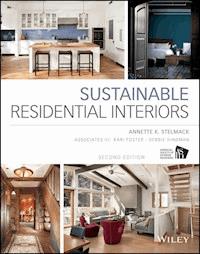
Cover Images: (Top row, left) Private residence, San Francisco, California: Interior designer, Joshua Mogal, eco + historical, inc.; Architect, Jonathan Feldman, Bridgett Shank, Feldman Architecture; Photographer, Paul Dyer Photo. (Top row, right) Wellness Loft, Delos’ pilot project, Manhattan, New York: Developer, Delos’ WELL Building Standard. (Bottom row, left) Private residence, Lake Creek, Colorado: Interior designer, Annette Stelmack, Kari Foster, Associates III; Photographer, David O. Marlow. (Bottom row, right) Private residence, Aspen, Colorado: Interior designer, Wendy Silverman; Architect, Sarah Broughton, Rowland + Broughton Architecture and Urban Design; Brent Moss Photography.
Cover design: Wiley
Copyright © 2014 by John Wiley & Sons, Inc. All rights reserved.
Published by John Wiley & Sons, Inc., Hoboken, New Jersey.Published simultaneously in Canada.
No part of this publication may be reproduced, stored in a retrieval system, or transmitted in any form or by any means, electronic, mechanical, photocopying, recording, scanning, or otherwise, except as permitted under Section 107 or 108 of the 1976 United States Copyright Act, without either the prior written permission of the Publisher, or authorization through payment of the appropriate per-copy fee to the Copyright Clearance Center, 222 Rosewood Drive, Danvers, MA 01923, (978) 750-8400, fax (978) 646-8600, or on the web at www.copyright.com. Requests to the Publisher for permission should be addressed to the Permissions Department, John Wiley & Sons, Inc., 111 River Street, Hoboken, NJ 07030, (201) 748-6011, fax (201) 748-6008, or online at www.wiley.com/go/permissions.
Limit of Liability/Disclaimer of Warranty: While the publisher and author have used their best efforts in preparing this book, they make no representations or warranties with the respect to the accuracy or completeness of the contents of this book and specifically disclaim any implied warranties of merchantability or fitness for a particular purpose. No warranty may be created or extended by sales representatives or written sales materials. The advice and strategies contained herein may not be suitable for your situation. You should consult with a professional where appropriate. Neither the publisher nor the author shall be liable for damages arising herefrom.
For general information about our other products and services, please contact our Customer Care Department within the United States at (800) 762-2974, outside the United States at (317) 572-3993 or fax (317) 572-4002.
Wiley publishes in a variety of print and electronic formats and by print-on-demand. Some material included with standard print versions of this book may not be included in e-books or in print-on-demand. If this book refers to media such as a CD or DVD that is not included in the version you purchased, you may download this material at http://booksupport.wiley.com. For more information about Wiley products, visit www.wiley.com.
Library of Congress Cataloging-in-Publication Data:
Foster, Kari.
Sustainable residential interiors/Kari Foster, Annette Stelmack, ASID, Debbie Hindman, Associates III.—Second edition.
pages cm
Includes index.
ISBN 978-1-118-60368-0 (hardback) — ISBN 978-1-118-88974-9 (epdf) — ISBN 978-1-118-89693-8 (epub)
1. Sustainable design—United States. 2. Ecological houses—Design and construction. 3. Sustainable engineering—United States. 4. Interior architecture—United States. I. Stelmack, Annette. II. Hindman, Debbie. III. Title.
TH4860.F67 2014
729.028’6—dc23
2013047828
Dedicated to my ‘Grosseltern’ (grandparents).
—Annette K. Stelmack
PREFACE
When we heal the earth, we heal ourselves.
—David Orr
As residential interior designers, we create “home” for our clients. Our responsibility is to serve them in one of the most personal and profound expressions of their world—where they live. We are privileged to engage with them on an intimate level, listening to their needs and dreams for “home,” where they welcome us into their living rooms, dining rooms, kitchens, bedrooms, bathrooms, home offices, and closets.
Since the first edition of this book, residential interior designers have developed a greater consciousness and appreciation for green and healthy design issues. In fact, the market transformation has seen an explosion of sustainable ideas, principles, and practices, including eco-friendly and healthier products. Green building rating systems are being adopted nationwide, and product certifications are standard practice for many manufacturers, who are following the leaders in the commercial sector of the industry.
This new edition provides comprehensive and reliable information on how to apply sustainable design principles and practices on projects. We celebrate your interest in integrating environmentally responsible design into your practice, and it is an honor to offer this book to the design community.
Our intention in Sustainable Residential Interiors is to support you as you question the status quo, to ignite your spirit as a catalyst for change, to present you with information and processes, and to encourage you to ask well-informed questions as you start down the path to creating healthy, high-performing, eco-friendly, meaningful, nurturing residences that positively impact our clients and the world we live in. Designers around the world are integrating sustainable, healthy, and high-performing strategies into their daily practice; it is no longer an added value, it is inherent to their work. In fact, we implore you to act now, and live differently, for if we don’t, who will?
Consumers, too, are more aware of the environmental issues affecting their homes and lifestyles, and they increasingly ask designers, architects, and builders to incorporate healthy indoor air quality and sustainability into their projects. To help meet this increased demand, this book provides design professionals with a comprehensive, easy-to-understand sustainable resource guide. It will:
Answer why we must become catalysts for change.
Share inspiring stories about today’s environmental champions.
Give visual examples of sustainable projects and applications.
Examine why the health, safety, and welfare of our clients matter.
Address the most hazardous chemicals that are consistently in our lives.
Explore the health impacts of traditional building.
Encourage critical thinking about environmental issues within homes.
Present strategies for incorporating sustainable design into work and projects.
Provide a practical, hands-on approach to sustainable design.
Offer guidelines for clients and project teams.
Provide helpful checklists for greening projects and specifications.
Give in-depth information to promote understanding and assist in specifying interior finishes and furnishings.
Raise questions for manufacturers and vendors.
Share effective methods of marketing sustainable design services.
Discuss what’s next with industry leaders.
Years ago, our eyes, minds, and hearts were opened to the inspirational world of sustainable design. Since then, we have been on a quest, searching for ways to exemplify integrity in our work, as articulated through the details of a project—asking how long finishes will last and which adhesives to specify, addressing indoor air quality, ensuring that woods are from certified sources, finding low-impact materials, conserving energy and water, supporting construction teams in reducing waste, providing information regarding healthy cleaning methods, assisting clients with multiple chemical sensitivities to create a healthy interior—all while exceeding the client’s expectations.
We know that healthy, eco-friendly design might not always be what our clients want initially, but we believe they will come to value and appreciate it in the long run. And it is for the future that we do this, for the future health of the Earth and its inhabitants, for future generations, indeed, for the future of humanity and our planet. We, the authors, have found that when something is right, there is always consensus, and we have agreed that this is the right way to practice the business of interior design.
Our goal for Sustainable Residential Interiors is to create a reference tool for interior designers who are beginning to embrace green design strategies. What is a healthy, green building? Simply, sustainable building takes steps to create homes that are socially and environmentally responsible while supporting the health and prosperity of families, communities, and the environment. Whether renovating an existing residence or designing a new home for your clients, keep in mind these three fundamental goals:
Be mindful about using limited resources, such as wood and water, to limit waste, pollution, and environmental damage.
Build and remodel with energy efficiency in mind to save money, create a more responsible home, and reduce air pollution and global warming.
Choose healthy materials and construction methods to prevent indoor air pollution from formaldehyde, mold, toxins, and other contaminants.
The residential design industry is moving briskly in the direction of sustainable building for many vital reasons, among them:
Higher quality
. Most green building products and materials are now developed to perform better than their conventional counterparts.
Greater durability and less maintenance
. Green building encourages the use of longer-lasting products that don’t require an inordinate amount of time or the use of harsh chemicals to maintain. Less frequent replacement puts less of a burden on natural resources and landfills.
Greater comfort and lower utility bills
. Energy-efficient upgrades can reduce the rate of energy consumption, lowering energy bills while providing a comfortable living space.
Healthier products and practices
. Green building promotes the use of products and construction practices that avoid introducing harmful chemicals and other pollutants into the home.
Natural resource conservation
. Protecting the environment is yet another compelling reason for committing to build green.
This book is a continuation of a journey that started so many years ago. It presents a logical and sequential process for creating healthy, sustainable residential interiors that meet the goals of the homeowner as well as the goals of green design. Step by step, it will take you through an integrated design process, exemplifying how sustainable principles, strategies, and practices can be applied at each level of interior design. These principles and practices can be utilized in any residential project to create a home that is healthy, functional, comfortable, sustainable, and beautiful.
Imagine if:
We learned how to be eco-friendly from our parents and grandparents, our grade schools, middle schools, high schools, and colleges.
Clients came to us asking for homes and products that were Earth- and family-friendly.
We, as residential interior designers, ascribed to the medical profession’s charge, “First, do no harm,” and recommended and specified only Earth-friendly and healthy materials and products.
We were able to provide net-zero-energy homes that were truly restorative for our clients and for the planet.
Residential contractors and architects seamlessly and routinely integrated green principles and strategies into their everyday best practices.
Government mandated environmentally sustainable construction for residences.
The core principle of all manufacturers of residential products included healthy ingredients as well as environmental and social responsibility.
All materials were safe and their contents healthy.
There was a practical, positive book to assist residential interior designers in converting their practice into one that is socially and environmentally responsible.
Well, here it is!
Our challenge, and opportunity, is to learn how we can leave a lighter footprint on the planet—or better yet, no footprint at all—and have a positive impact on our clients in order to create a thriving future for generations to come. As interior designers, we must actively promote change, transparency, and progress in the building industry—change that will support our clients’ vision and respect the environment, fully integrating environmentally responsible design. On each project we are motivated to create designs that are appropriate to the client and that meet traditional goals—the homeowner’s needs, budget, schedule, and aesthetics—as well as to give back more than we take from the surrounding environment.
Thank you for taking time to read this book. Whether you are taking your first steps toward adopting sustainability or are well along on your journey, we hope that you will find it informative and helpful and that it will inspire you to act now. We are truly honored to share with you how much our design and building profession is transforming and moving in a better direction. We look forward to engaging in conversations with you about healthy, intelligent, high-performing design, and with that in mind we welcome your feedback, your insights, and your questions. Hope to hear from you soon!
ACKNOWLEDGEMENTS
I am sincerely thankful to everyone who contributed their time, dedication, expertise and knowledge to make this book possible.
To Tom Stelmack, I am endlessly grateful for your never-ending love as my remarkable life partner of more than thirty-five years: You are my home. In particular, thank you for believing in me, always, and for encouraging me while we endured a tumultuous year of family illnesses, epic flooding, and the passing of dear loved ones. Your feedback and gracious support helped me through the challenges, the long days and evenings, and the countless weekends of hard work. Thanks for holding down the home front, babe.
My love always to my family, especially my son, daughter-in-law, and grandson, who cheered me on and gifted me with special family time to relax, laugh, love, and celebrate the next generation. Also to my parents and grandparents, for instilling values I deeply cherish, especially your profound love and joy for family, your exquisite caring for nature and her bounty, and your risk-taking spirit that embraces everything the universe offers and proves that life is indeed magnificent.
Thank you to my clients, who continually open their hearts and minds to allow me to help them create healthy, nurturing, high-performing, and vitalizing interiors that reflect their essence and support their health, safety, and well-being.
I want to acknowledge my U.S. Green Building Council family, both near and far: Thank you for teaching and inspiring me. What an amazing professional arena in which to connect, collaborate, inspire, advocate, and educate. To my fellow LEED faculty members: Thank you for sharing your passion, commitment, and expertise. A special shout out to Holley Henderson, who in my moments of weakness took time to brainstorm and clarify the direction of the new chapters; thank you, my Yoda sister.
A huge thanks to the early adopters and pioneers that I’ve stalked for more than fifteen years. I’ve had the immense good fortune to connect and work with you and deeply appreciate the motivation, guidance, passion, and knowledge you’ve graciously shared with me: Bill Reed, Ann Edminster, Ed Mazria, Kristen Richie, William McDonough, Dr. Marilyn Black, Peter Yost, Linda Sorrento, Alex Wilson, Paula Baker-Laporte, Bill Browning, Mary Cordaro, David Bergman, Rachel Gutter, Tom Lent, Penny Bonda, Nadav Malin, Nancy Clanton, Lance Hosey, Leigh Anne Van Dusen, Jay Hall, Jill Salisbury, Michael Lehman, and Susan Szenasy, and, in loving memory, Greg Franta, Ray Anderson and Malcolm Lewis. My heart and mind are overflowing thanks to each and every one of you, and so many more, who have respectfully challenged me and provided opportunities for tremendous personal and professional growth. You are thought-leaders on the cutting edge of the industry, truly being the difference!
Initially, our passion as environmental stewards was nurtured by trailblazers from all walks of life; Buckminster Fuller, Daniel Quinn, David Suzuki, Julia Butterfly Hill, Judith Helfand, Michael Braungart, Paul Hawken, Sarah Susanka, and Sym Van der Ryn are among them. We are thrilled that many have contributed to our book: Bert Gregory, Hunter Lovins, Janine Benyus, Paula Baker-Laporte, Steve Badanes, Trudy Dujardin, and William McDonough. Thank you for your unwavering commitment to creating a better world. You inspire us daily to do our part in creating healthy and nurturing environments.
A special note of gratitude to my exceptional reviewers. To Teen Rollins, who jumped in head first to provide guidance, clarity, and organization for the new chapters. Thank you for reining me in as the material was growing exponentially and for reviewing existing information for necessary updates. To Kari Foster, Debbie Hindman, and Amy DePierre at Associates III: thank you for your valuable review and editing of the draft manuscript and for your feedback, comments, and patience, and particularly for encouraging me to fly solo on this second edition. Namaste dear friends, I treasure our long-standing and enduring friendships.
My phenomenal research team—Rena Goodwin, Jessica Levy, Teen Rollins, Sheena Roddy, Briar Sawkins, Erica Smith, Bethany Strothman, Lisa Taylor, and Lori Tugman—provided in-depth examination and confirmed updates–tracking down all the material I needed to create the new chapters and advance the existing ones, and securing images and permissions. Your dedication, staying power, commitment, thoroughness, and patience were outstanding. I loved working with all of you and appreciate you immensely.
To the interior designers, architects, and project teams who submitted their cutting-edge, healthy, and high-performing residential projects: Thank you for your enthusiasm and the wealth of expertise and creativity you share through your work, which illustrates that sustainable, healthy principles and practices are beautiful, culturally rich, and ecologically sound.
My editor, Lauren Poplawski, has been understanding and patient this year, especially when my personal life got in the way of writing. Thank you for your compassion and for being there when I needed your guidance and expertise.
Finally, I want to thank you, our readers, for expanding your commitment to healthy, sustainable interior design. Knowledge empowers change; I am honored to be part of your process. I hope to hear from you as you transform your approach, communication, and design process in your projects.
—Annette K. Stelmack, Inspirit-LLC
We are eternally grateful to Annette Stelmack for her incredible hard work in spearheading the research, writing, and rewriting of this second edition of Sustainable Residential Interiors and in updating it with the many changes that have occurred in the few short years since we collaborated together on the first edition. It’s gratifying to see the new wealth of information available to us all in creating healthy, responsible, beautiful, and life-enhancing interior spaces. A special mention and thank you to Amy DePierre, an integral part of the Associates III team, for her supreme effort and diligence in the review of the content and written word.
—Kari Foster and Debbie Hindman, Associates III, Inc.
Chapter 1Why Be Sustainable?
Figure 1.1
Chapter 2Inspiring Stories
Inspiration comes through experiences that touch our hearts and open our minds to new ways of thinking and new ways of doing. In acknowledgment of the power of such experiences in our own lives, we invited some of our mentors and associates to share their personal stories of inspiration.
William McDonough: Designing the Future
William McDonough is a world-renowned architect and designer and winner of three prestigious national awards: the Presidential Award for Sustainable Development (1996), the Presidential Green Chemistry Challenge Award (2003), and the National Design Award (2004). Time magazine dubbed him a “hero for the planet” in 1999.
Photo courtesy of William McDonough.
Founding principal of William McDonough + Partners Architecture and Community Design, a design firm practicing ecologically, socially, and economically intelligent architecture and planning in the United States and abroad, William is also the cofounder and principal, with German chemist Michael Braungart, of McDonough Braungart Design Chemistry (MBDC), which employs a comprehensive cradle-to-cradle design protocol to chemical benchmarking, supply-chain integration, energy and materials assessment, clean-production qualification, and sustainability issue management and optimization.
My life in design has been influenced strongly by experiences I had abroad, beginning in Japan, where I spent my early childhood. Although land and resources were scarce there, I mainly recall the beauty of traditional Japanese homes, with their paper walls and dripping gardens, their warm futons and steaming baths. I also remember quilted winter garments and farmhouses with thick walls of clay and straw that kept the interior warm in winter and cool in summer.
Later, in college, I accompanied a professor of urban design to Jordan to develop housing for the Bedouin who were settling in the Jordan River Valley. There, I was struck again by how simple and elegant good design can be, especially when it is suited to the locale. The tents of woven goat hair the Bedouin had used when nomads drew hot air up and out, creating not only shade but a refreshing interior breeze. When it rained, the fiber swelled and the structure became tight as a drum. This ingenious design, locally relevant and culturally rich, contrasted sharply with modern home design, which applied universal solutions to local circumstances and sharply separated indoors and out. The Bedouin tent, on the other hand, was in constant, intelligent dialog with place; only a permeable membrane separated the landscape from the interior. Imagine if American homes and interiors were designed to make equally good use of the particular gifts of particular locales—the varieties of sunlight, wind, terrain, and vegetation that show what works in each place and make shelter a living, breathing presence in the landscape.
After graduate school, I apprenticed with a New York firm esteemed for its socially responsible urban housing, and then founded my own architectural firm in 1981. Three years later we were commissioned to design the offices of the Environmental Defense Fund, which became the first green office in New York. I worked on indoor air quality, a subject almost no one had studied in depth. Of particular concern to us were volatile organic compounds, carcinogenic materials, and anything else in paints, wall coverings, carpeting, flooring, and fixtures that might cause indoor air problems or multiple chemical sensitivity.
With little or no research available, we turned to manufacturers, who often told us the information was proprietary and gave us nothing beyond vague safeguards in the material data safety sheets mandated by law. We did the best we could at the time. We used water-based paints. We tacked down carpet instead of gluing it. We provided 30 cubic feet per minute of fresh air per person instead of the standard 5. We had granite checked for radon. We used wood that was sustainably harvested. We did our best, but I hoped for more. I wanted to design buildings and materials that were completely beneficial for people and nature. I wanted to make things that celebrated human creativity and the abundance of the natural world.




