


Erhalten Sie Zugang zu diesem und mehr als 300000 Büchern ab EUR 5,99 monatlich.
- Herausgeber: The Lilliput Press
- Kategorie: Geisteswissenschaft
- Sprache: Englisch
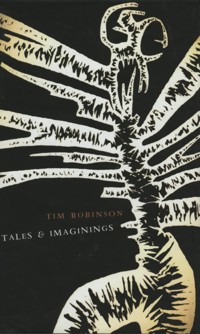
From the two volumes of Stones of Aran to the essays collected in Setting Foot on the Shores of Connemara and My Time in Space, Tim Robinson has established himself as one of the great non-fiction writers at work in the English language. In light of this, Tales and Imaginings, a collection of imaginative writings from five decades, might seem a profound departure, but to read it is to encounter anew the integrity and connectedness of Robinson's body of work. In the earliest stories gathered here, we recognize their author as the young Robinson, doing National Service in Malaya, whom we encountered in two searching autobiographical essays from My Time in Space; reading the most recent piece, 'Three Notes on the Elgin Marbles', we are reminded of Robinson's essay on his work as a visual artist and its examination of the role of the museum. In between are stories and imaginative essays that engage in unexpected ways with the West of Ireland landscapes Robinson has described so memorably in his previous books. Most of these pieces straddle recognizable genres; for example 'Orion the Hunter', which can easily be read as fiction, was selected for The Best American Essays 1998. Tim Robinson's non-fiction writings brilliantly transcend established disciplines and styles, and he has always shown himself to be an imaginative writer of the calibre of Borges and of Sebald. Tales and Imaginings confirms that achievement.
Sie lesen das E-Book in den Legimi-Apps auf:
Seitenzahl: 293
Veröffentlichungsjahr: 2002
Das E-Book (TTS) können Sie hören im Abo „Legimi Premium” in Legimi-Apps auf:
Ähnliche

















Tim Robinson
TALES AND IMAGININGS
Contents
Title Page
Preface
The Festival of Creation
So and Springrice
The River
The Ephemeron
Approaching the Glacier
Telling the Tale
Secret Meeting
Two Reminiscences of London 1970
Terminal Deity
The Heavens Fall
The Objective Reality of Purgatory
On the Edge
Visits to the Black Cliff
The Absence
Orion the Hunter
A Crystallography
Olwen Fouéré in The Bull’s Wall
Realism With a Human Face
If Undelivered Please Return
Three Notes on the Elgin Marbles
Notes
Copyright
Preface
Throughout most of my life, at intervals and very slowly, I have written pieces of fiction. Now that they have bulked up enough to be called a collection, it is a curious experience for me to read through them. Do I recognize their authors? I seem to enter a room of mirrors situated at various distances into the past. This young man aglow with the Orient, this dweller in European cities subject to metaphysical aftershocks, this Atlantic hermit with his mate, this word-logged pet-loving contemplative – none is exactly me, but I can see that each to a degree is responsible for me. And so I bear a reciprocal responsibility and want to take their shortcomings on my shoulders. Hence the decision to publish their works. Most of them are I-pieces, and their narrators are another source of anxiety, for I cannot totally disown them either, despite deploring their nihilistic tendencies. But because in the past I have published so much factual, celebratory, useful writing, I hope to be excused for giving rein to dark themes and dubious moods in some of these tales and imaginings – knowing, however, that once they leave my desk they are essentially on their own.
TIM ROBINSON
Roundstone,June2002
The Festival of Creation
I
Persimmon despite his bulk went through the crowd like a blackbird through branches. Struggling in the confusion caused by his passage, I couldn’t catch his bellowed comments on the sights that flashed forth, evoked and dismissed by his potent gestures. I would have escaped from my self-appointed guide had he not already made himself indispensable by rushing me into this tangled quarter of the city. At one point an old woman curled up in a basket snapped at my ankle, and I lost sight of him; then the maze of frayed and patched dwellings parted to reveal him, momentarily static, at the foot of a great staircase leading up to the temples which hung over us like rosy evening clouds. ‘Young man‚’ he said, mopping his brow with his newspaper, ‘time is short; let us imagine we are at the top. The balustrade as you see is a huge snake that descends the hill in seven undulations, and shades us here with its seven heads. Up there, a last coil of its tail encircles a little viewing-platform, from which I now lean out so that my stomach broods over the city like a thundercloud, and by running my fingernail along the principal thoroughfares I elucidate what lies before your bewildered eyes.’
‘Wait‚’ I cried, ‘one fact please, just as an example. Back there we passed a man sitting by a coil of rope smouldering away at one end; why was that?’
Persimmon’s gaze rested heavily on me for a moment, and then was lifted towards the pinnacles above. ‘In comparison with my rich conception of this city, some fragments of which I may communicate during this morning, such queries dwindle into triviality; spare me them.’ He upended an empty oil-drum before me, and achieved an oratorical balance upon it. ‘Grasp the ground-plan first,’ he cried, turning himself into a declamatory, rotating signpost. ‘We are looking down upon a holy-mountain mandala-city, a simple and symmetrical structure of square within square extending both inwards and outwards beyond the limits of vision. It answers our enquiring eyes with a universal statement, qualified by the idiosyncrasies of millions, as if the Absolute had its portrait done in fingerprints.’ A small audience of naked children had gathered, and when Persimmon fell, very slowly and without disarticulating his syntax for a moment, they received his declining trunk into their arms, gathered up his scattered small change, and restored it to him with grave politeness. ‘The principal product of this propitious clime,’ he continued, supporting himself on half-a-dozen small springy bodies, ‘is symbolism, the consumption of which is strictly reserved for tourists.’
Later, as we stood on a mud-bank to watch the river changing its course millimetre by millimetre, we breathed more slowly; I told Persimmon about my missionary great-aunt, who had left her small savings to me on condition I spent it in coming here to see a festival commemorating the Creation, which had impressed her long ago.
‘And how long are you staying?’
‘Just five days; that’s another condition of the will.’
‘A lady of extraordinary wisdom!’ judged Persimmon, already in motion again, treading heavily from boat to boat across the crowded river. ‘The conditions of her will are the conditions of your vision; they are the magnifying glass through which, in your five days, you will discover a lifetime.’ His rhetoric bobbed and gleamed before me as I lurched after him, pushing through lines of washing, apologizing to the diminutive families that stared up at me from the bottom of each boat like the contents of trampled nests. ‘Five days! That calls for the concision of a novella; allow me to state its theme without preliminaries. The unique attribute of this city is to wear in the present the aspect of a memory; fragmentary, contingent, a temporal discontinuum of moments like pearls unthreaded by cause or purpose! Is this so? At first, certainly; and for reasons your commonsense will furnish. The daily life of the natives appears to you full of mysteries. Do not enquire; mysteries are hard to come by nowadays. Again, for you things lack names; and I will not provide them. One chooses between remembering an object or its name. I recommend that you preserve the pre-adamite clarity of your senses. The landscape of a memory, then; grasp that, and know where you are.’ Reaching the opposite bank, Persimmon stopped suddenly, the mud immediately closing over his shoes; he turned his face back to where I rocked on the brim of the last boat, and with a pedagogical look he demanded, ‘Now, what were your very first impressions, say at the airport?’
‘The lizards on the ceiling‚’ I said, momentarily suspended, and thinking fast, ‘and the spoons in the coffeebar each holding a minute reflection of the big electric fan overhead.’
‘Correct!’ cried Persimmon, uprooting himself with a great sucking convulsion, and wafting me ashore with a wave of his arm. ‘Quite correct! The reversal of gravity, in fact, as one might expect, everywhere being the antipodes of somewhere. In that case I will show you around; this evening we will visit the Happy World, which is a dance-hall, a fairground, a what-you-will, and where you may well meet a nice girl. After that what we old China hands call the opium parlour would be an instructive visit.’ He continued to plan as we clambered up crisscross timbers onto the busy road, and squeezed along between slow columns of lorries piled with some blackish rotting substance. He had to go sideways to allow his gestures the space they demanded; he coughed and wiped his eyes in the smoky crevices of the traffic, but his voice carried well over its roar. ‘I cannot mediate the surrounding jungle for you; that you must experience for yourself. However, I will arrange a trip for you to a friend of mine, a rubber-planter up in the hills near the temple ruins, which you can visit en route. Where are you staying, by the way?’
‘At the YMCA. It’s very cheap if you share a room.’
‘Then no doubt you have met young Midgley, who has been staying there for some months.’
‘In fact he’s my room-mate.’
Persimmon looked at me, and then through me down suddenly-opening vistas of speculation. ‘And how do you get on with that remarkable being?’
I hesitated; ‘Is he a friend of yours?’
‘You may speak evil of him to me‚’ answered Persimmon, sitting on the edge of an immense gutter in the middle of the road, and swinging his muddy shoes and socks in the swift clear water. The traffic groaned and rattled on either side of us.
‘Well, of course I only met him last night, when I was tired after the flight, but he’s not exactly the ideal room-mate …’
Persimmon interrupted: ‘He showed you his own method of erecting a mosquito-net, and left you shut in with a mosquito all night. From six in the morning until two in the morning, going the long way round the day, he hops like a molecule!’ – Persimmon combined a demonstration with capering in the sun to dry his footwear – ‘When you wake in the morning, the room is full of the dials of his diabolical engines; a hundred suns dazzle you; you rub your eyes, wondering which is Midgley’s expressionless face with its gloomy moustache; but he is under your bed taking by telepathy your temperatures oral and rectal; he computes the difference, divides by your intake, and in a trice he is in possession of the length of your gut! You ask me his history; we will lean against the shaded wall of this police station, the only building in this neighbourhood strong enough to support me, and I will gratify your curiosity. The person we speak of came out to a big firm here as an expert in time and motion; he soon demonstrated that the local supply of those commodities immeasurably exceeds the demand, and they sacked him forthwith. He then devoted himself to the automation of his own life story, but got no further than the invention of, if I remember aright, a thumb-sucking machine. Defeated by his own humanity, he retreated to plantlife. And the outcome? A beautiful paper flower; when floated on water it folded itself up into a small hard pellet and sank like a stone! Another of his projects is a catalogue of the contents of this city; thus finite minds conceive their tasks as finite. We know better. Enough of such western wisdom! I must be about my business.’
‘What is your business?’ I enquired, as Persimmon began to wave and shout in the direction of a group of rickshaw boys dozing in their vehicles on the other side of the road.
‘Genuine relics of fake holy men, fake fountain-pens of genuine makes. Imports and exports, you might say; also transistor radios, for which the girls here have neat fingers. I’m a busy man, always sprinting over the roofs of cars in the traffic jams, even jumping from housetop to housetop in areas where I am unlikely to be recognized. Now, as you see, all these rickshaw boys have slipped off down various alleys at the sight of me, so I will walk with you as far as your YMCA, which is just round the corner, and then I must take wing. As we go, I will summarize your morning’s findings. In a word, the very structure of your experiences renders them time-resistant; when you come to write them up you will not have to wait like the early-to-bed Parisian memoirist for some flimsy secondary quality to recall them all. An observer less analytical than you might have said, the structure of a dream – and would have been mistaken. One person or thing does not become another, as seems unremarkable, natural even, in a dream. No, here as elsewhere ‘each thing is what it is‚ and not another thing’. To the natives of course it is just another city, another Bangkok, Penang, Malacca. I have been here thirty years, and so to me too its main aspect is that of a traffic problem. There is your YMCA; lunch awaits you, and an afternoon nap. I will collect you at sundown tonight. You have no time to thank me, as I am already running for that tram. Farewell!’
*
The clinging rosy wraps of a daylight drowse began to tatter under the intrusive thought-processes of Midgley’s number-machines; through a wispy hole his angular image was admitted into the reluctant depths of my sun-drenched darkness. A little bubble of awakeness formed around this irritant particle; the pearly sphere swelled until it enclosed me.
Mellow sunlight winked around the edges of the drawn curtains. Midgley was explaining one of his instruments. I sat up and shook my head; the morning came back like a flock of bright birds looking to be fed. I decided to speak rather than listen.
‘An acquaintance of yours rescued me from a band of robbers today.’
Midgley opened a notebook and asked, pencil poised, ‘What was his name?’ When I answered ‘Persimmon’, he sighed, and shut his notebook. Then he opened it again: ‘And the robbers?’
‘A crowd of kids swarming round me; naturally I don’t know their names. They were waving newspapers in my face, and under the newspapers their hands were diving into my pockets. Then this stout gentleman appeared and beat them off with the airmail Times. He’s going to show me round a bit.’
Midgley looked solemn. ‘Although Persimmon is a very good friend of mine, I should warn you that he is methodologically unsound.’
‘Then I’d better not mention him in my letters home. What form does this unsoundness take?’
A little pool of sunshine came into being on Midgley’s apparatus. He poked at it with his finger; it trembled and fled.
‘Let me give you an example. When I first came here he tried to persuade me he could predict all my actions. I naturally set out to disprove his claim by doing unexpected things, but he would never admit that they were unexpected. I’m a very methodical person, and I found it very difficult to think of new things to do, or find time to do them in. I decided to do one peculiar thing every day. I kept it up for a month; that’s how I lost my job. Then Persimmon told me he had only done it to exercise my imagination. I don’t need imagination, as it happens; this device I’ve been working on will make imagination obsolete. I only need to buy a battery for it, and it’s ready for testing. However, I won’t trouble you with an explanation of it, because you wouldn’t take it seriously.’
‘Why shouldn’t I?’ An explanation seemed inevitable. In the meantime I decided to get up.
‘Because you’ve been talking to Persimmon. He tells such lies about my work that nobody takes it seriously; I don’t know why he does it, because my experimental work complements his intellectual investigations perfectly. This device is an example; it’s based on an idea he threw out, and which he encouraged me to develop to the point of applicability. But his way seems to be to turn the unbelievable into reality, and make the reality appear so fantastic that nobody believes it.’
As I pulled on my trousers I looked at the little pyramid of metal and glass; four legs, three switches, two dials, and a flexible tube sprouting from the top. I tried to wash my slight irritability away in a basin of tepid water. ‘Please tell me what it is‚’ I said, lying down on the bed again.
‘I have already told you; you must have been asleep. It’s a device for recording dream-images. I expect that sounds a little far-fetched to you.’
‘No, on the contrary, I find the idea reassuringly unoriginal. What’s the little tube on top for?’
‘That is to be inserted into the sleeper’s ear.’
‘Really? Now if I take that seriously, I am led to ask if you couldn’t plug another tube into the other ear, and so get a stereoscopic picture?’
Midgley turned away and stood peering out through the gap between the curtains for a moment. Then he started again: ‘The suggestion shows your complete misapprehension of the principles involved. Let me begin at the beginning.’
‘No, wait, a more profound question occurs to me. Surely anyone sleeping with that thing plugged in his ear is going to have rather odd dreams?’
At this, Midgley became incomprehensible to the layman; his squeezed fingers and closed eyes indicated the tiny germ of doubt with which the experimenter unavoidably infects the experiment, the grain of subjectivity on which the pearl of knowledge forms itself. His brow bowed to Heisenberg, who, it appeared, if he knew where he was, didn’t know how fast he was going, and vice versa. Above, Einstein revolved on a disc in space, tracing the trajectory of a moonbeam. Not all Midgley’s million meters could masticate to exactitude the stubborn quantum-nut; so much at least condensed for me from the fog of mathematics he raised around us. By the time it had cleared, my mind had turned to other things. ‘What time is it, and what time is sundown?’ These questions were within the scope of Midgley’s instruments; the difference between the two answers was a mere five minutes. When I told him that Persimmon was taking me to the Happy World and then to an opium den, Midgley began to fill his pockets from drawers and trays of handily-sized implements. ‘I’ll accompany you to the Happy World, but not the opium house; it’s full of smoke, and I hate blurred things. The old Chinaman who runs it is very persuasive, too; he has a First in mathematics. I should be careful if I were you.’
I drew the curtains. The day’s sunshine had baked the city into a fragrant golden cake. ‘Hurry up then, if you’re coming; my hair is brushed, my tie is straightened, the world like a roulette ball is about to plop into one of various nights; adventure sings in the streets. Let’s go!’
‘You’re already talking like Persimmon,’ Midgely sighed, and as we rattled down the stairs he offered advice: ‘Don’t be led astray by your enthusiasm for the oriental. Preserve the objective viewpoint always.’
‘The objective viewpoint?’ I said. ‘I’ll try it!’
II
Down a capillary vesicle of a phosphorescent leaf three microbes hurry. From a mile above, Persimmon, Midgley and another, each in his own way, watch themselves pursue dwindling ramifications of the street-plan; Persimmon as final cause of all he surveys, Midgley plotting his world-line with due regard to relativities special and general, the other, through wide eyes and categories indeterminate as yet. There they are, temporarily baulked where the street ends abruptly at the foot of a cliff. The leader of the pack is casting about to find the little archway leading to a flight of steps up through the darkening foliage. On closer examination, Midgley, the rearmost of the three, is a miracle of conscious coordination, his muscles and tendons answering to the readings of his visual cortex with a scarcely perceptible time-lag. It appears he wishes to communicate with his companions; his mouth opens; ‘Wait, I must wind up my pedometer!’ Persimmon fills the arch, peering up the stairway Why does he pause? The wind is rising, the shadowy tangles of creeper that mask the cliff-face shift and rattle. The stairway with its wattle roof forms a little tunnel through limply flapping leaves, leading up and round a dark shoulder of rock. Against each roof-post lies a bundle, sprouting a hand like a sickly flower. Persimmon shouts ‘Have your small change ready!’ and sets off at a great pace, dealing out a coin to every second beggar. The second member of the party, myself a long time ago, follows, doing the same for those Persimmon passes over.
*
At the top I caught up with myself, and found Persimmon on a terrace among little trees hung with hourglass fruit each with a rag tied round its middle. Between swaying branches I saw below us the city beginning to map itself in lights; it showed no trace of the grand symmetries Persimmon had evoked. Purple columns of cloud were staggering towards us from the blazing horizon; above, the sky still held huge upsidedown pyramids of green light.
‘Eighty-seven steps exactly‚’ announced Midgley, coming clicking round the corner after us.
‘Welcome to the Happy World!’ said an old lady smiling across a turnstile, and issued us with tickets.
A chill gust of wind hurried us past a row of stalls selling incense sticks and small squares of gold leaf, into a courtyard where a fallen Chinese lantern was bowling about in a muddy puddle, between a little temple and a huge barnlike building of concrete. The first heavy drops of rain struck at our backs. ‘Into the dancehall!’ said Persimmon, and ran up the steps towards the great double doors, which blew open at that moment, and immediately crashed shut behind us. The dance-hall was racked by distorted music; it coughed and cleared itself like a throat. Through the darkness and mucous noises a man reeled towards the door. As he lurched between us he thrust a little booklet of tickets into my hand and shouted, ‘Enjoy yourself with those!’
‘Dance tickets‚’ said Persimmon. ‘You’re supposed to buy them from the old dame in the pajama trousers over there.’
We advanced into the gaunt hall, and sat down at one of the little iron tables round the dance-floor. The doors had opened again, and jammed. Rain was already leaping and roaring on the steps outside. At the far end of the room was an empty bandstand, and a flight of steps up to a balcony. A few bulbs burned feebly among the roof-girders, where the loudspeakers howled and shuddered. Apart from some silent beer-drinkers and a few couples dancing, the only people there were half a dozen girls sitting in a dark recess under the staircase. A ragged boy brought us small cups of bitter black tea, and the fat old woman in floppy cotton trousers moved towards us sluggishly. ‘Since you have tickets, you must dance,’ said Persimmon. ‘Tell her which girl you’ve set your heart on.’
I pointed at one of the girls in the obscure depths of the hall; the old woman bent down with a grunt to sight along my arm, her chin resting on my shoulder for a moment, and then trudged wearily across the dance-floor. We watched her in the distance pointing back at us. The girl appeared to argue with her for a minute before walking towards us.
As she came, the tormented loudspeakers fell silent, the doors slammed shut and the damp draught ceased. She approached through a profound stillness. ‘Observe the complicity of the inanimate!’ whispered Persimmon in my ear. But the cracked music started again and the doors flew open as she stood before us. She hugged her bare shoulders, and smiled equally upon us all. I placed a chair for her so that I was between her and the other two.
‘Would you like some tea?’ I asked; her answer was too quiet to be heard above the music, and I waved to the tea-boy, who brought us four more cups of tea, leaving the three empty cups on the table. Midgley, stirring his tea in a spiral movement from bottom to top, was discussing the girl in whispers with Persimmon: ‘To a certain degree …’ I heard him say, as he switched his eyes towards other girls at random in a comparative way. Not knowing what to say to the girl, I gestured towards the dance-floor. She picked up my booklet of tickets, tore one out and placed it under her saucer; then she slipped her little finger through my watch-strap and led me onto the dance-floor. As we began to dance she looked up at me for the first time; there was a question in her eyes to which I had no answer. I glanced around at the people sitting at the tables, embarrassed because I danced badly and there were so few couples on the floor; however nobody was looking at us except Midgley. The evening had already fallen quiet outside; the girl had put aside her question and was dancing, her mind far away, to a music that had changed, softened, as if its waves now reached us only after perhaps a year’s passage through the air of a scented country.
We walked back to our table hand in hand; we felt suddenly happy. ‘You make a lovely couple‚’ said Persimmon. As we sat down I said to Midgley, ‘Two hundred and thirty-six steps exactly.’
Later we danced again, and Persimmon led the fat lady in cotton trousers onto the floor; the girls at the dark end of the hall came forward to admire the ponderous graces of yesteryear. Then he persuaded them to come and sit with us; some of the morose onlookers were moved to join us, and it seemed that a party was being formed, wordless, but with tentative laughter, when Persimmon smashed his cigarette into dust and fumes in his saucer and jumped up. ‘It’s getting later and later! If we are to smoke opium, we must go immediately.’
‘I won’t come‚’ said Midgley. ‘I have to go home and make some notes.’
‘I’ll catch you up in a moment‚’ I said. They went out, deep in conversation.
‘Will you come again?’ whispered the girl.
‘Yes, of course.’
‘Remember to ask for me.’
‘What’s your name then?’
‘Nit. My name is Nit.’
‘Nit?’
‘Remember Nit. Ask for Nit. Please; will you remember?’
*
‘How on earth did she get such a name?’ I said to Persimmon as we descended the covered stairway. It was quite dark now; the beggars had gone, leaving their mats rolled up and tied with string to the wooden posts.
‘No doubt its an abbreviation of something suitably exotic‚’ answered Persimmon, ‘or perhaps an American sailor gave it to her. I see you were hoping for one of those names that make Chinese novels read like a perfumery. A pretty girl, anyway; you must have good eyesight. You will find that after a day or two in your pocket her name will be quite amenable to the palm of the hand. Don’t trouble to tell me if I prophesy correctly.’
‘I’m not quite sure she is the girl I pointed at, but …’ I almost lost Persimmon as he turned suddenly at a little archway, and pushed through a crowd of half-naked youths lounging in the mouth of a dark alley. ‘Down here!’ he called. I stepped over sleeping children, and almost slipped in mud. On a pile of rags an old woman sat, holding a bowl to her lips and hooking rice into her mouth with one finger. Persimmon was rapping at a door in a windowless wall. ‘You look peculiar,’ he said. ‘What’s the matter?’
‘Did you see that man with the forked thumb?’
Persimmon turned on me with a snarl. ‘For opening bottles, do you suppose? What is your mind full of? Girls, freaks, the quaint decorative surface! You must go deeper! Prepare yourself. And wear a serious inwardly-gazing smile, if you please; these people do not like to be looked at.’
The door opened a bit, and a head appeared so low down I didn’t see it immediately. Persimmon hustled me past the little doorkeeper who was like a bent, rusty key, twisting his neck to look up at us sideways. We too had to duck our heads; we were standing at the top of a short flight of stone steps, close under the ceiling of an enormous room. At first I couldn’t read the dark maze below; I felt warmth and stillness. Lines hung with clothes stretched across the room, and on the ceiling their shadows, thrown by oil-lamps burning in a layer of dusk on the floor, stirred like dim memories of the gleaming brown bodies lying motionless below. The room was divided by low partitions into hundreds of almost enclosed spaces. Each of these compartments had a broad bench on either side, bearing two or three people; most of them were asleep, their pale foot-soles regarding the lamps on the floor between the benches, but here and there were open eyes like black jewels, that did not move as we crossed their vision. In the depth of this scented labyrinth there sat among the fleshless sleepers a great soft pyramidal being with blood-rimmed eyes screwed deeply into his slowly pulsating face. Persimmon introduced me in a whisper; the swing of a sleeve made room for us on the bench; tea was brought.
‘Talk with me for a few moments before you smoke. My life is lonely, I sleep little. In the night, after the doors are locked and the last pipe is dead, I walk round and study the faces of my guests. They look older when asleep, but whether happier or wiser I do not know. I cannot enter their dreams; they bring back no souvenirs; any memories they smuggle out are buried later. Maybe they eat well there; certainly they will sacrifice food to buy from me. If they have friends or lovers there, here they are solitaries. They lie apart; in all this valley of sleepers not one head on another’s shoulder, not a hand touches casually another’s foot. For most men, I suppose, sleep is merely the soil in which their days grow. One is accustomed to think of the roots of a tree as the support and sustainer of the trunk, so purposeful, so fulfilled in the midst of its airy and fantastic creation of foliage and flower and fruit. One might, however, conceive of the seasonal and aeonal cycles of the crown, its breathing of sunshine, as a servant process, dedicated to an end: the roots’ stubborn, blind, inching exploration of earth. Look around you; here is my head-down forest. I, their forester, loiter above ground, wondering.’
‘You fatten on lop and top, however,’ said Persimmon in a conversational tone. Our host closed his eyes, and smoked his cigar thin as a straw. To break the silence I said, ‘I know somebody who has invented a camera for photographing dreams.’
‘Tell him that he has been anticipated, by Daguerre.’
Persimmon stirred restlessly; ‘Slack wisdom! However, my young friend is anxious to see for himself what lies under the forest floor.’ Ignoring our host’s sigh, he snapped his fingers to a figure standing in the shadows, who came forward with the apparatus of opium. The pipe, a thick wooden cylinder with an octagonal acorn-cup growing from one side, was placed in my hands. Persimmon, the expert, opened a little pill-box of brown grease, and picked up a blob of it on the end of a bamboo splinter. He rounded it against a wafer of bone, held it over the lamp till it sputtered, and put it into the cup of my pipe. ‘Come on now, lie down on the bench and hold it over the lamp. Rest your head on that block. Suck! You’re letting all the smoke dribble out of the corner of your mouth. Suck, before it’s all gone!’
‘I can’t swallow it – it’s so heavy and sweet. It rolls round my mouth like mercury!’
‘Try another lot; you wasted that.’
‘But do I want to kipper my brains like this?’
‘Of course you do. A well-fumigated subconscious will procure you sanative sleep before tomorrow’s journey.’
‘Why, where am I going tomorrow?’
‘To visit my friend the sage on the mountain-tops, near the religious ruins. The train leaves at nine; meanwhile all your worries about waking up in time are already asleep in my watch-case. Come on now, deep breaths. Ten deep breaths make one pipe, then a cup of tea, and then I will join you in another pipe.’
As we smoked, Persimmon talked. The cyclic ritual of the pipes stirred a slow eddy in the passage of time. My eye found a mouse asleep on the narrow top of a partition opposite our bench. Perhaps it was carved out of wood. Was it the torpid air swaying above the lamp that made it seem to stir and settle? I tried to follow Persimmon’s sentences, which wound away from me into the darkness: ‘… to entrap one of the most ancient chimeras of science; he holds that since dream transformations are fully reversible, the dream, thermodynamically considered, is the perfect machine. If so, he claims, all that stands between him and a certain possibility too absurd to bear contemplation – the frictionless time-rewinder – is the dreaminess of dreams, their drift and waver … I prefer another line of thought.’
Why is Persimmon bending over me, calling to me, the sound of his voice reaching me only after turning and turning in the coils of fragrant smoke? ‘You are floating. Your petals are closing. You are folding up into a pellet. You are sinking. Sink! Like a stone!’
Far above me, his other line of thought branched and budded. ‘More seriously, let us discuss the investigations he – or was it I? – made into the phenomenology of dreams, a region in which the concepts formed in waking life are like speechless foreigners
My left eye is a quiet pool. My right eye lies among the unwinking pebbles at the bottom, looking up through a green so tender and diffuse that only with an imperceptible trembling can its invisible skin support the sailing lilies of ideas unfolding overhead.
‘The material continuities, in the nature of the case, being absent, on what thread is strung the dream-object’s identity? Suppose for instance an eye becomes a pool …’
‘No, an eye is like enough a pool; but suppose now an idea becomes a lily-pad, what is the unity underlying that becoming?’
The pool flows calmly around the pale undersides of the lily-pads, expanding, losing its edges.
‘Imagine an opinion becomes a window; that’s a philosopher’s metaphor made concrete. And now the window in its wall becomes a lily leaf on the water’s surface; a geometry is preserved. The question is, do such transformations form chains that hold?’
The windows pattern a wall that stretches out of sight, above, below, and on either side. An infinitude of Persimmons smile and bow to me from them.
‘… or the being we meet in dreams who is at once today’s friend and a long-dead schoolmaster; a “person”? The word falters. A language born in the world of wide-awake is a wooden tongue to the dream-teller. Our failures to describe are blessed with a paltry adequacy simply because, all failing alike, we recognize to what each other’s failures refer.’
The windows shift and flicker like sunlight on rippled water. They shatter silently into foam and flow in sheets around me.
‘But perhaps we can tell our dreams because our language is not just built on the day’s stabilities; indeed how could it be? Consider the child, his growing rationality heaped and squared each day like a sandcastle, only to be licked shapeless by a tide of dreams each night …’
Foam dances in a whorl on the seashore, A last few words, ‘Or, of course …’ and ‘Perhaps, though …’, drift down to drown in it. The bubbles are catching at my wrist. Something tender is hidden behind them.
III
‘The train doesn’t actually stop there, but it slows down, so be ready to jump.’
I waited, holding the carriage door half open, in a rush of mouldy jungle air.
‘Jump!’ they shouted.
By the time I had picked myself up, the train had disappeared down a tunnel of leaves. Two brown bodies pieced themselves together from scraps of shade under a flowering bush, and came forward carrying a pole.
‘To the temple?’
‘Yes, please.’
In single file, first the shorter carrier with one end of the pole on his shoulder, then myself hugging it with arms and legs, and last the taller carrier with the other end of the pole on his shoulder, we climbed a path of leaf-mould beneath the trees. Then, first the taller carrier, next myself, and last the shorter carrier (their statures being adapted to this route), we descended to the banks of a river. On the dazzling water stood an old man in a little boat; his parasol was a leaf as long as himself, resting on the crown of his head in a broken arch. The boat drifted gently to the bank, and we jumped in. The boatman adjusted the rudder, and we immediately began to move out into the current. The two pole-men were already asleep in the bottom of the boat, piled together like cats; the old man sat motionless in the stern, under his leaf.
Was I expected to row?




