


Erhalten Sie Zugang zu diesem und mehr als 300000 Büchern ab EUR 5,99 monatlich.
- Herausgeber: Batsford
- Kategorie: Lebensstil
- Sprache: Englisch
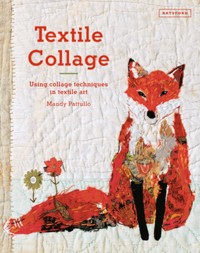
Textile artist and surface designer Mandy Pattullo marries fabric with collage techniques to produce beautiful pieces of art. In Textile Collage she shows a fresh way to use scraps and oddments of fabrics to create something unique and personal, while also being economical – perfect for those who have hoarded bits of fabric, trim and memory-filled domestic textiles over the years. Chapter one covers 'Materials': collecting and sourcing fabric including unpicking and storing found fabric. In chapter two, 'Make', Mandy guides you through all the artistic and creative elements that you need to consider to create a beautiful collage. The following chapter 'Portray' looks at piecing together a collaged portrait – human or animal – showing the figurative approach in collage work that includes transfer images and using found photographs. In the chapter 'Worn', the collage technique is used to embellish skirts, jackets and accessories. The final chapter 'Book' looks at the fabric book as a receptacle for textile collage, with a range of approaches and forms explored. This is a wonderful resource for all textilers looking to make the most of the found fabrics they love and fully explore the technique of collage with textiles.
Sie lesen das E-Book in den Legimi-Apps auf:
Seitenzahl: 147
Veröffentlichungsjahr: 2016
Das E-Book (TTS) können Sie hören im Abo „Legimi Premium” in Legimi-Apps auf:
Ähnliche


















Contents
Flower corsage constructed from old quilt pieces and fabrics (see here).
Introduction
MATERIALS
Hunting and gathering
Fabric archaeology
Dyeing
Making marks
Storage and care
MAKE
Colour
Composition
Putting it together
Stitches
Finishing off
Changing the scale
Appliqué
Patchwork
Mixing paper and cloth
PORTRAY
Enchanted forest
Building up your collage
Line
Animal magic
Birds
People portraits
WORN
What to use
Getting started
Jackets
Quilt garments
Domestic embroidery
Flower corsage
Going small
BOOK
Things to consider
Quilt books
Scroll books
Making a fabric concertina book
Wonders with wallets
Collections and cloth books
Conclusion
Artists’ websites and suppliers
Further reading
Index
Picture credits and acknowledgements
Introduction
I came to textile collage through a lifetime of collecting fabrics, making patchworks and training as a surface pattern designer. My training encouraged me to look at textile archives and decorative art for imagery and pattern to use in fabric design but I was also drawn to the textures and resonance of old fabrics themselves, and became a collector of antique and ethnic textiles and particularly of old quilts. There came a point where I had to start using these precious finds in my practice rather than hoarding them. By cutting, tearing and unpicking, I discovered that I was interested in mixing things up, the possibilities of layering and assembling, and found myself doing collage with fabric.
Collage is traditionally associated with paper. My favourite fine artist has always been Robert Rauschenberg, and he and Kurt Schwitters, Peter Blake and Joseph Cornell have created respected works of art through their careful arrangements of paper scraps and sometimes fabric.
Stitching into a piece of an old log cabin quilt.
The technique can easily be transferred to fabric and is a most satisfying medium in which to work because when you complete a project a transformation has occurred. From a seemingly random collection of scraps you have created a cohesive and pleasing composition. I have also chosen it as the main focus of my work because of its relationship to the thrift and ‘make, do and mend’ culture of past times, in particular utility patchworks and quilts made by women in domestic settings. The collages I make, like those early patchworks, bring together precious fragments to form evocative compositions. The viewer is forced to re-examine fabrics that have become flawed through wear and tear, to find in them a new beauty. My collages are nearly all hand pieced for the same reason, as the slowness of hand stitching gives me time to build up a relationship with even the shabbiest of fabrics.
Fabric collage is a kind of patchwork but without having to follow a pattern and a kind of appliqué without the templates. There is a freedom in the art of fabric collage, which allows you continually to arrange and rearrange and create anything from pictures and wall hangings to books, garments and accessories. I have done all of these things and now hope to inspire you too, to use those collections of fabric and textile treasures you have collected for years or are about to find, to indulge in fabric collage.
‘When I adjust materials of different kinds to one another, I have taken a step in advance of mere oil painting, for in addition to playing off colour against colour, line against line, and form against form, I play off material against material…’
KURT SCHWITTERS
A corner of my studio at The Hearth, Horsley, Northumberland.
MATERIALS
Button Flower (detail), 2013. 25 x 43cm (10 x 17in).
Every artist needs materials to create a work of art. The materials may not be unusual but it is the way they use them that matters. The artist needs to develop a style and visual language where the materials are used to construct the work, but where a transformative process has been undertaken. My materials are fabric and thread – easily accessible to everyone – but I am selective about the fabrics I work with, as I want them to tell a story which is mine and not someone else’s. I have chosen to work with materials that come to me not through purchasing in shops, online or at shows, but are inherited, gifted and given, or purchased second hand. I actively seek out the worn and torn. Fabrics that are stained are not rejected as they have a history, and signs of wear and tear show me that materials have been used or loved. My collection of fabrics not only gives me a palette of colours but also provide me with sensory stimulation with their rough edges, textures and stitched marks. The materials you collect need to be personal to you, and if you seek out the unusual and fabrics that are a little more difficult to find then you too will be able to develop a signature style.
Hunting and gathering
The lovely thing about fabric collage is that you have the opportunity to create a resolved piece of work using a wide variety of materials. It encourages you to collect and take a fresh look at the worn and shabby, the textured, the printed, the shiny, the transparent, the embroidered. You will not reject the stained and darned or fabrics marked by mildew and rusty pins, as all of these can be added to the mix. It is a thrill to find these items through online auction sites, visiting vintage fairs and flea markets or rummaging in charity shops. You may be lucky enough to have inherited some fabrics and embroidered pieces that hold memories for you of the person who made them. What are you keeping them for? If you are not using them, and they are stored somewhere you cannot see them, cut them up and use them to create works of art, which bring together your own hands and those of past generations. To me this link with the past is one of the most important elements of why I do what I do. As I reinvigorate, rescue and reclaim fabrics and domestic needlework from anonymous wearers and embroiderers I feel a real sense of connection to the people who wore and made them.
In this chapter I will introduce you to the interesting fabrics you can look out for and give a little bit of history about some of them. Some of the textiles described will be more suitable for the base or foundation of your piece whilst others can be cut or torn into smaller pieces for collage and appliqué.
A fabric selection from my studio including pieces of quilt, flour sack, printed cotton, denim and furnishing fabrics.
A pile of old patchwork quilts ready to be used as the foundations for collage or unpicked for their fabrics.
Quilts
The patchwork quilt arose from necessity. The thick wadding in between a top and bottom layer of fabric, held together by knotting or quilting stitches, provided an essential warm layer at night in the days before central heating. Quilts were sometimes carefully designed, and new and co-ordinated fabrics were bought, but on the whole the quilts of the late nineteenth and early twentieth centuries were thrifty affairs made from leftover dressmaking fabrics, recycled clothing and tailors’ samples. Old patchwork quilts are my passion. I love to see how they are put together, which designs have been used and how the colours of the fabrics work next to each other. Each piece of fabric may tell a story. I particularly like those pieces that may be poor in design but incorporate bits of wool, flannel and men’s shirting.
A quilt can provide both a foundation on which to work and, once unpicked, a lovely collection of old fabrics for your use.
It is becoming harder and harder to find old quilts. I look for quilts that are worn and torn; sometimes they have stains and the wadding layer is trying to escape. These ragged quilts are usually cheaper to buy as they often have areas of very fragile fabrics, which have disintegrated due to the original dyeing, printing or bleaching process. I love these tattered wisps and carefully pull them out to use within my work. When I find a pile of quilts for sale I always pick them up. If the quilt is heavy then the patchwork on the top may be covering and repairing another quilt underneath. The top layer can be removed and the usually Victorian second quilt inside revealed and used. I feel no guilt at cutting up old quilts to use in my work, as when the sections are worked on and remodelled it means that many people can once again appreciate the surfaces and patterns of that quilt, not just me. I never use quilts in perfect condition in my work but ones that are really not fit for purpose, as they are too tattered to survive as bed covers.
Turkey red
The scarlet colour found in many old quilts and eiderdowns is often called Turkey red. The dye originally came from the madder plant. Its use was developed in the Middle East, but by the late eighteenth century there were commercial dye companies in England and Scotland producing huge amounts of colourfast Turkey red cotton fabric for the home and export markets, and Turkey red fabric could be found across the world. Other colours and patterns were mixed in with the red, with the development of a discharge process, which could bleach away the red to reveal white. The white areas could be printed with black, blue and yellow, and green was created by overprinting blue with yellow. By the twentieth century a synthetic dye was developed and the use of the plant-based dye declined.
Turkey red fabrics in Britain were used for dresses and also for down-filled petticoats, eiderdowns and quilts. The use of Turkey red within quilt design was at its height in the late nineteenth and early twentieth century. When red was combined with white it produced dramatic quilts such as the quilted ‘strippy’ from the North East of England or appliquéd and log cabin designs imported from the United States.
The best source of authentic printed Turkey red fabric for collage is the eiderdown. These often have a thick layer of cotton wadding inserted for warmth. The thickness makes them difficult to collage on to or use because of the lumpiness but the pretty printed fabrics can be unpicked and the wadding discarded. These old fabrics can be extremely delicate so will not withstand repeated washing after they have been applied.
Turkey Red, 2014. 45 x 45cm (18 x 18in). A cushion cover using a variety of Turkey red eiderdown fabrics.
Curtain fabrics and linings
There is no shortage of new curtain fabric to buy but look in auctions and charity shops for old curtain fabric with beautiful patterns and designs, whether it be 1950s retro, figurative toile de Jouy or Arts & Crafts prints. Faded florals, crumpled chintz and retro prints are all collectable and when used within a collage might provide the start of a colour story or the pattern might suggest stitch schemes. I particularly like old linen printed fabric that may have been unevenly bleached out by the sun. Curtain linings that have maybe touched a damp window and show signs of foxing or mildew immediately provide an ‘aged’ appeal.
Bump curtain lining, a lining fabric which has wadding bonded onto it, is useful as a foundation fabric or backing for fabric collage.
Upholstery fabrics such as cut or devoré velvet, woven tapestry, brocades, damasks and silks can be used. I have even incorporated some of my grandmother’s old sofa fabric in some of my work. Your work will immediately have more integrity if some of the ingredients have a link with your own life story.
Peony, 2015. 34 x 23cm (13 x 9in). Pieces of old and stained curtain fabrics provide a patchwork base for the appliquéd needlepoint peony.
Printed fabrics
I prefer to use old rather than buy new, and cottons and linens rather than synthetic fabrics. When clothes are discarded in our household they are sorted into a pile for the charity shop and a pile to be cut up. Men’s shirts, printed cotton skirts and blouses are cut up for the fabrics and buttons. Don’t discard cuffs or front fastenings as these details might be used somewhere. Look for second-hand garments that can be recycled into your work.
I only use pure cotton fabric for finger-turned appliqué in a project. Cotton holds a crease when you press it with a finger or iron, which make it ideal for turned edges. Fortunately, beautiful cotton patchwork fabrics can now be easily obtained from specialized shops. The designs are sometimes reproduced from historic sources so it is easy to match the style of old patchwork quilts. I don’t buy much new fabric but every now and then will buy a fat quarter of fabric if I am running short of colours. I nearly always use the back of these newer crisp printed fabrics or tea dye them or use them within a border. Floral prints such as those from Liberty are great to cut up to extract tiny individual flowers for appliqué details and I love French General’s prints, inspired by French archive research.
Blue
When you think of blue cloth you might almost immediately picture denim. Denim is a robust fabric associated with blue jeans. The first jeans were worn during the Californian gold rush and are now ‘mined’ in the same way as gold was because even tiny scraps of original Levi Strauss workwear are highly collectable. Indigo-dyed jeans may fade with washing and will become distressed with repeated wearing. This is when denim becomes so much more interesting. If you cut up a pair of jeans you will have a palette of blue fabrics with various degrees of staining, and unpicking seams will reveal the original blue. There is, of course, the detailing too – pockets, rivets, labels and the iconic orange stitching of the original designs. Using a little bit of denim in a collage will have resonance with almost everyone.
The quilt makers of Gee’s Bend, a once isolated community in Alabama, utilized denim within their quilt-making out of necessity. They transformed the worn-out jeans of their menfolk into dynamic bed quilts which have now been re-appropriated by the fine art world and hang in major North American museums. This redefining of craft into art has also happened with Japanese ‘boro’ textiles. Boro means ‘tattered rags’ in Japanese and refers to the tradition of patching and repairing humble materials, particularly indigo-dyed fabric, so that they may continue to be used in times of economic necessity. We now revere these textiles produced in poverty for their naïve patchwork compositions, the surface qualities of the worn fabrics and the stitching used to hold them all together. We can learn a lot from a close examination of the way they instinctively layered and collaged together scraps. It is unlikely that you will be able to get hold of an original piece of boro textile to use within your work but you might be able to source old kimonos or more contemporary Japanese indigo-dyed fabrics. If you really like the look then you might be able to re-create it through indigo dyeing very distressed old fabrics such as worn quilt tops, as I sometimes do.
Spotted Star, 2013. 41 x 27cm (16 x 10½in). A piece inspired by boro textiles but using over-dyed British quilt fragments.
A is for Andrew, 2014. 16 x 22cm (6 x 9in). A teaching sample mixing recycled denim with an old cross-stitch tablecloth.
Pink Flower, 2015. 14½ x 20cm (6 x 8in). The back of an Indian embroidery mixed in with linsey-woolsey cloth, a flower from a cushion cover and pieces of quilt.
Lace
There are so many different types of lace – crochet, bobbin lace, net lace and tatting. Examples can easily be found in thrift or charity shops or you can cut lace off garments or old linen. Most old lace is made from cotton so it dyes well. I avoid using too much lace, particularly as a trim, as it can be a distraction and ‘prettify’ a piece of work. When I use it I cut sections out of it, shredded or torn, so it looks less contrived.
Found embroidery
I sometimes like to incorporate pieces of stitching that have been done by someone in the past or from another culture. I look for embroidered napkins, handkerchiefs, tablecloths and runners in charity shops and flea markets. These are usually cheap because they are no longer valued. Monograms and name labels were often used to distinguish the ownership of pieces sent to a laundry and can be cut off and used to add text in a piece. I will pay more for exquisite historical pieces or stitched work from other cultures. These can be purchased online but I prefer to find them at vintage and antique textile fairs so that I can handle the pieces and see their true colours and quality. Exquisite examples of historic embroidery from China, Japan and India can be used in textile collages and can add a real focus to a piece, like a precious jewel. Indian embroidered goods are easy to find; they can sometimes be crude but always check the back of the embroidery as this is occasionally more interesting.
Silks
Silk has a softness and transparency that is unique. It was often used in Victorian log cabin quilts and has a tendency to disintegrate with time. You might find an old silk petticoat or dress which is too thin and worn to work with but can be torn up and dyed. Look for old silk scarves and Indian printed silk garments second hand. Debra Weiss uses scraps of silks in her collages. She explains her reason:




