


50,99 €
Mehr erfahren.
- Herausgeber: John Wiley & Sons
- Kategorie: Geisteswissenschaft
- Sprache: Englisch
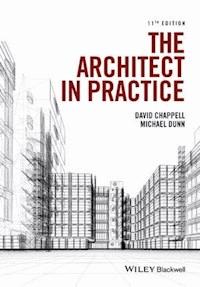
Throughout its many editions, The Architect in Practice has remained a leading textbook used in the education of architects. While the content of the book has developed, the message and philosophy has remained constant: to provide students of architecture and young practitioners with a readable guide to the profession, outlining an architect's duties to their client and contractor, the key aspects of running a building contract, and the essentials of management, finance and drawing office procedure.
The eleventh edition follows in that tradition. The text has been brought up to date to ensure it follows the new RIBA Plan of Work 2013 as the guide to the architect’s workflow. In addition, a number of changes to standard forms of contract were made with the publication of the JCT 2011 suite of contracts, and the RIBA Standard Form for the Appointment of an Architect 2010 (2012 Revision). These new forms are fully covered. In addition, the opportunity has been taken to reorganise the layout so that the content flows in a way that is more consistent with current architectural practice, and to deal with the increasing use of BIM. The eleventh edition of The Architect in Practice continues to provide the guidance and advice all students and practising architects need in the course of their studies and in their profession.
Sie lesen das E-Book in den Legimi-Apps auf:
Seitenzahl: 1085
Veröffentlichungsjahr: 2015
Ähnliche
















The Architect in Practice
Eleventh Edition
David Chappell
Michael Dunn
This edition first published 2016 © 2016 by David Chappell and Michael Dunn © 2010 and 2005 by David Chappell and Andrew Willis
Registered officeJohn Wiley & Sons, Ltd, The Atrium, Southern Gate, Chichester, West Sussex, PO19 8SQ, United Kingdom.
Editorial offices9600 Garsington Road, Oxford, OX4 2DQ, United Kingdom. The Atrium, Southern Gate, Chichester, West Sussex, PO19 8SQ, United Kingdom.
For details of our global editorial offices, for customer services and for information about how to apply for permission to reuse the copyright material in this book please see our website at www.wiley.com/wiley-blackwell.
The right of the authors to be identified as the authors of this work has been asserted in accordance with the UK Copyright, Designs and Patents Act 1988.
All rights reserved. No part of this publication may be reproduced, stored in a retrieval system, or transmitted, in any form or by any means, electronic, mechanical, photocopying, recording or otherwise, except as permitted by the UK Copyright, Designs and Patents Act 1988, without the prior permission of the publisher.
Designations used by companies to distinguish their products are often claimed as trademarks. All brand names and product names used in this book are trade names, service marks, trademarks or registered trademarks of their respective owners. The publisher is not associated with any product or vendor mentioned in this book.
Limit of Liability/Disclaimer of Warranty:While the publisher and author(s) have used their best efforts in preparing this book, they make no representations or warranties with respect to the accuracy or completeness of the contents of this book and specifically disclaim any implied warranties of merchantability or fitness for a particular purpose. It is sold on the understanding that the publisher is not engaged in rendering professional services and neither the publisher nor the author shall be liable for damages arising herefrom. If professional advice or other expert assistance is required, the services of a competent professional should be sought.
Library of Congress Cataloging-in-Publication Data
Chappell, David (David M.) The architect in practice / David Chappell, Michael Dunn. - Eleventh edition. pages cm Includes bibliographical references and index. ISBN 978-1-118-90773-3 (pbk.) 1. Architectural practice-United States. I. Dunn, Michael (Michael H.) II. Title. NA1996.C47 2015 720.92-dc23
2015016360
A catalogue record for this book is available from the British Library.
Wiley also publishes its books in a variety of electronic formats. Some content that appears in print may not be available in electronic books.
Cover image: Nadla/istockphoto
The Inspiration
From a pseudonymous letter of a quantity surveyor to the Builder, 9 March 1951
‘I have great admiration for an architectwho does his job well, because he has one of the most difficult jobs in the world. He must be an artist but at the same time in his administration of a building contract be a business man, and in interpreting it even something of a lawyer.’
The Dedication
To Arthur Willis, Christopher Willis and Bruce George and To the architectural profession in the hope that the book may encourage that co-operation of which its joint authorship is a symbol.
Contents
Preface
Acknowledgements
Abbreviations and Acronyms
Part 1 Practice
A THE PRACTITIONER
1 The Construction Industry
1.1 Introduction
1.2 Significance of the construction industry
1.3 A changing industry
1.4 Clients
1.5 Contractors
1.6 Consultants
1.7 Clerk of works
1.8 Construction industry bodies
References and notes
2 Academic and Professional Qualifications
2.1 Introduction
2.2 Relevant bodies
2.3 Architectural education and training
2.4 Examination of professional practice
2.5 Approval of educational programmes
2.6 Practising in the United Kingdom
2.7 Practising in Ireland
2.8 Practising in Egypt, Nigeria and Malaysia
2.9 Maintenance of standards, regulation and codes of conduct
2.10 ARB's standards of professional conduct and practice
2.11 RIBA code of professional conduct
2.12 The RIAI code of conduct
2.13 Continuing professional development
References and notes
3 Employment Opportunities
3.1 Introduction
3.2 Private practice
3.3 Local authority
3.4 Other public sector organisations
3.5 Large companies
3.6 Contractors
3.7 Manufacturers
3.8 Academia
3.9 Other specialisation
3.10 Adjudicator, arbitrator or expert witness
References and notes
4 Employment
4.1 Finding employment
4.2 Acceptable job titles
4.3 Employment
4.4 Job description
4.5 Hours of work
4.6 Overtime
4.7 Salary
4.8 Benefits
4.9 Professional activities
4.10 Expenses
4.11 Leave
4.12 Disciplinary and grievance procedure
4.13 Notice and dismissal
4.14 Spare time practice
4.15 Monitoring of telephone calls and e-mails
4.16 Discrimination
References and notes
5 Types of Practice
5.1 Sole principal
5.2 Partnerships
5.3 Incorporation
5.4 Co-operative
5.5 Group practice
5.6 Developer/architect/contractor
References and notes
6 Setting Up in Practice
6.1 Sole principal
6.2 The decision
6.3 Timing
6.4 Practical points to decide
6.5 Business plan
6.6 Enlarging the practice
References and notes
B PRACTICE MANAGEMENT
7 Management Principles
7.1 Objectives
7.2 Leadership
7.3 Communication
7.4 Delegation
7.5 Motivation
References and notes
8 General Office Practice
8.1 Introduction
8.2 Telephone, facsimile (fax) and e-mail
8.3 Information technology
8.4 Letter writing
8.5 Reports
8.6 Filing
8.7 Office-based meetings
8.8 Drawing office practice
8.9 Computer-aided design
8.10 Presentation
8.11 Reproduction
8.12 Work programming
8.13 Sources of information
References and notes
9 Marketing
9.1 Active marketing
9.2 Brochure
9.3 Website
9.4 Social media
9.5 Advertising
9.6 Contacts
9.7 Competitions
9.8 Frameworks
9.9 Retaining clients and recommendations
References and notes
10 Insurance
10.1 Introduction
10.2 Premises and contents
10.3 Public liability
10.4 Employer's liability
10.5 Professional indemnity
10.6 Latent defects insurance
10.7 Other insurances
References and notes
11 Finance and Accounts
11.1 Introduction
11.2 Accounts
11.3 Profit and loss account
11.4 Balance sheet
11.5 Assets
11.6 Liabilities
11.7 Capital
11.8 Cash-flow forecasting and budgeting
11.9 Books of account
11.10 Fee invoicing
11.11 Value added tax (VAT)
11.12 Computerisation
11.13 Annual accounts/auditing
11.14 Staff time records
References and notes
Part 2 Running a Project
12 The RIBA Plan of Work 2013
12.1 Sequential framework and Plan of Work
12.2 The Plan of Work explained
12.3 Building Information Modelling (BIM)
12.4 BIM overlay to the Plan of Work
12.5 Green principles
12.6 Green overlay to the Plan of Work
12.7 New words and phrases
References and notes
13 Stage 0: Strategic Definition – Appointment
13.1 Introduction
13.2 Scope of services
13.3 Determination of the fee
13.4 Terms of appointment
13.5 Consultants
13.6 Project managers
References and notes
14 Stage 0: Strategic Definition – Terms
14.1 Standard forms of agreement
14.2 Standard Agreement 2010 (2012 revision): Architect
14.3 Duty of care agreements (collateral warranties)
References and notes
15 Stage 1: Preparation and Brief
15.1 Feasibility studies
15.2 Site and building acquisition
15.3 Surveys
15.4 The brief
15.5 Reporting
References and notes
16 Stage 2: Concept Design
16.1 Design data
16.2 Concept design and its development
16.3 Cost estimates and planning
16.4 Procurement paths and implications for the professional
16.5 Contract selection and implications
16.6 Guaranteed maximum price
16.7 PFI Contracts
16.8 Partnering
References and notes
17 Stage 3: Developed Design
17.1 General
17.2 Planning applications and approvals
17.3 Other approvals
17.4 Property
References and notes
18 Stage 4: Technical Design
18.1 Technical design
18.2 Production information
18.3 Building regulations 2010 (as amended)
References and notes
19 Stage 4: Technical Design: Tender Documentation and Tender Action
19.1 Introduction
19.2 Co-ordinated project information
19.3 Bills of quantities
19.4 Specifications
19.5 Schedules of work
19.6 Activity schedules
19.7 Tendering
19.8 Preparing the contract documents
References and notes
20 Stage 5: Construction
20.1 Contractor's programme
20.2 Meetings
20.3 Site inspections
20.4 Safety
20.5 Architect's instructions and variations
20.6 Variations and their valuation
20.7 Controlling costs
20.8 Workmanship and materials
20.9 Certificates and payments
20.10 Delays and extensions of time
20.11 Financial claims
20.12 Termination
References and notes
21 Stage 6: Handover and Close Out
21.1 Practical completion
21.2 Rectification period
21.3 Adjustment of contract sum
21.4 Final certificate
References and notes
22 Stage 7: In Use
22.1 Review of project
22.2 Architect's review
22.3 Client review
22.4 Review of building in use
References and notes
Table of Cases
Index
EULA
List of Illustrations
Chapter 2
Fig. 2.1
Membership of the RIBA.
Fig. 2.2
Routes to registration/RIAI membership.
Chapter 4
Fig. 4.1
Self-appraisal.
Fig. 4.2
Checklist of points to clarify at interview (note that it is not possible to be specific because of the wide range of posts for which an architect might apply).
Fig. 4.3
Grading table for architectural staff (Courtesy of RIBA Publishing).
Chapter 5
Fig. 5.1
Buying a share of the goodwill.
Chapter 8
Fig. 8.1
Setting out plan.
Fig. 8.2
A specimen project history sheet.
Fig. 8.3
Court hierarchy.
Chapter 11
Fig. 11.1
Example of profit and loss account.
Fig. 11.2
Example balance sheet.
Fig. 11.3
Example cash book summary.
Fig. 11.4
Example cash-flow forecast.
Fig. 11.5
Sample timesheet.
Chapter 12
Fig. 12.1
The 2007 RIBA Plan of Work (title of stages only). Courtesy of the Royal Institute of British Architects (RIBA).
Fig. 12.2
The 2013 RIBA Plan of Work (title of stages only). Courtesy of the Royal Institute of British Architects (RIBA).
Chapter 16
Fig. 16.1
Traditional contract.
Fig. 16.2
Project management type 1.
Fig. 16.3
Project management type 2.
Fig. 16.4
Design and build.
Fig. 16.5
Design and manage.
Fig. 16.6
Management contracting.
Fig. 16.7
Construction management.
Fig. 16.8
Standard forms of building contract.
Fig. 16.9
Selection flowchart.
Chapter 18
Fig. 18.1
Stage 4: Flow of information.
Fig. 18.2
Example of an initial notice.
Chapter 19
Fig. 19.1
Letter to contractor: invitation to tender (assumes bills of quantities used).
Fig. 19.2
Form of tender.
Chapter 20
Fig. 20.1
Example of a pre-start meeting agenda.
Fig. 20.2
RIBA Architect's Instruction. Reproduced by kind permission of RIBA and RIBA Publishing.
Fig. 20.3
Financial statement.
Fig. 20.4
Standard valuation form. Courtesy of The Royal Institution of Chartered Surveyors.
Fig. 20.5
Statement of retention values. Courtesy of The Royal Institution of Chartered Surveyors.
Fig. 20.6
Interim certificate. Reproduced by kind permission of RIBA and RIBA Publishing.
Fig. 21.1
RIBA certificate of practical completion. Reproduced by kind permission of RIBA and RIBA Publishing.
Chapter 21
Fig. 21.2
Adjustment of the contract sum under SBC.
Fig. 21.3
Example statement of final account to client.
Fig. 21.4
RIBA final certificate. Reproduced by kind permission of RIBA and RIBA Publishing.
Guide
Cover
Table of Contents
Preface
Pages
xiii
xiv
xv
xvii
xix
xx
xxi
xxii
xxiii
xxiv
1
3
4
5
6
7
8
9
10
11
12
13
14
15
16
17
18
19
20
21
22
23
24
25
26
27
28
29
30
31
32
33
34
35
36
37
38
39
40
41
42
43
44
45
46
47
48
49
50
51
52
53
54
55
56
57
58
59
60
61
62
63
64
65
66
67
68
69
70
71
72
73
74
75
76
77
78
79
80
81
82
83
84
85
86
87
88
89
90
91
92
93
95
96
97
98
99
100
101
102
103
104
105
106
107
108
109
110
111
112
113
114
115
116
117
118
119
120
121
122
123
124
125
126
127
128
129
130
131
132
133
134
135
136
137
138
139
140
141
142
143
144
145
146
147
148
149
150
151
152
153
154
155
156
157
158
159
160
161
162
163
164
165
166
167
168
169
170
171
172
173
174
175
176
177
178
179
180
181
182
183
184
185
186
187
188
189
190
191
192
193
195
197
199
200
201
202
203
204
205
206
207
208
209
210
211
212
213
214
215
216
217
218
219
220
221
222
223
224
225
226
227
228
229
230
231
232
233
234
235
236
237
238
239
240
241
242
243
244
245
246
247
248
249
250
251
252
253
254
255
256
257
258
259
260
261
262
263
264
265
266
267
268
269
270
271
272
273
274
275
276
277
278
279
280
281
282
283
284
285
286
287
288
289
290
291
292
293
294
295
296
297
298
299
300
301
302
303
304
305
306
307
308
309
311
312
313
314
315
316
317
318
320
321
322
323
324
325
326
327
328
329
330
331
332
333
334
335
336
337
338
339
340
341
342
343
344
345
346
347
348
349
350
351
352
353
354
355
356
357
358
359
360
361
362
363
364
365
366
367
368
369
370
371
372
373
374
376
377
378
379
380
381
382
383
384
385
386
387
388
389
390
391
392
393
394
395
396
397
398
399
400
401
402
403
404
405
406
407
408
409
410
411
412
413
414
415
416
417
418
419
420
421
422
423
424
425
426
427
429
430
431
432
434
435
436
437
438
439
440
441
442
443
444
445
446
447
448
449
450
451
452
453
454
455
456
457
458
459
460
461
462
463
464
465
466
467
468
469
470
471
473
474
475
476
477
478
479
480
481
482
483
484
485
Preface
It is often said that architects are poor at business. We suspect that, if true, it is because they enjoy what they do so much. It is not unusual to find architects continuing to work in order to see their buildings constructed long after disputes about fees and other things would have persuaded other professionals to walk away. Architecture is undoubtedly one of the professions that can be enjoyed. It offers a wealth of interest in a variety of fields which few other professions can match, and provides an emotional satisfaction which only the other arts can stimulate. In order to derive the fullest pleasure from it architects must devote themselves completely to its study and practice. The more proficient they become and the greater mastery they can acquire the more complete will be their enjoyment.
Ability to design and skill in draftsmanship or in using computer-aided design equipment will not alone make an architect. Architects should bring the same skill to all sides of their profession, whether it is the initial building survey, feasibility studies, concept design, production information or the giving of professional advice and undertaking the administration of the construction contract. In common with other professions architects owe a duty of care to their clients but they have a greater responsibility than most in that the buildings and environments that they create affect the population at large.
The purpose of this book is to present to architectural students, and perhaps the less experienced practitioners, some indication of the practice and procedure with which they must be acquainted if they are to follow their profession with success. They must find clients to employ them, they must be able to manage an office and be responsible for a good deal of administrative work in connection with construction contracts, and they must know something of finance, law, the general structure of the construction industry and the organisation and requirements of those authorities who exercise so much control over their day-to-day work. Let the readers, therefore, move away from their CAD equipment, lay aside their thick felt pens and settle down to their desk or armchair to study an aspect of their work which is essential to make them efficient architects.
The architect’s work is here looked at mainly from the angle of the private practitioner dealing with the JCT forms of contract, though references are made where appropriate to public service practice and to other forms of contract. Architects in private practice are often commissioned to act for public authorities and they must therefore be able to adapt to the differing conditions which this type of work involves.
Since the last edition, some re-ordering and re-structuring of the contents has taken place. The chapters have been arranged in the sequence which looks at what needs to be in place so that an architect can run a business. Part 1A opens with an introduction to the construction industry and is followed by details of entry to the profession and its regulation. This part deals with employment opportunities, advice on employment and hints for those wishing to set up in practice. Part 1B looks at some basic principles of managing and working in a practice including marketing, insurance and accounts. Part 2 ends the book with the running of a project, the chapters being based around the work stages of the RIBA Plan of Work which has again been revised since the last edition. Each chapter ends with notes and law case citations together with a selected bibliography.
The Architect in Practice was first published over 60 years ago in 1952. It was written by two men, one a quantity surveyor and one an architect, both of whom had a flair for writing and who, after working together for some years, came to the conclusion that a textbook on architectural practice was needed. During that time, through ten editions, it has remained a leading textbook used in the education of architects worldwide. This is the first edition which does not have as Quantity Surveyor author a member of the Willis family. The mantle was passed down through three generations and we are grateful to Andrew Willis who has taken that role for the last three editions.
The format of the book was radically changed for the seventh edition in order to make it more accessible to the casual reader. That revised format was well received. The structure of this latest edition has been significantly revised and will hopefully present the reader with a logical layout. As with the previous revisions though the format has changed, the message and philosophy remains the same: here is a book which tries to present to the reader some of the elementary duties that architects owe to their clients and contractors alike, and to endorse the adage that of the many responsibilities borne by an architect, the greatest is the duty of care.
Architectural practice is now much more complex than was the case 60 years ago. There is now a multitude of forms of building contract to choose from, which would take a lifetime to read. It is not possible to write in any detail on such a wide subject: it warrants a set of textbooks on its own. The most helpful thing that we can do is to point the reader to relevant sources for this and other allied subjects.
As usual, this edition has been brought up to date and our commentaries revised where we judged it appropriate to do so. This includes among other things: the need to address the RIBA Plan of Work 2013 both in terms of commentary and the structure to the book, updating our commentary on the RIBA Standard Form for the Appointment of an Architect 2010 (2012 Revision) and employment law and dealing with the impact of BIM. The Joint Contracts Tribunal has reissued all its contracts as a 2011 suite. The new contracts have been revised to comply with the amendments to the Housing Grants Construction and Regeneration Act (as amended) 1996 which place significant further responsibilities on an architect undertaking the role of contract administration. All references to JCT contracts in this book have been updated, where appropriate, to refer to the new contracts. We are pleased to know that this book is used in the Republic of Ireland, Egypt, Nigeria and Malaysia and in this edition, we have included reference to education, registration and other requirements in these countries.
Finally we hope that our efforts will assist future generations of architects in the way that Arthur Willis and Bruce George assisted our generations.
David Chappell Michael Dunn January 2015
Note
The Construction (Design and Management) Regulations 2015 came into force on 6 April 2015. This was too late to make any significant amendments to the manuscript which was with the publishers at the time. However, where appropriate and where possible, minor amendments have been made to the manuscript to identify the introduction of this change and through the use of endnotes the reader has been directed to further appropriate reading. Unfortunately, the new Regulations have replaced the role of CDM Co-ordinator with that of Principal Designer. This may well lead to some confusion between the roles of Lead Designer and Principal Designer.
Acknowledgements
We are grateful to Allan Ashworth, MSc, MRICS, and Keith Hogg, BSc, MRICS, for their agreement to the use in this book parts of the text of Practice and Procedure for the Quantity Surveyor. We are also grateful to the following for particular assistance as indicated:
Richard Cobb, BA Econ (Hons), DipTP, MRTPI, Chartered Town Planner, for continuing to contribute Planning Legislation and Practice in Chapter 17. It has been substantially revised for this edition.
Kevin Blunden, C.Build E FCABE, CEnv, FCMI, EurBE, MWOBO, FACC, Deputy Chief Executive (Technical), Chartered Association of Building Engineers, for updating the Building Regulations in Chapter 18.
Jane Dobson, MA (Hons) Landscape Architecture, Chartered Member of the Landscape Institute, for updating her contribution about landscape architecture.
Lawrence JG Johnston, BSc, MSc, MCIArb, RIBA, for continuing to contribute the whole of Chapter 2.
The Commonwealth Association of Architects, the Union of International Architects and the Association of Consultant Architects for the provision of information in connection with Chapter 2.
Gale and Snowden Architects of Exeter and Bideford for assistance with Chapter 8 and for the setting out plan in Figure 8.1.
The ARB Standards of Conduct and Practice, Education, routes to admission, CPD information, Prescription Procedures and membership statistics, copyright Architects Registration Board, are reproduced by kind permission of the ARB.
The RIAI Accreditation information, registration, CPD and the summary of the role of the RIAI are reproduced by kind permission of the Royal Institute of the Architects of Ireland.
Extracts from the RIBA Code of Conduct, RIBA membership statistics, RIBA Services, validation procedures, CPD requirements and extracts from the RIBA Plan of Work 2013 Overview, copyright Royal Institute of British Architects, are reproduced here by kind permission of the RIBA.
The RIBA Contract Administration Forms are reproduced by kind permission of the copyright owners, the RIBA and by the publishers, RIBA Publishing. Copies of the forms are available from RIBA Bookshops at www.ribabookshops.com
The RICS ‘Valuation’ and ‘Statement of Retention Values’ forms, reproduced on pages 430 and 435 can be purchased from RICS at www.ricsbooks.com
Abbreviations and Acronyms
AA CPE
Architectural Association School of Architecture (London) Certificate of Professional Experience
ABE
Association of Building Engineers
AC
Appeal case
ACA
Association of Consultant Architects
ACA 3
ACA Form of Building Agreement 1998 (1999 revision)
ACA SFA
The Association of Consultant Architects Standard Form of Agreement for the Appointment of an Architect 2012
ACEu
Architects Council of Europe
ACAS
Advisory, Conciliation and Arbitration Service
ACE
Association for Consultancy and Engineering
All ER
All England Law Reports
APEAS
Architects Professional Examination in Scotland (Edinburgh)
APM
Association for Project Management
APSAA
Association of Professional Studies Advisors in Architecture
ARB
Architects Registration Board
ARCON
Architects Registration Council of Nigeria
ARCUK
Architects Registration Council of the United Kingdom
BAE
Board of Architectural Education
BBA
British Board of Agrément
BBC
British Broadcasting Corporation
BCIS
Building Cost Information Service
BEC
Building Employers Confederation
BIM
Building Information Modelling
BLR
Building Law Reports
BPF
British Property Federation
BPIC
Building Project Information Committee
BRE
Building Research Establishment
BREEAM
Building Research Establishment Environmental Assessment Methodology
BSI
British Standards Institute
BSRIA
Building Services Research and Information Association
BUILD
Building Users’ Insurance Against Latent Defects
CAA
Commonwealth Association of Architects
CABE
Chartered Association of Building Engineers
CAD
Computer-aided design
CATS
Credit Award Transfer System
CAWS
Common Arrangement of Work Sections
CBC
RIBA Concise Building Contract 2014
CBI
Confederation of British Industry
CC
Construction Confederation
CCG
Construction Client’s Group
CCPI
Co-ordinating Committee for Project Information
CD81
JCT Standard Form of Building Contract with Contractor’s Design 1981
CDMR
Construction (Design and Management) Regulations 2007
CDP Act
Copyright, Designs and Patents Act 1988
CE11
JCT Constructing Excellence Contract 2011 (note that the JCT abbreviate for this contract is CE but because this abbreviation is used for Conformité Européenne the abbreviation CE 11 has been adopted in this book)
CE
Conformité Européenne
CE/P
JCT Constructing Excellence Project Team Agreement 2011
CE/95
RIBA Conditions of Engagement for the Appointment of an Architect 1995
CESMM
Civil Engineering Standard Method of Measurement
ClArb
Chartered Institute of Arbitrators
CIB
Construction Industry Board
CIBSE
Chartered Institution of Building Services Engineers
CIC
Construction Industry Council
CIJC
Construction Industry Joint Council
CIOB
Chartered Institute of Building
CIMAR
Construction Industry Model Arbitration Rules
CI/SfB
Construction Information/Samarbetskommitten for Byggnadsfragor
CIL
Community Infrastructure Levy
CILL
Construction Industry Law Letter
CIRIA
Construction Industry Research and Information Association
CITB
Construction Industry Training Board
CLD
Construction Law Digest
CLG
Communities and Local Government
ConLR
Construction Law Reports
ConstLJ
Construction Law Journal
CM/A
JCT Construction Management Appointment 2011
CM/TC
JCT Construction Management Trade Contract 2011
CPA
Construction Products Association
CPD
Continuing professional development
CPI
Co-ordinated project information
CPIC
Construction Project Information Committee
CV
Curriculum vitae
DB
JCT Design and Build Contract 2011
DBC
RIBA Domestic Building Contract 2014
DCLG
Department of Communities and Local Government
DCMS
Department of Culture, Media and Sport
DEFRA
Departments of Transport, the Environment, Farming and Rural Affairs
DOE
Department of the Environment
DWP
Department for Work and Pensions
ECC
NEC3 Engineering and Construction Contract
ECLG
Environment Community and Local Government
ECTS
European Credit Transfer System
EH
English Heritage
EMR
Electromagnetic Radiation
ENACA
European Network of Architectural Competent Authorities
EPC
Energy Performance Certificate
EPIC
Electronic Product Information Co-operation
EU
European Union
FA
JCT Framework Agreement 2011
GMP
Guaranteed Maximum Price
GN
Guidance Notes
GDPO
The Town and Country Planning (General Development Procedure) Order 1995, with later amendments
GPDO
The Town and Country Planning (General Permitted Development) Order 1995, with many later amendments
HE
Historic England
HO/C
Building contract for a home owner/occupier who has appointed a consultant to oversee the work 2005
HO/CA
Consultancy agreement for a home owner/occupier appointing a consultant in relation to building work 2005
HO/B
Building contract for a home owner/occupier who has not appointed a consultant to oversee the work 2005
HSE
Health and Safety Executive
IC
JCT Intermediate Building Contract 2011
ICSub/NAM/E
Intermediate Named Sub-Contractor/Employer Agreement
ICSub/NAM
Intermediate Named Sub-Contract Tender and Agreement
ICC
ACE and CECA Infrastructure Conditions of Contract (ICC) 2011
ICD
JCT Intermediate Building Contract with contractor’s design 2011
ICE
Institution of Civil Engineers
ICWCI
Institute of Clerks of Works and Construction Inspectorate of Great Britain Inc
IES
Integrated Environmental Services
IEE
Institution of Electrical Engineers
IFC 84
JCT Intermediate Form of Building Contract 1984
IMechE
Institution of Mechanical Engineers
ISDN
Integrated Services Digital Network
IStructE
Institution of Structural Engineers
ISO
International Organization for Standardization
JCT
Joint Contracts Tribunal Ltd
JCT 63
JCT Standard Form of Building Contract 1963
JCT 80
JCT Standard Form of Building Contract 1980
JCT 98
JCT Standard Form of Building Contract 1998
JV
Joint venture
KPI
Key performance indicators
LDD
Local Development Document
LDF
Local Development Framework
LDS
Local Development Scheme
LI
Landscape Institute
LLP
Limited Liability Partnership
LPA
Local Planning Authority
MC
JCT Management Building Contract 2011
MP
JCT Major Project Construction Contract 2011
MIPPS
Ministerial Interim Planning Policy Statement
MTAN
Minerals Technical Advice Note
MTC
JCT Measured Term Contract 2011
MW
JCT Minor Works Building Contract 2011
MWD
JCT Minor Works Building Contract with contractors design 2011
NBS
National Building Specification
NEC
New Engineering Contract
NJCC
National Joint Consultative Committee for Building
NPF
National Planning Framework
NPPF
National Planning Policy Framework
NPPG
National Planning Practice Guidance
NRM
New Rules of Measurement (RICS)
NSCC
National Specialist Contractors’ Council
NSIP
Nationally Significant Infrastructure Project
OS
Ordinance survey
PAM
Pertubhan Arkitek Malaysia
PAN
Planning Advisory Note
PAYE
Pay as you earn
PERT
Performance Evaluation and Review Technique
PCC
JCT Prime Cost Building Contract 2011
PCSA
JCT Pre-Construction Services Agreement 2011
PD
Permitted Development
PEDR
Professional Experience Development Record
PFI
Private Finance Initiative
PHPP
Passivhaus Planning Package
PI
Professional indemnity insurance
PINS
Planning Inspectorate
PPC 2000
ACA Standard Form of Contract for Project Partnering
PPG
Planning Policy Guidance
PPP
Public–Private Partnership
PPS
Planning Policy Statements
PSA
Property Services Agency
QQI
Quality and Qualifications Ireland
RIAI
Royal Institute of the Architects of Ireland
RIAS
Royal Incorporation of Architects in Scotland
RIBA
Royal Institute of British Architects
RICS
Royal Institution of Chartered Surveyors
RM
JCT Repair and Maintenance Contract 2011
RPB
Regional Planning Body
RSAW
Royal Society of Architects in Wales
RSS
Regional Spatial Strategy
RSUA
Royal Society of Ulster Architects
RTPI
Royal Town Planning Institute
SBC
JCT Standard Building Contract 2011
SBC/AQ
JCT Standard Building Contract With Approximate Quantities 2011
SBC/Q
JCT Standard Building Contract With Quantities 2011
SBC/XQ
JCT Standard Building Contract Without Quantities 2011
SEC
Specialist Engineering Contractors
SELECT
Electrical Contractors’ Association for Scotland
SFA/92
RIBA Standard form of Agreement for the appointment of an architect 1992
SFA/99
RIBA Standard form of Agreement for the appointment of an architect 1999
SMM
Standard Method of Measurement for Building Works
SNIPEF
Scottish & Northern Ireland Employer’s Federations
SoS
Secretary of State
SPC 2000
ACA Specialist Contract for Project Partnering
SPD
Supplementary Planning Document
SPG
Supplementary Planning Guidance
SPP
Scottish Planning Policy
SPV
Special Purpose Vehicle
SW/96
RIBA Conditions of Appointment for Small Works 1996
TAN
Technical Advice Note
TeCSA
Technology and Construction Solicitors Association
TPO
Tree Preservation Order
UCAS
Universities and Colleges Admissions Service
UCATT
Union of Construction, Allied Trades and Technicians
UIA
International Union of Architects
UK
United Kingdom
UNICLASS
Unified Classification for the Construction Industry
UCO
Town and Country (Use Classes) Order 1987
VAT
Value added tax
VOIP
Voice Over Internet Protocol
WLR
Weekly Law Reports
Construction Act
Housing Grants, Construction and Regeneration Act 1996 as amended by The Local Democracy Economic Development and Construction Act 2009
Scheme
Scheme for Construction Contracts (England and Wales) 1998 (as amended by the Scheme for Construction Contracts (England and Wales) Regulations 1998 (Amendment) (England) Regulations 2011)
NI Order
Northern Ireland the Construction Contracts (Northern Ireland) Order 1997 as amended by the Construction Contracts (Amendment) Act (Northern Ireland) 2011
Part 1Practice
A THE PRACTITIONER
1The Construction Industry
1.1 Introduction
Lesen Sie weiter in der vollständigen Ausgabe!
Lesen Sie weiter in der vollständigen Ausgabe!
Lesen Sie weiter in der vollständigen Ausgabe!
Lesen Sie weiter in der vollständigen Ausgabe!
Lesen Sie weiter in der vollständigen Ausgabe!
Lesen Sie weiter in der vollständigen Ausgabe!
Lesen Sie weiter in der vollständigen Ausgabe!
Lesen Sie weiter in der vollständigen Ausgabe!
Lesen Sie weiter in der vollständigen Ausgabe!
Lesen Sie weiter in der vollständigen Ausgabe!
Lesen Sie weiter in der vollständigen Ausgabe!
Lesen Sie weiter in der vollständigen Ausgabe!
Lesen Sie weiter in der vollständigen Ausgabe!
Lesen Sie weiter in der vollständigen Ausgabe!
Lesen Sie weiter in der vollständigen Ausgabe!
Lesen Sie weiter in der vollständigen Ausgabe!
Lesen Sie weiter in der vollständigen Ausgabe!
Lesen Sie weiter in der vollständigen Ausgabe!
Lesen Sie weiter in der vollständigen Ausgabe!
Lesen Sie weiter in der vollständigen Ausgabe!
Lesen Sie weiter in der vollständigen Ausgabe!
Lesen Sie weiter in der vollständigen Ausgabe!
Lesen Sie weiter in der vollständigen Ausgabe!
Lesen Sie weiter in der vollständigen Ausgabe!
Lesen Sie weiter in der vollständigen Ausgabe!




