


Erhalten Sie Zugang zu diesem und mehr als 300000 Büchern ab EUR 5,99 monatlich.
- Herausgeber: Crown House Publishing
- Kategorie: Fachliteratur
- Sprache: Englisch
Crown House is pleased to announce the publication of the third edition of The Art of Hypnosis: Mastering Basic Techniques by Roy Hunter. This updated third edition includes a new introduction by Conrad Adams PhD together with a revised Chapter 1. Roy Hunter is an expert in the field of hypnosis. He was specially selected to carry on the work of the 'Grand Master of Hypnotherapy', the late Charles Tebbetts, who was a master teacher and contributor to the art/science of hypnosis and hypnotherapy. This book is based upon the training course of Tebbetts, which has been updated by Roy Hunter. Tebbetts' training has formed the basis of a large number of hypnotherapy courses taught in America and Europe. The Art of Hypnosis is well-written and easy to read and understand, even for the novice. In-depth and practical information is given on how to achieve maximum results in a hypnotic session by phrasing suggestions properly and by using various techniques to determine which approach is best for each individual client.
Sie lesen das E-Book in den Legimi-Apps auf:
Seitenzahl: 308
Veröffentlichungsjahr: 2010
Das E-Book (TTS) können Sie hören im Abo „Legimi Premium” in Legimi-Apps auf:
Ähnliche

















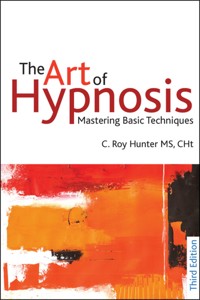
The Art of Hypnosis
Mastering Basic Techniques
Third Edition
Part I of Diversified Client-Centered Hypnosis (based on the teachings of Charles Tebbetts)
C. Roy Hunter, M.S., FAPHP
Crown Housing Publishing Limited
www.crownhouse.co.ukwww.crownhousepublishing.com
Crown House Publishing Ltd Crown Buildings, Bancyfelin, Carmarthen, Wales, SA33 5ND, UKwww.crownhouse.co.uk
and
Crown House Publishing Company LLC 6 Trowbridge Drive, Suite 5, Bethel, CT 06801, USAwww.crownhousepublishing.com
© C. Roy Hunter 1994, 1996, 2000, 2010
The right of C. Roy Hunter to be identified as the author of this work has been asserted by him in accordance with the Copyright, Designs and Patents Act 1988.
All rights reserved. Except as permitted under current legislation no part of this work may be photocopied, stored in a retrieval system, published, performed in public, adapted, broadcast, transmitted, recorded or reproduced in any form or by any means, without the prior permission of the copyright owners. Enquiries should be addressed to Crown House Publishing Limited.
British Library of Cataloguing-in-Publication Data A catalogue entry for this book is available from the British Library.
10-digit ISBN 184590439-713-digit ISBN 978-184590439-5 eBook ISBN 978-184590449-4
LCCN 2010921870
Previously published by Kendall/Hunt Publishing Company under ISBN: 9780757511011
Printed and bound in the USA
Dedication and Acknowledgements
This book is dedicated to the many thousands of people devoting their careers to help empower their clients through the art of hypnosis, and to all who believe in the benefits of hypnosis to facilitate positive change.
I owe a debt of gratitude beyond words to my late mentor and friend, Charles Tebbetts, for his guidance and priceless encouragement − not only for my work as a hypnotherapist, but also for my teaching professional hypnotherapy. I also wish to thank Dr. Dwight Damon for encouraging me to write this book. Special recognition and appreciation is also in order for Jonathan Chang, M.D., who valued this book enough to take time out of his busy schedule and contribute the artwork for the first edition.
And finally, my deepest gratitude goes to Jo-Anne, my wife, for her willingness to share so many hours of my time with all of you who read this book. Her love and support helped make this book a reality, and she well deserves to share my success.
Roy HunterThanksgiving Day, 1993
Postscript: As the second decade of the new millennium dawns, I wish to give thanks to all the professionals who use and endorse previous versions of this book. My gratitude also goes to the many hypnosis instructors who recommend this text as required reading for their students, and to all those responsible for selling out my previous editions so quickly. Also, as some have requested, this third edition contains a glossary. Since I made only minor changes to the 2010 version published by Crown House Publishing, this is still the third edition.
Table of Contents
Preface (by Ormond McGill, Ph.D.)
Introduction (by Conrad Adams, Ph.D.)
1. Overview
The Purpose of This Book
Who was Charles Tebbetts?
Part I: Learning the Art of Basic Hypnosis
Part II: Learning the Art of Hypnotherapy
Part III: Advanced Hypnotherapy Techniques
2. Hypnosis: What IS It and Why Use It?
Why Use Hypnosis?
Subconscious Resistance to Change
“Old Tapes” Must be Changed
What is Hypnosis?
The Four States of Mind
Terminology for People in Hypnosis
Faith and Hypnosis are Closely Related
Hypnotic Formula: Components of Hypnosis
Mixing the Ingredients to Hypnosis
Are the Ingredients Enough?
3. Hypnosis: Yesterday and Today
The Purpose of this Chapter
Possible Origins of Hypnosis
The Hypnotic Pioneers of Yesteryear
Hypnotic Pioneers of the 18th Century
Hypnosis in the 19th Century
The Most Common Mistake of the Pioneers
20th Century Hypnosis
The ART of Hypnotherapy: Birth of a New Profession
Legal Recognition of Hypnotherapy
The Future of Hypnosis
4. The Dual Roles of Suggestibility Tests
Wording is Important
Tebbetts Suggestibility Tests (Roy Hunter style)
Should You Use Suggestibility Tests Every Time?
Before You Begin Hypnosis ...
5. Inductions and Awakening
How Do We Induce Hypnosis?
Induction Type #1: Eye Fixation
Type #2: Relaxation (or Fatigue of Nervous System)
Type #3: Mental Confusion
Type #4: Mental Misdirection
Type #5: Loss of Equilibrium
Type #6: Shock to Nervous System
Unique Technique
IMPORTANT ADVICE REGARDING TOUCH
Your Imagination is the Limit
VOICE: Your Greatest Tool
Awakening
6. Deepening the Hypnotic State
Recognizing the Trance State
Depths of Hypnosis
How to Deepen the Hypnotic State
What about Guided Imagery for Deepening?
7. Testing During Hypnosis
How Does Testing Benefit the Client?
Eye Catalepsy Test
The Hand Clasp
The Rigid Arm Test
Automatic Motion
Arm Levitation
To Use Arm Levitation Without Touch
What if a Client Fails Two Tests?
Can Convincers be Used to Measure Hypnotic Depth?
In Conclusion
8. Post-hypnotic Suggestion and Suggestion Structure
Non-therapeutic Post-hypnotic Suggestion
Therapeutic Post-hypnotic Suggestion
Post-hypnotic Suggestion as a Hypnotic Induction
Direct and Indirect Suggestion
Constructing Effective Suggestions
9. Ethics and Potential Dangers
What Constitutes Ethics?
“Hypnotic Seal”
Ethics Legislated in Washington State
Is Hypnosis Dangerous?
Just What Constitutes Adequate Training?
Do Advanced Degrees Ensure Wise Use of Hypnosis?
Be Non-Judgmental of Your Clients
In Conclusion
10. Self-hypnosis for Stress Coping
The Peaceful Place Meditation
Using the Peaceful Place Triggers
Stress Release Options − the Healthy Choices
Doing It
It Only Works When it is Used
11. Concepts About the Subconscious Taught by Charles Tebbetts
Six Functions of the Subconscious
The Five Methods of Subconscious Programming
The Rules of the Mind
So... WHERE DO WE GO FROM HERE?
12. Introducing the Art of Hypnotherapy
So... Just What is Hypnotherapy?
Hypnotist or Hypnotherapist?
How Can Hypnotherapy Resolve Problems?
Are All These Steps Necessary?
Preview of Parts Therapy
In Conclusion
Glossary
Bibliography
Index
Preface
by Ormond McGill, Ph.D.
It would be fun to say this is a spooky and mysterious book; but that would not be true, as it is a highly informative and scientific test about an important subject that is daily gaining increasing recognition − and is of personal value to everyone: HYPNOTHERAPY.
This book is written by a man who is an expert in this field, and was specially selected to carry on the work of a “grand master of hypnotherapy,” the late beloved and esteemed Charles Tebbetts.
Charles Tebbetts was a master teacher and contributor to the art/science of hypnosis; and his protégé, Roy Hunter, is remarkably skilled to carry on his work, of which this book is positive proof.
Today hypnosis is no longer shrouded in shadows, but in the bright light of understanding it is recognized as a remarkable means of controlling man’s greatest gift: the human mind.
Mind is a process of producing thoughts, and when under the owner’s perfect control it can lead to joyful living and heights of genius. The classic quote says: “As a man thinkest in his heart, so is he.”
Roy Hunter has wonderfully contributed to the profession of hypnotherapy in this book, which in clear language all can easily comprehend; he explains what hypnosis is, how to induce it, and how to use this unique state of mind for benefit in countless ways.
Roy Hunter brings the understanding and practical use of hypnosis up-to-date. Just check the contents and you will instantly know the value of the book you hold in your hands.
Read it from cover to cover. You will not only learn about the Art of Hypnotherapy via the Charles Tebbetts methodology; you will also learn how to avoid being mastered by your mind, and instead will learn how to become a Mastermind.
Ormond McGill, Ph.D.Palo Alto, CAApril 27, 1996
Introduction
by Conrad Adams, Ph.D.
Every profession has within its circle a few who are considered to be the master teachers. These dedicated teachers take the knowledge they have accumulated, digest it, add to it, refine it and then graciously pass along the end result through their daily work and mentoring activities. Their goal is to improve upon their chosen profession. Their challenge is to become an integral part of the evolution and growth of their discipline so that it impacts upon the world in the most positive way possible. These masters refuse to place themselves above those they serve. Instead, they give of themselves wholeheartedly by sharing their knowledge and promoting the well being of those they serve and teach. In doing so they become the examples to follow and the profession they serve is enriched. Roy Hunter is such a master teacher.
One of the most rewarding experiences a teacher can have is to observe a student take what has been learned, expand upon it, experiment with it, succeed with it and then passionately teach it to others so that they, too, may reap rewards from the knowledge. To see this occur is an affirmation that the knowledge taught is useful, important and appreciated.
Roy Hunter’s mentor, Charles Tebbetts (honored by his peers as a master trainer of hypnotherapy) certainly enjoyed that rewarding experience when he asked his protégé to teach for him. And he certainly made a wise decision in doing so. That opportunity to teach for Charles Tebbetts inspired Roy Hunter and allowed him to evolve into the mentor he is today. If Charles Tebbetts were still with us today, he would undoubtedly be very proud of Roy Hunter for what he has done and continues to do by promoting quality education for the profession of hypnotherapy.
My mentor and friend, Dr. E. Arthur Winkler, Founder and President of St. John’s University, often spoke highly of Roy Hunter and made references to his work as well as his integrity, professionalism and dedication to the spiritual aspects of the art and science of hypnotherapy. Since meeting Roy Hunter I have experienced first hand these qualities and the effectiveness of his teaching style at conferences and other workshops. His reputation sets an example for others in our profession to follow.
As I read The Art of Hypnosis I became amazed at the vast amount of subject material that has been compressed into the pages of one book. Roy Hunter starts with the very fundamentals of hypnosis and then takes the reader on an expansive journey into the fascinating art and science of hypnotherapy and how to use it effectively to promote health and wellness.
The author uses clear and precise language in a step-by-step approach to introduce the reader to the many facets of hypnotic technique. He incorporates a wide range of topics that offer an excellent overview of hypnosis for both the beginning practitioner and seasoned professional alike. The Art of Hypnosis is an easy read full of valuable information to be utilized for optimum results with clients.
Change is inevitable. Society is certainly experiencing change today seemingly more rapidly than at any other time in mankind’s history. Hypnotherapy is a part of that change. There is a trend now for wider acceptance of hypnotherapy by medical professionals who are turning to its use as an adjunct to traditional healthcare modalities. Today’s progressive hospitals are adjusting to this trend by creating separate departments of complementary medicine that incorporate the use of hypnotherapy.
If we are to adjust to this ever-constant and rapid change, we must be prepared to make mental changes quickly and efficiently. The Art of Hypnosis introduces its reader to valuable tools to be used to help evolve through these changes. It offers both self-hypnosis techniques and hypnotherapist directed techniques to facilitate subconscious change that is in agreement with the client’s conscious desires. The end result is most often permanent and desirable behavioral change.
Few books on the subject of hypnosis cover such a wide spectrum of topics on the fundamentals of hypnotherapy. It is informative, enlightening, practical and constructive. Every hypnotherapist’s personal library should include a copy of The Art of Hypnosis. It is a required text for students of Alpha University who are learning the art and science of hypnotherapy.
Conrad Adams, Ph.D.Founder & Academic DeanAlpha UniversityFebruary, 2010
Chapter 1
Overview
Charles Tebbetts, a living legend, demonstrated what he taught:
“All hypnosis is self-hypnosis. If you follow my simple instructions, no power on earth outside yourself can keep you from being hypnotized …”
Following these words, countless numbers of people proceeded to experience what Mr. Tebbetts called Miracles on Demand. Many lives were profoundly improved; and those of us who were privileged to study hypnotherapy directly under the “grand master” of hypnosis found our lives forever touched.
The Purpose of This Book
What is it about the Charles Tebbetts Hypnotism Training Course that inspires me to continue teaching the Tebbetts methodology when there are so many other good training courses available today? The answer is contained within these pages.
Before using hypnosis to help people, we must first master basic techniques. The purpose of this book is to help you learn the art of hypnosis by mastering the same legendary basic techniques taught by the late “grand master” himself, enhanced and modified by my experience and presented in my style − as taught to my own students at Tacoma Community College since 1987. Also, since this author finds it easier to communicate in the first-person format, the reader will notice that I do so frequently throughout this book. (My former mentor did likewise.)
Several hypnotherapists urged me to write this book originally because Miracles on Demand (written by Charles Tebbetts) went out of print in October, 1993. Charlie’s work MUST be preserved; and events of the late 1980s and early 1990s made me the best candidate for this. In 1993, Dr. Dwight Damon (President of the National Guild of Hypnotists) agreed, and encouraged me to write it, and you have the third version of the result in your hands.
The Charles Tebbetts Hypnotism Training Course was originally taught in three parts, as is my college course. The 500+ page work to back it up required two texts, and this is the first. My original title was: The Art of Hypnosis: The Charles Tebbetts Methodology as Taught by Roy Hunter. I changed the title three times since.
Furthermore, as the true artist is more interested in how to master an art instead of understanding why it works, this book strays from the usual academic writing style of typical textbooks. Rather than making this look like just another research paper, I use my own writing style − presenting the techniques of Charles Tebbetts just as I teach them to my own students.
Included are opinions of my former teacher and mentor as well as my own opinions, with updates of his work resulting from my own experience rather than on scientific research alone. Also, I write in simple language, just as my teacher taught in a friendly, easy-to-understand style. I hope you’ll find this to be a fresh, new approach to learning.
With every class I begin at Tacoma, I present a brief overview of the entire course and preface my remarks with some words about my former mentor; so I’ll do likewise here.
Who was Charles Tebbetts?
Dr. John C. Hughes, Research Editor of the National Guild of Hypnotist’s international publication entitled The Journal of Hypnotism, referred to Charles Tebbetts as one of the “grand masters” of hypnosis. In 1990 he was honored and inducted into the International Hypnosis Hall of Fame for lifetime achievement. Charles Francis, author of Counseling Hypnotherapy, states that Mr. Tebbetts “… was generally considered the oldest and most experienced hypnotherapist in the world” (p. 152) prior to his passing. Additionally, he was respected from coast to coast by members of all the large professional hypnotherapy associations, where he frequently presented his legendary parts therapy techniques.
With over six decades’ experience in the art of hypnotism, Mr. Tebbetts − who mastered many rapid-change client-centered techniques − taught that all hypnosis is self-hypnosis. In fact, Benjamin Franklin reached this same conclusion in the late 1700s, observing that Dr. Anton Mesmer’s patients were responding to Mesmer’s magnetism because of what was taking place in their own imaginations rather than because of any “mystical” power that Mesmer had. In other words, if the power resided in the minds of Mesmer’s patients, then he was only facilitating their own self-mesmerism! (I’ll discuss this further in the history chapter.) Yet instead of accepting this fact, most people since Mesmer still prefer to believe that the hypnotist has some “power” over others … and there are a few even today who attempt to use hypnosis to trick people into giving up their power.
In reality, the hypnotist is only a practitioner skilled in the art of guided self-hypnosis, as the individual creates his or her own trance state by following instructions of the artist. Yet even now, many researchers who are seriously interested in hypnotism still tend to research it only as a “science” rather than recognizing it as an art.
Mr. Tebbetts believed that if the hypnotist really mastered hypnotism as an art, this would diminish the likelihood of client resistance. Not only did he often have profound results with clients, he became a master teacher who taught hypnotherapy in a way that made him a living legend prior to his passing.
One of the most unique professional qualities about the Charles Tebbetts I knew was the way he endeavored to make things simple. He felt this was the best way to use hypnosis; and so do I, as should be evidenced by this book.
He believed that a client-centered therapist mastering a variety of simple techniques could be far more effective than the scholar of hypnosis who fails to create rapport with the client even though he/she might have a wealth of knowledge about scientific research in various applications of hypnosis.
While science tends to walk with a microscope, most clients are more interested in results than in getting bogged down with labels and scientific whys, etc. Thus, Mr. Tebbetts believed that some of the most simple concepts, once communicated effectively to the subconscious, could bring about some of the most profound changes in people’s lives. He proved this time after time in his class at Edmonds, Washington, with the way he demonstrated his mastership of the art of hypnosis.
Originally Charles Tebbetts became interested in hypnosis while playing in a band and observing a stage hypnotist; and he eventually performed the show himself when the hypnotist was unable to do so. This began a lifetime career of hypnosis, interwoven with other careers until he reached middle age. After studying hypnotherapy seriously in Southern California with Gil Boyne, he set up a full-time practice. Eventually he moved to Edmonds, Washington, where he taught professional hypnotism until the end of 1991. In 1987 he decided to expand his hypnotism training course to another city by asking me to teach it under his supervision. Then, in 1992, he moved to Arkansas where he spent most of his final months.
His passing took place among his peers in August that same year, at the annual convention of the National Guild of Hypnotists. Mr. Tebbetts was scheduled to present a workshop on his legendary parts therapy techniques, but he suffered a heart attack. He asked me to present in his behalf, and then passed on while I was quoting from his writings during his workshop. This was a very emotional experience for me; and I consider it an honor that my mentor asked me to continue his teachings.
By providing a written record of how I both utilize and teach the rapid change techniques of Charles Tebbetts, as enhanced through my own professional experience, it is my hope to preserve my late mentor’s teachings through the 21st century and beyond. Originally I assumed that my entire course would go into one book divided into three parts − but because of the length of this first book on mastering basic techniques, it seemed appropriate to publish this first volume as a separate text for the new student of hypnosis.
Now let me summarize the objectives of my entire course, which I now call Diversified Client-Centered Hypnosis, based on the course I originally started teaching at Tacoma Community College in 1987.
Part I: Learning the Art of Basic Hypnosis
The primary objective is to help the student of hypnosis to master basic skills and knowledge in the art of hypnosis. We must learn to walk before we can learn how to run and do other exercises; and the same is true with hypnosis. One must master the ART OF HYPNOSIS before effectively using hypnotic techniques to help people change habits and achieve goals − hence the title for this book.
Basic hypnotic techniques must be learned and mastered before learning the effective use of hypnotherapy techniques, because of a simple truth. All hypnotherapy employs the use of hypnosis; but not all hypnosis is hypnotherapy.
The BASIC course, as taught by Charles Tebbetts in the 1980s, was simplified and easy to learn. He incorporated suggestibility tests to help prepare a client for hypnosis. He categorized all hypnotic inductions into six basic induction types, and taught enough induction techniques to incorporate all six types.
We broke into pairs to practice all the basic techniques Tebbetts taught in the classroom, while our teacher observed and supervised the practice sessions.
After learning inductions, the hypnosis student then learned several deepening techniques as well as several hypnotic “convincers” to help the client believe in the hypnotic experience. We again broke into pairs to practice deepening techniques as well as the “convincers” that Tebbetts taught.
Next, the student now learned how to give effective non-therapeutic post-hypnotic suggestion as further evidence to the client that he/she really did experience hypnosis, and we learned how to construct more effective suggestions. Also included was a class on self-hypnosis.
My mentor’s course included his opinions and concepts based on several decades of experience, woven throughout the course. I added these where appropriate, and devoted Chapter 11 of this book exclusively to some of the basic ones Charles Tebbetts emphasized. He only briefly discussed hypnosis history, encouraging us to study on our own; but I included a lengthy history chapter, and discuss it in my own basic hypnosis class.
Since an art must be experienced in order to be learned, Charlie emphasized practice to help develop confidence and competence. I concur, so I encourage the reader of this book to seek actual “hands on” training in hypnosis rather than simply relying on books alone for learning and mastering the art of hypnosis, ESPECIALLY if there is any intention of using hypnosis for therapeutic purposes.
In addition to adding some historical background on hypnosis in my classroom, I discuss ethics, legalities and potential dangers − and have also included them in this book. I also added the important “hypnotic formula” to the very first class.
My mentor was a pioneer, so his course is now updated and combined with some of my own material. We all must grow, but I still endeavor to preserve the integrity of his methodology. My basic course still resembles his “101” course greatly, and I still endeavor to keep it simple.
While Charles Tebbetts was still living, I initiated frequent communication to discuss my updates, and to solicit approval on the added material where necessary. He deserved this courtesy since my course was based on his client-centered teachings. My students seem satisfied with the results; I trust that you will be as well.
Part II: Learning the Art of Hypnotherapy
Once you learn how to walk with the basic hypnosis techniques, what next?
At Tacoma Community College, Part II attempts to answer that question. As with the Basic quarter, emphasis is more on “how to” rather than on scientific or academic documentation. Since client results speak louder than words, client results are threaded throughout my second book based on The Charles Tebbetts Hypnotism Training Course − including some discussions of actual case histories on record which he facilitated. It is entitled: The Art of Hypnotherapy.
Client-centered hypnotherapy means much more to one who first masters a variety of basic hypnosis techniques. My former mentor always said, “Deal with what emerges!” Sometimes what emerges is a client who resists basic hypnotic techniques; therefore it is essential to fit the technique to the client rather than trying to fit the client to the technique. So with that in mind, Mr. Tebbetts taught and used a variety of techniques throughout his career, and taught me to do likewise.
The objective of what I once called the “intermediate segment” at Tacoma Community College is to teach the hypnotherapy student how to apply those techniques learned in the basic segment for habit control, general self-improvement, and personal motivation. I also want my students to learn how to help their clients discover and release any inhibitions or subconscious “blocks” preventing them from reaching a goal. My stated mission statement is to help people attain their ideal empowerment; and I teach my students to do likewise. Part II is now called: Learning the Art of Hypnotherapy.
The student first learns a foundation of four main steps to achieving successful hypnotherapy (summarized in the last chapter of this book). These steps form a foundation for all hypnotherapy techniques learned even beyond the class.
Included in “Intermediate” is information I teach on the benefits approach − which was added to my first class with my mentor’s consent, who was my course sponsor while he lived (as well as my friend). Charles Tebbetts openly admitted that any hypnotic technique which helped a client overcome a problem or obtain a goal was worthy of professional consideration, provided it was not harmful or dangerous to the client; so he was quite willing to let me teach this somewhat original but effective approach. I’ve added an important class on anchors and triggers, because they relate directly to habit control.
Charlie’s effective techniques help the subconscious to disclose the cause(s) of resistance to change, so that the client can be empowered to release the cause(s). Hypnotic regression therapy is explored in depth for a number of weeks, with emphasis on minimizing the risk of false memories. The hypnotherapist learns how to facilitate client abreactions during a hypnotic regression, how to avoid pitfalls such as unwisely “leading” the client during a regression, and how to use a variety of techniques to take a client back to the original cause of a problem … and more.
This cannot be learned adequately in one weekend!
Part III: Advanced Hypnotherapy Techniques
This class takes a closer look at just how hypnotherapy goes beyond simple motivation. Actual case histories are summarized for further examination of the Tebbetts techniques, and we explore other techniques as well. I wove some into The Art of Hypnotherapy instead of writing a third text.
The rapid change techniques of Charles Tebbetts include his legendary parts therapy (also called “ego states” therapy), as well as other client-centered methods that help facilitate subconscious change. Students see some videotapes of actual therapy sessions facilitated by Mr. Tebbetts, showing how the “grand master” helped people change their lives.
My “Advanced Hypnotherapy” class at the college provides the student an exposure to the use of a variety of hypnotherapy techniques for more specialized areas and/or more serious problems as well, such as those that might require a medical referral. There are videos showing Mr. Tebbetts in action, revealing how he utilized his own techniques for some of these, such as helping an alcoholic victim of epilepsy overcome both of those problems. The actual therapy script of this particular case, along with a testimonial, is included in my next book.
A few advanced techniques are touched on during Part III, and some are included in The Art of Hypnotherapy; but this class is always open to change, as I bring in guest presenters whenever possible. (Additionally, there are a few highly qualified instructors in other cities teaching my course in a similar manner, utilizing student materials and study guides in addition to my texts.)
I wish to give my students an opportunity for learning new techniques − including some that go beyond what either Charles Tebbetts taught or what I’ve developed and/or enhanced from his teachings over the years. With this in mind, the serious student of hypnotherapy is encouraged to grow beyond my books and follow the recommendations of several professional hypnosis associations: pursue ongoing continuing education.
In all of your pursuits to further your skills in the use of hypnotism, however, use only those techniques which benefit your clients − and then master them with both confidence and competence.
Now let’s get started with the first book …
Chapter 2
Hypnosis: What IS It and Why Use It?
Hollywood shrouds hypnosis in mysticism, and it is way past time to take it out of the dark ages! It is not mind control, nor is the hypnotized person “under someone’s power” as we are led to believe by the movies. Nor is it some dangerous scientific tool that should only be used by physicians or people with advanced academic degrees − because degrees do not guarantee ethics.
However, if we are going to seriously consider mastering the art of hypnosis, we need to know what it is, what its main ingredients are, and why we should use it.
Before examining what it is, let’s talk about its benefits.
Why Use Hypnosis?
Have you ever tried to change a habit pattern, or become more self-motivated, only to find your subconscious mind resisting? The very fact that the subconscious can create such resistance to change is WHY we often need hypnotherapy.
In the very first chapter of his book, Self-Hypnosis and Other Mind-Expanding Techniques (third edition), Charles Tebbetts wrote:
Since the subconscious mind is our driving force, we always do what our subconscious believes. Since it will believe anything it is told, we can reprogram it if we bypass the conscious mind and substitute new, constructive ideas for its existing negative ones. (p. 6)
My clients frequently ask me why they find themselves unable to accomplish seemingly simple goals and objectives through willpower. My response is to explain that acceptance of any new habit pattern requires subconscious cooperation, otherwise your conscious decision to make the desired change is undermined by your own subconscious belief in failure.
There is a basic law of the mind at work here: whenever your conscious and subconscious are in conflict, your subconscious invariably wins!
This is called the law of conflict. It can also be stated another way, whenever imagination and logic are in conflict, imagination usually wins.
This has been proven repeatedly: by smokers unable to stop without outside help, by dieters constantly going up and down with their weight, by outgoing people suddenly finding themselves petrified with fright when speaking in public, and by each of us as we wonder why things we want to change in life do not come easily.
People usually try to change their habits through willpower and/or self-discipline. While they may convince themselves what the logical course of action is, they still imagine themselves doing what they subconsciously desire to do. For example, smokers trying to quit still imagine the taste or smell of cigarettes, or dieters imagine how good junk food would taste − and then wonder why they backslide into old habits.
Imagination does usually win out over logic − and since this is true, we must be motivated to change at a subconscious level in order to change a habit permanently. We could also put this another way: willpower does not have a very good track record with changing habits, but hypnosis does!
As hypnosis and / or self-hypnosis are both proving to be effective ways to facilitate change at a subconscious level, this has resulted in increasing interest in the benefits of hypnosis and self-hypnosis! This rapidly increasing interest in hypnosis has created a rapidly evolving profession with thousands of professionals dedicated to the beneficial uses of hypnosis: the hypnotherapy profession.
Subconscious Resistance to Change
All of our present habits, mannerisms, and thought patterns are the results of past subconscious “programming” from parents, teachers, peers, co-workers, television − a variety of sources.
This programming can either propel us into success against all odds − or keep us from it in spite of our best efforts. In order to succeed, then, it becomes vitally important for us to learn how to gain and maintain control of our own subconscious programming.
Virtually all of us experience the difficulty of changing a habit pattern at one time or another. Once your subconscious learns something, it tends to resist change; and the more you try to force the change, the greater the resistance.
The subconscious acts like a child who resents force and rebels. Yet people spend countless megabucks on various self-help books, smokers’ treatments, various diet clinics, motivation programs, tapes, consultants, psychotherapists, and other professionals, seeking help to change old habits.
Logic works with the conscious mind, but imagination is the language of the subconscious. Hypnosis helps the subconscious by enhancing the ability to imagine … yet negative imagination can defeat both positive thinking as well as the strongest logic!
For example, I have been told by numerous diet counselors that 97 percent of people who pay money to lose weight find it again in less than two years. In other words, diets work on the body but not the mind; and unless the subconscious is changed, willpower is only temporary.
“Old Tapes” Must Be Changed
In hypnotherapy, we refer to subconscious programming as “old tapes” since our minds retain everything. (Someday we might change that to “Old CDs” rather than tapes.)
Some old tapes are good. We may be programmed to stop automatically at a red light, brush our teeth every day, say “thank you” when appropriate and act according to certain social standards, etc. We accept these tapes without thinking about them. But we also accept other tapes such as “I have my father’s temper,” or “I’m lousy with math,” or “All my relatives are overweight, because it runs in the family.”
When the subconscious mind is full of negative program tapes, it’s virtually impossible to stay in a positive frame of mind unless those tapes are changed on a subconscious level. The hypnotherapist who is skilled at the art of hypnosis can greatly enhance a client’s ability to replace and rewrite old tapes, and to make profound changes in a positive way!
What is Hypnosis?
Hypnosis has been given so many definitions that I could write for hours with commentaries on all the various definitions I’ve encountered over the years. Even as the new millennium dawns, professionals are still unable to agree on an exact definition!
The Mosby Medical Encyclopedia (1992 edition) defines hypnosis as “a passive, trancelike state that resembles normal sleep during which perception and memory are changed, resulting in increased responsiveness to suggestion.”
I prefer the way Charles Tebbetts defines hypnosis, and will quote from his second edition of Miracles on Demand:
There is no legal definition of hypnosis. Webster’s dictionary describes it incorrectly as an artificially induced sleep, but it is actually a natural state of mind and induced normally in everyday living much more often than it is induced artificially. Every time we become engrossed in a novel or a motion picture, we are in a natural hypnotic trance. (pp. 211−212)
Mr. Tebbetts went on in his book (and his class) to explain that hypnosis exhibits several identifying characteristics including: an extraordinary quality of mental, physical and emotional relaxation, a partial absence of the inhibitory process, or − as he so frequently said in class − a bypassing of the critical faculty of the mind. He also touches on the four states of mind, which I describe later in this chapter.
Dr. John C. Hughes, in his book, Hypnosis: the Induction of Conviction (pub. by National Guild of Hypnotists), says:
Hypnosis is one of the seven wonders of modern psychology. No one really knows what hypnosis is. But then no one knows what electricity is either. Yet that does not deter its usefulness. (p. 14)
Dr. Hughes goes on to point out that Hippolyte Bernheim believed there was no hypnosis, only suggestion; and that Emile Coué, the father of autosuggestion, believed that there is no suggestion − only autosuggestion. Or, stated another way, we could consider that all hypnosis is guided autosuggestion!
The very word hypnosis, coined by an English physician in the 19th century, has given us an inaccurate picture for well over a century. It is derived from the Greek word hypnos, meaning sleep. But hypnosis is not a state of sleep. Rather, it is the same state of altered conscious awareness we enter daily when our brainwave activity slows down to a frequency called “alpha,” which we pass through on the way to and from sleep. Many experts also refer to it as “altered consciousness” since the mind of a hypnotized person is still aware of what is taking place even though he/she may appear to be sleeping. (In fact, some clients are surprised at how aware they are during the hypnotic process − yet they still achieve benefits.)




