


2,99 €
Mehr erfahren.
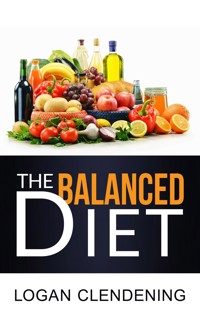
- Herausgeber: Logan Clendening
- Kategorie: Ratgeber
- Sprache: Englisch
IN the present state of our knowledge we can say with the greatest assurance that a complete and balanced diet is one that shall satisfy the following specifications:
1.It must furnish enough energy to keep the body going.
2.It must furnish material for growth and for replace ment of tissue waste.
3.It must furnish enough water.
4.It must furnish enough inorganic mineral salts.
5.It must furnish vitamins.
6.It should furnish enough bulk.
7.It must help to maintain the neutrality of the body.
The purpose of this book is to amplify these specifications and to attempt to persuade you of their validity. In order to do so we shall recount the findings and particularly the methods of that wonderful new science of nutrition, examine the observational and experimental data upon which it bases its conclusions so that we may realize how important those conclusions are for the welfare, health and happiness of mankind.
Our knowledge of diet and the chemistry of food and nutrition has enlarged so much in the last few years that it may be said to be among the most exact branches of biologic science. And this mass of exact information is so practical, touches so closely the interests of every one of us, that it is a duty for every one to acquaint himself with this body of knowledge.
Das E-Book können Sie in Legimi-Apps oder einer beliebigen App lesen, die das folgende Format unterstützen:
Veröffentlichungsjahr: 2016
Ähnliche



















THE
BALANCEDDIET
By
LOGAN CLENDENING, M.D.
Professor of Clinical Medicine, University of Kansas
Author of "The Human Body," etc.
ILLUSTRATE DD. APPLETON-CENTURY COMPANY
INCORPORATE D
NEW YORK 1936 LONDON
Digital edition 2016 by David De Angelis
COPYRIGHT , 1 9 3 6 , B Y LOGA N CLENDENIN G
All rights reserved. This book, or parts thereof, must not be reproduced in any form without permission of the publisher.
PRINTED IN THE UNITED STATES OF AMERICA
THE BALANCED DIET
CHAPTER I
WHAT IS A BALANCED DIET?
IN the present state of our knowledge we can say with the greatest assurance that a complete and balanced diet is one that shall satisfy the following specifications:
It must
furnish
enough
energy
to keep the
body
going.
It must
furnish
material
for
growth
and
for
replace
ment
of
tissue
waste.
It must
furnish
enough
water.
It must
furnish
enough inorganic
mineral
salts.
It must
furnish
vitamins.
It
should
furnish
enough
bulk.
It must
help
to
maintain
the
neutrality
of the
body.
The purpose of this book is to amplifythese specifications and to attempt topersuade you of their validity. In order to do so we shall recount the find ings and particularly the methods of that wonderfulnew science of nutrition,examine the observational and experimental data upon which it bases its conclusions so that we may realize howimportant those conclusions are for the welfare, health and happiness of mankind.
Our knowledge of diet and the chemistry of food and nutrition has enlarged so much in the last few years that it may be said to be among the most exact branches of biologic science. And this mass of exact information is so practical, touches so closely the interests of every one of us, that it is a duty for every one to acquaint himself with this body of knowledge.
I emphasize thepractical side of nutritional science. Thereare other branches of biologic science that have become quite exact. One is heredity and genetics. But interesting and fascinatingas this field is, we must acknowledge that thefactsacquired havelittle, or at least difficult application to man. So far as man is concerned, eugenics is a beautifuldream, but it is most unlikely that human nature will practise it. And so far as animal and plantbreeding is concerned, the practicalbotanists andfarrierstaught the geneticists far more than they learned.
Nearlyall the rich finds of nutritional science, on the contrary, have been turned to immediate goodaccount, and have changed theentire aspect of man'smajorpreoccupation—true,despite the Freudian viewpoint—eating.
This knowledge which has made it easy and, indeed, almost inevitable fora modern man to obtain a balanced diet is, as has been indicated, of comparatively recent development.The advice which other generations received on the subject of food was based partly on commonplace observation, partly on superstition and prejudice and partly on instinct and hunger. Instinct and hunger held first place and saved the day, and our ancestors managed to maintain goodnutritionlargely because Nature can turnanything inthe line of food to good account if only there is enough of it.
Some of the old dietetic advice is very quaint. The old treatises on diet were nearlyall combined with cookery recipes.Henry Buttes was a physician and student of Corpus Christi College, Oxford. In 1599 he publishedDyet's Dry Dinner. Some of the advice solemnly set down is that spinach "dothcure the cough, make the belly soluble, and the weasand smooth." The radish "causeth leannesse, belchings, headache and lice." Carrots are "of small nourish ment, slowly digested."Porkcauses"theGowteand Sciatica," but hare"procurethbeautie,fresh colour, and cheerfullcountenance." Crab meat is "good forthe consumption, and biting of a mad dog."1
Of similar sort is the famous advice of John Locke to the Earl of Shaftesbury:"But if my youngmaster must needs have flesh, let it be but once a day, and of one sort at ameal. Great careshould be used that he eatbreadplentifully, both alone, and with everythingelse. If it would not be thought too severe, I should
1Dyet's Dry Dinneris a rare book. I do not own a copy. The excerpts that I have made are from a description in the very interesting catalogue of James F. Drake, the bookseller, of New York. Mr. Drake offers his copy for sale at the price of $1,500 so it can easily be understood why my library does not contain an example of this item.
judge it most convenient that my young master should have nothing but bread for breakfast.
"And if betwixt meals he will eat, let him have, as often as he calls for it, good dry bread."
And in George Cheyne's Rules for the Preservation of Health(1725) he has sound but equally empirical advice: "Milk and sweet sound blood differ in noth ing but in color: Milk is Blood."
George Cheyne's idea of an abstemious diet was to limit one'sself to a pound of meat a day and not more than two bottles of port. Such samples of the dietetic advice offered to our ancestors plainlyindicate that they are based upon opinion, not science. They resulted neither fromcontrolled observation nor experiment. When those methods began to beapplied to foodandnutrition, modern eating habits changed rapidly.
Indeed, one needs only to compare our owntablewith the tables ofourforefathersto realize how radical this change hasbeen. In my boyhood, I remember distinctly that my fatherregarded tomatoes as poisonous. The staple of our familydinnertable was meat and potatoes, and bread and butter.Freshfruit,especially in the winter, was more or less of a rarity.
My grandfather'stable was even more restricted. Theonlysugar he used was hrown sugar or Ohio maplesugar. The bread, I imagine, was coarse and probablysoggy—the people of my generation must be able to remember"baking day,"whenrunning through the house was forbidden because the shaking threatened the rising of the bread. And frequently,in spite of these prohibitions, itdidn't rise and we ate it "unriz."Thepreponderance of meat and farinaceous foodson mygrandfather'stable over fresh vegetables and fruitswould be most unwelcome to modernpalates. I doubt if he ever ate an orange. I know he never ate grapefruit, or broccoli or cantaloup or asparagus. Spinach, carrots, lettuce, tomatoes, celery, endive, mushrooms, lima beans, corn,green beans andpeas—were entirely unknown, or rarities. About cauliflower, beets, lemons, limes, watermelons, pineapples and okra—I am not so sure. He may or may not have used these. The staple vegetables were potatoes, cabbage, onions, radishes and the fruits—apples,pears, peaches, plums and grapes and some of the berries—inseason. Apples were esteemed because they kept. You put abarrel in the cellar in the fall. Or, in grandfather's case, two barrels because it was the day of large families.
Cheese he ate more than I do. He lived inland— on the borders of Ohio and Pennsylvania, and seafoodwas seldomobtainable.Thegrandfathers of those who lived on or near the ocean were more fortunate. My grandfatherprobably never atean oyster, or a lobster, except on thefew occasions when he visited the seashore. He had no icebox. The railwaycarsof his day had norefrigeration. All the perishable food he ate came fromhisowndistrict. What canning or preservingwas done, my grandmother did in herownkitchen—andbadly.
In Latin and Oriental countries farinaceous foods predominated, as they still do—spaghetti and rice. And, of course, our Nordic grandfathers had plenty of oatmeal.
And if a modern were to be thrust into the diningroom of an Elizabethan household, he would simply gag—it is unlikely that he could eat a mouthfuluntil on the verge of starvation.
I am not here intending to emphasize the absence of delicacies from my grandfather'stable,but only to point out the monotony of hisdiet. The foodmarketing customs in his day presented him with a badly unbalanced diet and it was only by eating a great deal that he obtained all the necessary nutritionalelements. Even so, his generationsufferedconsiderablyfromsuchnutritional diseases as scurvy, anemia and rickets.
A contemporary record of my grandfather'stableis in Dickens's description of a meal onthe canal boat on his western journey:
Everybody sat down to tea, coffee, bread, butter, salmon, liver, steak, potatoes, pickles, ham, chops, black puddings and sausages.
"Will you try," said my opposite neighbor, handing me a dish of potatoes broken up in milk and butter, "will you try some of the fixing?"
One of the best gauges of the change in average dietaries can be found in the figures for the consumption of milk. Milk is such a staple of our modern diet, is properly considered the most nearlyperfectand complete food, that it is surprising to find how little was consumed and how careless were the regulations forthepurity of the supply a little over a hundredyears ago.
We have the record written by a Judge Colquhoun in London in the early part of the nineteenth century. He was gathering a detailedreport of the life of the metropolis and he included an account of the milk supply.The population of London wasalreadyover one million and the consumption of milk was onetenth of a pint per person per day. Today a pint is the regular ratio.
Furthermore, the report says that there was a pump in every cowshed and the milk was heavily watered. The sheds were intolerably filthy. The milk had less than half the food value that it has to-day and it was loaded with bacteria. Moreover, supposing that the better class of people consumed nearer to a pint a day than one-tenth, it can be seen that the average citizen of London had no milk at all a century ago.
The factors which have brought about the improvements we enjoy have been several. Perhaps the major credit should be given to those anonymous heroes who risked a tomato, ate one in spite of advice that it was poisonous, and advertised its merits. Who shall sufficiently praise the man who first was bold enough to swallow caviar? Almost as much praise, however, must be given industrial enterprise which made transportation oftropical delicacies cheap and easy, refrigeration and preservation of summer foods practicable,and the processing and canning of variousfoodshealthy and economical. Following in the van of these developments, the chemists and physiologists of the world found out how the foods acted, what was their composition and how they should be combined for the best results.
It is this last factor that we intend to study in this little book. The facts which are gathered together into the science of nutrition came from various sources, and in respect to other scientific develop ments are very modern.
The first contribution came from chemistry. And chemistry as a science began only a little more than a centuryand a half ago, someyearsbeforethe United States became a nation. It began with the discovery and isolation of oxygen, that keystone element—JosephPriestley isolated it in 1772. The great French chemist, Lavoisier, demonstrated how essential is oxygen to all the processes of life—indeed, to most chemical changes in Nature,whether organic or inorganic. His book was published in1775. The central factthat this memoir proved was thenature of heat.
Heat and fire have been ever present phenomena ofNaturewhich demandedexplanationbut they hadgreatlypuzzled the scientists of old time. The theory finally accepted towards the end of the eighteenth century was the"phlogiston"formulaof Stahl.Heat,he thought, was a substance: he called itphlogiston.When wood burned it lost weight, because "phlogiston" escaped from it. Lavoisier proved that fire is simply the union of whatever is burning with oxygen. He showed further that the heat of the body and the chemical processes of life are a slowfire
—a combustion—but that the essential nature of the process is not changed. It consists of a union with oxygen.
The chemistry of living matter was a difficult thing to unravel. The pioneer work in this field was by Liebig (1803-1873), whose name was known to the generation of my youth principally as the label on an extract of beef. He was able to gain only the most shadowy idea of Animal Chemistry,2 as his great work was called, but he showedat least that the chemical elements that enter into thestructure of the external inorganic world are also present in living tissue. Perhaps"living"is the wrong word becausethe tissue is dead when the chemist analyzes it, but if we say "animal" and "vegetable" instead of "living," it will cover the case. And "animal and vegetable," you see, means most of our food.
Liebig's work was extended by the great chemists Wohler (1800-1882), Hoppe-Seyler (1825-1895) and Emil Fischer (1852-1919). Wohler synthesized urea artificially. That is, he actually produced in the laboratory test-tubes a compound formedonly in
2Thus the first English translation was entitled. The literal trans lation of Liebig's book isOrganic Chemistry in its Relation to Physiology and Pathology(1842).
Nature by livingmatter. Hoppe-Seyler did so many things it makes one reel to think of them: he ascertained the formulasfor many of the elements of the blood—hemin, hematin and hematoporphyrin. He showedthat the hemoglobin of the blood combines loosely with oxygen. He introduced the term proteid, synonymous with the word we use in this book, protein. He analyzed milk, bile and urine. Emil Fischer synthesized the purin compounds, and artificially made or synthesized most of the sugar groups. He showed that the enzymes, including the ones which are active in digestion, are specific in action, affectingonly the chemical substances theyare meant to break down, to which they arerelated as a key to a lock or a glove to ahand.
To-day we have a very clear, even if not complete, knowledge of the chemical structure of our bodies as well as of the bodies of plants. We can, indeed, synthesize many chemical compounds of living tissue.
While this work was going on, science was advancing in another field to make our knowledge of diet exact—the physiology of digestion. William Beaumont, an American physician, published a little book in 1833 that is one of the greatmedical classics. The story behind the book is well known—how a Canadian voyager wasaccidentally shot in the abdomen at the trading post at Mackinac, how miraculouslyhe lived, but whenthewound healed, the inside of the stomach could be seen through a hole or fistula in the abdominalwall,howDr. Beaumont used thisunique
JUSTUS VONLIEBIG FELIX HOPPE-SEYLER
(1803-1873) (1825-1895)
EMIL FISCHER
(1852-1919) TH E FOUNDERS OF BIO-CIIEMISTRY
TH E FOUNDERS OF MODERN NUTRITIONAL SCIENCE
CARL VON VOIT
(1831-1908)
opportunity to extract and analyze gastric juice, and study the changes that take placein food when it enters the stomach, and thusfounded our knowledge of the processes of digestion.
Lesen Sie weiter in der vollständigen Ausgabe!
Lesen Sie weiter in der vollständigen Ausgabe!
Lesen Sie weiter in der vollständigen Ausgabe!
Lesen Sie weiter in der vollständigen Ausgabe!
Lesen Sie weiter in der vollständigen Ausgabe!
Lesen Sie weiter in der vollständigen Ausgabe!
Lesen Sie weiter in der vollständigen Ausgabe!
Lesen Sie weiter in der vollständigen Ausgabe!
Lesen Sie weiter in der vollständigen Ausgabe!
Lesen Sie weiter in der vollständigen Ausgabe!
Lesen Sie weiter in der vollständigen Ausgabe!
Lesen Sie weiter in der vollständigen Ausgabe!
Lesen Sie weiter in der vollständigen Ausgabe!
Lesen Sie weiter in der vollständigen Ausgabe!
Lesen Sie weiter in der vollständigen Ausgabe!
Lesen Sie weiter in der vollständigen Ausgabe!
Lesen Sie weiter in der vollständigen Ausgabe!




