


48,99 €
Mehr erfahren.
- Herausgeber: John Wiley & Sons
- Kategorie: Fachliteratur
- Sprache: Englisch
Praise for THE CHIEF HR OFFICER
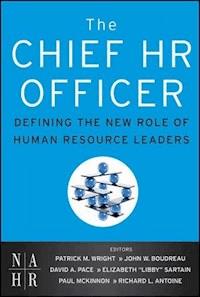
The Chief HR Officer offers the most current thinking on the evolving role of the chief human resource officer (CHRO). An essential resource for experienced and aspiring CHROs, the book shows leaders how to best prepare for and perform this critical role.
This comprehensive book shows how, in today’s extremely competitive work environment, the job of the CHRO has expanded to encompass many important roles. Among other things, HR leaders must adapt to and address the demands of an increasingly diverse and demanding workforce, globalization, stricter regulatory requirements, increased accountability to the CEO and board of directors, and the complexity of leading the HR function with often limited resources.
This vital guide is filled with rare insights and practical guidance from some of the country’s most successful CHROs who have been in the trenches as well as top academics researching the field including Randy MacDonald (IBM), Eva Sage-Gavin (Gap Inc.), L. Kevin Cox (American Express), Mirian M. Graddick-Weir (Merck), and Dave Ulrich (Ross School of Business, University of Michigan, and The RBL Group).
Sponsored by the National Academy of Human Resources (NAHR), the book covers a wealth of topics including how to develop a perspective and set of skills to effectively lead and perform in the role and how to approach strategy, management, leadership, ethics, and talent. In addition, the authors include information on forming and implementing activities that will further the firm’s strategy, advice for coaching and counseling the CEO, and much more.
Sie lesen das E-Book in den Legimi-Apps auf:
Seitenzahl: 488
Veröffentlichungsjahr: 2011
Ähnliche


















Table of Contents
Title Page
Copyright
Endorsements
The Authors
Chapter One: The Evolving Chief Human Resource Officer Role
Trends in HR
Pressures on Today's CHRO
Overview of the Book
Part One: Today's Chief Human Resource Officer
Chapter Two: Perform! Don't Run!
“You've Failed”
Today's HR: More Challenge, Greater Opportunity
The Value Proposition: Building Trust and an Atmosphere of Innovation
Taking Responsibility for Mistakes
Just the FAACTs
Analytics: The Future of HR
Plan and Adapt
Chapter Three: The Art and Science of the CHRO Role
The Science of Being a CHRO
The Art of Being a CHRO
Finally
Chapter Four: ETC
Ethics
Talent
Coaching and Courage
Chapter Five: Roles and Challenges of the CHRO
Research Methodology
Roles of the CHRO
Strategic Advisor
Talent Architect
Counselor/Confidant/Coach
Leader of the HR Function
Liaison to the Board
Conclusion
Part Two: The CHRO as Strategic Advisor and Talent Architect
Chapter Six: Leadership and Employee Engagement
The Plan
The Results
The Analysis
Conclusion
Appendix: Our Values in Action
Chapter Seven: Four Steps to World-Class Talent Management
Getting Started: The Outcomes of Talent Management
Step 1: Manage Talent Deployment Centrally
Step 2: Engineer Tension into the Talent Management Process
Step 3: Use Scenario Planning to Model Your Organization's Evolution
Step 4: Link External Talent Acquisition with Internal Talent Development
Conclusion
Chapter Eight: Retooling HR and Avoiding the Service Trap
The Service Trap
Retooling HR to Teach, Not Just Comply or Deliver
The Lessons of Retooling HR
Chapter Nine: The CHRO as Cultural Champion
Employment Value Proposition
Core Values
Workplace
Culture
Conclusion
Chapter Ten: When Crisis Calls
Building a New Leadership Team
Revamping the Pay System
Addressing Morale
Enforcing Ethical Conduct
Lessons Learned
Tyco and HR Today
Chapter Eleven: Doing HR's Business with the Government
Shaping Public Policy
Facing Increased Governance and Regulation
Living with Our Customers
Developing Competence in Handling Government Involvement and Related Public Scrutiny
Predicting the Future of the Interplay Between HR and the Government Interplay
Part Three: The CHRO as Counselor/Confidant/Coach
Chapter Twelve: Who Do You Really Work For?
The CEO
The Board Chair
The Board's Compensation and Management Development Committee
Your Peers on the Management Team
Your HR Team
The Company's General Population
Your Company's Customers
Your Company's Shareholders
Conclusion
Chapter Thirteen: Partnering with the CEO
Critical Abilities
Meaningful Purpose
Conclusion
Chapter Fourteen: Forging Effective Relationships with Your Boss and Colleagues
Building Strong Relationships
Traps to Avoid
Conclusion
Chapter Fifteen: What Do You Stand For?
Personal Brand
Which Battles to Fight
Never Make It Personal
Taking Risks
Determining When to Stand Up
The Courage of the Employee Advocate
Chapter Sixteen: Great Leader or Just a CEO?
Survey Questions Regarding the CEO
HR Advocates Versus HR Disappointments
Conclusion
Part Four: The CHRO as Liaison to the Board of Directors
Chapter Seventeen: Working with the Board of Directors
It Was the Best of Times, It Was the Worst of Times (Current Environment)
Let's Start at the Very Beginning … (Personnel and Compensation Committee Charter)
With a Little Help from My Friends (Personnel and Compensation Committee Members)
Let the Sunshine In (Criticality of Disclosure)
Who's on First? (Roles and Responsibilities)
I Can't Get No Satisfaction (Director Expectations)
Man in the Mirror (Learning from Experience)
You Can't Always Get What You Want (CHRO Role)
Chapter Eighteen: CHROs and Boards
CHRO's Role with the Board
HR Support for Boards
What the Role of the CHRO Should Be
Making It Happen
Time for a Change
Chapter Nineteen: The Role of the CHRO in Managing Executive Compensation
Three Basic Questions on Executive Compensation
Flash Points
Credibility with the Compensation Committee
Coming Up to Speed on Executive Pay
Conclusion
Chapter Twenty: How to Be a High-Performing CHRO in the Executive Compensation Arena
Part Five: The CHRO as Leader of the HR Function
Chapter Twenty-One: Making a Difference in the First 100 Days
Leveraging the First 100 Days: Three Keys to Success
The Road Map for Getting There: Key Actions and Time Line
Helpful Tips and Mistakes to Avoid
Closing
Appendix: The 100-Day Checklist
Chapter Twenty-Two: Delivering Results with a Global HR Team
Energy Challenges
Building Functional Capability
Consistent Strategy
Managing a Global Function
Encouraging Self-Service
Next Steps
Chapter Twenty-Three: Experiences as a New CHRO in a New Industry
Tips on Due Diligence Before Deciding to Move
My Transition Experience
Tips for Success in a New Job
Conclusion
Chapter Twenty-Four: Designing an Integrated HR Function
Factors Forcing Changes in the Design of the HR Function
How CHROs Are Responding
Conclusion
Chapter Twenty-Five: HR for Impact
Unilever, 2005–2008: HR to Support Restructuring
Unilever 2009–2010: HR to Support a Growth Vision
Part Six: Characteristics of Today's CHRO
Chapter Twenty-Six: Preparing CHROs to Exceed CEO Expectations
HR Participation at the Table
Talent and the Creation of Meaning
Questions CHROs Should Ask
The Competencies of Today's HR Professional
Chapter Twenty-Seven: Delivering Global Talent in a High-Velocity World
Strategic Business Insight from a Talent Management Perspective
HR Disciplines That Create Efficiency and Competitive Advantage
Experienced Leadership That Demonstrates Attention and Informed Courage
A Culture That Empowers the Team
Should a Great CHRO Be Raised or Recruited?
The Measurements of a CHRO's Success
Chapter Twenty-Eight: What Does Today's CHRO Look Like?
Data Collection
Demographic Characteristics of Top CHROs
CHRO Career Paths
Conclusion
Chapter Twenty-Nine: Bringing It All Together
Know the Business
Know How to Lead
Know People
Know Yourself
Conclusion
Index
Copyright © 2011 by John Wiley 8 Sons, Inc. All rights reserved.
Published by Jossey-Bass
A Wiley Imprint
989 Market Street, San Francisco, CA 94103–1741—www.josseybass.com
No part of this publication may be reproduced, stored in a retrieval system, or transmitted in any form or by any means, electronic, mechanical, photocopying, recording, scanning, or otherwise, except as permitted under Section 107 or 108 of the 1976 United States Copyright Act, without either the prior written permission of the publisher, or authorization through payment of the appropriate per-copy fee to the Copyright Clearance Center, Inc., 222 Rosewood Drive, Danvers, MA 01923, 978-750-8400, fax 978-646-8600, or on the Web at www.copyright.com. Requests to the publisher for permission should be addressed to the Permissions Department, John Wiley 8 Sons, Inc., 111 River Street, Hoboken, NJ 07030, 201-748-6011, fax 201-748-6008, or online at www.wiley.com/go/permissions.
Readers should be aware that Internet Web sites offered as citations and/or sources for further information may have changed or disappeared between the time this was written and when it is read.
Limit of Liability/Disclaimer of Warranty: While the publisher and author have used their best efforts in preparing this book, they make no representations or warranties with respect to the accuracy or completeness of the contents of this book and specifically disclaim any implied warranties of merchantability or fitness for a particular purpose. No warranty may be created or extended by sales representatives or written sales materials. The advice and strategies contained herein may not be suitable for your situation. You should consult with a professional where appropriate. Neither the publisher nor author shall be liable for any loss of profit or any other commercial damages, including but not limited to special, incidental, consequential, or other damages.
Jossey-Bass books and products are available through most bookstores. To contact Jossey-Bass directly call our Customer Care Department within the U.S. at 800-956-7739, outside the U.S. at 317-572-3986, or fax 317-572-4002.
Jossey-Bass also publishes its books in a variety of electronic formats. Some content that appears in print may not be available in electronic books.
Library of Congress Cataloging-in-Publication Data
The chief HR officer: defining the new role of human resource leaders / editors, Patrick M. Wright … [et al.].
p. cm.
Includes bibliographical references and index.
ISBN 978-0-470-90534-0 (hardback); ISBN 978-1-118-02322-8 (ebk); ISBN 978-1-118-02323-5 (ebk); ISBN 978-1-118-02324-2 (ebk)
1. Personnel management. 2. Personnel departments. I. Wright, Patrick M. HF5549.C44794 2011
658.3—dc22
2010046805
The National Academy of Human Resources (NAHR) is an honorific organization where individuals and institutions of distinction in human resources are recognized for exceptional professional achievement by election as “Fellows of the NAHR.” In addition, the NAHR furthers the HR profession through the Chief Human Resource Officer (CHRO) Academy and other philanthropic and educational activities. For more information, visit www.nationalacademyhr.org.
The Society for Human Resource Management (SHRM) is the world's largest association devoted to human resource management. The Society serves the needs of HR professionals and advances the interests of the HR profession. Founded in 1948, SHRM has more than 250,000 members in over 140 countries, and more than 575 affiliated chapters. Visit www.shrm.org.
The Authors
Richard L. Antoine is president of the National Academy of Human Resources and a consultant on talent management and CEO/senior management succession planning working with CEOs and CHROs. Prior to this he held a number of line positions at Procter & Gamble during a thirty-nine-year career, the last eleven of them as the global HR officer reporting to the CEO.
He has a degree in chemical engineering from the University of Wisconsin and an M.B.A. from the University of Chicago. He has served on many nonprofit and university boards and is currently the vice chair of the University of Wisconsin Foundation and a member of the Human Resource Policy Institute Advisory Board.
James Bagley has been with Russell Reynolds Associates for nearly twenty-five years and has held key leadership roles within the firm. He is currently the global leader of the firm's corporate officers sector, which works with clients across all industries, including industrial, consumer, technology, financial services, health care, and executive assessment. Bagley previously founded and led the firm's HR practice and co-managed the New York office.
Prior to rejoining Russell Reynolds Associates in 1998, Bagley was senior vice president of human resources at MasterCard International, where he had global responsibility for the company's comprehensive HR activities, including compensation and benefits, staffing, employee relations, and professional learning and development. He was recruited to MasterCard from Russell Reynolds Associates, where he focused on assignments for senior-level HR executives across a broad range of industries. He joined the firm in 1984 as HR director. Earlier, he was a benefits and compensation consultant with Alexander & Alexander Services and worked with State Mutual Life Assurance.
He received his B.A. from Fordham University.
Sid Banwart has had a broad range of successful business experiences during a forty-two-year career with Caterpillar Inc. He served in two joint ventures before being named manager of engineering and quality for a new start-up facility in Monterrey, Mexico, in 1985. Returning to the United States in 1990, he held key positions at plants in Illinois before being named Product Manager with global P&L responsibilities, where his business success led to a position as general manager for Caterpillar's Large Engine Division.
He was appointed a corporate officer in 1997, and served as the responsible officer for four different business functions. As corporate vice president, these roles were chief technology officer, head of the components business, chief information officer, and for the most recent five years, chief HR officer.
Lesen Sie weiter in der vollständigen Ausgabe!
Lesen Sie weiter in der vollständigen Ausgabe!
Lesen Sie weiter in der vollständigen Ausgabe!
Lesen Sie weiter in der vollständigen Ausgabe!
Lesen Sie weiter in der vollständigen Ausgabe!
Lesen Sie weiter in der vollständigen Ausgabe!
Lesen Sie weiter in der vollständigen Ausgabe!
Lesen Sie weiter in der vollständigen Ausgabe!
Lesen Sie weiter in der vollständigen Ausgabe!
Lesen Sie weiter in der vollständigen Ausgabe!
Lesen Sie weiter in der vollständigen Ausgabe!
Lesen Sie weiter in der vollständigen Ausgabe!
Lesen Sie weiter in der vollständigen Ausgabe!
Lesen Sie weiter in der vollständigen Ausgabe!
Lesen Sie weiter in der vollständigen Ausgabe!
Lesen Sie weiter in der vollständigen Ausgabe!
Lesen Sie weiter in der vollständigen Ausgabe!
Lesen Sie weiter in der vollständigen Ausgabe!
Lesen Sie weiter in der vollständigen Ausgabe!
Lesen Sie weiter in der vollständigen Ausgabe!
Lesen Sie weiter in der vollständigen Ausgabe!
Lesen Sie weiter in der vollständigen Ausgabe!
Lesen Sie weiter in der vollständigen Ausgabe!
Lesen Sie weiter in der vollständigen Ausgabe!
Lesen Sie weiter in der vollständigen Ausgabe!
Lesen Sie weiter in der vollständigen Ausgabe!
Lesen Sie weiter in der vollständigen Ausgabe!
Lesen Sie weiter in der vollständigen Ausgabe!
Lesen Sie weiter in der vollständigen Ausgabe!
Lesen Sie weiter in der vollständigen Ausgabe!
Lesen Sie weiter in der vollständigen Ausgabe!
Lesen Sie weiter in der vollständigen Ausgabe!
Lesen Sie weiter in der vollständigen Ausgabe!
Lesen Sie weiter in der vollständigen Ausgabe!
Lesen Sie weiter in der vollständigen Ausgabe!
Lesen Sie weiter in der vollständigen Ausgabe!




