


Erhalten Sie Zugang zu diesem und mehr als 300000 Büchern ab EUR 5,99 monatlich.
- Herausgeber: BoD - Books on Demand
- Kategorie: Ratgeber
- Sprache: Englisch
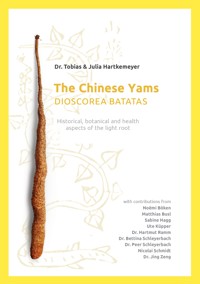
The Chinese Yams: Dioscorea Batatas (6th revised edition, January 2025) by Dr. Tobias and Julia Hartkemeyer explores the historical, botanical, and health aspects of the Chinese yam, also known as the light root or Lichtyam. This comprehensive work delves into the plant's taxonomy, ethnobotany, cultivation, nutritional properties, and medicinal significance, drawing on contributions from experts in biodynamic farming, Traditional Chinese Medicine (TCM), and anthroposophic principles. The book traces the yam's ancient origins, its cultivation across Asia, Africa, and the Americas, and its introduction to Europe over 150 years ago. It highlights the plant's cultural and nutritional importance, notably at Andreashof in Ueberlingen, where biodynamic methods enhance its quality. The text covers the yam's morphology, growth cycle, and cultivation practices, emphasizing its adaptability to various climates and soils. It also discusses its bioactive compounds, such as diosgenin, and their pharmacological benefits, including potential hormonal and anti-inflammatory effects. Innovative quality assessment methods, like biophotonics and eurythmic treatments, underscore the yam's unique "light storage capacity" and vitality, aligning with Rudolf Steiner's anthroposophic insights. The book includes practical applications, such as recipes featuring the light root, and profiles successful cultivation at Andreashof. Engaging and multidisciplinary, this work invites readers to explore the Chinese yam's rich heritage and potential in modern nutrition and medicine. Read the full book for in-depth insights into this remarkable plant.
Sie lesen das E-Book in den Legimi-Apps auf:
Seitenzahl: 227
Veröffentlichungsjahr: 2025
Das E-Book (TTS) können Sie hören im Abo „Legimi Premium” in Legimi-Apps auf:
Ähnliche



















TABLE OF CONTENTS
Introduction
1. HISTORY AND ETHNOBOTANY OF DIOSCOREALES
Taxonomy
The plant family
Ethnobotany of the Dioscoreales / yam species
2. CULTURAL DESCRIPTION OF DIOSCOREA BATATAS
Morphology
Site factors
Climatic conditions
Reproduction
Growth cycle
Crop rotation
Fertilization
CARE MEASURES
Planting
Diseases and pests
Harvesting and storage
Variations
3. QUALITY ASSESSMENTS IN ORGANIC FARMING
Food quality
Complementary so-called holistic quality assessment methods
4. DIOSCOREA BATATAS AND RUDOLF STEINER
Vitality and the problem of nutrition
Root nourishment
Threefold structure of plant and human being
Root - head/nerves and senses
Flower and fruit - reproduction and metabolism
5. DIOSCOREA BATATAS AND ITS DISTRIBUTION HISTORY
The first trials in Germany and France
Japan
China
6. NUTRITIONAL INGREDIENTS
Starch
Amino acids
Fats
Minerals
Bioactive substances
Diosgenin
Dioscorin and dioscin
Allantoin
Batatasins
7. PHARMACOLOGICAL SIGNIFICANCE OF DIOSCOREAS
Traditional medical applications in naturopathy
Traditional medical uses of other Dioscorea species
ingredients and their significance for the human body
8. ENCOUNTERS AND EXPERIENCES WITH CHINESE YAMS
Three seasons at the Phoenix Farm
My own cultivation trials
Mistletoe and yams
Shoot-fruit and root-fruit
9. THE CHINESE YAM IN TRADITIONAL CHINESE MEDICINE (TCM)
Origins and early use:
Basis of TCM
Medicinal use of Chinese yam in the present day
10. ENDOCRINE DISRUPTORS VS. BIOIDENTICAL DIOSCOREA HORMONES
Endocrine disruptors
The body's own steroid hormones
Patient examples
Thoughts on anthroposophic medicine
Recent thoughts and scientific studies on steroid hormones and ingredients of Dioscorea batatas:
11. ON THE FORMATION OF THE LIGHT ROOT
The method
Red and green in the leaf
The earth's breathing of light
Bare sprout
Burning shoot tips
Aspects of the nourishing effect of the light root
12. OSTEOPATHIC TREATMENTS FOR HORMONAL IMBALANCES
Focus on the whole person
Practical and clinical experience:
Results:
13. PROFILE: ANDREASHOF IN ÜBERLINGEN - A PIONEER OF LICHTYAM® CULTIVATION ON LAKE CONSTANCE
Quality tests using fluorescence excitation spectroscopy / Biophotonics at Andreashof: on the question of light quality
14. EFFECTIVE SENSOR TECHNOLOGY /EMPATHIC FOOD TEST
15. EURYTHMY AND THE DIOSCOREA BATATAS FROM ANDREASHOF
Introduction
The question
Methodology
Experimental setup:
Brief explanation of the sounds according to Rudolf Steiner with recorded observations during the treatment
Further observations
Conclusions:
16. COOKING WITH THE LIGHT ROOT
Make your own light root salt
Beetroot with light roots
Light root butter with flowers
Pumpkin roll with light root
BIBLIOGRAPHY
INTRODUCTION
The success of Jamaican sprint superstar Usain Bolt, which his father attributed to regular yam consumption, is among the factors that have sparked growing interest in this remarkable plant. Ongoing doping incidents in the sports world could further amplify this interest and help raise awareness of the yam root in Germany. However, this plant is no newcomer to medicinal botany—the yam root, Dioscorea batatas (Chinese yam), has been cultivated in Europe for over 150 years.
Our first encounter with Chinese yams occurred at our wedding when a friend gifted us a box of Dioscorea batatas tubers, saying, “Here are some light roots—you’re farmers, do something with them!” Though we had only heard of the plant in passing, we were quickly inspired and began our first cultivation trials. To combine practice with theory, we submitted a start-up project proposal to the Federal Ministry of Education and Research. Fortunately, the proposal was approved, forming the foundation for our work with this intriguing plant.
After several years of field trials, Hof Pente shifted its focus to “solidarity farming.” In this model, food is not sold in the conventional sense. A regional community of about 300 people finances and supports the development of diverse agriculture, including around 60 vegetable crops, arable farming, and free-range livestock (cattle, sheep, pigs, chickens, and bees). The resulting food is shared among members. Beyond farming, the Hof serves as an educational and community space that promotes diversity.
In Germany, Dioscorea batatas is notably cultivated at Andreashof in Überlingen on Lake Constance, where it has been grown and processed to Demeter biodynamic standards since 2002. For this reason, Andreashof is featured in a dedicated chapter.
We have sought to present the many aspects associated with this plant. As it is primarily grown on biodynamic farms, we include Rudolf Steiner’s ideas about light ether, reflected in the term “Lichtwurzel” or “Lichtyam®.” Such terms may initially cause confusion, which we aim to clarify in the following chapters.1 The so-called “light root” is certainly not a modern indulgence promising to “eat your way to heaven,” and other plants also possess unique qualities. Nonetheless, its distinctiveness justifies dedicating a book to it, encouraging readers to explore this ancient, yet still little-known, medicinal plant in Europe.
Chapters one through seven, written by Dr. Tobias and Julia Hartkemeyer, form the foundation of this book. Chapters ten, thirteen, and fourteen were added in later editions. With the sixth edition, chapters eight, nine, eleven, twelve, fifteen, and sixteen were contributed by various authors, each responsible for their content.
Dr. Tobias Hartkemeyer & Julia Hartkemeyer
Hof Pente
Osnabruck, Germany
1 1 The name “Lichtwurzel,” “Light Yam,” or “Lichtyam®,” as used at the Andreashof in Überlingen, is supported by additional aspects. In some of the oldest sources on Traditional Chinese Medicine, the yam root (Dioscorea batatas, Chinese: Shan Yao) is described as the all-encompassing representative of the Yang principle in the plant kingdom. The masculine “Yang” (as in Yin-Yang) stands for the principle of sun and light (Ying et al. 1999, p. 19), while “Yin” represents the feminine and lunar forces. The German terms “Yam” or “Yams” derive from the African word nyam in the Wolof language, which means “to taste” or “to savor.”
2. CULTURAL DESCRIPTION OF DIOSCOREA BATATAS
MORPHOLOGY
Like all Dioscorea species, D. batatas is a perennial. In many botanical textbooks they are classified as monocotyledons, but Ayensu (1972) doubts this. According to him, dicotyledonous embryos have also been observed (Ayensu, 1972). Its twining shoots can grow to a length of 8 to 10 meters. During the growing season from May to October, the tendrils become woody almost to the ends of their shoots. The leaves of D. batatas are heart-shaped (up to 8 cm long and 6 cm wide). The leaf position on one and the same plant can be alternate or opposite. The many small white flowers (dioecious) have the pleasant scent of cinnamon. They form small, loose racemes, each individual flower of which is only 2 to 3 mm in size. The seed capsules of the female plants resemble beechnuts (Fig. 34, p.114). The seeds are generally not very fertile (the germination rate is about 2%). Male and female plants produce bulbils, small above-ground tubers that form in the leaf axils on the tendril and with which they can reproduce vegetatively. The roots form starchy, bulbous thickenings in a wide variety of shapes. There are various statements on the size and weight of the tubers; for example, Chittenden (1956) states that they can reach a depth of over one meter. A root tuber grows to a length of 100 cm within two years and can reach a good 10 cm in diameter. At this stage, the root tuber can weigh up to 2 kilograms. As it is a perennial plant, older specimens can weigh many times more.
FIGURE 3: MORPHOLOGY OF DIOSCOREA BATATAS
(Source: Lemure & van Houtte, 1855)
Figure 4: DIOSCOREA BATATAS/LICHTYAM: TENDRILS WITH FOLIAGE LEAVES AND BULBILS PHOTOS: M. BUSL
Figure 5: INFLORESCENCE OF MALE D. BATATAS (4-6 CM LONG)- SMELLS OF CINNAMON AND VANILLA
Figure 6: DIOSCOREA BATATAS: THE INFLORESCENCE OF THE FEMALE PLANT IS ABOUT TWICE AS LARGE AS THE MALE (6-12 CM LONG, LOCATION ÜBERLINGEN-BONNDORF 2012)
(Source: Gilg & Schumann 1900)
FIGURE 7: MORPHOLOGY OF DIOSCOREA BATATAS: INFLORESCENCE
SITE FACTORS
D. batatas requires deep, well-drained soils for optimal growth. Compacted subsoils and waterlogged sites are unsuitable. The species thrives in a pH range of 5-7 (Franke 1994). Since D. batatas commonly occurs in alluvial landscapes, it typically grows in silty clay soils characteristic of these environments (Beyerl 2001).
Soil structure is critical for tuber development, as the tubers penetrate the soil directly rather than forming from thin roots. Dense, waterlogged soils promote tuber rot. To ensure adequate soil loosening and aeration, tillage requirements increase proportionally with fine soil content (Franke 1994).
CLIMATIC CONDITIONS
D. batatas can survive in a number of different habitats and climatic conditions; in the wild, it usually grows in bright clearings along the edges of tropical floodplain forests (Yayskievych 1999). It therefore has a relatively high demand for warmth. Optimal temperatures are between 20°C and 30°C. The leaves are very sensitive to frost; they can freeze at 1°C. However, the root tubers can also be left in the soil over winter (Thompson, 1878) if the frost does not penetrate too deeply into the soil during this time. Sufficient humidity and a continuous supply of water are necessary for good growth. Franke (1994) writes of annual precipitation between 1,100 and 10,000 mm. In the first five months after planting, the soil must therefore be well and regularly moistened. Periods of drought should not exceed 4-5 months. The cultivation period is between 8-12 months. Yields are higher under alternately moist conditions than in constantly moist areas (Franke 1994).
REPRODUCTION
D. batatas generally reproduces asexually. Although it is capable of generative reproduction, there are no documented observations of this in North America. One reason could be the dioecious nature of the plant, another could be that female plants have not been observed growing in the wild (Beyerl 2001). According to Fernandez (1995), 38% to 94% of the flowers and 70% to 87% of the seeds wither, so that reproduction via the seeds is low. Only the males were cultivated on the Pente farm. One year, however, we also had a female plant. Its seeds were infertile. D. batatas can reproduce vegetatively through the buds that form particularly on the upper part of the large tuber. The shoot fruit nodules (bulbils) are also used for vegetative propagation. The emergence rate here is almost 100%. The root tubers that form from bulblets within one growing season usually do not reach their full size. These tubers are therefore used as planting material the following year and are planted out again. They only reach a marketable size after the second year. The roots that serve as planting material do not continue to grow themselves, but usually form one, sometimes two or three new root tubers of different sizes from the vegetation points, some of which can be used again as planting material for the following year.
At least 20 bulblets are formed per plant each year (depending on the heat sum and vegetation period), usually many times more. Two weeks after sowing, the latter can already germinate. Bulbils are also capable of germination and can grow into complete plants. Even partially eaten bulblets (e.g. by rodents) or bulblets cut by the plow are capable of producing healthy plants (Beyerl 2001). If a root tuber is cut into 4 cm long pieces, new plants can also grow from it. According to Franke (1994), when cutting large tubers, the top part is better suited than the end of the tuber, which in turn is better than the middle part. In some southern states of the USA, D. batatas has already attained the status of a weed due to its vegetative vigor.
GROWTH CYCLE
According to Fernandez (1995), the growth cycle of a D. batatas can be divided into four different phases.20 They are briefly summarized below:
Phase 1:




