


25,99 €
Mehr erfahren.
- Herausgeber: John Wiley & Sons
- Kategorie: Fachliteratur
- Sprache: Englisch
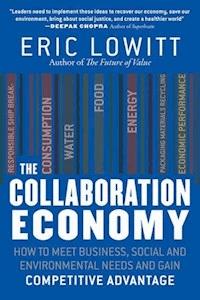
How six industries are collaborating with competitors, society, and the public sector for competitive advantage No longer can we consume the equivalent of 1.3 Earths resources and expect to remain prosperous in perpetuity. We need a new economic paradigm, one that yields growth in a way that strengthens the global systems we rely on daily for survival, such as the global water, food, and energy systems. The Collaboration Economy--a model where the private, public, and civil sectors collaborate for prosperity that can last in perpetuity--is emerging. But what does this economic model look like? How does it work? How can companies survive and thrive in the Collaboration Economy? The Collaboration Economy provides easy to use frameworks and tools to enable leaders of industry, of government, and of society to lead the effort to align growth with sustainable development. * Offers a plan for how the private, public, and civil sectors can successfully collaborate to steward resources, fortify global water, food, and energy systems, and spark a new era of prosperity at the same time * Contains case study profiles of the leaders of the Collaboration Economy, including Unilever, GE, Coca-Cola, Nestle Waters North America, Grieg Green, and the European Parliament * Written by Eric Lowitt, a globally recognized and sought after consultant, thought leader, and speaker in the fields of competitive strategy, growth, and sustainability, who has been named one of the Global Top 100 Thought Leaders on Trustworthy Business Behavior by Trust Across America
Sie lesen das E-Book in den Legimi-Apps auf:
Seitenzahl: 331
Veröffentlichungsjahr: 2013
Ähnliche



















Table of Contents
More Praise for The Collaboration Economy
Title page
Copyright page
Preface
Acknowledgments
Introduction
Why This Book, and Why Now?
Why You Should Read This Book
The Collaboration Economy’s Structure
Call to Action
Part One: Welcome to the Collaboration Economy
1: The Collaboration Economy: Prosperity and Social Dimensions Aligned
Welcome to the Collaboration Economy
How the Collaboration Economy Is Coming to Life
Orchestrators as Landmark Leaders
The Collaboration Economy Framework
What Will the Collaboration Economy Look Like?
Part Two: Bringing the Collaboration Economy to Life and Scale
2: Renewing the Global Energy Sector
The Global Energy Debate’s Three Great Tensions
Power Sources
Energy Infrastructure
GE as Orchestrator of a Global Energy System Solution
Call to Action
3: Turning Packaging Materials into Capital
The Current U.S. Recycling System Is Not Sufficient
Bottle Bills and Packaging Recycling—Why Do We Need a New Solution?
Collaboration and the Elements Needed to Turn Waste into Resource
Extended Producer Responsibility
EPR Adoption
Leadership Needed: Nestlé Waters North America Builds an EPR Coalition
Lessons NWNA Has Learned Along the Way
Call to Action
4: Renewing the Global Food System
Our Stressed Global Food System
Achieving Global Food Security
Unilever Changes Its Business Model
Incentives for Farmers
Example of the USLP in Action
Internal Unilever Changes
Challenges to Unilever’s Approach
Call to Action
5: Responsibility as Profitability: Toward Responsible Shipbreaking
Overview of the Maritime Shipping Industry
The Current Model of Ship Dismantling
Toward a New and Responsible Method of Ship Recycling
Bringing the Responsible Ship Recycling System to Life
Call to Action
6: Renewing Consumerism
Gatekeepers, Prosperity, and Sustainable Development
The Lease Society
Call to Action
7: Connecting the Water Drops
Our Current Water System
What Is Stressing Water?
Toward a Solution That De-Stresses Water
Coca-Cola: Water Stewardship Is Business Strategy
Partnerships Are Essential
Replicable Lessons Learned and Capabilities Developed
Challenges to Coca-Cola’s Water De-Stressing Efforts
Call to Action
Part Three: Putting It All Together to Move Forward
8: Becoming a Collaborative Leader
The Essential Skills and Traits of Leaders Operating in the Collaboration Economy
Call to Action
9: Winning in the Collaboration Economy
Corporate Strategy
Corporate Culture
Alterations to Operations
Call to Action
10: Where Do We Go from Here?
One U.S. Regulatory Change to Kick-Start Our Prosperity Engine
The Collaboration Economy Can Enable Solutions to Other Vexing Issues
Help Wanted: Further Collaboration Economy Thinking Is Needed
About the Author
Index
More Praise for The Collaboration Economy
“When it comes to solving complex environmental and social challenges, cross-sector collaboration clears a path forward. The Collaboration Economy shows how to nurture cross-sector collaboration for the benefit of the public, private, and civil sectors.”
—Tim Brown, president and chief executive officer, Nestlé Waters North America
“Eric Lowitt is highlighting one of the most important human behaviors for our beneficial common future: collaboration. In my experience, working with some of the largest companies and governments in the world, this sphere of activity is time and again proven to be the best and fastest path toward clarity of purpose, effective paths for integrated innovation, and sustainable growth: three things that we need to assure a positive, abundant future for all. It’s about taking forever; and it’s about taking us all together—that’s the point.”
—William McDonough, chairman, McDonough Advisors
“A very timely and relevant book! Eric Lowitt shows in an eloquent manner—with numerous excellent examples—how saving the world can be good business for all. I hope this book encourages all stakeholders to check their old assumptions and to experiment new collaborative business models for a better world.”
—Mikko Kosonen, chairman, SITRA, Finland’s Innovation Fund
“The Collaboration Economy provides original thinking on a vitally important question: How best to create cooperation in a world that badly needs it. Today, we face a shortage of both effective global leadership and a shared sense of urgency to address a lengthening list of problems without borders. Eric Lowitt offers valuable ideas on how business, government, and civil society can work together to pursue their individual interests toward a common goal.”
—Ian Bremmer, president, Eurasia Group
Jacket design: Adrian Morgan
Cover art: Shutterstock (rf)
Copyright © 2013 by John Wiley & Sons, Inc. All rights reserved.
Published by Jossey-Bass
A Wiley Brand
One Montgomery Street, Suite 1200, San Francisco, CA 94104-4594—www.josseybass.com
No part of this publication may be reproduced, stored in a retrieval system, or transmitted in any form or by any means, electronic, mechanical, photocopying, recording, scanning, or otherwise, except as permitted under Section 107 or 108 of the 1976 United States Copyright Act, without either the prior written permission of the publisher, or authorization through payment of the appropriate per-copy fee to the Copyright Clearance Center, Inc., 222 Rosewood Drive, Danvers, MA 01923, 978-750-8400, fax 978-646-8600, or on the Web at www.copyright.com. Requests to the publisher for permission should be addressed to the Permissions Department, John Wiley & Sons, Inc., 111 River Street, Hoboken, NJ 07030, 201-748-6011, fax 201-748-6008, or online at www.wiley.com/go/permissions.
Limit of Liability/Disclaimer of Warranty: While the publisher and author have used their best efforts in preparing this book, they make no representations or warranties with respect to the accuracy or completeness of the contents of this book and specifically disclaim any implied warranties of merchantability or fitness for a particular purpose. No warranty may be created or extended by sales representatives or written sales materials. The advice and strategies contained herein may not be suitable for your situation. You should consult with a professional where appropriate. Neither the publisher nor author shall be liable for any loss of profit or any other commercial damages, including but not limited to special, incidental, consequential, or other damages. Readers should be aware that Internet Web sites offered as citations and/or sources for further information may have changed or disappeared between the time this was written and when it is read.
Jossey-Bass books and products are available through most bookstores. To contact Jossey-Bass directly call our Customer Care Department within the U.S. at 800-956-7739, outside the U.S. at 317-572-3986, or fax 317-572-4002.
Wiley publishes in a variety of print and electronic formats and by print-on-demand. Some material included with standard print versions of this book may not be included in e-books or in print-on-demand. If this book refers to media such as a CD or DVD that is not included in the version you purchased, you may download this material at http://booksupport.wiley.com. For more information about Wiley products, visit www.wiley.com.
Library of Congress Cataloging-in-Publication Data
Lowitt, Eric, 1972–
The collaboration economy : how to meet business, social, and environmental needs and gain competitive advantage / Eric Lowitt.—first edition.
pages cm
Includes bibliographical references and index.
ISBN 978-1-118-53834-0 (cloth)
ISBN 978-1-118-57332-7 (ebk.)
ISBN 978-1-118-57335-8 (ebk.)
ISBN 978-1-118-57336-5 (ebk.)
1. Competition. 2. Consumption (Economics)
3. Sustainable development. I. Title.
HF1414.L69 2013
658'.046—dc23
2013002430
Preface
It has been an eventful time for me since the publication of The Future of Value, my previous book, in fall 2011. I have given numerous talks on the subject of sustainability and competitive strategy at conferences, corporate events, and universities both in the United States and abroad.
Along the way, I’ve had the privilege of holding conversations with many leaders from the private, public, and civil sectors. These conversations inevitably led to the question, “Will we make it?” Will we collectively change our path, invest in urban infrastructure, alter our behaviors, and set the world on a sustainable course? My answer was always the same: “Yes. I believe in the human spirit’s desire to survive and outpace the logic of Malthusian economics.”
But a vague concern began to gnaw at me. For a long time, sustainability consultants, including me, counseled our corporate clients to focus on getting their houses in order. Focus on what you can control. Lower your energy, water, and materials consumption. Reduce your greenhouse gas emissions. Sure, we’d provide stakeholder engagement advice, but usually along the lines of “listen to what the NGOs have to say about your business activities.”
Over time, my vague concern began to take shape. Am I giving my clients incomplete or, worse yet, bad advice by having them focus on getting their house in order? Would this goal, if accomplished by every company worldwide, enable the world to achieve a state of sustainable development? My answer was no.
This realization led to another question: What would enable the world to achieve a state of sustainable development?
For some reason, I then recalled an experience from my college days. I studied in Japan and lived with a host family near Osaka. A neighbor was a senior executive at a big Japanese trading company. One day, this neighbor invited me for dinner. He wanted to help me understand his business philosophy. At the time, the Japanese economy was running like a well-oiled machine. He was excited about the prospect of imparting wisdom to an American. So he placed two dominoes face down on his kitchen table.
“How many dominoes are on the table?” he asked me.
“Two,” I said without hesitation, curious to know what I was missing.
“No, try again” he replied.
I thought my Japanese was wholly inadequate, so this time I put two fingers up. Again he said no. In feigned disgust, he put the dominoes away.
Nearly twenty years later, in 2012, I finally began to understand his thinking. He wanted me to say, “It depends.” That is, if the two dominoes represent competing companies, then the likely outcome could be zero or one. Zero-sum competition between rivals rarely leads to the two rivals still standing after a period of time. But if the two dominoes represented partners, then there would be no limit to what they could do together. So in this case, the outcome would be “At least three.”
This lesson led me to wonder whether the same conceptual thinking could be applied to the sustainable development question. What if a company collaborated with public and social sector counterparts? And what if this group added more like-minded organizations from all three sectors? What could we then accomplish?
The Collaboration Economy is for leaders young and old who truly want to bring about a better world today and a better future tomorrow. It is essential that you, the reader, put aside preconceived notions of collaborations and partnerships—they take too much time, they create a camel when we wanted a horse—and instead read The Collaboration Economy with an open mind.
If you do, then I am sure you will come to the same conclusion that the companies and organizations featured in this book have reached: collaboration is our best shot at achieving sustainable development. And if aimed at the most vexing issues held in common—environmental and social challenges—collaboration across sectors (and yes, even within industries) can lead to something else: increased prosperity for all. In this way, our efforts can bring about a new economic model, one that aligns prosperity with sustainable development: the Collaboration Economy.
Eric Lowitt
April 2013
Needham, Massachusetts
Acknowledgments
Like any endeavor that requires great effort, this book is the result of the combined contributions of many individuals and institutions.
The Collaboration Economy would not exist without the kindness of strangers-turned-colleagues and colleagues-turned-friends. I reached out to a select number of companies that I truly believe are integral to our current economic system’s transformation into the Collaboration Economy. I was not sure what the response would be to my offer to collaborate on a chapter of The Collaboration Economy. To my pleasant surprise, I came into contact with experts in the fields of strategy, sustainable development, consumer behavior, investment policy, and public sector activity who were delighted to jointly develop content. In particular, my eternal gratitude goes out to Muhtar Kent, Bea Perez, Jeff Seabright, Greg Koch, Allyson Park, and Nelson Mumma at Coca-Cola; Kim Jeffrey and Michael Washburn at Nestlé Waters North America; Chris Bartle and Robert F. Kennedy Jr. at Keeper Springs; Mark Vachon, Lindsay Lorraine, and Jodi Groth at GE; Petter Heier at Grieg Green; Paul Polman, Jan Kees Vis, Karen Hamilton, Enrique Arceo, and Flip Dotsch at Unilever; Hal Hamilton at the Sustainable Food Lab; John Replogle at Seventh Generation; Walter Robb at Whole Foods; Judith Merkies MEP of the European Union’s Parliament; Erik Hormes, who supported Judith Merkies’s research into the development of a lease society; and Roope Mokka at Demos Helsinki. Thank you for working with me to craft the sector chapters of The Collaboration Economy!
Along the way, I had the privilege of getting to know the experts-turned-friends at Maine Pointe, a Boston-based consulting firm specializing in operations, logistics, and procurement effectiveness. Maine Pointe afforded me the opportunity to test content in The Collaboration Economy with both its executives and its clients. Thank you to Steve Bowen and Bill Forster.
Cherie Potts and Pat Steffens at Wordworks continue to amaze me. This sister team once again did yeoman’s work, quickly turning interviews into consistently flawless interview transcripts. Often I submitted interview recordings to Cherie and Pat without advance warning. They always sent back verbatim transcripts within the shortest possible time frame, handled with the utmost confidentiality. Once again, please consider yourselves partners in this book!
Several friends provided advice throughout the research and work for The Collaboration Economy. Among them I thank Ian Bremmer of the Eurasia Group; Eric McNulty, Kelvin Thompson, and Jodi Kaelle at the RoseMont Institute; Tim Mohin; Will Sarni; Yossi and Dana Raucher; Dr. Will Li; Mark Johnson; Pauliina Valpas; Paul Gardner; Susan Blesener; Carolyn Panzer; Maung Min; Suzanne Reed; Lonnie Reed; Sherryl Kuhlman; Joanne Spigonardo; Ingvild Jenssen; Santiago Gowland; Kevin Decker; Tim Damon; Barbara Kimmel; Roberta Barbieri; Bonnie Nixon; Brad Zarnett; Dan McGinn; Caroline Holtum; James Boyle; Sherry Frazier; Beth Wilson; and Cameron Schuster.
This endeavor began with intensive research and ended with a book. For their help in getting it there, I continue to be indebted to my editor at Jossey-Bass, Kathe Sweeney, and her dedicated colleagues, including Alina Poniewaz-Bolton and Jeanenne Ray. Kathe truly helped shape The Collaboration Economy, championed the book from the outset, and, most important, always believed in me. Thank you, Kathe!
Finally, I owe my deepest gratitude to my family. In particular, my daughter, Dana, and son, Alex, who put up with me as I worked on the book. I want to share a quick story. Dana came home from school with her friend Ian in fall 2011. Dana and Ian were so proud to share their idea to “save the world” with me: they wanted to design an electric car and post signs about the car at local gas stations. Their innocent dedication to saving the world motivated me throughout this project.
To my extended family, especially my parents, brother, sister-in-law, niece and nephews, and in-laws, I owe my deep appreciation for your support, inspiration, and encouragement.
And to my wife, Allegra, whose love and never-ending belief in me served as the foundation for this effort, I dedicate The Collaboration Economy to you. Please know I am truly blessed to have you in my life—I remain the lucky one!
Introduction
There once was a time when we rose to overcome great challenges . . .
The Collaboration Economy is a book about health and healing. Our planet is sick; so, too, are our economic, water, energy, food, resource consumption, and societal development systems. It is essential that we heal each of these systems, that together our planet and global economy are healthy providers for today, tomorrow, and in perpetuity.
Achieving this state of healthiness is a goal that can be met only through collaboration. Not just through an industry association or regulatory policy that requires compliance, but through honest and authentic collaboration nurtured across the private, public, and civil sectors. (Please note that for clarity, the combination of citizens’ and nonprofit organizations is referred to in this book as the “civil’ sector.” Occasionally the term “social sector” will be used when relaying a quote provided by an executive who used “social” in place of “civil.” Both terms are used to refer to the same thing: the combination of citizens and nonprofits.)
Lesen Sie weiter in der vollständigen Ausgabe!
Lesen Sie weiter in der vollständigen Ausgabe!
Lesen Sie weiter in der vollständigen Ausgabe!
Lesen Sie weiter in der vollständigen Ausgabe!
Lesen Sie weiter in der vollständigen Ausgabe!
Lesen Sie weiter in der vollständigen Ausgabe!
Lesen Sie weiter in der vollständigen Ausgabe!
Lesen Sie weiter in der vollständigen Ausgabe!
Lesen Sie weiter in der vollständigen Ausgabe!
Lesen Sie weiter in der vollständigen Ausgabe!
Lesen Sie weiter in der vollständigen Ausgabe!
Lesen Sie weiter in der vollständigen Ausgabe!
Lesen Sie weiter in der vollständigen Ausgabe!
Lesen Sie weiter in der vollständigen Ausgabe!
Lesen Sie weiter in der vollständigen Ausgabe!




