


21,99 €
Mehr erfahren.
- Herausgeber: John Wiley & Sons
- Kategorie: Fachliteratur
- Sprache: Englisch
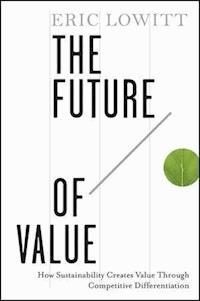
Enhance business performance by using sustainability for competitive advantage The Future of Value reveals what it takes for companies to grow and outperform the competition in today's growth-constrained, sustainability conscious world. The author shows leaders how to use sustainability as a powerful, pragmatic lens to enhance business performance. He also explores how to craft and oversee a portfolio of effective tools, develop competitive strategies, and adjust value chain activities, talent management practices, and corporate policies to help organizations execute powerful sustainability strategies. He provides a systematic, yet instantly familiar, model all companies can use to connect sustainability with their growth and competitive strategies. In this way, the author shows leaders how to shape, color, and own The Future of Value. * Outlines the keys to implementing sustainability in organizations to achieve business success today and tomorrow * Reveals how to engage stakeholders in day to day sustainability management as a means to shape and fuel efforts to continuously renew their sustainability strategies * The author is a 15-year veteran of sustainability and strategy management consulting, having worked with clients in the US, Japan, Australia, and Europe. He has an MBA in Strategic Management from The University of Pennsylvania's Wharton School and writes a regular column for Sustainable Life Media and GreenBiz, two of the world's most heavily trafficked sustainability news and thought leadership portals The author draws useful and accessible conclusions from a rich, diverse set of corporate interviewees. A core part of his research was the selection and interrogation of more than 25 Global Fortune 500 companies' sustainability, strategy, and finance leads.
Sie lesen das E-Book in den Legimi-Apps auf:
Seitenzahl: 318
Veröffentlichungsjahr: 2011
Ähnliche


















Table of Contents
Cover
Praise for The Future of Value
Title page
Copyright page
Dedication
Foreword
Preface
Acknowledgments
About the Author
INTRODUCTION
Why This Book and Why Now?
A New Way of Thinking About Sustainability’s Role in Value Creation
Why You Should Read This Book
How to Read This Book
Call to Action: Embrace Sustainability to Create Value Today and Tomorrow
Part One: HOW SUSTAINABILITY CREATES VALUE
1 SUSTAINABLE COMPANIES ARE MARKET LEADERS
Sustainability as Competitive Advantage: Three Examples
Are Many Other Companies Also Competing on Sustainability?
Research Findings
Conclusion
2 SUSTAINABLE MARKET LEADERS COMPETE ON SUSTAINABILITY
Monadnock: From ISO to Sustainable Market Leader
Connecting Sustainability with Corporate Strategy
Sustainability and Competitive Strategy: The Five Forces Model of Competition
Sustainability as Vehicle to Capture Customers
Sustainability as Market Entry Strategy
Conclusion
3 COMPETING ON SUSTAINABILITY CREATES VALUE
Three Reasons to “Wing It”
Translating Advantage into Performance
Increasing Revenue
Reducing Expenses
Creating Tangible and Intangible Value
Conclusion
Part Two: HOW TO CREATE VALUE IN YOUR ORGANIZATION
4 CRAFTING SUSTAINABILITY STRATEGY
Strategy Formulation
The Need for Sustainability Strategy
Integrating Sustainability with Strategy
Conclusion
5 LEADING STRATEGY AND MANAGEMENT EFFORTS
Sustainability Governance at Herman Miller
Sustainable Market Leaders’ General Approach to Governance
How Widespread Is the Installation of Sustainability Governance Structures?
Conclusion
6 EMBEDDING SUSTAINABILITY INTO THE VALUE CHAIN
Sustainability as Catalyst and Source of Agility
Five Functions to Retool
Conclusion
7 ANALYZING AND COMMUNICATING PERFORMANCE
The Fine Art of Crafting Sustainability Performance Systems
When and How to Communicate Progress
Sustainability Performance Management Can Drive Business Value
Identifying Best Practices
Identifying Product Improvement Opportunities Through Life Cycle Assessments
Conclusion
8 RENEWING SUSTAINABILITY EFFORTS
eBay Engages
Relationships with Employees
Relationships with Customers and Interested Communities
Relationships with Value Chain Partners
Relationships with Competitors
Relationships with Nongovernmental Organizations
Conclusion
9 KEEPING SUSTAINABLE AND AGILE
Stakeholders Emerge as Initiators of Imperatives
The Sustainability Era and Society as Stakeholder
A Payoff in Agility
Appendix A: RESEARCH METHODOLOGY
Phase 1: Identifying Sustainability Among the 2010 Global Fortune 500
Phase 2: Identifying Sustainable Market Leaders
Phase 3: Seeking Deeper Understanding of What the Leaders Do
Appendix B: INTERVIEWEES
Appendix C: INTERVIEW PROTOCOL
Index
Praise for The Future of Value
“Sustainability is becoming an essential ingredient to high performance; leaders need to learn new skills to fashion sustainable and successful long-term careers for themselves. Lowitt’s book will help current and aspiring leaders develop these new skills. The Future of Value is an essential read for any leader seeking to be highly successful today and tomorrow!”
—Marshall Goldsmith, author of the New York Times bestsellers Mojo and What Got You Here Won’t Get You There
“The Future of Value makes a powerful connection between sustainability, strategy, and value creation with excellent examples and stories to illustrate its solid points. You will learn from this clear, concise, and useful guide to sustainable practices.”
—Andy Savitz, author, The Triple Bottom Line
“Regardless of your stance on sustainability, The Future of Value is essential reading for innovative corporate leaders.”
—Tim Mohin, director, corporate responsibility, Advanced Micro Devices
“This book is useful, well written, and timely. Sustainability has evolved from the periphery to the center of business attention, but we still have a lot to learn about how to embed issues like water and carbon into the bottom line. Lowitt explains how. He spent months interviewing leaders in the most advanced companies, and he shares what they are doing. We can take these lessons and put them to work. Lowitt’s clear stories and frameworks are more useful than theories and more inspiring than sermons. I hope this book is widely read and put into practice because the earth will be a better place.”
—Hal Hamilton, founder and codirector, Sustainable Food Lab
Copyright © 2011 by Eric Lowitt. All rights reserved.
Published by Jossey-Bass
A Wiley Imprint
989 Market Street, San Francisco, CA 94103-1741—www.josseybass.com
No part of this publication may be reproduced, stored in a retrieval system, or transmitted in any form or by any means, electronic, mechanical, photocopying, recording, scanning, or otherwise, except as permitted under Section 107 or 108 of the 1976 United States Copyright Act, without either the prior written permission of the publisher, or authorization through payment of the appropriate per-copy fee to the Copyright Clearance Center, Inc., 222 Rosewood Drive, Danvers, MA 01923, 978-750-8400, fax 978-646-8600, or on the Web at www.copyright.com. Requests to the publisher for permission should be addressed to the Permissions Department, John Wiley & Sons, Inc., 111 River Street, Hoboken, NJ 07030, 201-748-6011, fax 201-748-6008, or online at www.wiley.com/go/permissions.
Readers should be aware that Internet Web sites offered as citations and/or sources for further information may have changed or disappeared between the time this was written and when it is read.
Limit of Liability/Disclaimer of Warranty: While the publisher and author have used their best efforts in preparing this book, they make no representations or warranties with respect to the accuracy or completeness of the contents of this book and specifically disclaim any implied warranties of merchantability or fitness for a particular purpose. No warranty may be created or extended by sales representatives or written sales materials. The advice and strategies contained herein may not be suitable for your situation. You should consult with a professional where appropriate. Neither the publisher nor author shall be liable for any loss of profit or any other commercial damages, including but not limited to special, incidental, consequential, or other damages.
Jossey-Bass books and products are available through most bookstores. To contact Jossey-Bass directly call our Customer Care Department within the U.S. at 800-956-7739, outside the U.S. at 317-572-3986, or fax 317-572-4002.
Jossey-Bass also publishes its books in a variety of electronic formats. Some content that appears in print may not be available in electronic books.
Library of Congress Cataloging-in-Publication Data
Lowitt, Eric.
The future of value : how sustainability creates value through competitive differentiation/Eric Lowitt ; foreword by William Sarni.
p. cm.
Includes bibliographical references and index.
ISBN 978-1-118-07452-7 (hardback); ISBN 978-1-118-07823-5 (ebk); ISBN 978-1-118-07824-2 (ebk); ISBN 978-1-118-07825-9 (ebk)
1. Management—Environmental aspects. 2. Strategic planning—Environmental aspects. 3. Value. 4. Social responsibility of business. 5. Sustainable development. I. Title.
HD30.255.L687 2011
658.4'08—dc22
2011015808
To Allegra and our children, Dana and Alex
Foreword
For one to understand the importance of The Future of Value we must look back a few years to when the notion of sustainability was just entering our lexicon.
“What is sustainability?”
“Why would I spend money on any of this if I don’t have to?”
These were the common questions just a few years ago when the business value of sustainability was, at best, an attractive concept but one that could reference few, if any, qualitative or quantitative success stories. Despite this significant limitation, many held on to the belief that sustainability had real business value.
Those of us who were trying to build businesses around sustainability consulting services referred to the “Brundtland Commission”1 definition of sustainability or the “triple bottom line” from John Elkington.2 While the Brundtland definition was useful for framing an ethos (“Sustainable development is development that meets the needs of the present without compromising the ability of future generations to meet their own needs”), it could not be readily translated into a business strategy or actions (some might argue this point). The “triple bottom line” took us further but still not far enough. In my opinion, the value of sustainability for businesses is not about balancing economic and social performance with economic performance (again, some might argue this point). Instead it is about proactively managing environmental and social performance to drive economic performance (more in line with the Dow Jones Sustainability Index view of sustainability, www.sustainability-index.com).
Our passionate and, of course, rational arguments were not enough to compel most business leaders to embrace sustainability as a strategy. This all changed as the value of sustainability became clear and sustainability went mainstream.
Key articles articulating the value of sustainability emerged. Stuart L. Hart and Mark B. Milstein identified sustainability as a driver for the creative destruction of industries and innovation.3 Sustainability was framed within the business thinking of economist Joseph Schumpeter to describe a process in which the old ways of doing things are destroyed and replaced by new ways. Continued refinement of our thinking resulted in a more explicit thesis that sustainability is now one of the key drivers of innovation for businesses.4 Taking this further we now recognize that companies are internalizing externalities unheard of just a few years ago. To quote the authors of a recent article, “Companies have long prospered by ignoring what economists call externalities. Now they must learn to embrace them.”5
This shift in business thinking about the value of sustainability is now consistently confirmed by surveys of “C-suite” business leaders. A survey in early 2011 by MIT Sloan Management Review clearly lays out the business value of sustainability and reflects the increase in spending on sustainability initiatives during a global economic recession (more than 50 percent of the survey participants).6 The value of sustainability was cited as a driver for innovation, increasing intangible (brand) value, adding potential new revenue streams through new products and services and reduced costs due to material or waste efficiencies, access to new markets and increased competitive advantage (my emphasis).
The conclusion is straightforward: companies are spending more on, and realizing increased top-line and bottom-line value from, sustainability initiatives.
This leads me to why this book is important. It moves the dialogue to the next phase of how we view sustainability and provides increased rigor in evaluating the real value of sustainability. Not simply anecdotal evidence that sustainability has value—this book provides a critical view as to why sustainability is now fully integrated into business strategy.
Much has changed in a very short period of time. If you are running a business, sustainability is the right business thing to do instead of the right thing to do. There is almost no other alternative for businesses to thrive in today’s highly competitive global marketplace. The Future of Value can help companies embed sustainability into their overall business strategy and be more competitive in the global marketplace.
William Sarni
July 2011
Denver, Colorado
Notes
1. World Commission on Environment and Development [WCED], The Report of the Brundtland Commission: Our Common Future. Oxford, UK: Oxford University Press, 1987, 1.
2. John Elkington, Cannibals with Forks: The Triple Bottom Line of 21st Century Business. Oxford, UK: Capstone, 1997.
3. Stuart L. Hart and Mark B. Milstein, “The Creative Destruction of Industries,” Sloan Management Review 41:1 (Fall 1999).
4. Ram Nidumolu, C. K. Prahalad, and M. R. Rangaswami, “Why Sustainability Is Now the Key Driver of Innovation,” Harvard Business Review (2009).
5. Christopher Meyer and Julia Kirby, “Leadership in the Age of Transparency,” Harvard Business Review (April 2010).
6. Knut Haanaes and others, “First Look: Second Annual Sustainability and Innovation Survey,” Sloan Management Review 52:2 (Winter 2011).
Preface
Three events set me on the path to write this book. The first event traces its roots to a post office in Smithtown, New York. My dad, Dr. Michael Lowitt, a psychotherapist, had long been curious about the fate of “Dear Santa” letters sent by underprivileged children. One wintry day in the mid-1980s he went to the post office and learned about the existence of a stack of “Dear Santa” letters that had gone unread, let alone unanswered. He took a sample of these letters home and was deeply touched by their contents. Amid the raft of letters asking for video game systems and the like were a set of letters asking for the barest of necessities: food, clothes, warmth. A man with the biggest heart around, my dad sprung to action that day. He organized local businesses to donate these necessities of life. He personally answered hundreds of letters. And whatever needs weren’t met through donations from others, he took care of himself. Hence the “Smithtown Holiday Project” was born. As a young boy I learned about the power of entrepreneurship, the benefits of giving, and perhaps most important, the meaning of creating value for other people.
The second event was a chance meeting in New York City in 1996. For context, the reader must know that I have always been fascinated by the art of crafting strategy. There’s just something very cool about planning a path through competition to success. I started my first job out of college in 1996, working as a management consultant at what was then known as Andersen Consulting (long since known as Accenture). I was assigned to Andersen’s New York office. Since I had a modest amount of financial services experience from interning during college at Prudential Securities (retail brokerage) and then Merrill Lynch (bond trading), I joined Andersen’s financial services industry practice, as part of the company’s process competency group. My first gig was an internal project focused on populating the company’s internal knowledge management system with best practices from the company’s financial services projects. It was during this time I met a man who changed my life.
David Cohen is one of the most amazing people I’ve had the privilege to know. He has that rare combination of off-the-charts intelligence and go-out-of-his-way niceness. When we met, David was a partner in the company’s financial services industry practice. He was regularly called upon by his peers to provide subject matter expertise in financial services, strategy, and process design. As the reader might suspect, David’s office was lined with business books of all shapes and ages—a day spent in his office was a day spent with Michael Porter, Tom Davenport, Henry Mintzberg, Michael Hammer, Bruce Henderson, and Gary Hamel.
David took me under his wing. He lent me a new strategy book nearly every Monday with the unspoken agreement that I would read it and be prepared to discuss it with him shortly thereafter. I started with The Discipline of Market Leaders by Michael Treacy and Fred Wiersema. Then I read Beyond the Hype (Nitin Nohria), The Death of Competition (James Moore), and Value Migration (Adrian Slywotzky). Over three years David afforded me the luxury of access to more than 100 of these strategy books. Writing one has always been a closely held goal of mine.
Fate conspired with passion and fascination in November 2007. As a research fellow in Accenture’s Institute for High Performance in Boston, I was responsible for leading a line of business research; at the time I was focused on the intricacies and drivers of customer loyalty. I had wanted to carve a niche in this field but frankly was struggling to find a large enough “white space.” One night I received an email from Bob Thomas, director of the institute. He said that Mark Spelman, who was the managing partner of Accenture’s Global Strategic Services consulting practice, wanted to develop a sustainability research program to support the company’s new sustainability consulting practice. Mark had asked Bob if I was available to pitch in. I didn’t need to be asked twice.
After two years of leading this line of inquiry, I left Accenture. Unsure what I wanted to do next, though fueled by a passion to further study the link between performance and sustainability, I set out to design a research program that would support a book that combined my sustainability, strategy, and value creation interests. I hope you enjoy reading this book.
The third event took place in 1994. I had the opportunity to study in Japan. I attended a university called Kansai Gaidai, located in a city called Hirakata, between Osaka and Kyoto. The university had a large base of exchange students from all regions of the world. Every day one could hear ten to twenty languages simultaneously spoken in a beautiful blend in the school’s student lounge. One day I met a woman named Julie, who was from Kentucky. An avid reader, Julie had this ability to quickly look at someone and unearth a piercingly true insight. She looked at a poorly dressed, long-haired blond guy from New York and confidently predicted, “You are going to write a book someday.” I don’t know where Julie is these days; it’s been more than fifteen years. But if you are out there, and somehow reading this, please know that you planted an idea that day. Thank you!
Eric Lowitt
July 2011
Needham, Massachusetts
Acknowledgments
Like any endeavor that requires great effort, this book is the result of the combined contributions of many individuals and institutions.
The Future of Value would not exist without the kindness of strangers turned friends. I often contacted sustainability and strategy practitioners “out of the blue.” More than 80 percent of these folks not only responded but allowed me to interview them. In no particular order, my eternal gratitude goes out to Julie Bisinella at Australia & New Zealand Bank; Dan Cherian at Nike; Brian Larnerd and Lauren Garvey at Hitachi; Richard Verney and Michelle Hamm at Monadnock Paper; Santiago Gowland at Unilever; Lynnette McIntire and Ed Rogers at UPS; Tim Mohin at AMD; Ben Packard at Starbucks (and Ann Clark for helping facilitate the conversations); Edna Conway and Mandy Knotts at Cisco; Melissa Fifield, Renate Greelings, Kindley Lawlor Walsh, Jorge Perez-Olmo, and Lisa Carpenter at Gap Inc.; Adam Elman at Marks & Spencer; Amelia Knott at Centrica; Kevin Moss at BT Americas; Arlin Wasserman at Sodexo; Jean Sweeney and Heather Tansey at 3M; Cameron Schuster at Wesfarmers; Annie Lescroart at eBay; Julia King at GlaxoSmithKline; Frank Mantero at GE; Mark Schusterman, Paul Murray, and Gabe Wing at Herman Miller; Charles Ruffing and Chris Veronda at Kodak; Scott Carman and Jennifer Silberman at Hilton Worldwide; Mark Heintz at Deckers; Alison Presley at Travelocity; Dr. Eckhard Koch and Betsy Blicharz Arnone at BASF; and Peter DeBruin and Richard Pearl at State Street Global Advisors. Thank you everyone!
This book also would not exist if Accenture had not extended to me the opportunity to study the topic of sustainability. Thank you to Bob Thomas, Paul Nunes, Jeanne Harris, Mark Spelman, Terry Corby, David Light, Bruno Berthon, Peter Lacy, David Abood, Lisa LaPlant, and Jim Grimsley for believing in me and letting me study sustainability in a corporate setting. I had the privilege of working daily with very smart colleagues, who challenged my foundational thinking about sustainability. Among these colleagues (and friends) are Anna Caffrey, Judith Walls, Chi Pham, Chris Hilson, and especially John Glen.
Since I started this book right after leaving Accenture, I took great lengths to treat the Accenture content I produced as off limits for this book. Unfortunately that meant I needed to leave out content provided by preeminent sustainability companies and practitioners. That said, I want to thank Bonnie Nixon, Randy Boeller, and their colleagues at HP; Jennifer Mattes, Clay Nesler, and their colleagues at Johnson Controls; Roberta Barbieri and Carolyn Panzer at Diageo; and Caroline Angoorly, formerly of J. P. Morgan.
I am forever indebted to three colleagues in particular. Andy Hoffman took a sustainability neophyte and taught him both the literal meaning and ethos of sustainability. Will Sarni wholeheartedly encouraged me to write this book and not be satisfied with good when I should reach for great. David Cohen was instrumental in setting a young and inexperienced analyst on the path that ultimately led to this book. It would take several paragraphs to thank David for all he did for me. To Andy, Will, and David, please know I appreciate your friendship, your intellectual support, and your consistent willingness to help.
Cherie Potts and Pat Steffens at Wordworks deserve special attention. This sister team did yeoman’s work quickly turning interviews into consistently flawless interview transcripts. Often I submitted interview recordings to Cherie and Pat without advance warning. They always sent back verbatim transcripts within the shortest possible time frame, handled with the utmost confidentiality. Please consider yourselves partners in this book!
I spent most of 2010 with Deloitte Consulting LLP’s Enterprise Sustainability practice. The experience of working with and learning from top-notch colleagues, including Karin Kin, David Linich, Chris Park, Julie Engerran, Eric Hespenheide, Peter Capozucca, Rachel Smeak, Amisha Parekh, and Joshua Rosenfield, is one I will always remember fondly. While with Deloitte Consulting LLP, I worked with several members of the UN Global Compact. Thank you to Ole Hansen, Gavin Power, Jerome Lavigne-Delville, and Georg Kell for allowing me to spend time with you and your organization.
Several advisers have become friends along the way. Among them are Mark McElroy at the Center for Sustainable Organizations, Asheen Pharnsey at SolidWorks, Joanne Lawrence at Hult International Business School, Gib Hedstrom at Hedstrom Associates, Noeleen Nunez at Net Impact at UMass Amherst, and Leslie Caplan at Leslie Caplan Consulting. Thank you for your kind support, your intellectual contributions, and your friendship.
This endeavor began with intensive research and ended with a book. To help get it there, I am indebted to my editor at Jossey-Bass, Kathe Sweeney, and her dedicated colleagues, including Dani Scoville, Alan Venable, Pam Suwinsky, Mary Garrett, and Jesse Wiley. Kathe championed this book from the outset; she stuck with this book project through various iterations and ultimately sharpened both the insights and the prose.
Finally, I owe my deepest gratitude to my family. In particular, my daughter Dana and son Alex, who frequently put up with me as I worked on this book. You two can now erase Daddy’s book!
To my extended family, especially my parents, brother, sister-in-law, niece and nephews, and my in-laws, I owe my deep appreciation for your support, inspiration, and encouragement.
And to my wife, Allegra, whose love and never-ending support served as the foundation for this effort. I dedicate this book to you. Please know I am truly blessed to have you in my life—I am definitely the lucky one!
About the Author
Eric Lowitt is a strategy and sustainability consultant with fifteen years of management consulting and strategy experience in companies such as Accenture, Deloitte Consulting, and Fidelity Investments. He received his MBA from the Wharton School of Business. The author of numerous articles about sustainability, strategy, and value creation, Lowitt’s work has been published in mainstream and practitioner journals such as Forbes, Journal of Corporate Governance, and Business Strategy Review. He and his wife live outside of Boston with their two young children.
INTRODUCTION
Altruism is the enemy of sustainability.
The Future of Value is about a new way to create business value. is defined as a return on investment from , including shareholders, employees, and local community members. , coined by the Brundtland Commission as development that “meets the needs of the present without compromising the ability of future generations to meet their needs,” has altered how companies create value.
Lesen Sie weiter in der vollständigen Ausgabe!
Lesen Sie weiter in der vollständigen Ausgabe!
Lesen Sie weiter in der vollständigen Ausgabe!
Lesen Sie weiter in der vollständigen Ausgabe!
Lesen Sie weiter in der vollständigen Ausgabe!
Lesen Sie weiter in der vollständigen Ausgabe!
Lesen Sie weiter in der vollständigen Ausgabe!
Lesen Sie weiter in der vollständigen Ausgabe!
Lesen Sie weiter in der vollständigen Ausgabe!
Lesen Sie weiter in der vollständigen Ausgabe!
Lesen Sie weiter in der vollständigen Ausgabe!
Lesen Sie weiter in der vollständigen Ausgabe!
Lesen Sie weiter in der vollständigen Ausgabe!




