


22,49 €
Mehr erfahren.
- Herausgeber: The Crowood Press
- Kategorie: Lebensstil
- Sprache: Englisch
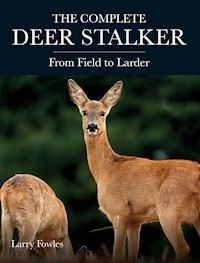
Deer stalking entails much more than walking the countryside with a rifle; there is a great deal to be considered prior to lacing boots and donning a green fleece. It is often said that the real work starts after the trigger has been squeezed. This book looks at all aspects of the pursuit, with clear explanations accompanied by advice, images and anecdotes. In addition, there is a unique reference chapter of all potential conditions a deer may suffer from, with full descriptions and images, and advice on suitability for entering the food chain. Specific coverage includes: laws, leases and making a start obtaining an FAC: the necessary equipment in this technological age; deer species, with identifying images; deer senses and how they shape our approach to them; shot placement and maximum shooting distances; the importance of bullet design and its effect on the carcass; stalking activities by month through the year; after the stalk - sticking, initial evisceration, inspection and recovery; at the larder - hygiene, and who needs to register as a food business and finally, inspecting the carcass, with a library of images showing conditions.
Das E-Book können Sie in Legimi-Apps oder einer beliebigen App lesen, die das folgende Format unterstützen:
Seitenzahl: 290
Veröffentlichungsjahr: 2021
Ähnliche
















THE COMPLETE
DEER STALKER
From Field to Larder
THE COMPLETE
DEER STALKER
From Field to Larder
Larry Fowles
First published in 2021 byThe Crowood Press LtdRamsbury, MarlboroughWiltshire SN8 2HR
www.crowood.com
This e-book first published in 2021
© Larry Fowles 2021
All rights reserved. This e-book is copyright material and must not be copied, reproduced, transferred, distributed, leased, licensed or publicly performed or used in any way except as specifically permitted in writing by the publishers, as allowed under the terms and conditions under which it was purchased or as strictly permitted by applicable copyright law. Any unauthorised distribution or use of this text may be a direct infringement of the author’s and publisher’s rights, and those responsible may be liable in law accordingly.
British Library Cataloguing-in-Publication DataA catalogue record for this book is available from the British Library.
ISBN 978 1 78500 855 9
Contents
Introduction
1. UK Law Concerning Deer and Stalking
2. Equipment
3. Deer Species in the UK
4. Deer Sight, Hearing and Olfactory Capabilities
5. Deer Stalking
6. A Stalker’s Year
7. After the Shot, to the Larder
8. Registering as a Food Business
9. Diseases and Inspection
10. Looking Ahead
End Notes
Index
Introduction
Deer hunting, indeed any form of hunting, is an emotive subject in the twenty-first century. Never before has this been the case, meat having historically been the ‘best’ food, demonstrated with numerous records of banquets with birds stuffed inside animals and lavish platters of game for lords and gentry, while poorer people ate vegetables and grain, supplemented with whatever fish, white meat or little red meat that could be obtained.
Venison, in having to be hunted, was the preserve of the very rich, as most others lived by subsistence farming. There simply wasn’t time to hunt, even if land were available on which to do so. Such was the case throughout the medieval periods (AD425–1500) to the Tudor and Stuart eras. The Industrial Revolution in Georgian through to Victorian times meant a little leisure time for some, but meat was still a luxury. Slowly, perhaps since the end of World War I, diets included more meat, and different forms of hunting became available to the lower classes.
In recent times deer have multiplied rapidly and are now over abundant. They have no natural predators, and with the expansion of coppices, woods and forests in England (seeChapter 10), the deer’s lot has been a happy one in recent decades. As a result, damage to tree and other crops is cited, as well as the cost to human life itself. The increased deer population has led to many deer crossing the country searching for food and quiet shelter, and accidents involving vehicles as they cross busy roads are rising – 400 to 700 people are injured, and sadly around twenty people a year die from deer-related collisions.1 It is a fact that deer need to be controlled – that is, culled – in the UK in greater numbers than ever before.
However, cultural attitudes have changed considerably, and meat is no longer seen as an aspirational food source for many people. Deer culling is opposed by groups calling for alternative ways of controlling numbers. Arguments are put forward that deer management can be achieved through non-lethal means, which is true on a small scale. Often deer-proof 2m-high fences are erected around vulnerable woodlands, while individual saplings in smaller plantations can be protected with tubes around the young trunks. But countrywide, this has little effect on the deer population as a whole, as deer will simply move on to the next unprotected wood; it will not reduce their numbers. Covering all rural areas with plastic tubes and fences is not a practical solution.
Sterilization is one way of population control promoted by opponents to culling. Such programmes have been carried out in the United States on isolated populations, such as NewYork’s Staten Island, an area of just 150sq km (58sq miles), with a population of around 2,000 deer in 2015. A $4.1million scheme sterilized 1,154 deer, reducing the population by just 8 per cent over three years. This will need constant attention however, such that a $2.5 million contract is being awarded to carry it forwards another five years. The cost was $3,727 (£2,900) per animal sterilized.2 On that basis, Britain’s estimated 1.5 to 2 million deer would require a sterilization programme that would cost eye-watering sums, even if it were possible to capture or get close enough to dart a good proportion of the female deer across open countryside and the hills of Scotland.
Perhaps in the future there may be a safe and effective contraception or sterilization method to control our wild deer population, but at present it is not even on the horizon. Cutting-edge research is exploring the insertion of immunocontraception (IC) antigens into pollen or plant spores for example, but the questions of side effects and unintended consequences, if such a strategy proved remotely possible, need to be answered. It is a complex area, including the likely increased longevity of a female that does not produce young, and the effects on male deer puberty, antler growth and behaviour if males ingest a vaccine meant for females, among other issues.
Authorities and respected researchers both in this country and in others are of the consensus that immuno-contraception ‘works very well when injected into female deer, but there are currently no delivery systems that can be used to implement IC in free-living, wild deer’.3 The piecemeal management of our resident deer will need to continue, each landowner culling, or not, the deer roaming over their land as they see fit.
This book recognizes the increased population numbers of certain species, and the rapid changes in hunting technology, and discusses what this may mean for the stalker on his or her patch in the UK.
ABOUT THE AUTHOR
I came into deer stalking along a fairly unusual route. I was employed in the red meat industry at the time as a slaughterman; the owner of the abattoir was a landowner and farmer. As a teenager I would work weekends, collecting hay and straw by small lorry and conveying it from the farm to the abattoir lairage. The farm connection developed into shooting rabbits and pigeons, which I would sell to local butchers. Later my interest turned to deer and because of the day job, carcasses posed little issue to me. I happily shot a few deer as the ground allowed, either for the farmer, the local butcher or myself.
The author, working at an outdoor abattoir with reindeer. Near Gol, Norway, 1980.
An inspector in the early 1960s, examining pig plucks. There is a long history of meat inspection in the UK.
Years later, without the old land I used to stalk, I went out for paid stalks with a professional in Dorset. We got along well, for he was an ex-meat industry worker too. I learned much from him, and the professional stalkers I’ve met since have been founts of knowledge as well, there for the asking.
A few years on, through red meat industry-related connections, I landed an informal, part-time job culling deer on an estate in Berkshire. The mid-1990s, although only some twenty-five years ago, were very different times compared to deer stalking today, and I was quickly approached to ‘manage’ the deer on two adjoining estates also. From the outset, my task was to reduce the populations to an acceptable level, as the deer had never been culled as part of a concerted management programme. The carcasses were sold to a dealer, with perhaps ten a year returned to the landowners. I still manage these three estates, along with a couple of smallholdings.
I have never been a trophy hunter, and I’m still not drawn to shooting specific deer because they have a large set of antlers on their heads: that concept is alien to me. Perhaps it’s my background in the meat industry – each animal is primarily a source of meat. I do understand that for others, antlers are a big deal, but for me a buck or a stag is a bigger carcass and harder to drag back and lift into my truck!
My job at this time was as a meat inspector in various abattoirs, both large and small, inspecting carcasses for human consumption. Inspectors also oversaw animals prior to slaughter (ante-mortem), and ensured that slaughter was carried out in a humane manner. I was inspecting some 800 sheep each morning alongside four colleagues (deer are anatomically much like lean sheep, apart from not having a gall bladder), with perhaps 200 cattle later in the day. At other times I was at a pig plant, where the daily throughput was around 2,200 animals. This informed my deerstalking, such that a quick end to the deer’s life and the full inspection and use of the carcass thereafter were of paramount importance.
Meat inspectors have an important role to play in overseeing safe meat production in this country, and the number of TB reactor cattle, for example, coming through one plant was astonishing, with lesions often found in places not normally associated with this classical disease. Applying this knowledge to deer carcasses, I admit to being surprised at the lack of understanding of many pathological conditions in deer by some UK deer stalkers, who are able to put small numbers of carcasses into the food chain without further checks.
To this end, this book is partly aimed at those hunters wishing to further their knowledge of the deer carcass, also to guide them in examining borderline cases, and judging when to pass as fit carcasses that might otherwise be unnecessarily thrown away. I have also learnt a lot in the field, both from my own observations and much more from others whom I have met along the way, and I am pleased to pass on all this acquired knowledge. I hope that the information contained in these chapters from my involvement in the much larger red meat trade (in the UK, some 540,000 animals are killed weekly, compared to 350,000 deer yearly)4 will aid the stalker in processing his or her deer into venison in a humane and hygienic manner. This will, in turn, promote confidence in the methods of production and therefore the venison itself to the end user, the general public.
ACKNOWLEDGEMENTS
The chapter on deer senses was greatly informed by Professor George Gallagher and Assistant Professor Gino J. D’Angelo, both at the University of Georgia, USA. I thank them for their time and correspondence, and the use of their research.
I am especially pleased to share the images in Chapter 9 of various diseases and conditions, as they give another dimension to the written word. Some images are mine, but both David Barrah (senior meat inspector, retired, and part-time lecturer in comparative anatomy and disease at Bristol Veterinary School) and Dr Andrew Grist (lecturer at Bristol Veterinary School, and author of four meat inspection textbooks) have both generously given me permission to reproduce their images, and have amended some descriptions in the text.
No doubt some will disagree with me on certain aspects of my thoughts and observations, but putting forward ideas for debate is all to the good. Where relevant I have sought to justify my views, rather than state them as facts. As stalking deer is necessarily a solitary occupation, one can meet and discuss issues with only relatively few people, and one way of reaching a wider audience is with the old-fashioned book. This allows me to expand on a subject, and having put my name to it, I have sought to be unbiased and straightforward.
Chapter 1
UK Law Concerning Deer and Stalking
In England, Wales, Northern Ireland and Scotland, laws regarding the shooting of deer centre on welfare issues around the animal’s yearly lifecycle and the humane killing of our six species. The lifecycle provisions address pregnant does in the run-up to birth and dependent fawns thereafter, while humane killing concerns the use of a suitable weapon with an expanding projectile (bullet) to ensure a quick death. Both of these areas are discussed below and in Chapters 2, 3 and 5.
From these come our basis for deer stalking, as opposed to the situation in some other countries, which have a government department that oversees deer populations. This department will issue licences or tags to shoot specific numbers within their seasons, as in the United States for example, which stipulates the deer to be taken on the large tracts of state-owned land. In the UK it is left to landowners and/or the holder of rights to manage deer numbers on privately owned land as they see fit. Only in Scotland has a government body occasionally stepped in to cull deer on specific estates on welfare grounds due to large populations not being managed effectively.
As the lifecycle of deer does not change year on year, the information below is unlikely to alter. However, populations grow and decline, technology changes, and materials are sometimes reclassed as hazardous. It is good practice to keep abreast of these changes by checking in with organizations such as the British Association for Shooting and Conservation1 and the British Deer Society2, for moratoriums due to extreme weather or disease control. This would include foot and mouth outbreaks, areas newly banning lead projectiles, and other changes that can be put into effect quickly, as would be the case if chronic wasting disease (seeChapter 9) were found in the deer population in this country.
CLOSE SEASONS AND TERMINOLOGY
The close season is the period in the year when it is illegal to shoot members of a certain sex of a deer species. We often speak of the doe and buck seasons, but these are catch-all terms, probably an Americanism that has taken hold in the UK. Red and sika male and female deer are properly called stags and hinds, and their young are known as calves. All other deer species are termed bucks, does and fawns.
Does and Hinds
The close season for the females of each species is set in order to safeguard their welfare during the last two months of pregnancy, through birth to the weaning of their young. For example, the roe doe open season finishes at the end of March, and they will give birth from late May through to mid-June. The young are said to be weaned by November, so the doe season opens on the first of that month, the rationale being that if the mother is shot, the fawns are able to fend for themselves.
There is, however, ongoing discussion about this, as some late-born fawns, particularly if they have a poor summer and autumn, may not be independent of their mother by the time the season opens. Similarly, the one month extension of the doe-stalking season to 31 March implemented in 2008 is distasteful to some, as the doe will be heavily pregnant by this time and although the foetus will not be viable (able to survive) outside the womb, it will be all but fully formed. SeeChapter 6 for further discussion on this matter.
The doe seasons are a compromise between, on the one hand, having enough time to complete the required cull in reduced winter daylight and poor weather, and the animal’s welfare on the other. The stalker who knows his ground and his deer well will be able to judge whether he can start his doe cull in November, and would hope to finish it by early March, if not sooner. It is best to work within the parameters of the deer seasons as enshrined in law, and not push them to the limit.
Table 1: Female Close Season
England, Wales and N Ireland
Scotland
Red
1 April–31
October, 16 Feb–20 October
Sika
1 April–31 October
16 Feb–20 October
Fallow
1 April–31 October
16 Feb–20 October
CWD
1 April–31 October
Not found in Scotland
Roe
1 April–31 October
1 April–20 October
Muntjac
No close season
(CWD: Chinese water deer)
Table 2: Male Close Season
England, Wales and N Ireland
Scotland
Red
1 May–31 July
21 Oct–30 Jun
Sika
1 May–31 July
21 Oct–30 Jun
Fallow
1 May–31 July
1 May–31 July
CWD
1 April–31 October
Not found in Scotland
Roe
1 November–31 March
21 October–31 March
Muntjac
No close season
Bucks and Stags
Buck seasons concern sporting considerations, where antlers are a trophy, as much as anything else; thus bucks are out of season during the regrowth of their antlers.
Of course in order to gain an appreciation of the age and quality of a buck, you need to see the fully grown antlers. The resident stalker will again know his deer and will either cull or leave certain animals to breed, the aim being to improve the quality of bucks in his or her area. But aside from this, there is no physiological reason why bucks need a season. A minority consider that culling bucks while they are in rut is rather unfair; fallow, red and sika bucks in particular are full of testosterone at this time and are solely concerned with reproduction, so they become an easy target. This is quite apart from the fact that they lose much of their condition by not eating, and the carcass can be tainted with the smell of urine and testosterone: it is therefore not the best venison for the table – but that is said with my meat inspector hat on.
Deer antlers are a valuable trophy to many stalkers.
Notes on Deer Seasons
• In Northern Ireland only red, sika and fallow deer are found, but the law would apply equally there if other species were to become resident.
• Variations in the close seasons in Scotland arise due to weather conditions, which are invariably harsher than in southern England.
• Muntjac have no close season as they breed all year and do not have a specific rut period.
• Chinese water deer (CWD) have the same season for male and female, as they are extremely difficult to distinguish from each other; the blanket close season therefore protects the doe’s late pregnancy through to weaning.
• Unlike small game, such as pheasants, partridge and hare for example, there are no restrictions to shooting deer on Sundays or certain public holidays. Deer can be shot on all days of the year, within their open seasons.
LEGAL RIFLES FOR DEER
Further legislation covers the calibre of gun with which you are legally permitted to shoot deer. Long gone are the days when deer were commonly targeted with shotguns using no.6 shot in a drive along with pheasants. A shotgun can still be legally used, however, but in very restricted circumstances where serious damage can be proven, and using AAA shot or a minimum 350 grain rifled slug. This method is not discussed further here, as the use of a shotgun is very limited in scope and is viewed by most as an unsuitable weapon. Shooting with rifles of the legal calibre is the accepted way to deal with deer that are causing much damage to crops. The various terms and vagaries of this subject are contained in Chapter 2.
The Deer Act of 1991 stipulates that in England and Wales a minimum of .240 calibre with a muzzle energy (m/e) of not less than 1,700ft/lb is legal for all species of deer from muntjac to red, using expanding ammunition. No minimum bullet weight is specified, as attaining the m/e requirement requires a bullet of at least 85 grains in weight travelling at over 3,000ft/sec, for example. The heavier the bullet, the less hard it needs to be driven to exceed 1,700ft/lb.
Muntjac and Chinese water deer (CWD) can be shot with a smaller calibre, of not less than .220in and an m/e of at least 1,000ft/lb. A minimum bullet weight of 50 grains also applies, and must be of expanding construction.
In practical terms, stalkers generally have a minimum of the popular .243 chambered rifle, which covers the 1,700ft/lb requirement if the barrel is long enough. Some shorter barrels of around 50cm (20in) or less struggle to attain the velocity needed to satisfy the muzzle energy. While it is nice to use a lighter and handier .22 centre-fire rifle for muntjac and CWD, it is very restrictive and would be illegal to use if a larger species of deer crossed the stalker’s path, which, invoking Murphy’s law, is bound to happen!
In Scotland, the requirements are a little more specific. While a minimum calibre is not specified, a minimum muzzle energy of 1,750ft/lb, with a bullet weighing no less than 100 grains, together with a minimum muzzle velocity of 2,450ft/sec, is legal for all deer. However, roe can be taken with a minimum 50-grain bullet weight travelling at at least 2,450ft/sec and developing at least 1,000ft/lb of energy. In practice, this means the starting point for larger deer is again the .243 and .222 for roe, CWD and muntjac not found north of the border.
Northern Ireland, as noted above, has only the larger red, sika and fallow species. Across these, a minimum 100-grain bullet giving a 1,700ft/lb from a calibre not less than .236in is required. In practice a .243 is the minimum, the .236 stipulation being a technical way of describing the .240in minimum.
There is more information on calibres and bullets in Chapter 2.
LICENCES FOR OUT-OF-SEASON AND NIGHT SHOOTING
There is very limited scope for using special out-of-season and night-shooting licences, but before applying to Natural England, the Welsh Assembly Government or Scottish Natural Heritage to shoot out of season, the stalker should be aware that there are provisions in law for specific defences, if challenged.
Fallow does, just out of season but in the crop.
The first is through section 7 of the Deer Act, which allows deer to be shot on welfare grounds. This would apply to a stalker shooting an injured deer, perhaps caught in a fence and unable to escape, or a deer wounded as a result of a vehicle collision, for example.
The second is the ‘farmer’s defence’, where the owner of the land gives written permission for certain deer to be shot out of season to prevent damage, or further damage, to various crops, timber or other property on their land. As this is a defence, the onus is on the defendant – that is, the stalker and land owner – to prove that this was the case if they were prosecuted.
A licence to shoot out of season will only be granted in exceptional circumstances, and the protection of crops is not one of them. Valid reasons are to conserve natural heritage, and preserving public health or safety. These licences will only be granted when all alternative measures have been explored, such as fencing and day-time shooting, and will probably mean a visit from the appropriate authority to oversee the practices in place.
Night shooting is not permitted, except under special licence, defined as one hour after sunset to one hour before sunrise. This has particular relevance nowadays with various thermal devices; this is discussed in Chapter 10. Section 8 of the Deer Act allows a licence to be granted to shoot deer at night under similar conditions to section 7 – that is, conserving natural heritage, preserving public health and/or safety, and preventing damage to ‘property’ – that is, crops. Again there must be no practical alternative such as fencing or day shooting, which has to be shown to have been ineffective in dealing with the issue.
Note that a night-shooting licence does not allow shooting out of season, which is covered by section 7. However, section 7 does not allow night shooting, so effectively the shooting of deer both out of season and at night is never allowed.
SHOOTING AND THE PUBLIC
On our crowded island, bridleways and footpaths, often ancient rights of way, crisscross the countryside. On my permissions there are some six different bridleways and four footpaths, which dictate stalking activities to some extent. The general public have unrestricted access to these at all times, and the lone runner or dog walker will appear at any time, even on the most miserable, wet winter morning at first light!
Footpaths and bridleways.
Shooting deer from a vehicle is legal if it is stopped and the engine is switched off.
The law states that no firearm should be discharged within 15 metres (50 feet) of the centre of a highway if it causes the user injury, or interrupts or interferes with their passage. This only applies to highways of vehicles, so shooting from and across footpaths and bridleways is permitted. It goes without saying that shooting near these areas requires utmost care, and if deer stalking is innocently disrupted by a horse rider, walker or whatever, that is part of the joys of hunting in this country.
However, the user of these paths should not loiter with the intent of disrupting the hunter’s lawful activity, as this can then become trespass, even if they stay on the right of way. Deer stalking can be an emotive subject to some users of the countryside, but it is better not to have any confrontation, and to wait quietly for the person(s) to pass. If a conversation is inevitable, most people are polite when approached in a friendly and open manner, starting with a loud and cheery ‘good morning’, which helps to disarm walker(s) not fully on side. There is no point in talking in hushed tones at these times, as deer in the vicinity would already be well aware of people being present!
Walkers found well off the public right of way are, technically, guilty of civil trespass, but most are happy to be shown the footpath, especially when gently but firmly informed that shooting is being carried out in the area, and of the dangers it could cause them or their dogs. I believe that people discovered in this situation quietly know they shouldn’t be there, and are therefore already on the back foot.
The law says that deer can be shot from a high seat, blind or on foot, but not from a vehicle unless it is stationary with the engine turned off – a further public safety measure. Besides, it would not be at all easy to ensure a safe backstop and to check for stray members of the public while aiming at deer from a moving vehicle.
This doe expired across a boundary. Luckily I had permission to retrieve it.
It is important to know that deer are not property, so are not owned by, and are not the responsibility of anyone. When on owned land, they become the property of that landowner when dead. If a deer is shot and then crosses a boundary and expires there, it belongs to that landowner. It is best to make contact with owners of land adjoining one’s permissions well beforehand, to see how they feel about the possibility of recovering dead or wounded deer from their property. A text or phone call before you might need to do so would be appreciated, and keeps everything legal.
The Deer Stalking Certificate
The Deer Stalking Certificate (DSC) is a nationally recognized award, split between two levels. Level 1 gives general information about the six species and their identification, legislation, shooting and safety, and provides the required knowledge for carcass inspection, such that the successful candidate will be a ‘trained hunter’. This is usually a three-day course with an assessment and a target-shooting test at the end.
Level 2 builds on the mainly classroom-based learning of Level 1, in that the candidate must demonstrate a deer stalk, the humane killing of the deer, then their ability to eviscerate, inspect and hygienically transport its carcass; this they must do on three separate occasions, overseen by an accredited witness. This can take some time to achieve, so a three-year period is allowed before re-registration is needed.
The DSC courses and awards are supported by the British Association for Shooting and Conservation (BASC), the British Deer Society (BDS) and the National Gamekeepers Association (NGO), and other rural agricultural colleges and commercial companies offer their courses and awards. All successful candidates are registered with Deer Management Qualifications (DMQ), a not-for-profit company that maintains the DSC certification, and quality assures the process. According to the DMQ website (dmq.org.uk), as of mid-2020 some 27,400 persons have completed the DSC Level 1, and 5,900 have completed Level 2, to give some idea of the uptake of the awards.
The DSC 2 isn’t seen as a gold standard, but the foundation on which to build competence in the field.
MAKING A START
For those wishing to explore deer stalking, the novice usually thinks of obtaining land to hunt over and the purchase of a firearm; however, this may not be necessary at first, or indeed at all, if all that was wanted was just the occasional stalk. Unless a person is really sure of his or her desire to stalk, or has prior experience, I would advise attending a course such as a Deer Stalking Certificate Level 1 (DSC 1) (see box), which covers the basics of the sport – an overview in some respects.
Learning from a Professional
With an understanding gained from the basic course, the novice could then pay to go out with a professional stalker, using the provision in the law of an estate rifle. This allows a person without a firearms licence to use another’s rifle while in their presence. Restrictions apply, but in practice this means the novice can be guided by the owner of the shooting rights of land over which they may shoot deer. This may satisfy the occasional deer stalker who wants just a few outings a year. He or she will have knowledge from the course, further enhanced by the professional, without the need to go through the process of applying for a rifle.
Learning with a professional stalker can teach the novice a great deal in a short space of time.
When I started in the 1980s it was much easier to obtain a firearms licence, but much of my practical knowledge came from a professional I went out with for some twelve days in total, spread over an extended period. One learns fieldcraft, riflecraft, as well as a host of other practical skills. I believe the money spent on those stalking days was worth every penny, and when I then stalked on my own permissions I think I was fairly well prepared from the outset, instead of learning from the mistakes I could have made.
Target Shooting
The other route into stalking is via a target-shooting club; if successful in becoming a member, this will result in a firearms licence that allows a weapon to be shot, but only at an approved target-shooting ground. There are many clubs around the country, offering anything from an air rifle through .22 rimfire at 25 or 50yd (23 or 45m), to full-bore rifle shooting at 100m (109yd) and far beyond. A club will have an induction course, including safety on the range, and will introduce the novice shooter to a variety of club guns. Over time the probationary period will be met and the trainee’s performance will satisfy the training officer, which may then help him or her obtain a firearms licence.
Regular shooting at a range gives familiarity and confidence in one’s equipment.
This is no overnight matter and will take some six months or longer, depending on the number of attendances. It must be said that target shooting in itself is an enjoyable and social activity. One may start with the ultimate intention of going deer stalking, but may be easily side tracked into entering the various competitions open to the target club member.
The advantage of this route is that the trainee learns how to shoot accurately and safely, and gets to be at ease with his weapon as opposed to it being an alien tool. There is no substitute to spending time at the range, shooting perhaps thirty to fifty rounds at each visit in the case of a full bore, and more if a .22 rimfire gun. Much later, when the novice is finally faced with a shootable deer, familiarity with his or her rifle could be the difference between a successful hunt or otherwise, when the heart rate soars and one gets the adrenalin shakes while trying to be calm, called ‘buck fever’.
A mentor may then take the novice along on his or her stalking trips as an observer, and/or the DSC 1 course could be taken. Subsequently, with suitable ground and police approval that they may shoot over it, the novice could apply to have his or her firearms licence endorsed so they are permitted to shoot deer, finally taking to the field and shooting their first deer unaccompanied. Normally the police will allow a restricted licence, meaning that the rifle can be shot only over land approved by them, but this can be lifted after perhaps a year or two, allowing the licence holder to shoot wherever he or she has permission and judges the land to be suitable.
It can be a long process, but owning a firearm and being allowed to use it in the field is a responsibility. One’s training helps prove the case for being licensed.
INSURANCE
Insurance is another area to cover before going out in the field, although it is not a legal requirement. We live in an increasingly litigious society, where we have to prove that our actions are lawful and correct, so being insured for third party accidents is a good start. Organizations such as the BASC, BDS or the NGO offer cost-effective group insurances for the amateur stalker.
Increasingly it is required to do a risk assessment, especially if a lease is taken from one of the larger landowners. It may take a few hours, but having this in writing shows that you have looked at the potential risks and have taken steps to eliminate or mitigate these to yourself and others. It is often surprising what comes up when thinking about potential situations. This goes hand-in-hand with the much maligned health and safety regulations, which requires that precautions are taken to avoid risks ‘so far as is reasonably practical’; it is not to be viewed just as an exercise to cover the stalker from a lawsuit.
The HSE website3 has much information on assessing the risks in the workplace, based around five points:
•Identify the hazards
•Decide who might be harmed and how
•Evaluate the risks and decide on precautions
•Record your significant findings
•Review your assessment and update if necessary
All this can be kept in a document and produced if the need arises, showing that the stalker has applied thought and care to their actions, ultimately demonstrating a good level of competence.
Identify the Hazards
Picking some brief examples, the ‘hazards’ could include coming across members of the public and local inhabitants while stalking. It is good to establish relations with people nearby, and they may be forewarned of your actions if you send a ‘round robin’ text to the estate workers and locals a day or two before your visit to the land, informing them of times and locations. If there is to be farm work in the area the stalker can in turn be informed, but mainly you can be reasonably assured that nobody should be in the vicinity, and if the hunter has a problem, those contacts will know where to look.
A simple sign, warning walkers of possible danger ahead.




