


2,99 €
Mehr erfahren.
- Herausgeber: BookRix
- Kategorie: Lebensstil
- Sprache: Englisch
One Of The Most Substantial Fly Fishing Guides There Is Available On The Market Today. This book covers everything there is to know about fly fishing and it's easily understandable to the average person. It's like having your very own fishing expert that you can reference and ask questions anytime you need. You'll uncover a wide array of tips and advice including guidelines on how to correctly cast today! I myself was an avid fisherman. I loved fly fishing, but wanted better results. It wasn't easy when I first began! I mean, information on this is easy enough to come by... if you want to buy several expensive books on the subject. To be quite honest with you, I got tired of looking and searching all over the place, so I decided to create this one definitive book on fly fishing! You're going to discover so many things on fly fishing with little effort! Not only will you discover the fun in fly fishing, but you'll also learn bonus tips to actually help other people.
Das E-Book können Sie in Legimi-Apps oder einer beliebigen App lesen, die das folgende Format unterstützen:
Veröffentlichungsjahr: 2019
Ähnliche


















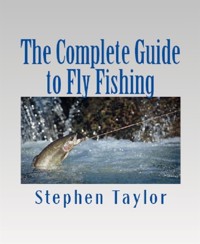
The Complete Guide to Fly Fishing
BookRix GmbH & Co. KG81371 MunichThe Complete Guide to Fly Fishing
By Stephen Taylor
Introduction
It’s a beautiful day in early spring. You are standing beside a beautiful river flowing through the mountains of Colorado. In your hands you hold your gear. You are brimming with excitement as you imagine what you will catch today. You are getting ready to fly fish and you can’t wait to get started!
People have been fly fishing for years. In its beginnings, people would use flies to fish with for food, but then it turned into a sport and now anglers fly fish for both food and sport.
Fly fishing is a traditional angling method that uses artificial flies for lures that are made of materials like fur and feathers. The flies are fastened onto a hook and are meant to imitate a fish’s natural food source. The rods are light, but the lines are heavy providing the weight and momentum for casting.
Fly fishermen use a series of casting moves meant to imitate the bug on water. The techniques are wide and varied. When casting much of the rod’s movement comes from the angler’s wrist.
Fly fishing as a sport is something many people find amazingly enjoyable. Most fly fishing is done in certain places like Colorado, Montana, and Wisconsin. The fish most often caught are trout and salmon, although anglers can catch a variety of fish with their flies.
In this book, we’ll explore a variety of topics with regards to fly fishing. Some of the information will be geared towards beginning fishermen, but experienced fly fishers can benefit from this information as well. A refresher course is always good in any sport!
We’ll look at the gear you’ll need, ways to tie flies, and the best places to find an excellent fishing spot. You’ll learn about places to buy your gear from and what to look for when you are buying that gear.
This author is an equal opportunity person and no disrespect is meant to women who like to fly fish when I use the term fisherman. Because most of the time we say the word “fisherman”, don’t fret gals, I’m talking about you too!
New and experienced anglers can both benefit from this great book. So, let’s explore the joys of fly fishing!
Fly Fishing Terms
Just as with any sport, there are some terms that are synonymous with the sport itself. While most people think of flies as pesky insects, fly fishermen know that flies are something else altogether. Flies to a fisherman are what is most important to make their hobby enjoyable and challenging.
To a beginner, fly fishing terminology might be confusing, so in this section, we’ll present you with some new terms and what those terms mean so that when we use them later in this book, you’ll know what we’re talking about.
Back cast – The portion of any fly cast that extends beyond the person doing the casting.
Bass Bug - Name used to describe a large number of surface bass flies usually tied with hollow hair (such as deer hair).
Bass Bug Taper - A special weight forward floating fly line with a short front taper so that the generally wind-resistant bass bugs can turn over.
Blood Knot - The most widely used knot for tying two pieces of monofilament with similar diameters together; the best knot for construction of a knotted tapered leader; also called the barrel knot.
Breaking Strength - Amount of effort required to break a single strand of unknotted monofilament or braided line, usually stated in pounds (example: 6 lb. test).
Caddis - One of the three most important aquatic insects imitated by fly fishermen; found world wide in all freshwater habitats; adult resembles a moth when in flight; at rest the wings are folded in a tent shape down the back; the most important aquatic state of the caddis is the pupa, which is its emerging stage.
Casting Arc - The path that the fly rod follows during a complete cast, usually related to the face of a clock.
Clinch Knot - Universally used knot for attaching a hook, lure, swivel, or fly to the leader or line; a slight variation results in the improved clinch knot, which is an even stronger knot for the above uses.
Co-Polymers – These are mixtures of various nylons and plastics along with anti-UV chemicals that have resulted in the exceptionally high breaking strength of modern tippet material. This is certainly one of the biggest advancements in fly fishing in the last 50 years. It allows you to use very fine tippets with breaking strengths two to four times as strong as regular nylon monofilament. Co-polymers are not as abrasion resistant as regular nylon monofilament.
Damping - Reducing excess vibrations in the rod blank when unloading the rod during a cast. This causes fewer waves in your fly line resulting in more power & distance for less effort.
Dead Drift - A perfect float meaning the fly is traveling at the same pace as the current; used in both dry fly and nymph fishing.
Double Taper (DT) - A standard fly line design in which both ends of the line are tapered, while the greater portion or "belly" of the line is level; excellent line for short to moderate length casts, and for roll casting; not as well suited for distance casts; commonly available in floating, or sinking styles.
Drag - (1) Term used to describe an unnatural motion of the fly caused by the effect of the current on line and leader. Drag is usually detrimental, though at times useful such as when imitating the actions of the adult caddis. (2) Resistance applied to the reel spool to prevent it from turning faster than the line leaving the spool which is used in playing larger fish.
Dry Fly - Any fly fished upon the surface of the water; usually constructed of non-water-absorbent materials; most commonly used to imitate the adult stage of aquatic insects.
Dry Fly Floatant – This is a chemical preparation that is applied to a dry fly before use to waterproof it; may be a paste, liquid, or aerosol.
False Cast - Standard fly fishing cast; used to lengthen and shorten line, to change direction, and to dry off the fly; frequently overused. In false casting, the line is kept moving backwards and forwards without being allowed to touch the surface of the water or the ground
Floating Fly Line - a fly line where the entire line floats; best all round fly line.
Fly Casting - standard method of presenting a fly to a target using a fly rod and fly line; involves many different casts.
Fly Line - key ingredient to fly fishing; made of a tapered plastic coating over a braided Dacron or nylon core; available in several tapers and in floating, sinking, and sink-tip styles.




