


5,49 €
Mehr erfahren.
- Herausgeber: Hangar 1 Publishing
- Kategorie: Lebensstil
- Sprache: Englisch
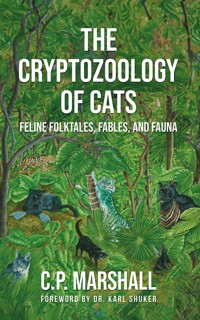
From exotic wild species inhabiting unfamiliar settings to elusive forms still unknown to science or thought to be extinct, the Felidae, better known as ‘cats’, have been reported in sightings from around the world. According to conventional wisdom, they do not exist, but mystery cats of all sizes have attracted increasing attention from naturalists and laypersons alike, and the evidence for these animals is becoming more substantial and increasingly difficult to deny.
Now, one of the world’s leading cryptozoological investigators and field researchers offers a comprehensive field guide and overview of these mysterious cat-like creatures. Filled with photographs, comprehensive paintings, classifications, and hard evidence, this book offers an invaluable resource for those who wish to investigate these sightings further or simply enjoy the fascinating reports provided by others.
Das E-Book können Sie in Legimi-Apps oder einer beliebigen App lesen, die das folgende Format unterstützen:
Seitenzahl: 666
Veröffentlichungsjahr: 2024
Ähnliche



















THE CRYPTOZOOLOGY OF CATS
FELINE FOLKTALES FABLES AND FAUNA
C. P. MARSHALL
HANGAR 1 PUBLISHING
Copyright © 2023 by C. P. Marshall
All rights reserved.
No part of this book may be reproduced in any form or by any electronic or mechanical means, including information storage and retrieval systems, without written permission from the author, except for the use of brief quotations in a book review.
A major contribution to the field of cryptozoology! Mystery cats around the world are arguably the most likely scientifically unrecognized species. Carl Marshall is a respected investigator who is both thorough and pragmatic.
KEN GERHARD (AUTHOR, TV PRESENTER, AND CRYPTOZOOLOGIST)
This book is among the most detailed and engaging tomes on the subject of mystery big cats, and it represents a lifelong study of the phenomena, taking into account practically every possible cryptid cat from every single continent. ‘The Cryptozoology of Cats’ would serve as an excellent guide for field researchers, as well as a wonderful reference source for academics.
MATT EVERETT (DIRECTOR, PANTHERA BRITANNIA DECLASSIFIED)
To my mind, Carl Marshall is the only field researcher who has earnt the accolade of achieving what I like to call the ‘Holy Trinity of Mystery Big Cat Discoveries’; being part of the discovery of big cat paw tracks in the Forest of Dean in 2019 - tracks which have essentially been peer-reviewed and verified TWICE; the photographing of a tiger in a region of Sumatra with they have never been recorded previously; and the leading of the discovery of DNA evidence of a leopard living wild in rural Gloucestershire in 2022. This book bears testament to Carl’s wisdom, knowledge and passion for the world of wildlife and nature science, and is an astounding contribution to the zoological literature.
TIM WHITTARD (JOURNALIST AND DOCUMENTARY PRODUCER/RESEARCHER)
The Study of Felinology has long been presumed a closed system, a science within which there are no new species to discover. That is, until 'The Cryptozoology of Cats came along!
In this book, Author, Zoologist, and field researcher Carl Marshall expertly lays the foundational evidence to support the existence of a wealth of cryptic cats around the world, covering everything from amphibious Prehistoric Survivors prowling the Amazon Rainforest to Alien Big Cats roaming the British Countryside.
This is a must-have book for all you Feline Fans out there!
ANDY MCGRATH – AUTHOR: BEASTS OF BRITAIN.
For Mum & Dad, whose love and encouragement is limitless, and whose interest in this, as in all my ventures, is never less than my own.
ACKNOWLEDGMENTS
I would like to acknowledge and give my warmest thanks to the following. My parents, John and Frances Marshall, to whom I literally owe everything and whose love and guidance are with me in whatever I pursue. They are the ultimate role models. I would also like to express my sincere gratitude to Dr. Karl Shuker for his friendship, wise counsel, and for agreeing to write the foreword for this book; Andrew 'Geordie' Jackson for accompanying me through numerous sweltering rainforests; Maureen Ashfield for her beautiful artwork, and the late Sid Ashfield (RIP) for never failing to believe in me. Many thanks to the CFZ, especially Jonathan and the late Corinna Downes. I would like to thank Tim 'Mothy' Whittard and Matt Everett from Dragonfly Films; David and Mary for their overwhelming kindness; Doug and Alex Hajicek of Hanger 1 Publishing; Sumatran cryptozoologist and forest guide Dally Sandradiputra for his hard work and hospitality in welcoming us into his home and making us feel like part of the family during our stay in his beautiful country. Finally, I would like to thank Dr. Richard Lamb; Dr. Darren Naish; Rhoda Watkins; Jay Opie; Sarah Hartwell; Jonathan McGowan; Richard Freeman; Neil Arnold; Dr. Isla Fishburn, Kelci ‘Saff’ Saffery; Dr. Helen McRobie; Prof. Andrew Hemmings; Monty Bell Jr.; Lars Thomas; James Archer; Severinus Majakil (RIP); Robert ‘Bobby Dred’ Westby; Andrew Remes; Becky Marshall; Artist Danielle Rose; Richard Muirhead; Carl Portman; John Calvert; Emma Bartholomew; Dr. Marta Skowron Volponi; and Alan Friswell.
Carl Marshall and Andrew Geordie Jackson in Sumatra.
CONTENTS
Foreword
Dr. Karl Shuker
Introduction
How This Book Is Arranged
The Felidae
1. The “Big Cats” of Cryptozoology
2. The Lesser Cryptid Cats
3. The Lynx Effect
4. Anomalous Big Cats, aka Alien Big Cats
5. When Folklore and Fable Meet Teratological Reality?
6. Fearsome Critters, Lumberjack Tales and Bogeycats
7. “I Tawt I Taw a Puddy Tat!”
8. Reported Social Behaviour in Otherwise Habitually Solitary Species
Conclusions
Appendices
On the Origins of the 'Dangerous Wild Animals Act' of 1976
Large-Sized Feliform Cryptids by Continent
Possible Prehistoric Survivors
African “Water Lions”, “Water Leopards” or “Jungle Walrus”
Previously of Cryptozoological Significance
Solid Evidence: Escapees, Illegal Releases, and Specimens Captured or Killed in Britain and Northern Ireland
Complete List of Wild Cats Including Sub-Species
Selected Texts Cited/Further Reading
Resources
Afterword
FOREWORD
DR. KARL SHUKER
Several years ago, I was idly flicking through various cryptozoologically-themed uploads on Tumblr when I chanced upon a post that was both eye-opening and, indeed, truly life-affirming for me. Its writer revealed how a certain book had played a huge part in his life, and I was amazed to discover that it was one that I'd authored – Dragons: A Natural History (1995). The writer described how it had been a present to him from his mother when he was just a small child and how much he loved it and still does, has read and re-read it countless times, has learnt so much from it, and when still young even carried it about with him wherever he went with his family. He still owns it today (repaired to within an inch of its life in order to save it from falling apart after such extensive use), and he ended his post by saying that in this little book, he had found his life.
To say that I was humbled and yes, almost tearful, was putting it mildly. Down through the four decades of my career as a cryptozoological author of over 30 books and innumerable articles, I've quite often received communications from readers around the world saying how much they've enjoyed and even been inspired by my writings, but until I saw that Tumblr post I had never truly realised just how inordinately influential a writer via their works can be upon other people, even people whom the writer doesn't know personally and whom they will never even meet. Such is the power and the global reach of words.
But why am I saying all of this here? Because one of those persons, someone who has stated directly to me on many occasions how much my writings mean to him and have inspired him in his own cryptozoological research, is none other than the author of this present book, C.P. Marshall, or Carl to his many longstanding friends, including me.
Back in 1989, my own first book was published, Mystery Cats of the World, which was also the very first book ever to survey feline cryptids on a global basis, and I have since followed it up with two more – Cats of Magic, Mythology, and Mystery (2011) and Mystery Cats of the World Revisited (2020, a massively-expanded, fully-updated second edition of my 1989 book). During those entire 31 years, no other books on this worldwide crypto-subject ever appeared; only now, at last, with Carl's, there is a fourth – The Cryptozoology of Cats.
Consequently, as Carl himself noted to me recently, during his research for it, my own trio of mystery cat books had collectively covered this subject so extensively that it was inevitable, unavoidable, that his book would incorporate and substantially refer to my original writings and discoveries, but he has painstakingly credited me and them throughout it, for which I am most grateful and which is such a pleasant change from the shameful lack of credit and bare-faced plagiarism that so much of my work has experienced down through the years via various parasitic online coverages of its subjects. But I am not remotely surprised by Carl's diligence and honesty, because this is precisely the kind of man and the kind of totally professional cryptozoological researcher he is.
Also, it is interesting to note how closely our lives have run in parallel with regard to mystery creatures. My first book dealt with mystery cats, and so too does Carl's. As a fully trained zoologist, I have always sought throughout my cryptozoological career to bring to bear a resolutely, unequivocally scientific approach to my investigations and documentation of cryptids, and so too has Carl. In Carl's case, moreover, this is readily seen not only in relation to his bibliographical endeavours but also in regard to his fieldwork.
Whereas chronic health issues have always curtailed my childhood dream of directly seeking cryptids in remote and exotic faraway places, Carl has taken part in several such expeditions, especially in tropical Asia, searching for a variety of different mystery beasts, and he has always demonstrated an admirably conscientious, sophisticated attitude when doing so. As a result, even though my third mystery cat book has been in print barely three years, readers will discover that Carl's contains a number of additional crypto-feline examples that only came to light after mine was published in 2020 and that some of these are ones that he personally learnt about and investigated on-site during his most recent expeditions. Indeed, he actually encountered one such beast in the flesh! I won't say any more about that here, so as not to spoil the surprise for readers, but how many cryptozoologists are able to say that they have directly observed their highly elusive, long-sought-after quarry? Carl can!
No one reading The Cryptozoology of Cats will fail to be impressed by what is so obviously and, in every way, not just an exhaustively-researched book but also a true labour of love. Carl has a profound passion for cryptozoology – this much is instantly evident here – and as he already knows (because I've told him several times!), I fully anticipate that he will increasingly and significantly contribute to cryptozoology in the coming years. He brings scientific sobriety and invaluable expertise to the subject at all times, as opposed to the sloppy silliness presented by some others that have given such potent ammunition to cryptozoology's sceptics, critics, and cynics who strive at every opportunity to demean and debase this emergent zoological discipline.
If cryptozoology is ever to gain mainstream respectability, it needs to be represented by responsible, authoritative researchers, those who have the tenacity to pursue its reclusive subjects both in the library and in the field, and the skill to present their findings in a strictly scientific manner. In my view, this book, together with his expeditionary searches, demonstrates very effectively that Carl is definitely one such researcher – which is why I have such hope, even optimism, that major new animals will indeed be discovered in due course. With the likes of Carl at its fore, as a guiding captain at its helm, the future of cryptozoology is certainly in good hands!
So, enjoy and be educated by The Cryptozoology of Cats – and I strongly suspect (as well as sincerely hope) that following on from this very fine debut book there will be many more full-length works authored by my crypto-friend and near-namesake Carl.
Dr Karl P.N. Shuker, June 2023.
INTRODUCTION
The great French writer, actress, and journalist Sidonie-Gabrielle Colette (b. 1873 – d. 1954) once said there were no ordinary cats. Colette's now renowned and oft-cited statement is found in virtually every reference book on domestic cats, usually accompanied by the comment that all cats – whether big or small, wild or domestic, [known or yet to be discovered] - are in fact “extraordinary animals.” From reports of enormous sabre-toothed cats lurking in the rivers and wetlands of tropical Africa, as well as smaller "wildcats" (believed by some to be Felis silvestris) existing in rural Southwest England, cats – mysterious, dangerous, and aloof, perfectly embody the spirit of cryptozoology. The fact that cryptozoology relies heavily on oral and material folklore is an uncomfortable pill for many enthusiasts to swallow. In fact, it has been said that “all cryptids are folkloric” (Arment, 2004), and the cryptozoology of cats is no exception.
Often enshrouded in mystery and superstition, cats – particularly black cats – are enigmatic creatures by nature. Mavrogatphobia, or the fear of black cats, seems to have its roots in the medieval belief that animals with dark fur or feathers, such as rats, crows, and ravens, were semi-supernatural omens of death. In 16th century Italy, it was believed that death was foreshadowed if a black cat lay on a sickbed, or if a funeral procession meets a black cat, another family member will soon die. For centuries, the bite from a cat was believed to be poisonous and legends were told that if you directly inhaled a cat's breath, you would succumb to the “wasting disease” now known as pulmonary tuberculosis or TB.
Might there be objective origins for such beliefs? Possibly. Myths, folktales, and legends do not typically come out of nowhere, they are usually initiated by something, an innate effort to comprehend the unusual. In reality, all cats (family Felidae) carry a great number of bacteria that can lead to festering tissue infections when inflicted through a bite wound. One of the more common is the highly pathogenic bacteria Pasteurella multocida, which can cross the blood-brain barrier causing potentially lethal meningitis. On June 13th, 1233, Pope Gregory IX issued a decretal called Vox in Rama (“A voice in Ramah”) that condemned the heretical belief in Luciferianism thought to be rampant throughout Germany at that time, by authorising a bloody crusade against the worship of Lucifer as a deity. The letter contains detailed descriptions of rites and beliefs, some of which linked cats to witchcraft; even claimed to be in league with the Devil himself. As a consequence, throughout much of the medieval period, cats were cruelly tortured and culled in huge numbers. Annual festivals where cats were killed sprung up, and some continue to this day – although happily, in a more pleasant form (see “Cat Annis”, Chapter Five). Many scholars believe it was because of depleted cat numbers that the Plague, carried by rats from the East, was able to gain a deadly foothold in Europe.
When the disease returned in the late 17th century, rumours quickly spread that cats spread the sickness (they didn’t) but failing to appreciate the gravity of the situation, the Lord Mayor of London simply ordered that all cats (and dogs) be destroyed, as noted by Daniel Defoe in his Journal of the Plague Years (1722), where he estimated that some 200,000 cats were slaughtered. This was ill-advised, of course, because the real distributor of the Plague was the Oriental flea, which lives on rats, and with dramatically fewer cats to keep their numbers in check, the rat population in Europe soared. As did the death rate, with entire communities being wiped out and corpses littering the streets as there was no one left alive to bury them. But what about traditions associating cats with imminent death, such as the supposed psychic powers of the “funeral cats” already mentioned? Surely this is merely superstition and in direct contradiction to scientific knowledge, right? Well, perhaps there is a grain of truth to these stories after all, or at least something eerily reminiscent.
Enter Oscar the therapy cat. One of six kittens, Oscar was adopted in 2005 by the Steere House Nursing and Rehabilitation Center in the city of Providence, USA. Steer House is a 41-bed 'pet-friendly' facility that treats terminally ill patients with Alzheimer's, Parkinson's, and other debilitating conditions. Oscar didn’t initially take to his intended role at the facility, where staff described him as aloof and “not a cat that's friendly to people”, sometimes, for example, hissing at staff members when he wanted to be left alone. However, after Oscar had been at Steere House for around six months, staff began noticing that he would often choose to nap next to resident patients who died within several hours of his arrival. It seemed as if he was trying to comfort and provide company to resident patients as they departed this life.
Dr. Joan Teno, a physician at the facility, clarified that “it's not that [Oscar] is consistently there first, but the cat always does manage to make an appearance, and it always seems to be in the last two hours.” Up to the time of the initial news reports, Oscar had accurately predicted the deaths of 25 resident patients. As far as staff at the Center knew, the only one he missed was when relatives, perhaps aware of his alleged ability and not ready to lose their beloved, requested that he be removed from the room. On that occasion, Oscar reportedly paced outside the room and went into such a frenzy of yowling and scratching at the door that he had to be temporarily removed from the premises. It wasn't long before the staff decided to start contacting the family members of resident patients as soon as they discovered him sleeping next to their loved ones, to notify them, and allow them to say their final goodbyes. Oscar’s presence became part of a calming ritual that made the room feel more like a homely setting during a patient's final hours, and according to staff Oscar did not leave the minute they died and would often still be in the room when the undertaker arrived. There was even one occasion when Oscar's prediction was more precise than that of one of the doctors. A resident was showing signs of being close to death, but when the doctor asked the attending nurse whether the cat had been in, she replied that he hadn't. So, to help him maintain his record, Oscar was brought into the room, but after a brief sniff around he promptly left again. It was not until some ten hours later that the resident actually did pass away, and sure enough, Oscar had returned about two hours before and remained in the room.
Dr. Teno, together with Steere House geriatrician Dr. David Dosa, wondered whether Oscar might have been responding to the scent of chemicals released when someone dies, or some other odour emitted during death. CBS News consulted several animal experts who suggested various hypotheses, one of which was that he might have been drawn to an as yet unidentified chemical that is released prior to death, and his attendance in rooms with that odour could have been learned behaviour. Regardless of whether Oscar was actually predicting the impending deaths of the terminally ill by catnapping next to them a few hours before is entirely speculative, but we do know that some animals are sensitive to a wide range of cues that we as humans are unaware of, and Oscar’s sensitive nose (or rather his Jacobson's organ) may have been detecting minute biochemical changes in a body's metabolism that occur shortly before death, similar to how some dogs can predict epileptic fits before the people themselves can even sense it.
The human imagination is limited, and numerous aspects of nature remain unknown to us; discoveries are yet to be made, and there are concepts we haven't even considered that may be beyond our current comprehension. We may never know if a cat can truly detect impending death, or even if they fully understand what death is, but they certainly know when a fellow housemate is missing or if something familiar has changed. He had probably been present at the deaths of more than a hundred people, but in November 2013, Oscar had his own close brush with death. He was suffering from a severe allergic reaction to something ingested and was rushed into intensive care, where his heart stopped beating and he ‘died’ for several seconds. Fortunately, quick-thinking vets revived him, and he was taken back to the nursing home where he became a patient himself for a while, before making a full recovery.
Folklore and mystery are not exclusive to black housecats. For the Indigenous peoples of North and South America, the jaguar, particularly the all-black (melanistic) variety, is imbued with great magic and preternatural abilities. The jaguar is remarkable due to its superior physical abilities, such as its climbing, running, and swimming skills, which even surpass those of the Asian tiger. This has earned the jaguar a reputation of superiority, and a beast to be revered. To the Tucano people who live along the Vaupés River and surrounding areas of the northwestern Amazon basin, the roar of a jaguar is associated with thunder and is widely worshipped as a deity in Peru, Mexico, and Guatemala, among other places.
During Chuna’s Han Dynasty (202 BC – 9 AD), people believed the tiger (Panthera tigris) was the ruler of all wild animals. According to Chinese folklore, a tiger's tail would turn white when it reached five hundred years; the rest of it presumably turning progressively whiter each quincentennial. In this regard, the white tiger became an ancient mythological king of beasts. It was also said that a white tiger would only appear when an emperor is a righteous ruler, or if there is world peace; in which case, they must be very rare beasts indeed! So why are we as humans so fascinated by cats, particularly large species, both real and imagined? One theory is that we have retained a kind of collective “genetic memory”, which goes back to when our ancestors were more likely to be preyed upon by big cats than what is presently experienced by most people.
Neuroscientific studies on laboratory mice suggest there is truth to the theorised phenomenon in which certain experiences can influence subsequent generations. In a 2013 study, mice trained to fear a specific smell passed on their aversion to their decedents, which were then extremely sensitive and afraid of the same smell, even though they had never encountered it, nor had they been trained to fear it. The researchers found small changes in brain structure, concluding that “the experiences of a parent, even before conceiving, markedly influence both structure and function in the nervous system of subsequent generations.” Could a similar mechanism be involved in some reports of Alien Big Cats? (ABCs).
We are used to our senses providing us with fairly accurate information about the world around us, but our grey matter has a tough job. Information from the world bombards us as a mixed-up series of electrical signals. Our eyes take in light and colour. Our ears pick up sounds. And the brain has to work to make sense of this mishmash of information. This is known as bottom-up processing and the human brain is very good at it. Yet when we see large quadrupeds, particularly when they are darkly coloured and observed under poor conditions, particularly at night, our brains cannot get enough visual information and has to fill in the gaps for us. But the human brain also does top-down processing. It adds information to our perceptions of the world. Most of the time, there is too much information coming in through the senses, and paying attention to all of it would be overwhelming. So, our brains pick out the most important parts and fill in the rest. What you see isn’t what’s actually out there in the world. It is a picture that the visual cortex of your brain created for you based on electrical signals captured by your eyes. The same goes for the other senses.
Most of the time, this picture is fairly accurate – at least enough to allow us to navigate our daily lives in safety – but sometimes, especially when under heightened duress, the brain adds things that are simply not there. Perhaps we have a genetic predisposition to visualise humanity’s primary predator as a basic survival response. Ultimately, it’s better to be cautious, than to just hope that what we’re seeing doesn’t pose a threat. Perhaps this is somehow related to facial pareidolia, the illusion of recognising facial structures in everyday objects, or apophenia, the human tendency to look for patterns in random information. It is quite possible that a similar genetic mechanism is at work which triggers us to see large cats, forcing us into an automatic survival response and increasing our chances of survival even if the perceived threat isn’t actually present. I call this theoretical pareidolic phenomenon ‘felidolia’. Before the mastery of fire enabled early humans to safely enter caves to avoid dangerous wildlife and unfavourable weather conditions, we were far more vulnerable to predation by big cats.
Today, leopards hunt baboons, monkeys, chimpanzees, and sometimes even small gorillas, and there is now little doubt that their palate for primates included our ancestors over the past three million years. This is directly supported by the fossilised skullcap of an early hominin named Paranthropus robustus discovered in a cave at Swartkrans, South Africa in 1949. The cranium section (labelled SK 54), which belonged to a child, has been pierced, leaving two small round holes. These prominent puncture holes match perfectly with the conical lower canines of a prehistoric African leopard. The youngster appears to have been ambushed by a leopard, which then dragged its body into the safety of a tree to eat in peace, just as modern leopards frequently do. The leftovers then either fell from the tree into an entrance to the cave in the ground below, or the big cat could have bypassed the tree by bringing its meal directly into the cave. The leopard's longer upper canines probably pierced the forehead or eyes as it dragged it from points A to B. One moment, this little hominin was carrying on with life as usual in South Africa, circa 1.5 million years ago. The next, a sudden impact, excruciating pain, a crunch, and then nothing, dead in the jaws of one of prehistory’s greatest predators.
Early humans were in constant competition with large carnivores for food, and avoiding violent encounters with dangerous predators was part of daily life for our ancestors. As a result, these fierce felines, which tend to be more active after dark when we are most vulnerable, now haunt the dark, boundless landscapes of our subconscious minds. Could this be the solution to the ABC phenomenon? Well, as convenient as it sounds, I highly doubt it. This and other theories are discussed in more detail later in this book. Nevertheless, it is important to recognize that the evidence available does not correlate with the high number of reported sightings of big cats in the British countryside. Now, please do not misunderstand me; there is indeed some evidence of these animals (refer to Chapter 4), it is, however, disproportionate to the sheer volume of annual reports. It is illogical to assume that these animals could exist in such significant quantities and still not be officially confirmed.
For centuries, cats of all sizes have intrigued humans, inspiring stories and legends, all the while eliciting admiration, intrigue, and fear; and while zoomythology can be entertaining to think about, it isn’t to be taken literally. Contrary to popular belief, ostriches do not bury their heads in the sand to avoid danger, goldfish have memories that last considerably longer than 3-5 seconds, camels stay hydrated by storing water in their bloodstreams rather than in their humps, and most sharks will not die if they stop swimming. Of course, we recognise these animals and acknowledge their existence, but reports of cryptids should also not be dismissed offhandedly, simply because they are embellished with folklore. Thus, it is understandable – some might even say inevitable – that cats, by walking the fine line between danger and beauty, myth, illusion, and biological reality, have become a firm staple of popular cryptozoology, third only to mystery hominids and lake monsters.
HOW THIS BOOK IS ARRANGED
Despite the very real possibility that some of the “unknown animals” discussed in this work are undiscovered Felidae, a few examples which were once of cryptozoological significance, but are now formally acknowledged (e.g., king cheetahs) have been included to provide a comprehensive overview. Due to the limitations of cryptozoological data types, and to avoid further confusion, I will hereafter refer to the “true cryptids,” i.e., those suspected to be unclassified felid species, yet which might actually belong to different mammalian groups, as a ‘Feliform Cryptid.’ My usage of this term is entirely for descriptive purposes and does not necessarily imply any specific reference to the Feliformia: a suborder of the order Carnivora consisting of cat-like carnivorans, including cats (large and small), hyenas, mongooses, viverrids (civets, genets, linsangs, and binturongs) and related taxa.
Furthermore, some cryptids such as the Queensland “tiger” may not even be placental mammals (Placentalia), but instead could belong to the infraclass Marsupialia – the marsupials. The distinguishing characteristic of which is that they give birth to very immature, embryo-like offspring that complete their development outside the womb, usually attached to a nipple in a pouch. The remarkable diversity among known marsupials, both structurally and behaviourally, often presents striking examples of convergent evolution – a phenomenon wherein two organisms without a recent common ancestor become increasingly alike as they adapt to a similar ecological niche. As a result, some marsupials exhibit a striking resemblance to moles, shrews, squirrels, mice, dogs, hyenas; and, in prehistoric times, even cats. Others are ecological counterparts, less in structure than in habits, of rabbits and small bears. Even the larger grazing marsupials (such as kangaroos), which resemble no placental mammals, can be thought of as occupying the same ecological niche as the deer and antelope found elsewhere in the world. In fact, kangaroos would probably look more like deer if it weren't for the fact that their ancestors had to be resourceful in order to travel long distances in hot climates with little water and low-energy diets.
Even if some “feliform cryptids” are unknown cats, we cannot hope to accurately identify them without some form of biological material to study and verify. While the cryptids prowling these pages might resemble cats, the information associated with them is open to interpretation and revision until specimens are acquired for classification. Should they exist in the biological sense, and we wish to assign them some sort of label before their official discovery and classification, it can only be that they seem to be hair-covered, air-breathing, warm-blooded vertebrates of unknown species. When a newly discovered animal is classified, it is a requirement for the original describer to designate a holotype specimen (for species or subspecies only) that can be readily accessed by others for verifying the status of other specimens. In the absence of sufficient biological material, cryptozoologists can only offer theories based on personal experience or theoretical knowledge. As a result, the main purpose of this book is simply to try and point readers in the right direction. It serves as a guide to what might exist.
The feliform cryptids herein are organised according to their reputed morphological characteristics and behaviours and listed alphabetically. The Author’s Verdict is by no means essential but is found below each cryptozoological entry, indicated in brackets, employing a numerical system of 1 to 5, with 1 representing ‘highly unlikely’, 2 ‘implausible’, 3 ‘conceivable’, 4 ‘probable’, and 5 ‘persuasive’. This simple system is developed from my own research and judgment of the available evidence. For the few examples that have been officially documented yet whose precise identities remain uncertain (e.g., the genetic mutation that produces Woolly Cheetahs) this rating system is replaced with additional details regarding the Status of a specified feliform cryptid.
If one is willing to accept my conclusions regarding the potential characteristics and identities of these presumed animals, then great. On the other hand, if this is not the case, I would advise passing over those particulars; carefully examining all of the evidence, and deciding for yourself what is and is not possible.
For each feliform cryptid, details concerning one or more of the following particulars will be discussed.
The origin of the name of a specified feliform cryptid, including information regarding the person who first coined it. For those whose common names are not English words, the language of origin is specified. It is important to remember that, as in traditional zoology, the common name for a cryptid is often misleading. The discerning reader will quickly discover that many cryptozoological "cats" do not fit their generally accepted labels. We will come across “tigers” that are clearly not of the species Panthera tigris, and “lions” that are so strange, they can’t possibly be true lions (Panthera leo).Information regarding the geographical area associated with a specified feliform cryptid, such as rivers, mountains, and caves. All placenames reflect those in use as of August 2023, having been updated accordingly.Information regarding the physical appearance of a feliform cryptid. This might include general morphology, approximate size and weight, fur type, head shape, eyes (often described as “glowing”), dentition, shape and length of ears, neck length, shoulder proportions, upper body and lower body regions, as well as the length and thickness of the tail.Not unsurprisingly, many feliform cryptids discussed in this work are described as fast, agile, and aggressive nocturnal predators. When known, I will offer details about their preferred bioregions (e.g., arboreal or terrestrial), vocalisations, prey items, social behaviours, interspecific interactions (including with humans), and hunting behaviours. This could provide insights into how they interact with their environments and with one another.Geographical variants and alternate spellings of names associated with feliform cryptids may be provided.A scientific name. In biology, the formal naming system used for describing species is called binomial nomenclature (that is to say, “naming using two names”). Such a name is known as a binomial name, a binominal name, a binomen, or simply (and imprecisely) a Latin name. The first part of the name (the generic name) identifies the genus to which the species belongs, whereas the second part (the specific name) distinguishes the species within the genus. For example, modern lions belong to the genus Panthera and within this genus to the species Panthera leo. Both the genus and species names are in Latin grammatical form, though they can be based on words from other languages, particularly Greek. A biological classification that ranks immediately below a species, usually a population of a particular geographic region, genetically distinguishable from other such populations of the same species, is designated by a scientific trinomial (three-part name), e.g., Panthera leo melanochaita – a lion subspecies found only in Southern and East Africa. In certain circumstances, a specimen of significant cryptozoological value has been assigned a scientific name by an investigator who has studied it, such as Panthera leo maculatus (Heuvelmans, 1955). Binomial nomenclature is important because it allows people throughout the world to communicate unambiguously about animal species. If and when a cryptozoological animal form is confirmed to be a living biological species, then such a name could be used for its formal scientific description, unless another existing name is more fitting, or it has been previously used for another organism. Many mythical animals have some sort of classification title after them, be it species, genus, etc. And since most can be compared with real animals and their characteristics, they are usually classified based on their traits in common with other animals. For no reason other than entertainment, some of the “Fearsome Critters” listed in Chapter Five have also been designated a scientific name, either to make them sound more scientific or to poke fun at such uses, i.e., binomium ridiculus.When known, information regarding the characteristics and measurements of paw prints or other impressions reported to have been left by feliform cryptids in a range of substrates, such as sand, clay, or snow.Significant reports are provided, with the majority being testimonial though there may be occasional inclusion of petroglyphs, pictographs, monumental inscriptions, and other significant artefacts. In some cases, a pelt or additional biological sample may be discussed.Extinct or Alive? Should they exist, gaining insight into the current condition of a feliform cryptid ‘type’ is critical for understanding their chances of long-term survival.Possible biological identities and plausible hypotheses are presented.Note: It is unavoidable that some examples discussed in this work have been placed into more than one category. This is due to the contentious, debated, and indecisive nature of anecdotal, testimonial, and circumstantial evidence. It is possible that some feliform cryptids might result from amalgamations of different species or legends. However, it is plausible, albeit uncertain, that some feliform cryptids probably do belong to the order Carnivora, suborder Feliformia, family Felidae – the Cats. The only undeniable examples are those that have been confirmed to exist in one form or another (or to have recently existed) and identified using accepted scientific practices. Others that appear to be straightforward may actually be more obscure. Escaped or illegally released big cats could potentially adapt to occupy ecological niches left vacant by species thought to have gone extinct, essentially replacing them, or even actively out-competing them should they survive in small, isolated populations. If they are closely related enough to be able to successfully hybridise, they might even incorporate a species that is declining into their own gene pool.
What Is Cryptozoology?
Cryptozoology is a multidisciplinary field of study that seeks to explore evidence for animals not yet discovered and described by science. The term “cryptozoology” comes from the Greek words "Kryptos," which means "hidden or unknown," "Zóo," meaning "animal," and "Logos," meaning "the study of;" therefore, cryptozoology is the study of the evidence for unknown or hidden animals. Personally, I prefer the term “unexpected animals,” as it encapsulates both documented species found in unfamiliar locations as well as potential new species. Displaced species, most notably the infamous “phantom big cats,” are sometimes referred to by cryptozoologists as “pseudo-cryptids.” Regarding my own research and classification system, I categorise these apparently “out-of-place” felids as Type 4 unknown animal forms (see A Question of Classification).
At its most fundamental level, cryptozoology is the study of animals only rumoured to exist. The origin of the word is unclear, as two scientists have both claimed to be its creator. What we do know is that it first appeared in print on January 1st, 1959, in Lucien Blancou’s work on the well-known editorial series Que Sais je entitled Geographie Cynegétique du Monde (“Hunting Geography of the World”), where he presented his dedication proclaiming: ‘Bernard Heuvelmans, maître de la cryptozoologie’ (“Bernard Heuvelmans, master of cryptozoology”). In 1949, Blancou began collecting information regarding the mysterious alleged wildlife of Central Africa, which he continued to do periodically for the next four years. During their private correspondence, Heuvelmans (b. 1911 – d. 1973) seems to have coined the term that is now commonly used and found in most modern dictionaries.
However, in his second book “In the Wake of the Sea Serpents” (first American edition, 1968, p. 508), Heuvelmans also credits Scottish biologist and explorer Ivan T. Sanderson (b. 1911 – d. 1973). While discussing two articles on sea serpents by Sanderson in 1947 and 1948, Heuvelmans wrote: ‘When he [Sanderson] was still a student he invented the word ‘cryptozoology’, or the science of hidden animals, which, I was to coin later, quite unaware that he had already done so.’ Presumably, this was at Eton Collage where Sanderson studied the natural sciences between 1924 and 1927. Sanderson was an advocate of Charles Fort (b.1874 – d. 1932), the renowned American author and investigator of anomalous phenomena, and would proudly refer to himself as a “profound Fortean.” It was an article written by Sanderson in 1948 titled “There Could Be Dinosaurs” that inspired Heuvelmans to begin collecting information concerning potentially still unknown animals.
In 1955, Bernard Heuvelmans released his seminal work, “On the Track of Unknown Animals” (French title: ‘Sur la Piste des Bêtes Ignorées’). In his career, Heuvelmans was critical of conventional zoological methods, stressing that the discovery of new species does not have to be based purely on chance but can be accomplished through targeted efforts if we only acknowledge the possibility that large undiscovered creatures might inhabit the world today. This presented an entirely novel concept at the time and one that continues to inform modern-day approaches to zoological research. There is little doubt that Sanderson played a major role in the early popularisation of cryptozoology. It was, however, Heuvelmans’ meticulous amelioration and refinement that transformed what was once a straightforward examination of reports of strange creatures into a methodology worthy of scientific pursuit. It is, in my opinion, only right that Heuvelmans receive the ultimate credit. It appears that Heuvelmans was the first to conceive of the term, followed closely by Blancou’s public use of it, and finally, by Sanderson’s post hoc claim to have coined it first.
Over the years, numerous distinguished investigators have made significant contributions to the study of cryptozoology, both before and after the coining of the term itself. Yet by the early 19th century, scientific opinion had undergone a seismic shift. Suddenly it was unacceptable to express any approval of the idea that large unknown animals might exist, even those reported to reside in the deepest, darkest depths of the oceans. In 1802, Pierre Denys de Montfort (b. 1766 – d. 1820), a French malacologist (an expert in snails), proposed the potential for two undiscovered species of giant octopi in his work Histoire Naturelle Generale et Particuliere des Mollusques ("An Encyclopaedic Description of Molluscs"). Following the publication of his book, de Montfort's career, and ultimately his life took a downward turn as he was widely ridiculed and derided by his colleagues and peers. However, in the early years of the second half of the 19th century, de Montfort's theories were vindicated to an extent when it was confirmed that the giant squid exists, classified under the genus Architeuthis. Sadly, de Montfort never got to experience this success as he died in poverty in a Paris gutter in 1820.
Constantine Samuel Rafinesque-Schmaltz (b. 1783 – d. 1840) was a self-taught naturalist, archaeologist, linguist, and entrepreneur who made significant contributions to cryptozoology in his lifetime. He described and published over 6,500 new species, came up with a speciation theory of biological evolution 25 years before the publication of Charles Darwin’s “descent with modification” theory of evolution, and developed a rigorous classification scheme for sea serpent reports. He is also credited as being the first investigator to acknowledge the Dorsal Jaguar – an occasionally reported cryptid jaguar from Pennsylvania’s Alleghany Mountains and the US-Canada border. Despite his troubled career, Rafinesque’s brilliance has gone down in history. Although he wasn't wealthy Rafinesque was comfortably settled in Philadelphia at the end of his life, yet, though he received the highest quality medical care available at the time, he would ultimately succumb to stomach cancer on September 18th, 1840.
Heuvelmans was profoundly influenced by the works of Dutch zoologist Antoon Cornelis Oudemans (b. 1858 – d. 1943) who compiled the first comprehensive analysis of sea monster reports in his influential 1882 book “The Great Sea Serpent”. Oudemans suggested that many sightings of so-called “sea monsters” could actually be explained by a still undiscovered species of pinniped (seals, sea lions, and their kin), which he called Megophias megophias, drawing inspiration from Rafinesque’s 1817 classification of the same name. This “seal serpent” was estimated to measure between 20 and 200 feet in length and was globally distributed.
Charles Gould (b. 1834 – d. 1893) was a 19th-century geologist whose notable work “Mythical Monsters” (1886, W. H. Allen & Co.) still stands in the field of cryptozoology. As the son of renowned ornithologist, John Gould, and the talented illustrator Elizabeth Gould – both pioneering figures of the natural history movement of the nineteenth century – it is unsurprising that Charles found success in science by pursuing his passion for geological surveying in both Britain and Tasmania. He also collected ornithological specimens, a pursuit that his father would have viewed favourably, as well as material for his book Mythical Monsters. His book delves into the cultural significance of dragons in Western, Chinese, and Japanese societies, in addition to unicorns and the phoenix, as well as a series of sea serpents reported off the New England coast in 1817. Charles Gould also published in the Papers and Proceedings of the Royal Society of Tasmania, theorising that the Australian ‘Bunyip’ may have been a pinniped.
Willy Otto Oskar Ley, better known simply as Willy Ley (b. 1906 – d. 1969), was a renowned German American science writer and early space travel advocate who wrote several important books regarding what would come to be known as cryptozoology. In his 1959 classic Exotic Zoology, Ley discussed creatures such as unicorns, merfolk, and living non-avian dinosaurs. It is my opinion that Ley’s writings are just as important to cryptozoology (usually referred to at the time as “romantic zoology”) as anything written by Sanderson, if not more so.
The British zoologist Dr. Karl Shuker is rightly regarded as the world's foremost cryptozoologist. His 1989 “Mystery Cats of the World,” revised and updated in 2020 as “Mystery Cats of the World Revisited: Blue Tigers, King Cheetahs, Black Cougars, Spotted Lions, and More,” is the definitive source of information regarding enigmatic, unidentified cats, demonstrating a degree of scientific methodological rigour that these days is without parallel in the field of cryptozoology.
A Case for Cryptozoology
The year was 1812, and the famous French naturalist and zoologist, Georges Cuvier (b. 1769 – d. 1832) had just declared that there were no large terrestrial mammal species left to be discovered. If other species were out there, he insisted, scientists would already know about them. Then, in 1819, a mere seven years after Cuvier’s “rash dictum”, the Malayan tapir was identified as a new species and designated the scientific name Acrocodia indica (now known as Tapirus indicus). Yet Chinese people living on the edges of rainforests had long spoken of a white-backed tapir-like animal, yet Cuvier, in his bias, flatly stated that, since the reports were not made by trained western scientists, they lacked credibility and therefore the species did not exist. Some have called this racist, while others have pointed out that when animals are steeped in folklore, it can be difficult to determine where to draw the line.
Unexpected discoveries followed in the 19th century, including that of another tapir, Baird’s tapir (T. bairdii), native to Mexico, Central America, and north-western South America, which wasn’t described by science until 1865 even though it is the largest of the three species of tapirs native to the Americas as well as the largest land mammal in both Central and South America. For the past two centuries, it has been shown time and time again that Cuvier’s rationale was at best premature, and at worst, flawed. Notwithstanding newly discovered non-mammalian species such as the remarkable discovery of the world's largest lizard, the Komodo dragon a full century later in 1912, the list of newly described “large quadrupeds” continues to grow. The Kamchatka brown bear (Ursus arctos beringianus) was first identified in 1898. In 1930, the Chacoan peccary (Catagonus wagneri) or ‘tagua’ was first discovered through fossils and was initially thought to be extinct. Nevertheless, its status as a ‘Lazarus taxon’ was cemented in 1971 when a living specimen was found deep in the Argentine province of Salta’s Chaco region, living blissfully unaware of its apparent extinction. The people of the area had long been familiar with the species; ultimately, however, it took considerable time before western scientists accepted its contemporary existence.
The list goes on – two deer were discovered in the 1800s: Muntiacus reevesi in 1839 and Hydropotes inermis in 1870, followed by Chrotogale owstoni in 1912. Gorilla beringei beringei, one of the two subspecies of eastern gorilla, was not officially described until 1902 despite being the world's largest known living primate. For centuries, these mighty “man-beasts” had been hidden in legend and folklore but were finally accepted as a biological reality. The allied rock wallaby (Petrogale assimilis), native to northeastern Queensland, Australia, was formally documented by science in 1877, and the largest species of tree kangaroo (Dendrolagus dorianus) remained undiscovered until 1883. In 1831, the chinkara from India (Gazella bennettii) was discovered, followed by the Saudi gazelle (G. saudiya) in Arabia in 1935. Moreover, two new desert warthogs, namely Phacochoerus africanus massaicus and the closely related P. a. sundevallii, were discovered in Africa in 1908.
That same year marked another huge discovery – the classification of the northern white rhino – the largest land animal by body mass after the elephants, with an impressive length of up to five metres, a height of two metres, and a weight of two and a half tons. Biologist Richard Lydekker formally described the new subspecies and named it Ceratotherium simum cottoni. Unfortunately, poaching has caused the near extinction of the northern white rhino – the only surviving members are two females called Najin and Fatu, who live lonely lives at Ol Pejeta Conservancy in Kenya.
In accordance with the subject matter of this book, namely cat-like animals, the fossa of Madagascar (Cryptoprocta ferox), actually an impressively agile and giant relative of the mongoose with feline characteristics, was first identified by science in 1833. Growing up to six feet in length from nose to tail tip, and weighing up to 12 kg (26 lbs), the fossa is a slender-bodied animal bearing little resemblance to its mongoose cousins. Interestingly, the fossa combines aspects of three different families of carnivores: the Herpestidae (mongooses), Viverridae (civets and their relatives), and the Felidae. Depending on the local dialect, this extraordinary animal can be correctly pronounced “foosa,” “foosh,” or “foosha.” The fossa bears a strong resemblance to a slender-built mountain lion but boasts a mongoose-like head that is comparatively longer than that of a felid. Its muzzle is wide and short, adding to its cat-like appearance – which is particularly striking when observed from a distance.
The fossa has several physical adaptations for climbing that are typical of cats, such as a long tail for balance and semi-retractile claws for gripping trees. Additionally, it also has unique adaptations not found in the Felidae, such as its semi-plantigrade foot morphology, which allows the fossa to walk either flat on the soles of its feet, like a bear, or on its toes, like a cat. When climbing in trees, the fossa walks flat-footed but will quickly switch to toe-tip walking when moving on the ground. Its paws are nearly bare with strong and flexible pads providing added grip. The fossa possesses the amazing ability to descend head-first from trees thanks to its highly flexible ankles, which enable it to clasp tree trunks, allowing for quick movements up or down the tree or a sudden leap to an adjacent one. Previously classified as belonging to the Viverridae family, recent molecular research has placed the fossa in the endemic Eupleridae family, comprising ten known living species in seven genera, commonly known as euplerids or Malagasy carnivorans.
Officially considered extinct, a giant fossa, known to palaeontologists as Cryptoprocta spelea, once existed in Madagascar; moreover, based on cryptozoological evidence, it may have survived there undetected to the present day. The giant fossa was initially described in 1902, based on subfossil (green) bones found in caves across Madagascar. Its distinct species status remained uncertain for many years, until 1935 when it was officially recognised as a separate species. It is uncertain when and how the giant fossa became extinct; there is anecdotal evidence, including eyewitness reports of fossa much larger than normal, that the species may not have vanished after all. Madagascar is the fourth largest island by landmass in the world, but sadly much of its varied fauna and flora are now endangered by human activity. Since the arrival of humans on the island, Madagascar has lost more than 90% of its forests, with a devastating 40% of the island’s primary forest cover being lost between the 1950s and 2000. According to the U.N. FAO, 21.6% or approximately 12,553,000 ha of Madagascar is still forested; however, of this, only 24.2% (3,036,000 ha) is primary forest – the most carbon-dense and biodiverse form of forest as well as the type best suited for harbouring large new species. Nevertheless, is this sufficient for the giant fossa to have gone unnoticed by science? More on this later.
The Yemeni gazelle (Gazella bilkis), commonly referred to as the Queen of Sheba's gazelle, was officially declared extinct in 1951. Sadly, subsequent surveys across their former range yielded no tangible evidence. Nevertheless, in 1985, a photograph depicting a pair of gazelles was taken at a private collection at Al Wabra Wildlife Preserve in Qatar, Middle East. Colin Groves (b. 1942 – d. 2017), the late British-Australian biologist, anthropologist, and Professor of Biological Anthropology at the Australian National University in Canberra, speculated that these may have been surviving Queen of Sheba's gazelles. It is deeply regrettable that the majority of cryptozoologists and cryptozoological investigators tend to disregard animals like gazelles, probably viewing them as ordinary, while focusing their efforts on the less plausible cryptids.
Local residents in the current Zimbabwean territory have for many years spoken of a strange feline creature, which they refer to as the leopard-hyena. However, until 1926, European scientists had failed to recognise the reality behind these tales; that the so-called leopard-hyena is actually a striped cheetah. Further information regarding this remarkable discovery will be discussed later. The Bornean yellow muntjac (Muntiacus atherodes) was only recognised as a distinct species in 1982. Additionally, a large, very rare, and endangered antelope species called the saola (Pseudoryx nghetinhensis), also known as the Spindlehorn, Asian unicorn, and Vu Quang ox, was discovered after remains were found in the Vu Quang Nature Reserve in Vietnam by a joint survey by the Vietnamese Ministry of Forestry and the World Wildlife Fund. The species was initially documented in 1992 by forest ecologist Do Tuoc, with the first living saola being photographed in 1993. The last recording of the species was in 2013 on a trail camera from the Saola Nature Reserve in central Vietnam. Since then, locals have reported its presence in and around Pu Mat National Park in Vietnam and Bolikhamxay Province in Laos.
The discovery of the Zanzibar servaline genet is an excellent example of the benefits of ethno-knowledge as a potential source of data. Despite being well-known to rural Zanzibaris, European zoologists were unaware of its existence until the late 1990s. In 1995, a wildlife consultant working in Zanzibar named Tony Archer obtained a dried skin and skull from Kitogani in south-central Unguja. It was subsequently described as a new subspecies of servaline genet (Genetta servalina archeri, Van Rompaey & Colyn, 1998) and named after Archer. Since 1990, a total of 124 primate species and subspecies have been identified: Madagascar is home to 54 new species, while the Neotropics, Asia, and Africa have 32, 24, and 14 respectively. Sixty-eight are prosimians (lemurs, lorisoids, and tarsiers), along with 52 monkeys and 4 apes. We will focus on the four apes as they are the largest, these are the northern buffed-cheeked gibbon (Nomascus annamensis, Thinh, et.al, 2010), found in Cambodia, Laos, and Vietnam; the Mishmi Hills hoolock gibbon (Hoolock hoolock mishmiensis, Choudhury, 2013) from the northeastern tip of India; the montane dwelling Skywalker hoolock gibbon also known as the Gaoligong hoolock gibbon (Hoolock tianxing, Fan, et.al., 2017); and finally, the Tapanuli orangutan – the largest recently described primate. In 1939, only anecdotal evidence was available, and it wasn't until 1997 that the species was officially identified in South Tapanuli on the island of Sumatra, Indonesia, and it took another twenty years for Pongo tapanuliensis (Nurcahyo et.al, 2017) to be designated official species status.
Cuvier would have classified all these as “large quadrupeds”, likely discrediting them as unsubstantiated reports, only to be taken aback later by their eventual discovery. Unfortunately, this attitude persists today, as many biologists maintain an uncompromising stance when it comes to such finds, viewing them merely as isolated incidents, and may, rightfully or not, express resentment when they are associated with the field of cryptozoology. It has been established that the occurrence of previously unknown large animals is not as rare as one might have thought. It is perhaps understandable that we discover new monkeys with some regularity and will sometimes find new herbivores that graze openly and in groups – unlike highly secretive and solitary nocturnal predators like cats. To combat and prevent further impediments, we require new approaches and, in some respects, a new philosophy.
I will end this menagerie of large mammal discoveries since Cuvier's fallacy with two animals that were thought to be extinct, that are in fact much more than just “large quadrupeds”. A crash of Sumatran rhinoceros (Dicerorhinus sumatrensis) was recorded in 1983 from Sarawak in northwestern Borneo, some 40 years after it was written off as extinct. And in 1988, another remarkable discovery was made in Vietnam: the Javan rhino (Rhinoceros sondaicus), a species believed to have gone extinct as early as the 1940s. These mighty mammals are now facing serious risk of extinction; indeed, four specimens, one of them being an adult female, have died from diseases transmitted by wild cattle. As of 2023, their estimated population stands at 76.
The language of scientists is data. Unlike some of my peers and colleagues, I do not consider cryptozoology to be a science, at least not in the way that, say, entomology is a valid branch of zoology concerned with insects, or how palaeontology is the scientific examination of prehistoric life through fossils. Could it be classed as a subdivision of zoology? Zoology is the scientific study of the structure, behaviour, physiology, classification, and distribution of known animals. It is a science, and as such, zoology is about testing hypotheses or offering theories that may explain aspects of the animal kingdom and seeing if they hold up to critical scrutiny. A hypothesis is an assumption made before any research has been completed for the sake of testing; and crucially, hypotheses must be tested against data to become excepted models. A theory, on the other hand, is a principle set to explain phenomena already supported by data. We have data for cryptids. These include tracks, hair samples, vocalisations, photos, and innumerable eyewitness accounts, but unfortunately, data such as these are often rejected by the scientific community in the absence of complete specimens. But be assured, even when data is far less controversial, the scientific consensus is often disunited.
You often hear it said that a single data point teaches us nothing, and I want to be very clear that this is incorrect. To see this, imagine, if you will, we go from one data point (one item in a data table, or one piece of information, about an observation, at a given point in time) to two data points. What happens then? Well, according to this felicitous rule that one data point teaches us nothing, we would suddenly go from knowing nothing to knowing something as we go from one to two data points. But there is nothing inherently special about the second data point. The truly significant change occurs when we go from zero data points, which by definition means we have literally no information, to one data point, which means we have at least some information. If this sounds confusing, think of it like this. One data point is like a single drop in the ocean, but what is an ocean if not a multitude of drops? A rich data set is a collection of single data points and each point provides potentially useful information, it simply needs to be evaluated with a critical and unbiased eye. We shouldn't be astounded to discover data sets like foot morphology and gait inferred from track evidence etc. Although cryptozoology is by no means rich in data, what there is should not be ignored simply out of bias.
As we search for knowledge of the animal kingdom, professional cryptozoologists (those who use scientific methods, not necessarily those who are paid) attempt to fill these information voids by devoting their time to research and by publishing their findings. For me, cryptozoology is best described as a portmanteau of knowledge, typically theoretical, but potentially useful as a systematic and targeted methodology focused on zoological discovery. So far, cryptozoological data has not been able to provide conclusive evidence of a species’ existence that would convince the scientific community. It may, however, be used to pinpoint the location of an as-yet-unidentified animal, making it possible to find and document it later.




