


2,39 €
Mehr erfahren.
- Herausgeber: Caroline Press
- Kategorie: Ratgeber
- Sprache: Englisch
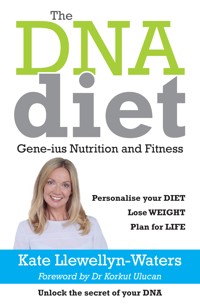
We are all totally unique and individual and, genetically, there is no one like you, so why eat or exercise like someone else? Nutrigenomics provides us with the information and knowledge we need to personalise our diet, fitness and take charge of our health. The DNA Diet book will revolutionise your thoughts and habits about the way you choose to manage your diet and exercise. Low Carb, Low Fat or Mediterranean Diet – which one is genetically appropriate for you? The author Kate, your very own Gene Genie, explains how you can use your individual DNA to find out how to achieve the ultimate healthy lifestyle for you. This is the key to you finding out about your ultimate and optimum Plan for Life.
Das E-Book können Sie in Legimi-Apps oder einer beliebigen App lesen, die das folgende Format unterstützen:
Seitenzahl: 202
Veröffentlichungsjahr: 2018
Ähnliche




















Praise for The DNA Diet
‘I wish I had known about genetically appropriate diets during my playing career, and how my body responded to nutrients such as carbs, fats, and lactose – having this knowledge is a huge advantage in helping you achieve your weight loss and fitness goals. The USA rugby 7s squad, which I coach, have already benefited significantly from Kate’s knowledge, and have experienced some great results following their personalised, DNA-based nutrition and fitness plans. I am very excited to be able to offer my clients at the Athlete Factory their own genetically appropriate diets and fitness plans, too. The DNA Diet is a brilliant and easy to understand guide that will benefit everyone looking for a personalised nutrition programme.’
Phil Greening, former England and British and Irish Lions rugby player
‘For me, The DNA Diet was a total game changer. Within a week of starting my genetically appropriate diet I was less bloated, my skin looked brighter and I had more energy. Over a month, I lost 7lbs and my mood dramatically improved. I can’t recommend it highly enough.’
Sophie Barton, writer and editor, former Executive Editor at Closer magazine
‘Such an inspirational book. Don’t give up on your diet goals, read this instead and you’ll learn how what seems impossible can be accomplished.’
Sandro Monetti, Hollywood insider, author and award-winning journalist
‘Kate Lewellyn-Waters, you are amazing and such a blessing I can’t begin to tell you. Thank you so much and so glad I have you in my life!’
Carlin Isles, ‘The Fastest Man in World Rugby,’ rugby player and US team sprinter
‘The DNA Diet is amazing! I have in the past suffered with depression and then post-natal depression and I wanted to look for something, other than medication, that I could do to help myself feel better. I discovered the DNA health and fitness plan which has transformed my life. I feel great knowing that I am eating and exercising in line with what my body needs and it has made a huge difference. Thank you so much.’
Alex Leigh, former model and client of the DNA Diet
CONTENTS
Foreword
With the completion of the Human Genome Project, awareness of Genomics is on the rise. Scientists know more than ever before about the organization of the genome, its structure and how it effects our cellular processes. These improvements in molecular genomics have helped us to explain our physiological differences when it comes to nutrition, weight and lifestyle. The past 20 years have given us the opportunity to study individuals’ lifestyle choices and how genetic information can affect exercise and nutritional habits. Armed with information about your genome, you will be in a position to make the right choice for you based on your DNA – and it all starts with this amazing book.
With the DNA Diet, readers can understand what Nutrigenomics expert and Registered Nutritionist Kate Llewellyn-Walters has dedicated her life to for the last 14 years. Kate’s passion for health and nutrition is clear, and her book offers people a chance to understand how their genome holds the key to better health, wellbeing and personalized nutrition.
Find out more about your nutritional habits and the genes responsible for them as Kate guides you through the basics, explained simply and clearly. By reading this book, you have the opportunity to change your lifestyle, enjoying better health and an increased sense of wellbeing. This is far more than just a book to read and enjoy, it’s a plan for life.
Does this book hold the key to health and happiness? It’s certainly an excellent place to start. You’ll find out about genetic polymorphisms and how they impact nutrition and exercise. Discover the genes that scientists have been studying and their influence on your metabolism and eating habits – why do you always prefer salty snacks? Why do sugar cravings strike every morning at the office? Along the way there are tips for finding the best exercise plan for your genes and the diet plan that’s right for you.
The DNA Diet: Gene-ius Nutrition and Fitness is an excellent guide for anyone interested in the important role our genes play in our health, happiness and wellbeing.
Assoc. Prof. Dr Korkut Ulucan, MSc, PhD Sport, Nutri and Pharmacogenetic Expert
Preface
We are currently battling a worldwide obesity crisis and developed countries, such as the UK, US, Australia and New Zealand are unfortunately leading the way. These countries make up four of the top six nations where obesity is most prevalent amongst their populations. At present, the UK reports an adult obesity level of 27%, which is 11 percentage points lower than the USA, which reports the highest adult obesity level.
Being overweight is a major risk factor in numerous chronic diseases, including Type 2 diabetes, cardiovascular disease (CVD) and cancer and it has also been associated with an increased risk of mental health issues. After smoking, obesity is the single greatest cause of early deaths in the UK; roughly 30,000 people die prematurely each year because of it. Once only considered a problem in high income countries, being obese is now dramatically on the rise in low- and middle-income countries, particularly in urban settings. In 2016, the World Health Organisation (WHO) determined that 39% of men and women aged 18 and over were overweight worldwide.
Current government guidelines offer one-size-fits-all advice, which, as we can see from the statistics regarding obesity, is simply not working.
Introduction
We are all totally unique and individual – genetically, there is no one like you, so why eat like someone else? Nutrition and weight loss need to be personalised, and the good news is that they can be personalised. Taking control of your genetic destiny can help you reach your weight loss goals and ultimately change your life for the better.
Sarah was in her early 30’s when I first met her. She had tried every diet going and really struggled with losing weight. She had adopted a very low carb diet for the 3 months before we met, with only 20% of her daily energy intake coming from carbs. She felt awful on this diet and was unable to concentrate on her work, which resulted in her spiralling into a period of crippling anxiety. When she first contacted me, she was feeling very low and demoralised. So, we took her DNA sample for the DNA diet and genetic tested to find out her optimal level of carbs, fats and how she handled lactose and numerous other nutrients. Finding this information out was life-changing for Sarah. She began to eat for her genes. She lost the excess 6kg weight she wanted to and reached her goal weight effortlessly. The biggest surprise for Sarah was discovering that she had a low sensitivity to carbohydrates and carried the CC genotype in the ADRB2 gene (we will look at the science in more detail in the next chapter), which meant that consuming a diet rich in carbohydrates would not affect her weight loss.
I bet you’re wondering if, like Sarah, you too have a genetically low sensitivity to carbs and can now enjoy a carb rich diet. Adopting the right diet for your genes will help you reach your goal weight and, more importantly, stay at that weight.
I’ve written this book to share the exciting field of DNA research, testing and nutrigenomics so you can benefit from this knowledge and make your Plan for Life. In 2017, I launched a website www.thednadiet.co.uk where people can share their experiences of following a genetically appropriate diet. We have had some incredible feedback, where clients have told us “you have given me my life back”, and “this isn’t a diet, it’s a plan for life” and “simply effortless!” Changing someone’s life is the most rewarding experience.
The plan is based on the new and emerging science of nutrigenomics, which is the study of how different nutrients may interact with particular genes to impact the risk of health concerns, including obesity, by altering the structure or expression of an individual’s genetic profile.
The foods we consume influence the genetic communications that our body experiences, and these genetic communications regulate all the molecules that make up our metabolism. It is these molecules which inform our bodies if calories should be used for energy or conserved, which may then be stored as fat.
Once we have learnt the language of our genes we can totally change how what we eat impacts our bodies. It will help us succeed with our weight loss journey, maintain that goal weight and achieve optimum health.
How to Use This Book
This book has been designed to be used by the reader whether you have had your DNA tested or not. If you have your test results, simply go to the diet and exercise plan that has been recommended to you. If you haven’t been tested, make sure you read all the chapters, and this will help explain as we go along how to make this book work for you.
Benefits of The DNA Diet
Your genes do not have to be your destiny, it’s never too late to changeEnsure successful and sustainable weight loss for the long termOvercome predispositions to obesity by preventative measuresPersonalise your genetically appropriate dietExercise in a way to suit what’s not only best for you but most enjoyableAnd remember – it’s not a diet, it’s a plan for life.I hope you enjoy following the DNA Diet and fitness plan and I look forward to hearing about your experiences and success.
THE SCIENCE
We will start by looking at the science behind DNA testing for weight management, health and fitness, the difference between nutrigenomics and nutrigenetics, how our genes can affect obesity and cause us problems and most importantly of all, what we can do about it.
1. Genetic Testing for Weight Management
Genetic testing can help you understand why you struggle to lose weight and what you need to do to lose that extra weight and to reach your ultimate weight goal. A weight management DNA test, which takes 60 seconds to do at home, looks at genetic markers known to influence your weight and your ability to lose weight and maintain weight loss. From your results, you gain a fascinating insight into your health and issues which may have been plaguing you for a long time. Having this knowledge can completely change your relationship with food.
How to take a DNA sample
It is so easy and you can do it in the comfort of your own home by just following these simple steps:
Step 1 Being careful not to touch the head of the swab, remove the swab from the packaging.
Step 2 Holding the stick end of the swab, firmly rub the head of the swab inside your mouth on the inner cheek on both sides of the mouth for approximately 30 seconds (each side).
Step 3 Gently shake the used swab in the air for a few seconds to allow it to dry a little. Take care not to put it down or touch the swab head.
Step 4 Place the swab in the sample collection envelope and post.
A weight management DNA test will show you:
How your body metabolises carbs and fats. What ratio of carbs, protein and fats are right for you so you can lose weight and sustain that weight loss? It will also show you whether you can lose weight eating a high carb diet and what is the optimal diet for you.Metabolise simply means ‘process’ – so how your body processes carbohydrates, saturated fat, caffeine, salt, etc.
Inflammation is the body’s defense mechanism; it’s part of the body’s immune response or an attempt at self-protection.
Chronic inflammation is when inflammation persists longer than necessary, resulting in more harm than benefit.
Oxidative stress is an imbalance between free radical activity (oxygen-containing molecules) and antioxidant activity. When working efficiently, free radicals can help fight off pathogens, which cause infections. However, when there are more free radicals than can be kept in check by antioxidants, these free radicals can start inflicting damage to DNA, fatty tissue and proteins in your body.
Since DNA, fat and proteins make up a significant part of the human body, the damage incurred can result in numerous diseases over time. These conditions include: Type 2 diabetes, high blood pressure, hardening of the blood vessels, heart disease, Parkinson’s, Alzheimer’s and cancer. It also impacts on ageing.
One way of limiting and preventing oxidative stress is to make sure you are getting enough antioxidants in your diet.
All of these areas are known to be involved in weight management and there may be a fundamental reason in your genetic make-up why you find it difficult to lose weight and, most importantly, keep it off.
Genetic testing provides an opportunity to understand our genes better and allows you to take action to help support those genes by following a healthy and genetically appropriate diet. It is also important to recognise that we need to exercise and ensure we have adequate sleep. If you want to know more about the facts and the science, keep reading, otherwise move straight to The Diet section.
2. DNA Basics
What is DNA?
Deoxyribonucleic acid (DNA) is our hereditary template, and the information in DNA is stored as a code made up of four chemical bases:
Two DNA base pairs join to make a unit, so for example A with T and C with G.
Each base is attached to a sugar molecule and a phosphate molecule, and together a base, sugar and phosphate are known as a nucleotide. Nucleotides are organised in two strands that form a spiral, which is known as a double helix. This arrangement is similar to that of a ladder – the sugar and phosphate molecules form the vertical parts of the ladder, whilst the base pairs make up the horizontal ladder rungs.
Human DNA consists of about 3 billion bases, 99% of which are the same in all people.
What is a Gene?
Genes are made up of DNA – they are a template to make proteins, and we have two copies of each gene, one inherited from each parent. Genes are segments of DNA that contain the instructions your body requires to make molecules known as proteins. Every gene can have many, many combinations of the four bases and this forms our genetic code. It is this code that gives the instructions to produce the proteins needed for our bodies to function. The Human Genome Project determined that we as humans have between 20,000 and 25,000 genes.
What is a SNP?
With the exception of identical twins, everyone has small differences in their genetic code, so one letter may be replaced by another. It is these little differences which can lead to alterations in the proteins being made and the way that our enzymes work.
Put very simply, a SNP (single nucleotide polymorphism) is a difference in a nucleotide, where one nucleotide is replaced with another. They can behave as biological markers revealing a predisposition towards a particular disease, behaviour, physical or physiological trait.
A nucleotide is the basic structural unit and building block for DNA.
Alleles are ‘letters’ and are part of the SNP; we inherit two alleles, one from each parent. These two ‘letters’ at a given SNP position determines your genotype. Your genotype is your complete heritable genetic identity, however, the word ‘genotype’ can also refer to a particular gene or set of genes.
Are There ‘Good’ and ‘Bad’ Genetic Variations?
Generally, genetic variations shouldn’t be viewed as good or bad – instead, these variations should be seen as just small differences in the genetic code. The important thing to realise is which form of the variation you have so you can adopt the appropriate nutrition, exercise and lifestyle interventions.
3. What is Nutrigenomics, Nutrigenetics and Gene Expression?
The Human Genome Project, completed and published in 2003, had a goal to identify all the approximately 20,000–25,000 genes in human DNA and to determine the sequences or ‘spelling’ of the three billion chemical base pairs, which make up the human genome. You have within you a genetic code, which is full of individual and unique ‘knowledge’. Every change and adaptation, which allowed your ancestor to survive is here in a ‘web’ of genetic information handed to you from all your genetic ancestors. When this ‘web’ is spread out it is huge; about three billion genetic letters or nucleotides’, and this constitutes what is known as your genome. In fact, you have two genomes – one from each parent, which is the reason that you are not identical to either parent. Within our genomes we have approximately 20,000–25,000 genes and almost every single one of your body’s cells has a complete copy of your genome within it
Nutrigenomics, also known as Nutritional Genomics, is a very fast-moving field of research that includes genetics, molecular biology and nutrition. In short, nutrigenomics is the study of the effects of nutrients on the expression of an individual’s genetic profile. This definition has since been broadened to include nutritional factors which protect the genome from damage.1
In contrast, nutrigenetics involves ascertaining the impact of how genetic variations (SNPs), affect responses to specific nutrients, which ultimately lead to differences in health between individuals.2
However, nutrigenomics is being used more and more as an umbrella term to refer to the study of how diet affects genes and how genes affect diet.
In summary, the fundamental difference between nutrigenomics and nutrigenetics is that nutrigenomics concentrates on the impact of nutrients on gene expression, whereas nutrigenetics focusses on establishing how genetic variations influence responses to nutrients.
What is Gene Expression?
In short, gene expression is the process in which the instructions in our DNA are converted into a functional product such as a protein. It is a tightly controlled process, which allows a cell to respond to its changing environment.
Gene expression is a process in which DNA sequences are ‘expressed’ into proteins, and different sections of DNA code of different amino-acids, which are the ‘building blocks’ of proteins. These sections of DNA are fundamentally copied and translated into proteins, which are required for cellular functioning. There are many elements that can increase or decrease the rate of DNA sequences being translated into its corresponding protein, but for this to happen a transcription factor is required.
Transcription factors are imperative for the normal development of an organism, in addition to routine cellular functions and response to disease. They can activate or repress the transcription of a gene, which is generally a determining factor whether the gene functions at any given time. So some transcription factors increase the rate of DNA transcription, which increase the process of gene expression. Others may decrease the rate of DNA transcription which decrease the rate of gene expression.
A transcription factor is a member of a molecule family that controls the activity of a gene by determining whether the gene’s DNA is transcribed into RNA.
4. Genes and Obesity
In 2007, researchers found a gene called Fat Mass and Obesity-associated (FTO) to be significantly related to obesity in a series of studies. Researchers found that a genetic variation within the FTO gene made some people more susceptible to obesity. Those participants who had both copies (one from each parent) of the higher-risk variation in the gene were 7 pounds heavier and, subsequently, 1.67 times more at risk of obesity, in comparison to those individuals who did not possess the higher-risk genetic variation.
Since obesity is a risk factor for amongst other things, Type 2 diabetes, cardiovascular disease (CVD) and various cancers, it is useful to focus on the nutrigenomic aspects of this condition. A 2003 study demonstrated that women with a higher risk genetic variant in the ADRB2 Glu27 gene and a carbohydrate intake of more than 49% of total daily energy intake had approximately a nearly three-fold higher risk of developing obesity. However, subjects with the lower-risk genetic variant in the ADRB2 Glu27 gene were not predisposed to an increased obesity risk when consuming the same carbohydrate intake levels. This may potentially provide an explanation as to why some females who consume diets rich in carbs experience an increase in body weight and fat, whilst others do not.3
5. Your Genes Do Not Have to be Your Destiny
It is fascinating to realise that our gene expression is actually a summary of all of our exposures in our lifetime and it starts even before we were born. In fact, even before our mother was born, as it was our maternal grandmother who made the egg cell, which we then became. Post conception, we then spent nine months in our mother surrounded by amniotic fluid, and everything she experienced, we also experienced.
However, researchers have found that there’s something more which is influencing our genes, and nutrition and food may be one of the most significant elements in our genetic well-being.




