


Erhalten Sie Zugang zu diesem und mehr als 300000 Büchern ab EUR 5,99 monatlich.
- Herausgeber: Mercier Press
- Kategorie: Lebensstil
- Sprache: Englisch
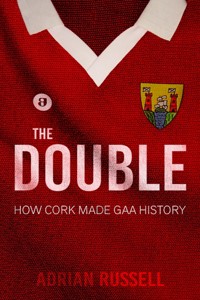
The greatest achievement in GAA history finally gets its due: Adrian Russell's The Double is a singular triumph. - Michael Moynihan On 16 September 1990, Cork's footballers ran out on the Croke Park pitch chasing immortality. The Rebel County hurlers, watching on from the Hogan Stand in suits, had won an unlikely All-Ireland a fortnight earlier; their thrilling final victory over Galway capped a hugely fun come-from-nowhere season. Now, if Billy Morgan's footballers could overcome their rivals in Meath, they'd secure sporting history for the county; a Senior All-Ireland double. After hitting a historically low ebb the previous year, the hurlers arrived with a bang led by a hurling fanatic priest. Fr Michael O'Brien built his by plucking players from relative obscurity, coaxing old stars back into action and trusting young guns to make a name for themselves. Billy Morgan's footballers, meanwhile, were a tight-knit, well-travelled side by the summer of 1990. A cast of strong characters, including Larry Tompkins, Niall Cahalane and Dave Barry, who trained hard and partied just as hard, they ended Kerry football's hopes, before running into the Meath machine. Cork were defending champions but questions remained: could they back it up when the pressure was piled on by the hurlers' success? In a long summer that saw the nation celebrate Ireland's Italia '90 success, Cork made its own sporting history. The Double is the story of how they pulled it off.
Sie lesen das E-Book in den Legimi-Apps auf:
Seitenzahl: 434
Veröffentlichungsjahr: 2019
Das E-Book (TTS) können Sie hören im Abo „Legimi Premium” in Legimi-Apps auf:
Ähnliche



















MERCIER PRESS
3B Oak House, Bessboro Rd
Blackrock, Cork, Ireland.
www.mercierpress.ie
www.twitter.com/MercierBooks
www.facebook.com/mercier.press
© Adrian Russell, 2019
Epub ISBN: 978 1 78117 5 996
This eBook is copyright material and must not be copied, reproduced, transferred, distributed, leased, licensed or publicly performed or used in any way except as specifically permitted in writing by the publishers, as allowed under the terms and conditions under which it was purchased or as strictly permitted by applicable copyright law. Any unauthorised distribution or use of this text may be a direct infringement of the author’s and publisher’s rights and those responsible may be liable in law accordingly.
For my parents, Pat and Frances; two rebels
Contents
PROLOGUE
SECTION 1: FOOTBALL ORIGINS
1. A PUNCHER’S CHANCE
2. WHO ARE THESE OLD MEN?
3. THE SECOND-BEST TEAM IN THE COUNTRY
4. HAUNTED
5. FUCK THE BUS
6. TWO PSYCHOS, TWO AND A HALF GENIUSES AND FOUR FATHER FIGURES
7. WE’LL WALK THIS
8. SOMETHING WHICH SHOULD ONLY HAPPEN OVER A CANDLELIT DINNER
9. THE MEATH ROSE
10. FERGIE TIME
11. PLAYA DEL INGLES
12. BOTTLE
SECTION 2: HURLING ORIGINS
13. THE PRODIGAL SON
14. 90 C 27
15. FAITH OF OUR FATHERS
SECTION 3: FOOTBALL
16. NEVER AGAIN
17. FRIENDLY FIRE
18. LOCK THE GATES
SECTION 4: HURLING 1990
19. BROTHERS IN ARMS
20. PURPLE RAIN
21. SPORTS STADIUM
22. THE ENIGMA
23. THE SILVER FOX DOES IT AGAIN
24. SOME FACTS OF LIFE
25. NUTS TO A MONKEY
26. NESSUN DORMA
27. HE’LL NEVER KEEP IT UP
SECTION 5: FOOTBALL 1990
28. THE GOOD PEASANT
29. TOP OF THE QUEUE
30. THE HISTORY BOYS
SECTION 6: AFTERWARDS
31. UNBEATABLE
32. DEAR OLD SKIBBEREEN
33. LEGACY
ENDNOTES
BIBLIOGRAPHY
ACKNOWLEDGEMENTS
ABOUT THE AUTHOR
PROLOGUE
Midway through the second half of the All-Ireland hurling final of 1990, Croke Park took a breath and time slowed down. With Galway already four points ahead of an unfancied Cork side, and Galway’s Martin Naughton barrelling through on goal, a green flag would surely signal the end of the contest. Led from the wilderness by a charismatic but idiosyncratic priest, the Rebels’ unlikely and thrilling run through the championship would ultimately end in defeat. Or so it seemed in that moment.
A first Senior All-Ireland final capitulation to the Tribesmen would mean, too, that Cork’s hopes of making history would be dashed at the first hurdle; the city and county had buzzed for weeks with the anticipation of their teams securing a Senior All-Ireland Double for the first time in one hundred years.
In contrast to the out-of-the-blue hurlers’ season, the footballers were a tight-knit gang who had been on the hard road together for some time. After two years in a row of All-Ireland final devastation, they’d finally made the breakthrough in 1989. But people shrugged in reaction to their ‘soft’ All-Ireland, earned against an inexperienced Mayo. Now they prepared to take on their hated – the correct word at this time – rivals, Meath, in a fortnight’s time. When would this opportunity come around again?
As Martin Naughton swung for history, the 63,000 people in the stadium didn’t make a sound, according to one man watching on from behind dark glasses to protect his eyes. ‘You know those powerful pregnant silences?’ asks Brian Keenan. ‘When you know there’s a superb piece of play coming up … and there’s definitely going to be a score?’1
***
Keenan was watching, amongst the country’s VIPs, from the Hogan Stand. But his perspective on the game was unique. Born and reared in deeply loyalist Tiger’s Bay in Belfast, he was not exposed to hurling’s charms as a young boy. But when he pushed through Queen’s University Belfast’s gates as a mature student later in life, he found himself drawn to the game, as well as to Irish culture and music: ‘It all came together,’ he remembers.
After college, an invitation to teach at the American University in Beirut – not a hurling heartland – seemed enticing and he happily took the job. He was taken hostage by Shiite militiamen just four months later and would spend almost five years in captivity before being released on 24 August 1990. It was a few days before the All-Ireland hurling final.
In a highly emotional press conference in front of, literally, the world’s media in Dublin, Keenan began the process of articulating the horrific, monotonous trauma he’d endured for so long. When returned to the Mater Hospital, he told doctors he’d like to attend the upcoming game.
The Department of Foreign Affairs contacted Croke Park about tickets (he was pressed by opportunistic friends in Ardoyne GAA club to secure them seats too) and ultimately the association’s press officer, Danny Lynch, gave up his seat for the guest of honour, with Lynch sitting in the press box.
Less than a week after being pulled out of a dungeon in the Middle East, Keenan left the hospital in the boot of a car – because of the intense press attention – to head for Jones’ Road, where a few bottles of Guinness were pressed into his hands and he was introduced to various dignitaries.
‘I met President Hillery and I think the man was a bit bemused,’ he says of the then Uachtarán na hÉireann, who was preparing to leave the Áras after a fourteen-year stay. ‘He wasn’t too sure who I was or why I was being presented to him.’
Keenan sat into his seat next to Ray Burke, then minister for communications in Charlie Haughey’s cabinet, and tried to process the universe that suddenly yawned in front of him.
‘The numbers of people all around!’ says Keenan of the view he attempted to compute through his shades, which were needed after so much time in the dark. ‘I’d been locked up in a hole in the ground for nearly five years. Jesus Christ, the crowds of people! That was the fascination. I couldn’t tune in to the game. I was almost hypnotised by the noise of the crowd rather than the game itself.’
The Belfast man had to compose himself at various points during the game, leaving his seat every now and then. If it happened today the reaction video would surely go viral, along with ‘Angry Athenry Dad Puts Foot through Telly at Full Time’ and footage of lads in county jerseys crying at a Sydney bar counter.
‘I had super-tuned ears from not hearing anything for five years. It was like being on another planet to me. Suddenly you’re amongst this sea of noise and it’s overwhelming.’
***
Hurling can cause sensory overload, even if you haven’t been chained to a radiator for half a decade. But the 1990 final was particularly overwhelming.
Cork were five points down at half-time and their manager, the hurling fundamentalist Fr Michael O’Brien, lashed into his side in the dressing room, questioning their manliness, character and work rate, with those in the room recalling the priest shouting:
‘Are you scared of Keady?’
‘Look at you, you big lump of lazy shit!’
‘We’re Cork; go out and do this.’
The Carrigaline parish priest punctuated his speech by throwing buckets of water over some players and punching another, for dramatic effect.
After the interval, Cork slipped further behind before Tomás Mulcahy scored a captain’s goal. And then the ball broke down for Martin Naughton. ‘A goal chance for Galway now!’ the television viewers didn’t need to be told.
The Cork goalkeeper darted from his goal. ‘In those situations in a one-to-one you half-gamble,’ Ger Cunningham says.2
‘This was amazing to me,’ says Keenan, who watched from over the shoulder of former Taoiseach and Cork GAA icon Jack Lynch, in the good seats, as he heard a familiar silence for the first time all day.3
The welcome silence was broken by roars from the Cork supporters. Ger Cunningham had stopped the sliotar with his face, but an oblivious umpire waved it wide.
Cork got the next score through Tony O’Sullivan and the penny dropped for Galway. ‘When those little things start going against you,’ recalls the Tribesmen’s boss Cyril Farrell, ‘you know.’4
Cork kept the momentum and noise on an upward curve thanks to an inspirational over-the-shoulder point from a dual star and goals from an enigmatic forward.
The Rebels won a rare thing: an All-Ireland as underdogs.
Sitting not far from Keenan, Cork’s football boss was tapped on the shoulder by an unknown Leesider as he filed out of the old stand. It seemed he’d been sent as an emissary by the rest of the county’s supporters, with a single message.
‘It’s down to ye now,’ the fan told Billy Morgan.
‘And that’s all he said,’ recalls Morgan.5 It was heard loud and clear.
The Double was on. And it was down to the footballers.
SECTION 1
FOOTBALL ORIGINS
CHAPTER 1
A PUNCHER’S CHANCE
If anyone could sense if the footballers were up to the task of creating sporting history in 1990, John ‘Kid’ Cronin was the man. An astute and hugely popular corner man for both hurlers and footballers, he could read a dressing room expertly.
Though the septuagenarian had been involved with Cork GAA since the early 1970s, he’d punched out a professional boxing career for himself before that. Cork in the 1930s, and particularly the northside of the city, had been fertile ground for the sport. Shadow-boxing in the middle of it all was a young middleweight called John, from the Fairhill club, who turned professional and was billed as ‘Kid’ Cronin.
The Kid fought three times at Tolka Park, beating Siki O’Neill of the Liberties, his great rival, on one occasion in the Drumcondra football ground. They fought twice more on Leeside, recording a victory each. Cronin beat Clonmel flyweight Johnny Healy twice at Cork City Hall on cards that filled the Anglesea Street venue. He travelled the roads of Ireland – and particularly the old one to the capital – for fights alongside his friend ‘Butcher’ Howell. The heavyweight had, unsurprisingly, a butcher’s shop in Blackpool, while his wife had a pub in the neighbourhood.
Cronin later opted to follow another neighbour, Pat Mulcahy, to England, where the pair fought in the so-called ‘booths’, a serious apprenticeship during which fighters needed to know every trick in the professional’s book to thrive. The booths, a feature of British boxing from the eighteenth century up until they disappeared in the 1970s, were essentially travelling circuses with a cast of hardened pugilists, who’d pitch up in provincial and seaside English towns like Margate, Blackpool and Middlesbrough in a convoy of wagons.
An end-of-the-pier type showman would entice crowds to the big top – which the boxers usually erected themselves – with a roll-up roll-up routine, before the fighters would line out, stripped for a shift. Local hardmen would be invited to take on their pick of the visiting bunch, with the incentive of up to £5 – a serious prize for the mainly working-class crowds – if they survived a round or three in the ring.
These were crucibles in which serious fighters learned their trade through practice rather than theory, and experienced boxers sharpened up before fully sanctioned bouts. It was also sometimes just a bit of pantomime, with a plant often emerging from the audience to go through a pre-arranged routine that had seen as many towns as the boxers.
World flyweight champion in the 1920s Jimmy Wilde, who operated under the wonderful nickname ‘the Ghost with the Hammer in His Hand’, had plotted his nascent career ‘as a paper-thin fifteen-year-old, clattering sixteen-stone coal miners’ in the booths. Tommy Farr, a heavyweight champion who later dismissed the fighting qualities of the great Muhammad Ali with the words ‘He wouldn’t have hit Joe Louis’s arse with a handful of rice’, also ran away with the booths before reaching greater heights in his career.1
A young miner in the northeast of England did survive three rounds with a boxer around this time and used the pound he won to buy an engagement ring for his sweetheart. Robert Charlton and his fiancée, Cissie, gave the world Bobby, as well as Ireland’s Italia ’90 mastermind Jack, during their subsequent marriage.
Amid this vaudeville milieu, Kid Cronin was well-fed, well-trained and well-rewarded as he jabbed his way around England in the 1930s, knocking out cocky young sailors attempting to impress a local girl, or the pitmen who fancied their chances at earning a couple of extra quid.
***
After his return to Cork, the Glen hurling club and St Nick’s football club got the benefit of the Kid’s experience from the 1960s onwards and when club stalwart Donie O’Donovan took over the county football side in the early 1970s, he brought the corner man with him, beginning a relationship with Cork GAA that would go on until Cronin’s death many years later.
Fr Michael O’Brien, who’d ultimately take the reins of the Cork hurlers in 1990, was impressed by Cronin and asked him to make his way up Redemption Road to help out with the famous hurling nursery St Finbarr’s, Farranferris, or ‘Farna’ as the now-closed diocesan seminary was known. He was present for their golden era of four in a row Harty Cups and then later the All-Ireland triumph under Sean O’Riordan in the mid-1980s. Ever in demand, Cronin was later asked to help out with UCC by O’Brien and with Coláiste Iognaid Rís by Billy Morgan.
‘They talk about psychologists today; he was a psychologist in his own way,’ says Conor Counihan, who got to know the Kid when the uncompromising Aghada defender took his seat on the Cork footballers’ bus in the 1980s.2
Moments before a Harty Cup final with Farna, the Kid identified one nervous player in the dressing room and, reaching into his inside jacket pocket, offered him a tablet: ‘Take that, it’ll calm you down. Ringy always took one before a big match.’3
The player took the pill and played all before him as St Finbarr’s added to their ever-growing tally of Hartys. Later an intrigued Fr O’Brien inquired about the tablet.
‘Half a polo mint,’ said the Kid, with a wink.
Before an All-Ireland final with the northside college, Cronin was rubbing down Johnny Crowley under the watchful eye of O’Brien. It’s said that when the priest left the room, the future All Star defender asked the masseur for a cigarette, which he duly passed over. Puffing away during his massage, Crowley thought he was caught when O’Brien burst back into the room. Cronin put the lit fag into his pocket and continued his task.
‘Do I smell smoke?’ O’Brien asked.
‘No, father,’ the Kid replied, ‘that’s just the embrocation I’m using for the rubdown.’4
His trousers were ruined, he later lamented.
A real odd couple, Cronin constantly wound up O’Brien, deliberately or otherwise.
‘He was very droll,’ says fellow Glen Rovers man Kieran McGuckin, who regularly sat next to his clubmate on bus journeys and was privy to round after round of fascinating boxing tales. ‘Nothing could phase the Kid. He’d always have an answer if someone targeted him for a ball hop or something like that. Of course he was well down the road at his age, he’d have heard it all. He hopped off the Canon [Fr O’Brien] and he didn’t pull his punches with him either. The Canon could be cutting a bit at times and the Kid would bring him down to size fairly quick.’5
On the way to a Munster hurling final against arch-rivals Tipperary in Páirc Uí Chaoimh, the Cork bus snaked its way through the rainy streets. O’Brien had adapted a UCC chant from his successful time with the college to suit his stint with the intercounty side. His call-and-response mantra involved the priest shouting ‘Who are we?’ and the players roaring back: ‘Cork!’ This would, ideally, work up into a frenzy, like a soccer crowd in the minutes before a local derby.
This particular day, sensing his side needed to boost their energy levels behind the condensated windscreen of the stuffy team bus, O’Brien stood at the top of the coach and began his well-rehearsed ‘Who are we?’ routine.
Cronin, however – who’d assisted with Fitzgibbon Cup games through the years too – sitting in the very centre of the back row, chatting happily to some of the players, quickly shouted ‘U-C-C!’
The bus was rocked by gales of laughter and O’Brien quickly sat back into his seat at the top of the coach.
‘And the Canon gets a bit sulky – because he would do that,’ says former intercounty hurler John Considine, ‘and turns around to sit down and it could have got a bit funny, you know … but then the Kid broke out and sang “Beautiful City”. And honest to God now it was amazing and of course there was cheering and the whole lot.
‘I never met anybody that didn’t like Kid Cronin. He was the masseur and he was working there,’ the Sarsfields man adds, rubbing his thighs, ‘but it was actually here,’ he says, tapping his temple. ‘So, you could be dying and Kid – at that age, like, he was literally only coating you with the oil – and he’d be telling you you’re fine. You could be dead and he’s saying, “You’re never in such great shape.” And Frank Cogan came in to help Kid [with the massaging], and Frank would do one leg … and the joke would be that you’d end up running around in a circle because you would have one leg that’d be flying.’6
Though players from both the hurling and football panels now recognise Cronin was there for the encouraging, intelligent word in their ears as much as the liniment on their joints or his famous ‘karate chop’, he lasted long enough to see the introduction of actual psychologists to the Cork camp. He wasn’t impressed.
‘There’d be sniggering and everything going on,’ says 1990 hurling coach Gerald McCarthy of the reaction to the headshrinkers’ rituals. ‘This went on for a couple of weeks and it wasn’t really working. And we were all sitting down waiting for your man to come in one night and the Kid says, “Jesus, lads I think the pathologists are here again tonight.” That’s what he called them.’7
Sitting amongst the players was where Cronin seemed most happy, exchanging ‘a shilling or two shillings’ in a game of poker, but more importantly dealing in wisecracks.
‘He had a very young mind,’ says Dinny Allen, who first got to know Cronin in the early 1970s, when the young Nemo forward joined the intercounty football set-up.8 One of the panel’s natural comedians as well as leaders, Allen once attempted to fill a few minutes of a train journey to Dublin with a joke, while a couple of players and the Kid went through the custom of a game of Hold ’Em.
The set-up for Allen’s gag revolved around a Kerryman finding a false wall in his bedroom while extending his house. The punchline was the discovery of a skeleton with a sign around his neck reading: ‘All-Ireland Hide and Seek Champion 1932’.
‘When I told the Kid,’ says Allen, ‘I’m not codding you – he was laughing for fucking three hours.’
Cronin worked in the distillery, now gone, in Blackpool and it was suspected he used some of the weekly product rations that employees were afforded to make up the famous mixture he rubbed into generations of Cork players. The secret sauce’s exact ingredients remain a mystery, however.
‘He used to have this amazing rub with poitín and oil and all sorts of stuff, and Jesus Christ, he’d rub the calves but you’d feel great coming off the table,’ says Kieran McGuckin. ‘You’d say, “Thanks Kid!”
‘“The way you thank me now, boy,”’ came Cronin’s stock response, ‘“is the way you go out and play.”’9
That farewell as the players went onto the field was often bookended by his greeting as they arrived back in from training: ‘Jesus lads, I was sweating watching ye.’
It was a catchphrase often repeated, out of context, on team holidays and elsewhere, of course.
For Cork he was a vibes man, a friend, a secret keeper, an eternal thread between panels and generations. The beloved and respected Grandad Trotter character who kept everyone’s feet on the ground behind the Páirc Uí Chaoimh gates – including those who held the keys.
The players might have just won a Munster final or dismantled another opposing team, but he’d be gently chiding them to get on the bus while tapping the face of his watch with his finger: ‘Come on, I have to get back to Blackpool for a game of don.’
In a dressing room with a passionate football manager who earned the nickname ‘Semtex’, and another led by a hurling-obsessed parish priest prone to histrionics, the Kid brought some much-needed yin to their yang.
Beating his way to Páirc Uí Chaoimh from North Cork, Danny Culloty used to swing into the now demolished Blackpool flats next to the old Glen Hall to pick up Cronin on their way to football training; northsiders Tomás Mulcahy and Tony O’Sullivan regularly called in on the way to hurling sessions.
‘I loved the guy,’ says Culloty. ‘If a player was down, he’d come over and gee them up. He wasn’t just a masseur, he did lots of other jobs as well. I remember one time I was dropped and he had a word in my ear on the way home and it meant a lot. Oh, I was very fond of him, very fond of him.’10
On one trip to the States, the hurling panel knew they’d have to rush between terminals in New York to make their connecting flight home. Cronin, who naturally enough was slowing down at this stage, was told to sit at the top of the plane for the first flight and a couple of players were assigned to assist him during the transfer. ‘They were under each arm and the Kid’s legs don’t touch the ground half the time going through JFK,’ says Kevin Hennessy.11
‘Kid was the grandfather that everyone wanted to have,’ says Colman Corrigan, part of the football side that ended Kerry’s dominance in the late 1980s. ‘He was the nicest man that you’d ever meet in your life. He was possibly the worst masseur that you’d ever meet in your life. He wouldn’t rub a gooseberry, but once you were up on the table when Kid was rubbing you, he’d always say, “Jaysus, you’re flying.” And you could be absolutely totally unfit, but you were still flying with the Kid.
‘We brought him out to the Canaries and you know the old-fashioned way he’d wear the handkerchief on the top of his head,’ recalls Corrigan. ‘He laid out on the beach and got fucking browned to a cinder. He came in and arrived into some pub and he was after buying some T-shirt off one of the lucky-lucky fellas. You can imagine now this man was seventy-something years of age. He comes into the thing – and he was wearing a jumper in thirty-degree heat, he lifted up his jumper and written across it was “Don’t Mess With The Kid Cronin”.’12
The teams’ soigneur had seen it all and was a direct line through the twin narratives of Cork GAA from 1973. Like Dr Con Murphy alongside him on the bench for all those years, he sat through three-in-a-row reigns, All-Irelands in 1984 and 1986, and famous provincial wins in Thurles.
But so too was he a witness to lots and lots of defeats to Kerry.
Arriving back into hurling training on the Tuesday night after another traumatic trip with the footballers to Killarney, Kevin Hennessy recalls lifting his head from the massage table to ask: ‘That’s not the bottle you used in Killarney now, Kid, is it?’
Without looking up from his work, Cronin replied: ‘Oh no, no; it’s their heads I should be rubbing, not their legs.’13
The footballers’ minds were – at least part of – the problem after years and years of Kerry dominance. Ever astute, however, when Cronin saw an old friend walk back in the gates of Páirc Uí Chaoimh late in 1986, he must have known Cork football had a puncher’s chance once again.
CHAPTER 2
WHO ARE THESE OLD MEN?
Billy Morgan emerged from the spaghetti bowl streetscape of Cork’s downtown in the 1940s. From there he became one of Irish sport’s great mavericks and, through a five-decade association with the jersey, the heartbeat of Gaelic football in the Rebel County.
A goalkeeper, he excelled at Coláiste Chríost Rí before winning back-to-back Sigerson Cup medals at University College Cork in the mid-1960s. Earning a call-up to the Cork Senior side at eighteen, he then played in the 1966 All-Ireland semi-final against Galway. He got back to Croke Park in 1967 for his first encounter with Meath, when Cork conspired to lose a game they had controlled. Six years later, Cork would go one better with him as skipper. The 1973 All-Ireland final win over Galway felt like the start of a successful run for that team. ‘That’s the problem,’ he says, ‘we thought that too.’1
Cork lost an epic All-Ireland semi-final against Kevin Heffernan’s Dublin the following year. Heffo twisted what was a friendly slag between Morgan and his friend Jimmy Keaveney of Dublin – the former had gently taunted the Dublin player with the Sam Maguire the year previously – into a motivational tool.
It was a febrile atmosphere at a packed Croker, on a day which helped birth the success of the mid-1970s Dubs and the terrace culture it brought with it. At one stage Cork had sixteen men on the pitch due to a botched substitution and Heffernan rushed across the whitewash in protest. Morgan ultimately dragged down his friend Keaveney, who had been storming towards his net, and the subsequent penalty – scored by Brian Mullins – proved the difference, with the Dubs winning 2–11 to 1–8. Cork would be incarcerated in Munster by Kerry and Mick O’Dwyer after that, despite Morgan’s maniacal pursuit of victory each year.
A teacher by training and though generally a considered man, his furious temper at times flared when in the sporting arena. In Killarney during this barren period, Morgan was attempting to persuade an unsure dressing room that they could derail the great Kerry team on their own patch. Outside, beneath the Reeks, the Cork Minors had pegged a ten-point deficit back to two – an achievement that Morgan, in full flow, weaved into his oratory contemporaneously.
‘Look at the Minors,’ roared Billy, ‘there’s your pride, boys. Boys who were ten points down at half-time and came out like men and have cut Kerry back to two points.’
As he spoke, Mick ‘Langton’ McCarthy, a selector from St Nick’s, was standing on the dressing-room bench, looking out at the field through a high window. ‘You better make that five points,’ Langton interjected. ‘Kerry are after getting a goal there.’
The room exploded in laughter; not a useful atmosphere when gearing up to face the green and gold machine. Billy ‘had to be hauled off’ Langton, according to one account.2
In short, he was a born winner, a pre-multichannel Roy Keane.
Always a keen runner, Morgan, unusually, missed a Nemo Rangers appearance in a final because he’d already organised a trip to New York to compete in the famous city marathon. The club lost the game and with the players togging in quietly after the disappointment, one of the mentors, who’d had word from Manhattan, stuck his head around the door: ‘Disaster lads,’ he winced, ‘Billy’s after losing the marathon as well.’3
Morgan – all the while totting up county and national titles with his club – called time on his intercounty career in 1981 and the following year went, with his wife, Mary, and young family, to New York to study.
They loved it; Morgan played a bit and they might well have stayed longer, but the Department of Education told him his job would not be held any longer than September 1985.
It was a sliding doors moment that Cork GAA fans should mark in the calendar.
***
Even then a players’ man and one of the game’s iconoclasts, Morgan was approached to train the Cork Senior side late in 1986. But in one of the great examples of the cognitive dissonance in the church of Cork GAA, Morgan would not be a selector or indeed, as many think since, the team’s manager.
County board secretary Frank Murphy was essentially the organisation’s ‘chief executive’ according to Morgan and was also a football selector at the time: ‘He was in everything but the crib at Christmas.’4
‘I was just appointed as coach, although I said I wanted the right to propose players and it was up to them then if they wanted to pick them or not,’ he says of the arrangement.5
At least it was a foot in the door.
Morgan held his first training session on a Saturday in November 1986.He took the players down to the City End of the Páirc Uí Chaoimh pitch, as if the centre field was bugged by HQ. There were, pointedly, no other selectors or mentors present.
Morgan, who’d observed the politics of the back room from a remove as a player, informed his panel that all the players needed to worry about was performing on the pitch. More than anything technical or mechanical, he set about changing the culture initially.
‘In my own time playing I felt we had great teams and great players, but we were mismanaged,’ Morgan says.
‘It was always the case that if a fella made a mistake on the pitch, he’d be looking at the sidelines, saying, “I’ll be coming off next.” So I said that day, “Just you worry about playing, don’t worry about mistakes, I’ll handle things on the sideline.” And that took off the pressure.’
The players immediately bought into it.
‘I always remember his words,’ says Colman Corrigan of that stall-setting chat on the Páirc Uí Chaoimh pitch. ‘And he said, “I’m right, even though ye may think that I’m fucking wrong.” Which meant: we buy into this and we’ll go far.’6
As well as trying to convince his new troops that they could win again, Morgan set about making it happen. He unpacked modern training techniques learned in America and applied winning blueprints that were already tested in the living sports science lab that was Nemo Rangers.
‘What Billy was bringing in was essentially a kind of tried-and-trusted formula that had worked for years for Nemo, long before he came along,’ says Midleton forward Colm O’Neill. ‘I remember in the mid-’80s when I was playing and you’d be talking to the Nemo fellas and they’d be training over the winter and you’d be looking at them saying those fuckers are half-mad. That’s the one thing, you’d have to give credit to the Nemo fellas. When you see the whole professional approach to GAA now and fitness regimes, and Nemo were doing that donkey’s years before everyone else. And that professional approach that has obviously brought Nemo to the level, that was what Billy brought in.
‘Before that,’ O’Neill continues, ‘it was kind of a thing that lads were only getting out of it what they were putting into it. My first year in 1984, there was kind of an element of Kerry were two levels above everyone else and you could train your arse off and get hammered or you could do fuck all and get hammered anyway. And then when Billy came along, his attitude was, screw this, we’re just going to have the best-prepared team in the best condition.’7
Morgan realised he’d have to take different approaches with the different groups within his remit. But first, the older players needed to be built back up.
‘To be quite honest about it, mentally a lot of that team were kind of a small bit shattered,’ admits Corrigan, who was on the road with the Senior side since the early 1980s, ‘because we had suffered so many defeats by Kerry. We had won in ’83 okay, but we had suffered defeats in ’81, ’82 in a replay, ’84, ’85, ’86.’8
However, the next generation had respect but little fear of the Kerry jersey. Cork had won three All-Ireland U–21 titles on the trot and national Minor honours before that. The likes of Barry Coffey, Mick McCarthy, Teddy McCarthy, Danny Culloty and Michael Slocum loved playing the Kingdom, weirdly.
‘They basically adopted the attitude, “Who in the hell is Jack O’Shea? Who in the hell is Mikey Sheehy?”’ continues Corrigan, who was part of a serious U–21 team himself around the turn of the decade with John Kerins and others. ‘And that’s the way they came in, which gave us a lift.’
‘We always beat them, which is unusual,’ says Danny Culloty, a central part of those underage runs under Bob Honohan. ‘If someone asked me today what my favourite pitch is, I’d say Killarney. I just love the place. I don’t know if it was a bit of cockiness or what, but we were confident of beating them. We lost a few alright, but we won more than we lost, which is unusual.’9
Culloty, John Cleary, Niall Cahalane, Tony Davis and Barry Coffey were amongst a clutch of players who graduated to the Senior ranks from the mid-1980s on and they didn’t have the same PTSD that other shellshocked Cork soldiers exhibited when they passed through Rathmore on the way to Fitzgerald Stadium.
‘We came in at the end of the great Kerry team,’ recalls Barry Coffey, a hardy and versatile player who would be deployed in various positions throughout Morgan’s tenure, ‘and I joined the Senior panel in ’84. I went from Minor into the Senior team and my first year out of Minor I played against them and you could see they were tailing off and slowing down a little bit. We were certainly winning; we were beating Kerry religiously at Minor and U–21 level, so we really weren’t phased by them.’10
***
No one sat through more facile Mick O’Dwyer speeches in losing Cork dressing rooms than Dinny Allen. From Turner’s Cross in Cork city – directly across from the soccer ground – Allen was a talented footballer and athlete. Having made his Senior Cork debut in 1972, he was cruelly denied an All-Ireland in the county’s breakout year twelve months later. He watched the Billy Morgan-captained side from the stand, left out because he’d helped Cork Hibs to an FAI Cup final victory at Flower Lodge over Shelbourne a few weeks earlier. The original sin of lining out for the much-loved soccer club, with the likes of Carl Humphries, Dave Bacuzzi and Dave ‘Wiggy’ Wiggington, would never be considered absolved by some of those wielding influence within the Cork County Board for the rest of his playing career.
Allen was ultimately allowed back into the intercounty fold, however, and won a Munster hurling medal in a cameo season in 1975, with a side about to go on an historic three-in-a-row run. The following year he returned as skipper of the footballers, after Nemo won another county title. He’d lose eight Munster finals on the trot before throwing his hat at it, or Kerry threw it at Allen. Afterwards he continued to star for a dominant Nemo side and was being picked by Mick O’Dwyer for Munster sides in the Railway Cup.
When Morgan took over ahead of the 1987 season, he rapped on his friend’s front door. ‘See, Billy wasn’t a selector at all, which sounds ludicrous now. And it was ludicrous even at that time,’ recalls Allen of the limited power afforded to Morgan, who was attempting to construct a side.11
Allen performed relatively poorly in a trial game between his club and the county side, however, thereby weakening Morgan’s argument to recall the mid-thirties forward. He’d have to watch on for the remainder of the year.
The Cork coach realised he needed to try a more political route to introduce his next pick, Dave Barry, to his set-up.
***
Dave Barry was never a pushover. A plumber by trade, he was a talented playmaker in two codes: Gaelic football with St Finbarr’s and Cork, and soccer for Cork City. He proved time and again on the playing field and away from it that he wasn’t one to be bullied.
One such incident occurred on a September day in 1991. Barry spent the morning fitting a back boiler in a house in Ballyphehane. When the plumber clocked off he headed down the road to Musgrave Park to face Jupp Heynckes’ Bayern Munich in the Uefa Cup. Over 4,000 people had knocked off work early to see the European heavyweights take on the League of Ireland outfit on a Wednesday afternoon. Bookmakers had City at 5–1 to score a single goal in the tie, while the Bundesliga giants were at similar odds to win the whole tournament.
Stefan Effenberg, one of half a dozen Germany internationals in the visitors’ line-up, along with two Brazilians and future international Christian Ziege, suggested they’d make short work of City and expected to score six goals. And in a line that’s now difficult to untangle from the myth, he either described the already balding Barry as ‘looking old enough to be my father’, or asked idly of the entire City side: ‘Who are these old men?’
The effect was noticeable for the hosts’ talisman. ‘We didn’t need motivation to play Bayern Munich,’ he said. However, ‘Effenberg certainly provided us with extra incentive to go out and do something. He was an arrogant type and slagging us off before the game only served to fire us up.’12
It was Cork City who opened the scoring. Midway through the first half Mick Conroy nicked the ball from Brazilian star Bernardo. He passed to Pat Morley and the striker’s through ball put Barry clear. His right-foot finish was pure Davey Barry, but that came as news to the Bundesliga’s so-called Hollywood FC. On the way back to the centre circle, Barry trotted past Effenberg and enquired when he planned on scoring those six goals. Effenberg did manage to score one goal, but city held out for a famous draw.
After the second leg at the Olympic Stadium, which the German side won 2–0, Barry told reporters that although he may look like someone’s dad, Effenberg played like his mother.
‘I never saw reporters with as big a smile on their faces with a comment like that about Effenberg, because I don’t think anybody liked him.’13
That night Des Lynam ended Sportsnight on the BBC with the tale of a plumber who had humbled the German heavyweights on a rugby pitch in Cork.
Frank Murphy might well have warned the Germans not to back Dave Barry into a corner. ‘I went to training one day [in 1986] and they came up to me and said, you have to pack up the soccer. And I says why?’ Barry recalls of the start of an episode with the Cork County Board.14
A victim of his own talent, Barry had always had trouble trying to juggle codes. He broke his leg on his Cork City debut against Dundalk in 1984, weeks before he was to take on Imokilly with the Barrs in the county football final. The city side lost the game.
In 1986 the Cork County Board concocted a code of conduct that seemed designed purely to stop Barry from playing in the League of Ireland. The main thrust of the document was that the county’s top hurlers and footballers could not play other sports. And at this particular training session this new code was put to him for the first time.
‘Are you telling me that on a free Sunday no one can go out and play a round of golf, rugby?’ Barry asked.
‘That’s right, nobody can play any other sport … only GAA. Play with your county all year,’ was the official’s response as Barry recalls.
‘And I was saying to myself, this is ridiculous, like. It’s an amateur sport. I love both games. I give full commitment to Cork County Board, but on my free Sundays I can do what I want and that was go and play with Cork City. But they didn’t accept it, they wouldn’t have it and they gave me an ultimatum. You know, you either do it or you won’t play – I was told you won’t wear a red jersey again. And I went away and played with Cork City that year. It’s probably a stupid thing to say to me. It was a very easy decision for me … because someone was putting a gun to my head. And you put a gun to my head and I won’t agree with you.’
***
When Billy Morgan was asked to train the county side ahead of the 1987 season, Barry’s number was one of the first he called. Where was the logic in leaving this talent outside the wire? Especially because of a misguided so-called code of conduct.
Like many young men in the country at that time, Barry was out of work and the few pounds he earned from playing soccer were more than handy. Morgan was happy for him to continue lining out for the latest League of Ireland iteration on Leeside and he arranged a meeting with the county board top brass.
‘We went down and it was a nice day at the start of the summer, we sat in the stand,’ says Morgan. ‘And I deliberately sat opposite Davey so when he was asked questions I could …’ – he gestures and nods as if coaching Barry – ‘I told him, “Don’t bring up anything about soccer.”’15
The meeting went relatively well, at first, with the county board officials discreetly ignoring the elephant in the covered Páirc Uí Chaoimh stand with them.
Dinny Allen would later christen Barry ‘George Washington’ for his next interjection, however. The Cork City midfielder could not tell a lie.
‘Next thing,’ says Morgan, ‘Davey out of the blue says, “Come here now, what about this code of conduct? Will I have to give up soccer?”
‘And they said, “Yeah.”’
The meeting ended and, amazingly, it meant that both Allen and Barry would sit out the 1987 season.
Morgan had two more cards up his sleeve, however.
CHAPTER 3
THE SECOND-BEST TEAM IN THE COUNTRY
It’s 1986 in New York and the second-best baseball team in the city has just careened their way to a World Series victory.
The New York Mets won 108 regular-season games and the playoffs, but their greatness on the field was matched by their profoundly bad behaviour off it. ‘The Amazins’ were led by the charismatic and moustachioed Keith Hernandez and a dynamic and dangerous duo of Dwight Gooden and Darryl Strawberry. The rest of the so-called ‘Scum Bunch’ made up the feckless, but admittedly entertaining, cast of characters. On the way to an historic season they smashed up hotel rooms and charter planes, a bar in Houston and even the reviled Boston Red Sox. The 1986 Mets were a College Road party that played a little ball. The bad guys won, as their biographer Jeff Pearlman put it.
While Queens welcomed back their unlikely heroes, a man by the name of Larry Tompkins headed for JFK airport. After four years, on and off, in New York, he was flying towards a new home in Cork. And he was determined that he wasn’t going to win in the style of the ‘Scum Bunch’.
Tompkins was a native of Eadestown in Co. Kildare but had been educated across county lines in Wicklow. Showing the honest work ethic that would mark out his career, he was said to gather his young schoolmates around during lunch breaks at Blessington Vocational School for extra training in the lead-up to important games. An impressive athlete, he played, incredibly, five years at U–21 level – making his debut at sixteen – and two years at Minor, representing the Lilywhites at three levels simultaneously at one stage. He began his intercounty Senior career with Kildare in 1981 against Roscommon in Dr Hyde Park.
In 1985 Ireland was no country for young men. That year Tompkins qualified as a carpenter and headed again for the United States, where he worked in construction. Kildare had just beaten Wicklow in the first round of the championship and, after his arrival in New York in May, someone from the county board rang him to say they’d fly him back for the next round. He was brought home, but they didn’t bother to give him a return ticket and, embarrassed, he had to go looking for answers from officials.
‘The county board’s response seemed to be: “Who does he think he is, coming demanding things of us?”’ according to Tompkins. ‘Eventually they came up with a ticket and I got back to America, but there was a sense of bitterness. I felt I had been let down.’1
While playing football for the ‘Donegal’ club in New York, Tompkins fell in with a crowd from West Cork. He also worked with brothers Arthur and Vincent Collins from Castlehaven. When they came back to Ireland to try to win a county with the club, which they’d never achieved before, he was asked to join them.
Billy Morgan, who’d known Tompkins from Gaelic Park in the Bronx, met the Kildare native in Skibbereen Golf Club and tried to persuade him to transfer to Cork. Tompkins hesitated, but ‘eventually I turned up for training and everything went from there. In fact I played for Cork before I played for Castlehaven.’
Around the same time, a former Kildare teammate of Tompkins made the leap too. Shea Fahy’s route was less circuitous, however. The big, athletic midfielder had been a lieutenant in Collins Barracks on Cork’s northside for four or five years and had been commuting to Kildare for training. Morgan got wind that he’d had enough of looking at Fermoy and Durrow through a windscreen and the pair met in Clancy’s Bar on Marlborough Street. As well as agreeing to throw his lot in with Cork, Morgan signed him up for Nemo too.
***
Another piece of the puzzle was John Cleary. An ever-present in those underage success stories, he was a clinical corner forward from Castlehaven. He was on the fringes of the side when Cork shocked Kerry in 1983, but, after an injury in 1984, he faded into the background in the following two years, while his clubmate and future brother-in-law Niall Cahalane established himself.
When Morgan held trials upon his appointment, Cleary swung through the gates and forced his name onto the lips of the county’s selectors once again. When he got back to the big time, Tompkins and Fahy were togged out, his former U–21 colleagues were ready to take their lead, and a slightly older vintage like close friends John Kerins and Colman Corrigan were buying everything their new charismatic and modern coach was selling. ‘It was coming together, but it was Billy that knitted the whole thing together,’ says Cleary.2
When a group see a couple of newcomers bring value to the set-up, there’s little hassle fitting them in. That’s why Fahy and Tompkins quickly became part of the furniture.
‘Larry was huge and Larry in a way probably gave us that belief and an insight into what maximising your ability was,’ says Denis Walsh, who was one of those who went almost stride for stride with Tompkins at training. ‘But then Shea Fahy was underrated in a way, but in actual fact Shea was massive for that team as well.’3
At that stage, Tompkins was not the team player on the pitch he’d evolve into – he was focused on his own game and myopic about improving himself – but he led in his actions and words always. And he became a focal point in a position that needed resolving.
‘He brought a new dimension to it and a level of intensity. Plus he was just a pivotal player in terms of his position at centre forward,’ says Barry Coffey, one of the younger generation whose eyes were opened by the high standards Tompkins imported. ‘He brought something that up until that we didn’t have, to be honest.’4
And then there were the set pieces. Tompkins’ GPS was rarely off. ‘He was an unbelievable lift and as well as that he could kick a free from sixty yards!’ says John Cleary, the Castlehaven sharpshooter.5
Fahy and Tompkins had to sit out the league campaign as their paperwork was slowly processed. Results went well for Morgan’s new side, with wins over Armagh – which they toasted with champagne on the flight home – and then Derry at Páirc Uí Chaoimh.
They ultimately won the Second Division, putting Cork in the National League quarter-finals, where they’d face Dublin in Croke Park, a valuable test of where they were at in their nascent development.
Dublin’s Barney Rock equalised with a couple of minutes to go and the game ended in a draw after normal time.
After the whistle, when Morgan got back to the dressing room, a clatter of selectors were conferring in the shower area. The selection committee – of which the Cork coach, Morgan, was not a member, of course – did not know if the draw compelled Cork to re-emerge for extra time or if, as the competition rules stated, there would instead be a (lucrative) replay on Leeside.
Football selector and county board secretary Frank Murphy was pushing for Cork to not engage in another period of playing time. Others were less sure.
Morgan shrugged and said another game at this level would be helpful to his young side.
The selection committee ultimately announced that Cork would not be playing extra time and added they had a train to catch. The county board chairman, Con Murphy, a former association president, argued for Cork to play on. But the team did not re-emerge.
Outside, the Dublin team trotted out, the ball was thrown in and Barney Rock soloed towards the Canal End, where he knocked the ball into the empty net. (It’s unclear what would have happened if he’d put the ball wide.)
This farce was an instructive episode for the Cork players, who saw their new coach back up his words from their first City End meeting the previous autumn.
‘We were never told that there was extra time,’ says Colman Corrigan. ‘But Billy stood with us. We were inside in the dressing room, he had never been informed that there was extra time [prior to the game, in the event of a draw], even though Frank had. He had received a letter on the Tuesday night before the game. Frank wanted the game back in Páirc Uí Chaoimh like he did with the 1983 All-Ireland semi-final.6 So he said fuck all to Billy, but Billy stood firm. We refused to go out onto the pitch, we were getting onto the train when the ball was being thrown in [at Croke Park].
‘But it was that loyalty that we showed to him and he showed to us that made us. Billy said I want an extra game for ye; I want an extra tight championship game for ye. Billy didn’t give a shit whether the game was going to be played again in Croke Park. Billy wanted another game for us, so that’s where we stood. We stood with him.’7
Afterwards, typically of his career, the episode became synonymous with Morgan and his perceived stubbornness, even though he had played a mere walk-on part in the pantomime.
Cork were later fined for ‘making a laughing stock’ of the GAA.




