


28,99 €
Mehr erfahren.
- Herausgeber: John Wiley & Sons
- Kategorie: Fachliteratur
- Serie: Bloomberg
- Sprache: Englisch
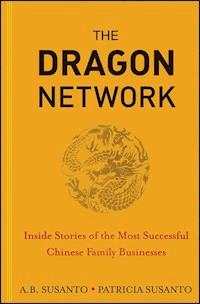
What's driving the burgeoning global Chinese family businesses? Chinese family businesses are the driving force behind Asia's economic prosperity. As the world becomes more global they have had to adapt to the new environment. This timely book draws on an extensive regional survey to reveal the key players and the strategies that will drive their success going forward. The book discusses and analyzes the business life and achievements of some prominent overseas Chinese family businesses in Asia and reveals their life philosophies, their business journey, and their family role in business. * Includes analysis regarding how the senior Chinese generations prepare their children to run the business in the future * Reveals that flexibility, ability to adapt to changing business environments, and resilience contribute to the success of many overseas Chinese family businesses * Offers illustrative examples of successful family businesses from Malaysia, Indonesia, The Philippines, and China Based in solid research and filled with illustrative examples, The Dragon Network offers an inside look at how family businesses succeed and thrive in Asia.
Sie lesen das E-Book in den Legimi-Apps auf:
Seitenzahl: 310
Veröffentlichungsjahr: 2013
Ähnliche


















Contents
Acknowledgments
Introduction
Chapter 1: Revealing Fast-Growing Overseas Chinese Family Businesses
Assimilation
Discrimination
Background of the Overseas Chinese Family Business (OCFB)
Overseas Chinese Family Businesses in Southeast Asia
Overseas Chinese Family Businesses in Other Regions
Chapter 2: How Do Chinese Values Support Business Values?
The Role of the Family in Chinese Culture
Confucian Values
Filial Piety
Guanxi
Characteristics of Chinese Family Businesses
Challenges Facing Overseas Chinese Family Businesses
Chapter 3: Combining Modern Management and Chinese Traditional Values
Family Businesses around the World: An Overview
Family Businesses: The Strengths
Family Businesses: The Weaknesses
Modernizing Overseas Chinese Family Businesses
Chapter 4: Anatomy of Conflict Management
The Story of Nyonya Meneer
The Story of Yeo Hiap Seng (YHS)
The Origins of Conflicts in Overseas Chinese Family Businesses
Conflict Management
Chapter 5: The Succession Conundrums
Succession Planning Conundrums
Succession in Overseas Chinese Family Businesses: Influence of Confucian Values
Preparing the Next Generation of Leaders in Overseas Chinese Family Businesses
The Next Generations: Dealing with Challenges
Chapter 6: The Role of the Wife in Overseas Chinese Family Businesses
Wife as the Balance of the Husband
Wife as Complement and Driver
Wife as the Secretary
Wife as the Most Important Figure Following Her Husband’s Death
The Role of a Wife: A Breaker or a Binder?
Chapter 7: Leadership Styles of Overseas Chinese Family Businesses
From Dictatorship to Democracy
Yearning for a Patriarch
Chapter 8: The Importance of Social Organization in Chinese Family Businesses
Evolution of the Bamboo Network
Founder’s Activities for Retirement
Chapter 9: Dealing with Risk
How Do Chinese Family Businesses Deal with Risk?
Risk Attitude among Younger Generations in Chinese Family Businesses
Chapter 10: Issues on Sustainability in Family Businesses
Phases of Growth in a Family Business
Challenges in Maintaining Sustainability
Chapter 11: Suggestions for Developing Chinese Family Businesses
Implementing Corporate Governance
Creating a New Business Paradigm, Strategy, Structure, and System
Enhancing Education and Competence for Family Members
Recruiting Non-Family Executive Professional Managers
Analyzing Corporate Life Cycle
Promoting Fair Remuneration and Equal Treatment among Members
Influencing with the Right Leadership
Reformulating Strategy and Renewing Business
Promoting Ethical Behavior
Promoting Corporate Social Responsibility
Developing Estate Planning
Chapter 12: The Future of Overseas Chinese Family Businesses: Toward a More Global Management Style
About the Authors
Bibliography
Index
Since 1996, Bloomberg Press has published books for financial professionals, as well as books of general interest in investing, economics, current affairs, and policy affecting investors and business people. Titles are written by well-known practitioners, BLOOMBERG NEWS® reporters and columnists, and other leading authorities and journalists. Bloomberg Press books have been translated into more than 20 languages.
For a list of available titles, please visit our web site at www.wiley.com/go/bloombergpress.
Copyright © 2013 by John Wiley & Sons Singapore Pte. Ltd.
Published by John Wiley & Sons Singapore Pte. Ltd.
1 Fusionopolis Walk, #07-01, Solaris South Tower, Singapore 138628
All rights reserved.
No part of this publication may be reproduced, stored in a retrieval system, or transmitted in any form or by any means, electronic, mechanical, photocopying, recording, scanning, or otherwise, except as expressly permitted by law, without either the prior written permission of the Publisher, or authorization through payment of the appropriate photocopy fee to the Copyright Clearance Center. Requests for permission should be addressed to the Publisher, John Wiley & Sons Singapore Pte. Ltd., 1 Fusionopolis Walk, #07-01, Solaris South Tower, Singapore 138628, tel: 65–6643–8000, fax: 65–6643–8008, e-mail: [email protected].
Limit of Liability/Disclaimer of Warranty: While the publisher and author have used their best efforts in preparing this book, they make no representations or warranties with respect to the accuracy or completeness of the contents of this book and specifically disclaim any implied warranties of merchantability or fitness for a particular purpose. No warranty may be created or extended by sales representatives or written sales materials. The advice and strategies contained herein may not be suitable for your situation. You should consult with a professional where appropriate. Neither the publisher nor the author shall be liable for any damages arising herefrom.
Other Wiley Editorial Offices
John Wiley & Sons, 111 River Street, Hoboken, NJ 07030, USA
John Wiley & Sons, The Atrium, Southern Gate, Chichester, West Sussex, P019 8SQ, United Kingdom
John Wiley & Sons (Canada) Ltd., 5353 Dundas Street West, Suite 400, Toronto, Ontario, M9B 6HB, Canada
John Wiley & Sons Australia Ltd., 42 McDougall Street, Milton, Queensland 4064, Australia
Wiley-VCH, Boschstrasse 12, D-69469 Weinheim, Germany
ISBN 978-1-118-33937-4 (Cloth)
ISBN 978-1-118-33938-1 (ePDF)
ISBN 978-1-118-33939-8 (Mobi)
ISBN 978-1-118-33940-4 (ePub)
Acknowledgments
I would like to express our gratitude to all of our family who have taken the time to meet with us and share their story and impart their wisdom and knowledge of life; the experience itself is nothing short of extraordinary. We have also appreciated the support from the Indonesia Chinese community, who have given their time to be interviewed, helping us go deeper into the roots of our Chinese heritage.
Thanks go to our team, especially Himawan Wijanarko and Hariadi Suripto, who have dedicated their time to conducting extensive research, holding discussions, and writing this book, and to the team at John Wiley & Sons, who have made an idea come true.
Introduction
Overseas Chinese family businesses (OCFBs) have played an important role in the Southeast Asian economies of Indonesia, Thailand, Malaysia, Singapore, and the Philippines. In other parts of the world, such as Australia and North America, we can also find successful family businesses founded by Chinese citizens, although their number and size are smaller than those in the Southeast Asia region.
As most Chinese family businesses come from the Southeast Asia region it is important to know some of the reasons. First, countries such as Indonesia, Thailand, Malaysia, and the Philippines are emerging markets—nations with social or business activity in the process of rapid growth and industrialization. The role of these emerging markets, together with other quickly growing markets from other countries such as Brazil, India, and China, are expected to be increasingly important in the upcoming decades. To support this rapid growth and industrialization, the contribution of these Chinese-owned businesses cannot be ignored.
Second, all countries in the Southeast Asia region are members of the Association of Southeast Asian Nations (ASEAN). ASEAN covers a land area of 4.46 million km2, which is 3 percent of the total land area of Earth, and has a population of approximately 600 million people, which is 8.8 percent of the world’s population. In 2010, its combined nominal GDP had grown to US$1.8 trillion. If ASEAN were a single entity, it would rank as the ninth largest economy in the world, behind the United States, China, Japan, Germany, France, Brazil, the United Kingdom, and Italy. ASEAN will make much progress in economic integration by creating an ASEAN Economic Community (AEC) by 2015. Overseas Chinese family businesses, already known for their ability to identify and capitalize on business opportunities, surely do not want to miss the chance to tap into this large and potential market.
Third is the signing of the ASEAN–China Free Trade Area (ACFTA). ACFTA is a free-trade area among the ten member nations of the ASEAN plus China. This free-trade area came into effect on January 1, 2010. ACFTA is the largest free-trade area in terms of population and third largest in terms of nominal GDP. It also has the third largest trade volume after the European Economic Area and the North American Free Trade Area (NAFTA). China had already overtaken the United States as the third largest trading partner of ASEAN, after Japan and the European Union, when the free-trade area came into effect. China is also the world’s largest exporter, so Chinese-owned businesses can be expected to seek opportunities to increase their business value.
The rapid growth and development of the Chinese economy has drawn attention from people around the world. They want to learn about the characteristics of the Chinese economy, including how Chinese businesspeople run their companies. Since the economic reform and the integration into world society of China, the number of non-state businesses has increased and many of them are family owned. Today, Chinese family companies control a portion of Asia’s economic wealth that is larger than their relative share in population (Lee, 2006). This development will attract more people to research Chinese family businesses. And to make the learning process easier, people outside mainland China will likely observe family businesses founded by ethnic Chinese in their home countries, since these businesses are considered to have many similarities with family businesses in mainland China.
Economic development in the ASEAN and mainland China, as well as success stories of ethnic Chinese entrepreneurs in other regions such as North America and Australia, are the reason why learning about OCFBs is needed. Most ethnic Chinese businesses are family owned since family is the foundation of Chinese organizations, including businesses. We need to learn their management style, for example, how business organization is structured, how family relationship affects business management, and how Chinese traditional values influence family business practices. It is also interesting to learn about the challenges facing Chinese family businesses in a rapidly changing environment, and whether these family businesses will be able to survive and thrive in future generations.
Chapter 1
Revealing Fast-Growing Overseas Chinese Family Businesses
In every country or region, there are always people who move and live outside their area for many reasons. Chinese people are no exception. Many of them have left and then lived outside of China. These people are known as overseas Chinese. The word “China” as denoted here includes the People’s Republic of China (also known as mainland China), Taiwan, Hong Kong, and Macau. Hong Kong and Macau are part of the People’s Republic of China, while the status of Taiwan as a state is still disputed.
Many Chinese people migrated to various regions in Southeast Asia, North America, Australia, Europe, Latin America, and Africa. These people then created a community in every place in which they settled. Many Chinese people left their home country due to political instability, wars, starvation, poverty, and rampant corruption. Most of them were poor, were poorly educated, and were illiterate. Many of them worked as a laborer for low wages.
Between 1840 and 1940, about 20 to 22 million Chinese people left their country to live in other regions, according to McKeown (2010). Southeast Asian countries such as Malaysia, Singapore, Indonesia, Thailand, Vietnam, and the Philippines became their main destinations. Most of these people found work in mines and on plantations. About 75 percent of them then went back to China once their contracts had expired, while the rest stayed and started to build small family businesses. These businesses served as the middlemen in export and import activities, connecting local markets, as well as Southeast Asians.
Lesen Sie weiter in der vollständigen Ausgabe!
Lesen Sie weiter in der vollständigen Ausgabe!
Lesen Sie weiter in der vollständigen Ausgabe!
Lesen Sie weiter in der vollständigen Ausgabe!
Lesen Sie weiter in der vollständigen Ausgabe!
Lesen Sie weiter in der vollständigen Ausgabe!
Lesen Sie weiter in der vollständigen Ausgabe!
Lesen Sie weiter in der vollständigen Ausgabe!
Lesen Sie weiter in der vollständigen Ausgabe!
Lesen Sie weiter in der vollständigen Ausgabe!
Lesen Sie weiter in der vollständigen Ausgabe!
Lesen Sie weiter in der vollständigen Ausgabe!
Lesen Sie weiter in der vollständigen Ausgabe!
Lesen Sie weiter in der vollständigen Ausgabe!




