


0,49 €
Niedrigster Preis in 30 Tagen: 0,00 €
Niedrigster Preis in 30 Tagen: 0,00 €
Mehr erfahren.
- Herausgeber: Booksell-Verlag
- Kategorie: Sachliteratur, Reportagen, Biografien
- Sprache: Englisch
In "The Elephant Man and Other Reminiscences," Frederick Treves offers a poignant collection of narratives that blend memoir, medical intrigue, and social observation. Centering on the extraordinary life of Joseph Merrick, known as the Elephant Man, Treves's prose is characterized by its empathetic tone and rich detail, which evoke both the horror and humanity of Merrick's plight. Set against the backdrop of Victorian society, the book delves into themes of isolation, compassion, and the ethical responsibilities of medicine, illustrating the complex interplay between societal perceptions and individual dignity. Treves's literary style, marked by clarity and sensitivity, invites readers to reflect on the profound impact of physical appearance on identity and social acceptance. Frederick Treves, a prominent British surgeon and a member of the Royal Society, became one of the era's leading practitioners in the field of surgery and medicine. His profound experiences treating Merrick, who suffered from severe deformities, profoundly impacted Treves's outlook on life and humanity. His medical insights, coupled with deep empathy for his patients, likely inspired him to write this touching anthology, shedding light on the oft-overlooked lives of those marginalized by society. This book is highly recommended for readers interested in medical history, social justice, and the human condition. Treves's unique firsthand account not only educates about the medical practices of the time but also serves as a timeless reminder of the moral imperative to recognize and honor the dignity of all individuals, regardless of their physical circumstances. In this enriched edition, we have carefully created added value for your reading experience: - A comprehensive Introduction outlines these selected works' unifying features, themes, or stylistic evolutions. - A Historical Context section situates the works in their broader era—social currents, cultural trends, and key events that underpin their creation. - A concise Synopsis (Selection) offers an accessible overview of the included texts, helping readers navigate plotlines and main ideas without revealing critical twists. - A unified Analysis examines recurring motifs and stylistic hallmarks across the collection, tying the stories together while spotlighting the different work's strengths. - Reflection questions inspire deeper contemplation of the author's overarching message, inviting readers to draw connections among different texts and relate them to modern contexts. - Lastly, our hand‐picked Memorable Quotes distill pivotal lines and turning points, serving as touchstones for the collection's central themes.
Das E-Book können Sie in Legimi-Apps oder einer beliebigen App lesen, die das folgende Format unterstützen:
Veröffentlichungsjahr: 2019
Ähnliche

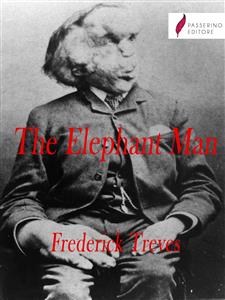












The Elephant Man and Other Reminiscences
Table of Contents
Introduction
Frederick Treves’s The Elephant Man and Other Reminiscences is a single-author collection that gathers the surgeon-writer’s most memorable recollections into a coherent whole. It presents incidents drawn from professional practice and from encounters that lingered in his memory, arranged to illuminate the moral and human dimensions of care. The overarching purpose is not to compile a technical record, but to preserve scenes in which observation, judgment, and sympathy meet. By bringing these pieces together, the collection invites readers to consider how a trained clinical eye can also be an instrument of humane understanding, and how narrative can hold experience without exaggeration.
As a volume, it is neither a complete works nor a scholarly compendium; rather, it is a curated suite of a dozen narratives unified by voice and outlook. Beginning with the well-known account of 'The Elephant Man' and extending through portraits such as 'The Old Receiving Room', 'Breaking the News', and 'A Question of Hats', the sequence moves from the exceptional to the everyday. The design allows singular cases to be read alongside quieter moments, so that the remarkable is balanced by the routine. The scope thereby encompasses the public spectacle and the private exchange, the crisis and the interval between crises.
In terms of form, the book is composed of prose reminiscences: memoiristic essays, case vignettes recast as narratives, and character sketches. They are not fictional tales or formal case reports, but reflective pieces written for general readers. Some episodes have the compression and momentum of short stories, yet remain anchored in firsthand experience. Others take the shape of observational notes that widen into brief meditations. Across the volume, Treves blends descriptive reporting with personal perspective, maintaining a clear distinction between fact recalled and meaning inferred. The result is a set of accessible, self-contained texts that reward both continuous and selective reading.
Several unifying preoccupations recur. Chief among them are dignity amid affliction, the ethics of looking and speaking, and the limits of diagnosis when set against the complexity of a life. The narratives weigh detachment against compassion, examine the textures of fear and courage, and return to the moment when a clinician must decide how to act or what to say. Fortune, accident, and the unpredictability of the body are present throughout, as are questions of identity and reputation. Even when events are modest, the underlying concerns are large: mortality, responsibility, and the possibilities of kindness under pressure.
Stylistically, Treves writes with restraint and precision, favoring exact observation over ornament. He constructs scenes from closely chosen particulars—light, gesture, inflection—allowing significance to emerge without overt commentary. The prose is plain yet musical, sustained by a steady cadence and a wry, undemonstrative humor. Many pieces begin with a concrete predicament and unfold toward a moral or emotional inflection point, a structure that mirrors clinical reasoning while never losing sight of the person before the case. The vocabulary is clear, the sentences well balanced, and the tone even, producing an authority that stems from experience rather than insistence.
The collection remains significant because it preserves a first-hand view of medical and social experience from a practitioner who also possessed a strong literary sense. The opening account of the figure known as the Elephant Man has become a touchstone in later discussions of his life and representation. Read alongside the other reminiscences, it is set within a wider ethic of attention and respect. Beyond any single episode, these pages offer readers of life writing and the medical humanities a concise archive of attitudes, dilemmas, and practices that continue to resonate in discussions of care, vulnerability, and narrative truth.
Approached as a whole, the volume offers a sequence of self-sufficient encounters that accumulate into a portrait of a professional conscience. Each piece begins with a premise simple enough to describe without spoiling—an unexpected patient, a difficult conversation, a night that will not pass—yet each opens onto considerations larger than the incident itself. Readers may proceed in order or choose according to interest; either way, the unity lies in the unwavering gaze and measured voice. What endures is the invitation to look closely, to listen carefully, and to consider how attention itself can be a restorative act.
Historical Context
Frederick Treves (1853–1923) matured in the high-Victorian medical world that shaped these reminiscences. Born in Dorchester, Dorset, he trained at the London Hospital Medical College and rose through its wards in Whitechapel, the East End quarter that frames many episodes. Appointed surgeon in the 1880s, he combined exact clinical practice with a craftsman’s prose, the better to fix people and places on the page. His acquaintance with Joseph Merrick (1862–1890), the so-called Elephant Man, grew out of that hospital environment, where curiosity met compassion. The voluntary hospital’s routines, its porters, nurses, receiving rooms, and students, supplied Treves with a repertory of scenes repeated across the collection.
He wrote amid the consolidation of the medical profession after the Medical Act of 1858 and the strengthening of standards through the General Medical Council. London’s great teaching hospitals competed in The Lancet and the British Medical Journal to codify technique and ethics. The London Hospital relied on subscriptions, letters of recommendation, and endowed wards, shaping who entered a casualty room or a private room alike. Clinical meetings, demonstrations, and the Pathological Society of London created a culture in which unusual bodies and ordinary tragedies were alike classified, illustrated, and debated, giving Treves both a vocabulary and a forum that connect the disparate narratives collected here.
Treves’s career spanned an era of rapid therapeutic change that saturates these recollections. Antiseptic and aseptic surgery, inspired by Joseph Lister in the 1860s and strengthened by sterile technique and rubber gloves in the 1890s, transformed risk. Inhalational anesthesia, routine by the 1870s, extended the surgeon’s reach into the abdomen, where Treves championed early operation for intestinal obstruction and appendicitis. He gave Hunterian lectures at the Royal College of Surgeons and, in June 1902, performed the emergency operation that saved King Edward VII from peritonitis days before the coronation, a feat that made his authority national. New tools—X-rays (1895), blood groups (1901), and electrocardiography (1903)—recast diagnosis.
The human material of these sketches emerges from the compressed, polyglot East End at the fin de siecle. London’s population swelled toward 6.5 million by 1901; Whitechapel, Aldgate, and Mile End crowded with dock laborers, costermongers, tailors, and recent arrivals from Ireland and Eastern Europe. The Poor Law, workhouses, and the Metropolitan Asylums Board intersected with voluntary hospitals at the threshold of the receiving room. Accidents from horse traffic, factory belts, and, after 1900, motor omnibuses delivered a steady flow of emergencies. The memory of the 1888 Jack the Ripper murders haunted the district’s alleys, sharpening anxieties about charity, policing, and the boundary between the medical and the morbid.
Victorian entertainments and scientific curiosity overlapped in ways central to Treves’s world. Public exhibitions of human curiosities toured provincial halls and London booths, while medical museums and the Pathological Society of London (founded 1846) collected specimens and case histories. Joseph Merrick’s trajectory—from Leicester showrooms to a bed at the London Hospital—marks a cultural pivot from spectacle to care, even as language lagged behind. Treves’s narratives record that transition’s ambiguities: the quasi-theatrical case presentation, the photograph, the plaster cast, the appeal to subscribers, and the attempt to restore a patient’s privacy. The same apparatus frames many figures in this book, whether they are sailors, shopgirls, or society patrons.
The imperial and transnational sweep of late-nineteenth-century Britain widens his canvas. Treves served as a consulting surgeon in the South African War (1899–1902), observing field hospitals, shock, and sepsis under campaign conditions that informed his civilian practice. Steamship routes after the Suez Canal’s opening in 1869 stitched London to ports from the Cape to Bombay; hospital ships and maritime accidents brought sea lovers and casualties to his notice. Continental itineraries, too, matter: the Austro-Hungarian krone, introduced in 1892, anchors episodes set among Vienna’s and Prague’s clinics, where figures like Theodor Billroth had set standards in operative surgery; Berlin and Paris offered bacteriology in the line of Robert Koch and Louis Pasteur.
Shifts in language about the mind and the heart underwrite several recollections. Neurasthenia, named by George M. Beard in 1869, circulated in clinics and clubs alike as a diagnosis of modern strain; Charcot’s demonstrations in Paris redirected attention to hysteria and hypnotic suggestion. Before cardiology’s instrumentation, heart failure commonly appeared on British death certificates as a vague terminal phrase, masking diverse pathology later clarified by the electrocardiograph. Death and dying remained saturated with religious and legal forms—last rites in articulo mortis, coroners’ inquests, and formal notification to next of kin—while medical paternalism governed what could be told at the bedside. The negotiation of truth, tact, and duty threads through Treves’s cases.
These reminiscences appeared in 1923, when post-war Britain was reassessing Victorian and Edwardian certainties. Treves had by then withdrawn from regular practice, honored with a baronetcy in 1902 and high distinctions in the Royal Victorian Order for his service to King Edward VII. He died in Lausanne, Switzerland, on 7 December 1923, but his London remains the organising stage: the London Hospital in Whitechapel, its museum, and its alumni networks. The tensions he records—between spectacle and science, charity and policy, stoicism and anxiety—speak across the collection’s pieces, binding The Elephant Man to the old receiving room, the sea, the hats, and every fraught errand of breaking the news.
Synopsis (Selection)
THE ELEPHANT MAN
Treves recounts his first encounters with Joseph Merrick, the so‑called Elephant Man, and the care he received at the London Hospital, highlighting Merrick’s dignity amid public curiosity and stigma.
THE OLD RECEIVING ROOM
A portrait of the London Hospital’s receiving room, capturing the nightly stream of emergencies, the staff who manage them, and the human dramas in a crowded East End ward.
THE TWENTY-KRONE PIECE
An anecdote built around a single coin during a medical episode abroad, showing how chance, money, and professional judgment can shape a patient’s course.
A CURE FOR NERVES
A wry look at fashionable nervous complaints and their treatment, in which an unexpected, practical regimen proves more effective than tonics or rest cures.
TWO WOMEN
Contrasting sketches of two female patients from different social worlds, illustrating how class, character, and circumstance bear on illness and courage.
A SEA LOVER
The story of a man bound to the sea by temperament and memory, whose illness tests that bond and prompts a compassionate response from his doctors.
A CASE OF "HEART FAILURE"
Treves examines a death labeled "heart failure," using the case to show how vague diagnoses can obscure real causes and responsibilities.
A RESTLESS NIGHT
A surgeon’s sleepless night on call, following a chain of urgent cases and small crises that reveal the strain and discipline of hospital work.
IN ARTICULO MORTIS
A vignette of a patient at the point of death and the gestures—medical and spiritual—made in those final moments, handled with duty and tact.
THE IDOL WITH HANDS OF CLAY
An admired figure is revealed as fallible, prompting reflections on hero worship, professional reputation, and the limits of skill.
BREAKING THE NEWS
Practical reflections on telling patients and families hard truths, illustrated by scenes balancing honesty, timing, and compassion.
A QUESTION OF HATS
A light yet telling episode in which the matter of hats—symbols of status and propriety—becomes a lens on hospital etiquette, authority, and the social lives of patients.
The Elephant Man and Other Reminiscences
ITHE ELEPHANT MAN
IN the Mile End Road, opposite to the London Hospital, there was (and possibly still is) a line of small shops. Among them was a vacant greengrocer’s which was to let. The whole of the front of the shop, with the exception of the door, was hidden by a hanging sheet of canvas on which was the announcement that the Elephant Man was to be seen within and that the price of admission was twopence. Painted on the canvas in primitive colours was a life-size portrait of the Elephant Man. This very crude production depicted a frightful creature that could only have been possible in a nightmare. It was the figure of a man with the characteristics of an elephant. The transfiguration was not far advanced. There was still more of the man than of the beast. This fact—that it was still human—was the most repellent attribute of the creature. There was nothing about it of the pitiableness of the misshapened or the deformed, nothing of the grotesqueness of the freak, but merely the loathsome insinuation of a man being changed into an animal. Some palm trees in the background of the picture suggested a jungle and might have led the imaginative to assume that it was in this wild that the perverted object had roamed.
When I first became aware of this phenomenon the exhibition was closed, but a well-informed boy sought the proprietor in a public house and I was granted a private view on payment of a shilling. The shop was empty and grey with dust. Some old tins and a few shrivelled potatoes occupied a shelf and some vague vegetable refuse the window. The light in the place was dim, being obscured by the painted placard outside. The far end of the shop—where I expect the late proprietor sat at a desk—was cut off by a curtain or rather by a red tablecloth suspended from a cord by a few rings. The room was cold and dank, for it was the month of November. The year, I might say, was 1884.
The showman pulled back the curtain and revealed a bent figure crouching on a stool and covered by a brown blanket. In front of it, on a tripod, was a large brick heated by a Bunsen burner. Over this the creature was huddled to warm itself. It never moved when the curtain was drawn back. Locked up in an empty shop and lit by the faint blue light of the gas jet, this hunched-up figure was the embodiment of loneliness. It might have been a captive in a cavern or a wizard watching for unholy manifestations in the ghostly flame. Outside the sun was shining and one could hear the footsteps of the passers-by, a tune whistled by a boy and the companionable hum of traffic in the road.
The showman—speaking as if to a dog—called out harshly: “Stand up!” The thing arose slowly and let the blanket that covered its head and back fall to the ground. There stood revealed the most disgusting specimen of humanity that I have ever seen. In the course of my profession I had come upon lamentable deformities of the face due to injury or disease, as well as mutilations and contortions of the body depending upon like causes; but at no time had I met with such a degraded or perverted version of a human being as this lone figure displayed. He was naked to the waist, his feet were bare, he wore a pair of threadbare trousers that had once belonged to some fat gentleman’s dress suit.




